

Impact of Flooding on Agriculture: 7 Ways to Boost Yields
“Flooding can reduce crop yields by up to 45% in severely affected regions, impacting food security and farmer incomes.”
Introduction: Understanding Agriculture Flooding & Its Ripple Effects
Flooding is among the most significant natural challenges agriculture faces globally. From sudden flash floods disrupting fields to prolonged inundation affecting wide swathes of farmland, the impact of flooding on agriculture is profound, complex, and far-reaching. As agricultural flooding events become more frequent and severe under shifting climate dynamics—including phenomena like El Niño—farmers, agri-technologists, and planners must understand its influence on soil, crop, water management, and yields.
This blog explores how floods alter ecosystems, disrupt growth cycles, and threaten food security. We’ll dive deep into hydrological mechanisms, damage pathways, yield impacts, and—most importantly—strategies and technologies for recovery and boosting future yields. By leveraging data-driven insights and adaptive flood management in agriculture, stakeholders can transform challenges into resilience.
“Over 21 million hectares of farmland are damaged by floods globally each year, threatening agricultural productivity and livelihoods.”
The Impact of Flooding On Agriculture: Soil, Crops, and Yield Dynamics
Agriculture flooding isn’t merely an excess of water—it sets off a chain reaction disrupting soil structure, nutrient availability, crop health, and regional food security. The immediate losses—crop destruction, equipment damage, and delayed planting—are visible. Yet, it’s the long-term soil and yield dynamics that shape future agricultural viability and farm management decisions.
- ✔ Soil Disruption: Floods reduce oxygen diffusion through soil porosity, suffocating roots.
- 📊 Crop Health Decline: Stunted growth, leaf scorch, and disease outbreaks increase.
- ⚠ Pest Proliferation: Inundation can accelerate weed proliferation and pest dynamics.
- 🌱 Nutrient Loss & Gain: Erosion may strip away topsoil, yet deposited sediments can improve fertility.
- 🌾 Yield Volatility: Timing of floods may reduce harvests or, rarely, boost yields via alluvial nutrient influx.
Key Insight 🔎
Agriculture flooding exerts a complex web of influences—while most crops suffer, certain systems even benefit when restoration is swift and managed.
Hydrological Changes: How Floods Alter Agricultural Systems
Hydrologically, a flood is not just excess water; it fundamentally reshapes fields and their biological balance. Floodwaters rapidly saturate soils, triggering waterlogging, increasing porosity, and significantly reducing oxygen diffusion to crop roots. The presence of standing water deprives crops of light, while short-term inundation accelerates weed proliferation.
Root physiology is especially at risk. Many crops, including staples like wheat, maize, and soy, are sensitive to root suffocation. Roots may fail, stunted growth ensues, leaf scorch becomes apparent, and plants face increased susceptibility to diseases and pests.
Conversely, in some periodic flood-prone zones, both crops and natural ecosystems have evolved flood-resilience traits. Farmers often cultivate varieties with shallow root systems or distinct resistance to inundation. Raised beds, dikes, and terracing are employed to preserve soil integrity and facilitate effective drainage.

Soil Health, Fertility & Microbiota in Flood Agriculture
During flooding, soil fertility undergoes rapid, uneven change. Floodwaters may deposit nutrient-rich sediments—especially in alluvial regions—forming fertile silt for future harvests if soils are properly restored. This is a double-edged sword, because soil erosion can strip away topsoil on sloped fields, removing organic matter and essential nutrients critical for plant establishment.
- ✔ Floodwaters can improve fertility by depositing beneficial sediments in some regions.
- ⚠ Erosion strips away organic-rich topsoil, especially on slopes.
- 🌱 Soil compaction, crust formation, and uneven microbial changes may hinder recovery.
- 🍂 Poorly aerated soils—especially where compaction is severe—stunt future crop establishment.
Pro Tip 💡
Post-flood restoration should focus on re-aerating soils, relieving compaction, and rejuvenating organic matter for sustainable yield improvement.

Flooding Impact Timeline: Planting, Growth, and Harvest Quality
The timing of floods relative to crop cycles matters immensely:
- 🌱 Early-season flooding can delay sowing, disrupt seed establishment, and shorten growing seasons, leading to yielding lower harvests.
- 🌾 Mid-season floods can cause direct crop loss or kill entire stands.
- 🌤 Post-flood dry spells stress already weakened plants, sometimes causing permanent yield decline.
- 🍚 Rice paddies are a unique case—here, deliberate flooding suppresses weeds and can improve nutrient uptake under controlled conditions.
- 🧬 Grain quality suffers, as premature sprouting and elevated disease pressure sharply reduce market value.
Common Mistake ❌
Failing to adjust planting dates or crop varieties after major flood events can lead to unsuccessful re-establishment and repeated losses.
Economics of Flood Agriculture: Financial Losses and Recovery
The economic impact of flooding on agriculture reverberates from the farm household to the global supply chain. Immediate losses include destroyed crops, damaged infrastructure, delayed planting, and machinery challenges. Cash flow constraints become acute, especially for smallholders with limited insurance coverage or credit access.
Post-flood recovery expenditures often include:
- ✔ Soil rehabilitation and nutrient replenishment
- 🛠 Pest and disease management (outbreaks often soar post-flood)
- 🚧 Repairing infrastructure: restoring drainage networks, irrigation systems, and road access
- 🌾 Reseeding or diversifying crops for next season
- 🏛 Seeking government or mutual aid relief—though availability and efficiency vary
Repeated or poorly managed floods can erode the viability of entire farming regions, particularly when market access becomes compromised.
For assessment, verification, and access to loans or insurance after a flood event,
Farmonaut’s Satellite-Based Crop Loan & Insurance Verification
platform offers a reliable, data-driven approach—speeding up recovery and reducing fraud risk for financial organizations.

Investor Note 📢
Repeated flooding in mining or agriculture regions increases both yield risks and long-term restoration costs—making satellite-based monitoring and data-driven planning essential for sustainable investments.
Flooding in Agroforestry & Mining-Adjacent Ecosystems
Flood agriculture challenges span far beyond row crops. Forestry and agroforestry systems also experience severe disruption: tree mortality in young plantations rises during prolonged saturation, while timber quality and stand integrity often suffer. Floods can alter stand structure, introduce pests and disease outbreaks, and hinder the re-establishment of productive species.
Where agriculture zones border mining landscapes, flood events may mobilize sediments and contaminants, posing additional risks for soil quality and downstream food security. Continuous environmental monitoring—including carbon footprinting and traceability solutions—are advisable for responsible stewardship in these sensitive areas. Explore
Farmonaut’s Carbon Footprinting Platform for effective agri-environmental impact tracking.

- 🛑Flood damage in young plantations is often permanent, requiring replanting and soil compaction relief.
- ⚠️Floods near mining zones can introduce hazardous contaminants, making ongoing soil quality monitoring vital.
- 🌳Disease and pests surge post-flood—integrated protection must be prioritized.

“Over 21 million hectares of farmland are damaged by floods globally each year, threatening agricultural productivity and livelihoods.”
Comparative Impact and Solutions Table: Flood Management in Agriculture & Crop Yield Improvement
| Flood Impact | Estimated Yield Loss (%) | Impacted Crops | Recommended Solution/Practice (Flood Management in Agriculture & Crop Yield Improvement) |
|---|---|---|---|
| Soil Erosion & Topsoil Loss | 15 – 35% | Maize, Wheat, Soy, Vegetables | Terracing, cover crops, raised beds, contour farming, add organic matter |
| Waterlogging/Root Suffocation | 20 – 40% | Cereals, Cotton, Oilcrops | Enhanced drainage, subsoiling, aeration, resistant varieties |
| Nutrient Leaching & Imbalance | 10 – 30% | All field crops | Timely fertilization, application of compost/organic matter, precision restoration |
| Crop Establishment Failure | 25 – 45% | Wheat, Maize, Soya, Rice (upland) | Re-seeding, adjust planting dates, resilient seeds, raised nursery beds |
| Flood-borne Disease & Pest Surge | 5 – 20% | All field crops, especially vegetables | Integrated pest/disease management, real-time monitoring, rapid response |
| Contaminant/Sediment Exposure (Mining-adjacent) | 10 – 25% | All crops near mining | Regular soil/water monitoring, remediation, traceability deployment |
| Infrastructure/Access Damage | N/A (indirect, but may trigger 100% local loss) | All crops | Early warning, robust access roads, rapid repair, risk-sharing networks |
For real-time field monitoring and decision support, explore Farmonaut’s Large-Scale Farm Management solutions.
7 Practical Strategies: Boosting Yields Despite Floods
-
Improve Drainage Infrastructure
- ✔ Build ditches, install tile drains, and maintain waterways to reduce prolonged soil saturation.
- 🌊 Restore and clear riverbanks periodically in flood-prone regional agriculture contexts.
- 💧 Use precision water management tools—see Farmonaut Satellite & Weather API for integrated decision support.
-
Adopt Raised Beds & Contour Farming
- 🌱 Raised beds protect seedling roots, reduce erosion, and facilitate rapid drainage post-flood.
- 🏞 Terracing & contouring slow runoff and preserve soil fertility on slopes.
- 📹 Learn how elevated beds improve resilience:
Elevated Garden Beds: Boost Plant Health, Prevent Soil Erosion
-
Choose Flood-Tolerant Crop Varieties
- 🌾 Select varieties bred for shallow root systems or natural resistance to prolonged wetness.
- 🔬 For rice and select grains, investigate new cultivars designed for submerged growth periods.
- 🌎 Consider crop diversification to spread risk and improve food security—beneficial even in uncertain El Niño years.
-
Enhance Soil Organic Matter & Structure
- 🍂 Regularly add compost, manure, or green cover crops to improve soil integrity. This facilitates root recovery and nutrient retention post-flood.
- 💪 Relieve compaction via shallow tillage, subsoiling, or bioremediation techniques to support healthy establishment in future crops.
-
Rebuild Crop Establishment After Floods
- 🌾 Adjust planting calendars and re-seed fields using flood-recovered or disease-free stock.
- 🏡 Use raised nurseries to boost seedling survival during restoration.
- 🦠 Quick post-flood replanting reduces weed and disease risks.
-
Integrate Real-Time Monitoring & Early Warning Systems
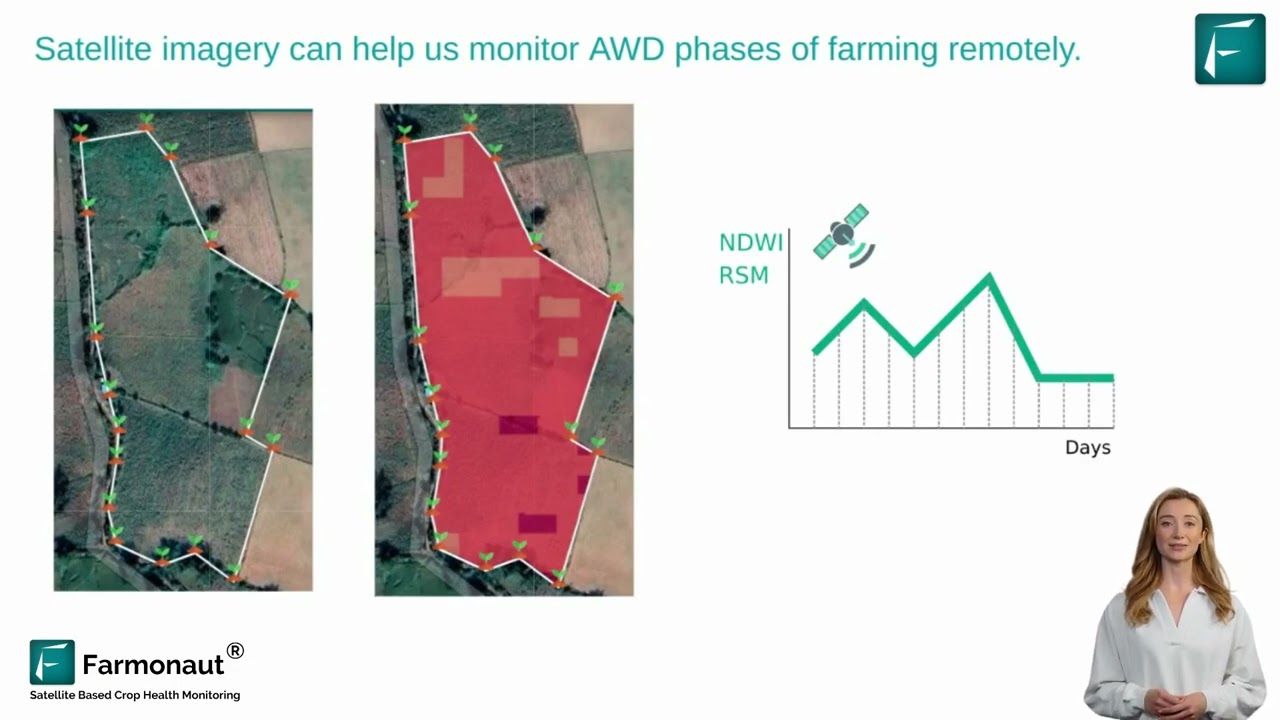
- 📡 Leverage satellite imagery, IoT sensors, and AI-based advisories for timely intervention.
- 💻 Farmonaut’s Jeevn AI System and web/mobile apps enable all users to detect crop stress and waterlogging instantly—vital for flood resilience.
- 🤖 Try Farmonaut’s Real-Time Monitoring Platform
-
Leverage Community-Based Recovery & Financing Tools
- 🏦 Pool risks through local support networks, micro-insurance, or satellite-based insurance assessment for faster payouts.
- 🔁 For mining-adjacent landscapes, deploy traceability and remediation planning—see Farmonaut’s Blockchain-Based Traceability suite.

- 💧Effective Drainage = Reduced Waterlogging Risk.
- 🌾Diversification + Right Varieties = More Resilient Yields.
- ⚠️Ongoing Monitoring = Faster Recovery & Fewer Crop Losses.
- ✔ Boost soil health with fresh organic matter after each flood for improved future resilience.
- 📊 Use farm management technology for crop, pest, and moisture monitoring.
- ⚠ Do not reseed with previously submerged or moldy seeds. Fresh, disease-free stocks yield better.
- 🌍 Plan for seasonal risk using early warning and weather AI insights.
- 🪴 Elevate planting beds for seedlings on marginal or poorly drained soils.



Farmonaut Tools & Flood Resilience Tech
We at Farmonaut are committed to making advanced, satellite-powered insights affordable and accessible for global agriculture and allied sectors. Our platform delivers satellite-based monitoring, real-time analytics, and actionable advisories to improve resilience against the impact of flooding on agriculture.
Key digital tools & benefits include:
- 🌎 Satellite-Based Monitoring: Real-time NDVI, soil moisture and crop health analytics for timely flood detection and post-event management.
- 🤖 AI & Jeevn Advisory: Automated, location-specific advice on water management, crop strategy and risk mitigation during and after flood events.
- 🔗 Blockchain Traceability: Enhance supply chain trust and validate post-flood product quality, optimizing access to regional and international food markets.
- 🚜 Fleet Management: Monitor and optimize farm, mining, or construction vehicle use with satellite-driven analytics for rapid recovery and operational efficiency. For more details, see Farmonaut Fleet Management Solutions.
- 📊 Environmental Impact Tracking: Carbon emissions and contaminant flow monitoring, essential for responsible flood recovery and ESG compliance in agriculture and mining. See carbon footprinting platform.
- 💹 Scalable Data Access: From single-user to government scale, manage operations with flexible API and app-based access. Developer Integration Docs here.

Farmonaut Subscription Options:
Action Item ✔️
For optimal post-flood recovery, activate Farmonaut’s app for monitoring and use the satellite weather API for smart, scheduled replanting decisions.
Key Insights, Tips, & Common Mistakes in Flood Management for Agriculture
- Resilience starts with prevention—prioritize landscape drainage, regular monitoring, and crop rotation to reduce long-term vulnerability.
- Floodplain mapping with satellite imagery guides smarter restoration and infrastructure investment.
- Invest in resistant seed stock and soil structure improvement; these strategies lower both immediate and future flood impacts.
- Do not neglect pest/disease risk post-flood—integrated management can rescue yields and bottom-line profitability.
- Unlock funding and support with data-driven impact proof—satellite verification platforms (like Farmonaut’s) speed up recovery aid and microcredit access.
A common mistake is assuming that flood damage is “finished” once the field dries. Instead:
- Actively observe regrowth, continue soil aeration, and restore organic matter—these steps are essential for full recovery.
- Never rush replanting if soils are still compacted or poorly aerated—ensure root zone revival before new sowings.
Frequently Asked Questions (FAQ)
How does flooding directly impact soil structure and crop viability?
Flooding increases soil porosity and reduces oxygen diffusion, resulting in root suffocation, stunted growth, and often complete crop failure. Standing water also accelerates weed and pest dynamics, leading to compounded losses.
Can floods ever benefit future harvests?
In certain alluvial regions, floods deposit nutrient-rich silt that can boost soil fertility for subsequent crops—if restoration is rapid and compaction is relieved. However, this happens selectively and unpredictably.
Which crops are most at risk during floods?
Non-rice cereals, oil seeds, vegetables, and young orchards are highly sensitive. Only some rice varieties tolerate prolonged inundation when managed carefully.
How can modern satellite tools help with flood management in agriculture?
Satellite and AI-driven platforms (such as those by Farmonaut) enable real-time monitoring of soil moisture, vegetation health, and drainage, allowing for swift response and better post-flood yield recovery.
What are effective ways to reduce flood impact on food security?
Use raised beds, improve drainage, diversify crop portfolios, integrate real-time monitoring, and tap into insurance/financing options backed by satellite or remote-sensing verification.
Is there a link between El Niño and increased flood risk in agriculture?
Yes, El Niño events can cause erratic rainfall and increased flooding in certain regions. Adaptive varieties, enhanced drainage, and climate-informed calendars are recommended for El Niño-affected zones.
Conclusion: Shaping a Resilient Farming Future in a Flooded World
The impact of flooding on agriculture is both a challenge and—if managed wisely—an opportunity for renewal. Flood agriculture reshapes soil dynamics, yield potential, and even regional food security. As global water cycles grow more volatile, effective integration of structural interventions, agronomic strategies, and data-powered monitoring is crucial.
By investing in drainage, diversification, and ongoing field intelligence with platforms like Farmonaut, stakeholders can boost yields, speed recovery, and ensure resilience against the next deluge. With advanced satellite and AI tools now accessible even to smallholders, the tools for managing, recovering, and thriving in post-flood landscapes are better than ever.
Whether you oversee a small farm, manage regional infrastructure, or track environmental impacts near mining zones, embedding best practices for flood management in agriculture will protect your yields and sustainable future growth.
Explore Farmonaut’s API suite for seamless integration of satellite flood warnings and soil health analytics: Farmonaut Satellite & Weather API
For bulk farm or agri-corporate solutions, see Large-Scale Farm Management tools or access crop plantation and forest advisory.
Start building your farm’s flood resilience today—for tomorrow’s food security and prosperity.

 Elders
 Agritein
 Delicio
 Payagri
 WB Dev
 Sama Premium
 Prochecker
 Tres Valles
 LACOS Geoinformation
 Magrifly
 LatConnect 60
 WebsEdge
 Blickwinkel
 Agricultural Credit Policy Council
 Marei Nursery
 eKGIS
eKGIS Mostas Tech
 Andex
Andex FCF India
