

Yukon · Company comparison
Yukon Mining Companies: 10 Compared by Project Stage
Hecla’s Keno Hill is the only mine in this list still producing; the other nine are a mine in receivership and eight development or exploration projects. Figures are dated and sourced to each company, with a checklist for judging environmental record.
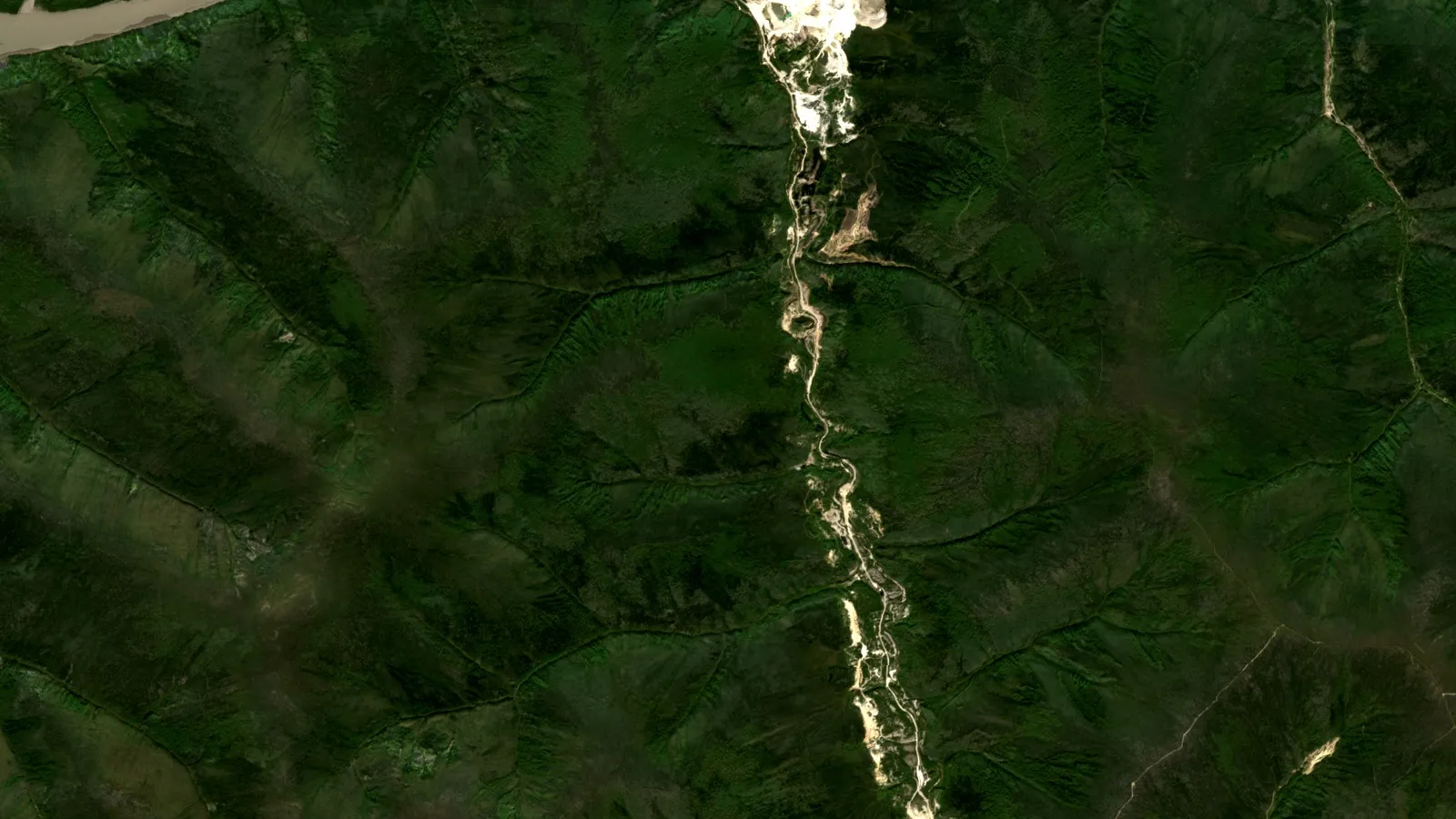
Key takeaways
- Hecla’s Keno Hill mine produced 3.02 million ounces of silver in 2025 (Hecla website).
- Banyan reports 3.64 Moz Indicated and 4.98 Moz Inferred gold at AurMac, effective 15 May 2026 (Banyan website).
- Fuerte Metals is now Talamore Mining, owner of the Coffee gold project (company website, 2026).
- The Eagle mine is in receivership; Boroo’s exclusivity to buy it, signed 23 April 2026, was extended by 90 days on 3 July 2026 (Boroo, 27 July 2026).
- Yukon placer miners reported more than C$449 million of gold revenue in 2025, under a royalty of 37.5 cents per ounce (CBC, February 2026).
In this article
- How we chose these Yukon companies
- Yukon mining companies compared by stage and size
- The ten companies, one by one
- Gold resources compared across the Yukon developers
- Grade against size: which projects are higher grade
- Gold resource value calculator
- Placer mining: the other Yukon industry
- How Yukon rules shape what these companies do
- How to judge a Yukon company's environmental record
- Exploration spending in Yukon
- Checking a Yukon property from space
- Frequently asked questions
Ten companies hold the Yukon projects that matter most to investors, lenders and licence holders in October 2026: one operating silver mine, one mine in court-supervised sale, and eight gold, copper, zinc and tungsten projects at different stages. Hecla’s Keno Hill mine produced 3.02 million ounces of silver in 2025, by Hecla’s own figures. At the other end, explorers such as Banyan Gold and Sitka Gold report resources of several million ounces but have no mine plan yet. This page ranks nothing by share price. It lines the companies up by project stage and size, with the source and date beside every figure, and shows what a reader who owns or buys ground should ask each of them.
If you came here asking which Yukon companies manage gold projects with care for the environment, the short answer is that no company can be rated from the outside on one number. The page therefore ends the company list with a checklist you can apply to any name, built on what went wrong at the Eagle mine in 2024. Nothing here is investment advice, and listing a company is not a recommendation.
How we chose these Yukon companies
This is a selection, not a census. A company is included when it meets all four tests: it controls a Yukon project that is either producing or has a published mineral resource or mine study; it has filed or posted figures in 2025 or 2026; it is a company that investors and suppliers can look up (listed, or a mine in a public receivership); and its own website or a court-linked source confirms the project status. Dozens of smaller explorers hold Yukon claims and are left out because they have no published resource. Placer operators, who are mostly small private firms, are covered in their own section below.
Because companies describe themselves, the table and profiles lean on company websites for the numbers, and say so. Resource figures are company estimates under Canada’s NI 43-101 rules, which set how a resource may be reported. A resource is mineral that may be mined one day; a reserve is the part shown to be economic. Only reserves have passed an economic test. Terms used below: Indicated and Inferred describe how well the ounces are known (Inferred is the least certain); g/t is grams of gold per tonne of rock; a PEA is a preliminary economic assessment, an early-stage study; a feasibility study is the later study that banks need.
Yukon mining companies compared by stage and size
The table runs from the one operating mine down to explorers. Stage is the company’s own description. Figures carry the date or report they come from.
| Company | Main Yukon project | Stage | Headline figure | Source |
|---|---|---|---|---|
| Hecla Mining (NYSE: HL) | Keno Hill, silver-lead-zinc | Operating underground mine | 3.02 Moz silver produced in 2025 | Hecla website |
| Victoria Gold | Eagle gold mine | Closed after June 2024 failure; in receivership | Exclusivity with Boroo Ltd signed 23 April 2026, extended 3 July 2026 | Canadian Press via BNN |
| Western Copper and Gold | Casino, copper-gold | Environmental assessment | 27-year mine life, C$3.62 billion pre-production capital (2022 study) | Company website |
| Snowline Gold (TSX: SGD) | Valley, at the Rogue project | Development; PEA done | 6.8 Moz payable gold, 20-year life (2025 PEA) | Company website |
| Talamore Mining (TSXV: TALA; formerly Fuerte Metals) | Coffee gold | Advanced, heap leach | 3.0 Moz Measured and Indicated at 1.15 g/t | Company website |
| White Gold Corp | White Gold project | PEA filed September 2026 | 1.73 Moz Indicated at 1.53 g/t; PEA after-tax NPV C$1.86 billion | Company website |
| Banyan Gold | AurMac | Resource definition | 3.64 Moz Indicated at 0.68 g/t; 4.98 Moz Inferred | Company website |
| Sitka Gold | RC Gold | Resource definition | 1.29 Moz Indicated; 3.83 Moz Inferred (2026 report) | Company site and technical report |
| Klondike Gold | Klondike District | Exploration | 586 square kilometres around Dawson City | Company website |
| Fireweed Metals (TSXV: FWZ) | Mactung tungsten; Macpass zinc | Advanced exploration | 41.5 Mt Indicated at 0.73% WO3 (2023 report) | Company website |
The ten companies, one by one
Each profile gives a best-for line, the facts, and a fair strength and weakness. The order follows the table, from producer to explorer.
1. Hecla Mining: Keno Hill silver
Best for: readers who want the only Yukon name with a working mine behind it,
Hecla bought Alexco Resource in 2022 and now owns 100% of Keno Hill, an underground mine in a district of 242 square kilometres with more than 35 old mine sites, 350 kilometres north of Whitehorse. Hecla says the property is fully permitted, with a 400-tonne-per-day mill, all-season road access and a connection to the Yukon Energy hydropower grid. It also holds the Rackla exploration project in the territory. Strength: working infrastructure, a business agreement with the First Nation of Na-Cho Nyak Dun Development Corporation and hydro power. Weakness: Keno Hill is a silver mine, so a reader looking for Yukon gold exposure will not find it here, and metal prices still decide its margins.
2. Victoria Gold: the Eagle mine in receivership
Best for: readers who need to understand what failed in the territory’s most recent gold mine and what a restart would need.
The Eagle mine near Mayo suffered a catastrophic failure at its heap leach pad in June 2024, spilling about two million tonnes of cyanide-soaked ore. A court then placed Victoria Gold in receivership with PricewaterhouseCoopers as receiver. On 23 April 2026 the receiver signed an exclusivity agreement with Boroo Ltd, a Singapore-based private company, which gave it 90 days for due diligence. Boroo said on 27 July 2026 that the exclusivity was extended on 3 July by a further 90 days; no price has been disclosed. A restart would also need agreements with the Yukon government and the First Nation of Na-Cho Nyak Dun. A sale needs court approval, and none had been reported by 28 July 2026, so the mine remains in receivership. Strength: the infrastructure exists. Weakness: the site is still under remediation and the community trust has to be rebuilt first.
3. Western Copper and Gold: Casino
Best for: readers who want a very large copper-gold project, with gold as a by-product.
Casino lies about 300 kilometres northwest of Whitehorse. The company’s 2022 feasibility study describes a 27-year mine life, a 120,000-tonne-per-day mill plus a 25,000-tonne-per-day heap leach, average annual output of 164 million pounds of copper and 259,000 ounces of gold, and pre-production capital of C$3.62 billion. The company says the environmental statement went in during October 2025 and the project is in review by a YESAB panel, the highest level of assessment in the territory. Company resource figures show 14.8 million ounces of gold in Measured and Indicated plus 6.3 million Inferred, with copper, molybdenum and silver. The US Geological Survey assessed porphyry copper potential across British Columbia and Yukon, the deposit type Casino belongs to. Strength: scale and a long mine life. Weakness: a very large capital bill, a remote site and a review that has no fixed end date.
4. Snowline Gold: the Valley deposit
Best for: readers who want the Yukon gold project with the most complete early-stage economics.
Snowline’s 2025 PEA for Valley, part of its Rogue project, shows 6.8 million ounces of payable gold, about 544,000 ounces a year in the first five full years and 341,000 a year over a 20-year life, with initial capital of C$1.7 billion and a 3.5-year build. The same page gives all-in sustaining costs of US$569 per ounce for the first five years and US$844 over the life of mine, at a study gold price of US$2,150 per ounce. The company says the site is 30 kilometres from existing mining trails and 75 kilometres from the public road network. Strength: high grade for an open pit (above 2.3 g/t in the first pit) and a low strip ratio. Weakness: the capital is large and the road link is long. A PEA can include inferred ounces and is not a reserve estimate.
5. Talamore Mining: Coffee gold
Best for: readers who want a heap leach gold project that has moved furthest through permitting, and who accept that heap leach is now under extra scrutiny.
Fuerte Metals changed its name to Talamore Mining Corp. in 2026, so older articles list the Coffee project under the old name. Talamore reports 3.0 million ounces of Measured and Indicated gold in 80 million tonnes at 1.15 g/t, and about 2.8 million ounces in 60 million tonnes at 1.44 g/t at a higher cut-off, 130 kilometres south of Dawson City. Cut-off grade is the lowest grade the company would still mine, so a higher cut-off gives fewer, richer tonnes. The company says its 2026 drill program is 40,000 metres. The company has also announced independent oversight of its heap leach facility. Strength: advanced permitting and engineering by its own account. Weakness: it is a heap leach and the whole territory is now re-examining that method.
6. White Gold Corp: the White Gold district
Best for: readers who want a district-scale land position south of Dawson with a fresh economic study.
White Gold Corp holds over 300,000 hectares, about 40% of the White Gold district, and reports 1,732,300 ounces Indicated at 1.53 g/t plus 1,265,900 ounces Inferred at 1.22 g/t across four deposits 95 kilometres south of Dawson City. On 25 September 2026 it announced a PEA with a C$1.86 billion after-tax net present value, 41% internal rate of return and 1.5-year payback. Net present value is the value today of future cash flows after discounting; IRR is the yearly return the cash flows imply. Strength: higher grade than most Yukon rivals. Weakness: the resource is smaller than Banyan’s or Snowline’s, and a PEA is an early-stage study.
7. Banyan Gold: AurMac
Best for: readers who want the largest gold resource in this list.
Banyan reports an Indicated resource of 3.64 million ounces at 0.68 g/t in 167.3 million tonnes and an Inferred resource of 4.98 million ounces at 0.58 g/t in 267.2 million tonnes, effective 15 May 2026. The estimate uses a 0.30 g/t cut-off and an open-pit shell. Strength: the largest gold resource in this list. Weakness: the grade is the lowest of the gold names in this list, so the project is sensitive to costs, and more than half the ounces are still Inferred.
8. Sitka Gold: RC Gold
Best for: readers who want an active drill program on a gold system in the Tombstone belt.
Sitka reports 1.29 million ounces Indicated and 3.83 million ounces Inferred at RC Gold, with a 60,000-metre drill program under way. The technical report dated 10 July 2026 uses a 0.3 g/t cut-off, effective 25 February 2026, and notes that bottle-roll tests in 2026 averaged 94.3% gold extraction, with tungsten also present. Strength: a growing resource and non-refractory gold, which means it can be recovered by standard leaching. Weakness: roughly three quarters of the ounces are Inferred and no economic study is published.
9. Klondike Gold: the Klondike District
Best for: readers curious about hard-rock sources of the famous placer gold.
Klondike Gold, a Vancouver-based explorer, holds 586 square kilometres around Dawson City, within Tr’ondëk Hwëch’in territory, and says the Klondike placer fields produced about 20 million ounces since 1896. It is drilling the Lone Star and Stander zones. Strength: a famous district with road access. Weakness: exploration stage, and the hard-rock source of the placer gold is still being worked out.
10. Fireweed Metals: Mactung and Macpass
Best for: readers who want a critical-minerals story rather than gold.
Mactung straddles the Yukon and Northwest Territories boundary. Fireweed’s 2023 report gives 41.5 million tonnes Indicated at 0.73% tungsten trioxide and 12.2 million tonnes Inferred at 0.59%; the company calls it the world’s largest high-grade tungsten deposit, which is its own claim. It received US$15.8 million from the US Department of Defense under the Defense Production Act to advance the project. The adjacent Macpass project is zinc-lead. Strength: government backing and a metal the US, Canada and EU list as critical. Weakness: access is by the North Canol Road or by air, and the resource figures date from 2023.
We cover a connected topic in Rare Earth Companies in Canada: 9 Compared by Stage.
Gold resources compared across the Yukon developers
Ounces alone do not rank projects, because a high-grade deposit can be cheaper to run than a larger low-grade one. The chart below sets the better-known ounces against the Inferred ounces for four gold projects. Snowline is left out because its public figure is a PEA mine plan rather than a classified resource, and Casino is left out because gold there is a by-product of copper.
Chart
Classified gold ounces, four Yukon projects
Million ounces; company estimates
Grade against size: which projects are higher grade
Grade matters because it sets how much rock must be moved for each ounce. The next chart plots the grade of each project’s best-known resource class against its ounces. White Gold sits to the right with the richest rock, Banyan has the most ounces at the lowest grade, and Coffee sits between them. Grades use different cut-offs, so use the chart to compare shape and not to rank to the decimal.
Chart
Grade against size, Yukon gold projects
Best-known resource class of each project; thousand ounces
Gold resource value calculator
A resource estimate becomes money only after recovery, price and royalty. Use the calculator to test a project of any size. All inputs are examples; enter today’s gold price and the figures from the company’s report.
Calculator
What is a gold resource worth after recovery and royalty?
Enter your own tonnes, grade, recovery and price. Results update as you type.
- Recovered gold (oz): 347,228
- Revenue at your price (US$): $1,041,683,412
- Royalty owed (US$): $20,833,668
Example values only, not benchmarks. The gold price is an input: use today’s price. Ounces use 31.1035 grams per troy ounce. Contained value is before mining and processing costs, so it is not profit.
Placer mining: the other Yukon industry
Placer mining digs gold out of loose gravel in stream beds, usually with excavators and sluice boxes, while lode or quartz mining digs it from solid rock. Most Yukon placer operators are small private firms rather than listed companies, and they cluster around Dawson City. According to the Yukon Geological Survey as reported by CBC, reported placer production in 2024, as of spring 2025, was nearly 99,000 crude ounces, worth around C$284 million, the highest value since records began in 1886. A later CBC report puts 2025 placer revenue at more than C$449 million. The 2024 figure was reported by spring 2025 and may have risen since, and the gold price also rose, so treat the change as a rough trend.
Chart
Reported Yukon placer gold revenue
C$ million; 2024 as reported by spring 2025, and calendar 2025
Royalty rules explain why this matters to the territory. The Yukon placer royalty is 37.5 cents per ounce, set in 1906 when gold was worth $15, and it applies only to gold that leaves the territory. In 2025 the government collected just over C$33,300 in placer royalties, CBC reported. A reform of the minerals law has been promised but, in the February 2026 report, had not been delivered. For anyone planning a placer purchase or lease, our guide on buying Yukon gold mines and claims covers listings and checks to run first.
▶ Follows gold from rock to ring: drilled, crushed, dissolved, caught on carbon, melted and refined. · 5:27
How Yukon rules shape what these companies do
Yukon’s first mining law was passed in 1924. The Quartz Mining Act covers staking claims, four classes of exploration program tied to environmental risk, and licences for building and closing a mine. Anyone over 18 may hold a claim, with no residency requirement. Claims are staked on a first-come basis, and the Tr’ondëk Hwëch’in chief has told CBC the system does not reflect modern treaties. Large projects also go through the Yukon Environmental and Socio-economic Assessment Board (YESAB), which is where Casino sits now.
The Eagle failure changed practice. An independent review board reported in July 2025 that the failure could have been prevented and that heap leach mining can be done safely if standards change; CBC counted 50 recommendations, and its first calls for a technical review board on major facilities for the whole life of the mine. A board member told reporters the failure rate of tailings dams that have review boards is zero.
How to judge a Yukon company’s environmental record
Marketing pages promise stewardship, so test the claim with documents instead. Ask for the following, and prefer answers that name a regulator, a date or an independent person.
- Independent technical review board. Does the company have one for tailings or heap leach, and does it publish its name and mandate?
- Engineer of Record. Is one named for each major structure, and is that person independent of the operator?
- Water and closure security. What financial security has been posted with the Yukon government for cleanup, and is it reviewed?
- First Nation agreements. Is there a signed agreement with the First Nation whose land the project is on, and does it cover monitoring?
- Monitoring data. Are water-quality results public, with the same sampling points across the years?
- Independent oversight of heap leach. Talamore has announced independent oversight for the Coffee leach pad; ask any heap leach operator for the same.
We have not scored the companies against this list, because most of the documents sit in regulators’ registries and change often. Use it as questions for the company, the Yukon government and the affected First Nation. Satellite imagery can add one more check: bare ground, stockpile growth and water colour near a site can be tracked over time, as the video below shows in general terms.

▶ Explains the seven environmental impacts of mining in plain words. · 2:31
Exploration spending in Yukon
Natural Resources Canada tracks what companies say they will spend. Its figures for Yukon fell from C$184.8 million in 2023 to C$154.7 million in 2024, and the 2025 intention was C$145.9 million, according to NRCan’s 2025 exploration summary. Intentions are surveys taken early in the year, so actual spending can differ. Juniors, which are small exploration companies, accounted for 80.5% of Yukon exploration money in 2024, according to our own summary of the national NRCan data. For the national production picture, NRCan also publishes annual statistics of mineral production by mineral and by province and territory.
Chart
Yukon exploration and deposit appraisal spending
C$ million; 2024 preliminary, 2025 a spending intention
Checking a Yukon property from space
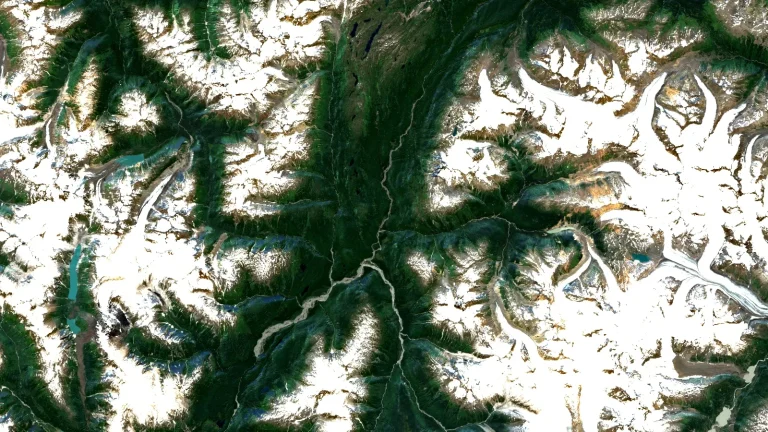
A licence owner or buyer can screen ground before sending a crew. Satellites cannot see gold, but they map the rock around it: rusty iron stains, clay minerals and fault lines left by hot water. Farmonaut builds that screen from satellite images for a boundary you send, in 5 to 20 business days, as exploration targets and not as a resource estimate. To get a price for your own area, use the mining quote form, read about satellite-based mineral detection, or contact Farmonaut.
▶ Shows how satellites map the rock around gold, such as iron stains, clay and faults. · 4:25
Frequently asked questions
Which companies operate mines in the Yukon right now?
Hecla operates the Keno Hill silver mine, which produced 3.02 million ounces of silver in 2025 per its website. The Eagle gold mine is closed and in receivership. Placer operators, mostly small private firms near Dawson City, also produce gold each summer.
What is the largest gold project in the Yukon?
It depends on the measure. Banyan reports the most classified ounces among the gold explorers in this list (8.62 million Indicated plus Inferred), Snowline’s Valley has the most complete economic study with 6.8 million payable ounces, and Casino holds the most gold overall, but as a by-product of copper.
Is the Eagle gold mine open?
No. It closed after the June 2024 heap leach failure. The receiver signed an exclusivity agreement with Boroo Ltd on 23 April 2026 and, on 3 July 2026, extended it by a further 90 days. No court-approved sale had been reported by 28 July 2026.
Which Yukon company was renamed?
Fuerte Metals, owner of the Coffee gold project, became Talamore Mining Corp. in 2026. Searches for the old name will still find older reports.
What is a PEA and why does it matter?
A preliminary economic assessment is an early study that estimates capital cost, operating cost and cash flow. It may include Inferred ounces, so it is not proof that a mine will be built. Banks usually wait for a feasibility study.
How much do Yukon placer miners pay in royalties?
The royalty is 37.5 cents per ounce, unchanged since 1906, and it applies only to gold that leaves the territory. CBC reported the government collected just over C$33,300 in 2025.
Who regulates a new Yukon mine?
Large projects go through YESAB for assessment, then need licences under the Quartz Mining Act and water licensing. First Nations have a say through agreements and their own regulatory processes.
Can a foreigner stake a claim in the Yukon?
The Quartz Mining Act sets no Canadian citizenship or Yukon residency test, though a person must be over 18 and a company must be registered with Yukon Corporate Affairs, per a Lexpert summary. Confirm the current rules with the Yukon Mining Recorder.
What does the word Inferred mean on a company page?
Inferred is the least certain resource class. The ounces are estimated from limited drilling and cannot be used in an economic study to prove a mine. More drilling can move them up to Indicated or leave them as they are.
How can I check a Yukon property before buying or drilling?
Start with the claim record, the company’s technical report and the regulator’s registry. A satellite screen of the boundary adds a cheap first look at alteration and access before field costs begin.
Are these companies safe investments?
This page does not rate investments. Mining shares can fall sharply, and exploration companies often raise money by issuing new shares. Read the filings and take advice that fits your own situation.
This page is for information only. It is not investment advice and not legal advice. Company figures are the companies’ own and change with each release; confirm current claim and licence rules with the Yukon government.
Farmonaut mining
Get a quote to screen your licence area from space
Send a KML, KMZ or polygon and Farmonaut screens the ground from satellite images before a crew goes in.

Mining Pro sample view, synthetic data
Keep reading
Sources
- Hecla Mining, Keno Hill, Yukon Territory: hecla.com
- Canadian Press via BNN Bloomberg, Singapore-based company chosen as potential buyer for Yukon mine (28 April 2026): bnnbloomberg.ca
- Western Copper and Gold, Casino Project: westerncopperandgold.com
- USGS, Porphyry Copper Assessment of British Columbia and Yukon Territory (SIR 2010-5090-C): pubs.usgs.gov
- Snowline Gold, company website: snowlinegold.com
- Talamore Mining, Coffee Gold Project overview: fuertemetals.com
- White Gold Corp, company website: whitegoldcorp.ca
- Banyan Gold, company website: banyangold.com
- Sitka Gold, company website: sitkagoldcorp.com
- Sitka Gold, RC Gold Project NI 43-101 Technical Report (10 July 2026): wp-sitkagold-2024.s3.ca-central-1.amazonaws.com
- Klondike Gold Corp, company website: klondikegoldcorp.com
- Fireweed Metals, Mactung Project: fireweedmetals.com
- CBC News, Gold prices drive Yukon placer mining production to new heights (9 September 2025): cbc.ca
- CBC News, As gold prices soar, some Yukon miners call territory’s low royalty rate ‘a bit ridiculous’ (10 February 2026): cbc.ca
- CBC News, Responsible mining needed, says Yukon First Nation, as Eagle Gold Mine goes up for sale (July 2025): cbc.ca
- Lexpert, What is Yukon’s Quartz Mining Act? (April 2024): lexpert.ca
- Natural Resources Canada, Mineral Exploration and Deposit Appraisal (March 2025): prod-natural-resources.azure.cloud.nrcan-rncan.gc.ca
- Natural Resources Canada, Annual Statistics of Mineral Production: mmsd.nrcan-rncan.gc.ca
- Farmonaut, Mineral Exploration Spending in Canada, by the Numbers (summary of NRCan data): farmonaut.com
- BNN Bloomberg, Potential buyer of Yukon mine at site of disaster given another 90 days (28 July 2026): bnnbloomberg.ca
Discussion
Questions, corrections or field experience? Share them below. First-time comments are reviewed before they appear, and your email is never published.
No comments yet. Be the first to add a question or your experience.

 Ramani Investments Ltd
 Congo Mining Solutions
 Mining SARL
 SenGold Invest SAS
 Sania Corporation
 Sean Mining Limited
 NTS Group (Pty) Ltd
 Mine4Africa
 Lithspo Minerals Limited
 Tintina Mining Group
 Dalgety Minerals Pty Ltd
 Vortex Minerals Pty Ltd
 Faith At Work (Pty) Ltd
 Geotech Mining Solutions plc
 Vulcan International Limited
 Kidepo Associates
 GKY Mining
 Alkimy SARL
 Double A Trading
 GemSprout Metals Limited











