

Gold mining tools · Buyer guide
Gold Mining Tools: 10 Types by Stage and Safety Rules
The ten gold mining tools that matter, in project order: pan, detector, sample kit, drone, satellite, sluice, drill, haul truck, concentrator and safety gear, with dated prices and the safety rule for each.
Key takeaways
- Gold has a specific gravity of 19.3 against 2.8 to 4.0 for host rock, so pans, sluices and centrifugal concentrators separate it by weight (ALS Global, laboratory guidance).
- A 2 May 2025 US supplier list priced a 14-inch steel pan at US$14, a hand sluice at US$169.96 and a 3-inch dredge at US$4,599; prices change and many places restrict dredging.
- US metal and nonmetal mine fatalities fell from 103 in 1980 to 25 in 2025, with 18 in 2024 and 31 in 2023 (MSHA).
- Artisanal and small-scale gold mining is the largest source of human-caused mercury emissions at 37.7% (US EPA citing UNEP, 2018); gravity tools recover gold without mercury.
- In a peer-reviewed quarry test a drone survey took 35 minutes against 97 for a tape survey, with 2.6% volume error against 1.3% (Frontiers in Built Environment, 2022).
In this article
- Gold mining tools at a glance
- How we chose these ten tools
- The 10 gold mining tools, stage by stage
- What a small placer kit costs
- US mine safety record: what the data show
- Mercury and silica: two hazards a tool should not add
- Drone surveys against ground surveys
- Autonomous haulage: where it is proven
- What to check before you buy or rent a tool
- Frequently asked questions
The ten gold mining tools that matter, in the order a project uses them, are the gold pan, metal detector, rock hammer and sample kit, drone and GPS survey kit, satellite imagery, sluice box, drill rig, excavator and haul truck, gravity concentrator, and protective and monitoring gear. This guide ranks nothing by brand. It orders the tools by stage of work, says what each one is for, what it costs where a dated price exists, and which safety rule goes with it.
Gold is heavy. Its specific gravity is 19.3 against 2.8 to 4.0 for common host rock, which is why most of the tools below are built to separate by weight rather than by chemistry (ALS Global, gravity gold recovery). Specific gravity is simply density compared with water. Because gold is so dense, a pan, a sluice or a spinning bowl can catch it while lighter sand washes away.
Gold mining tools at a glance
The table lists each tool with its job, a dated price where one exists, and the main hazard to plan for. Prices come from one US supplier price list dated 2 May 2025 and are examples, not quotes. Industrial machines are sold by quotation, so no price is shown.
| Tool | Stage | Best for | Example price | Main hazard and control |
|---|---|---|---|---|
| 1. Gold pan and classifier | Sampling | Testing a creek or soil sample | US$14 (14 in steel pan); US$24.95 (sieve) | Wet footing, cold water; work in pairs |
| 2. Metal detector | Search | Surface nuggets in mineralised ground | Varies by model | Digging holes; fill them in, get permission |
| 3. Rock hammer and sample kit | Sampling | Collecting rock for assay | Low | Flying chips; eye protection |
| 4. Drone and GPS survey kit | Mapping | Topography, stockpile volumes, claim lines | Consumer drone from about US$1,500 | Flight rules, battery time of about 20 minutes |
| 5. Satellite imagery | Targeting | Screening a whole licence before field work | Quote-based | Gives targets, not a resource estimate |
| 6. Sluice box and power sluice | Placer recovery | Washing gravel at a stream or bench | US$169.96 (hand sluice); US$2,975 (powered) | Engine fumes, water permits, heavy lifting |
| 7. Drill rig | Testing | Proving grade at depth | Quote-based | Rotating parts; guards and exclusion zones |
| 8. Excavator and haul truck | Extraction | Moving ore and waste | Quote-based | Vehicle collisions; autonomy and spotters |
| 9. Gravity concentrator and shaking table | Processing | Catching fine gold from crushed ore | Quote-based | Dust and slurry; no mercury needed |
| 10. Protective and monitoring gear | All stages | Dust, noise, gas and head protection | Varies by site | Used every shift, not occasionally |
How we chose these ten tools
We started from the stages every gold project passes through: find a target, sample it, prove it, move rock, recover metal, and stay safe while doing it. We kept one tool or tool family per job. We left out tools that are only needed in rare cases, and we left out brands, because model lines change every year.
Three rules applied to every claim. First, a performance figure is shown only if a government agency, a university paper, a laboratory or a company filing gives it, with its date. Second, safety statements follow public rules from MSHA (the US Mine Safety and Health Administration) and OSHA (the US Occupational Safety and Health Administration). Third, we leave out percentage gains that only a vendor brochure claims.
The readers we have in mind are licence holders, small-scale operators, consultants and investors who need to know what equipment a project will rent or buy, and what it should cost in safety effort.
The 10 gold mining tools, stage by stage
1. Gold pan and classifier sieve
A pan is the oldest sampling tool and still the first test of whether a stream carries gold. The US Environmental Protection Agency describes panning as a low-cost way to concentrate gold that takes time and skill, works best on coarse, well-liberated gold, and handles only small volumes (US EPA). A classifier sieve, which sorts gravel by size, is used first so the pan sees only similar-sized material. In a 2 May 2025 price list, a 14-inch ribbed steel pan was US$14 and a classifier sieve US$24.95 (Keene Engineering).
Best for: first sampling of creeks and soil. Pros: very low cost, nothing to break. Cons: slow, and it misses fine gold. Safety: cold water, slippery banks and sun; ask the land owner or agency before sampling.
2. Metal detector
A detector finds metal near the surface, so it suits nuggets and old workings, not buried ore. Models sold for gold are tuned to small targets and to mineralised ground, which confuses cheaper units. As one example, Garrett’s AT Gold manual describes a motion all-metal detector with manual and automatic ground balance for highly mineralised ground and waterproofing to 10 feet (3 metres) (Garrett AT Gold manual). Ground balance means the detector learns to ignore the iron minerals in the soil.
Best for: patches of shallow nuggets on open ground. Pros: light, fast, can be used by one person. Cons: depth is limited, and every signal still needs digging. Safety: fill the holes, keep off other people’s claims and check the rules for the land first.
3. Rock hammer and sample kit
A hammer, chisel, hand lens, bags and a marker are all a geologist needs to take a rock sample for assay. The value lies in the notes: a sample bag with no position and no description cannot be used later. Pair the kit with a GPS unit or phone app so every sample has coordinates.
Best for: outcrop sampling and trench lines. Pros: cheap and precise. Cons: slow over large areas. Safety: OSHA states that safety goggles and gloves must be worn with hand tools, and that damaged tools should be removed from use (OSHA 3080, Hand and Power Tools).
4. Drone and GPS survey kit
A drone with photogrammetry software turns overlapping photos into a map and a volume. In a peer-reviewed test on a quarry stockpile in Malawi, the drone took 35 minutes against 97 minutes for a tape survey, and its volume error was 2.6% against 1.3% for the tape, both inside the plus or minus 3% limit the authors cite (Frontiers in Built Environment, 2022). The same paper reports that a consumer-grade drone can cost as little as US$1,500 while a differential GPS costs more than US$10,000, that battery life is about 20 minutes, and that the saving grows with the size of the area.
Best for: topographic maps, stockpile volumes, access routes. Pros: keeps people off steep or unstable ground. Cons: weather and battery limits; it maps the surface only. Safety: follow local flight rules and keep the aircraft away from people and machines.
5. Satellite imagery for target screening
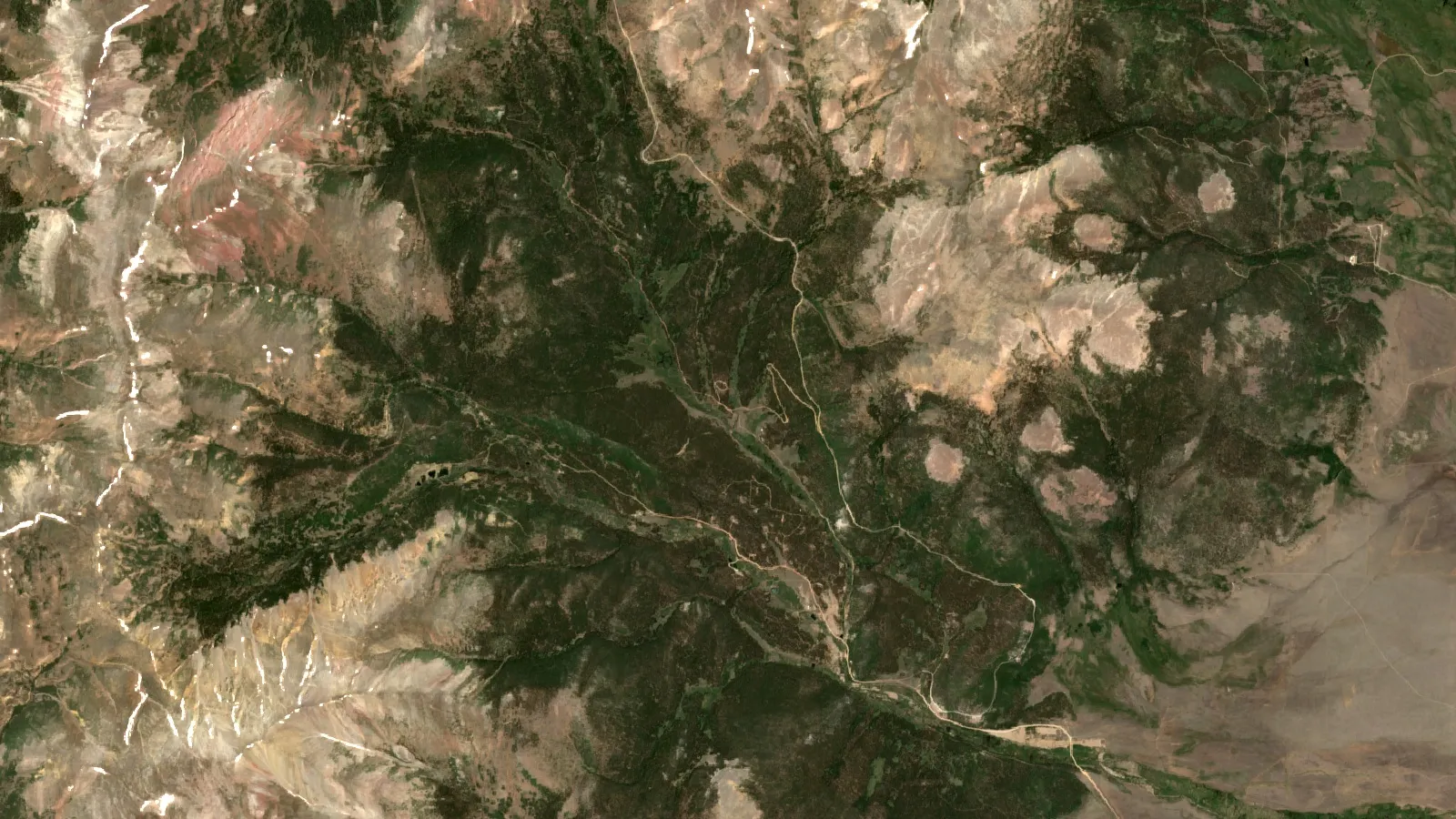
Satellites cannot see gold. They map the rock around it: iron-stained surfaces, clay minerals and fault lines that often sit near gold systems. That makes imagery the cheapest way to choose where to put the pan, hammer or drill. Farmonaut produces satellite-based mineral-detection reports from a KML, KMZ or polygon of a licence area in 5 to 20 business days; the output is a set of exploration targets that sits ahead of any resource estimate. For a worked example, see our Zambia gold anomaly case study and the satellite mineral detection service page.
Best for: deciding where field work goes before a team is sent. Pros: covers a whole licence, and no one walks onto the ground to collect it. Cons: targets still need ground checks. Safety: the screen is not an environmental or social clearance.
6. Sluice box and power sluice
A sluice is an inclined channel with riffles or matting that traps heavy particles as water carries gravel through. The US EPA gives a typical incline of 5 to 15 degrees and notes that most gold is caught near the top; sluices handle large volumes quickly but give a concentrate that usually needs panning (US EPA). In the May 2025 supplier list, a high-production hand sluice was US$169.96 and a 6.5 hp petrol-powered sluice US$2,975, and 3-inch dredges started at US$4,295 and reached US$4,599 with the larger engine.
Best for: stream and bench gravels. Pros: high throughput for the price. Cons: fine gold escapes; water and permit rules apply, and dredging is restricted in many places. Safety: petrol engines need ventilation and fuel handling care; OSHA adds that power tools need guards and should be disconnected before servicing.
7. Drill rig, including remote-operated rigs
Drilling proves what imagery and sampling only suggest. Diamond and reverse-circulation rigs are the standard exploration tools. Their main hazard is rotating parts, which is why guards and exclusion zones matter. Remote or automated control moves the operator out of the danger zone.
Best for: proving grade and thickness at depth. Pros: the only direct test of the rock. Cons: costly per metre, and results arrive after weeks of assay. Safety: OSHA requires guards on exposed belts, gears, shafts and rotating parts.
8. Excavator and autonomous haul truck
Hydraulic excavators and haul trucks move most of the rock in an open pit. Autonomy is proven at scale in mining and has now reached gold: in April 2026 Komatsu commissioned its 1,000th autonomous ultra-class truck, a 930E-5AT with a 290-tonne payload at Barrick’s Nevada Gold Mines, and said its customers had moved over 11.5 billion tonnes of material, across all commodities, with the system (International Mining, April 2026). In an iron-ore example reported in November 2019, Caterpillar and Fortescue reported 1 billion tonnes hauled, 33.5 million km without a safety incident and a 30% productivity gain (Canadian Mining Journal via Mining.com, November 2019).
Best for: pits moving tens of thousands of tonnes a day. Pros: fewer people near moving trucks. Cons: large capital cost and a need for a mapped, managed site. Safety: haul roads, blind spots and pedestrian routes still need separate control.
9. Gravity concentrator and shaking table
A centrifugal concentrator spins a bowl so heavy gold packs against the wall while lighter material is flushed out; a shaking table does the same job on a sloping, vibrating deck. In industrial plants, gravity units sit in the grinding circuit and treat the cyclone underflow or the mill discharge. ALS notes that a Knelson KC-MD3 bowl holds 60 to 100 g of concentrate, and that an industrial bowl captures 1 to 20 kg of concentrate (not pure gold) from hundreds or thousands of tonnes processed, a mass yield of fractions of one percent of the feed (ALS Global). The US EPA lists spiral and vortex concentrators, magnets and flotation as further methods that recover gold without mercury.
Best for: coarse and medium gold in crushed ore. Pros: no reagents needed for the first stage. Cons: misses very fine or locked gold, which needs leaching. Safety: dust and slurry control; do not substitute mercury, see the hazard section below.
10. Protective and monitoring gear
This is a group, not a single tool: hard hat, eye and hearing protection, respirator, dust monitor and a gas detector where air can change underground. Sensor-equipped helmets and wearables add alarms for gas, falls and fatigue. They support, but do not replace, the basic rules. OSHA’s hand and power tool guide calls for eye or face protection with grinding wheels, hearing protection around noisy tools, and suitable respirators or ventilation in closed areas.
Best for: every shift at every stage. Pros: cheap against the cost of an injury. Cons: only works when worn and maintained. Safety: see the silica rule below.
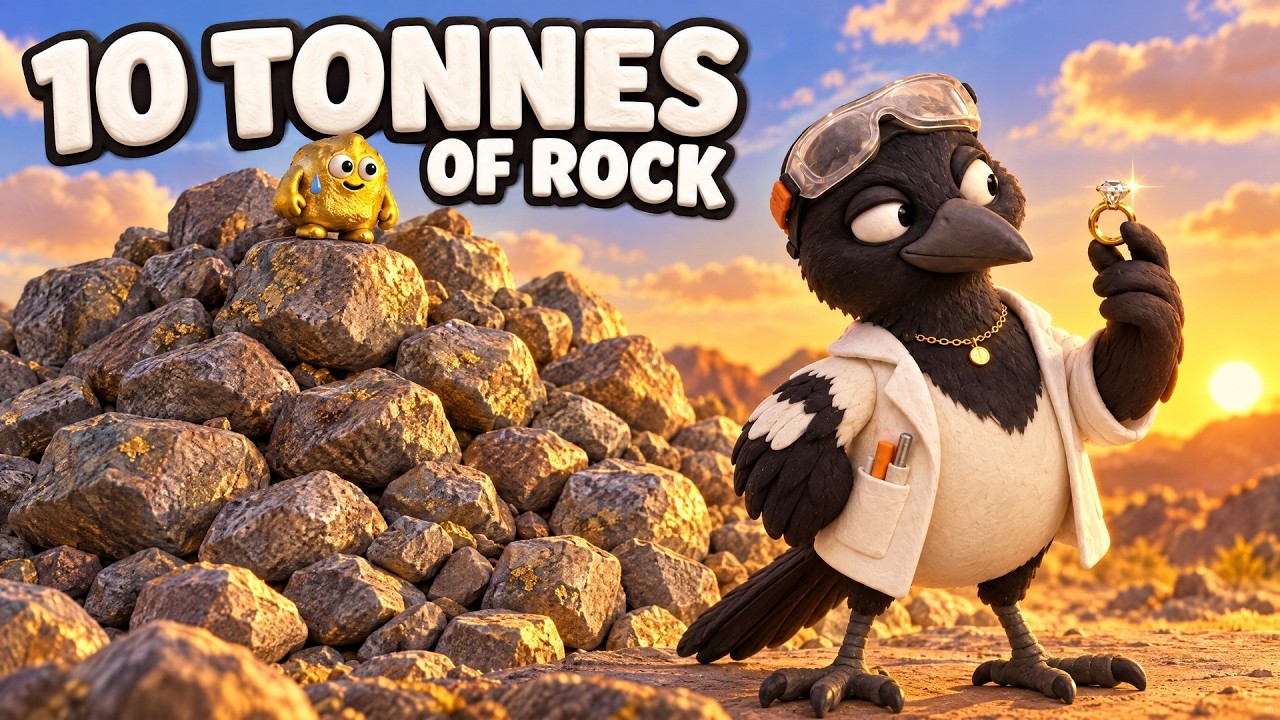
▶ Follows a small clay nugget from rock to ring: found, drilled, crushed, dissolved, caught on carbon, melted and refined. · 5:27
What a small placer kit costs
For a small placer start-up the cost is dominated by one machine. In the May 2025 US supplier price list, the kit steps up from US$14 for a pan to US$170 for a hand sluice, US$2,695 for a 2-inch backpack dredge and US$4,599 for a 3-inch dredge on a petrol engine. The chart shows these four. Add permits, fuel, safety gear and your own time, and compare the total against what the ground can yield in the calculator below. Checking the claim records and getting permission from the landowner come before any digging; our guides to gold mining permits in Oregon, South Dakota and British Columbia show how different the rules are from place to place.
Chart
Small-scale placer equipment, example prices
US dollars, one US supplier list dated 2 May 2025
Calculator
How many days to pay back a small gold recovery kit?
Enter your own tonnes, grade, recovery, price and daily cost.
- Gold recovered per day (grams): 1.44
- Gross value per day: $193
- Net value per day after running cost: $43
Example values only, not a benchmark or a forecast. Gold price is an input: use today’s price; the default is near the Kitco spot of about US$4,158 per ounce on 15 October 2026. The default kit cost is the US$4,599 3-inch dredge in the Keene Engineering list of 2 May 2025. One troy ounce is 31.1035 g. The result ignores permits, tax, royalties and your own time; a very large number means net daily value is near zero or negative. Amounts are US dollars.
US mine safety record: what the data show
The best public safety record for US mines is MSHA’s table of metal and nonmetal fatalities. It covers all metal and nonmetal operations, including sand and gravel, so it is not a gold-only series. Fatalities fell from 103 in 1980 to 47 in 2000, 24 in 2010 and 25 in 2025, while the workforce stayed between roughly 210,000 and 300,000 (MSHA, metal/nonmetal fatalities). Per 100,000 miners that is about 34 in 1980 and 9 in 2025 (our arithmetic from the same table). The series is lumpy: 2023 had 31 deaths and 2024 had 18.
Chart
US metal and nonmetal mine fatalities
Deaths per year, all metal and nonmetal mines including sand and gravel
The table does not say which tool did the work. Better guards, training, ground support, haulage controls and regulation all moved together, and no single tool can be credited with a percentage.
Mercury and silica: two hazards a tool should not add
Globally, artisanal and small-scale gold mining is the largest source of human-caused mercury emissions at 37.7%, ahead of coal burning at 21%, non-ferrous metal production at 15% and cement at 11% (US EPA, citing the UN Environment Programme’s 2018 Global Mercury Assessment). The World Health Organization calls mercury use in this sector particularly hazardous and urges non-mercury gold extraction (WHO, mercury and health). The gravity tools in this guide are the answer: sluices, tables, spirals and centrifuges recover gold without it.
Chart
Largest sources of human-caused mercury emissions
Share of global anthropogenic emissions, percent
Silica dust is the other hazard. MSHA’s 2024 silica rule for metal and nonmetal mines sets a limit of 50 micrograms per cubic metre over 8 hours and an action level of 25; enforcement was stayed in a notice published on 6 April 2026 while the rule awaits judicial review, and the numeric limits were expected to remain (SGS, April 2026). Dust capture at crushers and drills is a tool decision, not an afterthought.
Drone surveys against ground surveys
The drone case is stronger on time than on accuracy. In the tape-versus-drone test above the tape was twice as accurate. An earlier study summarised in the same paper compared crews and drones on three jobs: a volume calculation took 11 hours by cross-section against 5 by drone, terrestrial LiDAR topography 10 against 7 hours, and cross-section topography 16 against 8 hours. Savings depend on area, so a small claim may gain little.
Chart
Survey time, traditional method against drone
Hours per job

▶ Explains what satellites map when they cannot see gold: rusty iron stains, clay minerals and long straight cracks. · 4:25
Autonomous haulage: where it is proven
Komatsu says about 52% of its autonomous trucks are the 930E, with 24% each for the 830E and 980E, which gives roughly 520, 240 and 240 trucks of the 1,000 commissioned (International Mining). Autonomy is a large-pit tool. In the United States, USGS reports that the top 25 operations produced about 94% of mined gold in 2025, and Nevada alone about 64% (USGS, Mineral Commodity Summaries 2026). That concentration explains why heavy automation sits in a few big pits while the pan and sluice still serve the many small ones.
What to check before you buy or rent a tool
- Is the tool legal on this ground? Dredging, motorised sluicing and detecting need permits or are banned in many areas.
- Does it match the gold? Coarse gold suits a pan and sluice. Fine or locked gold needs a concentrator and sometimes leaching, so run a sample test first.
- Where is the dust and water going? Plan capture and recycling before you start.
- Is there a guard, a stop switch and a maintenance routine? Remove damaged tools from service.
- Is anyone trained? Training matters as much as the machine.
- What does the pay-back look like at your grade and at a lower gold price? Use the calculator.
Frequently asked questions
What tools do you need to start gold prospecting?
A pan, a classifier sieve, a hand sluice, a rock hammer, a GPS or phone for coordinates, and protective gear. A May 2025 US price list shows the pan and sieve under US$40 together and a hand sluice at US$169.96. Permission and any licence come before the first sample.
What is the best tool for finding gold?
There is no single best tool. Satellite imagery and a geologist’s map choose the place, a pan or detector confirms colours at the surface, and drilling proves depth. Use them in that order.
Which tool recovers the most fine gold?
Centrifugal concentrators and shaking tables are the usual step after a sluice, and ALS notes that gravity-recoverable gold is measured with a laboratory test on 50 to 100 kg of your own ore. Very fine or locked gold still needs leaching.
Is mercury needed to recover gold?
No. The US EPA lists panning, sluicing, shaking tables, spirals, vortex units, centrifuges, magnets, flotation and direct smelting as methods used without mercury, and the WHO urges non-mercury extraction.
How much does a gold dredge cost?
In a 2 May 2025 supplier list, a 2-inch backpack dredge was US$2,695 and 3-inch units started at US$4,295, or US$4,599 with the larger engine. Prices change, and many places restrict or ban dredging, so check the rules first.
Do drones help gold exploration?
They help with maps and volumes. A quarry test cut the survey from 97 to 35 minutes. They map the surface, so they do not replace sampling or drilling.
Are autonomous trucks used in gold mines?
Yes. Komatsu commissioned its 1,000th autonomous ultra-class truck in April 2026 at Nevada Gold Mines.
How many people die in US metal and nonmetal mining?
MSHA records 25 fatalities in 2025 and 18 in 2024, down from 103 in 1980. The series covers all metal and nonmetal mines.
What safety rule matters most for small-scale operators?
Wear eye protection and gloves, keep guards on every moving part, and disconnect a tool before servicing. These are OSHA’s basic hand and power tool rules; US mine sites fall under MSHA, so check its standards too. Add dust control and never use mercury.
Can satellites replace field tools?
No. Imagery narrows where to sample. It has to be checked on the ground, and any result is an exploration target, not a reserve.
This page is for information only. It is not investment advice or legal advice. Confirm licence, claim, dredging and permit rules with the regulator. Get the landowner’s permission before sampling, wear protective gear, and never use mercury to recover gold.
Farmonaut mining
Map your mining site from space
Send a licence boundary as KML, KMZ or a polygon and ask for a quote on satellite-derived exploration targets, ahead of any resource estimate.

Mining Pro sample view, synthetic data
Keep reading
Sources
- MSHA, Metal/Nonmetal Fatalities 1900-2025: msha.gov
- US EPA, Artisanal and Small-Scale Gold Mining Without Mercury: epa.gov
- US EPA, Mercury Emissions: The Global Context: epa.gov
- WHO, Mercury and health (fact sheet): who.int
- ALS Global, Gravity gold recovery: alsglobal.com
- Frontiers in Built Environment (2022), drone vs traditional stockpile volumes: frontiersin.org
- OSHA 3080, Hand and Power Tools: osha.gov
- International Mining, Komatsu commissions 1,000 autonomous ultra-class trucks (April 2026): im-mining.com
- Canadian Mining Journal via Mining.com, Caterpillar moves a billion tonnes autonomously at Fortescue (November 2019): mining.com
- SGS, MSHA delay of the silica rule for metal and nonmetal mines (April 2026): env.sgs.com
- USGS, Mineral Commodity Summaries 2026: Gold: pubs.usgs.gov
- Keene Engineering, Master Price List (2 May 2025): keeneeng.com
- Garrett, AT Gold metal detector manual: garrett.com
Discussion
Questions, corrections or field experience? Share them below. First-time comments are reviewed before they appear, and your email is never published.
No comments yet. Be the first to add a question or your experience.

 Ileys General Trading
 SG Gold Mining LLC
 VRV Global Pte Ltd
 Omsri International FZE
 G.I.T.T.
 Jaunita Erss Ltd
 Almosi SARL
 SRK Consulting
 Berks Gold Limited
 Mwerezi Minerals Company Limited
 Mining SARL
 SenGold Invest SAS
 Sean Mining Limited
 NTS Group (Pty) Ltd
 Mine4Africa
 Lithspo Minerals Limited
 Tintina Mining Group

 Licence holder · Nigeria · Gold + lithium










