

Rare earths · Company comparison
Rare Earth Companies in Canada: 9 Compared by Stage
Canada has no rare earth mine in production (USGS, 2026), but nine companies run plants or hold projects at study and drilling stages. See them side by side, with dated facts, price charts and a calculator.
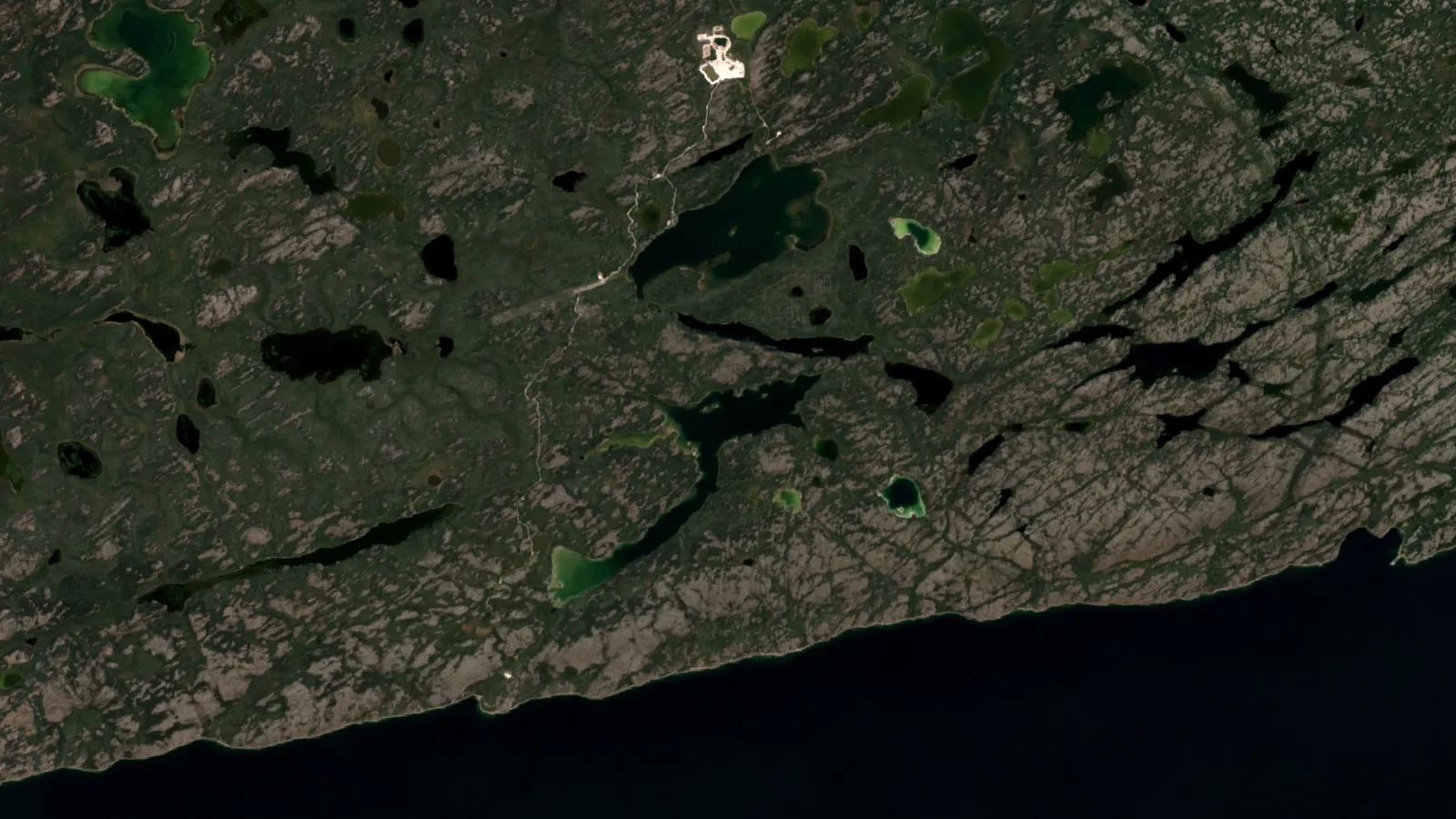
Key takeaways
- Canada is not yet a commercial rare earth producer; reserves and resources were 15.2 million tonnes of oxide in 2024 (NRCan), and the USGS lists no Canadian mine output for 2024 or 2025.
- North America supplied 0.8% of refined rare earths in 2024 and China 90.2% (NRCan), which is why processing plants lead the Canadian story.
- SRC in Saskatoon made NdPr metal at commercial scale in 2024; REalloys said on 13 August 2026 it had funded an upgrade targeting 525 tonnes a year.
- Wicheeda’s 2025 pre-feasibility study shows a US$37.42 per kg cash cost and US$67.60 break-even; ex-China NdPr oxide was US$95 per kg on 21 August 2026 (Benchmark).
- Torngat’s CEO said in January 2026 that Strange Lake production looks like 2029-30, not 2028, because permits are expected in early 2027.
In this article
- Rare earth companies in Canada at a glance
- How we chose and ordered these companies
- Is Canada producing rare earths yet?
- The nine companies, one by one
- Rare earth prices and what they mean for each project
- Calculator: what would a mixed carbonate plant earn?
- What slows Canadian rare earth projects
- How satellite screening fits rare earth exploration
- What to check before you back or partner with a rare earth company
- Frequently asked questions
Canada has no rare earth mine in commercial production. Natural Resources Canada (NRCan) says the country is “not yet a commercial producer” but holds reserves and resources of 15.2 million tonnes of rare earth oxide, and the USGS lists no Canadian mine output for 2024 or 2025 (USGS, Mineral Commodity Summaries 2026). What exists instead is a set of companies at very different stages: one working processing plant, a magnet maker with a Canadian head office, several projects with feasibility-level studies, and explorers still drilling.
This page compares nine of those companies by project stage, with dated facts from their own filings and from Canadian government sources. It also shows why prices matter to each project and gives a calculator for the revenue of a mixed rare earth carbonate plant. It is written for consultants, analysts and licence holders who need to know who is real, how far along they are, and what to check next. It is a fact sheet, not advice to buy or sell any share.
Rare earth companies in Canada at a glance
The table runs roughly from most to least advanced, using the stage each company reports for itself and the stage NRCan assigns to the project. Stage matters more than market value: a plant that makes metal today carries different risks from a deposit that still needs a permit.
| Company | Listing | What it does | Location | Stage (source date) |
|---|---|---|---|---|
| Saskatchewan Research Council (SRC) | Not listed | Processes oxides into NdPr metal; partner REalloys (Nasdaq: ALOY) | Saskatoon, Saskatchewan | Metal made at commercial scale; upgrade planned (Aug 2026) |
| Neo Performance Materials | TSX: NEO | Separation, magnetic powders and magnets | Head office Toronto; plants in Estonia and elsewhere | Operating; heavy rare earth line commissioned (Aug 2026 report) |
| Torngat Metals | Private | Strange Lake mine and separation plant plan | Nunavik, Quebec, and Labrador | Feasibility; impact assessment in progress (Feb 2026) |
| Defense Metals | TSXV: DEFN | Wicheeda open pit and carbonate plant plan | Near Prince George, British Columbia | Pre-feasibility study done; feasibility next (Mar 2026) |
| Avalon Advanced Materials | TSX: AVL | Nechalacho Basal Zone | Northwest Territories | Updating a 2013 feasibility study (May 2026) |
| Vital Metals | ASX: VML | Nechalacho Tardiff deposit and North T stockpiles | Northwest Territories | Pre-feasibility study due early 2027 (Jul 2026) |
| Search Minerals | TSXV: SMY | Foxtrot and Deep Fox deposits | Southeast Labrador | Preliminary economic assessment; demonstration plant planned (May 2026) |
| Geomega Resources | TSXV: GMA | Magnet recycling demonstration plant | Quebec | Commissioning expected November (Sep 2026) |
| Appia Rare Earths & Uranium | CSE: API | Alces Lake exploration | Northern Saskatchewan | Drilling done, assays pending (Aug 2026) |
All of these are facts as reported by the companies or agencies named in each section. Company statements about future capacity, dates and economics are targets, not results.
How we chose and ordered these companies
We included a company when it met three tests: it has a rare earth project or plant in Canada (or, for Neo, a Canadian head office with Canadian operations), it published a technical or corporate update in 2026 that we opened, and it has reached at least the drilling stage or runs a plant. We ordered the list by stage, using the project stage that NRCan assigns on its map of Canadian rare earth projects and the company’s own latest study.
The list is not a ranking by quality or value, and it does not cover every claim holder. NRCan’s project map also names other Quebec, Ontario, Saskatchewan and Alberta projects, several of them suspended or on hold, plus a scandium demonstration plant at Sorel-Tracy in Quebec. Rare earth elements, as NRCan defines them, are the 15 lanthanides plus scandium and yttrium. Light rare earths (such as lanthanum, cerium, praseodymium and neodymium) are more plentiful; heavy rare earths (such as dysprosium and terbium) are scarcer and are mostly produced in China and Burma, according to NRCan.
Is Canada producing rare earths yet?
Not from a mine. NRCan lists Canada’s reserves and resources at 15.2 million tonnes of rare earth oxide in 2024, and the USGS puts Canada’s reserves at 830,000 tonnes with no mine production in 2024 or 2025 (estimate). For scale, China mined an estimated 270,000 tonnes in 2025 and the world total was 390,000 tonnes (USGS, 2026). The same USGS table shows the United States at 51,000 tonnes and Australia at 29,000 tonnes.
Chart
Where refined rare earths came from, 2024
Share of world refined supply, %
Chart
Rare earth mine production by country, 2025 estimate
Tonnes of rare earth oxide content; selected countries
The refining side is just as lopsided. NRCan reports that China supplied 90.2% of refined rare earths in 2024, Europe 1.5% and North America 0.8%. That gap explains why Canadian governments have funded processing as well as mining, and why the first Canadian output is likely to come from plants that take in other people’s oxides, as SRC does, before it comes from a new mine.
The nine companies, one by one
Each entry gives what the company does, the latest dated facts, who it suits as a subject of study, and what to watch. “Best for” describes the kind of reader or research task, not a view on the share price.
1. Saskatchewan Research Council (SRC): the only Canadian plant making metal
SRC’s Rare Earth Processing Facility in Saskatoon produced rare earth metals at commercial scale in summer 2024, according to SRC as reported by the Canadian Mining Journal. SRC said the facility could make 10 tonnes of neodymium-praseodymium (NdPr) metal a month at more than 99.5% purity, and that it had signed tolling agreements (processing for a fee) with international clients. Since 2020 the plant has received C$71 million from the Government of Saskatchewan and C$30 million from the Government of Canada.
The next step is led by a US company. On 13 August 2026 REalloys (Nasdaq: ALOY) said it had fully funded an upgrade of the SRC facility, targeting about 525 tonnes a year of NdPr metal, 30 tonnes of dysprosium oxide and 15 tonnes of terbium oxide. REalloys says it holds supply rights to about 80% of the expanded output, expects the upgrade to start in the third quarter of 2026 and expects commercial intake in the third quarter of 2027.
- Best for: anyone tracking where Canadian metal will come from first.
- Strengths: a built plant, public funding and a named buyer for most of the planned output.
- Watch: the 525-tonne figure is a REalloys target, not SRC output, and the plant depends on bought-in feed rather than Canadian ore.
2. Neo Performance Materials: a Toronto company with its plants in Europe
Neo (TSX: NEO) has its head office in Toronto and facilities in several countries, including Peterborough, Canada, and a separation campus at Sillamäe, Estonia, according to its management discussion for the second quarter of 2026. In April 2026 it commissioned a small-scale heavy rare earth solvent-extraction line at Sillamäe. Its new sintered magnet plant at Narva, Estonia, was designed for 2,000 tonnes of magnets a year, scalable to 5,000, at a cost of US$75 million, backed by an EU grant of up to €18.7 million and a US$50 million credit facility from Export Development Canada (company release, 28 April 2025). The company’s second-quarter 2026 filing says the plant is making qualification sample magnets and is on track for two to three customer programmes to enter commercial production in 2026, with a Phase 1B expansion planned to lift capacity to about 5,000 tonnes.
- Best for: comparing an operating processor and magnet maker with the Canadian developers below.
- Strengths: plants that already run and public grant and credit support for the Narva magnet plant.
- Watch: the rare earth output is not made from Canadian ore, and its own filing notes that access to heavy rare earths outside China is a risk for the Narva plant.
3. Torngat Metals: a large heavy rare earth plan at Strange Lake
Torngat is a privately held, Montreal-based developer of the Strange Lake project in Nunavik, Quebec. Export Development Canada describes it as expected to be one of the largest heavy rare earth deposits outside China, with about 450 jobs once running. In June 2025 EDC provided a C$110 million bridge loan and the Canada Infrastructure Bank offered a C$55 million loan, for C$165 million in total, to fund engineering, environmental studies, permitting applications and road and airstrip work (Mining.com, 17 June 2025).
The plan has three parts: a mine and concentrator, a road of about 180 kilometres to Voisey’s Bay in Labrador, and a C$800 million separation plant at Sept-Îles, Quebec, rated at 15,000 tonnes a year. In January 2026 the chief executive said permits would likely arrive in early 2027 and production looked more like 2029-30 than 2028. The federal Impact Assessment Agency of Canada lists the proposed open-pit mine at a production capacity of up to 36,000 tonnes a day over 30 years (mill input 17,000 tonnes a day), with the impact statement stage in progress.
- Best for: heavy rare earth supply questions (dysprosium and terbium).
- Strengths: scale, federal financing and a plan to separate oxides in Quebec.
- Watch: the CEO’s January 2026 statement moved production from 2028 to 2029-30, and the company is private.
4. Defense Metals: Wicheeda, with the clearest published economics
Defense Metals (TSXV: DEFN) owns 100% of the Wicheeda project, about 80 kilometres north-east of Prince George, British Columbia. Its pre-feasibility study of 18 February 2025 (all amounts in US dollars, as the study labels them) reports a pre-tax net present value of US$1.8 billion and an after-tax value of US$1.0 billion at an 8% discount rate, an initial capital cost of US$1.4 billion, 15 years of open-pit mining and a 5,000-tonne-a-day concentrator. It plans an average of 31,900 tonnes of total rare earth oxide a year in concentrate and about 5,200 tonnes in a mixed rare earth carbonate, with cash operating costs of US$37.42 per kilogram of NdPr oxide and a break-even NdPr oxide price of US$67.60.
A company update of 2 March 2026 says SGS Canada and the Saskatchewan Research Council are running pilot metallurgical tests, and that the province selected Wicheeda for services from the B.C. Critical Minerals Office. NRCan lists Wicheeda at the feasibility stage.
- Best for: modelling a full mine-to-carbonate case from published numbers.
- Strengths: a filed study, road and rail access, and a flotation concentrate that the study puts at 50% total rare earth oxide.
- Watch: the study assumes a 2030 NdPr price of US$132.70 per kilogram, well above the figures in the price chart below, and financing the US$1.4 billion capital cost is still ahead.
5. Avalon Advanced Materials: refreshing a 2013 feasibility study at Nechalacho
Avalon (TSX: AVL) holds the Nechalacho rare earth and zirconium project in the Northwest Territories. In its 19 May 2026 update the company said it had formed a dedicated subsidiary, Magmic Rare Earths Inc., named a project director, planned a Yellowknife office and started a preliminary economic assessment to refresh the project’s 2013 definitive feasibility study. NRCan shows the Nechalacho Basal Zone at the feasibility stage.
- Best for: following a project with an old, detailed study that is being brought up to date.
- Strengths: a deposit that carries both light and heavy rare earths, per the company.
- Watch: the 2013 costs and prices are out of date until the new assessment is published, so do not reuse the old economics.
6. Vital Metals: Tardiff, North T and the same district
Vital Metals (ASX: VML) is listed in Sydney and develops another part of the Nechalacho district. Its ASX announcement of 17 July 2026 describes three programmes: a Tardiff pre-feasibility study targeted for February 2027, district exploration, and a North T demonstration project using surface stockpiles. It describes its holding as claims plus mineral leases above 150 metres relative level, so its ground is a different part of the district from the Basal Zone.
The same announcement calls Nechalacho a 192.7-million-tonne rare earths and niobium project and puts the Tardiff project at US$445 million. NRCan lists the T-Zone and Tardiff Zone at the pre-feasibility stage.
- Best for: checking how a resource grows with drilling.
- Strengths: a defined resource, niobium credits and a near-term stockpile plan.
- Watch: the US$445 million figure comes from a scoping study, the earliest and least certain study level.
7. Search Minerals: a near-surface deposit beside a port
Search Minerals (TSXV: SMY) controls a 64-kilometre belt in southeast Labrador. Its 27 May 2026 release describes a programme of about 17 channels (350 metres) at the Foxtrot deposit, which lies 10 kilometres from the deep-water port of St. Lewis, plus 15 tonnes of bulk sample for a demonstration plant. The company says its patented Direct Extraction Process has been through two pilot plant campaigns, and that a preliminary economic assessment exists for Foxtrot and Deep Fox. NRCan shows the Foxtrot project at the preliminary economic assessment stage.
- Best for: a small, road-accessible project with a stated processing route.
- Strengths: short haul to a port and an existing road.
- Watch: the process is company-owned and has not run at commercial scale.
8. Geomega Resources: recycling magnets instead of mining ore
Geomega (TSXV: GMA) is building a demonstration plant that recovers rare earth oxides from end-of-life magnet scrap. Its 2 September 2026 update says process piping is more than 75% complete and commissioning is expected to begin in November, with talks under way on feed supply, oxide offtake, toll processing and licensing. NRCan separately lists a rare earth recycling demonstration plant at St-Bruno, Quebec, at the processing stage.
- Best for: comparing recycled supply with mined supply.
- Strengths: no mine to permit.
- Watch: feed is the limit, because magnet scrap has to be collected and priced, and no commercial contract was announced in that update.
9. Appia Rare Earths & Uranium: drilling at Alces Lake
Appia (CSE: API) owns 100% of the Alces Lake property, about 38,522 hectares in northern Saskatchewan. On 4 June 2026 it announced mobilisation for a drill programme of about 3,300 metres in nine holes, testing targets picked from a 2025 ground gravity survey and chosen for their similarity to the high-grade WRCB zone and the Magnet Ridge discovery. NRCan lists Alces Lake at the exploration stage.
- Best for: following an exploration story where geophysics guides the drill.
- Strengths: the company describes the property as hosting some of the highest-grade rare earth mineralisation found in Saskatchewan.
- Watch: no resource estimate is quoted in the releases we opened, so there is no study to compare yet. Appia reported on 6 August 2026 that it finished six holes (1,440.87 metres, fewer than the nine planned), saw monazite by eye in three of them, and had sent 274 core samples to SRC for assay; no grades had been published.
Rare earth prices and what they mean for each project
The price that matters most is neodymium-praseodymium (NdPr) oxide, the magnet metal. The USGS records an average of US$92 per kilogram in 2021, a peak of US$124 in 2022 and a fall to US$55 in 2024, with an estimate of US$69 for 2025 (USGS, 2026). On 21 August 2026 Benchmark Minerals reported NdPr oxide at US$95,000 a tonne (US$95 a kilogram) delivered to Europe and North America, down 7.3% over two weeks and below the US$110 per kilogram price floor in the US Department of Defense agreements with MP Materials and Lynas.
Chart
Wicheeda study: cost, break-even and assumed price
US$ per kilogram of NdPr oxide
Chart
NdPr oxide price, 2021 to August 2026
US$ per kilogram; USGS annual averages, then one Benchmark spot assessment
That matters because every Canadian economic study contains a price assumption. Wicheeda’s study uses US$132.70 per kilogram for 2030, so it needs prices to rise from the August level to match its base case, although its break-even is US$67.60. Check the price date and basis in each study before comparing net present values.
Calculator: what would a mixed carbonate plant earn?
The calculator below turns a carbonate output into NdPr oxide tonnes, revenue and margin. The defaults are round example numbers close to the scale of the Wicheeda study; the carbonate payable share is set at 75% as an example only; replace every value with your own.
Calculator
What could a mixed carbonate plant earn from NdPr?
Enter your own tonnes, share, price and cost. Results update as you type.
- Revenue per year (US$): $302,812,500
- Cash operating cost per year (US$): $170,000,000
- Operating margin per year (US$): $132,812,500
- Break-even NdPr price (US$ per kg): $53
Example values only, not benchmarks or forecasts. The NdPr price is an input: use today’s price. The Wicheeda study (Defense Metals, 2025) plans about 5,200 tonnes of rare earth oxide in carbonate a year with NdPr at 87.3% of it, for scale. The 75% payable share is an example, not a sourced term. Money is in US$ per kilogram of NdPr oxide.
What slows Canadian rare earth projects
Three things recur in the sources above. The first is permitting: the federal impact assessment for Strange Lake lists the impact statement stage as in progress, with its latest update dated 18 December 2025. The second is processing: a mine alone does not make a magnet metal, so Torngat, Defense Metals and Search Minerals each plan their own separation or pilot plants, and SRC converts oxides made elsewhere into metal. The third is trade policy. Neo’s second-quarter 2026 filing records that China announced export controls on specific heavy rare earth elements in April 2025, and heavy rare earths are the elements Canadian projects like Strange Lake are meant to supply.
The distances also matter. Strange Lake needs about 170 to 180 kilometres of new road to the Labrador coast (the agency and Mining.com differ slightly on length), while Foxtrot is near an existing highway and a port. Cost per tonne follows logistics as well as grade.
How satellite screening fits rare earth exploration
Satellites do not measure rare earth grade. What they can do is screen large areas for the features that tend to go with the host rocks, such as alteration, structure and rock-type contrasts, so that field crews and drill budgets go to fewer places. A result is an exploration target that sits ahead of a resource estimate and needs sampling to confirm. For a licence holder, that means ranking ground before a field season rather than replacing it.
Farmonaut’s satellite mineral detection service takes a KML, KMZ or polygon and returns a screened map of the area; rare earth elements are among the minerals it covers. You can read more on the satellite-based mineral detection page, ask for a quote through the mining query form, or contact the team. For wider reading on the share-market side, see our guide to Canadian rare earth stocks.
▶ Explains remote sensing for mining in three minutes: the instrument families that measure ground from a distance. · 2:01
What to check before you back or partner with a rare earth company
- What study level is behind the numbers? A scoping study or preliminary economic assessment is a first look; a pre-feasibility or feasibility study carries more engineering. Check which one the quoted value comes from.
- Is the resource measured, indicated or inferred? Inferred tonnes have the least confidence.
- Light or heavy? Neodymium and praseodymium are plentiful relative to demand; dysprosium and terbium are scarcer, and the price for each differs.
- Where is it separated? A concentrate is not a product. Look for a named separation route, a plant, or a toll agreement.
- What price does the study assume, and in which currency? Compare it with the dated chart above.
- Which permits are outstanding? For Strange Lake the federal impact assessment is still in progress.
- Who buys the output? A signed offtake is stronger than a letter of interest.
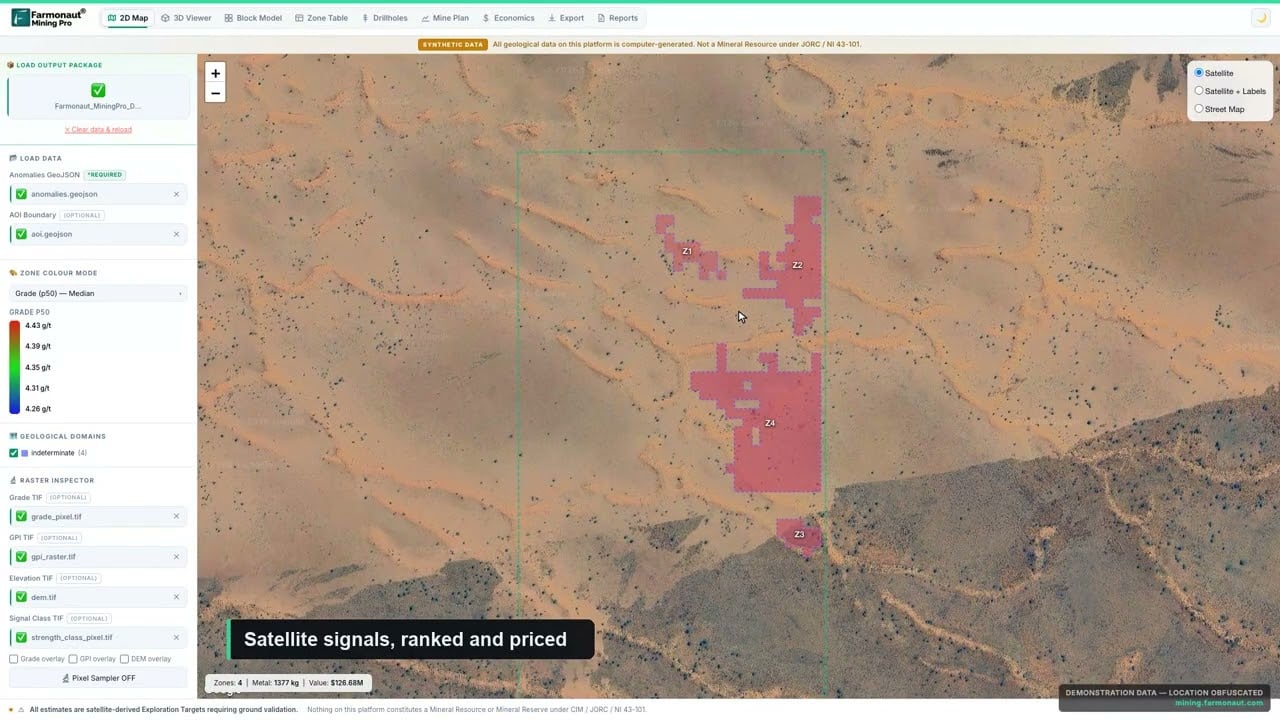
▶ A short look at Farmonaut Mining Pro, which turns a licence boundary into a geological and economic picture. · 4:56
If this topic matters to you, read Rare Earth Mining Investment: 8 Companies Compared next.
Frequently asked questions
Which rare earth companies in Canada are operating today?
Only processors and manufacturers. SRC makes NdPr metal in Saskatoon, and Neo makes rare earth materials and magnets, mostly outside Canada. No Canadian mine is in commercial production (NRCan, USGS 2026).
Does Canada have a rare earth mine?
No. NRCan says Canada is not yet a commercial producer, and the USGS shows no mine production in 2024 or 2025 (estimate).
How many rare earths does Canada have?
NRCan estimates reserves and resources at 15.2 million tonnes of rare earth oxide in 2024. The USGS gives a narrower reserve figure of 830,000 tonnes. The two use different definitions, so do not add them.
Where are the main Canadian rare earth projects?
The ones at feasibility or pre-feasibility stage on the NRCan map are Nechalacho in the Northwest Territories, Wicheeda in British Columbia, and Strange Lake and Crater Lake in Quebec. Foxtrot in Labrador is at the preliminary economic assessment stage.
Who is building rare earth processing in Canada?
SRC in Saskatoon is operating, with an upgrade planned with REalloys. Torngat plans a separation plant at Sept-Îles, and Defense Metals plans its own hydrometallurgical plant at Wicheeda. Geomega is building a magnet recycling demonstration plant, with commissioning expected to start in November 2026.
Which exchanges list these companies?
Neo and Avalon are on the TSX; Defense Metals, Search Minerals and Geomega on the TSX Venture; Appia on the CSE; Vital Metals on the ASX; and REalloys, which partners with SRC, on Nasdaq. Torngat and SRC are not listed. This page gives facts only and is not investment advice.
What is the difference between light and heavy rare earths?
Light rare earths include lanthanum, cerium, praseodymium and neodymium. Heavy rare earths include dysprosium and terbium. Heavy ones are scarcer and are made almost entirely in China and Burma, according to NRCan.
Why is NdPr the price to watch?
Neodymium and praseodymium go into the strongest permanent magnets. Magnets were 47.6% of global rare earth demand in 2024 (NRCan), and neodymium was the most-demanded single element at 36%.
Can satellites find rare earth deposits?
They can help rank ground for follow-up by showing alteration and structure, but they cannot measure rare earth grade. Sampling and drilling decide whether a target is real.
How long does it take to open a rare earth mine in Canada?
Torngat’s chief executive said in January 2026 that permits could come in early 2027 and production in 2029 or 2030 for Strange Lake, a year or more later than the earlier target.
This page is for information only. It is not investment advice. Company figures are the companies’ own statements on the dates given, and targets may change.
Farmonaut mining
Map your mining site from space
Send a KML, KMZ or polygon and Farmonaut screens the area from satellite images, so your field crews go to fewer places.
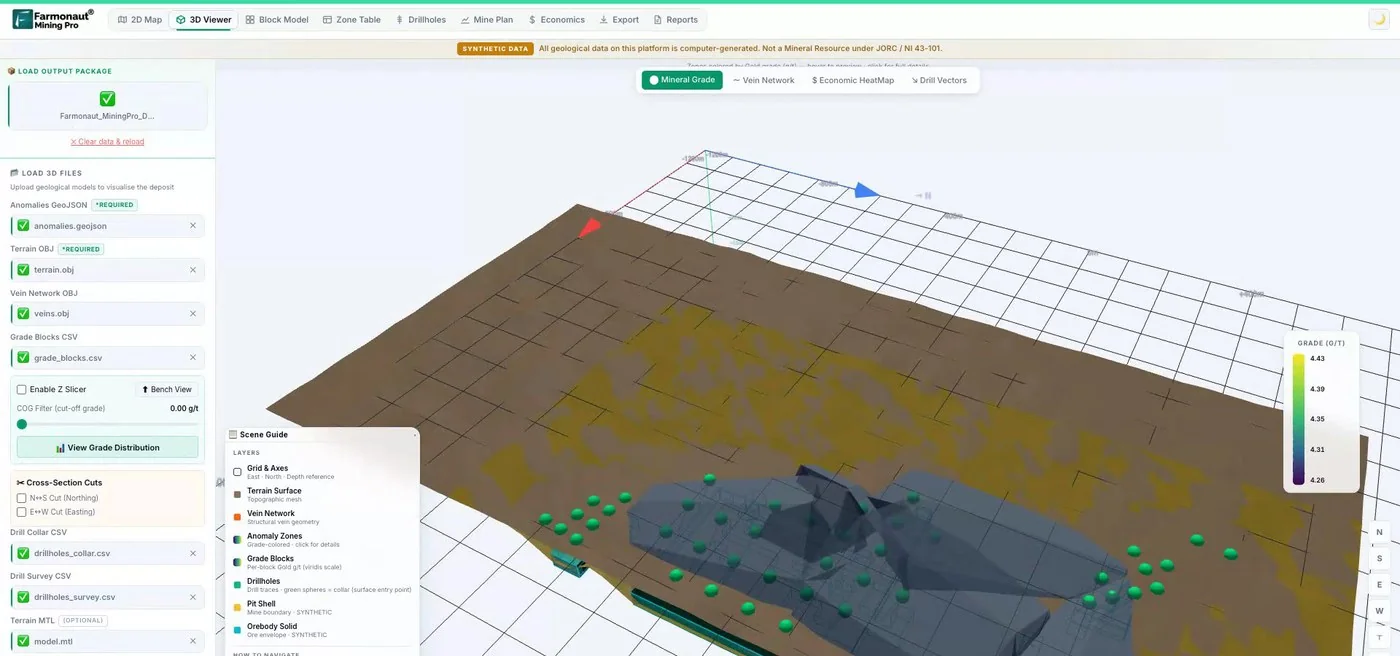
Mining Pro sample view, synthetic data
Keep reading
Sources
- USGS, Mineral Commodity Summaries 2026: Rare Earths (February 2026): pubs.usgs.gov
- Natural Resources Canada, Rare earth elements facts: natural-resources.canada.ca
- Canadian Mining Journal, Saskatchewan processing facility first to produce rare earth metals in North America (19 September 2024): canadianminingjournal.com
- REalloys, Second quarter 2026 results (13 August 2026): realloys.com
- Neo Performance Materials, Management discussion and analysis, second quarter 2026: neomaterials.com
- Neo Performance Materials, first magnet samples from new European facility (28 April 2025): neomaterials.com
- Export Development Canada, EDC financing for Torngat Metals (June 2025): edc.ca
- Mining.com, Torngat Metals secures funding for Strange Lake (17 June 2025): mining.com
- Mining.com, Torngat eyes Strange Lake feasibility study as timing slips (3 February 2026): mining.com
- Impact Assessment Agency of Canada, Strange Lake Rare Earth Mining Project: iaac-aeic.gc.ca
- Defense Metals, Wicheeda pre-feasibility study results (18 February 2025): defensemetals.com
- Defense Metals, Update on Wicheeda project development (2 March 2026): seekingalpha.com
- Avalon Advanced Materials, Year-to-date progress update on Nechalacho (19 May 2026): avalonadvancedmaterials.com
- Vital Metals, ASX announcement: appointment of non-executive director (17 July 2026): bulletin.webull.com
- Search Minerals, 2026 exploration program in Labrador (27 May 2026): newsfilecorp.com
- Geomega Resources, Corporate update (2 September 2026): newsfilecorp.com
- Appia Rare Earths and Uranium, Mobilizes for summer drill program (4 June 2026): newsfilecorp.com
- Benchmark Minerals, Ex-China NdPr prices slip below $110/kg price floor (21 August 2026): source.benchmarkminerals.com
Discussion
Questions, corrections or field experience? Share them below. First-time comments are reviewed before they appear, and your email is never published.
No comments yet. Be the first to add a question or your experience.

 Klusetic Mining Investments
 Mine4Africa
 Lithspo Minerals Limited
 Tintina Mining Group
 Dalgety Minerals Pty Ltd
 Vortex Minerals Pty Ltd
 Faith At Work (Pty) Ltd
 Geotech Mining Solutions plc
 Vulcan International Limited
 Kidepo Associates
 GKY Mining
 Alkimy SARL
 Double A Trading
 GemSprout Metals Limited
 Qader Group
 Ileys General Trading
 SG Gold Mining LLC
 VRV Global Pte Ltd
 Omsri International FZE
 G.I.T.T.
 Jaunita Erss Ltd
 Almosi SARL
 SRK Consulting
 Berks Gold Limited
 Mwerezi Minerals Company Limited










