

Lithium · Rare earth facts
Is Lithium a Rare Earth Element or Metal? 7 Key Facts
No. Lithium is an alkali metal in group 1 of the periodic table, while the rare earths are the 15 lanthanides plus scandium and yttrium. Both are US critical minerals, which is why they are often confused.
Key takeaways
- Lithium (atomic number 3) is a group 1 alkali metal, not one of the 17 rare earth elements (Royal Society of Chemistry).
- Crustal lithium is estimated at 20 to 70 ppm, similar to lanthanum (39 ppm) and neodymium (41.5 ppm).
- World lithium mine output was about 290,000 t of contained lithium in 2025; rare earth output was about 390,000 t of oxide (USGS, 2026).
- Batteries took an estimated 88% of global lithium use (USGS, 2026); magnets are the leading global use of rare earths.
- Lithium and each rare earth appear separately on the US Final 2025 List of Critical Minerals (Federal Register, 2025).
In this article
- Introduction
- 1. What is a Rare Earth Element?
- 2. Is Lithium a Rare Earth? The Scientific Classification
- 3. Contrasts in Extraction: Lithium vs Rare Earth Elements
- 4. Technological Roles – From Batteries to Precision Agriculture
- 5. Environmental Footprints and Resource Management
- 6. The Economic and Strategic Relevance
- Comparative Table: Lithium vs Major Rare Earth Elements
- Frequently Asked Questions
- Conclusion: Lithium's Place in Critical Minerals
- Introduction
- 1. What is a Rare Earth Element?
- 2. Is Lithium a Rare Earth? The Scientific Classification
- 3. Contrasts in Extraction: Lithium vs Rare Earth Elements
- 4. Technological Roles: Batteries vs Magnets
- 5. Environmental Footprints and Resource Management
- 6. The Economic and Strategic Relevance
- 7. Farmonaut’s Role in Modern Mineral Exploration
- Comparative Table: Lithium vs Major Rare Earth Elements
- Frequently Asked Questions
- Conclusion: Lithium’s Place in Critical Minerals
Introduction
Is lithium a rare earth element? This question is increasingly asked as lithium’s profile rises, powered by the global transition to renewable energy and technological innovation in batteries, electric vehicles, grid storage and electronics. This page explains how lithium’s nature, extraction, and applications sharply contrast with rare earth elements (REEs), while mapping their vital roles in energy storage, magnets and critical mineral policy.
Quick answer. No. Lithium (symbol Li, atomic number 3) is an alkali metal in group 1 of the periodic table (Royal Society of Chemistry). The rare earth elements are a set of 17 metals: the 15 lanthanides from lanthanum (57) to lutetium (71), plus scandium and yttrium (rare-earth element overview). So lithium is not a rare earth metal, not a rare earth element and not a rare earth mineral. Lithium ore comes from pegmatite minerals such as spodumene, from salt-lake brines and from clays; rare earths come mainly from bastnaesite, monazite and ionic clays (USGS Mineral Commodity Summaries, 2026).
The two groups are often mixed up because both sit on the US critical minerals list: the Final 2025 List of Critical Minerals names lithium and each rare earth separately, among 60 minerals (Federal Register, November 2025). Below you will find crustal abundance, mine output and price data side by side, and a calculator that turns a lithium grade into tonnes of lithium carbonate.
Why does this distinction matter? Many industries, including carmakers, utilities and mining companies, increasingly depend on both lithium and rare earth minerals for equipment, energy systems, and business resilience. Understanding the chemical, geological, processing, and technological differences guides smart choices in resource management, infrastructure development, and sustainability—all critical for future-ready operations.
Distinguishing lithium from rare earth elements (REEs) is essential for accurate decision-making in industrial and mining technology.
1. What is a Rare Earth Element?
Rare earth elements (REEs) are a group of 17 chemically similar metallic elements that include the 15 lanthanides (from lanthanum, atomic number 57, to lutetium, atomic number 71) plus scandium (Sc) and yttrium (Y). Despite their name, rare earth elements are not exceptionally rare in the Earth’s crust, but economic deposits are scarce and often challenging to extract and process.
- ♻ REEs comprise: Lanthanum (La), Cerium (Ce), Praseodymium (Pr), Neodymium (Nd), Promethium (Pm), Samarium (Sm), Europium (Eu), Gadolinium (Gd), Terbium (Tb), Dysprosium (Dy), Holmium (Ho), Erbium (Er), Thulium (Tm), Ytterbium (Yb), Lutetium (Lu), as well as Scandium and Yttrium.
- ⚠ Distinctive properties: REEs are renowned for their magnetic, luminescent, and catalytic behavior, enabling high-tech applications in clean energy, electronics, and defense.
Is lithium a rare earth? Is lithium rare earth? No. Lithium does not belong to this set and is chemically distinct, with unique industrial value—particularly for energy storage, batteries, and electric transport.
Many confuse lithium’s “critical mineral” status with “rare earth” status. In fact, lithium and REEs have very different roles, extraction methods, and chemical behaviors.
2. Is Lithium a Rare Earth? The Scientific Classification
Let’s directly answer: Is lithium a rare earth element?
Chart
Crustal abundance: lithium vs four rare earths
Parts per million in Earth’s crust (lithium shown at the low estimate)
- 🔬 Classification: Lithium belongs to the alkali metals group in the periodic table (Group 1, atomic number 3)—not to the lanthanides or rare earths.
- 🧪 Properties: It is the lightest metal, soft, with high electrochemical reactivity, and forms simple ionic compounds—contrasting the more complex bonding and electronic configurations of REEs.
- 🌎 Abundance: Estimates of lithium in Earth’s crust range from 20 to 70 ppm (parts per million), against about 66.5 ppm for cerium, the most common rare earth. Neither is truly scarce; the hard part is finding ore rich enough to mine.
Differences in Chemical Behavior and Geochemistry
- ⚡ Lithium’s ionic radius and electropositivity favor quick chemical reactions and make it ideal for fast-moving energy storage systems, such as batteries used in electric vehicles and farming equipment.
- 💎 Rare earth elements exhibit more subtle geochemical behavior, with similar sizes and trivalent states, requiring sophisticated processing to separate individual elements after extraction.
When evaluating mineral exploration opportunities, always verify the scientific classification—is it an alkali metal like lithium or a rare earth? This impacts everything from extraction processes to downstream industrial applications.
Is lithium rare?
Not in the crust. Published estimates put lithium at 20 to 70 ppm of Earth’s crust (lithium overview), which is in the same range as lanthanum (39 ppm) and neodymium (41.5 ppm) and far above dysprosium (5.2 ppm). Seawater holds an estimated 230 billion tonnes of lithium, at 0.14 to 0.25 ppm. What is scarce is ore: a deposit rich and large enough to mine at a profit. The USGS makes the same point for rare earths, which are more abundant than many familiar industrial metals but rarely concentrate into workable deposits (USGS Fact Sheet 087-02).
3. Contrasts in Extraction: Lithium vs Rare Earth Elements
The way lithium and rare earths are extracted, processed, and supplied is fundamentally different, shaped by their respective chemical properties, mineral associations, and industrial demand.
Chart
Lithium mine output by country, 2025 estimate
Metric tons of contained lithium
Lithium Extraction: Brine, Hard Rock, and More
- ☀ Brine operations (e.g., in the “Lithium Triangle” of Bolivia, Chile, Argentina): Extraction involves pumping lithium-rich brine from arid salars into surface ponds, evaporation to concentrate lithium salts, and final chemical processing into lithium carbonate or hydroxide for batteries.
- ⛏ Hard rock deposits (like Australian pegmatites): Require conventional mining, crushing, and flotation before chemical refining—sometimes preferred for higher purities needed in energy storage.
- 💧 Environmental challenges: Brine extraction is often scrutinized for water usage—especially in water-scarce regions—while hard rock lithium can generate tailings but has a smaller water footprint.
Rare Earth Extraction: Complex Ores, Complex Processing
- ⛰ Main source rocks: Carbonatite-related deposits (e.g., Bayan Obo, China), monazite sands, and ionic clays.
- 💡 Separation steps: After extraction and concentration, rare earth ores undergo complex solvent extraction, ion-exchange, and sometimes multi-stage chemical separations due to their similar chemistry.
- 🌍 Environmental considerations: Waste management and radioactive byproducts can be significant, leading to strict regulations for rare earth mining and processing.
The cost structure, water footprint, and technical hurdles for lithium operations versus rare earth mining are distinct. Supply chain decisions and ESG factors should be tailored accordingly.
Visual List: Lithium vs Rare Earth Extraction Highlights
-
🔵 Lithium Extraction
- Brine (salars): Pumping, evaporation, chemical conversion
- Hard rock: Mining, crushing, flotation, refining
- Water management crucial in arid basins
- Lower chemical complexity (extract to final product)
-
🟣 Rare Earth Extraction
- Complex ores (carbonatites, clays, monazite sands)
- Sequential separation (solvent, ion exchange tech)
- Significant waste and some radioactivity risks
- Often processed in multi-element extraction plants
Want to pinpoint prospective lithium and rare earth exploration zones without heavy upfront investment? Learn about satellite based mineral detection—Farmonaut’s AI-powered solution for rapid, non-invasive pre-field screening and cost reduction in mining and mineral resource management.
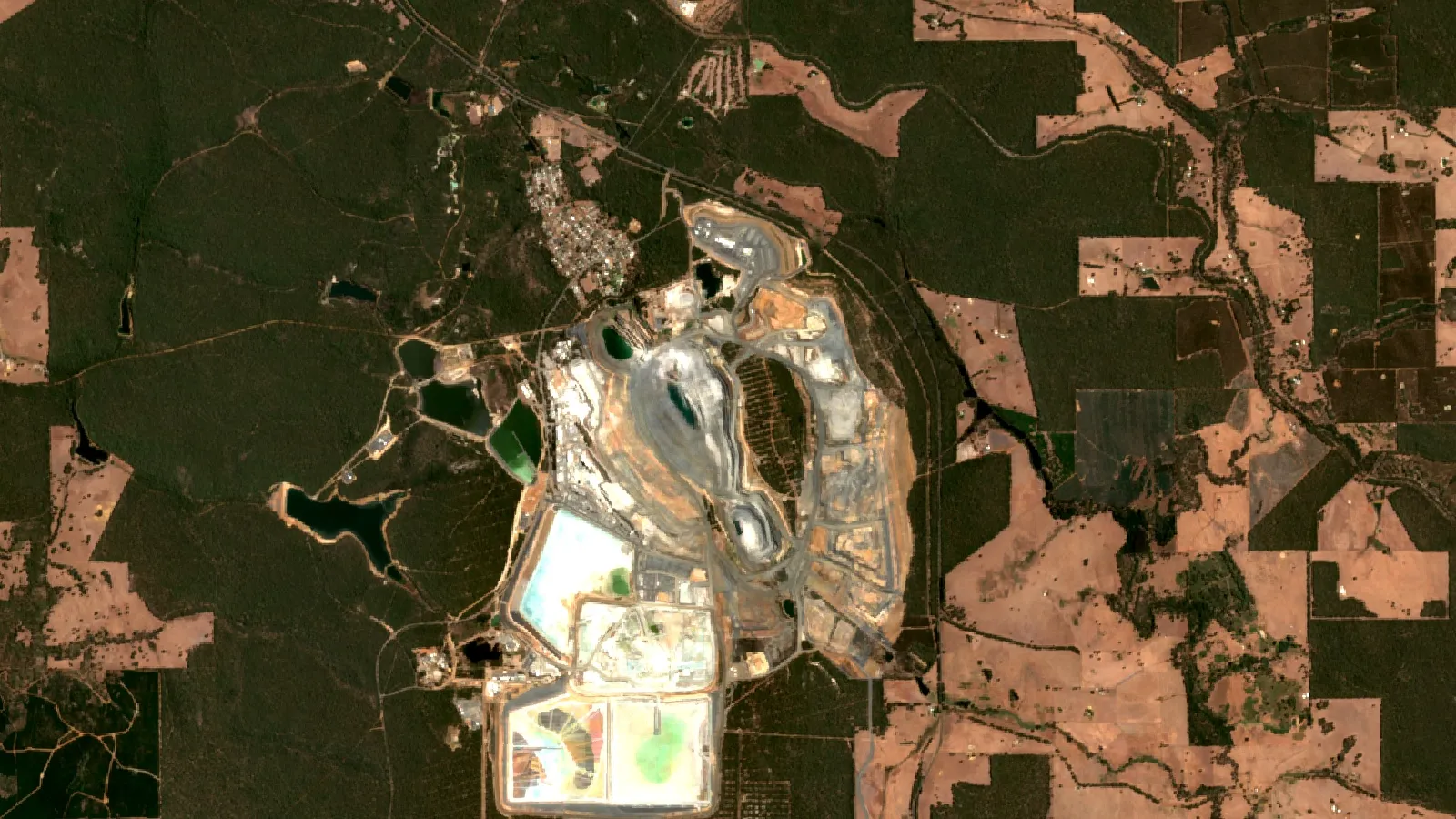
By country, Australia led lithium mine output in 2025 with an estimated 92,000 tons of contained lithium, mostly from spodumene pegmatites, followed by China (62,000 t) and Chile (56,000 t, from brine). World reserves are 37 million tons, with Chile (9.2 Mt) and Australia (8.4 Mt) the largest (USGS, 2026). For licence owners, satellite imagery such as Sentinel-2 can help map pegmatite outcrops and clay alteration before field sampling, but it does not replace assays.

▶ Farmonaut explainer: how satellite data is used to look for lithium-bearing pegmatites, in plain terms. · 10:49
4. Technological Roles – From Batteries to Precision Agriculture
Here lies the reason so many conflate is lithium a rare earth element—both have critical applications in modern technology. Yet, their industrial roles, particularly in energy storage, electronics and electric motors, are unique.
-
🔋 Lithium
- Modern batteries and energy storage (Li-ion, Li-polymer)
- Electric vehicles, including cars, buses and trucks
- Essential for off-grid solar systems at remote sites and homes
-
🧲 Rare Earths
- High-strength magnets for motors, wind turbines, and electronics
- Phosphors in LED lighting, screens, imaging systems
- Catalytic converters, pollution control, defense avionics
Where Lithium Demand Comes From
Lithium demand is led by batteries: USGS estimates global end uses at 88% batteries, 4% ceramics and glass, 2% lubricating greases and 6% other uses (USGS, 2026). The battery share grows as:
- ✔ Car and truck makers move to electric, battery-driven systems for sustainability and lower fuel use
- 📊 Mine sites, telecom towers and remote operations rely on off-grid power, remote data acquisition, and autonomous equipment
- 🟩 Grid and solar storage projects need battery energy storage
As vehicle and grid markets electrify, demand accelerates for lithium-based batteries.
How do mining operators screen ground before drilling? Check out satellite driven 3d mineral prospectivity mapping—strategic for risk reduction, operational cost control, and maximizing mineral deposit yields.
5. Environmental Footprints and Resource Management
Resource frameworks for lithium and REEs must address unique environmental, water, and operational challenges.
Lithium Environmental Footprint
- 💧 Water usage in brine extraction: Can affect local aquifers and ecosystems in arid regions
- 🔄 Recycling systems: Efforts ramp up for lithium battery recycling to reduce new mining impacts
- 📉 Reduced carbon footprint: Battery vehicles cut tailpipe emissions, although mining and refining carry their own footprint
Rare Earth Environmental Footprint
- ⚠ Complex waste: Processing creates chemical waste and sometimes radioactive byproducts
- 🧪 Tight regulations: Growing move towards cleaner REE processing for environmental compliance
Water management and ESG frameworks are especially vital in lithium brine basins and large-scale REE operations. Choosing the right location and extraction method preserves both economic and planetary health.
- ✔ Industrial resilience relies on sustainable supply chains — see Get a Mining Quote for modern, eco-conscious exploration services.
6. The Economic and Strategic Relevance
Both lithium and rare earth elements are classified as critical minerals by numerous countries, owing to their roles in energy, electronics and defense—but they underpin different links in global supply chains.
Chart
Battery-grade lithium carbonate price, 2021 to 2025
Annual average, US$ per metric ton
- 🚗 Lithium: Backbone of energy storage revolution—core for batteries in everything from electric vehicles to stationary solar and wind storage.
- 🎯 REEs: Make high-performance magnets and electronic components possible, critical for everything from wind turbines and smartphones to advanced defense systems.
- 🌍 Supply Chain Risk: Both face geopolitical and resource concentration risks, making diversification, recycling, and responsible mining-tech adoption key strategies.
Countries and industries are racing to secure sustainable supply and reliable mineral chains—favoring projects that apply advanced exploration intelligence and sustainable extraction practices.
🗺️ Ready to kickstart your next mineral discovery? Map Your Mining Site Here—get rapid mineral intelligence, reduce costs, and minimize environmental impact through satellite-based mineral prospectivity with Farmonaut.
Lithium vs rare earths in numbers
World rare earth mine output was an estimated 390,000 tons of rare earth oxide (REO) in 2025, of which China mined 270,000 tons; reserves exceed 75 million tons (USGS, 2026). Lithium output, counted as contained metal, was about 290,000 tons. The two numbers use different units, so compare trends rather than totals. US net import reliance was more than 50% for lithium and an estimated 67% for rare earth compounds and metals in 2025. Seven of the rare earths, terbium to lutetium, are classed as heavy rare earths by the USGS (USGS heavy rare earths, 2026).
Prices move fast. The USGS gives an average of US$9,000 per metric ton for battery-grade lithium carbonate in 2025, against US$63,700 in 2022. On 5 November 2026, Chinese lithium carbonate traded at about CNY 91,700 per tonne, down 26.6% in a month (Trading Economics, 5 November 2026). Australia, Canada and the US all list lithium and rare earths as critical minerals (Geoscience Australia).
Calculator
How much lithium carbonate is in a hard-rock deposit?
Enter ore tonnes and Li2O grade from a technical report, then your own recovery and price.
- Contained lithium metal (before recovery): 5,574 t
- Gross value in US$ at your price: $186,958,800
Example values only, not a benchmark. Conversion factors come from molar masses: 1 t Li2O = 2.473 t lithium carbonate equivalent (LCE) and 0.4645 t lithium metal. The default price is the USGS 2025 average for battery-grade lithium carbonate (US$9,000 per t, estimate); price is an input, use today’s price. Mining, processing and transport costs and royalties are not included.
Comparative Table: Lithium vs Major Rare Earth Elements
| Element Name | Classification | Abundance (ppm, Crust) |
Primary Extraction Regions | Major Applications | Notes |
|---|---|---|---|---|---|
| Lithium | Alkali Metal (Not Rare Earth) | 20–70 (estimates vary) | Chile, Argentina, Australia, China, Zimbabwe | Batteries, Energy Storage, Electric Vehicles, Glass/Ceramics | Group 1 alkali metal; world mine output about 290,000 t in 2025 (USGS) |
| Neodymium | Rare Earth | 41.5 | China, USA, Australia | Magnets, Electronics, Wind Turbines, Hybrid Vehicles | Main metal in NdFeB permanent magnets |
| Lanthanum | Rare Earth | 39 | China, United States, Australia | Batteries, Catalysts, Glass, Lighting | Light rare earth; used in refinery catalysts and NiMH batteries |
| Cerium | Rare Earth | 66.5 | China, United States, Australia | Catalysts, Glass Polishing, Electronics | Most abundant rare earth in the crust |
| Dysprosium | Rare Earth | 5.2 | China, Myanmar | Magnets, Lasers, Nuclear Reactors | Heavy rare earth; added to magnets for heat resistance |
- ✔ Lithium is an alkali metal, not a rare earth element.
- 🟢 Used predominantly in batteries, energy storage and electric vehicles, rather than magnets.
- ⚒ Lithium extraction (brine, hard rock) and REE mining (carbonatites, clays) differ in water use, environmental impact, and required processing.
- 🔄 Both are critical minerals for future-ready industries, but play distinct roles in different supply chain links.
- 📲 Farmonaut uses satellite analytics for non-invasive, rapid mineral prospectivity—reducing costs and environmental impact.
Frequently Asked Questions
Q1: Is lithium a rare earth?
No. Lithium is not a rare earth element. It is an alkali metal (group 1 of the periodic table), whereas rare earth elements are a distinct set of 17 metals (including the lanthanides, scandium, and yttrium).
Q2: Why do people confuse lithium with rare earth elements?
Lithium and rare earths are both critical to emerging technology (energy storage, batteries, electronics). This overlapping importance leads to confusion, but their chemistry, mining, and industrial roles differ markedly.
Q3: Where is lithium found, and how is it extracted?
Predominantly from brine deposits in arid basins (such as South America’s salars) via pumping and evaporation; increasingly from hard rock sources like Australian pegmatites through mining and refining.
Q4: Why is lithium a critical mineral if it is not a rare earth?
Lithium’s relevance is indirect—it powers batteries and equipment that underpin electric vehicles, grid storage and electronics, enabling energy efficiency and diesel reduction.
Q5: Can Farmonaut help in locating both lithium and rare earth deposits?
Yes. Our platform detects both lithium- and REE-mineralized zones using multispectral and hyperspectral satellite analysis, reducing risk, time, and environmental impact for early exploration projects.
5 Must-Know Facts for Mining Readers:
- ✔ Lithium belongs to alkali metals, not to rare earth elements.
- 🛰 Satellite-based tools help screen ground for early exploration before field work.
- 🌱 Lithium goes mostly into batteries: 88% of estimated global use (USGS, 2026).
- ⚠ Water management is a high-stake issue in lithium brine extraction—choose mining locations carefully.
- 📈 Securing supply chains for both lithium and REEs is mission-critical for future-facing industries and governments.
Are you ready to take your exploration to the next level? Contact Us for bespoke mineral intelligence, data-driven prospecting, or to discuss a mining project.
Get started with your project today: Get a Mining Quote
Is lithium a rare earth mineral?
No. The main lithium minerals are spodumene, lepidolite and petalite in pegmatites, plus lithium held in brines and clays. None of them is a rare earth mineral, although some pegmatites carry small amounts of rare earths.
Is lithium a REE?
No. REE is short for rare earth element. The list covers the lanthanides plus scandium and yttrium; lithium, atomic number 3, is not on it.
Do rare earths go into batteries?
Some do. Lanthanum is used in nickel-metal hydride batteries, which is one reason the two groups get confused (USGS). Lithium-ion batteries use lithium, not rare earths, in the cell chemistry.
▶ Farmonaut explainer: what an AI mining app does and what to ask before trusting its results. · 3:52
Conclusion: Lithium’s Place in Critical Minerals
To recap: lithium is not a rare earth element. It belongs to the alkali metals group, is the lightest metal, and is the key metal in lithium-ion batteries. In contrast, rare earth elements (REEs) are a set of 17 metals prized for magnetic, catalytic, and luminescent properties used in electronics and advanced equipment. While both lithium and REEs can sometimes coexist in certain mineral deposits, their extraction, chemistry, technological role, and market strategies differ markedly.
For mining companies, licence owners and investors, lithium’s value proposition lies in energy systems, machinery electrification, and sustainable operations—not in the magnet supply chain where rare earths dominate. Managing, deploying, and future-proofing your operations requires data-driven mineral intelligence for rapid, ESG-compliant development and supply chain resilience.
At Farmonaut, satellite data is used to screen licence areas for lithium and rare earth targets ahead of drilling.
This page is for information only. It is not investment advice. Prices and production figures are dated estimates and change often.
Farmonaut mining
Screen a lithium or rare earth licence from space
Request a quote to map pegmatite and alteration targets across your licence area with satellite data, ahead of field sampling.
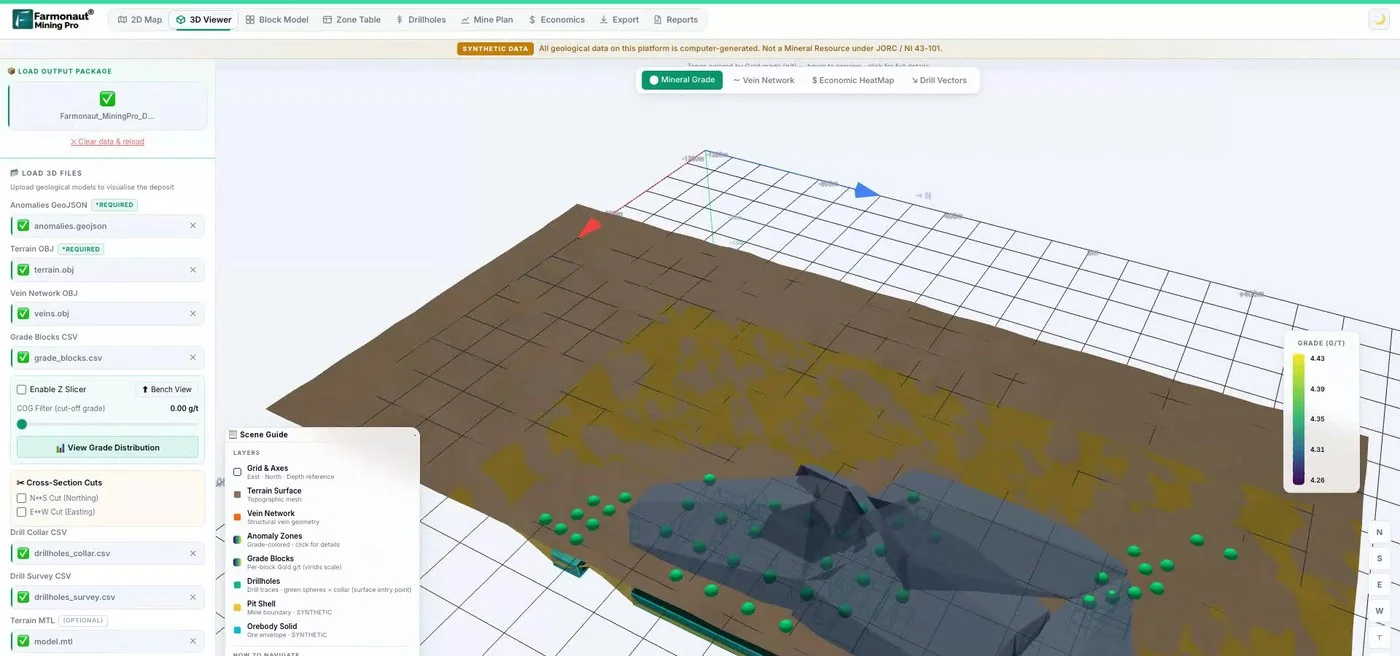
Mining Pro sample view, synthetic data
Keep reading
Sources
- USGS, Mineral Commodity Summaries 2026: Lithium: pubs.usgs.gov
- USGS, Mineral Commodity Summaries 2026: Rare Earths: pubs.usgs.gov
- USGS, Mineral Commodity Summaries 2026: Rare Earths (Heavy): pubs.usgs.gov
- USGS Fact Sheet 087-02, Rare Earth Elements: Critical Resources for High Technology: pubs.usgs.gov
- Federal Register, Final 2025 List of Critical Minerals: federalregister.gov
- Royal Society of Chemistry, Periodic Table: Lithium: periodic-table.rsc.org
- Wikipedia, Lithium (natural occurrence): en.wikipedia.org
- Wikipedia, Rare-earth element (list and crustal abundance): en.wikipedia.org
- Trading Economics, Lithium carbonate price (5 November 2026): tradingeconomics.com
- Geoscience Australia, Critical minerals: ga.gov.au
Discussion
Questions, corrections or field experience? Share them below. First-time comments are reviewed before they appear, and your email is never published.
No comments yet. Be the first to add a question or your experience.

 SenGold Invest SAS
 Sania Corporation
 Sean Mining Limited
 NTS Group (Pty) Ltd
 Mine4Africa
 Lithspo Minerals Limited
 Tintina Mining Group
 Dalgety Minerals Pty Ltd
 Vortex Minerals Pty Ltd
 Faith At Work (Pty) Ltd
 Geotech Mining Solutions plc
 Vulcan International Limited
 Kidepo Associates
 GKY Mining
 Alkimy SARL
 Double A Trading
 GemSprout Metals Limited
 Qader Group
 Ileys General Trading
 SG Gold Mining LLC
 VRV Global Pte Ltd
 Omsri International FZE
 G.I.T.T.
 Jaunita Erss Ltd

 Client · Tanzania · Gold
 Client & affiliate partner · Ghana · Gold










