
Mining finance · Contract guide
Mining Offtake Agreements: Terms, Pricing, Financing
A mining offtake agreement commits a buyer to take a set share of a mine’s output at a formula price, which is why lenders ask for one. See the contract types, the terms to check, how pricing works and real deals.
Key takeaways
- MP Materials announced a 10-year US$110 per kilogram NdPr price floor and a 10-year magnet offtake with the US Department of Defense on 10 July 2025 (MP Materials).
- Almonty’s Sangdong tungsten offtake, amended on 10 February 2020, runs 15 years with a minimum floor-price revenue of C$750 million, and met one of the final financing conditions.
- Kodal’s Bougouni spodumene offtake with Hainan Mining runs four years, is priced to a Shanghai Metals Market price, and pays 95% of shipment value on loading (Global Mining Review, 30 June 2025).
- The 2026 copper concentrate benchmark treatment charge was reportedly agreed at US$0 per tonne, against US$21.25 for 2025 (Benchmark Mineral Intelligence, December 2025).
- Offtake buyers commonly lend as well; the Canadian Mining Journal (2014) says the loan and offtake are packaged, often with first-ranking security over project assets.
In this article
- What an offtake agreement is, and what it is not
- Types of offtake agreement
- Key terms to check in the contract
- How offtake pricing works
- Treatment charges: why the same concentrate earns different money
- Offtake net revenue calculator
- Real offtake deals, and what each one shows
- How offtake agreements support mine financing
- Risks on each side of the contract
- What a licence owner needs before approaching offtake buyers
- Six steps to a financeable offtake
- Offtake, streaming and royalty compared
- Frequently asked questions
A mining offtake agreement is a contract in which a buyer commits to purchase a stated share of a mine’s future output, at a price set by a formula, for a fixed number of years. For a developer, its main job is to prove to lenders that the product has a buyer. In one large recent example, the US Department of Defense agreed in July 2025 to a 10-year price floor of US$110 per kilogram for MP Materials’ NdPr products and a 10-year magnet offtake, alongside equity and loans. This guide explains the contract types, the terms that matter, how pricing formulas work, and how offtake deals support project finance.
It is written for licence and claim owners, consultants and investors. It is general information, not legal or investment advice, and every real contract is different. Read the terms with a mining lawyer before you sign anything.
What an offtake agreement is, and what it is not
“Offtake” means taking product away from a mine. The seller is the mine owner or project company. The buyer, called the offtaker, may be a smelter, a refiner, a trader, a manufacturer or a government agency. The contract says what product is sold (for example copper concentrate, spodumene concentrate, gold doré or iron ore), how much, when and where it is delivered, how it is priced and when it is paid for.
Traditionally, offtake contracts were signed between operating miners and the refiners or smelters that wanted their output. Deals have increasingly been signed with development-stage companies and with the parties financing them, according to the Canadian Mining Journal’s 2014 overview of offtake financing. Because the contract only has value if the mine is built, the buyer often lends money at the same time.
It helps to separate offtake from three nearby deal types.
- Spot sale. One-off cargoes sold at the going price with no long-term commitment. Easy to arrange, but a lender cannot count on it.
- Stream. The buyer pays an upfront sum and later buys a share of a by-product metal, usually gold or silver, at a low fixed price. The Canadian Mining Journal (2014) notes that streams are used for precious metals, while offtake deals are typically used with base metals that have a more complex supply chain.
- Royalty. The holder receives a percentage of revenue or of net smelter return (NSR, the sales value after smelting and refining costs) and does not take physical product. See the guides on mining royalties and the NSR royalty definition.
An offtake does not transfer ownership of the mine and does not by itself pay the seller anything upfront. Any cash advance comes from a separate prepayment or loan, which is often signed in the same package.
Types of offtake agreement
Names vary between law firms and countries, so always read the operative clauses rather than the label. The table lists the common structures and the question each one answers.
| Structure | How it works | Who it favours |
|---|---|---|
| Take-or-pay | The buyer must take an agreed quantity, or pay for it even if it does not collect it. | Seller and lenders: revenue is more certain. |
| Take-and-pay | The buyer pays only for product actually delivered; no payment if no product ships. | Buyer: no payment for volume it never receives. |
| Life-of-mine or share-of-output | The buyer takes a percentage (up to 100%) of production for the life of the deposit or a set term. | Buyer: secures supply. Seller gives up marketing freedom. |
| Fixed term, fixed volume | A set tonnage each month or year for a stated number of years, often reviewed annually. | Both, if volumes match the plan. |
| Floor-price (and sometimes ceiling) | The formula price is used, but never below a minimum, and sometimes never above a maximum. | Seller when the floor covers costs and debt; buyer when there is a ceiling. |
| Offtake with prepayment or loan | The buyer advances money now and takes product later, usually with security over the project. | Developer needing early capital; buyer wanting supply and a return. |
| Government-backed offtake | A state agency or state-linked buyer commits to volumes or a price floor for strategic minerals. | Producers of materials a government wants to secure. |
Take-or-pay is the structure lenders like most. A financially strong buyer that accepts take-or-pay terms gives a lender the most comfort, but buyers often prefer flexibility, which is why many real contracts mix a volume commitment with annual reviews of quantity and price.
Key terms to check in the contract
Most disputes arise from a few clauses. The checklist below is a practical starting point for a licence owner or a consultant reviewing a term sheet.
| Term | What to look for |
|---|---|
| Parties and credit | Who exactly is the buyer, and can it pay? A parent guarantee or letter of credit matters if the buyer is a trading subsidiary. |
| Product and specification | Grade, moisture, and limits on penalty elements such as arsenic, fluorine or iron. These set both the price and the right to reject. |
| Volume and tolerance | Annual and monthly tonnage, a plus-or-minus tolerance, and what happens if the mine produces less than planned. |
| Term and extensions | Years covered, renewal options, and whether the buyer can extend alone. |
| Exclusivity | Whether the buyer takes 100% of output, a share, or has a right of first refusal on any other sale. |
| Price formula | The reference price, the averaging period, payable percentages, deductions, and any floor or ceiling. See the next section. |
| Delivery and risk | Where title and risk pass (at the mine gate, loading port or discharge port) and who pays freight and insurance. |
| Weighing, sampling and assay | Who samples, which laboratory settles disputes, and the umpire process if results differ. |
| Payment terms | Share paid at loading, share paid after final assay, and the security for payment. |
| Conditions precedent | What must happen before the contract starts, such as financing or a permit. |
| Force majeure and termination | Which events excuse performance, for how long, and when either side can walk away. |
| Change of control and assignment | Whether the contract binds a new owner if you sell the project, and whether the buyer can transfer its rights. |
The conditions precedent are often the weak point. When KGL Resources signed a binding copper-concentrate sale with Glencore for its Jervois project in Australia, the agreement was made conditional on finance being secured by 30 September 2025 or commercial production by 31 December 2025 (both dates have now passed; check the current status of the contract), as reported by Global Mining Review in March 2022. The same report lists the usual machinery of such a contract: assaying, weighing, sampling and moisture determination, plus force majeure clauses.
How offtake pricing works
Almost no offtake contract fixes a single price for years. Instead it sets a formula that links the sale price to a published benchmark and then applies adjustments. The formula usually has these building blocks.
- Reference price. An exchange or index price such as the London Metal Exchange (LME) cash settlement for copper, or a published market assessment for spodumene concentrate.
- Quotational period. The window over which the reference price is averaged. Sample clauses show wide variety: some use the month following delivery, others the third calendar month after the shipment arrives, per Law Insider’s collection of contract clauses. A longer window delays price exposure; a shorter one fixes it sooner.
- Payable percentage. The share of the contained metal the buyer pays for. A copper concentrate grading 25% copper does not earn 25 tonnes of copper value per 100 tonnes; the contract pays only for an agreed payable share of the metal. By-product credits for silver and gold usually carry their own minimum payable limits.
- Treatment and refining charges (TC/RCs). Fees the smelter keeps for turning concentrate into metal. Treatment charges are quoted in US dollars per tonne of concentrate and refining charges in US cents per pound of payable metal.
- Penalties and credits. Deductions for harmful elements above agreed limits and credits for by-product metals.
- Freight and handling. The Canadian Mining Journal lists truck, rail or slurry pipeline to port, port handling and ocean freight as separate cost steps that the contract must allocate.
- Provisional and final pricing. A shipment is usually invoiced on provisional weights, assays and prices, then settled when final results and the quotational period are known.
The KGL-Glencore deal shows how the pieces fit: the sale price is volume based and calculated by reference to the LME copper cash settlement price, with silver and gold credits subject to minimum payable limits, adjustments for penalties, treatment and refining charges, and a freight credit (Global Mining Review, March 2022).
Spodumene works differently because there is no exchange price. When Kodal Minerals announced its Bougouni offtake with Hainan Mining on 30 June 2025, the price was set to the Shanghai Metals Market published price with standard adjustments for grade variation, and the seller would receive 95% of the shipment value on loading at the export port, according to Global Mining Review. The agreement runs four years, covers 100% of the output of the first-stage plant, and includes an annual review of quantities and floor price.
Treatment charges: why the same concentrate earns different money
For base-metal concentrates, the treatment and refining charge is the term that moves most. The 2026 annual benchmark between a Chinese smelter and Antofagasta was reportedly agreed at US$0 per tonne and 0 cents per pound, against US$21.25 per tonne for 2025, according to Benchmark Mineral Intelligence (23 December 2025). The 2020 benchmark agreed between Freeport-McMoRan and Jiangxi Copper was US$62 per tonne (Fastmarkets, November 2019).
Chart
Copper concentrate treatment charge benchmark
Selected years, US$ per tonne of concentrate
Spot deals have gone further. Reuters reported on 16 October 2026 that Antofagasta sold 10,000 tonnes of Centinela concentrate for November shipment at a treatment charge of minus US$310 per tonne, meaning the smelter pays the miner, and that Teck sold Highland Valley material at minus US$370s, as carried by Kitco News. The report ties this to tight concentrate supply and to China’s smelting capacity, estimated at 13 to 14 million tonnes in the year, up more than 70% in a decade.
The lesson for a seller is that the same ore can fetch very different net revenue depending on when its TC/RC terms were fixed. A contract that locks a benchmark for several years shifts that risk to one side. A contract that resets annually passes it back and forth. Whichever you choose, model the net revenue at several TC/RC levels before signing.
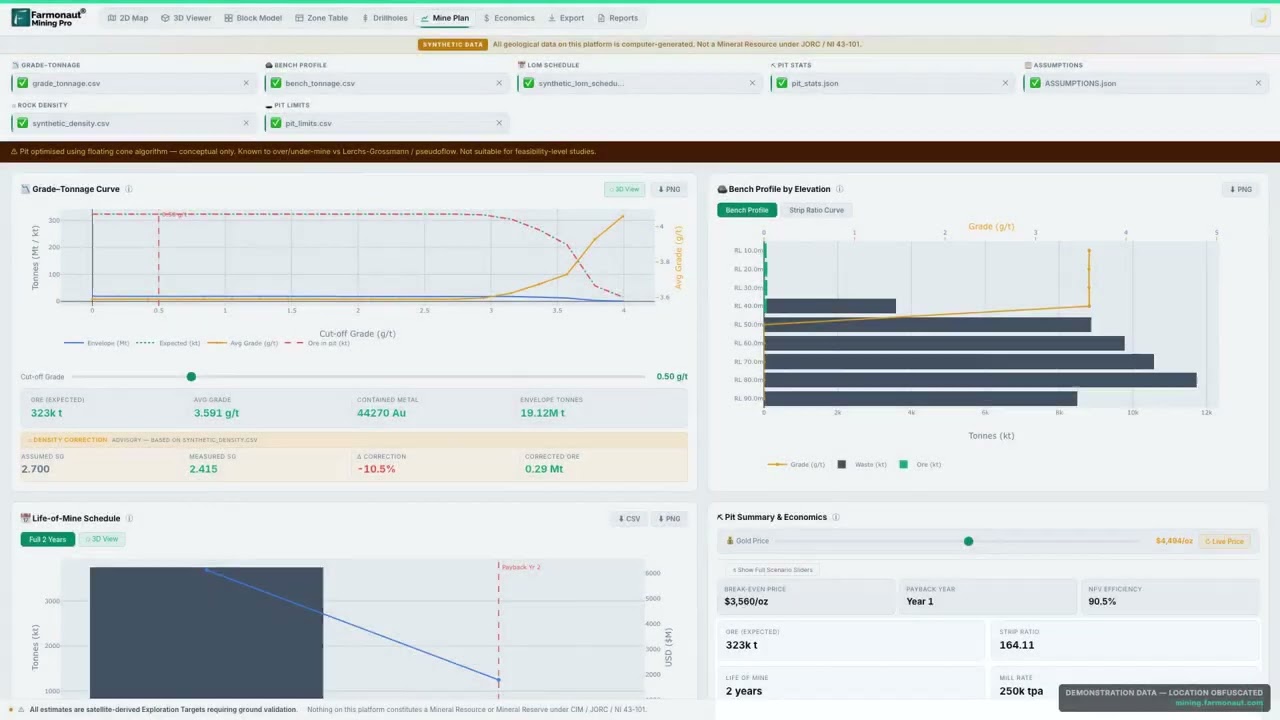
▶ Farmonaut course chapter on mine costs, break-even price and payback, the numbers a price floor has to cover. · 14:58
Offtake net revenue calculator
Use the calculator below to see how payable share, price floor, treatment charge, refining charge and freight combine for a concentrate shipment.
Calculator
What does a concentrate shipment earn under an offtake formula?
Enter your own shipment and contract terms.
- Payable metal (tonnes): 2,412.5
- Gross metal value: $24,125,000
- Treatment charges: $0
- Refining charges: $0
- Freight and handling: $600,000
Example values only, not a benchmark or a forecast. Metal price is an input: example, use today’s price. The 96.5% payable share, the treatment charge and the freight figure are examples; use your contract. Treatment charges are US$ per tonne of concentrate; refining charges are US cents per pound of payable metal; 2,204.62 pounds per tonne.
Real offtake deals, and what each one shows
Four published cases illustrate different structures. They are described from company announcements and press reports, and they do not imply Farmonaut was involved in any of them.
Chart
Almonty Sangdong: floor revenue before and after
Minimum floor-price revenue, C$ million
Chart
NdPr price against the US$110 floor
US$ per kilogram, August 2026 assessments
MP Materials and the US Department of Defense: price floor plus offtake
On 10 July 2025, MP Materials announced a package with the US Department of Defense that included a 10-year price floor of US$110 per kilogram for NdPr products, stockpiled or sold; an agreement that 100% of the magnets from a planned second magnet factory (the “10X Facility”) would be purchased by defense and commercial customers for 10 years after construction; US$400 million of convertible preferred stock; a US$150 million loan for heavy rare earth separation; and a commitment letter from JPMorgan Chase and Goldman Sachs for US$1.0 billion of construction financing (MP Materials press release, 10 July 2025). The release says the floor is meant to give stable cash flow with shared upside.
The company’s annual report (Form 10-K for 2025) gives the mechanics. Each quarter the government pays MP the shortfall between US$110 and a benchmark quarterly average price, per kilogram of NdPr stockpiled or sold. Once the 10X Facility reaches full production capacity and the benchmark is above US$110, MP pays the government 30% of the excess. The separate magnet offtake prices magnets at production cost plus a guaranteed EBITDA (earnings before interest, tax, depreciation and amortisation), and the filing says the government guaranteed at least US$140 million of EBITDA at the facility, subject to annual escalation (MP Materials Form 10-K, filed with the SEC). The company recorded US$51.0 million of price-protection income for 2025. The 10-K also uses the newer name Department of War for the same agency. For context, USGS estimates that China produced 270,000 of about 390,000 tonnes of world rare-earth-oxide mine output in 2025, while the United States produced 51,000 tonnes (USGS Mineral Commodity Summaries 2026).
A floor is a one-way protection for the seller that the buyer usually prices by taking some upside. Benchmark Mineral Intelligence reported on 21 August 2026 that NdPr oxide fell to US$95,000 per tonne CIF Europe and North America, below the US$110 per kilogram floor set for MP Materials and Lynas through their US Department of Defense agreements, while PrNd oxide in China was assessed at about US$107,500 per tonne (Benchmark Mineral Intelligence). A floor only helps if someone is obliged and able to pay the gap, which is why the buyer’s credit matters as much as the floor level.
Almonty and Sangdong: floor revenue as a financing condition
On 10 February 2020, Almonty Industries announced an amendment to its 2018 tungsten concentrate offtake for the Sangdong mine in South Korea, stretching the term from 10 to 15 years and lifting the minimum floor-price revenue from C$500 million to C$750 million (Almonty press release, 10 February 2020; later changes to the contract may apply). The company stated that the amendment satisfied one of the final conditions of its project financing. The customer was a related party holding more than 10% of Almonty’s voting securities, a reminder to check for conflicts when the buyer is also a shareholder.
Kodal Minerals and Hainan Mining: index pricing for a new lithium mine
The Bougouni deal described above (announced 30 June 2025) is a short, four-year contract for all production from a first-stage plant. The cash-flow feature is the payment term: 95% of shipment value on loading. For a junior starting production, early payment can matter more than the last dollar of price.
KGL Resources and Glencore: concentrate formula and financing condition
The Jervois copper deal used LME-linked pricing with by-product credits, treatment and refining deductions, and was conditional on project finance. KGL’s managing director described the buyer as a bankable counterparty and the agreement as a key component of its plan to raise funding (Global Mining Review, March 2022).
How offtake agreements support mine financing
Lenders will not advance construction debt on a mine unless they believe the product will be sold, in volume, at a price that covers operating costs and debt service. An offtake from a credible buyer answers the first part, and a floor price answers the second.
Chart
The MP Materials Department of Defense package
Announced 10 July 2025, US$ million
There are three common financing roles:
- Bankability evidence. Banks and funds lend against the offtake’s volume and price terms, so they read it closely and often require changes.
- Offtake-linked debt. The buyer lends or prepays and takes product later. The Canadian Mining Journal (2014) says the loan and offtake are commonly packaged, and the buyer can offer a lower-than-market interest rate because it expects a return from the offtake component.
- Strategic or state support. A manufacturer, trader or government agency commits to buy and sometimes invests equity too, as in the MP Materials package.
Security and priority matter. The Canadian Mining Journal notes that offtake investors increasingly seek first-ranking security over project assets, so that the offtake stays attached to the project if the loan defaults, and it advises agreeing bankable intercreditor principles early so that later senior lenders do not block the financing. A developer that signs an early offtake with aggressive security terms can find it hard to attract a bank later.
A US example of a strategic partner inside the project is the Thacker Pass lithium development in Nevada: Lithium Americas reports that the project is owned by a joint venture in which it holds 62% and General Motors holds 38%, and that Phase 1 financing includes a US$2.23 billion loan from the US Department of Energy plus strategic investments from GM and Orion (Lithium Americas Q2 2026 results, 13 August 2026). The US Department of Energy announced on 30 September 2025 that it had restructured its loan to the project, taking 5% equity warrants in Lithium Americas and 5% in the joint venture as part of the collateral package (US Department of Energy). The financing, the buyer and the equity all sit together in one structure.
Risks on each side of the contract
An offtake solves one problem and creates others. Review these before agreeing to a term sheet.
For the seller:
- Price left on the table. A fixed price or a low ceiling gives the buyer the upside if the market rises.
- Lock-in. 100% exclusivity for 10 or 15 years limits your ability to sell elsewhere, to a better-paying buyer or a downstream plant you may build later.
- Volume shortfall. If the mine under-produces, you may owe the buyer damages or lose the right to extend.
- Counterparty risk. A buyer that is a thinly capitalised trading company may not meet its payment obligations.
- Conflicts. If the buyer is also a shareholder or lender, its interests differ from yours at renewal and during a default.
For the buyer:
- Delivery risk. New mines often start slowly. Production and ramp-up delays are common.
- Quality risk. Concentrate that fails its specification can disrupt a smelter or a battery plant.
- Floor risk. A floor above market obliges the buyer to pay more than spot, as the NdPr figures above show.
- Sovereign and permit risk. Export licences, taxes and local rules can stop shipments, as the Kodal announcement shows: its first sale depended on the Mali export permit.
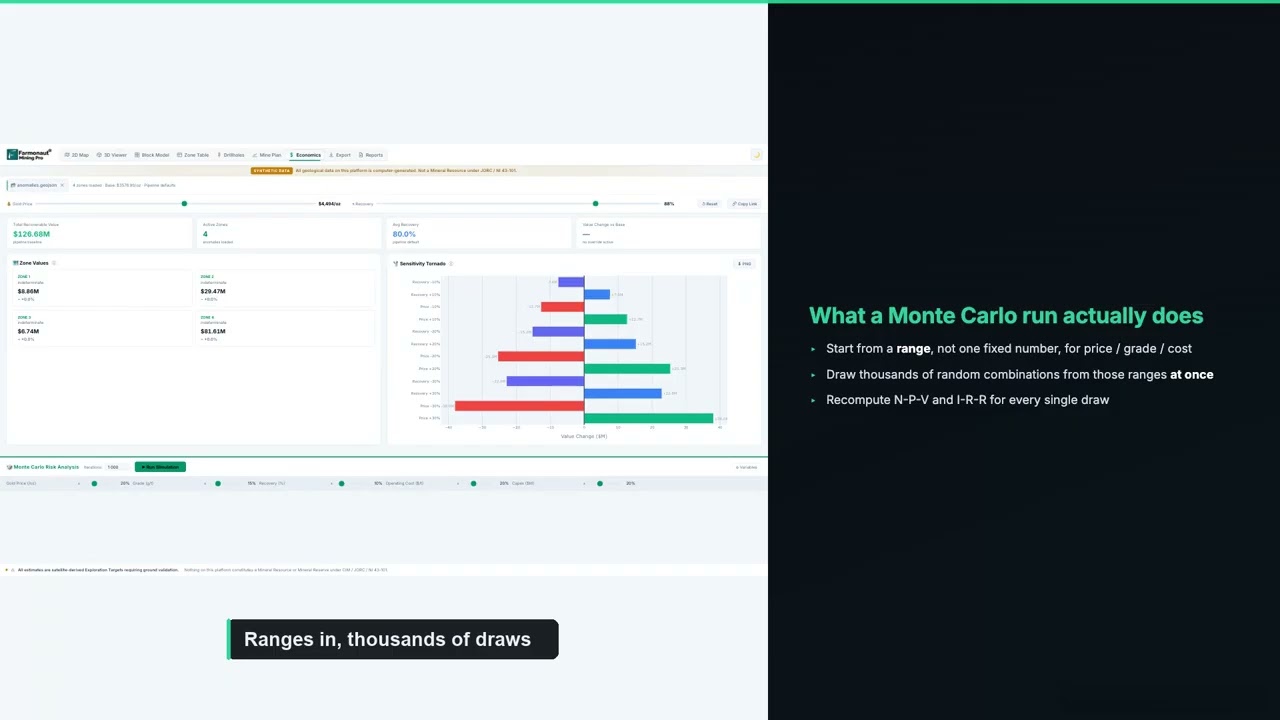
▶ Farmonaut course chapter on Monte Carlo P10/P50/P90 across price, grade and cost uncertainty. · 14:59
What a licence owner needs before approaching offtake buyers
Most buyers will not sign a binding offtake for ground that has no resource estimate, no sample tests and no permit path. The stage matters.
- Grassroots or early exploration. Offtake is unlikely. Buyers may take an interest through an option or earn-in instead. The guide to how to sell a mine covers valuation and deal types at this stage.
- Drilled project with a resource. A non-binding memorandum of understanding or a letter of intent is realistic, together with metallurgical test work that proves the product can meet a specification.
- Feasibility stage. A binding offtake with conditions precedent, a price formula and a financing link becomes normal, because the lenders will ask for it.
A buyer will usually ask for a data pack with the following: a clear title and permit status; a resource estimate prepared under a recognised code; drill and assay data; metallurgical and product test results; the production plan with monthly volumes; and logistics to port. Knowing what kind of deposit you hold also shapes the product and the buyer pool, so it helps to read types of ore deposits and, for lithium projects, the spodumene deposits guide.
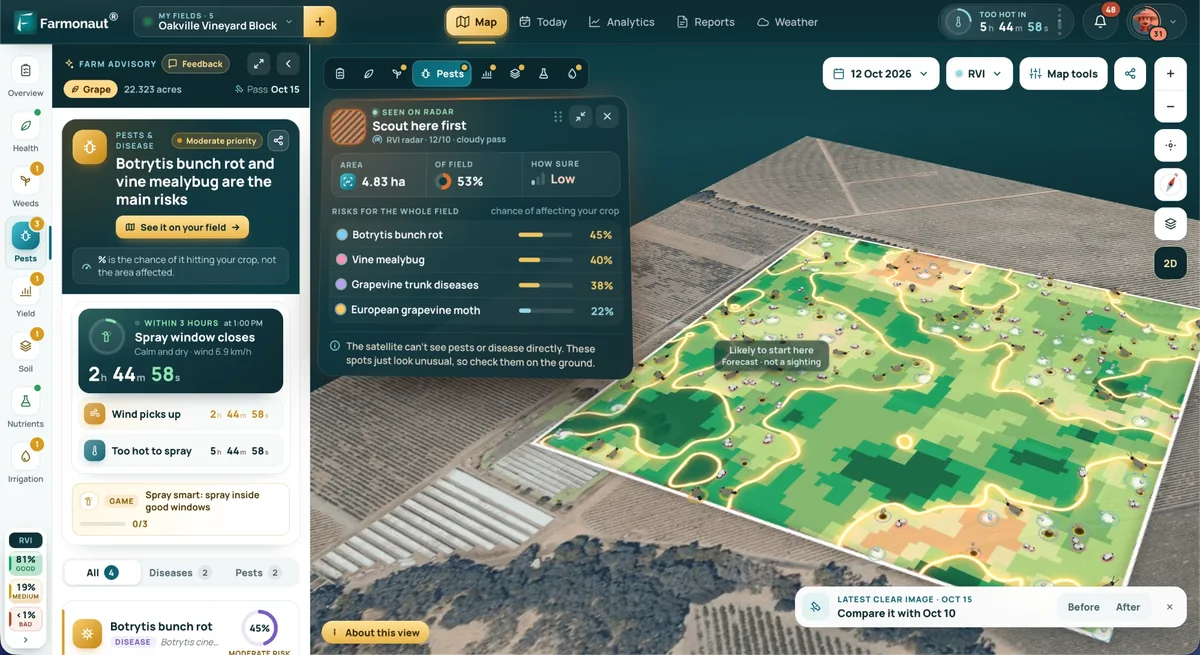
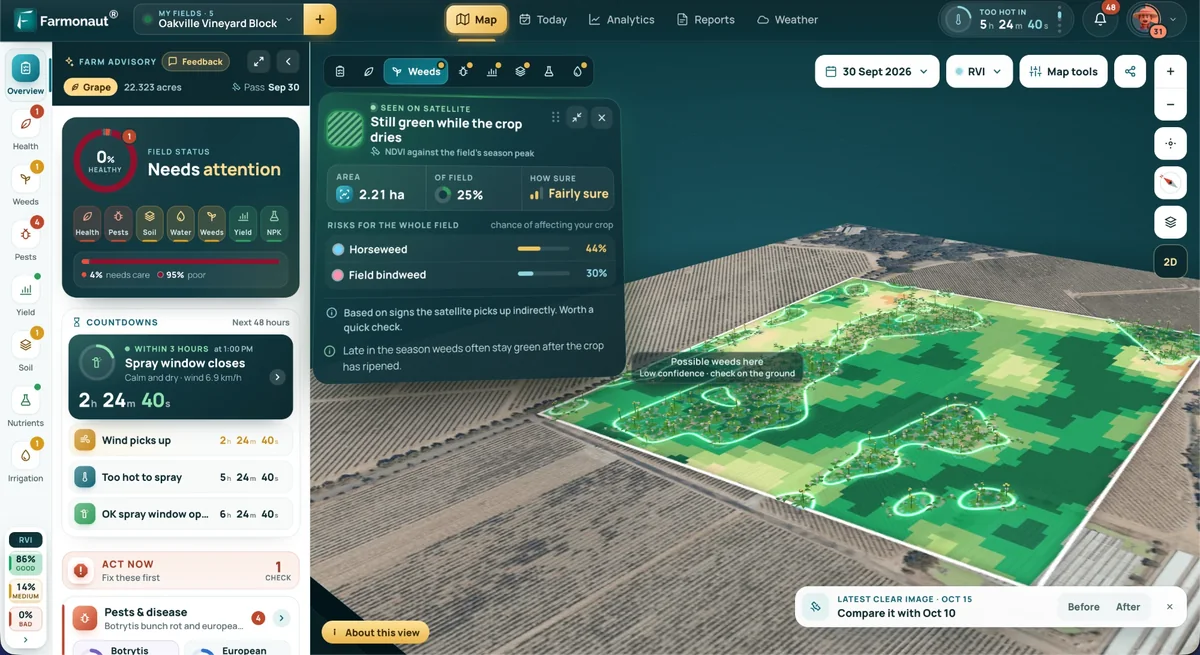
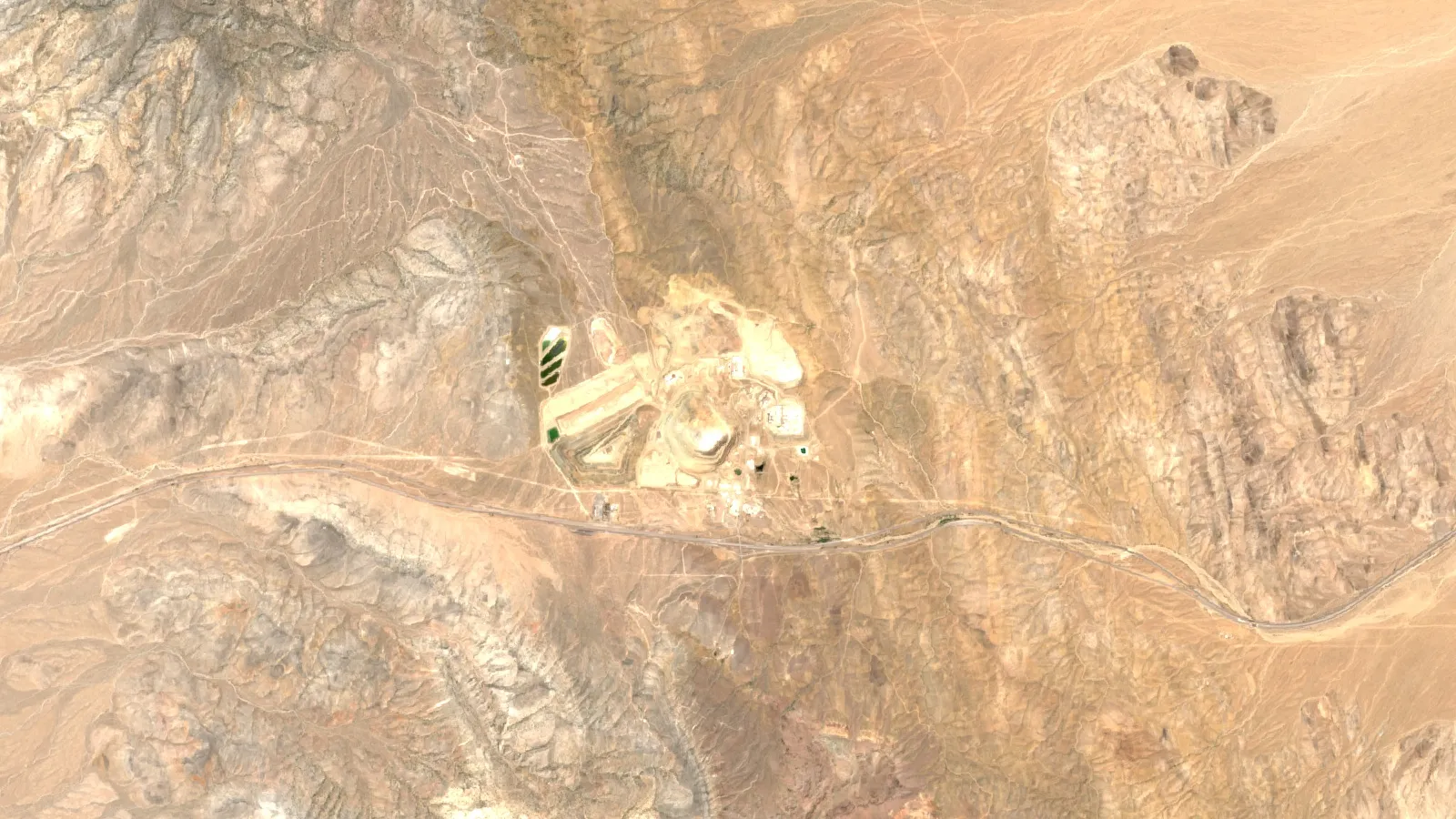
Before drilling, satellite imagery can help a licence owner rank ground, map alteration and check access to the target, so spending goes where a buyer will later want evidence. That is screening, not an estimate of resource, and it does not replace drilling or a qualified person’s report.
Six steps to a financeable offtake
The sequence below is a practical order of work. Timing depends on stage, commodity and market.
Infographic
Six steps to a financeable offtake
- 1Define the productOre, concentrate or metal, and the specification.
- 2Test itMetallurgy and buyer sample qualification.
- 3Map buyersSmelters, refiners, traders, agencies.
- 4Term sheetVolume, formula, floor, term, conditions.
- 5Align lendersCheck bankability before signing.
- 6Sign long formWith security and intercreditor terms.
- Define the product. Decide what you will actually sell: ore, concentrate or metal, and to which specification.
- Test it. Run metallurgical work and send samples to potential buyers for qualification.
- Map the buyer pool. List smelters, refiners, traders, manufacturers and public agencies, and what each needs.
- Sign a non-binding term sheet. Agree headline volume, price formula, floor, term and conditions precedent.
- Align with lenders. Ask the financing parties to review the term sheet before it becomes binding; revise to meet their bankability requirements.
- Negotiate and sign the binding agreement. Settle the long form with legal counsel, including security and intercreditor terms.
Offtake, streaming and royalty compared
| Feature | Offtake | Stream | Royalty |
|---|---|---|---|
| Buyer gets | Physical product | Share of a by-product at a set price | Share of revenue or NSR, no product |
| Upfront cash | Only if packaged with prepayment or loan | Yes, usually | Yes, when bought |
| Typical commodities | Base metals, battery minerals, bulk, rare earths | Gold, silver | Any |
| Main seller risk | Price and volume lock-in | Giving up future by-product revenue | Permanent claim on revenue |
Many financing packages combine them: a loan, an offtake for the main product and a royalty or stream on a by-product. If you plan to sell the project later, any of these will attach to the asset, so tell the buyer early.
Frequently asked questions
What is an offtake agreement in mining?
It is a contract in which a buyer agrees to purchase a stated share of a mine’s future production, at a price set by formula, over a fixed term. Developers use it to show lenders that their product has a buyer.
Why do lenders ask for an offtake agreement?
Lenders need evidence that production will be sold and that revenue will cover debt service. A credible buyer, a formula price and often a floor give them that evidence, which is why an offtake can be a condition of financing, as in Almonty’s Sangdong project.
What is the difference between take-or-pay and take-and-pay?
In a take-or-pay contract the buyer must pay for the agreed volume even if it does not collect it. In a take-and-pay contract it pays only for what is delivered. The first transfers volume risk to the buyer and is preferred by lenders.
How is the price set in an offtake agreement?
By a formula: a reference price from an exchange or published index, averaged over a quotational period, multiplied by a payable percentage, less treatment and refining charges, penalties, freight and other deductions. Some contracts add a floor, a ceiling or both.
What is a price floor in an offtake deal?
A minimum price below which the buyer cannot pay. In the MP Materials package the floor is US$110 per kilogram of NdPr for 10 years, and in Almonty’s amended contract the floor revenue is a minimum of C$750 million.
What are treatment and refining charges?
Treatment charges, in dollars per tonne of concentrate, and refining charges, in cents per pound of payable metal, are what smelters keep for turning concentrate into metal. The 2026 benchmark for copper concentrate was set at US$0 (Benchmark Mineral Intelligence, December 2025), and spot deals reported in October 2026 were below zero.
Can a small claim owner get an offtake agreement?
Rarely before there is a resource and product test work. Buyers commit to mines they believe will produce. Early-stage owners usually get an option, an earn-in or a letter of intent instead, so the first goal is data that a buyer or a lender will accept.
How long does a mining offtake agreement last?
Terms in the examples range from four years (Kodal and Hainan Mining) to 10 years (the MP Materials price floor and magnet offtake) and 15 years (Almonty’s amended Sangdong contract). Some contracts run for the life of the mine.
What is the difference between an offtake and a royalty or stream?
An offtake gives the buyer physical product at a formula price. A royalty pays a share of revenue and a stream gives the buyer a share of by-product metal at a set price. See the royalty guides linked above.
Does the buyer own part of the mine?
Not through the offtake alone. But offtake deals are often packaged with equity, loans or security over project assets, so the buyer can hold other rights. Check the whole package, not only the supply contract.
Where can I get an offtake agreement template?
Real terms depend on the commodity, the buyer and the jurisdiction. Use the checklist above to brief a mining lawyer, who can draft from precedent.
This page is for information only. It is not investment advice and not legal advice. Confirm contract terms with a mining lawyer.
Farmonaut mining
Get a quote to screen your licence from space
Request a quote for satellite mapping of your licence area before you commit drilling money.
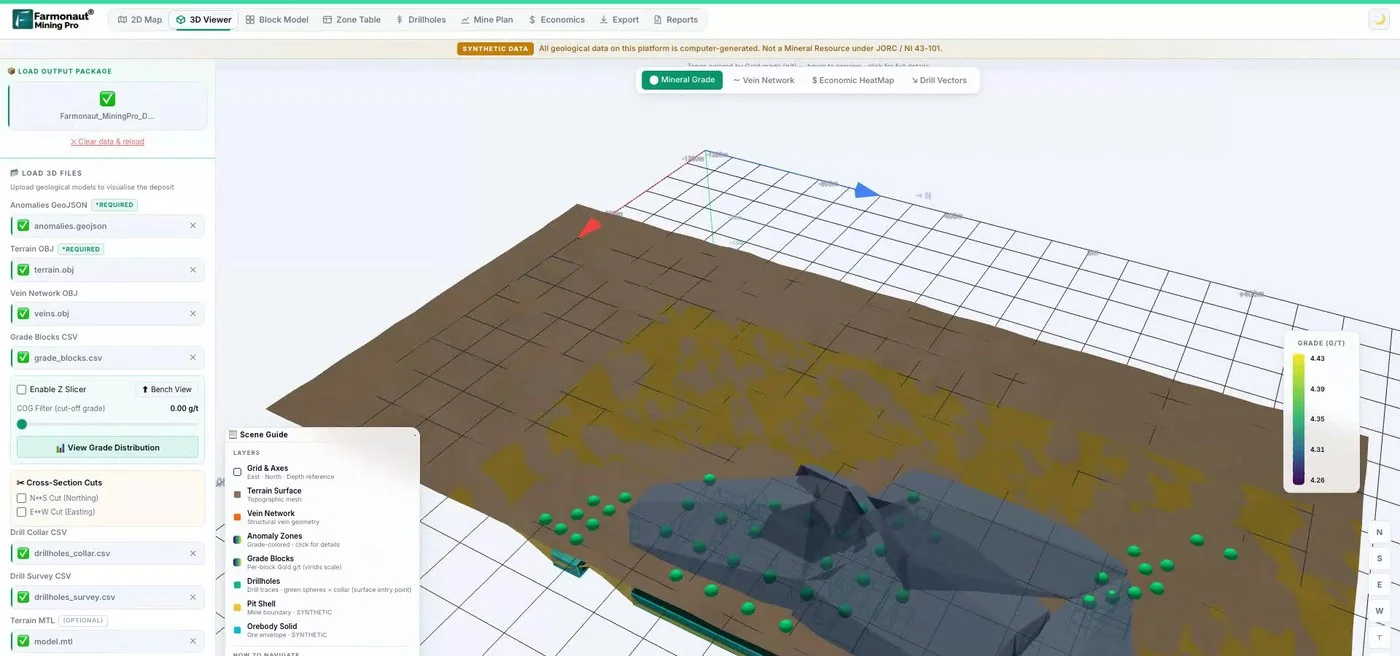
Mining Pro sample view, synthetic data
Sources
- MP Materials, partnership with the US Department of Defense (10 July 2025): mpmaterials.com
- Benchmark Mineral Intelligence, ex-China NdPr prices slip below the price floor (21 August 2026): source.benchmarkminerals.com
- Canadian Mining Journal, Offtake agreements and financing mine projects: canadianminingjournal.com
- Almonty Industries, Sangdong off-take agreement extended to 15 years: press.almonty.com
- Global Mining Review, Kodal Bougouni offtake agreement (30 June 2025): globalminingreview.com
- Global Mining Review, KGL Resources signs offtake agreement with Glencore (March 2022): globalminingreview.com
- Kitco News / Reuters, Antofagasta nets its highest ever copper treatment charges (16 October 2026): kitco.com
- Benchmark Mineral Intelligence, record low copper concentrate TC/RCs (23 December 2025): source.benchmarkminerals.com
- Fastmarkets, 2020 copper concentrates annual benchmark at $62/t: fastmarkets.com
- Mining Reporters, smelter and Antofagasta set copper processing fees at zero for 2026 (23 December 2025): miningreporters.com
- Lithium Americas, second quarter 2026 results (13 August 2026): nasdaq.com
- Law Insider, quotational period sample clauses: lawinsider.com
- MP Materials, Form 10-K for 2025 (SEC): sec.gov
- USGS, Mineral Commodity Summaries 2026: Rare earths: pubs.usgs.gov
- US Department of Energy, restructured Lithium Americas loan (30 September 2025): energy.gov
Discussion
Questions, corrections or field experience? Share them below. First-time comments are reviewed before they appear, and your email is never published.
No comments yet. Be the first to add a question or your experience.

 GemSprout Metals Limited
 Qader Group
 Ileys General Trading
 SG Gold Mining LLC
 VRV Global Pte Ltd
 Omsri International FZE
 G.I.T.T.
 Jaunita Erss Ltd
 Almosi SARL
 SRK Consulting
 Berks Gold Limited
 Mwerezi Minerals Company Limited
 Mining SARL
 SenGold Invest SAS
 Sean Mining Limited
 NTS Group (Pty) Ltd
 Mine4Africa
 Lithspo Minerals Limited