

Mining royalties · Buyer guide
How to Buy Mining Royalties: Types, Value, Risks
To buy a mining royalty, pick the route (listed company, private purchase or funding), check title and the operator, value the payments as a range, then sign and register. Types, 2025 margins, deal sizes and a price calculator inside.
Key takeaways
- A private mining royalty is a contract right to payment from a mine owner; a government royalty is a separate charge paid to the state (Clayton Utz, August 2024).
- Franco-Nevada kept US$1,656.1 million of US$1,822.8 million revenue as Adjusted EBITDA in 2025, about 91%; Royal Gold reported an 82% adjusted EBITDA margin (company results, 2026).
- Recent deals ran from US$4.7 million for a 1.0% NSR on 75% of one Australian project’s ounces to US$440 million for a stream on a producing mine (Franco-Nevada, Triple Flag, 2026).
- Value is the present value of expected payments, reduced for risk; CIMVal names income, market and cost approaches (CIM MES).
- Enforceability decides what you own: a Quebec court held in 2013 that customary NSRs were not enforceable against third parties (Langlois, 2015).
In this article
- What a mining royalty is, and the two meanings of the term
- Types of mining royalty and how each is calculated
- Royalty, stream, equity or physical gold: how they compare
- How gold royalty companies make money
- Why invest in gold royalties: benefits and limits
- Gold royalty valuation: how a royalty is priced
- What a mining royalty costs: recent deal sizes
- How to buy mining royalties in 6 steps
- Check the ground behind a royalty before you pay
- Estimate whether a royalty price makes sense
- Risks and checks before you buy a private royalty
- Tax and legal points to raise with an adviser
- Frequently asked questions
Buying mining royalties means paying cash for the right to a share of the revenue or metal from a mine you do not own or run. You can do it by buying shares in a listed royalty company, by buying a single private royalty from a prospector, landowner or explorer, or by funding a miner in return for a new royalty. For gold, the best-known listed route is a royalty or streaming company, and the largest of them kept about 82% to 91% of 2025 revenue as cash margin (company results, March 2026). Private royalties are priced as the present value of expected payments, reduced for risk.
This guide explains what a mining royalty is, the main types, how gold royalty companies make money, why investors buy gold royalties and what limits the case, how a gold royalty is valued, what recent deals cost, six steps to buy one, and the checks to run before paying. It covers metals and minerals, not oil and gas. It gives facts, not advice to buy or sell any security.
What a mining royalty is, and the two meanings of the term
The words “mining royalty” are used for two different things, and search results mix them. A private mining royalty is a right to payment from the owner of a mining project, linked to the minerals taken out or sold. It is a contract between the miner (the payer) and the holder, often created as a finder’s fee when an exploration project is sold, as part of a purchase price, or as a form of financing (Clayton Utz, August 2024). This is the kind you can buy as an investment.
A government (statutory) mining royalty is a charge a miner pays the state for minerals taken from the ground. It works like a tax and is outside what you can buy. Examples show how different the rules are. Queensland charges a variable rate of 2.50% to 5.00% of value on base and precious metals including gold, depending on average metal prices, in Australian dollars (Queensland Revenue Office). Nevada’s Department of Taxation states that its net proceeds of minerals tax uses a sliding scale of 2% to 5% on the miner’s net proceeds, that the tax rate for royalties is 5%, and that royalty recipients file statements (Nevada Department of Taxation, 2024-25 bulletin). If you are a licence owner who pays a state royalty, read your regulator’s page; the rest of this guide is about the private kind.
A royalty holder does not own or run the mine, does not pay for drilling, plant or sustaining capital, and has no say in mine plans, except where the contract gives rights such as audit or information. The holder is paid when the operator produces and sells. That is why a royalty can keep paying through cost overruns, but it also means the holder cannot stop a mine from closing.
The payments come from the mining chain itself: ground is drilled, ore is crushed, gold is dissolved, recovered and refined, and a share of the proceeds goes to the holder. The video below follows one nugget through those steps, which is the process your payment depends on.
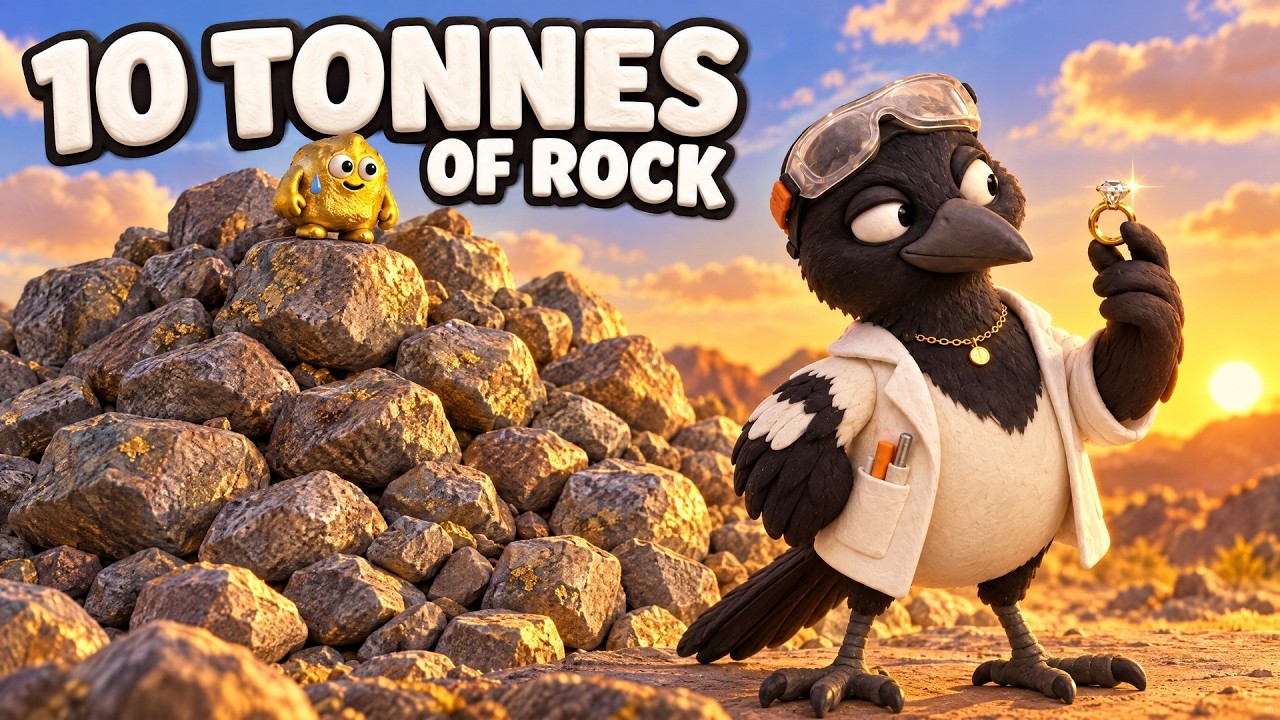
▶ How gold is mined and refined, step by step: the process that produces the sales a royalty is paid on. · 5:27
Types of mining royalty and how each is calculated
The calculation decides what a buyer will pay. Clayton Utz lists four common types (Clayton Utz, August 2024).
| Type | What the percentage applies to | What it means for a buyer |
|---|---|---|
| Net smelter return (NSR) | Sale price of the minerals minus agreed deductions such as transport, treatment, smelting and refining | The most common type. The list of allowed deductions is negotiated, so read it before you value the royalty. |
| Gross revenue royalty | Gross revenue from selling the minerals, with no deductions | Simplest to calculate; better for the holder than an NSR at the same rate. |
| Net profit royalty | Revenue minus all costs of production, operations, treatment and selling, and often capital and financing costs | Pays later and less; depends on how the operator books costs. |
| Volume or tonnage royalty | A fixed amount per tonne or other unit of mineral extracted and sold | Does not rise with the metal price unless a price link is written in. |
A net smelter return royalty is usually written as a rate on a share of output, such as the 1.0% NSR on 75% of all ounces at the Yilgarn Star gold project in Western Australia that Franco-Nevada bought in December 2025 (Franco-Nevada, 10 March 2026). Contracts can also add a buy-down right, where the operator may reduce the rate by paying a set sum. One Yukon royalty bought by Franco-Nevada is a 6.0% NSR subject to a 5.0% buy-down at the operator’s election, and a buy-down changes what the royalty is worth (same release).
Royalty, stream, equity or physical gold: how they compare
A stream is a related contract. The buyer pays an upfront sum for the right to buy a share of the metal at a low fixed price, then sells it at the market price. Triple Flag’s June 2026 stream on the Ravenswood gold mine in Queensland shows the terms: the company pays US$440 million upfront and has the right to buy 5.50% of payable gold, stepping down to 3.75% after 194,200 ounces and to 2.50% after 253,000 ounces, paying 10% of the spot gold price per ounce at first and 20% after 194,200 ounces (Triple Flag, 12 June 2026). Many listed companies hold both royalties and streams, so company results mix the two.
| Route | What you own | Main benefit | Main limit |
|---|---|---|---|
| Listed royalty company shares | A share in a company holding many royalties and streams | Diversified portfolio; easy to buy and sell | Company risks, fees and a share price that moves with markets |
| Private royalty purchase | A contract right on one project | Direct, priced to your own view | One operator, one mine; hard to resell |
| Royalty in return for funding | A new royalty written for cash you provide | You set terms at the start | You carry project and counterparty risk early |
| Mining company shares | Part of the operating company | Share of all profits and upside | Costs, capital and management risk |
| Physical gold | Metal you hold | No operator, no counterparty | Storage cost and no income |
Owning a royalty is not owning the land, and owning a claim is not owning the land either. A short video on what a gold claim does and does not give you is a useful check before you buy any interest tied to a claim.
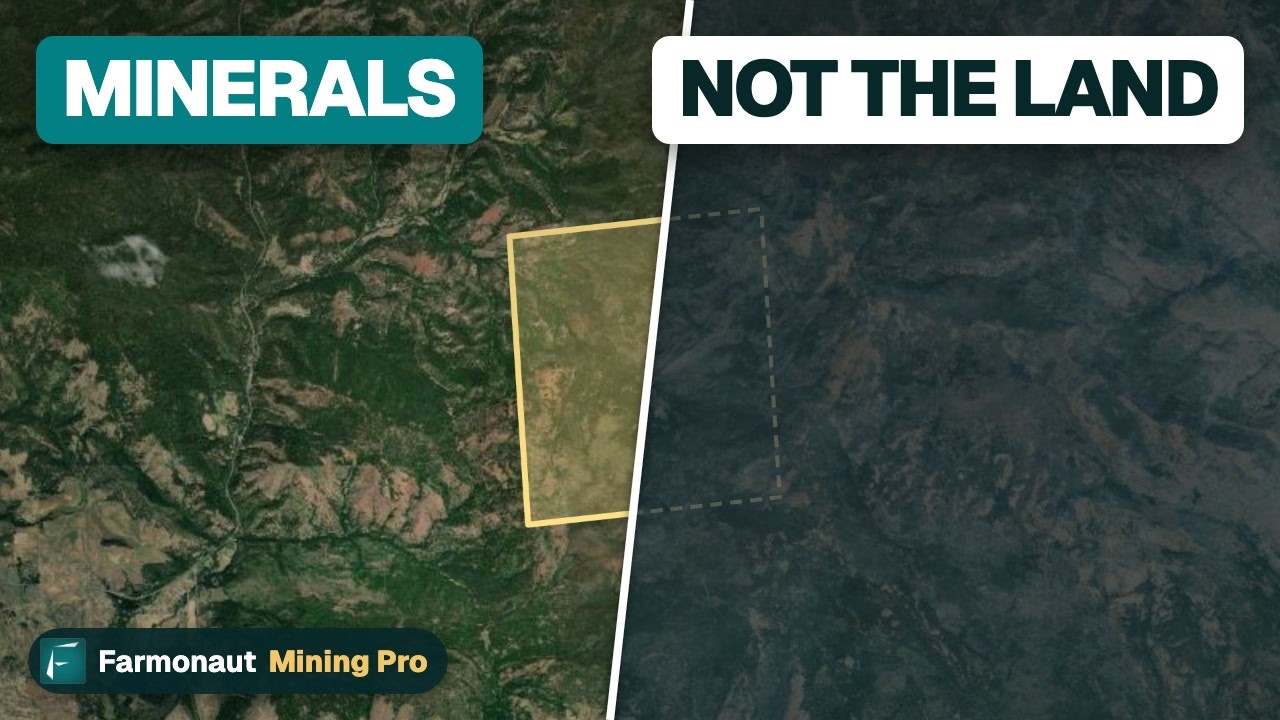
▶ What owning a gold claim does and does not give you. · 3:19
How gold royalty companies make money
A royalty company buys or creates royalties and streams, then collects a share of revenue as mines produce. Costs are small, because the operator pays for mining and processing. Franco-Nevada reported 2025 revenue of US$1,822.8 million and Adjusted EBITDA of US$1,656.1 million, about 91% of revenue, with 519,106 gold equivalent ounces (GEOs) sold and no debt (Franco-Nevada, 10 March 2026). A GEO converts silver, platinum group metals and other metals into ounces of gold so one number can describe a mixed portfolio.
Chart
Share of revenue kept after cash costs, 2025
% of revenue; measures differ (see source line), so compare the pattern, not the decimals
Royal Gold reported 2025 revenue of US$1,030.5 million, an adjusted EBITDA margin of 82% and gold as 78% of revenue; its general and administrative expense was US$49.2 million (Royal Gold results release, 18 February 2026). Wheaton Precious Metals, which holds streams, reported average cash costs of US$514 per GEO against an average realised price of US$3,554 in 2025, a cash operating margin of US$3,040 per GEO (Wheaton, 12 March 2026).
Scale matters. Metalla Royalty & Streaming reported 2025 revenue of US$11.7 million and Adjusted EBITDA of US$4.7 million, about 40% of revenue, on a much smaller revenue base (Metalla, 2025 results).
Why invest in gold royalties: benefits and limits
People buy gold royalties for reasons that show up in company results. The limits are as real as the benefits, and several come straight from the same results.
Chart
Wheaton: price, cost and margin per gold equivalent ounce
US$ per GEO sold; a streaming company, so cash cost is its fixed purchase payment
- Exposure to the gold price without running a mine. Wheaton’s cash costs rose from US$438 to US$514 per GEO between 2024 and 2025 while the realised price rose from US$2,426 to US$3,554, so most of the price rise reached the margin (Wheaton, 12 March 2026). The reverse holds when prices fall.
- Low operating cost. The margins above show how little of revenue is spent once a royalty is in place.
- Spread across mines. Franco-Nevada said precious metals were 90% of fourth quarter 2025 revenue and 89% of revenue came from the Americas, so a portfolio can still hold a regional concentration.
- Growth without capital spending. Royalty owners benefit if operators expand a mine, find more ore or extend life, without paying for it.
- Income paid to shareholders. Royal Gold raised its annual dividend to US$1.90 per share for 2026, its 25th consecutive annual increase (Royal Gold results release, 18 February 2026).
Limits come from the same structure. A royalty is tied to someone else’s mine, and the operator decides when and how to mine. Franco-Nevada says production at Cobre Panamá in Panama remains halted while the site is in a phase of preservation and safe management, yet its 2025 sales still included 11,208 GEOs from it, a reminder that one asset can stop paying (Franco-Nevada, 10 March 2026). A royalty on a mine that never gets built pays nothing. Prices fall as well as rise, and operators can be sold, merged or go into insolvency.
This is not investment advice, and no listed company named here is recommended. For a company-by-company comparison, see our guide to the best gold royalty investment companies.
Gold royalty valuation: how a royalty is priced
A royalty is worth the present value of the payments you expect, reduced for the chance that they do not arrive on time. The CIM Mineral Property Valuation standards (CIMVal) describe three approaches: the income approach (present value of future net economic benefits, adjusted for time and investment risk), the market approach (comparison with similar assets sold in open markets) and the cost approach (based on exploration spending, typically used for early-stage projects). CIMVal says valuation is stage-based and the income approach is considered only for properties with enough technical work to support a life-of-mine model (CIM MES, CIMVal standards).
In practice, a buyer builds a simple model with these inputs:
- Output attributable to the royalty. Ounces per year from the mine plan, times the share of production the royalty covers (some cover only part of the ground).
- Metal price. Buyers usually run several price cases rather than today’s spot alone.
- Royalty rate and deductions. An NSR is paid on revenue less allowed deductions; a gross royalty is not.
- Timing. A mine that starts in three years is worth less now than one already producing; payments are discounted for the wait.
- Mine life and discount rate. Longer life adds value, and a higher discount rate for risk reduces it. Producing assets with a strong operator take a lower rate than early projects.
- Contract terms. Buy-down rights, step-downs in rate and a cap on payments all change the answer.
The calculator below uses these inputs. It holds output and price flat, which real models do not, so treat the result as a starting range. A low-value project royalty may be priced by the market approach instead, from what similar royalties have sold for. A royalty company’s own shares are valued differently again, from the net asset value of its whole portfolio, and the figures vary by analyst, so this page does not quote a multiple.
What a mining royalty costs: recent deal sizes
Prices vary from a few million dollars for a share of a small project to hundreds of millions for a large producing asset. Franco-Nevada paid US$4.7 million plus a contingent US$1.0 million for the 1.0% NSR on 75% of Yilgarn Star ounces; it agreed in February 2026 to pay C$55 million (about US$40.1 million) for six royalties previously held by Victoria Gold; and it agreed to pay A$170 million (about US$120 million) for a gross royalty on the Bullabulling gold project from Minerals 260 Limited, to support the project’s development (Franco-Nevada, 10 March 2026). The Triple Flag stream on Ravenswood cost US$440 million upfront for a producing mine.
Chart
What buyers agreed to pay for royalties and a stream
US$ million at announcement; Australian and Canadian dollar deals converted by the companies
The price depends on stage, rate, share of output and the operator. A royalty on an early-stage property with no resource is priced like an option. A royalty on a producing mine with years of payments is priced like a bond, with price risk added. Small private sales are rarely public, so there are few comparisons for a small holder.
How to buy mining royalties in 6 steps
These steps apply to a private royalty. For shares in a listed company, your broker handles the purchase, and the work is reading the company’s filings.
Infographic
Buying a private royalty in 6 steps
- 1DecideIncome from a producing mine, or a cheaper early-stage bet.
- 2FindSellers: prospectors, landowners, explorers, companies raising money.
- 3Collect documentsAgreement, statements, operator reports, claim records.
- 4Check titleWhat registers the royalty and whether it binds a new owner.
- 5Value a rangeLow, middle and high case against the asking price.
- 6Sign and registerTransfer, notice to operator, registration, tax filing.
- Decide what you want. Income from a producing mine, or a cheaper bet on an early project. The answer sets the stage, price and risk you accept.
- Find a seller or a project. Sellers include prospectors, landowners, explorers that sold a project and kept a royalty, and companies raising money. Mining registers, filings and brokers are common routes.
- Get the documents. The royalty agreement and amendments, payment statements, operator reports, claim or licence records, and any consents.
- Check title and enforceability. Ask what registers the royalty and whether it binds a new owner of the property. In Quebec, the Court of Appeal held in 2013 that customary NSRs registered in the Mining Register were not enforceable against third parties, and a personal-right royalty can become worthless if the property is transferred or the grantor becomes insolvent (Langlois Lawyers, 2015).
- Value it as a range. Run a low, middle and high case with the inputs above, then compare with the asking price.
- Sign, notify and register. Transfer agreement, written notice to the operator, registration where the law allows it, and tax filings.
If you are on the other side, our guide on how to sell mineral royalties covers the steps for sellers. If you are selling the rights themselves, see how to sell mineral rights.
Check the ground behind a royalty before you pay
The value of a royalty depends on the ground under it. Before buying, check the operator’s technical report, the permits, the status of the claims and the land around the project. Satellite imagery can add one more view: it maps iron staining, clay minerals and structures on the surface, which helps a reader judge whether a stated target is plausible before money is spent. It does not measure grade, tonnes or reserves, and it is not a substitute for drilling. Farmonaut offers satellite mineral-detection reports that map such features as exploration targets, ahead of any resource estimate (satellite-based mineral detection). If you hold a licence, consult your adviser first and request a quote through the mining quote form or contact us.
The video below explains what a satellite can and cannot see when looking for gold.

▶ What satellites can and cannot show when looking for gold. · 4:25
Estimate whether a royalty price makes sense
Enter the output, price, rate, delay, mine life and discount rate to compare the present value with the price you are asked to pay. The result changes quickly with the discount rate and the start date, so test several values.
Calculator
Is the asking price for this royalty fair?
Enter your own output, price, rate, delay, mine life and discount rate.
- Yearly royalty income once producing (US$): $8,000,000
- Present value minus asking price (US$): $6,022,506
- Years of income to repay the price: 5.0
Example values only, not a valuation. Output and price are held flat, NSR deductions are ignored and one discount rate is used. Gold price is an input: example, use today’s price (US$ per troy ounce). Payments are assumed at year end.
Risks and checks before you buy a private royalty
- Operator quality. Check the operator’s financing, permits and record. A good royalty on a weak operator can still stop paying.
- Deductions. For an NSR, the definition of allowed deductions can reduce payments; ask for past statements.
- Rights to audit. A clause that lets you audit sales and costs protects you.
- Buy-back and step-down terms. A buy-back at a fixed price caps your upside; a step-down lowers the rate after a set number of ounces, as in the Ravenswood stream.
- Area covered. Some royalties cover the whole property; others only parts. Maps in the agreement need to match the current claims.
- Government royalties and taxes. A state royalty or net proceeds tax paid by the operator reduces its profit and can affect mine life. Compare the rules above.
- Resale. Private royalties are harder to sell than shares. Find out whether the agreement needs the operator’s consent for a transfer or gives it first refusal.
Tax and legal points to raise with an adviser
Royalty income and the sale of a royalty are taxed differently in different countries, and the same contract can be treated as income or as a capital gain depending on its structure. Registration rules also differ: the Quebec case above shows that a royalty can fail against a later owner if it is not built as a right that binds the property, and Clayton Utz notes that private royalties in Australia are generally contract rights, so security such as a tenement mortgage or a caveat where allowed may be needed (Clayton Utz, August 2024). Ask a lawyer and a tax adviser in the country where the mine sits and the country where you live before you sign.
Frequently asked questions
What is a mining royalty?
A private mining royalty is a contract right to payment from a mine owner, linked to minerals taken out or sold. A government royalty is a separate charge that miners pay the state for minerals taken from the ground (Clayton Utz, August 2024).
How do I buy a mining royalty?
You can buy shares in a listed royalty company through a broker, buy a private royalty from its holder, or fund a miner in return for a new royalty. A private purchase needs the agreement, payment history, a title and enforceability check, a valuation and a signed transfer, as in the six steps above.
How do gold royalty companies make money?
They collect a share of mine revenue or metal. Franco-Nevada reported US$1,822.8 million of revenue and US$1,656.1 million of Adjusted EBITDA for 2025, while the operators of the mines pay the costs of mining and processing.
Why invest in gold royalties?
Reasons given in company results include exposure to the gold price, low operating costs, portfolios spread across mines and growth when operators expand. Limits include dependence on the operator, one asset stopping, as at Cobre Panamá, and falling prices. This is information, not advice.
Are gold royalty stocks good investments?
That is a personal decision this page cannot make. Look at the company’s debt, the mix of metals and countries, how much of revenue comes from its largest assets, and how it prices new deals, using its own filings. Not investment advice.
What is gold royalty valuation based on?
It is based on the present value of expected royalty payments: output, price, rate, timing, mine life and a discount rate for risk. CIMVal names the income, market and cost approaches, and the right one depends on the project’s stage.
What is the difference between a royalty and a stream?
A royalty pays a share of revenue or output. A stream gives the buyer the right to buy metal at a fixed low price and sell it at the market price. Triple Flag’s Ravenswood stream pays 10% of the spot gold price per ounce at first, then 20% after 194,200 ounces.
How much does a mining royalty cost?
It depends on stage, rate and operator. Recent deals ranged from US$4.7 million for a small percentage of one Australian project to US$120 million for a gross royalty, and US$440 million for a stream on a producing mine.
Can an individual buy a mining royalty?
Yes, private royalties are contracts and anyone may buy one if the seller agrees and the agreement allows transfer. Small holders face thin information, legal and tax costs and a hard resale, so listed royalty companies are the other route.
What is a net smelter return royalty?
An NSR is a percentage of the sale price of the minerals minus agreed deductions such as transport, treatment, smelting and refining. The list of deductions is set in the contract.
What is the difference between a private and a government mining royalty?
A private royalty is a contract between a miner and a holder. A government royalty is a statutory charge. Queensland’s rate for gold is variable between 2.50% and 5.00%, while Nevada’s tax on royalties is 5%.
How can investors choose a royalty strategy?
Buyers commonly weigh income against growth, the operator and stage of each asset, the price against a range of values, and how many mines a portfolio covers. For listed companies, the filings carry the facts; for private royalties, legal advice comes first.
This page is for information only. It is not investment, legal or tax advice, and it does not recommend buying or selling any royalty or security. Royalty law, registration rules and tax treatment differ by country; confirm them with a qualified lawyer and tax adviser and with the regulator.
Farmonaut mining
Screen the ground behind a royalty from space
Investors and licence owners can request a quote for a satellite report that maps alteration on the ground behind a royalty as exploration targets, ahead of any resource estimate.

Mining Pro sample view, synthetic data
Keep reading
Sources
- Franco-Nevada, Reports Record 2025 Results (10 March 2026): newswire.ca
- Clayton Utz, Digging into mining royalties (August 2024): claytonutz.com
- CIM MES, CIMVal valuation standards: cimmes.org
- Langlois Lawyers, Next Generation of NSR Agreements in Quebec (2015): langlois.ca
- Queensland Revenue Office, Mineral royalty rates: qro.qld.gov.au
- Nevada Department of Taxation, Net Proceeds of Minerals bulletin 2024-25: tax.nv.gov
- Royal Gold, fourth quarter and 2025 results release (18 February 2026): sec.gov
- Wheaton Precious Metals, 2025 results release (12 March 2026): s203.q4cdn.com
- Wheaton, record annual results for 2025 (12 March 2026): finviz.com
- Triple Flag, US$440 million Ravenswood gold stream (12 June 2026): bnnbloomberg.ca
- Metalla Royalty & Streaming, 2025 results: finviz.com
Discussion
Questions, corrections or field experience? Share them below. First-time comments are reviewed before they appear, and your email is never published.
No comments yet. Be the first to add a question or your experience.

 Mwerezi Minerals Company Limited
 Congo Mining Solutions
 Mining SARL
 SenGold Invest SAS
 Sania Corporation
 Sean Mining Limited
 NTS Group (Pty) Ltd
 Mine4Africa
 Lithspo Minerals Limited
 Tintina Mining Group
 Dalgety Minerals Pty Ltd
 Vortex Minerals Pty Ltd
 Faith At Work (Pty) Ltd
 Geotech Mining Solutions plc
 Vulcan International Limited
 Kidepo Associates
 GKY Mining
 Alkimy SARL
 Double A Trading

 Licence holder · Nigeria · Gold + lithium










