
Rare earths · Companies, projects and stages
Rare Earth Exploration Companies: Projects and Stages
Meteoric Resources, Arafura and Lindian are the furthest along; Brazilian Rare Earths and American Rare Earths are at scoping stage. This guide ranks eight explorers by stage and shows how to check their claims.
Key takeaways
- World mine output of rare earths was about 390,000 t of oxide in 2025; China 270,000 t, the United States 51,000 t, Australia 29,000 t (USGS, 2026).
- Meteoric’s Caldeira feasibility study (31 July 2026) shows a post-tax NPV of US$847 million at spot prices but US$2,721 million at forecast prices.
- Scoping studies are accurate to about plus or minus 40 percent: Brazilian Rare Earths bases 56 percent of its production target on Inferred resources (ASX, 13 August 2026).
- NdPr oxide averaged US$69/kg in 2025, down from US$124 in 2022 (USGS), so price assumptions drive every study.
- A non-binding letter of interest, such as American Rare Earths’ US$456 million EXIM letter, is not a loan.
In this article
- Rare earth exploration companies compared by project stage
- The stage ladder: from grassroots target to feasibility study
- Company profiles: projects, stages and what the filings say
- Where rare earths are mined and who holds the reserves
- Prices and economics: why the same project can look good or poor
- How to check a rare earth explorer before you rely on it
- How satellite screening fits an exploration programme
- Frequently asked questions
The rare earth explorers furthest along in November 2026 are those that have already reached a feasibility study or a construction decision: Meteoric Resources (Caldeira, Brazil) published a definitive feasibility study on 31 July 2026, Arafura Rare Earths (Nolans, Australia) took a final investment decision in May 2026, and Lindian Resources (Kangankunde, Malawi) targets first production in the fourth quarter of 2026. Behind them sit scoping-stage projects such as Brazilian Rare Earths (Monte Alto) and American Rare Earths (Halleck Creek, Wyoming). This page ranks them by project stage, explains what each stage does and does not prove, and shows how to check any explorer’s claims yourself.
A note on scope. “Exploration company” here means a listed junior or developer whose main asset is a rare earth project that has not yet produced at commercial scale. Producers such as Lynas, MP Materials and China’s state groups are covered only as a benchmark. Everything below is a summary of public filings and is not investment advice.
Rare earth exploration companies compared by project stage
The table lists eight companies with a rare earth project as the main asset. “Stage” is the most advanced study or milestone the company itself reported, with the date. Studies at different stages carry different accuracy, so a scoping-study NPV (net present value, the discounted value of future cash flows) is not comparable with a definitive-feasibility NPV even when the headline figure is larger.
| Company (listing) | Project and place | Latest stage reported | Headline figure from the filing |
|---|---|---|---|
| Arafura Rare Earths (ASX: ARU) | Nolans, Northern Territory, Australia | Final investment decision; construction targeted from September 2026 | Offtake with Hyundai, Kia, Siemens Gamesa and Traxys (May 2026) |
| Lindian Resources (ASX: LIN) | Kangankunde, Malawi | Under construction; first production targeted Q4 2026 | Under construction; first monazite concentrate now targeted for December 2026, about 149,000 t of ore stockpiled (company update, 16 October 2026) |
| Meteoric Resources (ASX: MEI) | Caldeira, Minas Gerais, Brazil | Definitive feasibility study, 31 July 2026; Lynas agreed to acquire the company by scheme of arrangement (ASX, 1 October 2026) | 151 Mt ore reserve at 3,524 ppm TREO; capex US$498 million |
| Aclara Resources (TSX: ARA) | Penco Module, Biobio, Chile | Environmental impact assessment unanimously approved by the Biobio regional commission, 8 to 9 June 2026; feasibility study due Q4 2026 | Ionic clay heavy rare earths, with Grupo CAP as partner |
| Critical Metals Corp (Nasdaq: CRML) | Tanbreez, southern Greenland | Bankable feasibility study reported about 70 percent complete on 2 September 2025, with completion then targeted for Q4 2025 (no completion announcement found by 5 November 2026) | Resource near 45 Mt, 27 percent heavy rare earths |
| Defense Metals (TSXV: DEFN) | Wicheeda, British Columbia, Canada | Pre-feasibility study (2025); feasibility work under way | 29.2 Mt measured and indicated at 2.27 percent TREO |
| American Rare Earths (ASX: ARR) | Halleck Creek, Wyoming, USA | Updated scoping study, 30 September 2026 | After-tax NPV about US$1.07 billion at 8 percent |
| Brazilian Rare Earths (ASX: BRE) | Rocha da Rocha (Monte Alto), Bahia, Brazil | Scoping study, 13 August 2026 | Average 11.3 percent TREO; after-tax NPV US$7.9 billion at 8 percent |
TREO means total rare earth oxides, the combined grade of all rare earth elements expressed as oxides. Ppm means parts per million; 10,000 ppm equals 1 percent. Mt means million tonnes. Sources for each row are in the profiles below and in the source list at the end.
The stage ladder: from grassroots target to feasibility study
Almost every announcement from an explorer sits on one of the rungs below, and each rung answers a different question. A reader who confuses the rungs will overpay for hope.
- Grassroots and target generation. Mapping, sampling and geophysics identify ground worth drilling. No resource exists yet. Satellite imagery, public geology and old drill logs are the usual tools.
- Exploration target. A range of tonnes and grade based on limited drilling. Under the JORC Code (the Australasian standard for reporting mineral resources and reserves) an exploration target is not a resource and must not be added to one.
- Mineral resource. Rock with reasonable prospects of eventual economic extraction, split into Inferred, Indicated and Measured by confidence. Inferred material is the least certain and cannot be used in a feasibility study as ore.
- Scoping study. A first look at mining, processing and economics, accurate only to roughly plus or minus 40 percent. Brazilian Rare Earths states this accuracy for its own study, and says 44 percent of its production target is Indicated and 56 percent is Inferred.
- Pre-feasibility study. A tighter design with an option choice. It can declare a first ore reserve.
- Definitive or bankable feasibility study. The study lenders use. It fixes the flowsheet, capital cost, operating cost and schedule, and is paired with permits and funding.
- Final investment decision and construction. The board commits money. Commissioning, then ramp-up, follow.
Rare earths add two steps that gold or copper do not have. First, the mine produces a concentrate or a mixed carbonate, not a saleable metal; a separate separation plant splits the oxides, and few of those exist outside China. Second, the value sits in a small group of elements. The four magnet elements, neodymium, praseodymium, dysprosium and terbium, make up a minority of the tonnage but most of the revenue, so a deposit’s “magnet share” matters as much as its total grade.
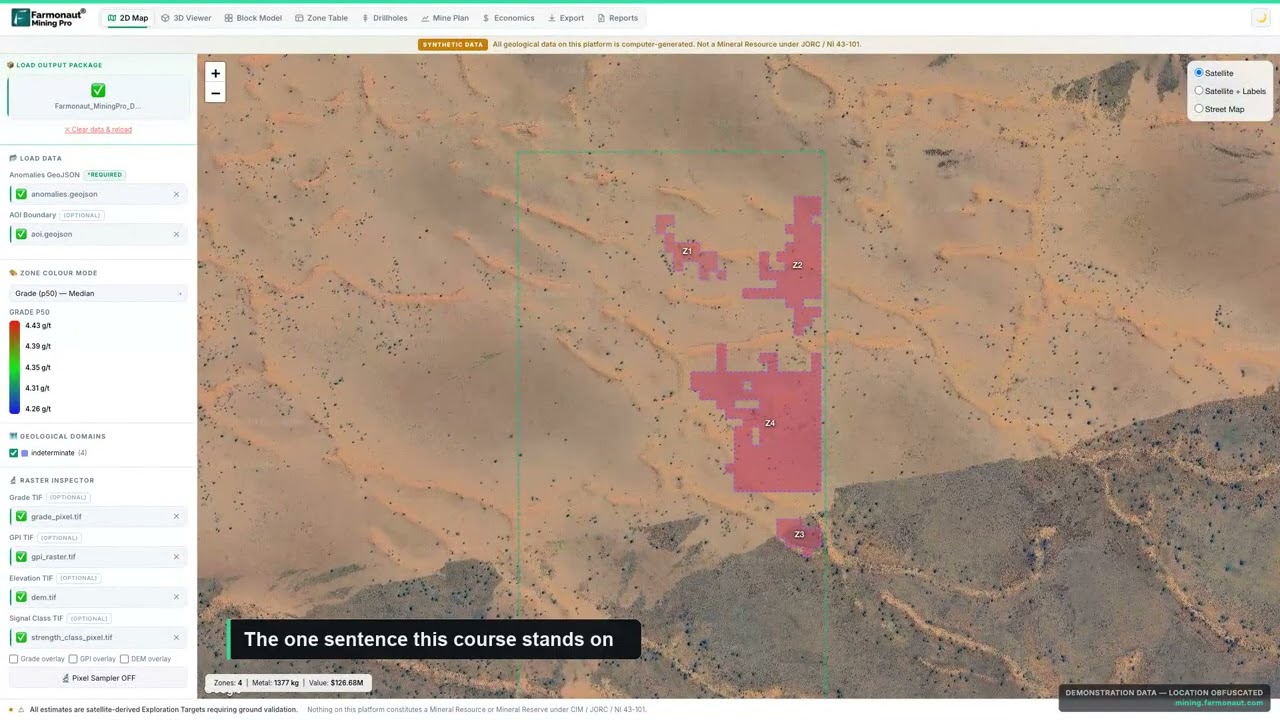
▶ Explains what an Exploration Target is and what it takes to become a classified Mineral Resource. · 4:14
Company profiles: projects, stages and what the filings say
Arafura Rare Earths: Nolans, Northern Territory
Arafura reported a final investment decision for the Nolans project on 21 May 2026 and said it was targeting the start of construction from September 2026 (check its latest ASX release for progress), according to its announcement as reported by The Motley Fool Australia. The company named offtake relationships with Hyundai, Kia, Siemens Gamesa and Traxys. Nolans is the clearest example in this list of a project that moved from study to funding: the decision followed years of work on permits, offtake and government support. Check the company’s latest ASX releases for the capital cost, resource and construction progress, because those figures change with each update.
Lindian Resources: Kangankunde, Malawi
Lindian’s Kangankunde project is the only one here that reported a build close to commissioning. On 16 October 2026 it said first monazite concentrate was targeted for December 2026 and about 149,000 tonnes of ore was stockpiled. In its ASX update of 22 June 2026, the company said the project was on schedule for first production in the fourth quarter of 2026, with front-end commissioning targeted for October 2026 and practical completion for mid-November 2026. In June it reported about 27,000 tonnes of ore stockpiled on the run-of-mine pad, tailings storage about 50 percent built and a workforce of 3,318. A Stage 2 feasibility study, led by the engineer DRA, is targeted for December 2026. The product is a rare earth concentrate, so downstream separation sits with the buyer.
Meteoric Resources: Caldeira, Brazil
Meteoric published its definitive feasibility study for the Caldeira ionic clay project on 31 July 2026. Coverage of the release gives an ore reserve of 151 Mt at 3,524 ppm TREO and 857 ppm magnet rare earth oxides, initial capital of US$498 million including 10 percent contingency, and a life-of-mine post-tax NPV of US$847 million at spot prices against US$2,721 million at the company’s forecast prices. The internal rate of return (IRR) is 24 percent on spot and 47 percent on forecast. On 1 October 2026 Lynas Rare Earths and Meteoric announced a binding scheme implementation deed under which Lynas proposes to acquire 100 percent of Meteoric’s shares in an all-share, court-approved scheme, so the listing may change if the scheme completes (ASX announcement). Read that gap carefully: the same mine looks modest or excellent depending on the price deck. In its June 2026 quarterly report the company reported a global resource of 1.6 billion tonnes at 2,317 ppm TREO, pilot-plant recoveries of 71 percent for magnet rare earths into a mixed carbonate, and a tenement consolidation agreement covering the main mining areas.
Aclara Resources: Penco Module, Chile
Aclara (TSX: ARA) is developing ionic clay deposits rich in the heavy rare earths. On 1 June 2026 it announced on 9 June 2026 that the Environmental Assessment Commission of Chile’s Biobio Region had unanimously approved the Penco Module environmental impact assessment, which was submitted in June 2024. A favourable evaluation report from the environmental assessment service on 1 June had recommended approval. The company expects to complete its feasibility study in the fourth quarter of 2026. The company is building a supply chain that runs from clay deposits to alloys for permanent magnets, and Penco is run with the Chilean group Grupo CAP.
Critical Metals Corp: Tanbreez, Greenland
Tanbreez sits in southern Greenland in a body of layered rock called kakortokite. On 2 September 2025 Critical Metals said the bankable feasibility study for a 500,000-tonne-per-year operation was about 70 percent complete and that the study was part of the documentation to be submitted to Greenland’s mineral authority (MLSA). The target completion was the fourth quarter of 2025, and this page found no later completion notice. Mining.com’s report of the same release puts the resource at nearly 45 million tonnes, 27 percent of it heavy rare earths, covering about 1 percent of a 4.7-billion-tonne mineralised unit, and cites the company’s earlier preliminary economic assessment at roughly US$3 billion NPV and 180 percent IRR. A preliminary economic assessment is a scoping-level study, so the high IRR is a design case, not a forecast. Look for the study’s completion date and licence decision in the company’s newest filings.
Defense Metals: Wicheeda, British Columbia
Wicheeda is a wholly owned, 11,800-hectare carbonatite-hosted deposit in British Columbia. A 2025 pre-feasibility study reported a measured and indicated resource of 29.2 Mt at 2.27 percent TREO plus 5.5 Mt of inferred material at 1.42 percent, according to a July 2026 report on the company. The same report says the 2026 spring drill programme fed an ongoing feasibility study, that pilot flotation testing at SGS Lakefield was nearly finished, and that the board was weighing strategic alternatives such as partnerships, government-supported financing and offtake, with no timeline given. A grade above 2 percent TREO is high for a bulk deposit, but a carbonatite flowsheet must also deal with penalty elements and a hydrometallurgical step, which is why pilot work matters.
American Rare Earths: Halleck Creek, Wyoming
American Rare Earths holds the Halleck Creek project in Wyoming, with a JORC resource of 2.63 billion tonnes at 3,292 ppm TREO and about 26 percent of the oxides in magnet elements, as stated on the company’s project page. On 30 September 2026 it released an updated scoping study for the first phase, the Cowboy State Mine: 4.5 million tonnes of ore a year, a 26-year plan, about 2,500 tonnes a year of neodymium-praseodymium (NdPr) oxide and an after-tax NPV of about US$1.07 billion at an 8 percent real discount rate (US$764 million at 10 percent, the rate used in 2025) and initial capital of about US$900 million. The production target is based entirely on Indicated resources. Separated oxide from a pilot and demonstration programme is targeted for late in the second quarter of 2027. A 3,050-metre drilling programme to support the feasibility study had completed five holes by June 2026. The company also holds a non-binding letter of interest from the US Export-Import Bank for up to US$456 million of debt. That amount matched the 2025 study’s initial capital; the updated study puts initial capital at about US$900 million, and the company says the letter is not committed financing. A non-binding letter is not a loan. For how Halleck Creek compares with other Wyoming deposits, see our Wyoming rare earth comparison.
Brazilian Rare Earths: Rocha da Rocha and Monte Alto, Brazil
Brazilian Rare Earths published a scoping study for Rocha da Rocha on 13 August 2026. In its announcement, the company says Monte Alto’s primary and residual mineralisation averages 11.3 percent TREO, and it reports, under the Argus EU/US forecast price case, an after-tax NPV (8 percent) of US$7.9 billion, an after-tax IRR of 89 percent, a payback of 1.1 years, average production of 5,276 tonnes a year of NdPr oxide and 2,253 tonnes a year of a heavy rare earth concentrate, and first production in 2031. The study carries an accuracy of plus or minus 40 percent, and 56 percent of the production target rests on Inferred resources. The grade is exceptional, but the study is the first rung of the economic ladder. The company’s cost position of about US$21 per kilogram of NdPr equivalent is its own claim, taken from an industry cost curve.
Where rare earths are mined and who holds the reserves
These companies are small beside the established system. The U.S. Geological Survey estimates world mine production of rare earths at about 390,000 tonnes of rare earth oxide equivalent in 2025, of which China produced about 270,000, the United States 51,000 and Australia 29,000 (USGS Mineral Commodity Summaries, February 2026). Burma ranks fourth at 22,000, and Brazil, Madagascar and Thailand are small but growing.
Chart
Rare earth reserves, selected countries
Million tonnes of rare earth oxide equivalent
Chart
Rare earth mine production, 2025
Tonnes of rare earth oxide equivalent, 2025 estimate, selected countries
Reserves tell a different story from output. Reserves are the part of a resource that is economic to mine today. China holds an estimated 44 million tonnes, Brazil 11 million, Australia 6.3 million, Russia 3.8 million, Vietnam 3.5 million and the United States 1.9 million; the world total is above 75 million tonnes (USGS, 2026). Brazil’s reserve position is the reason several companies in the table above are working there. For a country-by-country view of deposits, see our rare earth elements map and the US rare earth minerals map.
The United States produces concentrate, but it still relies on imports for most processed material. The USGS puts net import reliance for rare earth compounds and metals at 67 percent in 2025, up from 53 percent in 2024, and notes that bastnaesite is mined at Mountain Pass, California, while monazite comes from heavy-mineral sands in the southeast. That gap between mining and processing is why explorers sell a separation story as well as a deposit story. For US-listed producers and developers see our US rare earth companies list.
Prices and economics: why the same project can look good or poor
NdPr oxide is the price that carries most project economics. USGS records an average of US$69 per kilogram in 2025, after US$55 in 2024, US$75 in 2023, US$124 in 2022 and US$92 in 2021. Neodymium oxide averaged US$73, praseodymium oxide US$74, and the cheaper oxides such as lanthanum (US$1.00) and cerium (US$1.71) barely register. The spread explains a basic fact about rare earth projects: a deposit that is mostly lanthanum and cerium earns little, so grade alone says almost nothing.
Chart
Rare earth oxide prices rose in 2025
US$ per kg, annual average
Chart
NdPr oxide average price, 2021 to 2025
US$ per kg, 99% minimum purity
Three more points decide whether a study can be trusted. First, price assumptions. Meteoric’s two cases above differ by a factor of more than three in NPV because of the price deck. Second, recovery. Pilot plants report how much of each element survives from ore to a mixed carbonate; Meteoric reported 71 percent for magnet rare earths and 61 percent for total rare earths in its pilot, and a feasibility study should use figures that a pilot has already shown. Third, separation. Selling a concentrate at a discount is a different business from running a solvent-extraction plant, and the capital cost of the second is large.
Use the calculator below to see how tonnage, grade, recovery, magnet share and price combine into annual NdPr output and revenue. It is a first-pass screen for reading a company’s study, not a model of any project listed here.
Calculator
What could a rare earth project earn from NdPr?
Enter your own ore rate, grade, recovery, NdPr share and price.
- NdPr oxide per year (t): 2,250
- NdPr revenue per year (US$): $157,500,000
Example values only, not a benchmark or any listed project. Price is an input: use today’s price (USGS gives a 2025 average of US$69/kg). Counts NdPr oxide only; other oxides and processing costs are excluded. Money in US$.
How to check a rare earth explorer before you rely on it
Whether you hold a licence, advise a client or look at the sector as an investor, the same short list of questions separates a developing project from a promotion.
- Find the resource category. Look for Inferred, Indicated and Measured tonnes in the company’s table. The more Inferred rock behind a production target, the lower the confidence. Brazilian Rare Earths shows the split in its own announcement; use that as the model.
- Name the study and its accuracy. Scoping, pre-feasibility and definitive studies are different products. A larger NPV in a scoping study is not better than a smaller NPV in a definitive one.
- Compare the price deck. Ask which NdPr, dysprosium and terbium prices were used, and whether a spot-price case is shown beside the forecast case, as Meteoric did.
- Check permits at the right level. An exploration licence, a mining licence and an environmental approval are separate. Meteoric’s June 2026 report lists its tenements by type, with mining licences and applications side by side.
- Separate non-binding from binding. Letters of interest, memoranda and offtake term sheets differ from loan agreements and binding offtake contracts. The Halleck Creek letter from the US Export-Import Bank is described by the company as non-binding.
- Look at metallurgy. Ask for pilot-plant results, not only bench tests, and for recovery by element.
- Check who separates the product. A mine that sells concentrate depends on a processor. Find the processor and the contract.
- Read the filing, not the summary. Use the ASX, SEDAR+ (Canada) and SEC EDGAR (US) pages. Press summaries often quote older or different resource grades for the same project, so the primary document is the safest source.
Claims of “the largest”, “the lowest cost” or “the first” outside China are common in this sector. Each is a company statement and usually rests on a defined comparison, such as one cost-curve provider or one resource category. Treat them as claims until the basis is clear.
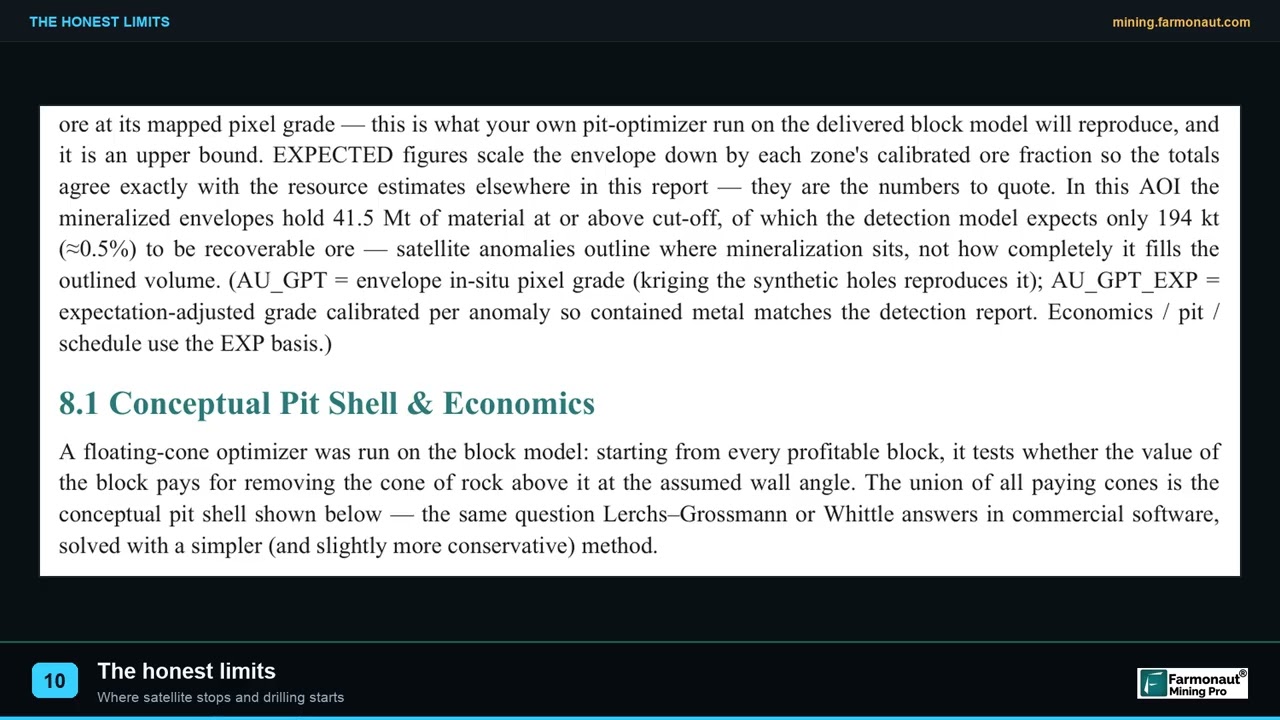
▶ Sets out the limits of satellite exploration that matter in mining due diligence. · 2:08
How satellite screening fits an exploration programme
Satellite imagery cannot measure rare earth grade through rock or soil, and it replaces neither drilling nor assays. What it does is narrow the search: mapping alteration, structure, weathering profiles and drainage, and ranking parts of a licence for sampling. For ionic clay projects the weathered cover is the target, so surface mapping and landform context are useful; for carbonatite and alkaline intrusions, ring structures and alteration patterns help to place the first traverses. Farmonaut’s satellite-based mineral detection covers rare earth elements among its 20-plus minerals, and a licence owner can use a screen like this before committing to drilling. The result is an exploration target, not a resource estimate, and it does not meet JORC or NI 43-101 standards.
The wider question of which methods work at which stage is covered in our guide to types of ore deposits, which sets out where carbonatite, ionic clay and other deposit styles fit.
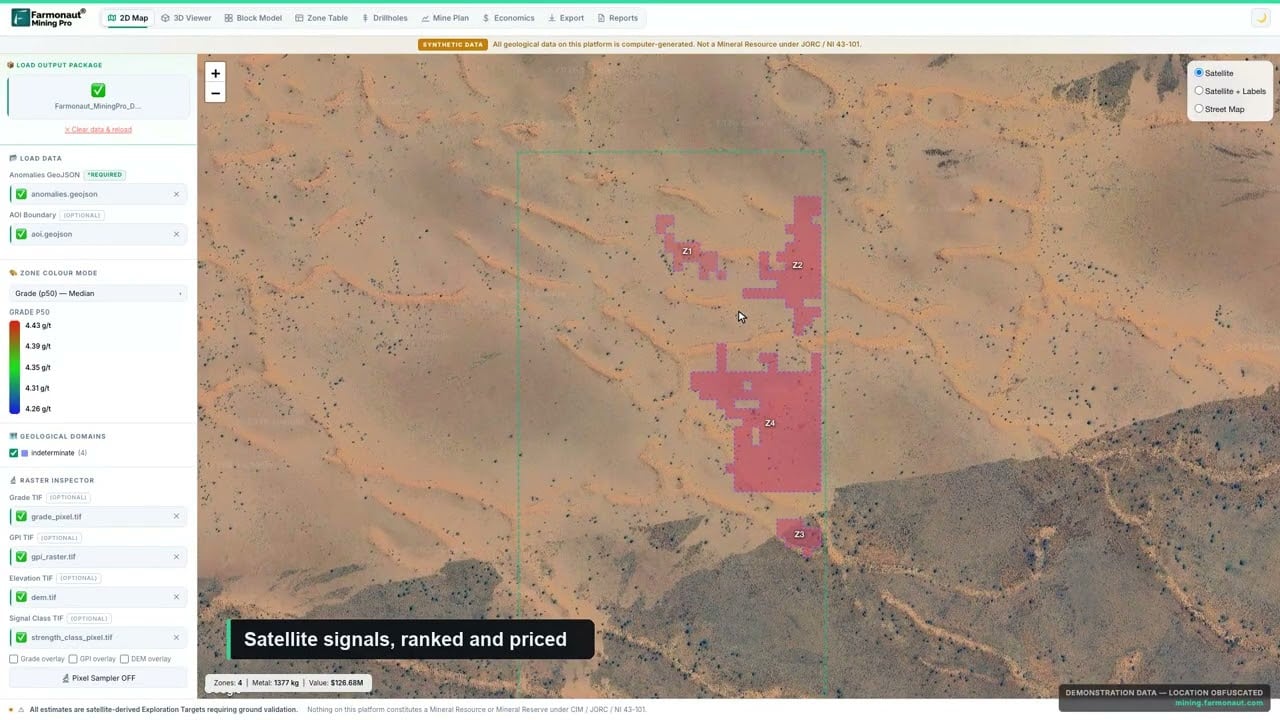
▶ Shows how a licence boundary becomes a satellite-based geological and economic screen. · 4:56
Frequently asked questions
Which rare earth exploration companies are closest to production?
By the stage each company reported, Lindian Resources (Kangankunde, Malawi) was nearest, with first production targeted for the fourth quarter of 2026. Arafura Rare Earths took a final investment decision on Nolans in May 2026, and Meteoric Resources completed a definitive feasibility study for Caldeira on 31 July 2026. Dates move, so check each company’s latest ASX announcement.
What is the difference between a rare earth explorer and a producer?
An explorer is still defining resources or studying a mine and has no commercial output. A producer sells material at scale. The USGS names Mountain Pass in California as the main US mine, and China produced about 270,000 of the world’s 390,000 tonnes in 2025.
Are there rare earth exploration companies in the United States?
Yes. American Rare Earths (Halleck Creek, Wyoming) is an Australian-listed company with a US project, and other US-focused developers are listed in our US list. Check the exchange, ticker and stage in the company’s own filings.
Which rare earth exploration companies are in Canada?
Defense Metals (TSXV: DEFN) holds Wicheeda in British Columbia, with a 2025 pre-feasibility study. The USGS credits Canada with 830,000 tonnes of reserves but no 2025 mine production, so Canadian projects remain pre-production.
Which rare earth exploration companies are listed in Australia?
The ASX holds many: Arafura (ARU), Lindian (LIN), Meteoric (MEI), Brazilian Rare Earths (BRE) and American Rare Earths (ARR) appear in this page. Australia itself mined about 29,000 tonnes in 2025 (USGS), and several ASX companies work abroad, notably in Brazil.
What does TREO grade tell me?
TREO is the total of all rare earth oxides in the rock. It does not show how much is high-value magnet material. Compare the share of magnet oxides: Halleck Creek reports about 26 percent and Meteoric 857 ppm magnet oxide within 3,524 ppm TREO (about 24 percent). Tanbreez reports 27 percent heavy rare earths, which is a different measure.
Why do two sources show different numbers for the same project?
Resources are updated, summaries mix older and newer releases, and grades may be quoted at different cut-offs. Go to the company’s ASX or SEDAR+ announcement and read the date and the cut-off grade.
Can I buy shares in these companies from this page?
This page gives facts only and is not investment advice. Exploration companies carry high risk: study results change, permits can be delayed and funding may not close.
How do I find rare earth ground to stake or explore?
Start with the geological survey and cadastre of the country or state, since rights and rules differ. In the US, the BLM and state land offices record claims. Confirm the rules with the regulator before staking or buying.
Can satellite imagery find rare earth deposits?
It can map alteration, structure and weathering that point to ground worth sampling, but only assays and drilling confirm grade. Treat a satellite result as an exploration target.
This page is for information only. It is not investment advice or legal advice. Company studies, permits and prices change; read the latest filings and confirm licence rules with the regulator.
Farmonaut mining
Screen your rare earth licence from space
Licence owners and consultants can request a quote to map alteration and structure before sampling and drilling.
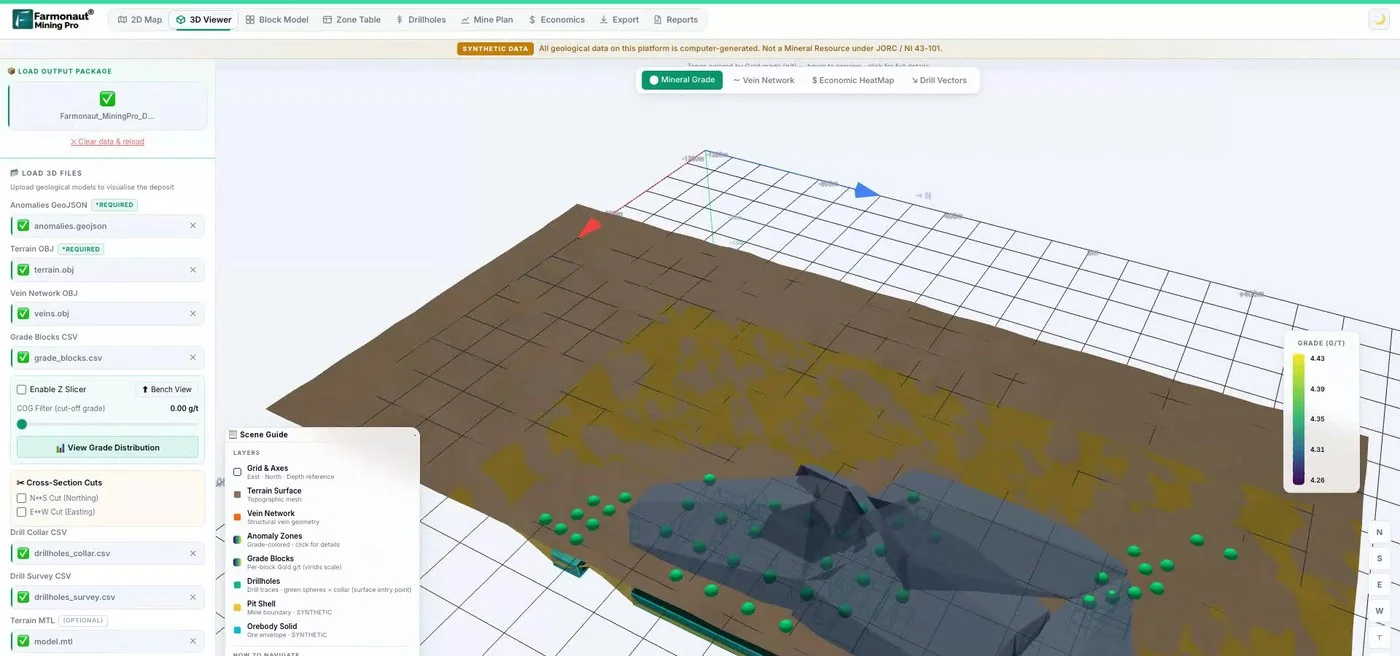
Mining Pro sample view, synthetic data
Sources
- USGS, Mineral Commodity Summaries 2026: Rare earths: pubs.usgs.gov
- Brazilian Rare Earths, Rocha da Rocha Scoping Study (ASX, 13 August 2026): announcements.asx.com.au
- Meteoric Resources, Quarterly Activities Report June 2026 (ASX, 24 July 2026): announcements.asx.com.au
- The Motley Fool Australia, Meteoric Resources releases Caldeira DFS (31 July 2026): fool.com.au
- Lindian Resources, Kangankunde construction update (ASX, 22 June 2026): announcements.asx.com.au
- American Rare Earths, Cowboy State Mine study (ASX, 30 September 2026): announcements.asx.com.au
- American Rare Earths, Halleck Creek project page: americanree.com
- Aclara Resources, Penco Module environmental approval (9 June 2026): newswire.com
- Critical Metals Corp, Tanbreez BFS 70% complete (2 September 2025): criticalmetalscorp.com
- Mining.com, Tanbreez feasibility on course for Q4 completion (2 September 2025): mining.com
- The Deep Dive, Defense Metals weighs strategic alternatives for Wicheeda (13 July 2026): thedeepdive.ca
- The Motley Fool Australia, Arafura final investment decision (21 May 2026): fool.com.au
- BriefGlance, American Rare Earths Halleck Creek feasibility drilling (June 2026): briefglance.com
- JORC Committee, JORC Code: jorc.org
- Lynas Rare Earths and Meteoric Resources, scheme implementation deed (ASX, 1 October 2026): announcements.asx.com.au
Discussion
Questions, corrections or field experience? Share them below. First-time comments are reviewed before they appear, and your email is never published.
No comments yet. Be the first to add a question or your experience.

 Tintina Mining Group
 Dalgety Minerals Pty Ltd
 Vortex Minerals Pty Ltd
 Faith At Work (Pty) Ltd
 Geotech Mining Solutions plc
 Vulcan International Limited
 Kidepo Associates
 GKY Mining
 Alkimy SARL
 Double A Trading
 GemSprout Metals Limited
 Qader Group
 Ileys General Trading
 SG Gold Mining LLC
 VRV Global Pte Ltd
 Omsri International FZE
 G.I.T.T.
 Jaunita Erss Ltd
 Almosi SARL
 SRK Consulting
 Berks Gold Limited
 Mwerezi Minerals Company Limited

 Exploration consultancy · South Africa · Gold