

Reviewed September 2026 against The Cattle Site breed standards, the Afrikaner Cattle Breeders’ Society breed standard, and FAO livestock emissions research.
Try it: Run your own numbers →
A mature Afrikaner bull weighs 750-1,000 kg (roughly 1,650-2,200 lb), a mature Afrikaner cow weighs 525-600 kg (roughly 1,160-1,320 lb), and yes — cows have lived in Africa for thousands of years, with the Afrikaner (also spelled Africander) descended from ancient Sanga cattle that blended African taurine and Asian zebu ancestry. It is one of Southern Africa’s principal indigenous beef breeds, distinguished by a red coat, a large hump and long horns that grow out sideways (horns are optional under the breed standard), and it is raised for beef, hide, and drought-resistant grazing rather than dairy.
Table of Contents
- What Is Afrikaner Cattle? Origin & Breed Identity
- Afrikaner Cattle Characteristics: Bull, Cow & Physical Traits
- Cows in Africa: Do They Live There, and Which Breeds?
- Weight, Lifespan & Production: Afrikaner vs. Other Breeds
- Economic Role of Afrikaner Cattle in Southern Africa
- How Afrikaner Cattle Fit Into the US Beef Market
- Climate Adaptation & Emissions: What the Evidence Shows
- Grazing Capacity Calculator
- Genetic Conservation & Breeding Strategy
- How Satellite Technology Supports Afrikaner Herd Management
- FAQ: Afrikaner Cattle
- Try it: Run your own numbers
What Is Afrikaner Cattle? Origin & Breed Identity
Afrikaner cattle (Africander in older English spelling) are a Sanga-type breed native to Southern Africa. Sanga cattle emerged from crossing African taurine cattle with Asian zebu (Bos indicus) stock, a lineage that moved through the region with pastoralist communities over thousands of years. The breed’s name is Afrikaans; “Africander” is the anglicized form still used in some historical breed literature, which is why both spellings return this article in a search — they refer to the same animal.
The defining traits are a red coat, a pronounced hump and long, sideways-growing horns. The breed society’s standard accepts light to dark red, plus some spotted, yellow and white animals, and lists horns as optional (breed society standard).

Afrikaner Cattle Characteristics: Bull, Cow & Physical Traits
Breed-standard mature weights, per The Cattle Site’s Africander profile:
- Afrikaner bull: 750-1,000 kg (1,650-2,200 lb) mature weight.
- Afrikaner cow: 525-600 kg (1,160-1,320 lb) mature weight.
Other documented characteristics: a red coat that reflects solar radiation better than dark hides, a loose dewlap and sheath that increase surface area for heat dissipation, and horns that in mature bulls curve forward and can exceed a meter in length. These are the same heat-adaptation mechanisms found across Sanga and zebu-influenced breeds, which is also why Afrikaner genetics show up in composite breeds like Bonsmara (Afrikaner × Hereford × Shorthorn) bred specifically for South African conditions.
The Afrikaner breed standard and studbook
The breed has been registered in South Africa since 1912. The Afrikaner Cattle Breeders’ Society says a studbook was opened that year after lobbying by Alex Holm, Director of the Potchefstroom College of Agriculture, which allowed controlled breeding of the modern Afrikaner (Afrikaner Cattle Breeders’ Society). The society is run through SA Stud Book, and performance testing is a condition of membership.
The society’s written standard for an ideal adult animal (breed society standard) sets out what judges and buyers look for:
- Colour: red in all shades from light to dark red. Studbook animals may also be red-spotted, speckled, or shades of yellow and white. Skin is amber and well pigmented.
- Horns: optional. Afrikaners may be dehorned.
- Bull: large and powerful, with a heavy neck, a wide dewlap in wrinkled folds and a large, firm hump.
- Cow: smooth, shiny coat, much narrower in the neck and face than the bull, with a hump less prominent than his.
- Temperament: alert, calm and quiet.
The standard also describes a long, deep, oval body, a loose dewlap running from chin to front legs, and short, strong pasterns. Anyone buying registered stock can check an animal’s papers with SA Stud Book through the society.
Cows in Africa: Do They Live There, and Which Breeds?
Cattle have been present in Africa for millennia, arriving with pastoralist migrations across North and East Africa before spreading south. Africa hosts dozens of indigenous breeds beyond the Afrikaner, including Nguni (South Africa, Eswatini), Ankole-Watusi (Great Lakes region), N’Dama (West Africa, trypanotolerance-selected), and Zebu-type breeds across the Sahel. The Afrikaner is specifically a Southern African breed — South Africa, Namibia, Botswana, and Zimbabwe — not a generic stand-in for “African cattle” as a category, since husbandry, disease pressure, and breed mix vary enormously by region.
If your search intent is “what does a typical African cow look like,” the honest answer is that there isn’t one type: coat color, horn shape, and body size differ by breed and by country. The Afrikaner’s red coat and large horns are specific to it and closely related Sanga breeds, not universal across the continent’s cattle population.
Weight, Lifespan & Production: Afrikaner vs. Other Southern African Breeds
The table below uses the published Afrikaner weight and lifespan figures alongside commonly cited ranges for other regional breeds. Where a figure is a breed-standard estimate rather than a directly sourced number, it is marked so you can weigh confidence accordingly.
| Breed | Mature Cow Weight | Mature Bull Weight | Documented Productive Lifespan | Primary Use |
|---|---|---|---|---|
| Afrikaner | 525-600 kg (1,160-1,320 lb) | 750-1,000 kg (1,650-2,200 lb) | Not sourced in this review | Beef, hide, drought-tolerant grazing |
| Nguni | Breed-standard estimate, not independently sourced here | Breed-standard estimate, not independently sourced here | Not sourced in this review | Beef, cultural/heritage herds |
| Bonsmara | Breed-standard estimate, not independently sourced here | Breed-standard estimate, not independently sourced here | Not sourced in this review | Commercial beef (composite breed) |
Only the Afrikaner row above is drawn from a cited source. For Nguni or Bonsmara weight and lifespan figures specific to your operation, the South African Studbook Association and individual breed societies (Nguni Cattle Breeders’ Society, Bonsmara Cattle Breeders’ Society) publish current breed standards and are the correct primary source rather than secondary aggregation.
Afrikaner cattle characteristics that matter most for buyers evaluating the breed: a heat-reflective red coat, high heat and drought tolerance, and registration through a breed society that requires performance testing.
Economic Role of Afrikaner Cattle in Southern Africa
Afrikaner cattle are raised commercially and by smallholders across South Africa, Namibia, Botswana, and Zimbabwe. Their economic case rests on two documented advantages rather than yield alone:
- Forage conversion: the breed is documented as able to maintain condition on sparse, low-quality forage where exotic breeds require supplementation.
- Disease and heat tolerance: reduces veterinary intervention frequency relative to imported breeds not acclimatized to regional tropical disease pressure.
Hides support regional leather production, and horns and bone are used in artisanal crafts, though no published per-unit pricing for these secondary products was found for this review — check with a regional agricultural cooperative or livestock auction house for current local prices, since these are set locally and not tracked in any national statistical series identified here.
How Afrikaner Cattle Fit Into the US Beef Market
Afrikaner cattle are not a significant presence in US commercial beef production; the breed’s US footprint runs through niche and heritage-breed registries rather than the commodity cattle market.
No published price differential exists for Afrikaner-sourced beef in US markets, and USDA grading does not report carcass yield or marbling by breed, so a direct Afrikaner-vs-Angus dollar comparison in US conditions cannot be made from public data.
What is genuinely unpublished, and worth stating plainly rather than guessing at: current US Afrikaner cattle inventory and registration counts, US-climate average daily gain and feed conversion figures for the breed, and any US market premium or discount for Afrikaner-influenced beef. US breed registries are the correct source to contact directly for current US herd numbers, since USDA NASS does not break out cattle inventory by breed.
For US readers evaluating the breed for heat-stressed regions (the Gulf Coast, the Southern Plains, parts of the Southwest), the closer published comparison point is Brahman, a zebu-influenced breed with an established US commercial presence and USDA-tracked market data, rather than Afrikaner, which does not have comparable US statistical coverage.
Afrikaner-specific US market price per head, current US registration counts, and US-climate feed conversion data are not published anywhere identified in this review. Contact a US breed registry or heritage-breed cattle broker directly for current figures — do not trust any site that states these numbers without sourcing them.

Climate Adaptation & Emissions: What the Evidence Shows
Livestock supply chains produce an estimated 7.1 gigatonnes of CO₂-equivalent a year, about 14.5% of human-induced greenhouse gas emissions, and beef and cattle milk account for the majority of that (FAO, Tackling Climate Change Through Livestock (2013)).
The relevance to a heat- and drought-adapted breed like the Afrikaner is direct: animals that maintain condition without supplementary feed, water hauling, or shade infrastructure reduce the input-side emissions and cost associated with cow-calf operations in hot climates. This is a documented mechanism, not a breed-specific emissions measurement — no study identified in this review measures Afrikaner cattle emissions directly against Angus or Brahman under controlled conditions.
Grazing Capacity Calculator
Estimate how many breeding cow-equivalents your pasture can carry, adjusted for the Afrikaner’s documented tolerance of sparser forage.
Run your own numbers
Assumes your local extension office’s acres-per-cow figure is accurate for your soil and rainfall; does not account for seasonal forage variation, supplemental feeding, or rotational grazing intervals. The breed-tolerance adjustment is a directional estimate based on documented low-forage tolerance, not a measured stocking-rate study.
Genetic Conservation & Breeding Strategy
Purebred Afrikaner populations face dilution pressure as commercial operations cross toward higher-yielding composite breeds. Breed societies respond with three standard tools, none unique to this breed but all applicable here:
- Registered breeding programs that verify pedigree and maintain minimum purity thresholds before certifying an animal as purebred Afrikaner.
- Semen and embryo banking to preserve genetic diversity independent of any single herd's survival.
- Digital traceability to document lineage and management practice, which supports both conservation record-keeping and premium-market positioning — see Farmonaut's product traceability platform for one implementation of blockchain-based origin and breed documentation.
Anyone sourcing Afrikaner breeding stock, in Southern Africa or for a US heritage-breed program, should verify registration status directly with the relevant breed society rather than relying on a seller's unverified claim — the same standard that applies to any registered livestock breed.

How Satellite Technology Supports Afrikaner Herd Management
Whether managing a Southern African extensive grazing operation or a smaller heritage-breed herd, the operational questions are the same: how much forage is on the ground, where is it thinning, and is the herd's carbon and land-use footprint documented for buyers who ask. Satellite and digital tools now answer these without a physical pasture walk:
- Vegetation and soil moisture monitoring to time rotational grazing moves before a paddock is overgrazed.
- Carbon footprint tracking via Farmonaut's carbon footprinting tool, relevant for producers documenting regenerative grazing claims to buyers or certification bodies.
- Breed and origin traceability through blockchain-based product traceability, which supports heritage and premium-market claims.
- Fleet and resource tracking for operations managing feed delivery, water hauling, or multi-paddock logistics via Farmonaut's fleet management tools.
- Financing support through satellite-verified crop loan and insurance products, which use remote monitoring to reduce verification friction for lenders.
- Large-scale herd and land management via the agro-admin platform, built for operations managing multiple paddocks or properties.
Developers building custom herd-and-land monitoring tools can integrate directly through the Farmonaut Satellite API, with full technical reference in the API developer documentation.







FAQ: Afrikaner Cattle
- How much does an Afrikaner bull weigh?
750-1,000 kg (1,650-2,200 lb) mature weight, per The Cattle Site's published breed standard. - How much does an Afrikaner cow weigh?
525-600 kg (1,160-1,320 lb) mature weight, per the same breed standard. - Is "Africander cattle" the same as Afrikaner cattle?
Yes. Africander is the anglicized spelling used in older and some international breed literature; Afrikaner is the Afrikaans-derived spelling in current use. Same breed. - Do cows live in Africa?
Yes, and have for thousands of years. Cattle arrived through pastoralist migrations and Africa today hosts dozens of indigenous breeds — Afrikaner, Nguni, Ankole-Watusi, N'Dama, and multiple zebu types — each specific to a region, not one uniform "African cow." - What are Afrikaner cattle characteristics?
Red coat, long sideways-growing horns (optional under the breed standard), Sanga-type build with a pronounced hump, high heat and drought tolerance. - Are Afrikaner cattle raised in the United States?
In small numbers through heritage-breed registries; the breed has no meaningful presence in US commodity beef production and no USDA-tracked inventory or pricing data by breed exists. No US registry figure for the breed was found for this review. - How does the Afrikaner compare to Brahman for hot climates?
Both are heat- and drought-adapted with zebu ancestry, but Brahman has established US commercial infrastructure and USDA market coverage that Afrikaner does not — making Brahman the more practical choice for producers relying on US market data. - What technology helps manage Afrikaner or other extensive-grazing herds?
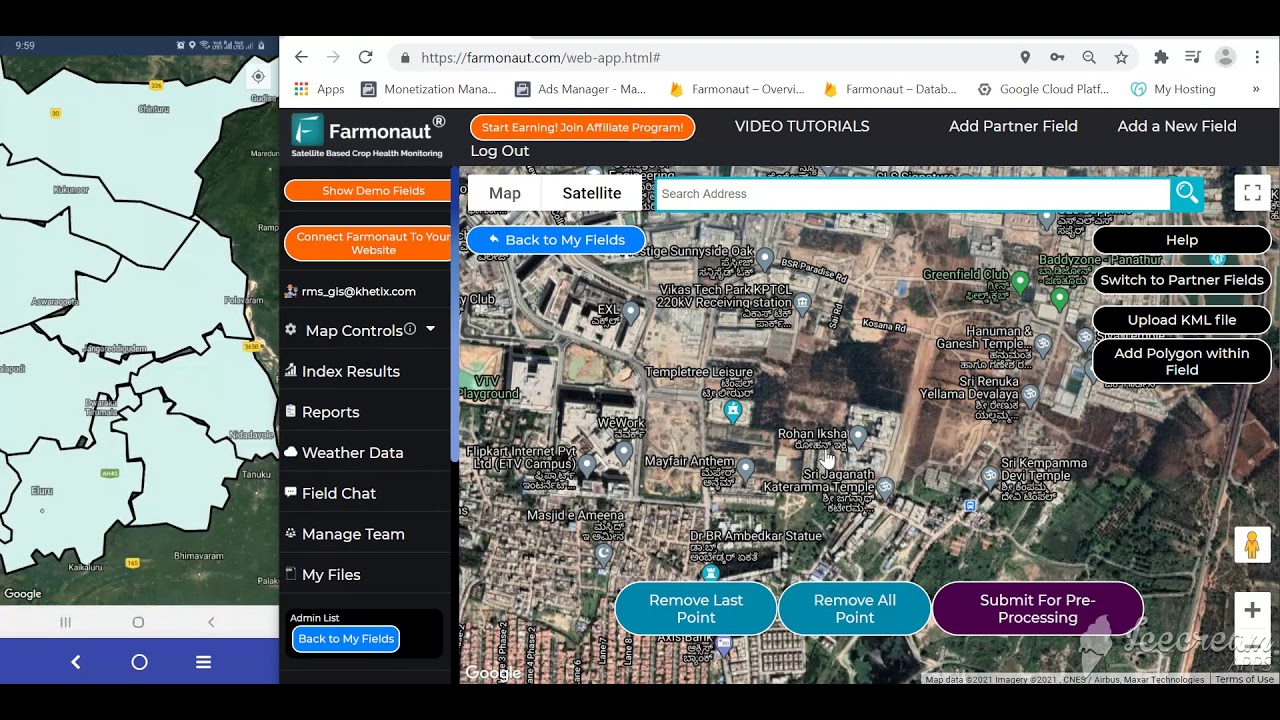
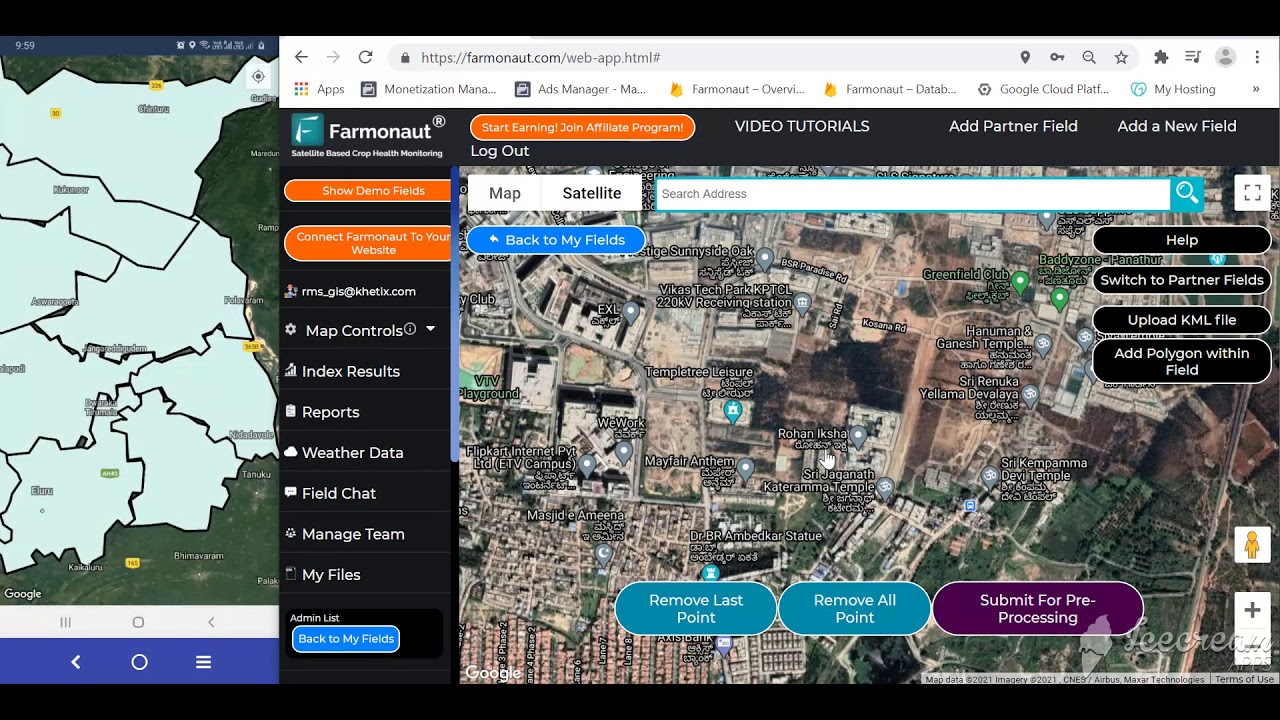
Satellite vegetation and soil-moisture monitoring, carbon footprint tracking, and blockchain traceability — see Farmonaut's large-scale farm mapping platform and the Farmonaut web and mobile apps.







Further reading:
Bottom Line
Afrikaner cattle are a documented, heat- and drought-adapted Southern African beef breed: bulls 750-1,000 kg, cows 525-600 kg. The breed has essentially no tracked presence in US commodity beef statistics, so treat any US price or inventory figure for it with suspicion unless it traces to a named breed registry. For the durable questions — is a breed's forage tolerance, lifespan, or heat resilience genuinely documented, or just claimed — check the primary breed standard and peer-reviewed livestock research directly, using the sources cited throughout this page, rather than a secondary aggregator.
Producers managing extensive grazing herds, Afrikaner or otherwise, can start tracking pasture condition and carbon footprint today via Farmonaut's platform.

 Concept Global
 Kubota
 FFBS
FFBS Jontra
 Kalustyan
 Tucor
Tucor Geno
Geno Hayleys Agriculture
 Linx Agritech
 Adinet
 Save Your Soils
 Grandstream Algérie
 XOS Realty
 Geospatial Lab Africa
 Agro La Gándara
 HIPSAC
 ZOL Zimbabwe
