

Reviewed August 2026 against USDA Economic Research Service, Abdul Latif Jameel Poverty Action Lab (J-PAL/MIT), and NIH/NCBI meta-analysis data.
Urea supplies roughly half the world’s nitrogen fertilizer, and how it is used differs sharply by region: in the United States it is a $663-per-metric-ton input applied at precise per-acre rates on corn and wheat; in Mali it is a scarce input that most smallholder rice farmers still don’t use at recommended rates even when it’s subsidized. Biological improvers — microbial inoculants, cover crops, compost — can cut nitrogen fertilizer needs by up to 52% without a yield penalty, according to a peer-reviewed meta-analysis. This article lays out the actual numbers behind urea use in agriculture, what Mali’s fertilizer data shows, and where biological improvers genuinely fit into a nitrogen program.
Urea Uses in Agriculture: What the Numbers Show
Urea (46% nitrogen by weight) is the highest-volume nitrogenous fertilizer on Earth. Global consumption reached 59.3 million metric tons in 2023, per Statista data drawn from USDA-linked sources. The United States accounted for 11.6 million metric tons of nitrogen fertilizer consumption that same year, according to the USDA Economic Research Service’s Fertilizer Use and Price data product.
The practical question for a US farmer is not “does urea work” — it’s “how much, and at what cost.” USDA ERS reported the following for the 2024 crop year:
- Corn: average nitrogen application rate of 151.8 pounds per acre
- Wheat: average nitrogen application rate of 77.15 pounds per acre
- Retail urea price: $663 per metric ton in the United States as of June 2025, per USDA ERS Charts of Note
- Jump to the calculator
At $663 per metric ton (2,204.6 lb), a straight-urea (46-0-0) application supplying 151.8 lb of actual nitrogen to an acre of corn requires roughly 330 lb of urea product, which at that price works out to about $99 of urea per acre for nitrogen alone — before accounting for splits, other N sources, or price paid by a specific supplier. That’s the kind of calculation the tool further down this page runs automatically for any price and rate you enter, since $663/ton is a point-in-time figure that will have moved by the time you’re reading this.
Urea’s advantages in US row-crop agriculture — corn, wheat, and grass/forage systems alike — are why it dominates: high nitrogen density lowers freight and storage cost per unit of N, it handles well in bulk spreaders, and it’s less corrosive than ammonium nitrate or anhydrous ammonia during storage and transport. For grass and forage-specific application guidance, see Farmonaut’s breakdown of nitrogen fertilizer for grass. The tradeoff is nitrogen loss: urea hydrolyzes to ammonium and can volatilize as ammonia gas when left on the soil surface, especially in warm, dry, or windy conditions, and unconverted nitrogen can also be lost as nitrous oxide (N₂O), a greenhouse gas roughly 265–298 times more potent than CO₂ per ton over a 100-year horizon per EPA’s standard global warming potential figures. Incorporating urea into the soil within 24–48 hours of application, or applying it ahead of rain, is the standard agronomic mitigation — no biological input required.

Mali Agriculture: Fertilizer Access and Yield Data
Mali’s agriculture sector is dominated by smallholder rice, millet, and sorghum production, and fertilizer access — not fertilizer chemistry — is the binding constraint. The clearest dataset on this comes from a randomized study run by researchers affiliated with the Abdul Latif Jameel Poverty Action Lab (J-PAL, MIT) on Malian rice farmers between 2015 and 2017.
The baseline numbers are stark. Smallholder rice farmers in the study applied an average of just 38 kg of fertilizer per hectare and harvested about 1,600 kg of rice per hectare. By contrast, farmers in well-irrigated Malian regions who applied 156–308 kg of fertilizer per hectare — four to eight times the smallholder rate — harvested around 4,500 kg per hectare, nearly triple the yield.
The study also found that when farmers were given full fertilizer grants — removing the cost barrier entirely — rice yields rose 31% relative to farmers who did not receive the grant. Yet access alone didn’t close the gap for everyone: even with a 33–44% subsidy on fertilizer cost, only 30% of female rice farmers in the study used fertilizer at all. That gap points to constraints beyond price — likely including land tenure, credit access, and control over household farm-input decisions — that a subsidy alone doesn’t solve. Full methodology and data are published by J-PAL’s Mali fertilizer profitability study.
For agriculture in Mali specifically, this means the highest-leverage intervention documented in the data isn’t a different fertilizer type — it’s closing the input-access and adoption gap for farmers, especially women farmers, who are already willing to farm rice at commercial intensity but are fertilizing at roughly a quarter of the rate that produces well-irrigated yields. Where urea and other nitrogen sources are available, correct timing and placement (avoiding surface broadcasting on dry, unincorporated soil, which accelerates volatilization loss in Mali’s hot, low-rainfall conditions) still matters for getting full value from every kilogram applied.

For agricultural monitoring in fertilizer-constrained regions like Mali, satellite tools can track crop health, flooding, and drought risk without requiring ground survey infrastructure. Explore Farmonaut’s Large-Scale Farm Management platform for satellite-based advisory that supports resource-application decisions in exactly these conditions.

Financial institutions serving Mali’s smallholder sector can also use satellite-based verification to underwrite crop loans and insurance against actual field conditions rather than self-reported acreage: Farmonaut Crop Loan & Insurance Verification.
Biological Improvers: What They Are and What They Replace
“Biological improvers” — also called biofertilizers or biologicals — are microbial or organic inputs (bacteria, fungi, compost, cover crops) that improve nutrient availability or uptake without being synthetic mineral fertilizer. They are a genuinely small but measurable slice of the fertilizer market: biofertilizers represent about 2% of the global $299 billion fertilizer market, according to a market estimate from S2G Investments cited by CropLife.
The performance data is more specific than the market-share number suggests. A peer-reviewed meta-analysis published via NCBI/NIH found that biofertilizers can allow a 52% reduction in nitrogen fertilizer application without a corresponding yield loss. A separate meta-analysis, also indexed on NCBI/NIH, found an average maize yield increase of 15.3% from biofertilizer use. Both figures come from meta-analyses (pooled results across multiple field studies), not single-farm trials, which is why they’re usable as planning benchmarks rather than a guarantee for any one field.
Common biological improver categories referenced in agronomy literature and used across the regions this article covers include:
- Rhizobium and Azospirillum inoculants — bacteria that fix atmospheric nitrogen or promote root growth, most established in legume and cereal systems
- Mycorrhizal fungi — root-associating fungi that extend a plant’s effective root surface area for phosphorus and micronutrient uptake
- Urease inhibitors — compounds (some plant-derived) that slow the enzymatic breakdown of urea, reducing the window for ammonia volatilization
- Compost and green manure — organic matter that raises soil organic carbon and buffers pH over multiple seasons
- Nitrogen-fixing cover crops — legumes such as cowpea and groundnut, used as rotation or intercrop nitrogen sources
Read more on the categories and product types in Farmonaut’s guide to biological inputs in farming.
It’s worth being direct about a gap here: retail pricing for biological improvers in a US per-acre or Mali per-hectare context is not available in the sourcing used for this article — market-share and yield-response data exist, but product-level cost comparisons against urea do not. If you’re evaluating a specific biological product, get its labeled application rate and per-unit cost from the supplier and run it through the calculator below against your urea baseline; that is a more reliable comparison than any published national average, because biofertilizer pricing varies by formulation, carrier, and regional distributor in a way bagged urea pricing does not.

Track soil carbon and fertility trends remotely with Farmonaut’s Carbon Footprinting tool, which gives a way to measure whether a biological-input program is actually changing soil organic carbon over time rather than relying on visual inspection alone.
US vs. Mali: A Side-by-Side Comparison
| Metric | United States | Mali | Source & Date |
|---|---|---|---|
| Nitrogen fertilizer consumption | 11.6 million metric tons (2023) | Not published in sourcing used here — see refresh guide below | USDA ERS |
| Typical field-level input rate | 151.8 lb N/acre (corn), 77.15 lb N/acre (wheat), 2024 | 38 kg fertilizer/ha (smallholder rice baseline) | USDA ERS; J-PAL |
| Higher-input comparison | — | 156–308 kg fertilizer/ha (well-irrigated regions) | J-PAL Mali study |
| Resulting yield (rice, Mali) | — | 1,600 kg/ha (baseline) vs. 4,500 kg/ha (well-irrigated) | J-PAL Mali study |
| Urea retail price | $663/metric ton (June 2025) | Not published in sourcing used here — see refresh guide below | USDA ERS Charts of Note |
| Primary constraint documented | Volatilization/N₂O loss management, price volatility | Input access and adoption (only 30% of subsidized female rice farmers used fertilizer) | USDA ERS; J-PAL |
The comparison makes the structural difference obvious: US agriculture’s urea challenge is loss-rate optimization on an input farmers already have reliable access to, while Mali’s challenge is access and adoption before optimization is even the relevant question for most smallholders.
Nitrogen Cost & Reduction Calculator
Enter your own urea price, application rate, and acreage to see the actual nitrogen cost per acre and what a biofertilizer-driven nitrogen reduction (using the 52% figure from the NCBI/NIH meta-analysis as a ceiling you can adjust) could save.
Assumptions: urea is treated as 46% nitrogen by weight; the calculation does not include application labor, equipment, freight, or price breaks for bulk purchase, and the reduction percentage is a planning input you set — it is not a guarantee for any specific field, crop, or biofertilizer product. The 52% default is the ceiling reported in a nitrogen-reduction meta-analysis, not an average outcome.
Monitoring Nitrogen and Soil Health with Satellite Data
Whether the question is “is this urea application being used efficiently” or “is this biofertilizer program actually working,” the honest answer requires measurement, not assumption. Farmonaut’s satellite platform provides vegetation health (NDVI), soil moisture, and stress-detection layers that make site-specific nitrogen and biological-input management possible at field scale.
- Satellite-Based Monitoring: Vegetation health and soil moisture data support precise urea and biological input timing, reducing both under- and over-application.
- Jeevn AI Advisory System: Location-specific recommendations for fertilizer and irrigation scheduling, combining conventional and biological input strategies.
- Blockchain-Based Traceability: Supply-chain transparency for crops grown under documented sustainable input programs — see Farmonaut Product Traceability.
- Environmental Impact Monitoring: Carbon footprint and farm-sustainability dashboards for tracking input-program outcomes over multiple seasons.


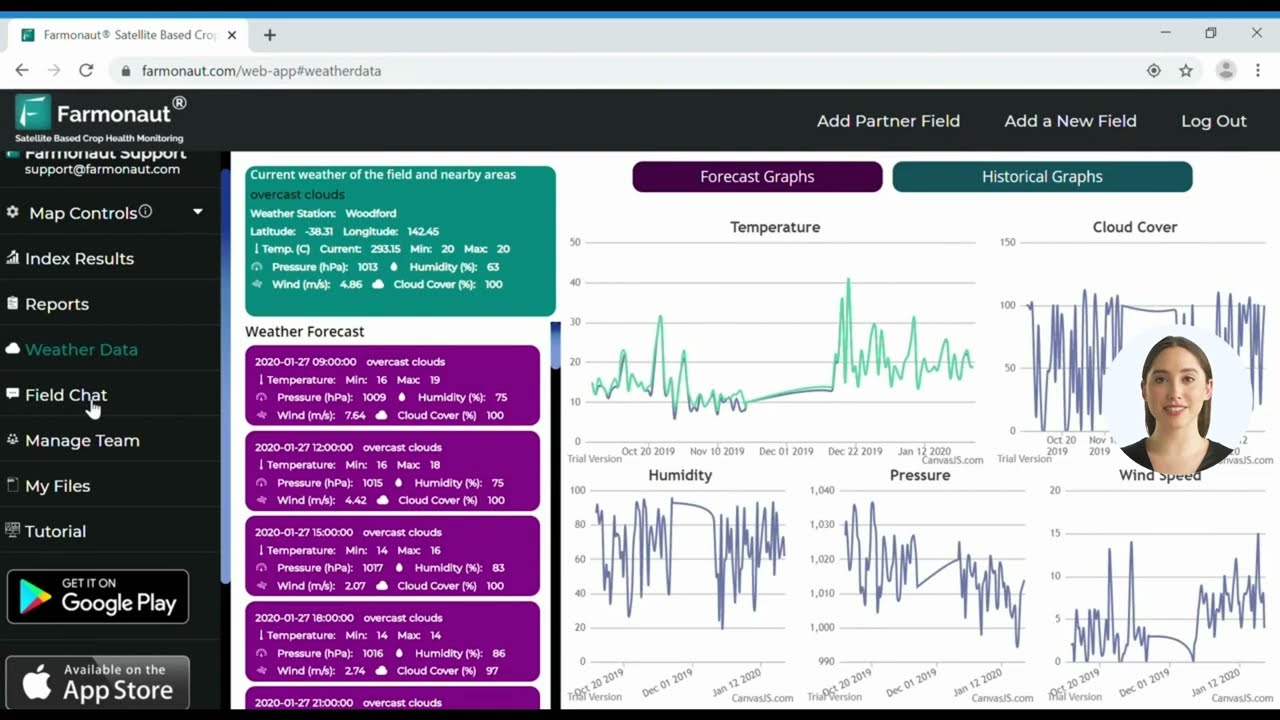
Developers can build on this data directly through the Farmonaut Satellite API and API Developer Docs, including weather-linked applications — see also weather forecasting approaches in agriculture for the forecasting layer behind timing decisions.
For operations managing input logistics across multiple fields, Farmonaut Fleet Management helps coordinate machinery and fertilizer distribution to cut redundant trips and associated emissions.


A Durable Checklist: Verifying Any Urea or Biofertilizer Claim
Fertilizer prices, application-rate averages, and even yield-response percentages shift year to year. Rather than trusting any single published figure indefinitely, use this checklist to verify a claim before acting on it — it applies equally to urea and to biological improvers, and it does not expire:
- Identify the vintage. Every input price or application rate has a reporting period. If a source doesn’t state one, treat the number as unverifiable.
- Match the geography. A national average (US) or a study-region average (Mali) may not reflect your state, county, or district — check for sub-national breakdowns before applying a figure to your own field.
- Check whether it’s a single study or a meta-analysis. Meta-analysis figures like the 52% nitrogen-reduction ceiling and 15.3% maize yield increase cited above are pooled across many trials and are more stable planning benchmarks than any one field trial.
- Separate correlation from causation in adoption data. Mali’s finding that only 30% of subsidized female farmers used fertilizer is an adoption statistic, not a statement about fertilizer’s agronomic effect — don’t conflate the two when reading similar data elsewhere.
- Re-price before budgeting. Urea at $663/metric ton was a June 2025 US retail figure. Re-check current pricing (see the refresh guide below) before committing input budget.
- Confirm the source is still the authority. USDA ERS, J-PAL, and NCBI/NIH are the sources this article rests on; if a newer official dataset supersedes one of them, defer to the newer one.
How to Get Fresher Numbers Than This Article
Every figure above will age. Here is exactly where to get the current version of each:
- US nitrogen application rates by crop and state: USDA NASS QuickStats (nass.usda.gov) publishes updated figures annually after harvest, filterable by crop, nutrient, and state. Data typically lags the current season by about six months.
- Global and US urea/fertilizer prices: FAO’s GIEWS Food Price Index tracks monthly international prices; USDA’s AMS Fertilizer Market News publishes weekly US Gulf/NOLA spot prices for a near-real-time domestic benchmark.
- Mali fertilizer consumption trends: CEIC Data maintains an annual series from 1961 to the present; the World Bank’s Agriculture Database also tracks fertilizer use per hectare by country and year.
- Biofertilizer market size and product-level pricing: not consistently published at per-acre or per-hectare resolution; request current formulation pricing directly from suppliers and benchmark it against your own urea cost using the calculator above.


Further reading:
Frequently Asked Questions
Q1. What are the main uses of urea fertilizer in agriculture?
Urea’s primary use is as a concentrated nitrogen source (46% N by weight) for row crops, grasses, and cereals. In the United States, USDA ERS data put average 2024 nitrogen application rates at 151.8 lb/acre for corn and 77.15 lb/acre for wheat. Globally, urea accounted for 59.3 million metric tons of nitrogen fertilizer consumption in 2023.
Q2. What is urea used for in agriculture beyond raising yield?
Beyond yield response, urea use in agriculture includes correcting nitrogen deficiency visible in crop canopy color and vigor, supporting protein content in wheat and other grain crops, and serving as the nitrogen component in blended or split-application fertility programs alongside phosphorus and potassium inputs.
Q3. Why does Mali’s agriculture sector struggle with fertilizer access?
J-PAL’s 2015–2017 study of Malian rice farmers found smallholders applying just 38 kg of fertilizer per hectare against a national well-irrigated comparison of 156–308 kg/ha — and even with a 33–44% subsidy, only 30% of female rice farmers used fertilizer at all. The constraint documented is access and adoption, not a lack of agronomic benefit: full grants raised yields 31% in the same study.
Q4. Do biological improvers actually reduce the need for urea?
A peer-reviewed meta-analysis indexed on NCBI/NIH found biofertilizers can enable up to a 52% reduction in nitrogen fertilizer application without yield loss, and a separate meta-analysis found a 15.3% average maize yield increase from biofertilizer use. Biofertilizers remain roughly 2% of the global $299 billion fertilizer market, per S2G Investments’ estimate, so adoption at scale is still limited relative to the documented agronomic potential.
Q5. Are biological improvers a full replacement for urea?
Not based on the data available: the 52% figure is a reduction ceiling from a meta-analysis, not full replacement, and it applies to nitrogen fertilizer broadly rather than urea specifically. The realistic use case documented in the research is integration — using biological inputs to lower the required urea rate — rather than elimination.
Q6. How much does urea cost per acre in the United States?
At the USDA ERS June 2025 retail price of $663 per metric ton and the 2024 average corn nitrogen rate of 151.8 lb/acre, urea for corn nitrogen alone costs approximately $99 per acre before freight, application, or blending costs. Use the calculator above with your local urea price to get a current figure for your own field.
Q7. Where can I access Farmonaut’s satellite tools for tracking fertilizer and soil health?
Farmonaut’s platform is accessible via the web app, Android app, iOS app, and the API for developers. The traceability solution supports transparent, verifiable supply chains for sustainably produced crops.

 Mera Farmhouse
 GalaxEye Space
 Sun Palm Australia
 Grandstream Algérie
 XOS Realty
 Geospatial Lab Africa
 Agro La Gándara
 HIPSAC
 ZOL Zimbabwe
 Juligerm
 AdBio
AdBio MISE Maroc
 NWNS
NWNS Red August Group
 Farm Inc
 WeMe Global
 Agrotoken
 Blue BearX
 Insignito
 DnCubed
