

Table of Contents
- Introduction: The Quiet Revolution in Senegalese Agriculture
- Why Artificial Intelligence is Transforming Agriculture in Sénégal
- Senegal’s Core Challenges: Agriculture and Climate Change
- Agriculture Startup Sénégal: 7 AI Solutions for Climate Change
- Comparative AI Solution Impact Table
- Supporting Solutions: Digital Inputs, Access to Credit & Markets
- Farmonaut: Satellite & AI-Driven Innovation for Modern Agriculture
- Opportunities for Adoption & Scaling in the Senegalese Context
- Key Pillars of Future-Proofing Senegalese Agriculture
- Frequently Asked Questions (FAQ)
- Conclusion: Embracing the Agricultural Revolution
Agriculture Startup Sénégal: 7 AI Solutions for Climate Change
Agriculture in Sénégal is undergoing a quiet revolution—one that is driven by an innovative startup ecosystem and firmly rooted in the realities of local fields and rural communities. In the Senegalese context, the emergence of technology-powered ventures is reimagining how farmers plant, protect, and profit from their land. Artificial intelligence in agriculture is reshaping practices with precision farming, market linkages, and climate resilience at their core.
- ✔️ Key Benefit: AI solutions deliver actionable recommendations to optimize yields and reduce input waste.
- 📊 Data Insight: Over 7 AI-powered solutions now operate in Senegal’s agricultural startups to confront climate change and enhance market access.
- ⚠️ Risk: Rural farmers often face limited digital infrastructure and scarce data, requiring platforms that work offline or in low-connectivity zones.
- 🌱 Practical Impact: Adoption of site-specific AI guidance markedly improves water, fertilizer, and seed use.
- 🔗 Better Access: Startups streamline delivery of certified seeds, credit services, and real-time agronomic support at scale.

Why Artificial Intelligence is Transforming Agriculture in Sénégal
Across Sénégal and West Africa, smallholder agriculture sustains millions of households and forms the backbone of rural communities. Yet, the core challenge remains: meeting the needs of a growing population while navigating the risks of climate variability, limited access to quality inputs, sporadic advisory services, and erratic markets.
Here lies the transformative opportunity—practical tech solutions that can be adopted at scale even by resource-limited farmers, narrowing the gap between traditional practices and next-generation farming.
- 💡 AI-driven agriculture platforms analyze weather, soil conditions, crop health, and more.
- 📱 Mobile accessibility enables info delivery directly to field-workers—even offline.
- 🌾 Generates precise, local recommendations on when and what to plant, irrigate, fertilize, or treat for pests.
- 🌦️ Anticipates stressors like drought before they impact the field.
- 🔄 Allows real-time adjustments in response to changing conditions.
Senegal’s Core Challenges: Agriculture and Climate Change
The intersection of “agriculture” and “climate change” is not merely academic in West Africa—it’s visible in every ruined crop after an unseasonal drought, every field abandoned because inputs didn’t arrive, and every wasted harvest unable to reach a paying market. For Senegalese smallholders and startups attempting to thrive, several persistent obstacles must be overcome:
In Senegal, climate variability—such as erratic rainfall, extended heatwaves, and new pest incursions—remains the primary check on reliable yields and profitability.
- 🌧️ Rainfall Variability: Irregular or delayed rains cause disrupted sowing or forced crop failure.
- 🔥 Heat Stress: Prolonged high temperatures reduce productivity and risk total crop loss.
- 🦗 New & Resistant Pests: Climate change alters pest pressure and increases resistance to conventional controls.
- 💧 Shrinking Water Resources: Higher demand for irrigation with less available clean water threatens farm sustainability.
- 🚛 Market Disturbance: Disconnected value chains leave perishables unsold and incomes uncertain.
Traditional responses to these stressors—blanket irrigation, high fertilizer rates, or broad pesticide use—are costly and environmentally unsustainable. Smart agriculture “startup” models, aided by “artificial intelligence”, now offer precise, data-driven alternatives.
Agriculture Startup Sénégal: 7 AI Solutions for Climate Change
The heart of Senegal’s agricultural transformation involves the deployment of artificial intelligence to translate complex, often scarce data into actionable farming decisions. Here are seven leading-edge AI-enabled solutions currently transforming farming in Sénégal:
-
Satellite-Based Crop Health Monitoring (e.g. NDVI, multispectral analytics) for proactive crop stress and pest detection.
- Enables timely, field-level recommendations for fertilizer, irrigation, and pest management.
-
AI-Powered Weather Analysis & Drought Prediction
- Optimizes planting windows and irrigation schedules based on hyper-local forecasts and soil moisture tracking.
-
Smart Irrigation Systems Integrated with Machine Learning
- Dynamically adjusts water application rate and timing—maximizing water use efficiency and crop resilience.
-
AI-Driven Nutrient Optimization
- Analyzes soil & plant data to deliver precise fertilizer plans; reduces input waste and environmental impact.
-
Automated Pest and Disease Detection via Machine Vision
- Leverages drone/imagery and AI pattern recognition to enable targeted, rather than blanket, interventions.
-
Blockchain-Based Supply Chain Traceability
- Builds market trust, validates product origin, and strengthens market access for producers.
-
AI-Powered Digital Marketplace & Advisory Platforms
- Connects smallholders with inputs, finance, and buyers while offering site-specific decision support and extension services.
“Agriculture startups in Sénégal adopting AI are reducing operational costs and unlocking new revenue streams by directly connecting producers with buyers, leveraging traceability and AI-based risk analytics.”
Comparative AI Solution Impact Table
| Solution Name | Core Technology | Main Application | Estimated Yield Improvement (%) | Estimated Input Cost Reduction (%) | Climate Resilience Boost (1-5 scale) | Market Access Enhancement (1-5 scale) |
|---|---|---|---|---|---|---|
| Satellite Crop Monitoring | Satellite Imaging + AI | Crop Stress & Pest Detection | 18-28 | 10-28 | 5 | 3 |
| AI Weather & Drought Prediction | Machine Learning / Local Weather Data | Drought, Rain, Heat Tracking | 15-22 | 8-13 | 5 | 2 |
| Smart Irrigation Systems | Sensor Networks + ML Models | Water Scheduling & Management | 14-20 | 18-30 | 4 | 1 |
| AI Nutrient Optimization | Soil Data, IoT, ML | Precision Fertilizer Application | 12-18 | 20-38 | 3 | 2 |
| Automated Pest Detection | Machine Vision, Drones, AI | Targeted Pest & Disease Alerts | 16-22 | 7-15 | 3 | 2 |
| Blockchain Traceability | Blockchain, Digital Ledgers | Supply Chain Authentication | up to 12 | 4-8 | 3 | 5 |
| Digital Marketplace & Advisory Platforms | Mobile Apps, API, AI | Input Supply, Buyer Matching | 10-17 | up to 11 | 2 | 5 |
These comparative estimates illustrate both the productivity leap and climate resilience potential that Senegalese “agriculture” and “startup” ecosystems can offer by deploying advanced “artificial intelligence” in “farming”.

When deploying AI solutions for agriculture, ensure platforms work offline or under intermittent connectivity for rural areas—boosting reliability for farmers with limited infrastructure.
Supporting Solutions: Digital Inputs, Access to Credit & Markets
The Senegalese “agriculture” “startup” scene extends beyond farm-level AI to reimagine the entire input supply and market access chain. Traditionally, the input ecosystem in “rural” communities is patchy and costly, with slow, sometimes opaque supply chains and high dependency on intermediaries.
- ✔️ Certified Seeds & Amendments: Startups directly deliver input packages (improved seed varieties, biofertilizers, and amendments) at the farm gate, often accompanied by digital traceability.
- ✔️ Pay-as-you-Go and Microcredit Models: Flexible financial schemes reduce upfront costs and align repayments with harvest income, addressing traditional barriers to credit.
- ✔️ Bundled Agronomic Advisory: Mobile platforms integrate extension services with each input sale, amplifying the impact of smart recommendations.
Failing to implement traceability in the supply chain weakens market trust and can limit export opportunities for Senegalese producers!
Digital advisory platforms and e-marketplaces are emerging as a cornerstone of the modern agricultural network. Whether it’s smarter aggregation, standardized grading, or improved logistics—these digital solutions empower smallholders and “startups” alike to access better markets and higher prices.
- 💸 Market Access: AI-driven grading and online contracts cut out high-cost intermediaries, while traceability tools build trust with buyers.
- 🚚 Logistics Optimization: Tech-enabled aggregation and transport planning reduces spoilage and improves delivery times.
- Access to up-to-date agronomic advice for site-specific practices
- Streamlining input procurement and payment via mobile money
- Connecting farmers directly with buyers for better price realization
- Supporting cooperative-based aggregation for consistent, graded supply
- Increasing bargaining power for small-scale producers

How Blockchain Traceability Drives Market Trust
-
Blockchain ledgers allow buyers to track agricultural products from farm to market, ensuring authenticity and enabling compliance with export standards.
» Check out Farmonaut’s blockchain-based Traceability Solutions for agriculture and beyond.
AI-powered resource management and environmental impact tracking are key competitive advantages for mining and agricultural businesses integrating with data-rich platforms.
For developers and businesses in agriculture looking to harness satellite data and AI-driven APIs:
- Farmonaut Satellite & Weather API – Easily integrate real-time and historical crop, soil, or environmental monitoring data into your digital solutions.
- API Developer Documentation – Full guidance for rapid implementation in any agri-tech, mining, or resource management project.



Our mission is to democratize advanced satellite-driven insights across agriculture and allied industries. We make actionable data accessible via Android, iOS, web applications, and robust APIs—bridging the gap for individual farmers, businesses, and government users worldwide.
Farmonaut: Satellite & AI-Driven Innovation for Modern Agriculture
At Farmonaut, we harness the power of satellite imagery, artificial intelligence, and blockchain to empower users in agriculture, mining, and infrastructure realms. Our technologies unlock actionable data for stakeholders of every scale—ensuring cost-efficiency, sustainability, and transparent decision-making.
-
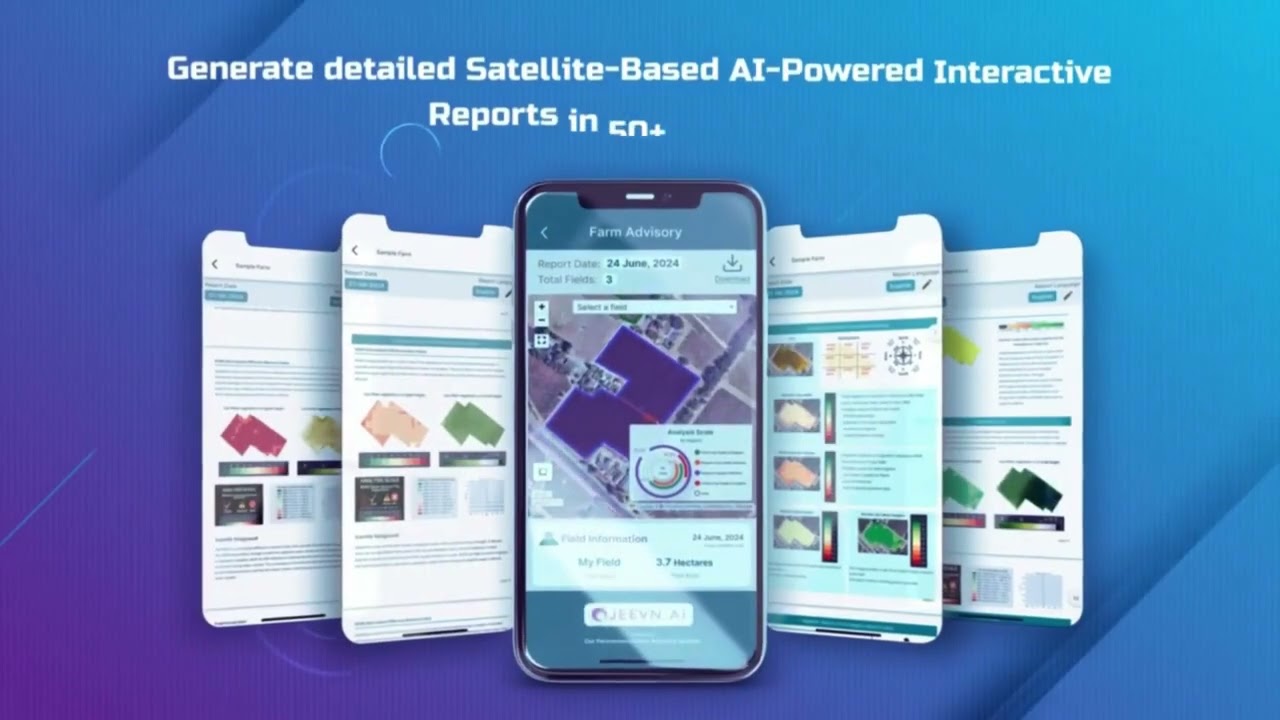
🌍 Satellite-Based Crop Monitoring: Multispectral imagery highlights vegetation health, crop stress, and soil conditions. This supports real-time intervention for optimal results.
Learn how our carbon footprinting tools help users monitor and reduce emissions in agriculture. -
🤖 AI Advisory (Jeevn AI): Delivers tailored weather alerts, spray schedules, and planting recommendations for farmers and managers.
Explore crop & plantation advisory for sustainable farming decisions. -
💡 Blockchain-Based Traceability: Safeguards supply chain integrity for agricultural and mining products via digital ledgers.
Trace your crops from field to market. -
⚙️ Fleet and Resource Management: Optimizes machinery and resource utilization for large farms or agribusinesses.
Fleet Management tools reduce costs and enhance operational safety. -
💳 Credit and Crop Insurance Verification: Our satellite-based analytics streamline crop loan and insurance processes for producers and financial institutions.
Discover crop loan & insurance services powered by data transparency. -
🏢 Enterprise & Large-Scale Management: The Agro Admin App enables agro-businesses to manage expansive farm operations via satellite insights, resource mapping, and task management.
Agro Admin App details

Our mobile-friendly platform is intentionally designed for rural communities where connectivity is limited and data is often scarce or delayed. This enables farmers and managers to make actionable decisions at the right time—improving yields, optimizing input costs, and increasing environmental resilience.
- Real-time Monitoring: Track crop status, spot stress or disease, and react immediately—using our NDVI-based analysis tools.
- Analytics for Sustainable Growth: Monitor trends in soil fertility, carbon emissions, or water use to align with both productivity and environmental goals.
- API & App Accessibility: Our service is available as a web platform, Android/iOS app, and API for seamless integration with other platforms.

Try Farmonaut’s Affordable Subscription for Senegalese Farmers & Startups
Opportunities for Adoption & Scaling in the Senegalese Context
The opportunity to scale AI-driven agriculture in Sénégal rests on three pillars: practical value for farmers, ease of technology adoption, and market relevance.
- Ease of Use: AI tools with intuitive interfaces—accessible on low-cost smartphones—lower barriers for rural users.
- Affordability & Micro-Payment Models: Subscription or pay-as-you-grow services are key for resource-limited communities (see Farmonaut’s pricing).
- Localization for Local Crops: Tailoring recommendations for regionally important crops such as millet, groundnut, and sorghum ensures wider impact.
- Hybrid Delivery: Mobile, web, API, and even peer-to-peer extension networks collectively reinforce best practice diffusion.

Digital platforms can accelerate the spread of climate-smart practices across “rural” areas while reducing dependency on overstretched government extension services.
- ✅ Higher, More Stable Yields: Site-based guidance enables more resilient yields and higher average productivity.
- ✅ Reduced Costs: Optimizing fertilizer, water, and pesticide inputs via AI cuts waste and cost while protecting soil and water health.
- ✅ Environmental Stewardship: Satellite and IoT data inform sustainable practices—essential for food security and export compliance.
- ✅ Market Inclusion: Blockchain-powered traceability and digital contracts strengthen bargaining power and earning potential.
- ✅ Education & Peer Learning: Localized advisory, mobile field schools, and peer-to-peer platforms enhance adoption, resilience, and inclusion.
Solutions like carbon-footprinting and real-time resource monitoring are central to meeting both local and global climate targets in Senegal’s agriculture and mining sectors.
Key Pillars of Future-Proofing Senegalese Agriculture
-
Digitized Advisory & Decision Support:
Algorithms analyze local data to generate precise guidance, turning guidelines into actionable field-level plans.
See how Farmonaut delivers AI-based crop management advisories -
Smart Supply Chains: Digital solutions streamline the input-to-harvest journey, improving access, transparency, and traceability.
Explore Farmonaut’s environmental & supply chain metrics -
Climate-Smart Practices: Drought-tolerant seeds, improved irrigation techniques, and AI-guided input management foster long-term resilience.
Agro Admin: Large-scale farm management solutions -
Market Linkages & Value Addition: Blockchain and digital market tools foster direct connections with buyers and processors, raising incomes.
Farmonaut Traceability for producers & buyers - Education, Extension, and Community Networks: Mobile learning and peer-to-peer knowledge transfer are vital for the long-term sustainability of technology adoption.

Frequently Asked Questions (FAQ)
What are the top AI solutions transforming agriculture in Senegal?
Seven leading AI solutions include satellite-based crop monitoring, weather and drought prediction, smart irrigation with machine learning, AI-driven nutrient optimization, drone/pattern-based pest detection, blockchain traceability, and AI-enabled digital marketplaces for farm inputs and market access.
How do Senegalese farmers benefit from adopting AI-driven platforms?
Benefits include increased yields (up to 30% in pilot regions), optimized use of water and fertilizer, reduced input costs, earlier stressor detection, improved climate resilience, and better access to buyers and premium markets.
How does Farmonaut support smallholders and agribusinesses in Senegal?
We provide affordable access to satellite-based monitoring, AI advisory, blockchain traceability, and fleet/resource tracking via apps and APIs. Our tools enable actionable, real-time insights for smallholders, businesses, and governments operating in resource-limited environments.
Is it necessary to have internet connectivity to use AI platforms?
Many platforms, including Farmonaut, are designed for intermittent or offline connectivity, ensuring rural areas with limited infrastructure can benefit from actionable insights at the right time.
Can Senegalese startups easily integrate satellite or AI data into their products?
Yes—Farmonaut’s robust API and developer documentation allow local startups or organizations to quickly integrate real-time satellite, weather, and environmental data into their agriculture or mining applications.
Conclusion: Embracing the Agricultural Revolution
The synergy between agriculture and startup innovation—powered by artificial intelligence, satellite data, blockchain, and advanced advisory tools—is rewriting what’s possible for farmers in Sénégal. These solutions are more than just buzzwords; they offer real, measurable benefits: higher yields, greater resilience to climate variability, reduced operating costs, and increased inclusion for marginalized producers and communities.
Leaders in agri-innovation are building a future-proof, technology-driven ecosystem that is robust against climate shocks while maintaining environmental consciousness and equitable value sharing.
- Ready to leverage the power of satellite, AI, and digital supply chains for your agri or mining operations? Visit the Farmonaut platform now or download our Android/iOS apps for direct access to affordable monitoring and advisory solutions!
For Senegalese agriculture, adopting AI and digital solutions is not just a pathway to modernization—it’s the key to long-term resilience, community viability, and global competitiveness in the face of climate uncertainty.

 WICO
WICO Gen Chayat
 Chimera Innovation
 Hiteshi Infotech
 Clubhouse OS
 SkyHarvest
 Polaris Digitech
 Teledarbas
 Wild Oak Farm
 SFX
SFX BACF Africa
 Doodlakine
 Exurbia Geospatial
 FieldZero
 Indico Company
