

Coffee Farming Kenya: Profitable & Organic Guide 2025
“Over 70% of Kenya’s coffee is grown by smallholder farmers using sustainable, organic practices.”
Introduction: Coffee Farming in Kenya 2025
Coffee farming in Kenya remains an integral part of the country’s agricultural landscape. It is deeply woven into the cultural fabric, shaping rural livelihoods and fueling the global reputation of Kenyan coffee. As we approach 2025, coffee farming Kenya is at a crossroads—balancing tradition and innovation while responding to sustainability, climate, and market pressures.
If you are a farmer, entrepreneur, or coffee enthusiast interested in organic coffee farming in Kenya, understanding the challenges, evolving practices, and profitability index in today’s market is crucial for making the best decisions. This comprehensive guide explores every facet of farming coffee—from smallholder operations in Kirinyaga, Nyeri, Kiambu, and Murang’a to the adoption of latest technologies for enhanced sustainability.
Kenya’s Coffee Industry: Agricultural Backbone and Global Reputation
The Kenyan coffee sector is legendary for producing some of the world’s most sought-after Arabica coffees. Its history dates back to the early 1900s, with coffee becoming not just a commercial crop but a symbol of national pride. By 2025, the country’s producers remain renowned for:
- Supplying specialty coffees with bright acidity, fruity undertones, and full-bodied flavor, known worldwide
- Clinging to the high-quality, high-altitude cultivation model
- Maintaining a majority presence of smallholder farmers in the industry
- Contributing significantly to rural incomes, employment, and national export earnings
Coffee farming Kenya takes place in fertile volcanic-soil regions with optimal rainfall and temperatures, particularly in:
- Kirinyaga: Celebrated for its rich, fruit-forward profile
- Nyeri: Noted for its sweet, winey characteristics
- Kiambu: Well-placed for specialty, sustainable production
- Murang’a: Emerging with increasingly organic practices

The country‘s success in farming coffee is as much about the natural environment as it is about the dedication of local communities. However, volatile global markets, climate change, and the need for sustainable, organic practices demand that Kenya’s coffee production continues to evolve if it is to remain profitable and resilient.
“Kenyan coffee yields can increase by up to 30% with climate-adaptive farming techniques.”
The Unique Kenyan Terroir: Soil, Climate, and Specialty Coffees
Kenya’s coffee-growing regions possess a unique terroir. The combination of altitude, volcanic soils, adequate rainfall, and optimal temperatures is ideal for arabica coffee development:
- Altitude: Most coffee farms are situated between 1,500 and 2,100 meters above sea level, resulting in slow berry ripening and more complex flavor profiles.
- Soils: The volcanic soils of Kirinyaga and Nyeri are naturally rich in nutrients, contributing to sustainable organic farming and specialty flavors.
- Rainfall: Reliable, bi-modal rainfall patterns are essential for healthy flowering, although increasingly unpredictable weather in recent years has posed risks.
- Flavor: Coffees from these regions are known worldwide for their bright acidity, fruity undertones, and unique, full-bodied flavor.
This natural bounty enables Kenyan farmers to tap into niche, specialty markets and command premium prices for quality beans. However, changing climate patterns threaten these advantages, requiring adaptive farming practices for future sustainability.

Climate Change and Environmental Challenges in Coffee Farming Kenya
Climate variability poses significant risks for coffee farming Kenya. The country is experiencing:
- Unpredictable rainfall patterns: Erratic rains or prolonged droughts disrupt flowering and fruit development cycles.
- Rising temperatures: Affecting high-altitude zones where premium coffee thrives, prompting pests and diseases to migrate to new areas.
- Extreme weather events: Heatwaves, heavy downpours, and wind damage can decimate yields.
- Water scarcity: A growing concern, especially in intimate highland regions where irrigation options may be limited.
The sector is responding with climate adaptation: intercropping, mulching, shade-tree planting, and integrated water management, essential for maintaining steady yields and minimizing environmental impact.
Key Climate Adaptation Techniques
- Agroforestry: Planting shade trees promotes soil health, conserves moisture, and buffers extreme temperatures.
- Cover cropping and mulching to reduce runoff and maintain soil moisture.
- Investments in water harvesting technologies and improved irrigation.
- Introduction of drought and disease-resistant coffee varieties.

To promote sustainable coffee farming Kenya, new environmental monitoring tools are being adopted—enabling real-time assessments of soil health, vegetation status, and water use efficiency.
For those considering advanced tracking of their farm’s carbon emissions or impact, our carbon footprinting solution offers satellite-based carbon monitoring. This enables farmers and businesses to measure, benchmark, and reduce their environmental footprint to meet local and global compliance, while accessing sustainable markets.
Coffee Plant Diseases & Yield Risks: What Farmers Face
Farming coffee in Kenya is complicated not just by weather, but by disease outbreaks and fluctuating yields. The main hazards include:
- Coffee Berry Disease (CBD): Caused by the fungus Colletotrichum kahawae, this disease is endemic in highland regions, especially Kirinyaga and Nyeri. It can devastate entire crops, especially in wet conditions.
- Coffee Leaf Rust (CLR): Due to the fungus Hemileia vastatrix, leaf rust weakens plants by causing premature defoliation, reducing both yield and future flowering.
- Root-Knot Nematodes and Other Fungal Infections: These further reduce plant vigor, especially on aged or poorly managed soils.
Yields are threatened when resilient, adaptive management is not in place. Practices like regular pruning, timely input application, and disease-resistant varieties play an increasingly important role.
Reducing chemical input usage — key to organic coffee farming in Kenya — not only protects ecosystems but can also reduce long-term production costs and pesticide resistance issues.

Organic Coffee Farming in Kenya: Principles & Practices
Organic coffee farming in Kenya continues to gain traction as both local and international markets shift toward environmentally friendly, health-conscious products. This approach involves:
- Reducing or eliminating synthetic inputs: No chemical fertilizers, pesticides, or herbicides. Farmers use compost, manure, and plant-based concoctions to boost soil fertility and manage pests.
- Promoting soil health and biodiversity: Organic systems encourage cover cropping, mulching, and rotation, which build soil organic matter and attract beneficial organisms.
- Maintaining buffer zones: Preventing contamination from neighboring conventional plots.
- Certification and traceability: Pursuing recognized organic certifications enhances access to premium markets but involves additional paperwork, inspections, and compliance costs.
The transition to organic is often supported by farmer cooperatives, NGOs, and government training. While it can increase initial costs and involve a steep learning curve (knowledge transfer), successful farmers report:
- Improved ecosystem health
- Reduced long-term input costs
- Premium prices for certified organic coffee
- Enhanced market access to discerning, sustainability-oriented buyers
- Greater climate resilience and soil fertility, boosting yields and incomes
If you need dedicated solutions for organic traceability, our product traceability module leverages blockchain to enable secure, transparent supply chains for agricultural products, directly aligning with organic certification demands.

Organic Coffee Farming Practices: A Closer Look
- Composting: Converts farm waste into fertile organic matter, improving nutrient cycling.
- Intercropping and Shade Trees: Reduces pest pressure, offers additional income (e.g., macadamia, avocado), and shields coffee plants from harsh sun.
- Biological Pest Control: Deploying insects, birds, and plant-based sprays.
- Manual Weeding: Reduces dependency on herbicides while encouraging more proactive management.
- Certification and Market Linkages: Collaborating with local and international partners to secure access to premium organic markets.

Comparative Table: Economic & Environmental Impact in Kenyan Coffee Farming
| Farming Practice | Estimated Yield per Hectare (kg) | Estimated Production Cost per Hectare (USD) | Average Selling Price per kg (USD) | Profit Margin (%) | Chemical Input Usage | Water Usage (liters per kg) | Carbon Footprint (kg CO₂e per kg) |
|---|---|---|---|---|---|---|---|
| Conventional | 1,300 – 1,700 | 1,100 – 1,500 | 2.20 – 2.70 | 20 – 25 | High | 110 – 140 | 2.6 – 3.4 |
| Organic | 1,100 – 1,500 | 900 – 1,300 | 2.80 – 3.50 | 28 – 34 | Low | 90 – 110 | 1.4 – 2.0 |
Note: These values are estimated averages for Kenya in 2025 and can vary by region, management level, and market conditions. “Profit Margin” reflects net return after typical input, labor, and certification costs.
Is Coffee Farming Profitable in Kenya?
Is coffee farming profitable in Kenya? The answer is nuanced. Profitability depends on:
- Farm size and management skill
- Yield and bean quality (especially for specialty/organic)
- Access to input credit, information, and quality organic inputs
- Market access, prices, and traceability options
- Participation in cooperatives versus independent selling
- Certification costs (for organic/specialty)
- Production and processing technology investments
In a volatile global market, specialty and organic coffee often fetch premium prices, helping offset slightly lower yields and certification costs. Farmer cooperatives play a vital role in aggregating produce, providing market bargaining power, facilitating organic certification, and enabling direct sales to export buyers.

Current Price and Profitability Scenario (2025)
As per 2025 estimates, while conventional farmers rely on commodity trading with its fluctuating pricing, organic-certified and specialty producers earn up to 30–50% more per kg—especially when leveraging:
- Digital platforms and mobile-based market access
- Direct trade links to roasters and international buyers
- Blockchain-based traceability for premium, ethical coffees
- Efficient, quality-focused processing

Access to credit and insurance is another key factor. Our solution for farm loan and insurance services can enable lenders and insurers to remotely assess crop health, improving loan approval times and reducing fraud, which is vital for the capital-intensive phases of coffee production.
Market Access, Value Addition & Branding
Market access and value addition are increasingly defining the profitability of coffee farming Kenya. In 2025, successful farmers and cooperatives are embracing:
- Direct sales and farmer market linkages: Exporters, specialty roasters, and local cafes are seeking relationships with producers, especially for organic-certified lots.
- On-farm and cooperative-level processing: Improved wet mills, solar dryers, and hulling machines boost coffee bean quality and value.
- Branding and packaging: Roasting, packaging, and marketing at the cooperative or regional level brings additional income, local pride, and consumer loyalty.
- Digital traceability tools: Blockchain-backed records assure international buyers of product origin and organic compliance—essential for access to premium markets.
Barriers and Opportunities in 2025
- Barriers: High certification costs, limited organic input availability, logistics, and marketing knowledge gaps hinder direct entry to premium markets.
- Opportunities: Initiatives for farmer group certification, digital traceability, and regional branding are rapidly reducing these barriers.
Our fleet management and large-scale farm management products help cooperatives and enterprises streamline logistics, optimize resource use, and ensure timely delivery to markets or processing centers.
Tip: Emphasize storytelling around your region (Kirinyaga, Nyeri, Kiambu, Murang’a), production methods, and sustainability commitment to connect with quality-driven consumers globally.



Get started with real-time crop monitoring, digital record keeping, and advanced advisory services for any scale of coffee farming operation across Kenya.
Technology, Innovation & Sustainability for Kenyan Coffee
Embracing new technologies is essential for sustainable coffee farming Kenya in the era of climate change and shifting consumer demands. Key areas include:
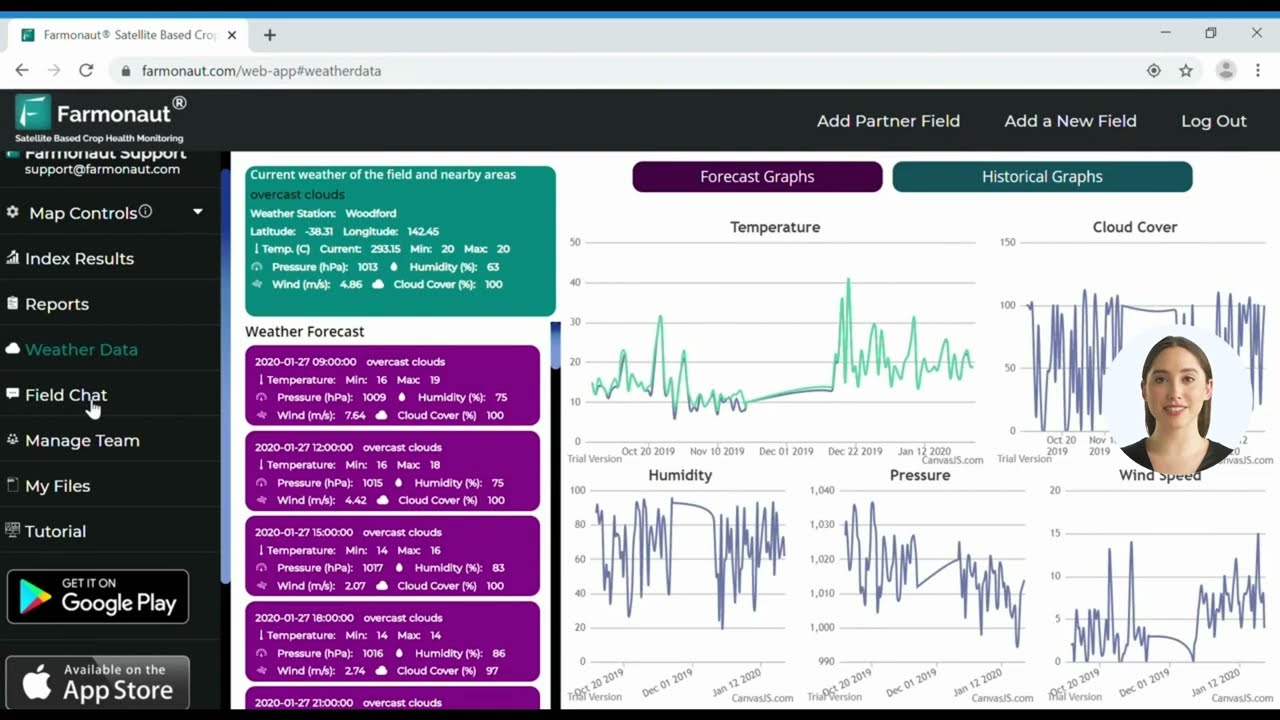
- Satellite remote sensing: Allows region-wide monitoring of crop health, soil conditions, and water use, providing actionable insights for better decision-making and resource efficiency.
- AI and Machine Learning: For precise disease, pest, and weather forecasting; optimizing fertilizer use; and automating farm-level data analysis.
- Blockchain and Digital Traceability: Secure, verifiable records for organic and specialty coffee, boosting transparency, reducing fraud, and increasing buyer confidence.
- Real-time environmental impact tracking: Enables measurement and reduction of farm carbon/emissions footprint to align with national and global sustainability goals.
- Mobile and Web-based Platforms: Widen access to advisory services, inputs, markets, and compliance tools for all types of farmers and cooperatives.

Environmental Impact Monitoring
For producers, exporters, and stakeholders focused on sustainability, accurate environmental monitoring makes compliance and reporting to regulators and buyers much easier.
Our carbon footprinting tool and traceability solution can help ensure your Kenyan coffee meets the emerging international requirements for environmental disclosure and origin verification.
Find integration options for your own systems in our API or explore developer documentation for complete customizations.
Policy, Cooperatives & the Road Ahead
To secure the future of coffee farming Kenya, the combined efforts of governments, cooperatives, NGOs, and private-sector players remain crucial:
- Government: Investment in rural roads, processing infrastructure, and affordable irrigation systems is vital. Support for research, organic extension services, and reduced certification costs further empowers farmers.
- Cooperatives: Provide economies of scale, improve bargaining position, and facilitate access to specialty/organic markets—often being the mainstay of farmer livelihoods in Kirinyaga, Nyeri, Kiambu, and Murang’a.
- Training/Knowledge Transfer: Focus on climate-smart practices, pest management, and high-quality organic production are essential for sustainable competitiveness.
- Value Chain Investment: From local roasting, eco-friendly packaging, to digital marketing—value addition keeps more wealth in farming communities while responding to global consumer trends.
How Farmonaut Supports Sustainable Coffee Farming Kenya
As part of our mission to democratize satellite- and AI-driven solutions across agricultural sectors, we provide affordable, scalable technology to coffee farmers, cooperatives, and organizations in Kenya and worldwide. Here’s how our platform addresses critical needs in coffee farming Kenya:
- Satellite Crop Monitoring: Our tools deliver NDVI-based insights on plant health, moisture status, and land management, enabling early detection of stress, water shortages, or disease hotspots.
- Jeevn AI Advisory: Real-time advice on crop protection, irrigation strategies, and yield optimization tailored to plot-level conditions, directly via web or mobile.
- Blockchain Traceability: End-to-end supply chain records for organic, specialty, and export coffee, helping you provide buyers with verified sustainability credentials.
- Environmental Impact Analysis: Track carbon footprint, monitor sustainability targets, and access reporting tools for compliance and market positioning.
- Fleet and Resource Management: Improve operational logistics, machinery usage, and farm-to-market transport efficiency for cooperatives and large growers.
- Financing Access: Satellite-verified loan and insurance tools help farmers secure timely financing with reduced risk and paperwork.
Our solutions are accessible on Android, iOS, browser, and API—serving everyone from the smallest highland farmers to large estate managers, and Government agencies.
For plantation, forest, or large-scale crop advisory, access our comprehensive modules at crop plantation and forest advisory here.
For management of large-scale farm operations, see our Admin App product page.
Farmonaut Subscription Options
We offer a flexible, subscription-based model for all users—whether you’re an individual farmer, a cooperative, or an agribusiness. Track crop health, automate reporting, and gain actionable insights affordably by subscribing directly here:
FAQ: Coffee Farming Kenya in 2025
Frequently Asked Questions
-
What are the main regions for coffee farming in Kenya?
The principal coffee growing regions are Kirinyaga, Nyeri, Kiambu, and Murang’a. These areas feature high altitudes, volcanic soils, and favorable rainfall patterns, making them ideal for specialty arabica coffee production.
-
Is coffee farming profitable in Kenya?
Profitability varies: organic and specialty producers, especially those affiliated with cooperatives and direct trade, are seeing higher and more stable returns. Factors including farm management, input costs, yields, and market access directly affect net income. Refer to the comparative table in this guide.
-
Where can I get support for organic coffee farming in Kenya?
Support is available from local agricultural offices, NGOs, training centers, and coffee cooperatives who offer certification, knowledge transfer, and sometimes organic input access. Technological services, such as those offered by Farmonaut, can monitor and benchmark your organic transition.
-
How can I access better markets for my coffee?
By joining a reputable cooperative, pursuing organic or specialty certification, leveraging blockchain traceability, and engaging digital platforms, you can access premium markets locally and internationally.
-
What main diseases affect Kenyan coffee crops?
The most common threats are coffee berry disease and coffee leaf rust. Climate shifts may also introduce pests or diseases to new regions, making real-time crop monitoring and resilient varietals crucial.
-
How can technology help my coffee farm?
Satellite imagery, AI-based weather and disease forecasting, blockchain traceability, and mobile advice can improve yields, cut input costs, and enhance sustainability—all improving profitability and resilience.
-
Are there solutions for carbon and environmental impact monitoring in Kenyan coffee farming?
Yes, solutions like Farmonaut’s carbon footprinting tool help farmers measure, benchmark, and reduce their emissions for certification and market access requirements.
Conclusion: The Future of Coffee Farming in Kenya
Coffee farming in Kenya remains at the heart of the country’s rural economy and global identity, especially with the rising demand for organic, specialty products. Farmers, cooperatives, and technology providers must continue to innovate, invest in quality, and adapt to fast-evolving climate and market challenges.
With organic practices, advanced monitoring, premium branding, and sound policy supports, Kenyan coffee can not only retain but grow its share of the specialty market—raising incomes, enhancing sustainability, and protecting the unique landscapes of Kirinyaga, Nyeri, Kiambu, and Murang’a for future generations. The stage is set for a thriving, sustainable, and increasingly profitable coffee sector well beyond 2025.
As we collectively navigate the exciting opportunities and serious challenges in coffee farming Kenya, advanced, accessible technology and sustainable practices are the key to ensuring enduring value for farmers, markets, and the environment alike.
Start your journey: Leverage real-time insights and data-driven tools by downloading our app or visiting our web platform today. Embrace the future of coffee farming Kenya—sustainably, profitably, and with confidence.
Discussion
Questions, corrections or field experience? Share them below. First-time comments are reviewed before they appear, and your email is never published.
No comments yet. Be the first to add a question or your experience.

 Wild Oak Farm
 KJBN Labs
 SFX
SFX BACF Africa
 Doodlakine
 Exurbia Geospatial
 FieldZero
 Indico Company
 Kubota
 FFBS
FFBS Jontra
 Tucor
Tucor
 Licence holder · Niger · Gold
 Licence holder · Nigeria · Gold + lithium










