

Percentage of Farmland Owned: White South Africans & China
Introduction: Why Farmland Ownership Patterns Matter
In the global discourse on agricultural land ownership, the percentage of farmland owned by white farmers in South Africa and the percentage of US farmland owned by China remain focal points for policy discussions, rural economics, and development strategies. The distribution of these resources not only determines economic outcomes for rural communities, but also profoundly shapes investment, access to credit, and the future of food security.
As policymakers invest in new programs and reform efforts, the question of who owns the land—from white commercial farmers in South Africa to foreign-held acreage in the United States—defines how power, opportunity, and innovation are spread across sectors. This comprehensive review presents a precise, policy-relevant narrative on farmland ownership by demographic and national group, avoiding unrelated conflations such as mining or urban infrastructure, and instead focusing closely on agriculture and its ripple effects on rural life, value chains, and national resilience.
Quick Global Trivia: Ownership Patterns at a Glance
- 🌍 South Africa: The vast majority of South Africa’s commercial farmland is held by white farmers, a demographic reality rooted in the nation’s history of land dispossession and ongoing political debate over restitution policy.
- 🌎 United States: While foreign owners represent a small portion of total U.S. agricultural land, their holdings—spanning over 35 million acres—dominate national debate, especially regarding food security and openness to international investment.
The Landscape of Land Ownership in South Africa
Historical Context: Land, Race, and Policy
Land tenure and distribution have shaped the course of South Africa’s rural development for more than a century. Ownership patterns are deeply interwoven with the legacy of colonial dispossession, apartheid spatial planning, and post-apartheid reform initiatives. The question of what percentage of South African farmland is owned by white farmers anchors national debate on equity and restitution.
- Pre-1994: Land policies systematically excluded Black South Africans, restricting over 80% of high-value agricultural land to white ownership.
- 1994 and beyond: The new constitution ushered in land reform, restitution programs, and redistributive policies targeting more equitable access.
- Current Context: Despite significant efforts, white farmers continue to own the majority share of commercial farmland, fueling continuous political debate and calls for accelerated reform.
Percentage of Farmland Owned by White South Africans: Key Metrics
Focus Keyword: Percentage of Farmland Owned by White Farmers in South Africa
Recent studies and government data consistently show that the percentage of farmland owned by white South Africans remains high, often cited at approximately 72% of commercial farmland. This figure, frequently referenced in both media and policy circles, plays a central role in land reform strategies, investment planning, and the design of support programs for Black smallholder farmers.
Key Insight:
Despite decades of reform programs, the percentage of farmland owned by white South Africans has changed only marginally, reflecting persistent patterns of access and power that impact Black farmers’ ability to participate fully in agricultural markets and policy design.
Understanding the Metric
- ✔ Estimates vary but a consensus places white ownership at about 72% for commercial agricultural land.
- Disparity encapsulates tens of millions of hectares, while Black communities (over 80% of the population) own a fraction of productive farmland.
- Policy focus: Government programs target redistribution, secure tenure for Black and Coloured farmers, and new models of support aimed at tackling inequality.
The extent of white South African farmland ownership directly influences allocations of inputs, credit, and technological support, shaping the trajectory of rural development and resilience for generations to come.
- 📊 Data insight: Nearly 27% of commercial agricultural land has been targeted for future redistribution by the state.
- ✔ Key benefit: Land restitution accelerates economic participation and food system innovation for previously excluded groups.
- ⚠ Risk or limitation: Land reform without secure tenure and technical support may lower productivity and create new inequalities.

Comparing Rural Land Ownership: United States & Foreign Interests
What Percentage of U.S. Farmland is Foreign Owned?
United States, sharing a different trajectory but similar policy concerns, has seen increased attention on the extent of foreign agricultural land ownership. As of the most recent government disclosures:
- ✔ Foreign entities—including multinational corporations, investment funds, and individuals tied to countries such as China—own over 35 million acres of U.S. farmland.
- China’s share is still relatively minor (under 1%), but the scale of overall foreign ownership has triggered robust debate on national security, food sovereignty, and the impact of foreign investment on rural land use and community resilience.
- 📝 Disclosure requirements: All foreign holders are required to report land holdings under the Agricultural Foreign Investment Disclosure Act (AFIDA), ensuring some level of regulatory oversight.
The pattern of farmland ownership in the US not only shapes investment strategies and infrastructure development, but also influences U.S. agriculture’s technological capabilities, innovation in rural areas, and stewardship of critical resources like water.

Key Numbers: Percentage of U.S. Farmland Owned by China
- ✔ China directly holds less than 1% of U.S. farmland, though its influence is often magnified in media and policy discussions due to the strategic implications of foreign agricultural investments.
- ✔ Total foreign-controlled farmland now exceeds 35 million acres, with Canada, the Netherlands, and Germany among the largest non-U.S. owner groups.
- ⚠ Trends show a slow, upward trajectory of foreign ownership, raising concerns about resource allocation and price competition for U.S. farmers.
Comparative Ownership Percentage Table
| Country | Owner Category | Estimated Percent of Total Farmland Owned | Year of Estimate | Policy Context | Impact Overview |
|---|---|---|---|---|---|
| South Africa | White Nationals | ~72% (commercial) | 2023 | Ongoing land reform; redistributive policy; attempts at fast-tracking Black ownership | Continued debate over equity, agricultural productivity, and restitution |
| South Africa | Black South Africans & Other Groups | ~28% (commercial + state-owned and communal) | 2023 | Land restitution and redistribution programs in progress | Focus on increasing access to markets and technology for Black farmers |
| United States | Foreign Owners (All) | ~2.8% (35M acres) | 2023 | Regulatory disclosures (AFIDA), open investment climate | Rising security, food sovereignty, and regional planning concerns |
| United States | Chinese Nationals/Entities | <1% | 2023 | Scrutiny and state-level ownership limitations in 10+ states | Strategic debate on food supply chain and national interest |
| United States | Domestic Owners | >97% | 2023 | Primarily family and corporate farms | Extensive land infrastructure, family succession challenges |
| China | State and Collective Owners | >98% | 2022 | Centralized state policies, household contracts; restrictions on foreign purchase | Land use rights subject to planning reforms, intensive agricultural modernization |
Ownership Distribution & Its Impact on Agricultural Policy
Why Patterns of Farmland Ownership Shape Development
Who owns the land determines who holds decision-making power over resource allocation, access to modern farming practices, and eligibility for public and private sector support. The distribution of farmland ownership by demographic group is a central issue that influences:
- Access to agricultural credit, subsidies, and inputs
- Market participation for rural groups with different levels of historic exclusion
- Adoption of new technologies (e.g., satellite monitoring, precision farming)
- Community cohesion, employment, and rural infrastructure
- Capacity for climate adaptation and resilience planning

Analysts emphasize the need for clear, data-driven governance to ensure that land resources sustainably support both inclusive growth and long-term food security in contexts as diverse as South Africa, the United States, and beyond.
The Role of Foreign Ownership: Focusing on China
Percentage of U.S. Farmland Owned by China & Its Policy Implications
China’s direct land ownership in the U.S. accounts for less than 1% of agricultural acreage, but the perception of China’s involvement as a ‘strategic competitor’ drives much of the policy debate. This topic is magnified in states that have passed legislation or are considering bills to restrict foreign—particularly Chinese—ownership of farmland, citing national security concerns and food sovereignty.
- ✔ Foreign-owned farmland is concentrated in certain regions, particularly in states with robust agricultural exports or infrastructure links to global trade.
- ✔ Multinational corporations, investment funds, and private individuals account for most foreign holdings in the US, with Canadian, European, and Chinese entities notably active in recent years.
- ✔ Disclosure and regulatory requirements have increased, with federal and state governments tracking foreign agricultural investments closely for strategic risk management.
- ⚠ Policy response: Several states have enacted or proposed bans on land sales to entities with ties to China, negotiating the balance between openness to investment and domestic food system control.
- 📊 Impact: While foreign ownership remains minor in scale, policy shifts reflect growing sensitivity to global disruptions and resilience planning in agriculture.
Land Reform, Restitution, and the Future of Equity
The South African Approach: Policy, Tenure, and Emerging Trends
Land reform in South Africa is guided by overlapping goals: achieving historic restitution, ensuring productive use of agricultural lands, and fostering inclusive economic growth by diversifying the base of landowners. Key instruments include:
- ✔ Restitution Claims: Enabling people dispossessed under apartheid to reclaim land or receive compensation.
- ✔ Redistribution: Allocating land to new Black farmers through government programs, cooperatives, and market-assisted initiatives.
- ✔ Tenure Security: Legal reforms aimed at giving landholders proof of ownership or long-term leases, critical for gaining credit access and eligibility for subsidies.
- ✔ Farmer Support: Training, extension services, access to Farmonaut’s crop advisory technology and other precision farming tools designed to bolster productivity for new entrants.

Visual List: Policy Drivers and Equity Outcomes
- ✨ Historic restitution enables healing of social inequities
- 📈 Redistribution unlocks market participation for Black farmers
- 🔑 Tenure security offers leverage for credit and investment
- 🎯 Technological support bridges productivity gaps
The Intersection of Technology and Land Ownership
Modern Monitoring Solutions for Transparent Ownership and Sustainable Use
Today, satellite-based technology is transforming how both governments and farmers monitor land use, plan resource allocation, and verify ownership claims. Advanced data-driven solutions are critical for successful land reform, helping prevent fraud, accelerate restitution, and support ongoing productivity gains.
Explore Farmonaut’s satellite-based crop verification and insurance solutions
for reliable, fast, and fraud-resistant rural financing.
Transparent ownership patterns—enabled by precise satellite data and secure digital records—empower policymakers to allocate resources strategically, enhance rural resilience, and design support programs that bolster productivity and equity across all groups.
- 🌍 Geospatial monitoring tracks ongoing land use, vegetation health, and change in landownership patterns
- 🔂 Blockchain technology ensures unalterable verification of transactions and historic restitution records
- 🤝 API integrations enable institutions to rapidly scale and automate documentation for regulatory compliance—see the Farmonaut API and the API developer documentation.
How Farmonaut Empowers Modern Land Management
Satellite, Blockchain, and AI: Tools for the Next Generation of Rural Stewardship
At Farmonaut, we provide a comprehensive platform for satellite-based land monitoring, blockchain-driven transparency, and real-time AI advisory for agriculture and related sectors. Our mission: make technology affordable and accessible to governments, businesses, and individual users globally.
Farmonaut Platform: Features in Focus
- ✔ Real-time monitoring of farmland and estate boundaries for clear identification of ownership and tenure status
- ✔ AI-driven crop health analysis to enhance productivity and optimize input allocation for farmers and large estates
- ✔ Blockchain traceability for supply chain management, supporting transparent land restitution and farm product origins.
Learn about Farmonaut’s blockchain-based traceability tools - ✔ Fleet & resource management for infrastructure, mining, and agricultural operators with large-scale asset tracking needs.
Discover Farmonaut’s fleet management solutions for efficient, secure logistics - ✔ Environmental impact monitoring including carbon footprint tracking for agricultural operations.
Explore Farmonaut’s carbon footprinting solutions for sustainability - ✔ Large-scale multi-farm and cooperative mapping for governments, NGOs, and commercial managers.
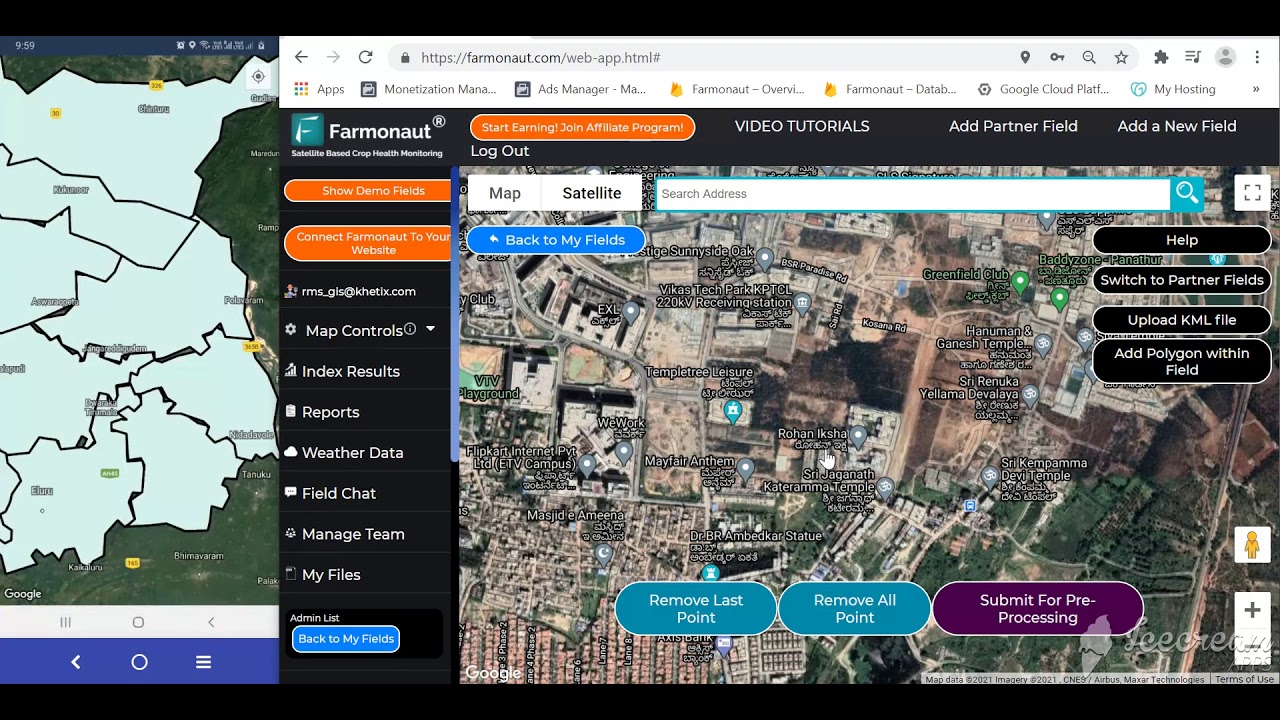
See the Farmonaut Agro-Admin App for bulk field management



Key Insights, Pro Tips, and Investor Notes
Highlights: Key Data, Risks, and Practices
- 🔑 Ownership clarity is fundamental for reducing land disputes and attracting international investment.
- 📊 Precise distribution analytics—enabled by platforms like Farmonaut— streamline regulatory compliance, asset management, and environmental monitoring.
- ⚡ Speed matters: Modern AI-advisory and API-based verifications can decrease wait times for credit or subsidies from months to hours.
Farmonaut’s Agro-Admin App automates bulk field registration for farm clusters. - ⚠ Risk: Continued concentration of farmland ownership can stifle rural innovation, lock out new entrants, and perpetuate inequitable market access.
- 📱 Mobile access enhances participation for both smallholder and large-scale farming groups, connecting rural operations to critical services and data in real time.
Stay current with satellite land boundary updates & remote sensing to catch early signs of encroachment or illegal occupation.
Employ blockchain-backed traceability to deter disputes and boost transparency in conveyancing.


Frequently Asked Questions (FAQs)
What is the current percentage of farmland owned by white farmers in South Africa?
According to the latest data, white farmers in South Africa own about 72% of commercial farmland. This figure is regularly cited in land reform policy discussions and underscores the scale of historical inequity.
How much U.S. farmland is foreign owned, and what is China’s share?
As of the latest estimate, foreign entities own over 35 million acres of U.S. farmland (about 2.8%). Chinese nationals/entities own less than 1% of this total, but their holdings are under heightened political scrutiny due to national security and food sovereignty debates.
Why does land ownership matter for rural development strategies?
Ownership patterns shape access to credit, eligibility for government programs, adoption of modern practices, and resilience to shocks. Equitable distribution is critical for sustainable rural livelihoods and long-term productivity.
How can satellite technology support land ownership monitoring and compliance?
Satellite-based monitoring provides up-to-date land use information, boundary verification, and real-time alerts for encroachment or unauthorized land use. This accelerates land restitution, program targeting, and regulatory compliance at scale.
What new technologies does Farmonaut offer for land and resource management?
We provide multispectral satellite imagery, AI advisory systems, blockchain-based traceability, and resource management tools for agriculture, mining, and infrastructure. These solutions increase transparency, optimize productivity, and streamline operations for diverse stakeholders.
Conclusion: Ownership Patterns Are Central to the Future of Agriculture
The percentage of farmland owned by white farmers in South Africa and the percentage of US farmland owned by China remain central issues that will continue to shape policy discussions, investment flows, and the evolution of agricultural economics globally. As we have shown, clear, equitable, and transparent land ownership is foundational for rural development, technological adoption, and national resilience.
By leveraging modern satellite monitoring, blockchain-based traceability, and data-driven governance, it is possible to promote both productivity and equity—addressing the deep historical rifts and laying the foundation for inclusive prosperity. Platforms like Farmonaut are instrumental in supporting stakeholders at every level, from policymakers and banks to smallholder farmers and agribusiness operators, as they navigate the complex, rapidly-evolving landscape of rural land ownership.

 Agreeta Solutions
 Agricultural Credit Policy Council
 BayWa
BayWa MCSOD
MCSOD Marei Nursery
 eKGIS
eKGIS Mostas Tech
 Native Seeds
 Andex
Andex FCF India
 Unifrutti Gulf
 Deluxe Conseil
 TVS Electronics
 WICO
WICO Chimera Innovation
 SkyHarvest
