

Rwanda Agricultural Exports: Farming in Rwanda Drives Growth
Rwanda’s agricultural sector stands as the beating heart of the nation’s economy, social fabric, and rural livelihoods. Across the rolling valleys and meticulously sculpted terraces from the north to the south, a thriving tapestry of crops defines not only daily life but also the promise and potential of Rwanda agricultural exports. In this deep-dive, we will explore how agriculture in Rwanda is charting a sustainable, value-driven, and resilient path toward rural prosperity – placing deliberate emphasis on crop diversification, innovative practices, environmental stewardship, and market strengthening.
Table of Contents
- Overview: The Foundation of Agriculture in Rwanda
- The Smallholder Challenge & Rural Landscape
- Crop Diversification: A Defining Feature in Rwanda’s Export Strategy
- Sustainable Agricultural Practices and Soil Health Management
- Boosting Productivity: Innovation, Inputs & Technology Transfer
- Strengthening Rwanda’s Agricultural Export Chains and Market Access
- Value Addition, Processing, and Rural Employment
- Enabling Smallholders: Cooperatives, Credit & Extension Services
- Environmental Stewardship, Resilience & Climate Adaptation
- Satellite Solutions & Technology Adoption: Farmonaut’s Contribution
- Key Rwandan Agricultural Export Crops: Sustainability & Impact Table
- Expert Insights & Highlight Boxes
- Visual Lists: Export Drivers, Challenges, Opportunities
- Frequently Asked Questions (FAQ)
- Farmonaut Solutions: Explore More
Overview: The Foundation of Agriculture in Rwanda
When discussing agriculture in Rwanda, it is essential to underscore the sector’s central role in shaping the country’s economy and development narrative. More than 70% of Rwanda’s rural population relies on agriculture for livelihoods, food security, and community resilience. This intensive reliance on the land is both a testament to the country’s farming tradition and a key challenge facing policy makers, who must continuously innovate to balance productivity, sustainability, and social equity.
- Agriculture is Rwanda’s largest employer, engaging more than two-thirds of the workforce.
- Rwanda agricultural exports are a major foreign exchange earner, with coffee and tea as traditional pillars.
- Sustainable farming practices are crucial to protect the environment and increase resilience.
- Policy makers emphasize market access and value chain improvements for rural prosperity.
- Emphasis on building rural resilience against climate variability is at the core of sector strategies.
As we journey through the sectors that underpin the Rwanda farming landscape, a key theme emerges – the balance between economic growth, social development, and sustainable environmental management.
Rwanda’s agricultural sector isn’t just a backbone of the economy; it defines the daily survival and upward mobility of millions. Diverse, sustainable growth strategies are essential for climate resilience and export success.
The Smallholder Challenge & Rural Landscape
The Rwanda agriculture sector is characterized by a dense population of smallholder farmers, with an average farm size below 1 hectare. These smallholders produce over 70% of the country’s food, and their collective enterprise forms a tightly woven social fabric of communities along valleys and terraces, from the northern volcanic soils to the southern hills.
- Smallholder farmers are pivotal to sustaining national growth and food security.
- Farming systems rely on rotating crops (beans, maize, root vegetables) and intensive land use to sustain family income.
- Farms lace through valleys and terraces, showcasing human ingenuity in managing challenging landscapes.
- Limited access to inputs and modern technology remains a hurdle for maximizing yields and exportable surplus.
For policymakers, supporting these farmers means strengthening rural services, extension systems, cooperative structures, and credit access within ambitious frameworks to elevate and diversify export potential.
Underestimating the importance of smallholders can undermine crop diversification and productivity initiatives. Effective scaling must begin with their empowerment.
Crop Diversification: A Defining Feature in Rwanda’s Export Strategy
Historically, coffee and tea have anchored Rwanda agricultural exports, serving as long-standing foreign exchange earners. However, ambitious policy pushes are redefining the narrative, placing deliberate emphasis on crop diversification beyond traditional staples.
- Horticultural Products: Fresh vegetables and fruits (beans, tomatoes, avocados, passionfruit) are increasingly grown under improved agronomic systems, gaining traction in both regional and international markets.
- Cut Flowers & Pyrethrum: Sectors like floriculture and essential oil crops highlight the move towards high-value, climate-resilient, and export-oriented production.
- Root Vegetables and Legumes: Irish potatoes, sweet potatoes, and beans are integral for resilience and rural diets, with export volumes rising each year.
- Value-Added Products: Rwandan agroprocessing clusters facilitate processing of raw produce into competitive goods like dried beans, fruit purees, and premium packaged exports.
Crop diversification not only boosts Rwanda’s export earnings but also cushions farmers against climate and price variability – and supports balanced soil nutrient cycling.

Sustainable Agricultural Practices and Soil Health Management
To sustain growth in rwanda agricultural exports, the adoption of sustainable practices stands as a defining feature of the sector’s strategy. Rwanda’s policy makers and extension services promote measures that ensure soil health, productivity, and environmental integrity.
- Organic amendments, compost, and mulch are used alongside balanced mineral fertilizers to replenish soil nutrients.
- Crop rotation and intercropping (maize, beans, bananas, legumes) reduce pest cycles and enhance soil fertility.
- Water conservation through rainwater harvesting, terracing, mulching, and expanded irrigation schemes enables stable yields despite rainfall variability.
- Integrated pest management relies on natural predators and practices to minimize synthetic pesticide use.
Such systems—rooted in agroecology—are vital for smallholder resilience and sustained export competitiveness. Attention to balanced soil nutrient replenishment and environmental stewardship ensures continued productivity gains across farm landscapes.

Export buyers increasingly demand sustainably grown, traceable, and ethically sourced goods. Adopting certified sustainable practices unlocks premium market opportunities for Rwanda farmers and processors.
Boosting Productivity: Innovation, Inputs & Technology Transfer
Productivity gains are crucial for rwanda farming to deliver strong export growth while supporting local food security. The sector increasingly relies on a mix of technology transfer, improved inputs, and precision farming techniques to help farmers raise yields, reduce losses, and ensure resilience.
- Certified, improved seed varieties (disease-resistant, drought-tolerant) offered by cooperatives and extension networks drive higher yields in both staple and export crops.
- Integrated pest management and precision fertilizer application help maintain environmental integrity and maximize resource efficiency.
- Soil health diagnostics and targeted nutrient replenishment programs combat declining fertility on intensively cultivated land.
- Adoption of remote sensing and digital advisory tools, such as those provided through satellite technology platforms, enhances monitoring and decision-making at the farm level.
Precision farming—combining scientific soil testing, improved seeds, and advanced technology—can double yields and reduce input waste for smallholders in even the most challenging terrains.

Strengthening Rwanda’s Agricultural Export Chains and Market Access
With fierce competition in regional and international markets, Rwanda’s agricultural export strategy emphasizes strengthening value chains, market access, and quality improvements, benefiting rural producers and the national economy alike.
- Grading and certification ensure Rwandan produce meets diverse buyer requirements, from bulk markets to premium, niche segments.
- Investments in packaging, cold storage, and transport logistics lower post-harvest losses and help producers secure better market prices.
- Reforms to reduce regulatory barriers, digitize documentation, and streamline export processing have substantially improved Rwanda’s export competitiveness.
- Blockchain-based traceability systems (see Farmonaut’s product traceability platform) reassure buyers of product authenticity and compliance with sustainability standards.
These deliberate, system-wide improvements have seen Rwanda agricultural exports rise over 40% from 2017 to 2022. Rural farmers—once isolated—now access regional and global value chains.
Value Addition, Processing, and Rural Employment
Value addition is central to raising the income of smallholder farmers and amplifying Rwanda’s export footprint. Investments in local agro-processing clusters and cooperative-run facilities enable transformation of raw produce into competitive finished and intermediate goods:
- Coffee and tea: Washed and specialty grades unlock premium prices in international markets.
- Horticulture: Cut, packed, and processed vegetables, fruit juices, and dried products command higher export values.
- Essential oils and spices: Pyrethrum extraction, natural oils, and floriculture products generate rural employment and stabilize incomes.
- Agro-logistics and cold chain: Local storage, packhouses, and digitized logistics reduce spoilage and enable just-in-time marketing.
This holistic focus—from farm to processing to market—underpins the transformation of Rwanda agricultural exports into a truly value-driven, competitive sector.

Integrated value chains and investment in rural processing not only boost export values—they create jobs, foster innovation, and anchor communities.
Enabling Smallholders: Cooperatives, Credit & Extension Services
Rwanda’s agricultural strategy heavily depends on well-organized producer groups, cooperative models, and robust extension services. These structures serve as critical vehicles for delivering training, facilitating credit, and providing access to inputs and markets:
- Cooperatives empower smallholders to negotiate better terms with buyers and access bulk input purchases.
- Microfinance and input-credit schemes lower the upfront barrier to participating in export markets.
- Targeted farmer training in agronomic best practices (see carbon footprinting and regenerative ag solutions) improves crop yields and environmental impact.
- Extension services disseminate modern methods—from soil handling and water management to post-harvest logistics—amplifying on-farm improvements.
As more smallholder farmers join organized structures, Rwanda agriculture becomes increasingly diversified, adaptive, and globally competitive.

Environmental Stewardship, Resilience & Climate Adaptation
Long-term viability of rwanda farming rests on environmental stewardship, resilience, and climate adaptation. This is embedded at every level:
- Agroforestry and conservation agriculture protect soils, retain moisture, and increase biodiversity.
- Climate-resilient crop varieties and diversified systems buffer against shocks and ensure year-round production.
- Rainwater harvesting and erosion-control terraces are standard in both household and commercial plots.
- Public-private, donor, and policy coherence promote continuous improvement in resilience, environmentally sound practices, and export sector strength.
Building climate resilience isn’t just about coping with shocks; it’s about shaping an adaptive sector that continually regenerates its potential—supporting both production and environmental integrity.

Satellite Solutions & Technology Adoption: Farmonaut’s Contribution
As agriculture modernizes, advanced technologies play a growing role in improving yields, resource use efficiency, and traceability. At Farmonaut, we are committed to making satellite-driven insights affordable, reliable, and accessible to all participants in the agriculture value chain, including those in Rwanda and across Africa.
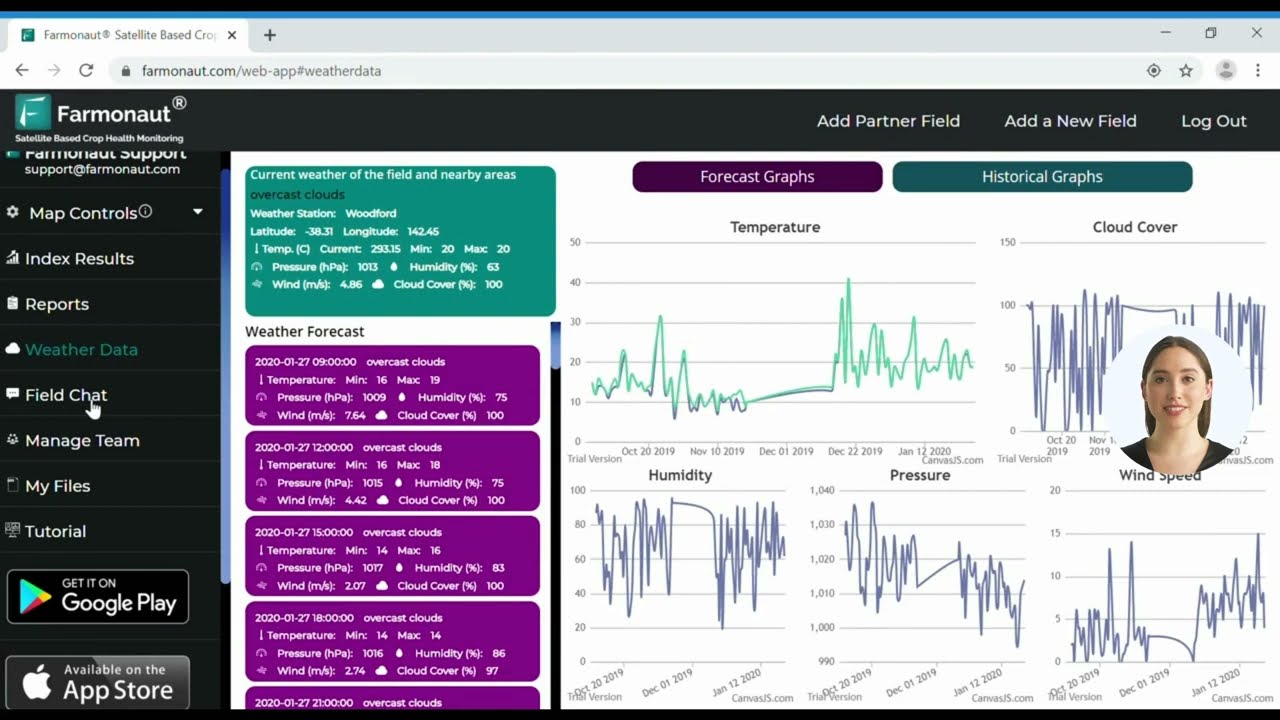
- Satellite-based monitoring delivers actionable insights on crop health, soil conditions, and input needs via the Farmonaut platform—accessible by Android, iOS, web, and API.
- Our AI-powered advisory system (Jeevn AI) provides real-time weather and crop recommendations for improved farming in Rwanda and beyond.
- Blockchain-based traceability enables transparency for Rwanda agricultural exports, building trust with international buyers and regulators.
- Tools like farm resource and fleet management, and carbon footprint monitoring support sustainable, high-efficiency operations for farmers, cooperatives, agribusinesses, and policymakers.
These technology solutions, when integrated into Rwanda’s extension systems, strengthen the sector’s resilience, competitiveness, and alignment with global sustainability standards.
Integrating satellite insights with local extension advice amplifies on-farm decision-making, reduces environmental impact, and unlocks new market access for export-oriented smallholders.




Ready to transform your export farming operations?
With Farmonaut, access affordable satellite-driven data for agricultural monitoring, AI-driven advisory, blockchain traceability, farm fleet management, and carbon footprinting on any device.
Explore our API solutions and developer documentation for seamless integration into your agricultural business, cooperative, or government workflow.
Key Rwandan Agricultural Export Crops: Sustainable Practices, Yield, and Export Value
| Crop Name | Sustainable Practice | Estimated Yield (tons/hectare) | Estimated Export Value (USD million/year) | Environmental Impact |
|---|---|---|---|---|
| Coffee | Organic farming, shade-grown, integrated pest management | ~2.1 | ~80 | Soil improvement, biodiversity enhancement |
| Tea | Contour planting, canopy management, natural pest control | ~2.5 | ~93 | Water conservation, erosion reduction |
| Pyrethrum (Natural Insecticide Crop) | Crop rotation, minimal pesticide use | ~1.8 | ~12 | Organic soil amendments, biodiversity |
| Fresh Fruits & Vegetables (e.g. Avocado, French beans, Passionfruit, Tomato) | Drip irrigation, crop rotation, integrated nutrient management | 4–12 (varies by crop) | ~27 | Soil fertility, efficient water use, habitat provision |
| Cut Flowers (Roses, Summer flowers) | Water-efficient irrigation, greenhouse cultivation | 80–120 (flowers per hectare/tons of stems) | ~8 | Water conservation, reduced chemical input |
| Irish Potatoes | Crop rotation, organic composting | ~11.5 | ~4 | Soil restoration, water retention improvement |
| Beans/Lentils | Legume intercropping, nitrogen fixation, minimal-till | ~1.1 | ~3 | Nitrogen enrichment of soils, reduced emissions |
Key Drivers, Risks & Opportunities in Rwanda Agricultural Exports
- Balanced crop diversification generates export growth and rural resilience.
- Certification and value chain strengthening boost competitiveness.
- Climate adaptation is essential to maintain yields and stability.
- Water management investments reduce drought impacts.
- Farm cooperatives connect smallholders to premium markets and support credit access.
Expert Insights & Highlight Boxes
A multi-pronged approach—combining diversified crops, science-based inputs, policy support, and sustainable landscape management—is proving to be the driver for thriving rwanda agricultural exports.
Adopting digital and satellite technologies early on simplifies compliance, traceability, and productivity monitoring for smallholders—key to unlocking international markets.
Neglecting post-harvest handling and processing results in significant value loss. Prioritizing infrastructure and training in these areas pays large dividends.
Rwanda’s export sector benefits from stability, supportive policy, and emerging eco-label markets. Investors should watch the rise in demand for traceability (Farmonaut Traceability Solutions) and data-driven verification systems.
Advanced remote sensing and real-time monitoring (Large Farm Management Platform) are transforming how land use, environmental impact, and supply chain efficiency are measured in Rwanda agricultural landscapes. Improve planning with high-frequency, affordable satellite data!
Frequently Asked Questions (FAQ) – Rwanda Agricultural Exports
-
What are Rwanda’s top agricultural export crops?
The leading export crops include coffee, tea, pyrethrum, fresh vegetables and fruits (avocados, French beans, passionfruit), cut flowers, Irish potatoes, and beans/lentils.
-
How do sustainable practices impact export performance?
Sustainable practices (organic amendments, integrated pest management, water conservation) improve yields, reduce environmental impact, and make Rwandan exports more attractive to international buyers seeking ethical sourcing.
-
How can smallholder farmers access export markets?
By joining cooperatives, leveraging microfinance/credit, working with extension services, and adopting certification and traceability solutions, smallholders gain entry to regional and international markets.
-
What role does technology play in Rwandan agriculture?
Technology—including satellite remote sensing, AI-driven advisory, and blockchain traceability—improves farm monitoring, input use, environmental compliance, and market access for all in the sector.
-
Why is crop diversification important in Rwanda?
Diversification spreads climate and market risk, enhances soil fertility, and opens new avenues for export earnings beyond traditional staples.
Farmonaut Solutions: Explore More for Sustainable Agriculture in Rwanda
With the evolving needs of Rwanda’s export sector, you can harness the latest innovations from Farmonaut:
-
Farmonaut Carbon Footprinting:
Quantify your farm’s carbon emissions, benchmark with best-in-class sustainable producers, and attract eco-conscious buyers in premium export markets. -
Blockchain-based Traceability:
Build buyer trust and meet global certification needs with secure, easily verifiable histories of your agricultural products. -
Satellite-backed Loan & Insurance Verification:
Streamline access to credit for climate-resilient investments, with satellite-verified crop production reports for insurers and banks. -
Farm Fleet & Resource Management:
Optimize rural logistics, monitor equipment, and reduce transport costs across the value chain. -
Crop, Plantation & Forest Monitoring:
Access periodic satellite data for sustainable landscape management and compliance reporting.
Conclusion: Rwanda Agricultural Exports on the Rise
From the hills of Musanze to the terraces of Huye and Rusizi, Rwanda’s agricultural exports have evolved in tandem with sustainable practices, crop diversification, and technology-driven productivity gains. This dynamic transformation is built on the foundation of empowered smallholder farmers, organizational innovation, and ambitious policy support.
As we look forward, embracing value addition, environmental stewardship, and digital solutions will propel Rwanda to deeper export, economic, and climate resilience success. By strengthening farmer organization, upgrading processing and logistics infrastructure, and adopting best-in-class sustainability systems, Rwanda stands poised to lift rural livelihoods and contribute to regional and global food security objectives.
The story of Rwanda farming is one of adaptation, innovation, and growth—a woven tapestry that defines the nation’s daily life and future potential.

 Godrej Agrovet
 Hayleys Agriculture
 Linx Agritech
 Adinet
 Save Your Soils
 GalaxEye Space
 Grandstream Algérie
 XOS Realty
 Geospatial Lab Africa
 Agro La Gándara
 HIPSAC
 ZOL Zimbabwe
 Juligerm
 AdBio
AdBio MISE Maroc
 NWNS
NWNS Red August Group
 Farm Inc
 WeMe Global
 Agrotoken
 Blue BearX
 Insignito
 DnCubed
 Indosistim Teknologi
 Liquify Digital
 CU Foods
 BeyondTech Global
 Rouge VC
 AgroRisk
 Oath Inc
 Esri North East Africa
 MDCV UK
 Etech Consulting Madagascar
 Vestlandsforsking
 WB Dev
 Sama Premium
 Tres Valles
 Blickwinkel
 Agricultural Credit Policy Council
 eKGIS
eKGIS Mostas Tech
 Andex
Andex Deluxe Conseil
 WICO
WICO Chimera Innovation
 SkyHarvest
 Teledarbas
 Exurbia Geospatial
 FieldZero
