

Agricultural Land Hyderabad: 7 Trends Around Hyderabad 2025
“By 2025, Hyderabad’s agricultural land is projected to shrink by 18% due to rapid urbanization.”
Summary: Agricultural Land Around Hyderabad—Current Scenario & 2025 Outlook
Hyderabad, as the capital city of Telangana, stands out as a prominent centre known for its rapid growth in infrastructure, IT, and real estate. However, the surrounding agricultural land near Hyderabad remains a vital component of the region’s economy, ecology, and food security. As we head into 2025, understanding the dynamics of agricultural land around hyderabad becomes crucial, given the competing demands of urban expansion, sustainability, and livelihoods for local farmers. The soil fertility, crop patterns, the evolving impact of urbanization, and government initiatives all play instrumental roles in shaping the region’s future. This comprehensive guide delves deeply into the seven defining trends affecting agricultural land hyderabad and explores sustainable pathways for resilient growth in 2025 and beyond.



Geographical and Agricultural Overview of Land Around Hyderabad (2025)
The agricultural land around Hyderabad spans vibrant districts such as Rangareddy, Medchal-Malkajgiri, and parts of Sangareddy and Vikarabad. These regions, resting on the Deccan Plateau, are characterized by two main types of soil: red soils and the richer black cotton soils. The black soil, especially, is renowned for its fertility—ideal for cotton, maize, and various pulses.
- Climatic Conditions: Semi-arid to tropical climates dominate the region, with moderate rainfall during the monsoon dictating successful cropping patterns.
- Major Crops: The most common crops cultivated are paddy, maize, cotton, red gram, in addition to horticultural products like mangoes and guavas.
- Diversified Agriculture: Dairy and poultry farming have risen alongside traditional cultivation. This diversified income model ensures greater resiliency for farmers and the local economy.
Yet, farmland around Hyderabad faces multiple challenges: urbanization, water management, soil degradation, and fragmentation of land holdings. As the city’s sprawl intensifies in 2025, striking a balance between development and conservation remains critical.

Agricultural Land Hyderabad: 7 Key Trends in 2025
Sustainable growth and food security for the Hyderabad region depend on our understanding and strategic management of the following seven prominent trends shaping agricultural land Hyderabad as of 2025:
- Soil Health
- Crop Diversification
- Urbanization Pressure
- Land Prices
- Water Availability
- Sustainable Practices Adoption
- Government Initiatives
Each trend has grown or shifted considerably since 2020, now exerting significant influence on local agricultural productivity, environmental sustainability, and the socio-economic fabric of the agricultural region around Hyderabad.
“Over 60% of farms near Hyderabad rely on sustainable practices to combat soil degradation and water scarcity.”
Trend Comparison Table: Agricultural Land Around Hyderabad (2020-2025)
| Trend | 2020 (Baseline) | 2024 (Current) | 2025 (Projected) | Sustainability Impact |
|---|---|---|---|---|
| Soil Health | Moderate degradation; limited awareness | Improving with targeted interventions | High adoption of soil conservation practices | Boosts productivity & ecosystem resilience |
| Crop Diversification | Low to moderate; rice, cotton dominate | Increase in maize, pulses, horticulture | Strong trend; >35% farms diversify crops | Mitigates risk, improves food security |
| Urbanization Pressure | Medium; gradual land conversion | High; accelerated sprawl, land fragmentation | Very high; 18% farmland loss projected | Threatens long-term ecological balance |
| Land Prices | Stable; slow appreciation | Rapid increase (30%+ in 4 years) | Continued inflation; high speculation | Reduces accessibility for small farmers |
| Water Availability | Seasonally adequate | Stress due to erratic monsoon, depletion | Critical; high micro-irrigation adoption | Micro-irrigation reduces depletion risk |
| Sustainable Practices Adoption | Limited; organic farming nascent | Rising; FPO & policy driven promotion | 60%+ adopting eco-friendly systems | Enhances biodiversity, carbon sequestration |
| Government Initiatives | Pilot projects; limited impact | Expanded: FPOs, zoning, technology push | Policy-backed, widespread, tech-integrated | Supports long-term sustainable development |
Urbanization Pressure: Expansion vs. Conservation of Agricultural Land Hyderabad
Hyderabad’s reputation as a capital city for IT and infrastructure has propelled rapid urban expansion over the past decade, stretching steadily into its agricultural hinterlands.
- Land Conversion: The construction of residential colonies, industrial parks, highways, and real estate projects has led to significant conversion of contiguous farmland into non-agricultural plots.
- Fragmentation: As urbanization accelerates, plots get fragmented, disrupting traditional farming systems and hampering investment in farm mechanization and infrastructure.
- Demands: Growing population, IT corridors, and logistics requirements instigate high demand for land, increasing competition between agriculture and other economic sectors.
Key Data for 2025:
- 18% projected reduction in agricultural land near Hyderabad (compared to 2020).
- Ongoing expansion especially in Rangareddy and Medchal districts.

Risks: Loss of fertile soil and green cover, threats to biodiversity, growing food import dependence, and increasing risks of environmental imbalances (air and water pollution, flooding).
Sustainable Response: Effective land use regulation and clear zoning policies are required. The government’s initiatives channel infrastructural growth into allocated industrial corridors to minimize influence on vital agricultural zones.
- Farmonaut Large Scale Farm Management Tools: For effective agricultural land monitoring, our platform provides satellite-based monitoring & field mapping solutions to help plan, assess, and safeguard large-scale farms against unplanned urban encroachment. The service supports urban planners and farm owners alike.
Water Scarcity and Irrigation Dynamics in Hyderabad’s Agricultural Land
Water is the lifeblood of agriculture, but is facing acute stress around Hyderabad due to a blend of climatic and anthropogenic factors:
- Sources: Canal irrigation from Osman Sagar and Himayat Sagar, seasonal rainfall, and increasingly, groundwater extraction via borewells.
- Trends: Over-extraction of groundwater and erratic monsoon rains accelerate depletion, impacting crop yields and farmer income.
Government & Policy Initiatives:
- Micro-irrigation Push: Adoption of drip and sprinkler irrigation is incentivized by the government in 2025, helping optimize water use and conserve resources.
- Real-time Water and Soil Health Monitoring: Tools like our carbon footprinting and resource management enable farmers to track water consumption, reduce waste, and enhance their field management approaches sustainably.
Hybrid farming that integrates low water demand crops like pulses and certain oilseeds is gaining traction, signaling a shift in cropping patterns due to water availability constraints.

Soil Health, Degradation & Management Practices in Agricultural Land Hyderabad
The soil found in the agricultural land around Hyderabad is either red or black (cotton) soil. However, intensive farming practices, repeated mono-cropping, and chemical fertilizer use have, over decades, exhausted natural fertility, leading to:
- Nutrient Depletion: Reduces yields, compels higher fertilizer input costs.
- Soil Erosion: Caused by the removal of ground cover and unplanned tillage.
- Reduced Water Retention: Especially in red soil, leading to faster runoff and lower moisture content.
Farmers’ Response in 2025 includes:
- Organic Amendments & Crop Rotation: Introducing organic manures, leguminous crops (red gram, pulses) to replenish soil nitrogen, and using mulching to protect surface soil.
- Adoption of Agroforestry: Planting trees for timber, fruit, and shade alongside regular cropping; shields farmland from wind/water erosion and provides diversified income for farmers.
- Soil Health Monitoring (via Satellite): We assist farmers and land managers with real-time NDVI (vegetation health) and soil monitoring—delivered on user-friendly app interfaces—facilitating accurate and data-driven decision-making.
Examples: Soil & Crop Choices by Soil Type
- Black Soil: Fertile, moisture-retentive, best for cotton, maize, pulses.
- Red Soil: Suited for groundnut, sorghum, and horticultural crops with added compost.
Land Fragmentation & Farmland Productivity
One of the distinctive challenges facing agricultural land near Hyderabad is the persistent fragmentation of land holdings. As urbanization pressure increases and farms pass through generations, inheritance-driven land splits cause plots to shrink, rendering them non-viable for commercial, mechanized agriculture.
- Impacts: Fragmented farmland is harder to irrigate, fence, and manage with modern equipment. Farmers struggle to maintain productivity and secure consistent returns.
- Solution in 2025: Collective approaches such as Farmer Producer Organizations (FPOs) and shared machinery pools are helping re-aggregate land and enable economies of scale.
- Monitoring Fragmentation: Our fleet & resource management tools support farmers with efficient allocation of shared machinery across scattered plots.
Smart Technologies and Modern Farming in Agricultural Land Around Hyderabad
Adopting smart agricultural technologies is rapidly transforming farming around Hyderabad in 2025. Peri-urban and rural farmers use satellite imagery, IoT-based soil sensors, and AI-powered analytics for efficient land management.
Benefits of Technology Adoption:
- Precision Farming: Monitor crop health, detect early pest/disease outbreaks, and tailor irrigation, fertilization, and harvesting schedules to maximize productivity.
- Real-time Monitoring: Satellite-based visualization tools reduce the need for physical checks, improving resource management and cost-efficiency.
- Yield Forecasting: Data models help farmers plan crop sales, access finance, and negotiate better terms with buyers.

- Blockchain-based Traceability: For responsible supply chains, our traceability solutions help record every step of an agricultural product’s journey, boosting transparency, food safety, and consumer trust.
- Access to Credit & Insurance: Lenders increasingly rely on objective, up-to-date satellite evidence (see: crop loan and insurance verification tools) to streamline finance and protect against risks arising from unpredictable weather or market disruptions.

Policy, Government Initiatives, and FPOs for Agricultural Land Hyderabad
The government of Telangana, in conjunction with agricultural bodies, actively supports the sustainability and livelihoods of farmers cultivating agricultural land hyderabad as we approach 2025. Notable pillars include:
- Zoning and Land Use Regulation: Designating high-value agricultural land as protected to mitigate the negative consequences of random urbanization.
- Support for Farmer Producer Organizations (FPOs): Granting financial, logistical, and market assistance to FPOs empowers small landholders to benefit from collective bargaining, shared infrastructure, and better price realization.
- Promotion of Sustainable Methods: Policies strongly encourage agroforestry, integrated pest management, organic composting, and water-efficient farming practices.
- Technology Integration: Launched state-backed initiatives encourage the widespread use of smart farm management apps and satellite-based monitoring systems.
With increasing urban-industrial pressure, these regulatory mechanisms are fundamental to preserving the ecological and social balance of agricultural land Hyderabad.
Adoption of Sustainable Practices by Hyderabad’s Farmers
We observe a major transition towards sustainable farming as a direct response to the soil and water stress prevalent around Hyderabad:
- Low-Input Farming: Reduction in the use of chemical fertilizers and pesticides in favor of natural alternatives and biological controls.
- Agroecological Diversification: Mixed cropping, intercropping, and the nurturing of on-farm biodiversity improve resilience against climate shocks.
- Climate-Smart Agriculture: Planning cropping calendars in sync with improved monsoon prediction models to optimize water and soil resource use throughout the year.
Statistics: By 2025, over 60% of farms are expected to follow sustainable practices, shielding them from the dual threats of degradation and erratic weather patterns, while bolstering food security and livelihoods.

Future Outlook: Balancing Growth & Sustainability in Hyderabad’s Agricultural Land (2025 & Beyond)
The role of agricultural land hyderabad in ensuring food security remains crucial despite the rapid growth of Hyderabad’s urban infrastructure. The outlook for 2025 and the years ahead emphasizes:
- Stronger Land-Use Controls: Policies to prevent excessive conversion and fragmentation.
- Technology Empowerment: Promoting affordable, accessible monitoring and advisory solutions for water, soil, and crop management.
- Resource Optimization: Higher adoption of micro-irrigation, reduced groundwater depletion, and science-backed cropping patterns.
- Inclusive Growth: Supporting marginalized and smallholder farmers with FPOs, finance, shared infrastructure, and market access.
- Sustainability First: Incentivizing conservation, reforestation, and eco-friendly farming to ensure biodiversity and ecological balance.
If these strategies are scaled thoughtfully, Hyderabad and its surrounding agricultural region offer a model for integrated rural-urban coexistence—securing livelihoods, food, and ecological stability for decades.
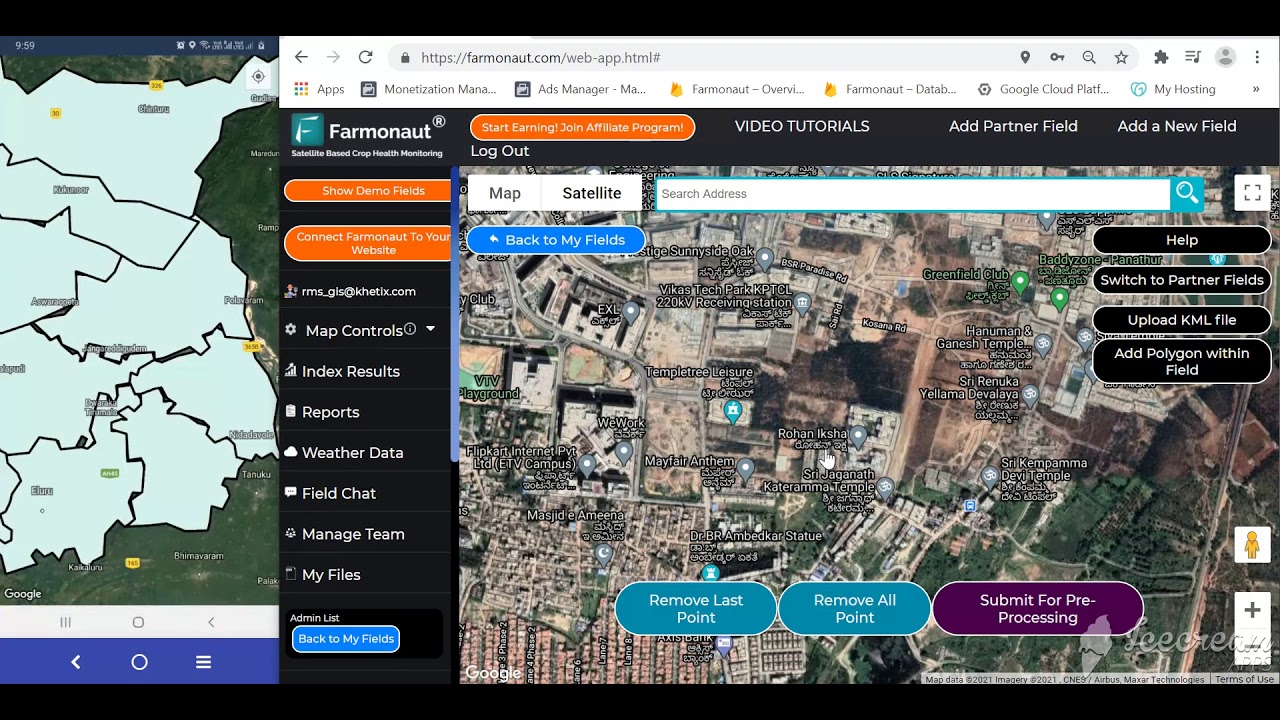
How Farmonaut Supports Sustainable Agriculture Around Hyderabad
As a satellite technology company committed to accessible, data-driven solutions, we at Farmonaut empower the agricultural land hyderabad region and its stakeholders in multiple ways:
- Satellite-Based Crop and Soil Health Monitoring: Our multispectral imagery delivers up-to-date NDVI metrics, enabling detection of nutrient stress and disease outbreaks even before they become visible to the human eye.
- Jeevn AI-Based Advisory: Our AI system analyzes real-time weather and satellite data to offer farmers timely, localized recommendations—optimizing crop and input management.
- Blockchain Traceability: With digital ledgers tracking crop journeys, we help producers meet food safety and quality assurance requirements while building trust with urban buyers.
- Fleet & Resource Management: We offer intuitive management for vehicles, irrigation pumps, and field equipment—helping aggregate logistics even across fragmented plots.
- Large Scale Farm Management: Agricultural land owners and enterprises near Hyderabad can efficiently map, monitor, and analyze vast holdings for better land utilization and productivity.
- Environmental Impact Tracking: Through advanced carbon footprinting tools, we enable farms to measure, reduce, and certify their environmental performance.
Our API and developer documentation ensure integration into other platforms for broad access. Mobile-friendly apps make advanced insights accessible for every stakeholder in the region.
FAQs: Agricultural Land Hyderabad in 2025
1. What are the main types of soil in the agricultural land around Hyderabad?
Red soil and black cotton soil dominate the region. Black cotton soil, especially, is fertile and ideal for crops like cotton, maize, and pulses.
2. What crops are most common around Hyderabad in 2025?
The region features paddy, maize, cotton, pulses (red gram), as well as fruits like mangoes and guavas. Dairy and poultry farming also support diversified incomes.
3. How has urbanization affected farming near Hyderabad?
Rapid urbanization has converted significant tracts of farmland into residential and industrial zones. The projected shrinkage is around 18% by 2025, increasing land prices, and causing plot fragmentation.
4. What initiatives support farmers facing challenges in Hyderabad?
Government policies focus on land use regulation, FPO support, micro-irrigation, and promoting sustainable practices to improve livelihoods and environmental outcomes.
5. How is technology helping local farmers?
Satellite monitoring, AI advisories, blockchain traceability, and fleet management (such as those provided by Farmonaut) are enabling real-time data-driven decisions, early risk detection, and better resource optimization.
6. How can I access Farmonaut’s satellite solutions for my farm?
Download our Android (Get it on Google Play), iOS (Available on App Store), or web app (Farmonaut Web App) for simple, robust agricultural support in the Hyderabad region.
Conclusion: Safeguarding the Agricultural Land Hyderabad Future
The agricultural land around Hyderabad sits at the crossroads of rapid urban growth and the unyielding need for sustainable practices for long-term food security and prosperity. Soil stewardship, water conservation, thoughtful adoption of smart technologies, and robust government support remain non-negotiable pillars for the region’s resilience in 2025 and ahead.
With proactive monitoring, collective wisdom, and data-driven tools like ours, Hyderabad can protect its rich rural-urban heritage—nourishing both its people and its environment for generations to come.

 Azure Clouds
 MCSOD
MCSOD Marei Nursery
 eKGIS
eKGIS Mostas Tech
 Native Seeds
 Andex
Andex FCF India
 Unifrutti Gulf
 Deluxe Conseil
 TVS Electronics
 WICO
WICO Chimera Innovation
 SkyHarvest
 Polaris Digitech
