

Agriculture in Rajasthan: 7 Powerful Innovations for 2026
- Summary: Agriculture in Rajasthan – Challenges and Opportunities in 2025
- Climatic Challenges and Geographical Insights
- Trivia: Rajasthan’s Water-Saving Achievements
- Shifting Crop Patterns: Key Crops and Innovations
- Water Management: Irrigation and Soil Conservation
- Livestock and Allied Activities: Bolstering Rural Livelihoods
- Agricultural Market Infrastructure and Digital Access
- Government Policies and Support for Agriculture in Rajasthan
- Seven Powerful Innovations Shaping Agriculture in Rajasthan 2026
- Farmonaut: Driving Digital Transformation in Rajasthan’s Agriculture
- Comparative Table: Key Innovations & Environmental Impact (2025–2026)
- Key Insights and Strategy Boxes
- Lists and Bullet Points: Quick Insights
- Farmonaut Apps & API Access
- Farmonaut Subscription Options
- FAQs on Agriculture in Rajasthan
- Conclusion & Future Outlook
Agriculture in Rajasthan: Challenges and Opportunities in 2025
Agriculture in Rajasthan, the largest state of India, is a paradox of adversity and resilience. Despite a predominantly arid and semi-arid climate, the sector remains vital, providing livelihood and nutrition for a significant portion of the state’s population. As 2025 approaches, agriculture in Rajasthan continues to evolve in response to environmental constraints, technological advancements, and government reforms—shaping not just the rural economy, but the very fabric of food security and sustainable development in the region.
This comprehensive analysis uncovers the core challenges, transformative opportunities, and seven powerful innovations that are revolutionizing Rajasthan’s agricultural landscape for 2026 and beyond.
Climatic Challenges & Geographical Insights
Agriculture in Rajasthan is intrinsically tied to its harsh terrain and erratic climate. The state spans over 342,239 km2, making it the largest in India by area. Its geography is marked by vast swathes of the Thar desert, undulating sand dunes, rocky outcrops, and saline soils, all of which increase agricultural challenges.
- Extreme temperatures: Summers can soar to 48°C, while winters often dip below 0°C.
- Low, erratic rainfall: Rainfall averages only 300–600 mm annually, with high regional and temporal variability.
- Frequent droughts: Many districts face recurring droughts, severely impacting crop yields and intensifying rural poverty and migration.
These climatic and geographical conditions restrict the types of crops grown—necessitating a reliance on drought-resistant varieties, advanced water management, and resource-efficient innovations.

Shifting Crop Patterns: Key Crops & Innovations
Diverse Cropping Patterns—Traditional Resilience Meets Modern Needs
Despite environmental hardships, Rajasthan sustains a diverse range of crops, reflecting its agro-ecological diversity and market potential:
- Bajra (Pearl Millet), moong, moth, wheat, barley, and mustard (oilseeds) remain major staples, accounting for over 80% of sown area.
- Pulses like moong and moth are grown for both consumption and nitrogen-fixing soil health benefits.
- Horticultural crops (kinnow, pomegranate, guava, mandarin orange) have gained ground due to their better market value and suitability for local climatic conditions.
In recent years, there’s been a gradual shift towards crop diversification. Farmers adopted varieties of high-value fruits, vegetables, and spices—enhancing profitability and reducing risk.
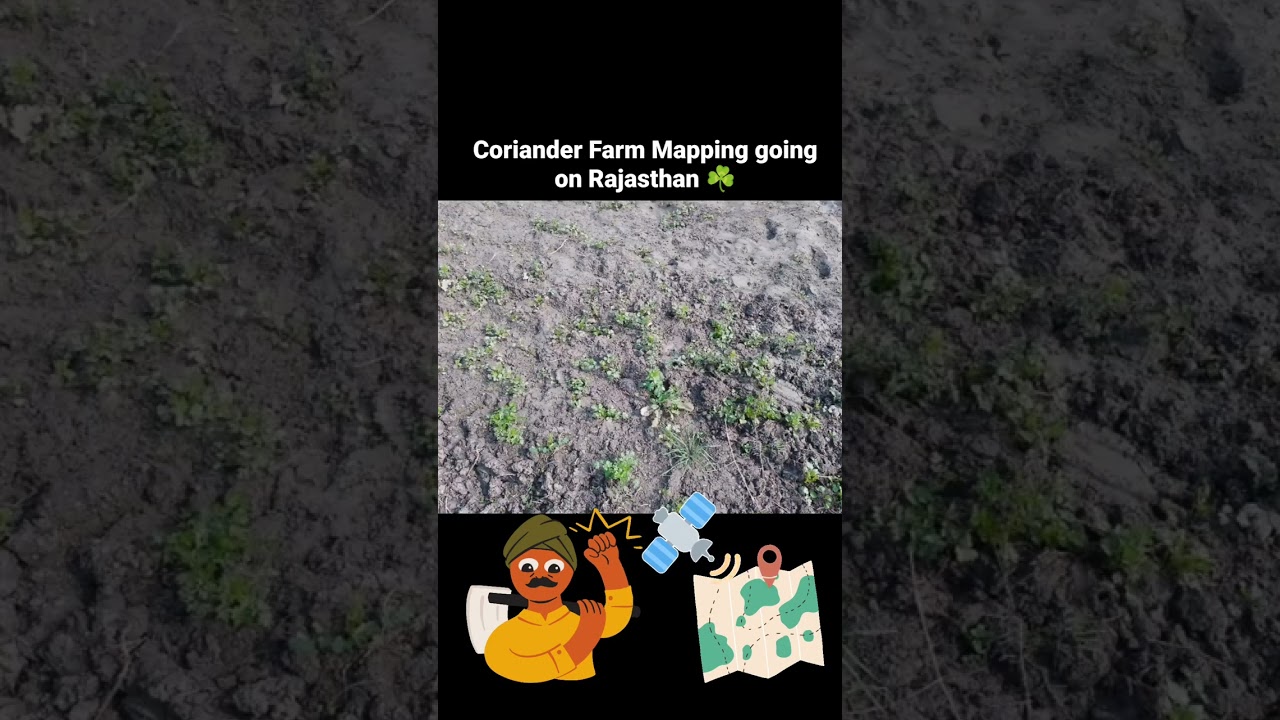
Emerging Technological Advancements (2025–2026)
- Precision farming, drip irrigation, and solar water pumps have seen widespread adoption—improving water use efficiency and reducing groundwater extraction.
- Development of drought-tolerant and early-maturing crop varieties by agricultural universities enhances both resilience and productivity.
- Increased use of AI-based advisory and remote sensing for timely pest management, soil analysis, and yield forecasting.
This evolving landscape prepares Rajasthan for climate adaptation, risk reduction, and enhanced food security.

Visual List: Rajasthan’s Leading Crops in 2025
- 🌾 Bajra (Pearl Millet) – Drought-resilient, staple grain
- 🌱 Moong & Moth Beans – Pulses for nutrition and soil health
- 🥬 Mustard – Key oilseed, adaptable to low rainfall
- 🍊 Kinnow & Mandarin Orange – Horticultural exports
- 🌳 Pomegranate, Guava – Higher market value & drought tolerance
Water Management: Irrigation & Soil Conservation
Water scarcity remains the defining challenge for agriculture in Rajasthan. With groundwater tables depleting rapidly—especially in Barmer, Jalore, and Churu districts—integrated management strategies are not just desirable but essential.
- Watershed management projects and rainwater harvesting are being scaled, recharging aquifers and enhancing irrigation coverage.
- Johads (traditional water bodies), check dams, and tanka storage structures are being revived, reducing runoff and increasing soil moisture retention.
- Drip and sprinkler irrigation are promoted through government schemes and subsidy support—cutting water consumption by up to 50%.
Soil Conservation: Practices for the Future
- Cover cropping and mulching reduces wind erosion, locks moisture, and suppresses weeds.
- Contour plowing and integrated nutrient management help maintain long-term soil fertility and health.
- Collaborative efforts by government agencies and NGOs focus on training farmers in sustainable land management, especially in vulnerable districts.


Livestock & Allied Activities: Bolstering Rural Livelihoods
In rural Rajasthan, animal husbandry complements crop farming—serving as an economic backbone, especially during drought years. The state is a top producer of milk nationwide, with indigenous breeds of cattle, buffalo, goat, and camel at the heart of rural livelihoods.
- Dairy cooperatives and organized veterinary services have boosted productivity and animal health in recent years.
- Poultry, sheep, and goat farming provide important sources of income for marginalized and women’s groups.
- Camel rearing is not only culturally significant but also supports eco-tourism and organic product markets.
These allied activities help rural populations diversify income, enhancing food security and resilience to climate-induced crop failures.

Agricultural Market Infrastructure & Digital Access
Strengthening market infrastructure and building digital bridges is critical for Rajasthan’s farmers to overcome traditional bottlenecks and unlock better value for their produce.
- E-marketing platforms offer real-time price discovery, transparency, and reduced dependency on middlemen.
- Agro-processing facilities and cold storage reduce post-harvest losses and enhance value addition, especially in high-value horticultural crops.
- Rural roads, digital payments, and market information systems have markedly improved access to domestic and global markets.
Improving physical and digital infrastructure helps farmers—especially smallholders—fetch better prices and minimize harvest wastage.
Government Policies & Support for Agriculture in Rajasthan
The government of Rajasthan has launched targeted schemes to fortify the fragile agrarian system. Policy interventions are increasingly climate-smart and prioritize sustainability:
-
Crop insurance: Tailored for drought conditions and allied risks, enhancing food security for smallholder farmers.
Learn how satellite technology supports crop loan & insurance verification → - Subsidies & Training: Micro-irrigation, solar pumps, and smart water management systems are incentivized for widespread adoption.
- Climate-resilient crop programs: Stress-tolerant & early-maturing seeds rollout in vulnerable districts.
- Sustainable agricultural policies: Emphasis on environmental conservation, efficient resource management & digital market connect.
Seven Powerful Innovations Shaping Agriculture in Rajasthan 2026
In 2026, transformative innovations are setting Rajasthan’s agriculture on a path to resilience and prosperity. Each solution addresses a unique combination of regional climate challenges, market dynamics, and environmental constraints:
- Drip & Micro-Irrigation: Maximizes water-use efficiency, crucial for arid and semi-arid zones.
- Climate-Resilient Crops & Early-Maturing Varieties: Mitigates drought and temperature shocks, secures yields in erratic climate.
- Remote Sensing & Satellite Monitoring (Including NDVI & NDWI): Enables real-time, affordable monitoring of crop and soil health over vast areas.
- Digital Market Platforms: Improves price transparency, reduces exploitation, expands farmers’ market reach.
- AI-Based Pest & Disease Advisory: Optimizes protection strategies, reduces losses from pests and diseases.
- Blockchain Product Traceability: Ensures supply chain integrity and instills consumer confidence in food safety.
- Regenerative Agriculture Practices: Focuses on soil rejuvenation, carbon sequestration, and biodiversity restoration.
When scaled through government support and private sector involvement, these innovations collectively enhance food security, climate adaptability, and market competitiveness in Rajasthan’s agriculture ecosystem.

Farmonaut: Driving Digital Transformation in Rajasthan’s Agriculture
At Farmonaut, we leverage satellite, AI, blockchain, and machine learning platforms to transform agricultural monitoring, crop management, and traceability for stakeholders in Rajasthan and across the world.
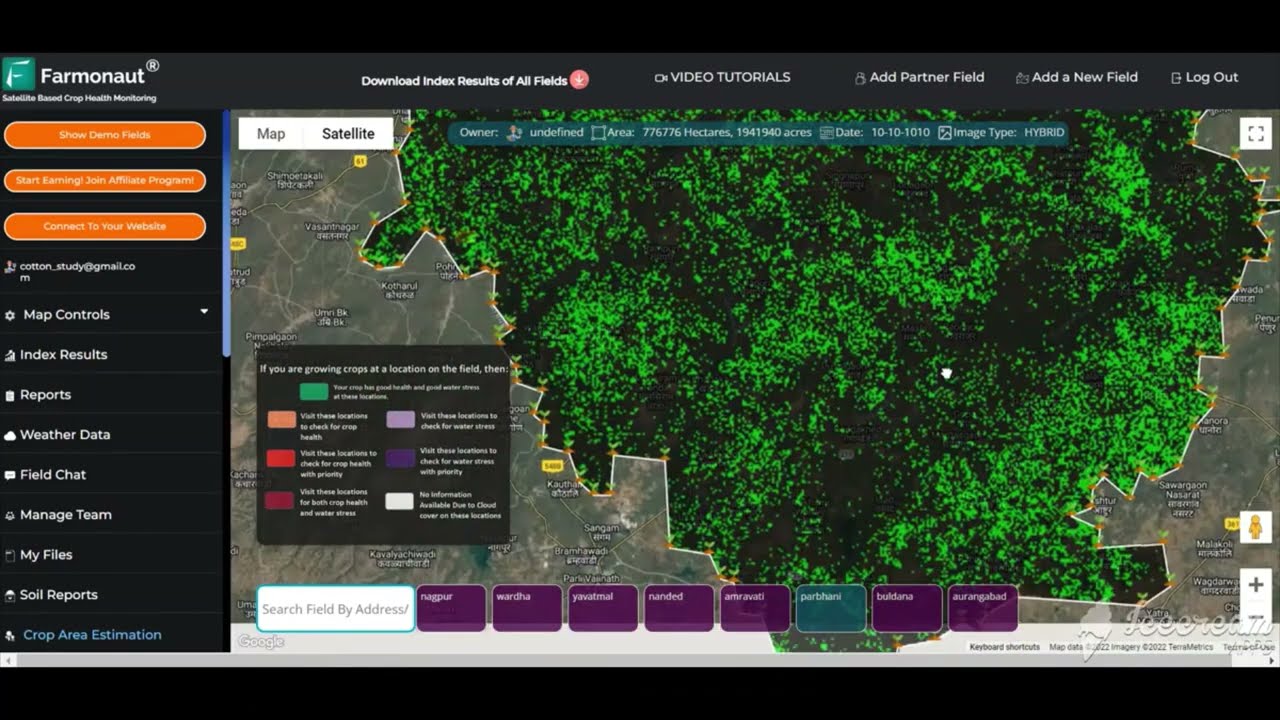
- Satellite-Based Monitoring: Our system uses multispectral imagery for real-time assessment of vegetation health (NDVI), soil conditions, and water stress in Rajasthan’s fields—enabling farmers to make informed, timely decisions.
See how large-scale farm management benefits from satellite-powered analytics → - AI-Based Jeevn Advisory: Delivers weather forecasts, pest/disease warnings, and customized guidance—crucial for the state’s diverse, risk-prone agriculture.
- Blockchain Traceability: We provide seamless, tamper-proof traceability for Rajasthan’s crops and livestock products, building trust in local and global markets.
Discover how blockchain boosts authenticity in farm supply chains → - Environmental Impact Monitoring: Tools for carbon footprinting and sustainability metrics—for compliance and responsible farming.
Explore carbon footprinting for sustainable agriculture → - Resource & Fleet Management: Satellite-powered fleet, vehicle, and machinery monitoring reduces downtime and operational expenses for agri-businesses.
Optimize agricultural fleet operations in Rajasthan → - Crop Area Estimation: Accurate, satellite-based area estimation helps in crop insurance planning and market forecasting.
Start with Farmonaut’s precision crop mapping tools → - API & App Integration: Our platform is accessible nationwide via app & API.
Integrate Farmonaut’s satellite and weather data API into your systems →
Visual List: Farmonaut’s Core Agri-Solutions
- 🔬 Remote Crop Health Analysis
- ☁ AI-Based Weather & Pest Forecasts (Jeevn)
- 🔗 Blockchain Traceability for Produce
- 🌱 Environmental Sustainability & Carbon Metrics
- 🚜 Fleet & Resource Optimization for Agribusinesses
Comparative Table: Key Agricultural Innovations and Their Environmental Impact (2025–2026)
| Innovation Name | Description | Adoption Rate in Rajasthan (2025–2026) | Water Usage Reduction (%) | Crop Yield Improvement (%) | Govt. Support (INR Crores) | Sustainability Rating |
|---|---|---|---|---|---|---|
| Drip & Micro-Irrigation | Low-pressure, targeted water delivery under crops | 50% of irrigated area | 40–55% | 15–22% | 3500 | ★★★★★ |
| Climate-Resilient Crops | Drought/heat-resistant and early-maturing varieties | 60% of sown area | 25–35% | 18–29% | 2200 | ★★★★½ |
| Remote Sensing Technology | Satellite monitoring of crops, soil, and water | 45% of districts (coverage) | 30–38% | 17–24% | 1500 | ★★★★★ |
| Digital Market Platforms | Online trade & price discovery channels for farmers | 35% of produce volume | 10–15% | 9–13% | 900 | ★★★★ |
| AI-Based Advisory Systems | Real-time AI insights for pests, weather, irrigation | 30% of progressive farmers | 18–25% | 16–28% | 1200 | ★★★★½ |
| Blockchain Traceability | Supply chain transparency from farm to fork | 12% of commercial produce | 10–12% | 5–10% | 500 | ★★★★ |
| Regenerative Agriculture | Soil restoration, carbon sequestration, cover cropping | 20% of cultivated area | 15–28% | 12–17% | 700 | ★★★★½ |
Key Insights and Strategy Callouts
Lists & Bullets: Rajasthan Agri-Future at a Glance
- ✔ Focus Areas: Water management, climate resilience, rural digitalization, and market access.
- 📊 Data Insight: Adoption of satellite-based monitoring expected to rise 2X by 2026.
- ⚠ Risk: Over-dependence on groundwater extraction remains a key vulnerability despite new schemes.
- 💡 Innovation: Blockchain traceability is rapidly being adopted by Rajasthan’s premium crop and dairy producers.
- 🌞 Renewables: Solar-powered water pumps not only cut costs but shrink agricultural carbon footprints.
Farmonaut Apps & API Access for Rajasthan’s Agri-Professionals
Unlock real-time satellite insights, AI advisory, and digital monitoring tools, accessible directly via:



Developers: Access full API Developer Documentation
Farmonaut Subscription Options
FAQs: Agriculture in Rajasthan (2025–2026 and Beyond)
A: Arid climate, erratic rainfall, groundwater depletion, frequent droughts, soil salinity, declining fertility, and market volatility are the key obstacles. Solutions include micro-irrigation, drought-resistant crops, policy support, and adoption of digital agri-tech.
A: Bajra (pearl millet), mustard, moong, moth, wheat, barley, kinnow, pomegranate, and guava are best adapted to Rajasthan’s climate due to their drought resistance or short growing cycles.
A: Water conservation is advanced through watershed projects, restoration of johads, micro-irrigation systems (drip/sprinkler), rainwater harvesting, and digital monitoring of usage.
A: We at Farmonaut deliver remote crop, soil, and water monitoring, AI-advisory, blockchain traceability, and resource management via satellite, helping farmers and agribusinesses optimize operations for sustainability, productivity, and climate resilience.
A: Yes. The Rajasthan government funds micro-irrigation, provides subsidies for renewable pumps, facilitates crop insurance, and supports digital market connectivity. Many initiatives also include training for new technologies.
A: Yes—Farmonaut’s platform is designed to be accessible and cost-effective for farms of all sizes. Subscription models ensure scalable and affordable access to essential monitoring features.
Conclusion & Future Outlook: Towards Resilient, Sustainable Agriculture in Rajasthan
As Rajasthan approaches 2026, agriculture stands at an exciting intersection of innovation, resilience, and sustainability. While the state’s vast, arid terrain and climate challenges remain formidable, the surge in advanced irrigation, climate-resilient crop varieties, digital integration, and government schemes signals a new era for the sector.
- Adoption of smart water management, soil conservation, high-value horticultural crops, and satellite-driven technologies will be crucial.
- Integrated policy support, combined with grassroots innovation, holds the key to future food security and rural prosperity.
- Actions at the farmer, government, and technology-provider levels are indispensable in shaping a robust agricultural future for Rajasthan.
We, at Farmonaut, remain committed to delivering accessible satellite-driven insights and digital tools to empower Rajasthan’s agricultural community in facing tomorrow’s challenges—and building on today’s vast opportunities.
For further reading, feature requests, or trial access to Farmonaut’s satellite and AI-powered services, explore our website.

 SatSure
 Geno
Geno Hayleys Agriculture
 Linx Agritech
 Adinet
 Save Your Soils
 Grandstream Algérie
 XOS Realty
 Geospatial Lab Africa
 Agro La Gándara
 HIPSAC
 ZOL Zimbabwe
 Juligerm
 AdBio
AdBio MISE Maroc
 NWNS
NWNS Red August Group
