

Agriculture Land Value in AP: 2026 Values & Rents
“Andhra Pradesh’s average agricultural land value is projected to rise by 8% in 2025 compared to 2024.”
“Cash rent rates for farmland in AP are expected to reach ₹18,000 per acre annually in 2025.”
- Introduction
- Trends in Agricultural Land Values in Andhra Pradesh: 2025–2026
- Cash Rents and Their Role in Agricultural Productivity
- Year-over-Year Comparison: Land Values & Cash Rents (2025 vs 2026)
- Agricultural Land Use Patterns and Sustainability Considerations
- Policy Implications & The Way Forward
- Technological Innovations Enhancing Agriculture and Land Use in AP
- FAQ: Agriculture Land Value in AP
Introduction: Understanding Agricultural Land Values and Cash Rents in Andhra Pradesh
Agricultural land values and cash rents remain at the core of Andhra Pradesh’s rural economy. As we examine the upcoming trends for 2025 and project into 2026, it’s crucial for farmers, landlords, tenants, policymakers, and investors to understand these dynamics, particularly amid evolving environmental challenges, technological advancements, and policy reforms.
The land not only serves as the backbone of agrarian economies but also directly influences rural livelihoods, food security, and community prosperity. Andhra Pradesh (AP), with its diverse agro-climatic zones and dynamic economic landscape, is an ideal region to analyze these industry trends and news in agriculture and land use. This comprehensive article delves into:
- The trends and drivers of agriculture land value in AP
- The dynamics of cash rents and their implications
- Changing land use patterns and the shift toward sustainable practices
- The policy, infrastructure, and technology shaping the future of this pivotal sector

Trends in Agricultural Land Values in Andhra Pradesh: 2025–2026
Drivers of Agriculture Land Value in AP
The agriculture land value in AP has demonstrated both resilience and volatility over the past decade. Key factors driving these fluctuations include:
- Urbanization and Infrastructure Development: Expansion of cities like Amaravati, Vijayawada, and nearby northern districts fuels higher demand for productive and strategically located land.
- Policy Reforms: Government initiatives regarding land leasing, crop support, and rural development affect both asset values and cash rents.
- Technological Advancements: Adoption of precision agri-technologies, such as satellite monitoring and AI-based advisory, increases productivity—raising land value in regions with higher adoption rates.
- Cropping Patterns: Shift toward high-value horticultural crops, aquaculture, and cash crops, especially in well-irrigated and market-accessible zones.
- Environmental Factors: Water scarcity, soil health, and changing climatic patterns influencing productivity and long-term economic outlook.
In 2025–2026, most agriculture land value in AP is expected to remain on an upward trend, although regional variation is evident. The most significant increases have been observed in zones nearer to:
- Major cities and urban infrastructure corridors
- Well-irrigated agricultural belts in Krishna, Guntur, East Godavari, and West Godavari
- Emerging horticultural and aquaculture hubs
Regional Variation by District & Land Use Type
Higher-valued agricultural lands are generally found near urban centers, along infrastructure development corridors, and in irrigated command areas. Their value can be 1.5–2 times higher than in remote, semi-arid, or upland regions of AP—especially where irrigation and market connectivity are limited.
Meanwhile, remote zones and districts characterized by rainfed or non-irrigated agriculture see stable or even declining values. Here, lower levels of investment, limited irrigation, and restricted market access reduce transaction frequency and downwardly pressure prices.
Cash Rents and Their Role in Agricultural Productivity
Defining Cash Rents: Mechanism and Implementation in AP
Cash rents represent the amount paid by tenants to landowners for the right to use agricultural land for crop production. In Andhra Pradesh, these arrangements are especially prevalent among smallholder and marginal farmers, forming a critical mechanism for land access and agricultural productivity.
These rents are typically fixed annually, and reflect a mix of market-driven and locally negotiated rates, influenced by:
- Land Value—Irrigated, well-located, and fertile lands command higher cash rents.
- Crop Choices—High-return horticultural and export-oriented crops elevate rent potential.
- Infrastructure and Irrigation: Assured water supply, market access, and proximity to processing units increase tenant willingness to pay.
- Demand and Supply Dynamics: Shortage of available land or high competition among tenants boosts rental prices.

In 2025, average cash rents in AP are expected to reach or marginally exceed ₹18,000 per acre annually, with persistent regional variation reflecting local land values, crop diversification, and tenant-landlord dynamics. The system empowers tenant farming by extending access to those without title ownership, but it also presents challenges—most notably, tenure insecurity, risks of over-exploitation for short-term gain, and occasional disputes regarding rental contracts.
**To address these concerns**, effective policy interventions—including digitization of land records, legal support for tenancy rights, and the promotion of sustainable leasing arrangements—are critical for healthy agriculture and land use in Andhra Pradesh through 2026.

Year-over-Year (YoY) Comparative Table: Agricultural Land Values and Cash Rents in Andhra Pradesh (2025 vs 2026)
| District/Region | Land Use Type | Estimated 2025 Land Value (INR/acre) | Projected 2026 Land Value (INR/acre) | YoY % Change (Value) | Estimated 2025 Cash Rent (INR/acre/year) | Projected 2026 Cash Rent (INR/acre/year) | YoY % Change (Rent) |
|---|---|---|---|---|---|---|---|
| Krishna | Irrigated | ₹22,50,000 | ₹24,35,000 | 8.2% | ₹21,000 | ₹22,800 | 8.6% |
| Guntur | Irrigated | ₹21,00,000 | ₹22,70,000 | 8.1% | ₹20,500 | ₹22,200 | 8.3% |
| East Godavari | Irrigated | ₹20,00,000 | ₹21,60,000 | 8% | ₹19,800 | ₹21,400 | 8.1% |
| West Godavari | Irrigated | ₹18,50,000 | ₹19,95,000 | 7.8% | ₹18,100 | ₹19,500 | 7.7% |
| Anantapur | Non-Irrigated | ₹7,00,000 | ₹7,60,000 | 8.6% | ₹9,500 | ₹10,400 | 9.5% |
| Chittoor | Non-Irrigated | ₹8,00,000 | ₹8,70,000 | 8.7% | ₹10,100 | ₹11,050 | 9.4% |
| Prakasam | Non-Irrigated | ₹7,80,000 | ₹8,45,000 | 8.3% | ₹10,400 | ₹11,250 | 8.2% |
Explanation: The above comparative table showcases the progression of agriculture land value in AP alongside cash rents for key districts in 2025 and projections for 2026. Most districts, especially in irrigated and high-potential agricultural corridors, are projected to see a consistent YoY increase in both asset and rental values, reaffirming trends observed in the broader regional economy.
Agricultural Land Use Patterns and Sustainability Considerations in Andhra Pradesh
Shifting Patterns: From Cereal Staples to High-Value Horticulture and Integrated Systems
The patterns of agriculture and land use in AP are in flux. While traditional cereal cultivation remains significant, a clear trend toward diversification into horticultural crops, vegetables, floriculture, and aquaculture is emerging especially in districts with better irrigation infrastructure and market connectivity.
- Horticulture: Andhra Pradesh is a top producer of mangoes, bananas, citrus fruits, and pomegranates. The shift to high-value horticultural crops increases both land value and annual cash rents.
- Aquaculture: The state’s coastal regions and delta zones are seeing a rapid expansion in fish and shrimp farming, offering attractive returns and transforming non-arable land segments.
- Integrated Farming: Adoption of integrated crop, livestock, and agroforestry systems in rainfed regions improves soil health, resilience, and overall productivity.
However, sustainable agriculture and land management are essential to maintain the long-term productive potential of these evolving systems.
“Andhra Pradesh’s average agricultural land value is projected to rise by 8% in 2025 compared to 2024.”
Soil, Irrigation, and Environmental Challenges
Persistent challenges such as soil degradation, water scarcity, and climate variability threaten the productivity and value of agricultural lands—particularly in non-irrigated, fragile, or semi-arid regions. Policymakers increasingly emphasize:
- Adoption of precision agriculture and resource-efficient practices
- Use of AI, remote sensing, and satellite-based solutions for monitoring soil health and crop vigor
- Transition to climate-resilient varieties, agroforestry, and organic practices
Maintaining balanced land use through strict zoning laws, efficient cropping patterns, and digitized record-keeping is crucial to prevent over-exploitation and fragmentation.

Policy Implications and the Way Forward
Given the complex dynamics shaping agriculture land value in AP, the path to sustainable growth includes multifaceted policy actions:
Enhancing Access and Equity in Land Leasing
- Simplifying and digitizing land records to reduce disputes and increase market transparency.
- Regulating rental arrangements to secure tenant rights, which will expand access for marginal and smallholder farmers and curb the risk of concentration and inequality.
- Encouraging stakeholder engagement so that the interests of both landlords and tenants are addressed and sustained.
Promoting Sustainable and Productive Land Use
- Investing in irrigation infrastructure and water management to unlock the productive potential of marginal lands.
- Incentivizing adoption of carbon footprinting and environmental impact tracking to reward sustainable practices among farmers.
- Supporting adoption of traceability and blockchain technologies for transparent produce supply chains. Ensuring the authenticity of agriculture and mitigating fraud builds rural trust and investment confidence.
These steps are pivotal for agricultural land values and cash rents to more accurately reflect underlying productivity, sustainability, and socio-economic realities.
Managing Asset Value, Credit, and Rural Investment
- Linking land value assessments with satellite-based verification for crop loans and insurance can stabilize rural finances, ensuring lenders and borrowers align on asset values and risk profiles.
- Empowering financial institutions with reliable, scalable APIs and developer docs for seamless integration of land, crop, and weather insights into banking systems.
Safeguarding Against Speculative Pressure & Land Hoarding
Policy vigilance is required to prevent speculative hoarding, rapid asset inflation disconnected from real productivity, and the exclusion of genuine agrarian stakeholders from the market.
- Monitoring transactions with large-scale farm management platforms that use satellite and AI for real-time land-use data.
- Encouraging transparent, data-backed investment decisions that align with food security and rural welfare priorities.

Technological Innovations Enhancing Agriculture and Land Use in Andhra Pradesh
Farmonaut: Making Satellite-Driven Insights Affordable and Actionable
At Farmonaut, our mission is to bridge technology gaps by democratizing access to affordable, scalable satellite monitoring and AI-driven analytics for the entire rural value chain. Here’s how our solutions empower agriculture and land use in AP:
-
Real-Time Crop Monitoring:
Users—ranging from smallholder farmers to large agribusinesses—leverage our satellite imagery for field-level health, irrigation status, and emerging risks assessments.



-
AI-Based Advisory and Resource Optimization:
Our Jeevn AI system delivers customized alerts and farming strategies, tailored to regional realities and supported by satellite-verified ground data. -
Blockchain Traceability:
Utilizing secure blockchains, our platform ensures traceability in crop supply chains, enhancing trust, reducing fraud, and supporting premium market access for sustainable producers.
Learn more about Farmonaut’s Traceability Solutions -
Carbon Footprinting for Sustainable Practice:
By tracking real-time environmental impact and emissions, our users can proactively adopt green farming methods and participate in carbon markets.
Discover Carbon Footprinting for Sustainable Rural Development -
Streamlined Lending and Insurance:
Our satellite verification tools expedite loan/disbursement and insurance claim validation—backed by reliable geospatial data.
Learn about Farmonaut’s Satellite-Enabled Crop Loan & Insurance Solutions
Access Farmonaut’s Satellite Farm Monitoring API — perfect for integrating agricultural land values and cash rents data feeds into banking, agribusiness, and rural development software. Developer docs are available for easy API implementation.
Additionally, our Large Scale Farm Management Suite is designed for stakeholders handling vast tracts, empowering them to monitor land use, resource deployment, and compliance remotely. This is invaluable for governments and big organizations aiming to support sustainable, scalable, and transparent agriculture.

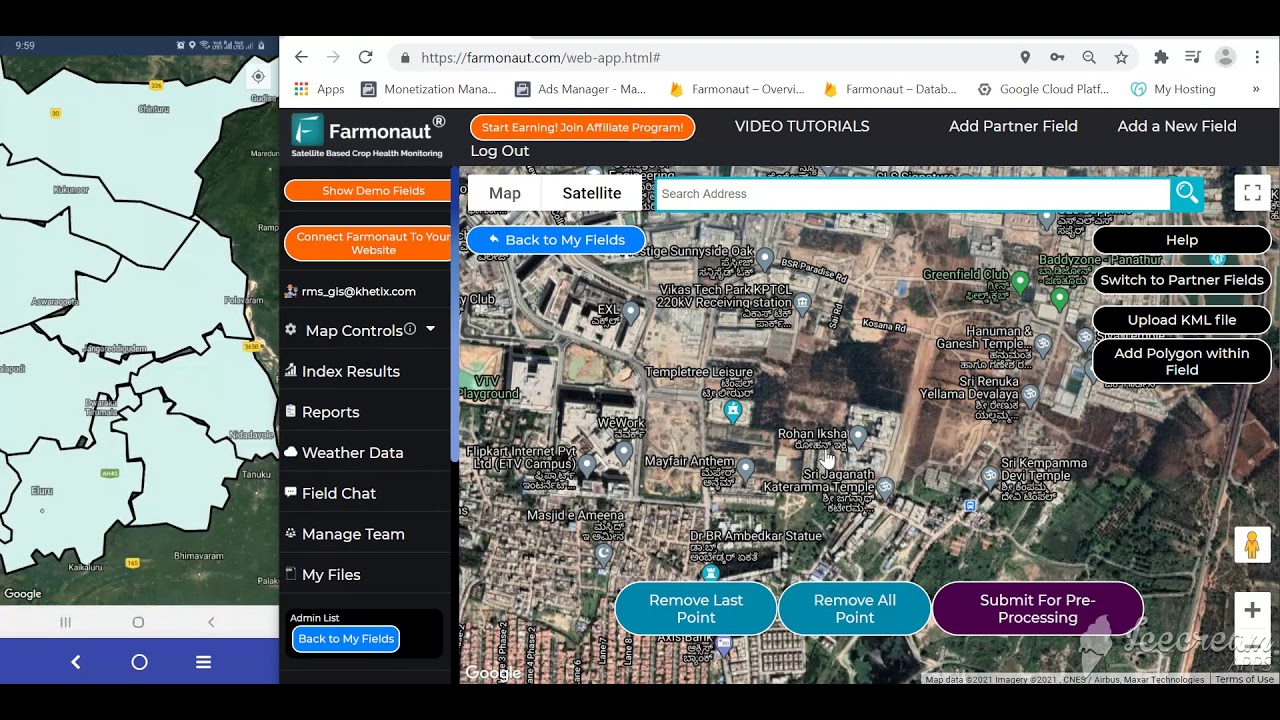
To make satellite-driven insights accessible, Farmonaut offers subscriptions on flexible terms. Industry users can preview or subscribe below:
As Andhra Pradesh moves forward in the digital era, unlocking the potential of agricultural land values and cash rents depends on an integrated approach combining policy, innovation, and transparent information. Satellite, AI, and blockchain-based tools—like those offered by Farmonaut—are poised to enhance productivity, stakeholder trust, and market efficiency for years to come.

FAQ: Agriculture Land Value in AP, Cash Rents & Land Use (2025–2026)
Q1. What factors are increasing agricultural land values in Andhra Pradesh?
Multiple elements—urbanization, irrigation, infrastructure development, crop diversification, policy reforms, and technology adoption—are pushing up agricultural land value in AP. Districts near Amaravati, Vijayawada, Krishna, and Godavari corridor experience the fastest growth.
Q2. Are cash rents directly proportional to land value?
Generally, yes. Cash rents rise with land value, especially for irrigated or high-potential land, reflective of greater crop productivity and market potential. Regional differences exist based on crop type and local demand-supply dynamics.
Q3. What are the main challenges facing the rural land rental market?
Tenure insecurity, incomplete records, inconsistent tenant rights, over-exploitation risks, and periodic policy gaps remain central. Modern leasing with digitized contracts and assured rights can mitigate these.
Q4. How are new technologies affecting agriculture and land use in AP?
Technologies like satellite crop monitoring, AI-based advisory, farm traceability, and carbon footprinting offer precise, scalable tools for increasing productivity, sustainability, and transparency. For example, organizations like Farmonaut grant access to such tools via web/mobile apps and APIs.
Q5. Is land value growth sustainable for Andhra Pradesh?
Sustainable growth depends on investing in long-term soil health, water conservation, legal transparency, and inclusive policies to ensure both economic and environmental stability for all rural stakeholders.
Q6. How can I keep track of agriculture land value in AP and major trends?
Monitor government agri market reports and leverage real-time digital solutions like those offered by Farmonaut for up-to-date geospatial, market, and environmental insights.
Conclusion: Harnessing Agricultural Land Values and Cash Rents for a Sustainable Future in AP
Andhra Pradesh’s agricultural land market—with its rising values, evolving cash rents, and shifting land use patterns—remains pivotal for the livelihood of millions and the overall rural economy. While rising land values boost asset wealth, policies and digital innovations must ensure equitable access, secure tenancy rights, and environmental sustainability for long-term prosperity.
Smart integration of technology, supportive policy, and sustainable practices—from land record digitization and satellite monitoring to carbon footprinting and traceability—will enable AP to align agricultural land values and cash rents with the state’s vision for inclusive, resilient, and future-ready agriculture through 2026 and beyond.
For ongoing updates, actionable insights, and scalable digital solutions, explore:

 BayWa
BayWa Azure Clouds
 MCSOD
MCSOD Marei Nursery
 eKGIS
eKGIS Mostas Tech
 Native Seeds
 Andex
Andex FCF India
 Unifrutti Gulf
 Deluxe Conseil
 TVS Electronics
 WICO
WICO Chimera Innovation
 SkyHarvest
