

AI Applications in Indian Agriculture & UAS 2026 Report: Unmanned Advancements Driving Precision & Efficiency
“By 2025, AI-powered UAS applications in Indian agriculture are projected to grow at a CAGR of over 18%.”
“Precision crop monitoring using AI and UAS is expected to cover more than 12 million hectares in India by 2025.”
Table of Contents
- Overview: Indian Agriculture Meets UAS and AI in 2026
- Key Insights from the Agriculture UAS Applications Market Report 2025-2026
- Focus Keyword: AI Applications in Indian Agriculture—Pathways to Yield and Resource Efficiency
- Core Use Cases: UAS & AI Transforming Farming in India
- Integrated AI and Data Ecosystems—Connecting Farm Insights to Decision-Making
- Regional Drivers: India’s Unique Adoption of Agri-UAS and AI Applications
- Comparison Table: AI-Driven UAS Applications in Indian Agriculture (2025-2026)
- Cross-Sector Impact: Learning from Mining & Forestry
- Challenges for Scalable UAS and AI Agriculture in India
- 2025 and Beyond: Outlook and Innovations in UAS Agriculture
- Farmonaut: Empowering Modern Agriculture with Satellite, AI, and Blockchain
- FAQ: AI & UAS in Indian Agriculture
Overview: Indian Agriculture Meets UAS and AI in 2026
The Indian agriculture sector is facing a paradigm shift, embracing advanced technologies that redefine how crops are grown, monitored, and managed. As we approach 2026, the fusion of AI-powered unmanned aerial systems (UAS) and integrated digital ecosystems is revolutionizing the way Indian farmers achieve yield improvements, resource efficiency, and sustainable competitiveness. The agriculture uas applications market report for 2025-2026 provides compelling insights: from automated crop monitoring and resource optimization to precise input application and data-driven advisories, the future of Indian agriculture is decisively digital and data-centric.
💡 Key Insight:
AI applications in Indian agriculture are rapidly advancing with UAS adoption, enabling precision crop monitoring, variable-rate application, and improved decision-making for farmers across diverse regions.
Indian farms, traditionally challenged by fragmentation, unpredictable climate, and yield variability, are poised to benefit from a new wave of technology adoption. Unmanned aerial systems equipped with advanced sensors (multispectral, hyperspectral, RGB, and thermal) form the backbone of modern precision farming. These UAS platforms, when synergized with AI analytics and cloud-edge integration, deliver actionable data that connects every stage of the agricultural value chain—from field scouting to market logistics.



What’s Driving AI and UAS Adoption in Indian Agriculture?
- ✔ Indian farmers are leveraging UAS agriculture for health monitoring, input optimization, and field management
- ✔ AI agriculture applications 2025 trends highlight cost reduction in input application (fertilizer, chemical, water)
- ✔ Precision farming enables efficient, targeted interventions across diverse crop zones
- ✔ Drones and AI analytics support early detection of pest/disease outbreaks, improving yield and reducing losses
- ✔ Farm management systems integrate real-time aerial data for better planning and logistics
Key Insights from the Agriculture UAS Applications Market Report 2025-2026
✨ Pro Tip:
When evaluating agri-UAS and AI investments, focus on platforms supporting modular sensor payloads, edge-cloud AI capability, and API integration with existing farm management systems for maximum scalability in 2025 and beyond.
According to the latest market projections, the Indian agriculture UAS applications market is characterized by:
- ✔ Advanced, multisensor payloads (multispectral, hyperspectral, thermal, RGB) for detailed field insights
- ✔ Edge and cloud AI for real-time monitoring, anomaly detection & advisory
- ✔ Adoption of open data schemas and integrated data chains for seamless decision-support
- ✔ Government policy (subsidies, drone clearances, and UAS training modules) facilitating mass adoption, especially for smallholders
- ✔ Yield improvement programs leveraging actionable, AI-driven crop management recommendations
- ✔ AI applications in agriculture 2025 extending to phenotyping, breeding, irrigation scheduling, and precise input management
- ✔ Efficient aerial scouting & monitoring supporting the entire farm-to-fork value chain—harvest logistics, quality, and supply

Focus Keyword: AI Applications in Indian Agriculture—Pathways to Yield and Resource Efficiency
Understanding the focus keyword—“AI applications in Indian agriculture”—is central to realizing the next chapter in Indian agritech. In 2025-2026, technology convergence between uas agriculture and AI-driven data analytics is enabling a transformative, scalable approach to:
- 📊 Data acquisition through drones, satellite platforms, and IoT sensors
- 🔍 Crop stress diagnosis using NDVI, VDI, and thermal indices
- 🎯 Targeted input application (fertilization, plant protection, irrigation)
- 🧬 Phenotypic trait extraction for breeding & selection programs
- 🏆 Resource conservation (water, nutrients, crop protection inputs) for sustainable yield improvement
⚠️ Common Mistake:
Many overlook the importance of data standardization. Ensure your UAS and AI platforms in Indian agriculture support open data formats and seamless integration with farm management software to avoid future data silo issues.
Visual List: Key Benefits of AI-Driven UAS in Indian Agriculture
- 🌱 Early detection of disease, pest outbreaks, and nutrient deficiencies
- 💧 Precision irrigation for water conservation in arid regions
- ⚡ Boosted yield by enabling targeted, timely intervention
- 🌾 Reduced input costs and environmental impact
- 📈 Improved reporting and compliance with agri-environmental regulations
Core Use Cases: UAS & AI Transforming Farming in India
Cutting-edge uas applications now cover the full lifecycle of crop development, protection, and harvesting. Here we map out primary cases and technologies deployed across India:
1. Crop Health Monitoring: Beyond the Visible
- ✔ Multispectral and hyperspectral sensors detect variations in crop vigor, leaf color, and stress markers.
- ✔ Early identification of nutrient deficiencies, drought stress, or disease outbreaks (weeks before visible symptoms manifest).
- ✔ AI models analyze vegetation indices (NDVI, VDI) and thermal signatures to map stress zones & inform targeted interventions.

2. Variable-Rate Input Application: Efficiency Realized
- AI-powered drones deliver fertilization and pesticide spraying at variable rates—applying exactly what is needed, precisely where it is needed.
- Prescriptions generated from UAS analytics optimize input costs and environmental impact, boosting crop margins and supporting sustainable intensification.
- Real-time flight planning and zone-wise application reduce overuse and enable compliance with government limits.

3. Precision Irrigation Planning: Smart Water Use
- 💧 Thermal imaging aids zone-wise moisture inference and soil water status estimation
- 📍 Site-specific irrigation scheduling becomes possible with aerial datasets & AI, particularly beneficial across semi-arid and arid Indian regions
- 🚀 Drones facilitate deficit irrigation planning, reducing waste, enhancing efficiency, and sustaining yields in water-stressed districts

4. High-Throughput Phenotyping & Breeding Support
- 🧬 In-row and canopy-level imaging accelerates in-field trait screening—detecting growth rate, canopy development, and pest resistance
- 🔎 AI pipelines extract phenotypic data for cultivar selection, potentially halving breeding cycle times for strategic crops (rice, wheat, cotton)
- 🧑🔬 Scientist and breeder programs can now monitor trial plots and advance selections rapidly across diverse agroecological zones
- 🖥️ All data is centrally analyzed, linked back to yield performance in real time

5. Pest & Disease Scouting: Faster Containment, Less Loss
- 🌟 Drone sorties and AI classifiers generate high-resolution field maps of pest/disease stress and infestation hotspots
- 🦟 AI distinguishes pest outbreaks from abiotic stresses (e.g., water or nutrient issues) and guides targeted chemical use—reducing broad-spectrum applications
- ⏱️ Instant advisories help smallholders control outbreaks early, preserving yield & minimizing post-harvest loss

6. Crop Logistics and Chain Monitoring: From Field to Market
- ✔ Regular aerial reconnaissance (via drones/satellites) supports yield estimation and harvest planning, especially for high-value crops (plantation, fruits, and vegetables)
- ✔ Supply chain data supports accurate market forecasting and logistical optimization
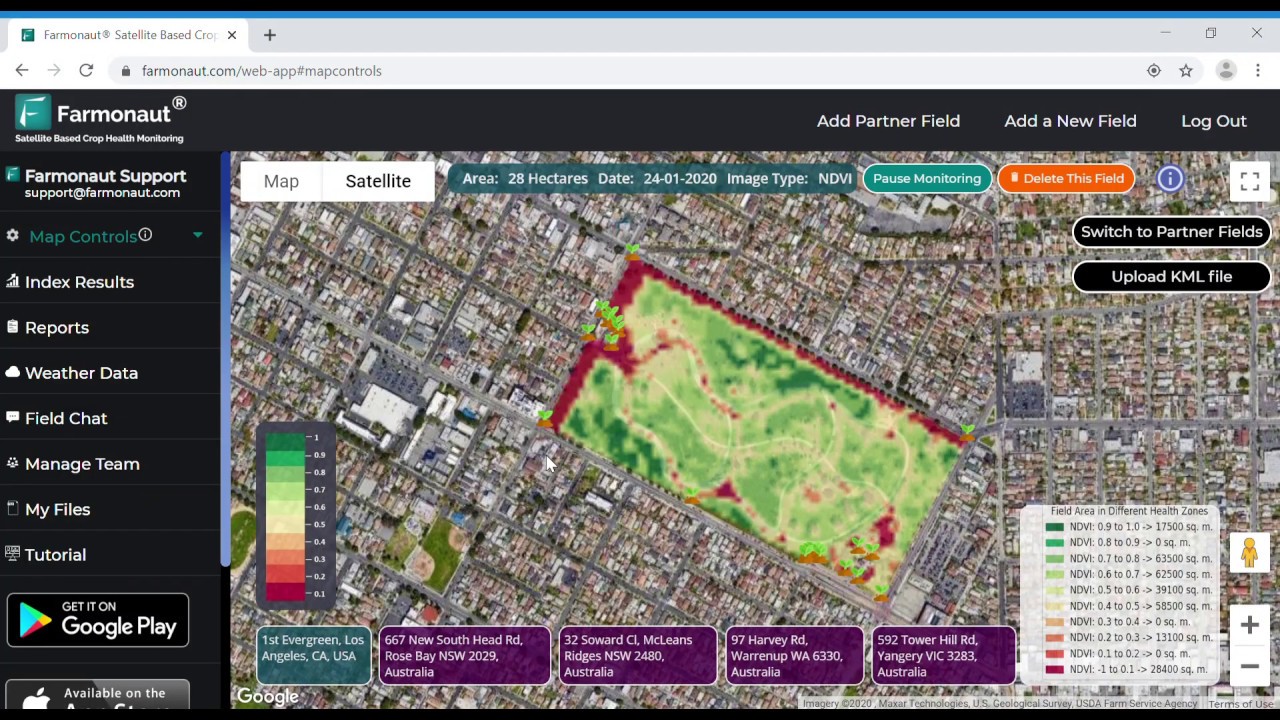
Visual List: Leading Indian Crops Leveraging UAS and AI Agriculture Applications
- 🌾 Paddy & Wheat: Early nutrient stress & water deficit detection supports efficient planning in Punjab, UP, and West Bengal
- 🌱 Millets & Pulses: AI-driven mosaics help manage vast tracts in dryland regions of Karnataka, Rajasthan, Tamil Nadu
- 🍊 Citrus, Plantations (Tea, Coffee): Canopy-level phenotyping, pest mapping optimizes export quality and market readiness
- 🥕 High-Value Horticulture: Yield prediction, harvest logistics, and quality assessment streamline farm-to-market transition
Integrated AI and Data Ecosystems—Connecting Farm Insights to Decision-Making
A defining attribute of AI agriculture applications 2025 is their integration prowess. The current and projected landscape is marked by the blending of edge AI (real-time anomaly detection on UAS) with cloud-based analytics interfacing with weather, historical, and IoT data layers. This integrated data chain connects insights from sensors on field sorties directly into farm management decisions.
- 📡 Edge AI: UAS onboard processors analyze flight sensor feeds, flagging issues (e.g., water stress, early blight) instantly for field staff.
- ☁️ Cloud Analytics: Central systems fuse UAS, weather, and soil data via APIs, generating actionable advisories that can be delivered as SMS, app notifications, or direct integration into FMS platforms.
- 🔗 Data Standardization: Open data schemas ensure outputs from diverse sensors and drones are seamlessly merged into farm records, enabling interoperability and scaling across large, distributed farm networks, a must for India.
- 🖼️ Computer Vision & Deep Learning: Using convolutional neural networks, AI can scan thousands of aerial crop images to detect subtle stress symptoms, supporting rapid intervention across multiple crops and zones.
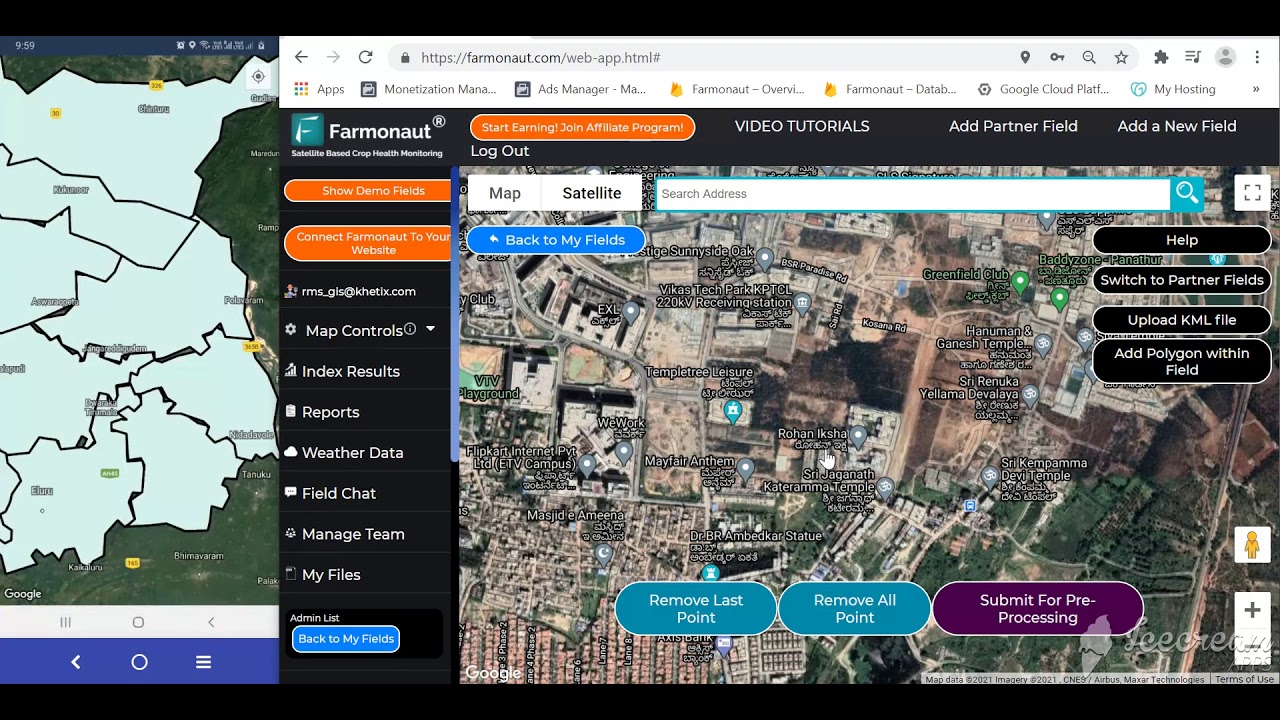
Pull satellite, weather, and crop health data directly into UAS management platforms or in-house applications.
Start integrating Farmonaut’s remote-sensing data for advanced agri-UAS, crop loan, and insurance workflows.
💸 Investor Note:
The Indian agriculture UAS applications market report signals sustained CAGR above 18%. AI+UAS platforms with open integration, scalable analytics, and cross-sector reach are prime investments for 2025-2026 and beyond.
5 Must-Have Features in 2026 UAS-AI Agriculture Platforms
- ✅ Modular Sensor Payloads: Interchangeable for diverse crops/regional use
- ✅ Edge AI Models: For real-time in-flight decision support and anomaly alerting
- ✅ Seamless API Connections: Eliminate data silos, enable cross-platform management
- ✅ Scalable Cloud Analytics: Support for millions of hectares and millions of farmers
- ✅ Localized AI Advisories: Address region-specific crops, conditions, and languages
Regional Drivers: India’s Unique Adoption of Agri-UAS and AI Applications
The vast scale and diversity of Indian agriculture—from subtropical sugarcane in Maharashtra to paddy in West Bengal, pulses in Rajasthan, and plantation/forest crops in Assam—requires flexible, regionally-tuned UAS and AI solutions.
- 🛰️ Custom UAS deployments are tailored for varying farm sizes, landholding fragmentation, and even riverine/island agriculture across India.
- 🛩️ The surge in small-to-mid-sized drones aligns with smallholder-dominated rural India.
- 🚦 Policy Support: Indian government subsidies, UAS flight permission relaxations, and drone pilot training are accelerating adoption, especially for orchards, plantations, and field crops.
- 🌏 Diverse sensors (thermal, multispectral, and RGB) empower UAS to adapt to different agroecological regions—rice in floodplains, millet in arid belts, citrus on plateaus, and tea in the hills.
🎯 Did You Know?
Farmonaut’s satellite-driven crop loan and insurance verification tools enable banks and insurance providers to verify field conditions using unbiased, real-time satellite data—reducing risk and improving access to finance for millions of Indian farmers.
Blockchain-powered traceability is also enabling Indian farmers to prove the provenance of their crops—boosting exports and trust. Read more about Farmonaut Traceability Solutions.
For agri-enterprises and cooperatives, robust large-scale farm management is key to scalability. Farmonaut’s Large Scale Farm Management App—details here—integrates satellite and AI insights for centralized decision-making across thousands of hectares.
Comparison Table of AI-Driven UAS Applications in Indian Agriculture (2025-2026)
| UAS Application Area | AI Technology Used | Est. Market Size (2025) (USD Million) |
Growth Rate to 2026 (%) | Key Benefits |
|---|---|---|---|---|
| Crop Health Monitoring | Computer Vision, ML | $132 | 19.4% | Early detection of stress & disease, improved yield, precise diagnosis |
| Disease & Pest Detection | Deep Learning, AI Classifiers | $105 | 18.7% | Reduced pesticide use, fast containment, less crop loss |
| Yield Prediction | ML Regression Models | $94 | 18.8% | Accurate harvest planning, better markets, lower waste |
| Variable-Rate Input Application | AI Prescriptions, Edge AI | $76 | 17.2% | Input efficiency, cost reduction, environmental protection |
| Resource Management (Soil/Water) | Remote Sensing AI, Predictive Models | $68 | 20.1% | Optimized irrigation, better soil health, sustainable farming |
Cross-Sector Impact: Mining, Forestry, and Lessons for Agri-UAS
While the agriculture uas applications market report focuses on crop-related innovations, cross-sector experiences offer valuable lessons:
- 🌲 Forestry: UAS platforms are used for site surveys, ecological monitoring, and rapid mapping—techniques adaptable for large agri-fields and plantation zones.
- ⛏️ Mining: Real-time resource monitoring, fleet and environmental impact tracking inspire scalable asset management models for cooperative agri-holdings and logistics in supply chain networks.
- 🔄 Shared Learnings: Edge AI, automated data chains, and remote compliance monitoring align with the needs of large, fragmented Indian agricultural landscapes.
As we look toward 2026, unified management platforms—like those pioneered by Farmonaut—will continue to lower cost and technical barriers to integrated, multi-sector AI and UAS deployment in Indian agri-tech.
For sectors seeking to monitor their carbon footprint and environmental impact, explore Farmonaut’s Carbon Footprint Monitoring Solutions.
🎓 Pro Tip:
UAS and AI deployment in agriculture, mining, or forestry requires continuous training. Regular upskilling is essential for pilots and field teams to maximize data value and comply with current Indian regulations.
Challenges for Scalable AI and UAS Agriculture in India
Despite exciting growth, several challenges persist for the broad-based adoption of ai applications in Indian agriculture:
- ⚠ Regulation & Safety: UAS operations require flight licensing, geofencing compliance, and well-trained pilots. Rapid scaling must not compromise safety or legal mandates.
- ⚠ Data Privacy & Control: Indian farmers must retain ownership/autonomy over their crop and field data. Clear agreements are crucial when using third-party analytics or cloud platforms.
- ⚠ ROI Assessment: The cost of drones, sensors, AI software, and maintenance must be evaluated against expected yield gains, input savings, and labor relief for financially sustainable deployment—especially at smallholder scale.
- ⚠ Skill Gaps: Ongoing training in field scouting, data interpretation, and digital agri-management is essential. Lack of skills can result in poor system utilization or missed actionable insights.
- ⚠ Connectivity: Reliable internet and cloud access is required for full utilization of cloud-based analytics—still a challenge in some rural regions.
“By 2025, AI-powered UAS applications in Indian agriculture are projected to grow at a CAGR of over 18%.”
“Precision crop monitoring using AI and UAS is expected to cover more than 12 million hectares in India by 2025.”
2025 and Beyond: Outlook and Innovations in UAS Agriculture
The next-generation landscape of Indian agriculture will be shaped by scalable deployment of aerial, remote, and multisensory data workflows, all powered by advanced AI analytics. Looking ahead:
- 🌐 Integrated Data Chains: Farm management will become increasingly connected—from UAS sorties to mobile agri-apps, with blockchain tracing ensuring full transparency across input purchase to market delivery.
- ⚡ Onboard AI: Drones will increasingly process data in real-time, relaying critical stress/disease alerts while still in flight, saving field teams hours or days in intervention response.
- 📲 Farmer-Centric Solutions: Region-specific advisory, local language support, and smartphone integration place actionable insights in every farmer’s hand, regardless of scale.
- 💰 Sustainable Value: Input savings, improved yields, facilitation of finance (via satellite-based loan and insurance risk assessment), and enhanced supply chain traceability drive long-term rural prosperity.
- 💡 Continual Skill Development: Tech upskilling programs for farmers and agronomists ensure the full value of ai agriculture applications 2025 is realized, bridging the digital divide in rural India.
Farmonaut Subscription Plans—for Seamless AI-Enabled Monitoring & Decision Support
Explore affordable, scalable subscription models for all scales—from individual farmers to businesses and government agencies:
Fleet and resource efficiency is crucial for scaling UAS-driven agri operations. Farmonaut’s Fleet Management Tools offer robust vehicle and machinery management for agri, mining, and forestry enterprises.
Farmonaut: Empowering Modern Agriculture with Satellite, AI, and Blockchain

As satellite technology, AI, and UAS transform Indian agriculture, Farmonaut stands as a pioneering technology facilitator. Our solutions enable precise, timely decision-making and robust management, without the need for expensive hardware setups. The platform combines:
- 🌐 Real-time, multispectral satellite monitoring for crops, mining, and infrastructure
- 🤖 AI-based advisory modules (Jeevn AI) to deliver customized insights and local strategies
- 🔗 Blockchain traceability for supply chain transparency and authenticity
- 📦 Resource & fleet management to enhance logistics efficiency
- 🌍 Environmental impact tracking (e.g., carbon monitoring)
Our platform is accessible via Android, iOS, web/browser, and robust API, bringing satellite AI insights directly to users of all sizes, from single-farm owners to large agri-enterprises and policymakers.
Subscription plans are designed to be affordable and scalable. We are committed to democratizing data, improving yield and input efficiency, and supporting Indian agriculture’s journey into a technology-first, sustainable future.
- 🌾 Enhanced Productivity: Actionable, real-time crop and field data optimize resource use and increase farm yields.
- 💡 Data-Driven Advisory: Insights tailored for diverse Indian regions, crops, and farm sizes.
- 🚀 Scalability: Flexible solutions for individuals, cooperatives, business enterprises, government, and financial institutions.
FAQ: AI & UAS in Indian Agriculture
-
What are UAS and how do they benefit Indian farming?
UAS (Unmanned Aerial Systems), commonly known as drones, are used for aerial mapping, crop health monitoring, pest detection, and optimizing input application. In India, they help farmers increase yield, reduce costs, and improve efficiency. -
How do AI applications improve crop monitoring and disease detection?
AI analyzes multispectral and thermal data from drones to detect early signs of stress, disease, or nutrient deficiencies. This enables targeted and timely interventions—often before visible symptoms appear—preventing major crop loss. -
Is it expensive to implement UAS and AI for my farm?
Costs have reduced significantly in 2025–2026 thanks to affordable hardware, pay-per-use models, and accessible subscription platforms (such as Farmonaut). Return on investment is typically seen through improved yield, lower input use, and better risk management. -
What about data privacy?
Reputable platforms (like Farmonaut) prioritize farmer data ownership and transparent usage policies. Always verify and agree to clear data-sharing terms before using any AI or UAS service. -
Can smallholder farmers in remote or fragmented regions benefit as well?
Yes! UAS and AI advisory models are tailored for fragmented, small-scale farming. Regionalized, localized support—often delivered via affordable mobile apps—brings high-tech benefits to all Indian agricultural stakeholders. -
Where can I learn more about integrating AI & UAS on my farm?
Explore Farmonaut’s web and mobile apps, and review our detailed subscription and product pages for step-by-step onboarding guides. Training sessions and pilot support are continually expanding across India.
Summary: AI & UAS—The New Normal for Indian Agriculture Efficiency
By 2026, Indian agriculture is no longer defined by tradition alone but by the adoption of AI-powered UAS applications. These platforms underpin scalable crop monitoring, judicious input planning, targeted irrigation, enhanced breeding, and traceable supply chains. Indian farmers and agri-businesses are riding an unprecedented wave of digital transformation—with tools like Farmonaut providing accessible, satellite-driven monitoring, advisory, and resource management systems. The result is sustainable, data-driven, globally competitive agriculture firmly rooted in the Indian landscape, ready for 2026 and beyond.

 Godrej Agrovet
 Hayleys Agriculture
 Linx Agritech
 Adinet
 Save Your Soils
 GalaxEye Space
 Grandstream Algérie
 XOS Realty
 Geospatial Lab Africa
 Agro La Gándara
 HIPSAC
 ZOL Zimbabwe
 Juligerm
 AdBio
AdBio MISE Maroc
 NWNS
NWNS Red August Group
 Farm Inc
 WeMe Global
 Agrotoken
 Blue BearX
 Insignito
 DnCubed
 Indosistim Teknologi
 Liquify Digital
 CU Foods
 BeyondTech Global
 Rouge VC
 AgroRisk
 Oath Inc
 Esri North East Africa
 MDCV UK
 Etech Consulting Madagascar
 Vestlandsforsking
 WB Dev
 Sama Premium
 Tres Valles
 Blickwinkel
 Agricultural Credit Policy Council
 eKGIS
eKGIS Mostas Tech
 Andex
Andex Deluxe Conseil
 WICO
WICO Chimera Innovation
 SkyHarvest
 Teledarbas
 Exurbia Geospatial
 FieldZero
