

Alumina Industry Outlook: Aluminium Industry Indonesia 2026
Table of Contents
- Summary: Alumina and Aluminium Industry Outlook in Indonesia – A 2025 Perspective
- Aluminium Industry Indonesia 2026: Fast Fact
- Abundant Raw Material Resources & Bauxite Deposits in Indonesia
- Government Policies and Strategic Development Driving Growth
- Industry Capacity, Alumina Refineries & Production Outlook for 2026
- Indonesia Alumina & Aluminium Industry: Key Forecast Indicators (2024–2026)
- Investment, Technology Trends & Sustainability Initiatives
- Challenges for the Alumina Industry Outlook & Future Prospects
- How Farmonaut’s Satellite Solutions Empower Indonesia’s Mining and Infrastructure Sectors
- Frequently Asked Questions
- Conclusion: Indonesia’s Journey to a Global Aluminium Player
“Indonesia’s aluminium production is projected to exceed 1.3 million tons by 2026, reflecting significant industry investment and growth.”
Summary: Alumina and Aluminium Industry Outlook in Indonesia – A 2025 Perspective
Indonesia’s alumina industry outlook and the evolving aluminium industry Indonesia are creating waves in the global market. With 2025 and 2026 marking pivotal years, the nation is transforming from a bauxite exporter to a dynamic production hub. Indonesia is rich in bauxite reserves, implements robust government policies, and encourages domestic production, greatly impacting alumina, aluminium, and downstream industries.
Infrastructure development, sustainability imperatives, and sophisticated technologies are fueling significant growth, while strategic investments reshape the national economy and Indonesia’s position as a global market player. In this blog, we explore in detail the trends, drivers, and projections defining Indonesia’s alumina and aluminium industries, including a comprehensive forecast table and key insights tailored for investors, policymakers, and industry professionals.

Abundant Raw Material Resources & Bauxite Deposits in Indonesia
Indonesia stands among the world’s largest bauxite resource holders, with deposits primarily concentrated in the Riau Islands, West Kalimantan, parts of Sumatra, and Sulawesi. This abundant resource base is pivotal to the country’s alumina industry outlook for 2025 and beyond. The regionally diverse deposits provide an essential feedstock for the growing number of refineries, positioning Indonesia for expansion in alumina output and value-added aluminium processing.
- Riau Islands: Home to several major bauxite mining sites; central for both domestic supply and past export-oriented mining.
- West Kalimantan: Major center for recent enterprise-backed refinery developments, supported by strong government policies.
- Sumatra & Sulawesi: Sites of emerging mining operations and proposed expansions for increased capacity.
The alumina industry outlook is buoyed by these rich reserves, which not only ensure a stable material supply but also instill confidence in investors—both local and international. As of 2025, Indonesia’s bauxite deposits are unlocking new production frontiers, shifting the nation’s profile from a raw material exporter towards robust value-addition and downstream industry development.
For more on the role of technology in resource management and traceability from mining to product stage, read about Farmonaut’s blockchain-powered Traceability Solutions for sustainable and transparent supply chains.




Government Policies and Strategic Development Driving Growth
The government of Indonesia has been instrumental in setting the strategic direction for the alumina industry outlook, emphasizing downstream value addition over raw exports. The “Mineral and Coal Downstream Industry Development Plan” remains a linchpin in this journey.
Key Government Initiatives and Policies for Aluminium Industry Indonesia
- Stringent Export Restrictions: The ban on raw bauxite ore exports, effective since 2014, aimed to shift industry focus towards domestic processing and value creation. This continues to align with plans for 2025 and beyond.
- Incentives and Support for Domestic Processing: The government offers investment incentives—such as tax concessions, reduced royalties, and priority land allocation—for new and expanding alumina refineries and downstream projects.
- Sustainability Mandates: Compliance with environmental standards is emphasized in licensing, mining, and refining operations. This includes red mud disposal, emissions reductions, water usage, and land reclamation—all of which are critical to sustainable development.
- Strategic Economic Policy: The government’s approach also seeks to increase job creation, build infrastructure, and leverage the sector for greater economic growth.
With these policies, the Indonesian alumina and aluminium industries are expanding through the commissioning of several new plants, many supported by international investors and technology providers. Policy-driven expansion is evident in regions like West Kalimantan, Riau Islands, and Sulawesi, which now serve as hubs of enterprise activity, building capacity and establishing the country as a significant player in the global metals market.

Industry Capacity, Alumina Refineries & Production Outlook for 2026
The alumina industry outlook for Indonesia in 2026 projects rapid expansion in production capacity, refinery numbers, and value-added transformation. As past policies bear fruit, the industry is transitioning from exporting raw bauxite to refining—substantially increasing national output and developing an integrated aluminium value chain.
Alumina Refineries: Capacity and Planned Expansions
- Current Capacity: Multiple alumina refineries are operational, with at least five major plants in West Kalimantan and others expanding across Sumatra and Sulawesi.
- Production Outlook: Alumina production volume is projected to surpass 1.2 million tonnes by late 2025, with further increases forecast for 2026 and beyond. This marks a significant increase compared to output figures from 2020–2023.
- Downstream Integration: While aluminium smelting is still in its early stages in Indonesia relative to established producers, notable investments in smelter-grade alumina and aluminium fabrication are underway.
- Domestic Demand Growth: Rapid development in infrastructure, automotive, and construction sectors is pushing up domestic aluminium demand, increasing the importance of local conversion facilities.
This growth aligns with the government’s ambition to foster a sustainable, technologically advanced, and globally competitive sector. More aluminium plants to serve new construction projects, ports, and highways across Indonesia are anticipated in 2026.
For organizations managing extensive mining or infrastructure projects, real-time remote monitoring can streamline operations. Discover the benefits of Farmonaut’s Fleet Management Tools for optimizing logistics and asset use in the mineral and mining sectors.
“Domestic alumina output in Indonesia is expected to increase by over 50% between 2023 and 2026 due to policy support.”

Indonesia Alumina & Aluminium Industry: Key Forecast Indicators (2024–2026)
To visualize the changes and project major industry trends, here’s a succinct, data-driven comparison table encapsulating Indonesia’s alumina industry outlook for 2025 and 2026, including production, investments, and policy actions.
| Indicator | 2024 (Estimated) | 2025 (Projected) | 2026 (Projected) |
|---|---|---|---|
| Alumina Production Volume | 0.96 million tons (Estimated) | 1.24 million tons (Projected) | 1.45 million tons (Projected) |
| Aluminium Output | 1.05 million tons (Estimated) | 1.21 million tons (Projected) | 1.33 million tons (Projected) |
| Export Value (Alumina & Aluminium) | $2.1 billion (Estimated) | $2.53 billion (Projected) | $2.97 billion (Projected) |
| Domestic Demand (Aluminium) | 0.79 million tons (Estimated) | 0.92 million tons (Projected) | 1.04 million tons (Projected) |
| Installed Refining Capacity | 1.2 million tons/year (Estimated) | 1.5 million tons/year (Projected) | 1.8 million tons/year (Projected) |
| Year-on-Year Growth Rate (%) | +7.5% (Estimated) | +10.3% (Projected) | +9.1% (Projected) |
| Major Investments | $1.2 billion (Estimated) | $1.34 billion (Projected) | $1.46 billion (Projected) |
| Government Policy Changes | Continued bauxite export ban; incentives on refining (Estimated) | Stricter environmental compliance; carbon & energy targets (Projected) | Further tax benefits; digital monitoring of compliance (Projected) |
Investment, Technology Trends & Sustainability Initiatives in Alumina Industry Outlook
The alumina industry outlook for Indonesia is not only defined by expanded production but also by major trends in technology, investments, and sustainability. International investors are injecting capital into new plants, spurred by favorable policies and strategic market positioning in Southeast Asia and the global metals market.
Technology Adoption and Energy Transformation
- Advanced Refining Technologies: New alumina refineries are equipping plants with improved heat recovery systems, digital process controls, and greener chemical extraction methods, reducing emissions and increasing efficiency.
- Hydropower for Smelting Operations: Efforts to tap into renewable energy in Sulawesi and Java aim to cut the traditionally high carbon footprint of aluminium smelting. Hydropower investments align with Indonesia’s commitment to sustainable, environmentally friendly industrial operations.
- Digital and AI-Based Monitoring: Satellite, AI, and blockchain innovations support compliance, boost operational transparency, and help refineries and mines optimize water and energy usage.
To support sustainability in mining, organisations can leverage advanced Farmonaut Carbon Footprinting Tools for monitoring environmental impact, aiding in emission control, and meeting stringent policy expectations.
Investment Trends and Strategic Developments
- Increasing FDI and Domestic Investment: Numerous international and domestic investors are entering the market, encouraged by Indonesia’s large resource base, policy incentives, and growing aluminium demand.
- Clustered Industrial Development: New hubs, especially in West Kalimantan and Sulawesi, are emerging with ancillary infrastructure—including ports, power plants, and logistics supporting seamless mining-to-market operations.
- Integration with Global Value Chains: As sustainability becomes a critical global requirement, Indonesian aluminium products are expected to enjoy rising preference in ESG-compliant markets.

Additional solutions like Farmonaut’s Satellite Monitoring API and API Developer Docs empower sector leaders to integrate real-time insights, boost operational efficiency, and ensure environmental compliance across mining and refining operations.

Challenges for the Alumina Industry Outlook & Future Prospects
The alumina industry outlook for Indonesia up to 2026 is optimistic but not without its challenges. Key hurdles need to be addressed for the aluminium industry Indonesia to realize its long-term growth and transformation potential.
Primary Constraints Facing the Sector
- Infrastructure Bottlenecks: Delayed development of ports, transport networks, and energy grids in remote mining areas can cause logistical inefficiencies and increased costs.
- Power Supply Issues: Aluminium smelting is highly energy-intensive. Unreliable power—especially in Sulawesi and Kalimantan—challenges round-the-clock, scalable production.
- Environmental Risks: Red mud disposal, high water usage, and mine site rehabilitation present major ecological and regulatory challenges. Failure to comply can result in operational delays or shutdowns.
- Volatile Global Market: The global price of alumina and aluminium can fluctuate sharply, affecting profitability for Indonesian producers.
- Policy and Geopolitical Uncertainty: While the government is consistent in its policy push, sudden regulatory or taxation changes and international trade tensions can impact planning.
Future Prospects & Roadmap for 2026 and Beyond
- Continued Expansion: As new refineries become operational and infrastructure improves, Indonesia’s alumina output will keep trending upwards, attracting additional investments.
- Comprehensive Value Chain Development: The strategic focus will increasingly shift towards integrated aluminium clusters—combining mining, refining, smelting, and downstream manufacturing.
- Sustainability Leadership: Evolving environmental regulations, energy transition, and digital compliance tools are expected to set Indonesia’s industry apart as an ESG-friendly supplier of alumina and aluminium.
- Domestic Demand-Driven Growth: Urbanization, infrastructure expansion, and automotive sector upgrades will further stimulate domestic aluminium consumption and boost sector resilience against global shocks.
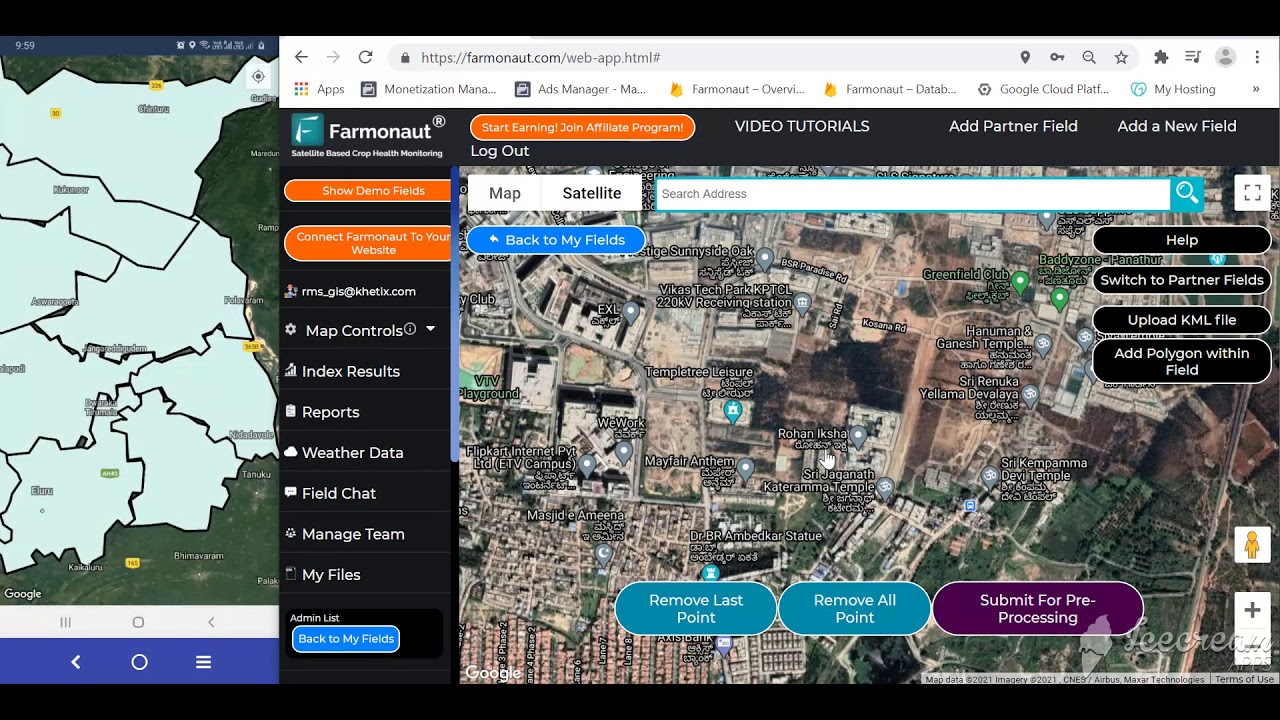
How Farmonaut’s Satellite Solutions Empower Indonesia’s Mining and Infrastructure Sectors
While Farmonaut is not a manufacturer, input seller, or online marketplace, our satellite technology platform delivers immense value to stakeholders in the Indonesian aluminium and alumina industry. Our advanced monitoring, AI-driven analytics, and traceability tools are designed for industries requiring robust, data-driven management of mining, refining, and infrastructure projects.
Why Choose Farmonaut’s Satellite Monitoring for Metals & Mining?
- Remote Real-time Surveillance: Monitor large-scale mining and processing operations in Riau Islands, West Kalimantan, Sulawesi, and Sumatra, reducing the need for expensive on-ground check-ins.
- AI-Based Decision Support: Leverage Jeevn AI to receive custom alerts and forecasts for resource extraction, compliance status, and productivity maximization.
- Blockchain Traceability: Safeguard your mineral supply chain integrity and augment your ESG credentials in the competitive global alumina and aluminium sector.
- Environmental Impact Insights: Use AI-powered carbon footprinting and resource management tools to comply with Indonesian and international environmental standards, reinforcing your commitment to sustainability.
- Scalable, Cost-Efficient Platforms: Subscribe only to the services you need—available via web, mobile app, or API—for site-level or national-scale operations. Get started on large-scale resource and field management immediately.
Explore Farmonaut’s API for developers at https://sat.farmonaut.com/api, and dive into rich documentation at https://farmonaut.com/farmonaut-satellite-weather-api-developer-docs/ for seamless integration into industrial and government workflows.
Frequently Asked Questions (FAQ): Alumina Industry Outlook & Aluminium Industry Indonesia
Q1. What is the outlook for Indonesia’s alumina and aluminium industry by 2026?
The outlook is highly positive. Indonesia is expected to exceed 1.45 million tons in alumina production and 1.33 million tons in aluminium output by 2026. This rise follows increased investments, policy support for value-added refining, and implementation of advanced sustainable technologies.
Q2. Where are Indonesia’s key bauxite reserves and production hubs?
The largest bauxite deposits are in the Riau Islands, West Kalimantan, parts of Sumatra, and Sulawesi. These regions house the majority of operational and planned alumina refineries, serving as drivers for Indonesia’s downstream growth.
Q3. What policies have impacted alumina and aluminium growth in Indonesia?
Major policies include raw bauxite export bans, incentives for domestic and international investors in refinery construction, tax reductions, and stricter sustainability mandates for refineries and mining operators.
Q4. How are environmental impacts addressed in the sector?
Firms must comply with regulations on red mud disposal, water management, carbon footprinting, and land reclamation. Monitoring and digital compliance tools (including those provided by Farmonaut) enhance adherence to these standards.
Q5. What role will renewable energy play in Indonesia’s aluminium industry?
Hydropower and renewables are increasingly being used to power smelting operations, crucial to lowering the carbon intensity and meeting both Indonesian and global ESG standards.
Q6. How can Farmonaut support businesses in the alumina and aluminium industry Indonesia?
Farmonaut delivers satellite-based monitoring, AI-powered advisory, blockchain traceability, and environmental impact tracking to help companies optimize operations, maintain compliance, and embrace sustainability in mining, refining, and infrastructure projects.
Conclusion: Indonesia’s Journey to a Global Aluminium Player
The alumina industry outlook and the aluminium industry Indonesia for 2026 and beyond showcase a sector brimming with opportunity and transformation. As abundant bauxite resources are harnessed and robust government policies take effect, production capacities—both for alumina and aluminium—will continue to climb.
Sustained investments, adoption of advanced technologies, and a growing focus on environmental sustainability will be instrumental in positioning Indonesia as a key global market player. Integrated downstream clusters, increased domestic consumption, and alignment with global value chains ensure not only exports but the creation of a dynamic, robust, and sustainable industry that benefits the economy, society, and environment.
Organisations leveraging cutting-edge monitoring, traceability, and sustainability tools—like those pioneered by Farmonaut—will find themselves well-equipped to thrive in this data-driven age. As Indonesia’s metal and minerals journey continues, the alumina industry outlook for 2026 and beyond remains exceptionally promising.
Discussion
Questions, corrections or field experience? Share them below. First-time comments are reviewed before they appear, and your email is never published.
No comments yet. Be the first to add a question or your experience.

 Vulcan International Limited
 Kidepo Associates
 GKY Mining
 Alkimy SARL
 Double A Trading
 GemSprout Metals Limited
 Qader Group
 Ileys General Trading
 SG Gold Mining LLC
 VRV Global Pte Ltd
 Omsri International FZE
 G.I.T.T.
 Jaunita Erss Ltd
 Almosi SARL
 SRK Consulting
 Berks Gold Limited
 Mwerezi Minerals Company Limited
 Mining SARL
 SenGold Invest SAS
 Sean Mining Limited
 Exploration consultancy · South Africa · Gold










