

Indian Govt Agriculture Schemes 2025: Organic Farming
“Over 2 million Indian farmers are expected to benefit from organic farming schemes by 2025.”
Introduction: The 2025 Landscape for Indian Government Agriculture Schemes
The agricultural sector in India stands at a pivotal crossroads in 2025, driven by an ambition to boost productivity, sustainability, and long-term farmer incomes. With an agriculture framework anchored in a broad spectrum of government agriculture schemes—uniquely designed to address diverse challenges and opportunities—the year 2025 marks a watershed for the integration of organic farming, sustainable practices, robust soil health, efficient irrigation solutions, and farmer-centric support mechanisms. This comprehensive view, relevant for writers focusing on agriculture, forestry, minerals, and rural infrastructure, delves into the pillars, programs, and technologies shaping Indian agricultural transformation across allied sectors.
In this article, we explore:
- The latest indian government agriculture schemes 2025 and government schemes for organic farming in india, including incentives, subsidies, and certification programs.
- How these central and state-led frameworks are designed for climate resilience, export readiness, and improved market access.
- The integration of modern inputs, technological interventions, and the push for sustainable, farmer-friendly innovation across rural and agricultural belts.
- Role of advanced tools and platforms in enhancing transparency, traceability, and implementation efficiency.
Let’s embark on a detailed journey through the most significant agricultural schemes, programs, and innovations set to shape India’s organic and sustainable farming landscape in 2025 and beyond.
Key Pillars of Indian Government Agriculture Schemes 2025
The 2025 Indian agricultural agenda is constructed around several salient pillars, reflecting the country’s unique challenges and ambitions. Each of these pillars features a distinct set of central and state-initiated schemes, robust support provisions, and future-ready implementation mechanisms:
- Farmer Welfare & Credit Support: Provides timely credit linkage, interest subventions, and insurance structures, laying the foundation for risk mitigation and income stability, especially for smallholders.
- Organic Farming, Soil Health & Sustainable Practices: Offers direct subsidies, capacity building, and infrastructure for organic inputs, including composting, bio-fertilisers, and certification. Emphasizes a national push toward chemical-free production.
- Agroforestry, Horticulture & Crop Diversification: Integrates timber/non-timber forestry, perennial and annual crops, and horticultural produce with enhanced schemes for funding and pilot clusters.
- Irrigation & Soil Health Investments: Prioritizes efficient water management, micro-irrigation, and modernization of existing irrigation networks along with precision agriculture advisories.
- Crop Diversification, Value Addition, and Market Access: Ensures improved post-harvest infrastructure, local processing clusters, grading, and support for market-linked agri-enterprises, with a strong export alignment.
- Robust Decentralized Implementation & Digital Monitoring: Focuses on convergence, state-level tailoring, digital dashboards, and beneficiary-centric delivery to ensure equitable access, especially in remote, rural, and forest-adjacent regions.
- Integration with Minerals, Forestry, and Rural Infrastructure: Fosters mutually reinforcing development in agriculture, allied sectors, and regulated mining activity via shared infrastructure investments.
In 2025, government agriculture schemes India 2025 are increasingly designed for climate resilience and market-driven organic farming, promoting sustainability and income security.

Regenerative Agriculture 2025: Soil Health & Climate-Smart Solutions
Major Focus: Government Schemes for Organic Farming in India
The central government agriculture schemes India 2025 center heavily around a shift from chemical-intensive practices to holistic organic farming across key agricultural belts in states such as Madhya Pradesh, Rajasthan, Sikkim, Uttarakhand, and the North East. The organic transition is incentivized and supported at every stage:
- ✔️ Financial Assistance: Direct subsidies for bio-fertilisers, vermicomposting units, and organic input production.
- 🏷️ Certification Support: Funding for certification under NPOP (National Programme for Organic Production) and Participatory Guarantee System (PGS).
- 📚 Training & Capacity Building: Dedicated programs for upskilling via workshops, digital platforms, and field demonstrations.
- 🧪 Soil Health Cards & Testing: Access to soil health cards and mobile testing labs to ensure compliance and traceability.
- 📦 Market Linkages: Schemes linking organic produce to niche urban and international markets, including support for branding and export readiness.



Scale up traceability and access premium markets with blockchain-backed certification. Learn more about traceability solutions on the Farmonaut platform.
India’s push toward organic farming aligns not only with evolving consumer preferences for chemical-free commodities in fruits, vegetables, spices, and plantation crops, but also with international export demand, especially for major crops like organic basmati rice and tea. The government schemes for organic farming in India integrate these domestic and global market realities, with digital monitoring for compliance, rapid scalability, and robust traceability frameworks.
Key Subsidies & Support Units for Organic Farming in 2025
- 🌱 Composting Units: Grants for on-farm composting structures (up to ₹20,000/unit)
- 🪱 Vermicomposting Units: Subsidies for organic vermicomposting installation (up to ₹15,000/unit)
- 🚜 Organic Inputs: Support for seed treatment, green manures, and bio-control agents
- 🧾 Certification Assistance: Compensation of up to ₹5,000/ha for certification costs
- 🔬 Testing Labs: Funding for soil and produce quality network expansion
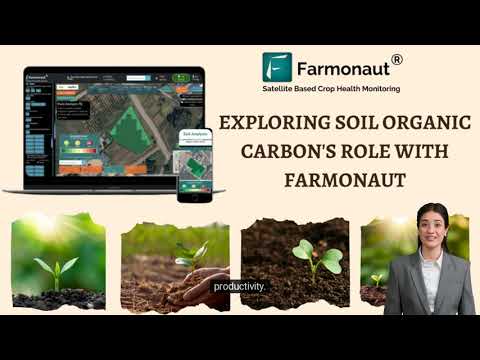
Unlocking Soil Organic Carbon: The Secret to Sustainable Farming
“Government aims to increase organic farmland in India to 3 million hectares by 2025.”
Table: Comparative Overview of Key Agriculture Schemes 2025
| Scheme Name | Focus Area | Est. Budget (INR Crores)* | Key Benefits / Support | Eligible Beneficiaries | Implementation Year |
|---|---|---|---|---|---|
| Paramparagat Krishi Vikas Yojana (PKVY) 2.0 | Organic Farming, Soil Health | 1,300+ | Financial grant for certification, cluster capacity-building, composting units, and organic inputs | Farmer clusters, FPOs, SHGs | 2025 onwards |
| National Mission for Sustainable Agriculture (NMSA) | Climate Resilience, Soil Health, Irrigation | 2,500 | Promotion of micro-irrigation, water conservation, soil health cards, and organic adoption | Individual farmers, FPOs | 2025-26 |
| Mission Organic Value Chain Development for North Eastern Region (MOVCDNER) | Organic Value Chain, Market Access | 600 | Cluster-based organic production, certification, market, and export support | NE Farmers, FPOs, SHGs | 2025 onwards |
| Pradhan Mantri Krishi Sinchayee Yojana (PMKSY) | Irrigation, Water Use Efficiency | 9,000+ | Drip/sprinkler irrigation subsidies, canal modernization, micro-irrigation promotions | All farmers (with focus on rainfed regions) | 2025 |
| Pradhan Mantri Fasal Bima Yojana (PMFBY) | Risk Management, Crop Insurance | 11,000 | Weather-indexed crop insurance, premium subsidies, quick claim settlement | Farmers (insured crops) | 2025-2026 |
| National Agroforestry Policy Support | Agroforestry, Diversification, Forestry | 400 | Sapling subsidy, timber/nontimber crop integration, soil health improvement | Farm households, rural belts | 2025-27 |
* Estimated budgets are indicative for FY2025–26.
FPOs: Farmer Producer Organisations | SHGs: Self-Help Groups
Ignoring eligibility or certification timelines can delay access to organic farming schemes.
Always verify current application criteria and deadlines.

JEEVN AI: Smart Farming with Satellite & AI Insights
Boosting Soil Health & Irrigation: Programs & Impact
Healthy, living soil is the cornerstone of organic farming and a sustainable future for Indian agriculture. To boost soil fertility and optimize moisture retention, government agriculture schemes India 2025 emphasize a dual focus:
- Soil Health Cards (SHC): Personalized recommendations for fertilisers (NPK ratio), organic amendments, and micro-nutrients based on periodic soil testing.
- Irrigation Infrastructure Upgradation: Through Pradhan Mantri Krishi Sinchayee Yojana (PMKSY), the central government is scaling up micro-irrigation, revitalizing old canals, and expanding drip irrigation coverage—especially in drought-prone and mining-adjacent rural belts.
- 🌾 20% reduction in input costs after SHC-based interventions
- 💦 30% higher water use efficiency in farms covered by drip irrigation schemes
- 🧑🔬 Farmer enrollment in soil health networks surpassing 50 million hectares
- 🌱 Widespread adoption of organic manures and composting structures in supported clusters
By 2025, over 150,000 micro-irrigation units are operational in states leading organic transformation, boosting both productivity and resilience.
Enhance your sustainability reporting with Farmonaut’s Carbon Footprinting solution – powered by real-time satellite data – and better align with government mandates for climate-resilient agriculture schemes.

Malawi Irrigation Tech 2025: Solar-Pump Solutions for Yield Enhancement
Agroforestry, Horticulture & Crop Diversification Schemes
A pillar of agriculture scheme 2025 is agroforestry—blending trees and crops for environmental and economic gain. Key components and benefits include:
- Agroforestry Clusters: Targeted funding supports integration of timber and non-timber plantation with annual crops, especially on degraded or mining-adjacent land.
- Horticultural Expansion: Programs to diversify into high-value fruits, vegetables, and spices, stabilizing farm income and providing ecosystem services.
- Soil & Carbon Sequestration: Trees improve soil health and contribute to carbon capture, aligning with climate goals and international sustainability benchmarks.
Leverage advanced plantation and forestry advisory for your clusters: try our forest and crop plantation monitoring solution for remote advice on soil health, water management, and crop selection via satellite.
Market access and value addition initiatives are fostering a regional organic export economy—particularly for tea, spices, and underutilised indigenous crops.

Regenerative Coffee Boom: Agroforestry, Profits & Blockchain Traceability
Value Addition, Processing, and Market Access
- 🌐 Expanded Value Chains: Government-backed clusters support post-harvest processing, grading, cold chains, and packaging units, ensuring organic produce meets local and export standards.
- 🌟 Rural Entrepreneurship: Agri-enterprise formation is encouraged via capital grants, bridging the last mile for farmer income enhancement.
- 📈 Employment Growth: Processing and input supply networks offer direct and indirect jobs across rural sectors, boosting allied income streams.
Ensure certified, premium supply chains: See how Farmonaut’s Blockchain Traceability empowers authentic market positioning and compliance, supporting both local and global market access.

Farmonaut Web System: Crop Monitoring via Satellite & AI
Implementation Mechanisms & The Role of Technology
The implementation of government agriculture schemes India 2025 relies on a blend of decentralized state-level innovation and central oversight:
- Convergence: Funds are allocated to state governments but guided by central norms and monitoring dashboards.
- Digital Platforms & AI: Beneficiaries are traced via real-time data collection, direct benefit transfer (DBT) platforms, and hotspot mapping, ensuring timely disbursements across rural and remote regions.
- Grievance Redressal: Robust, digital, beneficiary-centric portals support grievance redressal and feedback, especially in forest and mining-adjacent rural belts.
Optimize operations at scale with Farmonaut’s Large-Scale Farm Management Solution—delivering satellite-driven analytics, AI-powered advisories, and timely alerts for seamless governmental and institutional agriculture project management.

Farmonaut Satellite-Based Crop Health Monitoring: Future-Ready Insights
Climate Resilience, Alignment with Minerals & Infrastructure
The 2025 Indian government agriculture schemes are not just about on-farm productivity, but also integrating climate resilience, rural infrastructure, and sustainable resource usage across mining belts and forest landscapes. This alignment manifests as:
- Shared Infrastructure: Rural roads, cold warehouses, and renewable energy support clusters of organic producers and facilitate movement in remote belts.
- Environmental Impact Monitoring: Technology-driven monitoring (including resource and fleet management tools) ensures compliance with environmental norms, especially around extraction and mining-adjacent belts.
- Mining Regulations: Integrated policies ensure that mining operations (where permitted) are balanced with local agricultural livelihoods and land reclamation activities.
Satellite technology enables real-time tracking of compliance and sustainable practices across agricultural, mining, and forestry clusters in India’s diverse regions.
How Farmonaut Supports Government Agriculture Schemes in 2025
At Farmonaut, we are committed to supporting the government agriculture schemes India 2025—especially for organic farming, sustainability, and technological modernization. Our solutions use satellite-based monitoring, AI-driven advisories, and blockchain-backed traceability to make next-generation tools accessible to farmers, enterprises, and government agencies:
- ⚡ Satellite Monitoring: Real-time data on vegetation health, soil conditions, and field productivity—enabling proactive farm management and timely decision-making for both smallholders and institutional projects.
- 🧠 Jeevn AI Advisory: Advanced analytics and tailored advisories for optimizing organic practices, irrigation, input scheduling, and pest management on every supported field.
- 🔗 Blockchain Traceability: Trace farm-to-table organic produce, meet certification standards, and access premium and export markets leveraging secure digital records.
- 🌱 Environmental Impact Measurement: Monitor carbon footprint and regenerative gains to align with government mandates on climate-resilient agriculture.
- 🚚 Resource & Fleet Management: Enhance operational efficiency for rural projects, agro-enterprises, and even mining infrastructure with smart, mobile, and web-enabled tracking.
Our app and API ecosystem is designed with modularity and scalability—serving the needs of everyone from an individual organic smallholder to government agencies overseeing multi-district implementations.
Review eligibility, location, and produce profile. Each scheme delivers unique support for organic transitions, risk management, income diversification, and climate resilience across India’s rural landscape.
FAQs on Indian Govt Agriculture Schemes 2025 & Organic Farming
- 1. Who is eligible for government organic farming subsidies in India in 2025?
- Most government schemes, such as PKVY and MOVCDNER, are open to individual farmers, Farmer Producer Organizations (FPOs), Self-Help Groups (SHGs), and clusters in targeted regions. Eligibility often requires registration, basic landholding documents, and cluster formation for maximum benefits.
- 2. How do soil health cards benefit organic farming?
- Soil Health Cards (SHC) provide personalized, scientific recommendations for fertiliser usage and organic amendments. This helps reduce input costs, limits chemical overuse, and supports a transition to sustainable, organic farming practices.
- 3. What types of financial support are available for transitioning to organic inputs?
- Farmers can access direct subsidies for composting and vermicomposting units, receive grants for input procurement, and get partial compensation for certification costs. Under schemes like PKVY, cluster-based support ensures cost reduction on shared infrastructure as well.
- 4. What role does technology play in the implementation of government schemes?
- Digital dashboards, AI advisories, satellite imagery, and blockchain traceability are integral to modern scheme implementation—improving transparency, beneficiary targeting, real-time monitoring, and agri-enterprise traceability.
- 5. Can organic farmers in mining-adjacent belts access special support?
- Yes, special provisions often exist for regions affected by mining, forestry, or reclamation. These include reforestation, land rehabilitation, and sustainable livelihood projects, often in synergy with organic farming clusters and allied infrastructure investments.
Conclusion: Shaping the Future of Indian Agriculture
In 2025 and beyond, the tapestry of Indian government agriculture schemes interweaves farmer-centric welfare, robust credit support, risk mitigation, and a decisive push toward organic and sustainable agriculture. Schemes are designed not only for productivity but for long-range climate resilience, market alignment, and a new era of value addition—from soil and water to cluster-led export readiness.
Across India’s rural belts, from organic clusters in the North East to agroforestry pilots in Rajasthan, the vision is clear: empower every farmer to access modern inputs, integrate into sustainable value chains, and achieve stable, diversified incomes.
As technology, policy, and local ingenuity converge, we see a future where Indian agriculture is not just self-reliant but a global model for resilient, organic, and sustainable farming—anchored in cutting-edge schemes and informed by data, transparency, and rural empowerment.
Stay updated: Download the Farmonaut app for the latest insights, leverage advanced satellite tools, and become part of the transformation.

 Agricultural Credit Policy Council
 BayWa
BayWa Azure Clouds
 MCSOD
MCSOD Marei Nursery
 eKGIS
eKGIS Mostas Tech
 Native Seeds
 Andex
Andex FCF India
 Unifrutti Gulf
 Deluxe Conseil
 TVS Electronics
 WICO
WICO Chimera Innovation
 SkyHarvest
