

Agriculture Organic Farming: 7 Sustainable Ways 2026
Agriculture organic farming is rapidly evolving in 2026 as we collectively face the escalating environmental challenges brought about by climate change, population growth, and unsustainable farming and agriculture practices. As we seek balance between productivity, soil health, and environmental conservation, organic farming stands out as a critical approach and a highly effective pathway to a greener, more sustainable agricultural system.
“Organic farming can increase soil organic matter by up to 21% compared to conventional methods by 2026.”
What is Organic Farming? — The Foundation of Sustainable Agriculture
Organic farming is a holistic system that emphasizes the use of natural inputs and ecological processes for cultivating crops, managing soils, and fostering biodiversity. Unlike conventional farming that relies on synthetic chemicals, pesticides, herbicides, and genetically modified organisms (GMOs), organic agriculture strictly limits or excludes these substances. Instead, it relies heavily on solutions like compost, green manure, crop rotation, biofertilizers, and biological pest control to maintain healthy soils, produce nutritious food, and preserve environmental integrity.
As 2025 and 2026 unfold, the adoption of agricultural organic farming is not just an ethical or environmental choice – it is a necessity for a resilient farming future.
Regenerative Agriculture 2025 ? Carbon Farming, Soil Health & Climate-Smart Solutions | Farmonaut
Organic Farming for Sustainable Agriculture: A Pathway to 2026
Organic farming for sustainable agriculture has emerged due to the pressing need for eco-friendly methods that ensure long-term food security, mitigate the impacts of climate change, and protect human health. In 2025 and beyond, we see organic agriculture at the forefront of transformative innovations aimed at preserving the ecological integrity of our soils, water bodies, and biodiversity.
- Environmental Health: Organic farming reduces pollution by avoiding synthetic inputs and adopting practices that promote carbon sequestration and water conservation.
- Economic Viability: Organic methods often lower input costs over time and enhance access to premium markets.
- Social Equity: Organic agriculture supports local farmers, fair trade, and rural community development.
- Resilience: By building healthy soils and increasing biodiversity, organic systems are more resilient to droughts, floods, and climate extremes.
- Long-term Sustainability: Healthy organic soils slowly release nutrients, prevent leaching and eutrophication of water bodies, and provide a stable foundation for food production.

California Wine 2025 ? Sustainable Viticulture, Organic & Biodynamic, Precision AgTech
Sustainable Organic Farming Practices and Their Estimated Benefits (2025–2026)
| Practice | Description | Estimated Yield Improvement (%) | Soil Health Impact | Biodiversity Benefit (Species ↑) | Climate Resilience (% ↑) |
|---|---|---|---|---|---|
| Crop Rotation | Alternating different crops seasonally to manage nutrients and break pest cycles. | 10–20% | Increased organic matter, improved structure | +12 | 15% |
| Organic Fertilizers (e.g., compost, green manure) | Using natural composts and animal manures to enrich soils. | 8–17% | High—21% more organic matter | +7 | 12% |
| Biological Pest Control | Using beneficial insects and microbes to manage pests. | 5–12% | No chemical residue | +10 | 8% |
| Cover Cropping | Planting crops like clover or vetch to prevent erosion and fix nitrogen. | 6–15% | Improved retention & nitrogen | +8 | 10% |
| Biofertilizers | Applying microorganisms that enhance nutrient availability. | 8–13% | Microbial activity boost | +6 | 9% |
| Reduced Tillage | Minimizing soil disturbance to preserve structure and microbes. | 3–8% | Preserves organic carbon | +3 | 7% |
| Agroforestry | Integrating trees and perennials into farm landscapes. | 10–18% | Deep root enrichment | +15 | 16% |
*All values are estimated averages based on research for 2025–2026. “Species ↑” indicates number of additional species expected.
“By 2025, sustainable organic farming practices can boost on-farm biodiversity by 30% versus traditional agriculture.”

FREE Mulch & Compost NJ 2025 | Top Pickup Spots, Money-Saving Garden Hacks & Trendy Zero-Waste Tips
7 Sustainable Ways in Agriculture Organic Farming for 2026
1. Holistic Crop Rotation
Crop rotation involves alternating different crops across growing seasons to safeguard soil health, manage pests, and optimize nutrient cycles. By disrupting the lifecycle of pathogens and pests, this technique reduces disease pressure and curbs the need for synthetic pesticides.
- Improves nutrient availability and soil structure
- Enhances biodiversity and natural pest control
- Helps maintain healthy soils by reducing disease build-up

Organic Septoria Control : Protecting Tomatoes and Cannabis from Fungal Pests
2. Harnessing Organic Fertilizers and Compost
Supplying agriculture organic fertilizer such as compost, green manure, animal manure, and biofertilizers is fundamental to organic farming. These materials enrich soils with organic matter, improve water retention, foster beneficial microbial activity, and ensure slow, steady nutrient release.
- Inputs are sourced from natural processes— e.g., composting farm residues
- Reduces reliance on synthetic fertilizers, lowering pollution risks
- Promotes soil fertility for long-term sustainability
Learn how carbon footprinting tracks and optimizes sustainable input use for organic farming.
3. Implementing Biological Pest Control & Biopesticides
Organic farmers use beneficial insects, such as ladybugs and parasitoids, and natural biopesticides (like neem oil or microbial agents) for sustainable pest management. This approach helps avoid chemical residues in food and supports healthy biodiversity on the farm.
- Relies on natural pest-predator relationships
- Maintains the ecological balance of agroecosystems
- Reduces risk of pest resistance and environmental contamination

Organic Pest Control Made Easy with Farmonaut’s Precision Tools
Discover how large-scale farm management tools increase efficiency for organic pest control.
4. Cover Cropping and Green Manuring
The use of cover crops (e.g., clover, vetch) and green manure delivers multiple benefits: reducing soil erosion, enhancing water retention, suppressing weeds, and improving soil structure with added organic matter.
- Legumes and grasses fix atmospheric nitrogen in soils
- Improves microbial activity and boosts overall soil fertility
- Prevents nutrient loss after harvest, maintaining productivity

Unlocking Soil Secrets: How Organic Matter and Carbon Combat Climate Change ?
5. Biofertilizers for Enhancing Nutrient Uptake
Biofertilizers use living microorganisms—bacteria (e.g., Rhizobium, Azotobacter), fungi (mycorrhizae)—to increase nutrient availability in soils. Their use is increasingly essential in organic farming systems, enabling farmers to maintain crop yields sustainably without utilizing synthetic inputs.
- Enhances nitrogen fixation, phosphorus mobilization, and overall plant health
- Reduces need for mined and synthetic fertilizers
- Boosts soil biodiversity and resilience to weather extremes
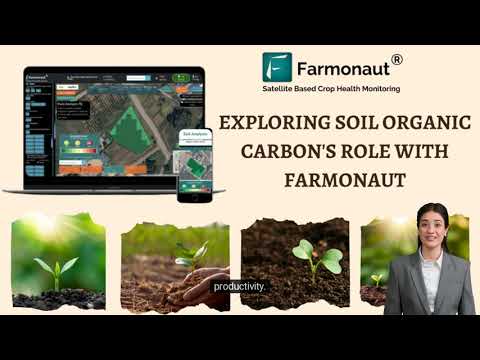
Unlocking Soil Organic Carbon: The Secret to Sustainable Farming with Farmonaut
6. Reduced Tillage and Soil Conservation Techniques
Reduced or zero tillage preserves soil structure, reduces erosion, and maintains organic matter. This approach, paired with mulching or living plant cover, leads to healthier soils and improved carbon sequestration.
- Reduces soil compaction and maintains microbial diversity
- Keeps carbon in soils, helping to mitigate climate change
- Improves water infiltration and retention
7. Agroforestry & Diversified Polycultures
Agroforestry integrates trees and perennial plants into agricultural fields to support biodiversity, carbon storage, and natural pest control. Polycultures combine multiple crop species to foster robust, ecological systems that can better withstand extreme weather conditions such as droughts and floods.
- Creates habitats for pollinators and beneficial fauna
- Strengthens farm resilience against climate fluctuations
- Increases on-farm species diversity and long-term productivity




Organic Rice Disease Management: Farmonaut’s Innovative Approach
Emerging Trends & Innovations in Organic Farming: 2025 and Beyond
Technology Meets Tradition in Organic Agriculture
As 2025 turns to 2026, organic farming globally is transformed by precision agriculture tools, real-time satellite monitoring, and digital platforms. These innovations enable farmers to optimize resource use, monitor pest/disease outbreaks, and access markets efficiently.
- Remote Sensing & Soil Health Monitoring: Satellite imagery—such as that provided by Farmonaut’s platform—offers insights into vegetation health (NDVI), soil moisture, and pest risks for proactive, data-driven management.
- AI & Blockchain: Artificial intelligence is increasingly used in organic farming for sustainable agriculture, from predicting weather extremes to using blockchain for transparent, fraud-free supply chains.
- Biofertilizer & Biopesticide Innovation: Ongoing research is making biological pest control and organic nutrient solutions more effective, affordable, and scalable.
The adoption of these innovations is essential for building resilient, sustainable agricultural systems capable of feeding a growing population while conserving soil, water, and biodiversity.
Discover our AI-driven advisory and satellite-based digital platform for sustainable decision-making in agriculture organic farming.
Developers: Explore Farmonaut’s satellite & weather API for custom agriculture solutions!
See the API developer docs for integration details.
Overcoming Challenges in Organic Farming and Sustainable Agriculture
While the benefits of organic farming are profound, implementation at scale brings certain challenges:
- Yield Gaps: Organic yields sometimes lag behind conventional—a gap being closed through resilient crop varieties, improved rotations, and data-driven fertility management.
- Certification Hurdles: Navigating certification for organic products can be complex, but blockchain traceability helps ensure transparency and compliance.
- Labor Intensity: Organic systems often demand more manual labor, which can be offset by smart mechanization and digital mapping tools.
- Market Access: Connecting organic farmers to consumers is simplified via digital apps and traceable, verified supply chains.
- Knowledge Transfer: Farmer education, supported by real-time AI-advisories, is crucial for boosting widespread adoption.
Solutions lie in:
– Science-based policies aligned with UN Sustainable Development Goals (SDGs)
– Investment in research, technology, and farmer training
– Financial services such as satellite-based crop loan verification to support organic transitions
As we advance into 2026 and beyond, organic farming, powered by both tradition and innovation, is poised to deliver an unparalleled positive impact on our environment, food systems, and communities.
Farmonaut: Empowering Sustainable Organic Agriculture with Satellite Technology
At Farmonaut, our mission is to make satellite-driven insights affordable and widely accessible in the agriculture organic farming ecosystem and beyond. Our platform harnesses multispectral satellite imagery, AI, and blockchain to offer real-time farm monitoring, AI-based advisory, blockchain product traceability, and environmental impact tracking—all of which are invaluable for organic and sustainable farming and agriculture in 2026.
- Satellite-based Crop Monitoring: We enable organic farmers to continuously track crop health, soil nutrient status, irrigation requirements, and pest risks, so farm resources are used efficiently and sustainably.
- AI-driven Advisory: Our Jeevn AI supplies tailored, real-time recommendations based on satellite data for optimizing yields while reducing water and fertilizer waste.
- Blockchain Traceability: We empower organic food producers to track and verify the journey of their produce, ensuring transparency and building consumer trust.
- Environmental Impact Monitoring: Our carbon tracking features help users quantify emissions, identify reduction opportunities, and meet climate targets—directly supporting organic sustainability goals.
- Resource and Fleet Management: Our tools support large-scale organic farm management with logistics and machinery optimization, reducing unnecessary fuel use and protecting soil integrity.
By integrating all these services into an easy-to-use web, Android, and iOS platform, Farmonaut empowers farmers, businesses, and institutions to nurture a more resilient, profitable, and sustainable agriculture future.
Frequently Asked Questions (FAQ) about Agriculture Organic Farming and Sustainable Agriculture
Q1: What is the main difference between organic farming and conventional farming?
Organic farming uses natural inputs like organic fertilizers, biofertilizers, and biological pest control, strictly avoiding synthetic chemicals, pesticides, herbicides, and GMOs. Conventional farming often relies on these synthetic substances and monocultures, potentially causing soil and water pollution.
Q2: How does organic farming help fight climate change in 2026?
By sequestering carbon in soils, reducing greenhouse gas emissions, and building resilient agroecosystems, organic farming helps mitigate climate change impacts and provides long-term sustainability for food systems globally.
Q3: Can organic farming be adopted on large farms or only by smallholders?
Organic farming is scalable and can be implemented on both small and large-scale farms. Technology platforms like Farmonaut make it easier to monitor, optimize, and manage organic practices on large tracts of land efficiently.
Q4: What types of fertilizers are allowed in organic farming, and how are they different?
Only organic fertilizers (e.g., compost, green manure, animal manure, and naturally derived biofertilizers) are permitted. These release nutrients slowly, increase organic matter, and enhance soil fertility without risking chemical pollution or harming beneficial organisms.
Q5: What are the main challenges of switching to agriculture organic farming?
Common challenges include transitional yield drops, certification and market access hurdles, and increased labor requirements. Overcoming these involves access to training, innovative tools, and transparent digital platforms.
Q6: How does Farmonaut help organic farmers?
Farmonaut delivers affordable satellite-driven insights, AI-powered advisory, blockchain traceability, and environmental monitoring to boost productivity, improve sustainability, and ensure compliance in organic agriculture.
Q7: What is the future outlook for agriculture organic farming in 2026 and beyond?
The future of agriculture organic farming is bright, with increasing policy support, technological innovations, and growing consumer demand for sustainable, traceable food. Combined, these trends make organic agriculture a foundation for a greener and healthier world.
Conclusion: Embracing Agriculture Organic Farming for a Greener, More Resilient Future
As we look ahead to 2026 and beyond, organic farming for sustainable agriculture stands as a pathway to a greener future. By adopting sustainable practices—from careful crop rotation to satellite-based monitoring, and responsible input use to blockchain-traceable supply chains—we collectively address the global challenges of food security, climate resilience, and healthy ecosystems.
The transition to organic farming is not only a choice but an essential step for a healthy planet and humanity. Let us continue to innovate, integrate the best of tradition and technology, and champion organic methods for the benefit of our soils, our water, our food systems, and future generations.
Discussion
Questions, corrections or field experience? Share them below. First-time comments are reviewed before they appear, and your email is never published.
No comments yet. Be the first to add a question or your experience.

 BeyondTech Global
 Consulthink Global
 Rouge VC
 Yutz Automation
 AgroGreen Dynamics
 AgroRisk
 Oath Inc
 Reddane Farming
 Esri North East Africa
 Cresol
 Atur Kuliner
 MDCV UK
 Zerella Group
 Etech Consulting Madagascar
 Vestlandsforsking
 Delicio
 WB Dev
 Sama Premium
 Prochecker
 Tres Valles
 LACOS Geoinformation
 Magrifly
 LatConnect 60
 Exploration consultancy · South Africa · Gold
 Licence holder · Niger · Gold










