

Table of Contents
- Introduction
- The Importance of Agriculture in Karnataka
- Understanding the Karnataka Agriculture Price Commission
- Price Discovery: Dynamics, Mechanisms & Farmer Welfare
- Land, Market Trends, and the Shaping of Rural Livelihoods
- Agriculture Problems in Karnataka: Key Challenges
- Role of Agriculture Companies in Karnataka
- Key Insights & Opportunities in Karnataka’s Agricultural Sector
- Karnataka Agricultural Commodity Price Trends & Support Mechanisms
- Emerging Technology & Sustainable Farming: Towards Resilient Agriculture
- Satellite Technology & Smart Decisions: Leveraging Farmonaut
- FAQ: Karnataka Agriculture Price Commission & Sector Trends
- Conclusion
Karnataka Agriculture Price Commission: Key Insights & Issues
Agriculture stands as a foundational pillar of Karnataka‘s rural livelihoods and regional economy, shaping the very fabric of its society and powering related sectors including farming inputs, food processing, agri-tourism, and commodity trade. The state, blessed with diverse agro-climatic zones, nurtures a wide-ranging portfolio of crops—from coarse cereals, pulses, and arecanut to spices, plantation crops, fruits, and vegetables.
At the core of this vibrant agricultural landscape lies the Karnataka Agriculture Price Commission, a pivotal institution dedicated to fair price discovery, safeguarding farmer incomes, and advising on market support mechanisms. In this comprehensive guide, we explore the commission’s role, analyze current trends, identify challenges in procurement and market access, and highlight opportunities for both farmers and agricultural companies in Karnataka to thrive.
The Importance of Agriculture in Karnataka
The importance of agriculture in Karnataka cannot be overstated. It stands as the backbone of the state’s economy, providing direct livelihoods to nearly 60% of the population, and forming the basis for food security, employment generation, and sustainable growth. Karnataka’s agricultural sector is highly diverse, with a mosaic landscape encompassing:
- ✔ Coarse cereals (ragi, jowar, maize) feeding both local and national populations.
- ✔ Pulses supporting dietary needs across regional communities.
- ✔ Arecanut, spices, and plantation crops such as coffee, cardamom, and pepper as high-value export commodities.
- ✔ Horticultural crops, from fruits (mango, banana, sapota) to vegetables and flowers, which drive sectoral diversification and higher incomes.
Karnataka ranks among India’s top states for the production of coffee, spices, and horticulture produce, reinforcing its status as an agricultural powerhouse.
- 📊 Data insight: Karnataka’s gross value added (GVA) from agriculture consistently hovers around 15–16% of the state’s GDP.
- ⚠ Risk or limitation: Rain-fed agriculture covers over 60% of cultivated area, exposing farmers to climate risk.
- ✔ Key benefit: Crop diversification into horticulture and spices supports stable farmer incomes despite monsoon volatility.
- 🔍 Pro Tip: Keep an eye on land availability—agricultural land for sale Karnataka often indicates emerging demand hotspots.
- 💡 Common Mistake: Relying only on a single market for farm produce can limit bargaining power and profitability.
In summary, the regional agricultural landscape is a dynamic, opportunity-rich environment—yet not without its unique structural and systemic challenges.
Understanding the Karnataka Agriculture Price Commission: Purpose, Function & Influence
The Karnataka Agriculture Price Commission was established to ensure transparent, data-driven determination of fair prices for the state’s agricultural produce—recognizing that price realization is fundamental to safeguarding rural livelihoods.
Central Functions of the Commission
- ✔ Market Price Assessment: Reviewing and analyzing market trends for a range of over 40 crops annually.
- ✔ MSP Recommendation: Advising the state government on Minimum Support Prices (MSP) for notified crops, after accounting for production costs and market dynamics.
- ✔ Advisory & Policy Support: Offering expert policy guidance on price support, market interventions, and procurement mechanisms to cushion farmer incomes from market volatility.
- ✔ Farmer Welfare Advocacy: Serving as an interface between farming communities and policymakers to align prices with cost structures, and recommending relief in times of distress.
The commission’s MSP advisories often serve as benchmarks for private traders and agri-businesses, indirectly impacting wholesale prices, land investment decisions, and the outlook on agricultural land for sale Karnataka.
Karnataka Agriculture Price Commission operates as a key node in the value chain—collaborating with Mandi boards, marketing boards, and procurement agencies to implement recommended support prices and procurement operations.

10 Low-Investment, High-Profit Agri Business Ideas in 2025
Price Discovery: Dynamics, Mechanisms & Farmer Welfare
Price discovery in Karnataka’s agricultural sector is a dynamic, multi-layered process, shaped by an interplay of factors such as seasonal crop cycles, monsoon reliability, market access, input costs like fertilizers, diesel, and electricity, post-harvest losses, and export competitiveness.
How Does Price Discovery Work?
- ✔ Assessment of Production Costs: State agencies and the Commission gather data from across Karnataka’s diverse zones on input prices, labor wages, irrigation expenses, and crop productivity.
- ✔ Mandi & Market Integration: Prices from regulated markets, private trades, and digital marketplaces are benchmarked to identify volatility and price realization trends.
- ✔ Stakeholder Consultation: Inputs are solicited from farmer groups, agriculture companies, researchers, and cooperatives to capture ground realities.
- ✔ Policy Recommendation: The Commission finalizes Minimum Support Price (MSP) bands and intervention measures to align with government procurement capabilities and fiscal policy.
- ✔ Monitoring & Intervention: Price movements are closely tracked during procurement seasons, with timely interventions activated to stabilize market supply, reduce distress sales, and counter produce gluts.
Producers who join Farmer Producer Organizations (FPOs)/groups often gain greater negotiating power and improved access to commission rates, leading to better price realization in both physical and digital markets.
The institutional role of the Price Commission thus extends beyond fixing prices—it is about cushioning farmer incomes against shocks, providing market intelligence, enabling access to support schemes and procurement drives, and nurturing rural entrepreneurship.
“In 2023, Karnataka’s mandi prices for key crops fluctuated by up to 30%, highlighting market volatility and farmer risk.”
Land, Market Trends, and the Shaping of Rural Livelihoods
Access to agricultural land for sale Karnataka, land tenure security, and responsive markets are crucial in enabling farmers and agricultural companies in Karnataka to invest, diversify, and scale up their operations. The demand for land is fuelled by several factors:
- Diversification into High-Value Crops: Horticulture, spices, plantation, and agroforestry not only reduce risk, but also promise higher farm-gate prices.
- Irrigation Infrastructure Expansion: Secure land rights motivate investments in drip irrigation, mulching, and sustainable intensification of existing holdings.
- Entrepreneurship and Producer Groups: With the confidence of land tenure, farmers can form collectives to negotiate better prices, access premium markets, and attract capital.
- Policy Ecosystem: State market reforms, digitization of land records, and e-auctions further boost investor sentiment and agricultural productivity.
However, market trends are not without friction. Land markets reflect both opportunity (for scaling up or shifting to high-value production) and challenge (for smallholders facing unstable tenure, high purchase/lease costs, or conversion barriers).
- ✔ Market Access Boost: Improved rural roads, storage facilities, and cold chains greatly enhance value realization for perishable produce.
- ⚠ Risk: Fragmented holdings and absentee land ownership can impede economies of scale and efficient resource allocation.
Many overlook the impact of tenure insecurity when evaluating agricultural land for sale Karnataka; lack of clear records can deter investment and delay irrigation or infrastructure upgrades.
Visual List: Factors Shaping Land Demand
- 🌱 Crop Diversification
- 💧 Irrigation Investments
- 🧑🤝🧑 Producer Groups Formation
- 🖥️ Market Digitization
- 🔏 Land Record Modernization
Visual List: Key Land-Related Policies in Karnataka
- 📝 Digitized Land Records
- 📜 Simplified Land Leasing
- 🍇 Incentives for Diversification
- 💸 Direct Procurement Mechanisms
- 🏗️ Facilitation of Cold Chain Infrastructure
Agriculture Problems in Karnataka: Key Challenges
Despite robust frameworks and a vibrant portfolio, agriculture problems in Karnataka present several pain points that directly impact price realization, farm incomes, community resilience, and market stability.
Let’s break down the critical categories:
1. Resource Constraints
- ⚠ Groundwater depletion—limits scope for irrigation expansion and double-cropping.
- ⚠ Rainfall variability—leaves almost two-thirds of the cultivated land exposed to monsoon risk each year.
- ⚠ Soil degradation—declining organic matter and increasing salinity reduce crop yields over time.
2. Institutional & Financial Barriers
- ⚠ Access to credit—small and marginal farmers often struggle to secure timely institutional loans.
- ⚠ High input costs—fertilisers, seeds, diesel, and agrochemicals continue to rise, swaying the cost-benefit calculus.
- ⚠ Subsidy delays—cash flow mismatches compound profitability pressures.
3. Market & Price Realization Challenges
- 🛑 Perishable produce losses—up to 20–30% of fruit and vegetable crops are lost due to inadequate cold storage and logistics bottlenecks.
- 🛑 Mandi price volatility—frequent fluctuations, as seen in 2023, dampen farmer confidence and deter long-term planning.
- 🛑 Delayed procurement—smallholders may be forced into distress sales below MSP.
4. Extension & Technology Gaps
- ⏳ Extension service gaps—disconnects between research innovation and field-level adoption stall productivity gains.
- ⏳ Limited digital access—digital divide persists, constraining adoption of modern market and farm management solutions.
Integrated policy action—blending credit access, irrigation investment, and digital solutions—holds the key to transforming sector productivity and market resilience.

Regenerative Agriculture 2025 🌱 Carbon Farming, Soil Health & Climate-Smart Solutions | Farmonaut
Role of Agriculture Companies in Karnataka
Agriculture companies in Karnataka operate across the value chain— from seed production, agrochemicals, drip irrigation equipment, and cold-chain facilities to marketing, digital extension, and financing. Their mission is to boost farm productivity, reduce post-harvest losses, and enhance price realization for all stakeholders.
These companies make a difference by:
- ✔ Disseminating best practices: Through technical guidance, crop demonstration plots, and digital platforms.
- ✔ Providing credit-linked inputs: Easing input cost pressures and enabling timely sowings.
- ✔ Facilitating market linkages: Through contract farming, direct sourcing, and e-market integration.
- ✔ Stabilizing supply chains: By improving storage, logistics, and post-harvest infrastructure to cut spoilage.
Consider integrating blockchain-based traceability solutions (see details here) to verify supply chains, assuring premium buyers of crop origin and boosting farm-gate prices.
In short, agriculture companies in Karnataka are instrumental in professionalizing production, minimizing losses, and delivering market-driven innovation to even the smallest of farmers.

Farmonaut Web System Tutorial: Monitor Crops via Satellite & AI
Key Insights & Opportunities in Karnataka’s Agricultural Sector
- ✔ High-Value Diversification: Karnataka’s focus on horticulture, plantation crops, and spices presents scalable income opportunities.
- ✔ Government-Led Irrigation Schemes: Support irrigation efficiency and enable year-round crop planning.
- ✔ Producer Groups: Collective action (FPOs, cooperatives) empowers farmers to negotiate better prices, pool resources, and access subsidized inputs.
- ✔ Market Reforms: Digitization and e-auctions make produce sales transparent and accessible, minimizing dependency on middlemen.
- ✔ Sustainable Intensification: Integrated soil health and precision farming practices are elevating productivity while conserving resources.
Rising demand for carbon-neutral, traceable farm produce is spurring investment opportunities in carbon footprinting (click here for details) and regenerative agriculture services.
Karnataka Agricultural Commodity Price Trends & Support Mechanisms
Structured, transparent price discovery and clear support mechanisms bolster farmer confidence and enable informed decisions about crop planning, irrigation investments, and diversification. The following table offers a comparative look at average prices, MSP, volatility, and support mechanisms for key crops across Karnataka from 2020–2024.
High volatility in maize and ragi prices underscores the need for both robust procurement policy and enhanced storage infrastructure in Karnataka.
Emerging Technology & Sustainable Farming: Towards Resilient Agriculture
As market volatility and climate risk intensify, technology and data-driven solutions are emerging as the next levers for sustainable intensification and price realization in Karnataka’s agricultural sector.
Technology Adoption Trends
- ✔ Remote sensing and satellite imagery empower farmers to monitor soil health, irrigation efficiency, and crop vitality.
- ✔ Blockchain-based traceability assures market participants of crop quality and provenance, promoting trust and driving price premiums.
- ✔ AI-powered advisory systems provide weather forecasts, input recommendations, and pest alerts for cost-effective, precision farming.

Farmonaut® | Making Farming Better With Satellite Data
Precision agriculture platforms help reduce input costs by recommending optimal sowing, irrigation, and fertilizer application timing—thereby raising productivity and farmer incomes.
Opportunities through Sustainable Farming
- ✔ Adoption of drip irrigation and mulching reduces water waste and boosts yield per acre.
- ✔ Carbon farming and sustainable soil management open new income avenues via carbon credits and ecosystem services.
- ✔ Digital extension enables last-mile knowledge transfer and best practice dissemination—bridging the technology gap for smallholders.
Ready to Digitalize Your Farm Management?
Discover smart, satellite-powered tools for monitoring crop health, tracking soil moisture, and optimizing resources at every stage of production. Explore our full suite of services via the  Farmonaut Web App.


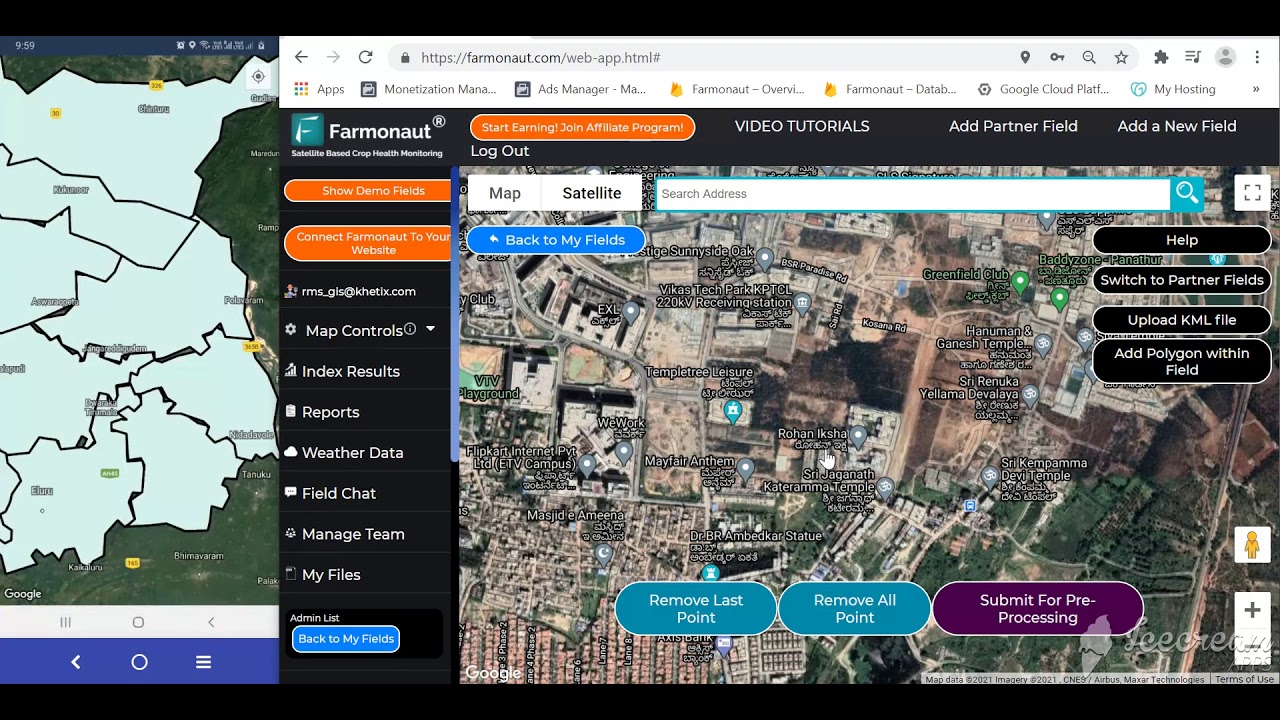
Farmonaut Large Scale Field Mapping & Satellite Based Farm Monitoring | How To Get Started
Satellite Technology & Smart Decisions: Leveraging Farmonaut
As a satellite technology company, we at Farmonaut provide affordable, real-time monitoring and advisory tools for the agriculture, mining, infrastructure, and environmental sectors. By leveraging advanced satellite imagery, AI, and blockchain, our platform enables:
- ✔ Crop Health Monitoring: Multispectral satellite images reveal NDVI, soil moisture, and vegetation stress, supporting smarter crop management decisions.
- ✔ Fleet Management: Track fleets and farm machinery remotely for optimized logistics and operational savings. Learn more about Fleet Management solutions.
- ✔ AI-Driven Insights: Jeevn AI analyzes satellite and field data to generate prompt advisory alerts and long-term strategies (available via API—see API or Developer Docs).
- ✔ Blockchain-based Traceability: Build buyer trust and premium pricing by tracing crop journeys from field to market.
- ✔ Loan & Insurance Enablement: Satellite-verified data reduces fraud, supporting banks and insurers with reliable farm, crop, and weather insights for crop loan and insurance—see our Crop Loan & Insurance solution.
- ✔ Carbon Footprinting: Monitor and track environmental impact for sustainable farming—explore Carbon Footprinting tools.
- ✔ Scalable Farm Management: Manage large plots and monitor production across value chains quickly and remotely. Learn more about Large Scale Farm Management.
Satellite-driven farm monitoring helps identify irrigation gaps, pest infestations, or soil moisture stress weeks before they become visible—saving both input costs and yield loss.
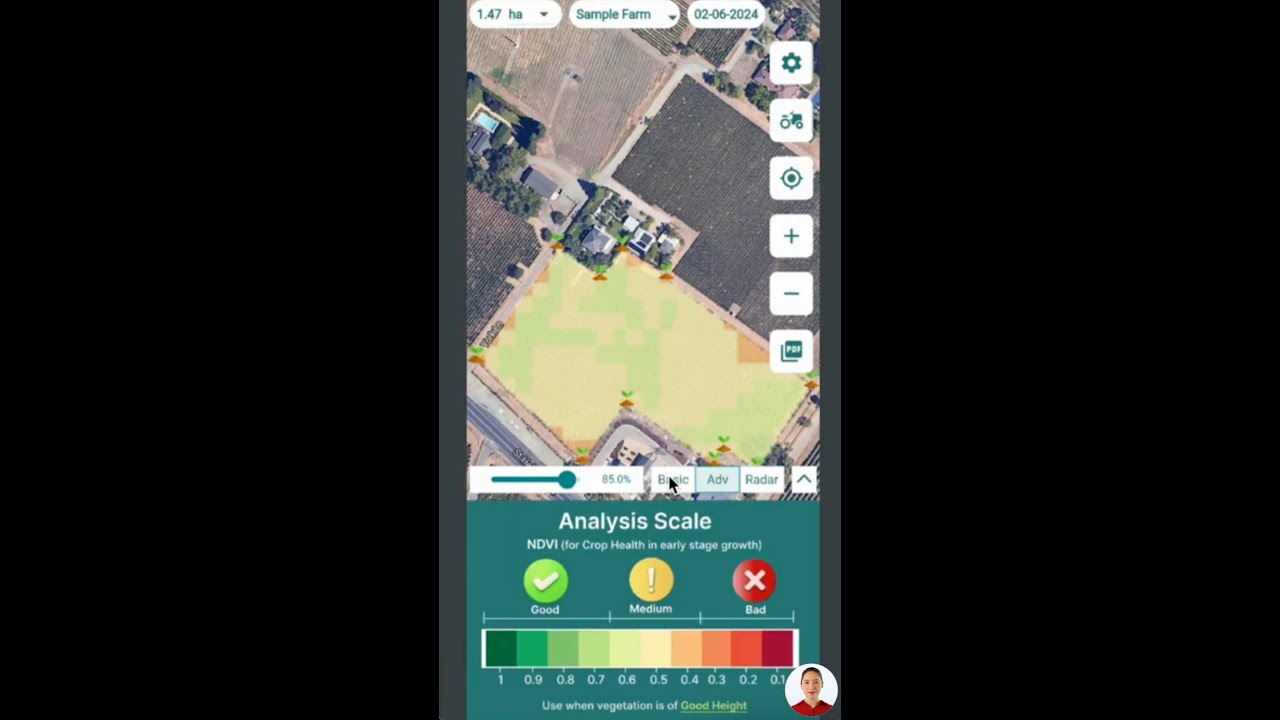
How to Interpret Satellite Data for Agriculture | Tutorial | Farmonaut Mobile Apps
Monitor your crops, soil, and irrigation efficiency in real time using Farmonaut’s app or API to boost resilience and get ready for contract farming or premium markets.
Farmonaut Subscription Options
Choose the right subscription to access affordable, scalable, satellite-driven solutions for agriculture, mining, infrastructure, and more.

Farmonaut® Satellite Based Crop Health Monitoring

Unlocking Farm Potential: A Comprehensive Guide to Land Cover Classification and Farm Land Types
Ignoring market volatility when planning your crop portfolio can result in lost income and missed procurement guarantees—always check latest advisories and recommended MSP.
FAQ: Karnataka Agriculture Price Commission & Sector Trends
1. What is the Karnataka Agriculture Price Commission’s core function?
The Commission assesses crop production costs, market price trends, and farmer welfare needs before recommending Minimum Support Prices (MSP) and other market intervention policies. It aims to align state procurement support with actual farmer requirements.
2. How are MSP and market prices different?
The Minimum Support Price (MSP) is a government-declared base rate intended to safeguard farmers against distress sales. Market prices fluctuate with demand, supply, and seasonal dynamics—which can be higher or lower than the MSP.
3. What role do agriculture companies in Karnataka play?
Agriculture companies operate across the value chain—offering seeds, fertilizers, irrigation solutions, storage facilities, and market linkages. Their efforts help stabilize supply, enhance quality, and improve price realization at the farm gate.
4. Are there reliable tools for monitoring and managing agriculture risk?
Yes, satellite technology, AI, and blockchain solutions—such as those available on the Farmonaut apps and API—enable real-time, affordable monitoring of crop health, irrigation efficiency, traceability, and loan or insurance verification.
5. Is there a way to check the latest government advisories and MSPs?
Farmers and producer groups should monitor state agriculture portals, commission advisories, and regulated market websites for frequent updates. Engaging with digital agri-extension solutions can ensure timely alerts.
Technology-driven compliance with carbon farming, traceability, and sustainable agronomy frameworks is fast becoming a prerequisite for premium market access in Karnataka and beyond.
Conclusion
The Karnataka Agriculture Price Commission remains pivotal in navigating the complex terrain of farm price discovery, farmer welfare, and market stability—balancing regional realities with broader policy goals. While Karnataka’s agriculture is challenged by climate, input cost escalation, and infrastructure gaps, proactive public mechanisms and the involvement of agriculture companies in Karnataka signal a future of opportunity.
The key to unlocking higher farm incomes lies in transparent price-setting, targeted procurement, diversified production, and digital transformation. Satellite, AI, and blockchain solutions—like those offered by Farmonaut—empower all stakeholders to monitor, manage, and monetize their operations sustainably and profitably.
With strong institutional frameworks, innovative agri-tech, and a robust policy ecosystem, Karnataka is well-placed to continue shaping India’s agricultural future.

 Delicio
 Payagri
 WB Dev
 Sama Premium
 Prochecker
 Tres Valles
 LACOS Geoinformation
 Pulsar Supernova
 Magrifly
 LatConnect 60
 WebsEdge
 Blickwinkel
 Agricultural Credit Policy Council
 MCSOD
MCSOD Marei Nursery
 eKGIS
eKGIS Mostas Tech
 Andex
Andex FCF India
 Unifrutti Gulf
 Deluxe Conseil
