

Modern Agritech in China: Agriculture & Forestry Tools Transforming Management by 2025
“By 2025, China aims to digitize over 60% of its agricultural land using advanced agritech and smart systems.”
Table of Contents
- Introduction: Modern Agritech in China
- Driving Forces Behind Modern Agriculture in China
- Precision Agriculture: Data, Sensors, and Efficiency
- Smart Irrigation & Integrated Water Management
- Biotechnology and Genomics: Modernizing Crop Resilience
- Modern Forestry: Tools, Monitoring & Sustainability
- Robotics and Automation in Agriculture
- Digital Platforms, Data Governance, and Farm Management Apps
- Policy, Finance, and Farmer Support
- Comparative Technology Adoption Table
- What’s Next for Agritech in China Beyond 2025?
- Farmonaut: Empowering Modern Agritech Through Satellite Technology
- Frequently Asked Questions
Introduction: Modern Agritech in China’s 2025 Landscape
The modern agriculture in China has entered a new era—one where advanced technologies, integrated systems, and digital tools are actively transforming how crops are grown, forests are managed, and essential resources like water and soil are stewarded. As we move toward 2026 and beyond, this shift is not just about upgrading machinery—it’s a wholesale modernization of methods, minds, and management across farming, forestry, and related sectors.
Key Insight 🧠
China’s agritech ecosystem is the world’s fastest growing, fueled by government policy, tech startups, and a national focus on food, forestry, and sustainability goals.
Let’s discover how modern agritech is revolutionizing not only mainstream agriculture, but also forestry management, digital water systems, and sustainable rural growth—all reinforcing food security and environmental resilience in the world’s most populous country.
Driving Forces Behind Modern Agriculture in China
Modern agriculture in China is increasingly defined by several converging factors:
- ✔ Population pressure: Feeding 1.4+ billion calls for efficiency and higher yields.
- 📊 Climate change: Need for resilience against droughts, floods, and temperature swings.
- ⚠ Resource limits: China’s water and arable land per capita lag global averages.
- ✅ Policy direction: Five-year plans and rural revitalization programs fuel agtech investment.
- 👨🌾 Rural digitalization: Bridging the urban-rural tech divide is a top priority.
Pro Tip 💡
When selecting modern agriculture tools, always ensure they enable real-time data collection, as data-informed actions drive the greatest impact and ROI.
The confluence of these drivers compels China to adopt data-driven, smart systems and modern agriculture tools across all scales—from massive state farms in Heilongjiang to specialized greenhouse hubs in Shandong and water-challenged regions in Xinjiang.
Precision Agriculture: Data, Sensors, and Efficiency in Modern Day Agriculture
At the heart of modern agriculture in China is precision agriculture. This approach uses sensors, data analytics, cloud computing, and automation to optimize the use of every resource. Here’s what defines this transformation:
- AI-driven sensors and probes: These monitor soil moisture, nutrient levels, and temperature in real time, enabling more accurate fertilization and irrigation. With these systems, decisions on input application are guided by insights rather than guesswork.
- Remote sensing & drones: Drone-based imaging and satellites survey large tracts quickly, providing actionable data on crop health, pest pressure, and yield potential. This supports targeted spraying, fertilization, and environmental monitoring—lowering costs and reducing waste.
- Variable-rate application tech: Using precision applicators, inputs are delivered precisely where needed, reducing overuse and environmental impact while boosting yield.
- Integrated platforms: Data from various sensors, equipment, and digital apps is fed into farm management platforms, providing a holistic view for overall optimization.
Common Mistake ⚠️
Ignoring the importance of data integration leads to fragmented decision-making. Ensure your farm and forestry tools are compatible with centralized digital platforms for the best results.
Precision in modern agriculture tools not only optimizes resource use, but also underpins sustainability—yielding more food per hectare while reducing environmental harm.

The above video demonstrates how modern agritech platforms like Farmonaut’s enable satellite-based, real-time monitoring of crop health—a core capability of precision agriculture.
Smart Irrigation & Integrated Water Management in China
In modern day agriculture, water management remains a central challenge and opportunity—especially in water-stressed areas such as North China Plain and Xinjiang. The integration of smart irrigation tools and water management systems is transforming efficiency across diverse climates and regions.
- 💧 Hydraulic & drip irrigation: High-efficiency systems, often coupled with soil moisture sensors and probes, enable farmers to optimize schedules and maximize yields while conserving water.
- 🌦 Weather forecasting: Modern agritech platforms use data fusion from rainfall, river flows, and groundwater monitoring to inform farm-level decisions and notify for optimal reservoir releases, reducing risk and maximizing efficiency.
- 📡 AI-driven irrigation recommendations: By incorporating real-time data, these tools adjust irrigation in response to needs, thereby reducing overall consumption, supporting sustainability and lowering costs.
Investor Note 🏦
China’s irrigation technology market is a top target for investors, projected to grow >10% annually to 2030. Top areas: smart irrigation sensors, data analytics and decision support systems.
Water-use efficiency is also complemented by soil health programs, which preserve microbial diversity and enhance carbon sequestration.
- ✔ Key benefit: Reduced water waste and input costs.
- ✔ Resilience: Minimized effects of droughts and rainfall variability.
- ✔ Sustainability: Supports regional goals for sustainable resource management.
“China’s forestry sector is projected to deploy 500,000+ digital monitoring tools for resource management by 2025.”
Biotechnology and Genomics: Modernizing Crop Resilience and Sustainable Yields
Modern agritech extends beyond sensors and software—biotechnology and genomics are essential for developing the resilient, high-yielding crops needed to feed China’s growing population and stabilize markets.
- 🧬 Marker-assisted selection: Accelerates breeding programs to create drought-tolerant, disease-resistant, and regionally adapted crop varieties.
- 📊 Digital phenotyping: Advanced imaging and data analytics enable rapid field evaluation of genetic traits and crop responses, supporting fast adoption of successful varieties.
- 🌱 Pest and disease control: Integrated pest management (IPM) and biocontrol strategies reduce pesticide reliance.
- 🌾 Specialty & staple crops: From rice and wheat to horticulture, genomics enhances productivity for both mass-market and specialty production.

Key Insight 🌟
Combining biotechnology with real-time data from digital tools accelerates feedback and adoption, making China’s crop improvement programs among the world’s fastest advancing.
The result? Higher yields, lower environmental impact, and resilience against pests, disease, and climatic stress across China’s diverse regions.
Modern Forestry Tools: Transforming Forest Resource Management
As modern agriculture in China evolves, so too does modern forestry. Advanced monitoring technologies are reshaping how forests are managed for both timber production and environmental stewardship.
- 🚀 Remote sensing, LiDAR, and satellite imagery: Assess canopy structure, timber volume, and carbon stocks in real time. Enable detection of pest outbreaks, fire risk, and drought stress for proactive intervention.
- 🌲 AI-powered analytics: Forecast risks, monitor biodiversity, and support restoration and agroforestry practices.
- 🏷 Traceability systems: Blockchain and digital tags enable sustainable sourcing and verifiable chain-of-custody for timber and other forest products.
- 🌳 Agroforestry integration: Blends income diversification with ecological restoration, benefiting rural economies and protecting ecosystem integrity.
Pro Tip 🌍
Satellite and LiDAR data, together with historic climate and fire data, provide a 360-degree view—enabling more accurate and sustainable forestry decisions across vast, remote regions in China.
Visual List: Major Benefits of Smart Forest Monitoring in China
- 🌳 Early pest outbreak detection
- 🔥 Accurate fire risk forecasting
- 🌲 Optimized timber yield & rotation
- ♻️ Efficient biodiversity monitoring & restoration
Robotics and Automation: Boosting Productivity, Reducing Labor Costs
With rising rural labor costs and the aging of the agricultural workforce, robotics and automation are vital for modern day agriculture in China. Here’s how the latest tech is deployed:
- 🤖 Autonomous harvesters, weeding, and pruning robots: Significantly lower manual labor in fruit, vegetable, and plantation crops. Especially impactful in controlled environments like greenhouses.
- ⚙ Robotic processing and cold-chain logistics: Automation in sorting, grading, packaging, and logistics boosts product quality and minimizes post-harvest losses.
- 🌐 Integrated farm robots: Linked via internet of things (IoT) systems to farm management apps for complete synergy.

- 📊 Data insight: Farms using smart harvesters see 15–25% labor cost reductions, plus higher yields from more precise operations.
- 🔋 Efficiency: Energy use is optimized in greenhouses via climate sensors integrating with automation for lighting, heating, and fertigation.
- 💡 Quality: Consistency in picking, handling, and packaging increases export value and food safety for downstream supply chains.
Common Mistake 🛠️
Automating without adequate data analytics can lead to sub-optimal outcomes. Ensure your robotics are fully integrated into a real-time, data-driven management system!

Visual List: Top Robotics Application Areas in Chinese Modern Agritech
- 🌾 Automated sowing & planting
- 🍅 Smart harvesting (fruits & vegetables)
- 🚜 Precision weeding & spraying
- 📦 Automated packing & cold-chain logistics



Digital Platforms, Data Governance, & Integrated Farm Management in China
Modern agriculture in China leverages platforms that provide end-to-end, data-driven management for farms, forestry, and water systems. These digital solutions empower farmers, cooperatives, and rural stakeholders to make better decisions and optimize every aspect of production.

- ⚡ Integrated farm management systems: Bring together agronomy data, input costs, yields, and sales into a single dashboard for real-time analysis and visualization.
- 🔒 Blockchain traceability: Provides full transparency from field to market, increasing food safety and supply chain trust.
- 🌐 Cloud-based collaboration: Enables farmers to connect with suppliers, buyers, insurers, and advisors for efficient transactions and customized products.
- 📊 Big data analytics: Transform on-farm and in-forest observations into actionable insights on productivity, risk management, and sustainability.
Investor Note 💹
Integrated data platforms supporting millions of Chinese farms and forestry operations represent a $10+ billion market opportunity by 2026.
- ✔ Key benefit: Increased operational transparency, risk reduction, and faster access to credit and insurance.
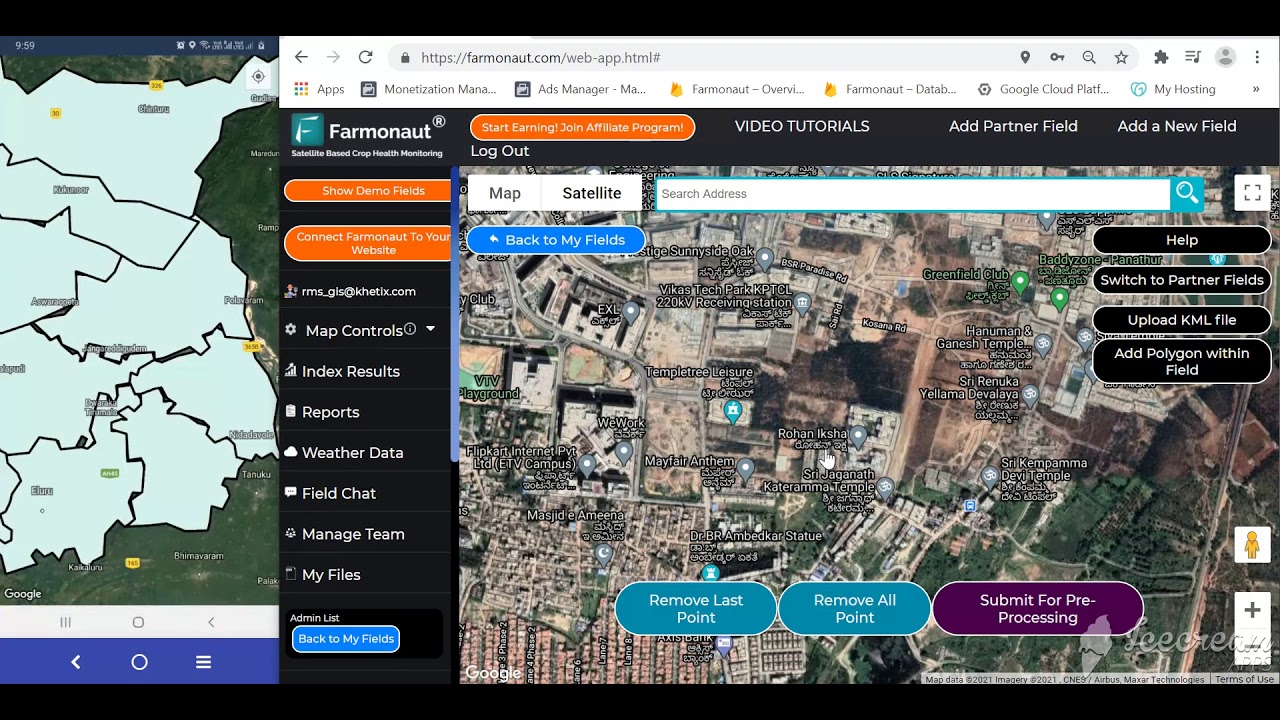
Integrate real-time satellite insights with your agtech platform using Farmonaut’s secure APIs for data and resource management.
Developers: Access comprehensive documentation for Farmonaut’s satellite-weather API to build custom solutions for crop, water, and forestry management.
Policy, Finance, and Support for Modern Agritech Adoption
The rapid adoption of modern agritech in China is underpinned by government incentives, focused training programs, and innovative finance. Here’s how the policy environment supports the digital and sustainable transformation:
- 💡 Government subsidies: Reduce the upfront costs of deploying sensors, automation equipment, and digital platforms, lowering barriers for small and medium-sized farms.
- 📖 Training & extension: Nationwide programs equip farmers and forest managers with the know-how to use advanced technologies effectively.
- 💰 Credit and insurance: Flexible financing solutions and satellite-based verification make it easier for farmers to access credit, insurance, and modernize production securely.
- 🔑 Public-private pilots: Large-scale rollouts demonstrate new tools’ impact, making proven solutions rapidly scalable and trusted across diverse provinces.
- 💾 Intellectual property regimes: Encourage local innovation while granting access to internationally proven solutions, powering a dynamic, competitive agritech ecosystem.
Key Insight 📈
By 2025, over half of Chinese agtech startups will offer vertically integrated finance, traceability, and analytics—dramatically accelerating sector-wide modernization.
Common Mistake 💸
Failing to leverage subsidized technology or digital finance platforms leaves significant value “on the table” for forward-thinking producers and forestry enterprises.
Comparative Technology Adoption Table: Modern Agritech, Forestry, & Water Tools in China by 2025
| Tool/Technology Name | Primary Application | Core Features | Estimated Adoption Rate in China by 2025 (%) | Expected Impact | Key Innovators/Providers |
|---|---|---|---|---|---|
| Smart Irrigation Sensors | Agriculture, Water | Soil moisture, automated irrigation scheduling | 65% | Water savings >25%, 10% yield boost | Farmonaut, Netafim China, Rain Bird, national R&D |
| Drones & UAV Imaging | Agriculture, Forestry | Aerial surveys, pest detection, mapping & spraying | 80% | Labor saving, faster intervention, yield up 7-15% | DJI, XAG, Farmonaut |
| Satellite Imaging & Analytics | Agriculture, Forestry, Water | Crop/forest health, NDVI, change detection | 65% | Precision input, early issue alerts, higher ROI | Farmonaut, Deimos Imaging, Chinese Space Agency |
| AI-Powered Forest Monitoring | Forestry | LiDAR, satellite, fire/pest risk prediction | 58% | Faster response, prevents losses, biodiversity | Farmonaut, Sinoforest, China Forestry Science |
| Robotic Harvesters & Automation | Agriculture | Automated picking, weeding, pruning | 44% | Up to 25% labor savings, higher consistency | XAG, EAVision, Farmonaut (for monitoring and insights) |
| Integrated Farm Management Platforms | Agriculture, Forestry | Data aggregation, real-time decision tools, cloud | 70% | Faster decision cycles, improved traceability | Farmonaut, Alibaba Cloud, Huawei |
| Blockchain-Based Traceability | Agriculture, Forestry | End-to-end product verification, security | 32% | Trustworthy supply chains, fraud reduction | Farmonaut, VeChain, JD.com |
What’s Next for Modern Agritech in China: Looking to 2026 and Beyond
As China continues to digitize its agricultural and forestry sectors, several trends are poised to define the next phase of transformation:
- ✔ More AI, More Automation: Even greater adoption of machine learning, automation, and robotics—further elevating productivity while addressing labor shortages.
- ✔ Data convergence across sectors: Seamlessly integrating forestry, agriculture, and water data systems for unified resource management.
- ✔ Regenerative agriculture: Increasing focus on soil health, carbon sequestration, and low-impact practices.
- ✔ Expanded role of traceability: Blockchain and digital verification for food safety and sustainability will become industry norms.
- ✔ Personalized farmer experiences: Tailored advisory based on real-time satellite data, enabled by platforms like Farmonaut, will give every farmer in China the insight advantage.
Investor Note 📡
The next decade will see China’s agritech sector become a global hub for innovation, export, and digital standard-setting in smart agriculture, forestry, and water resource management.
Farmonaut: Empowering China’s Modern Agritech and Resource Management Revolution
At Farmonaut, we are dedicated to supporting China’s agricultural and forestry transformation through affordable, scalable, and data-driven satellite solutions.
- ✔ Satellite-Based Monitoring: Our platform provides real-time, multi-spectral imagery for monitoring crop and forest health—enabling smarter irrigation, pest detection, and input optimization.
- ✔ Jeevn AI Advisory System: Delivers tailored insights to farmers and resource managers, analyzing satellite data for customized strategies, weather forecasts, and risk alerts.
- ✔ Blockchain-Based Traceability: Powering the future of transparent agriculture and forestry supply chains.
- ✔ Resource & Fleet Management: Optimize machinery, logistics, and field management for both smallholders and large-scale enterprises.
- ✔ Environmental Impact Tracking: Track carbon footprints and soil health to enable compliance and support sustainable practices at scale.
Get Started with the Farmonaut Web and Mobile App – delivering data-driven insights for the Chinese context.
Access APIs for seamless integration of satellite weather and resource insights into your own agtech solutions.
Our mission at Farmonaut is to democratize modern agritech, empowering businesses and governments to drive sustainability, productivity, and transparency throughout China’s extensive agricultural and forestry sectors.
Enable secure, satellite-based verification for crop loans and insurance to reduce risk and improve financial accessibility.
Support China’s carbon goals—calculate, benchmark, and optimize environmental impact with Farmonaut’s carbon & resource management suite.
Pro Tip 🚀
Switching to satellite-driven monitoring and AI-powered advisory can rapidly boost ROI and sustainability for any modern farm, forestry operation, or agri-enterprise in China!
Frequently Asked Questions — Modern Agritech in China
What is modern agritech, and why is it important in China?
Modern agritech refers to the integration of advanced technologies—such as AI, sensors, robotics, genomics, satellite imagery, and big data—into agriculture, forestry, and water management. In China, it’s critical for boosting food and timber production, resource efficiency, climate change resilience, and sustainable rural development.
How are modern agriculture tools used in Chinese farming?
These tools include smart irrigation sensors, drones for mapping and spraying, AI-based analytics for forecasting, digital platforms, blockchain traceability, and autonomous machines for tasks like harvesting and weeding. They maximize yields, reduce water and labor costs, monitor soil and crop health, and ensure sustainability.
Can smallholder farmers access these advanced systems?
Yes. Government incentives, agtech startups, and subscription-based platforms (such as Farmonaut) have made modern agritech affordable and scalable for individual farmers, cooperatives, and smallholder groups, particularly as more services are available via smartphones and web-apps.
How does Farmonaut enable precision agriculture and forestry management in China?
We provide satellite-driven monitoring, AI advisory, blockchain-based traceability, and API integrations tailored to the needs of Chinese agriculture and resource management. Our solutions support decision-making, enhance sustainability, and democratize technology access at all scales.
Is blockchain traceability important for agriculture and forestry?
Absolutely. It strengthens food and timber safety, builds consumer trust, and addresses regulatory demands—especially in export markets. Digital traceability is central to China’s quality and sustainability ambitions for 2025 and beyond.
Key Insight 🚩
By embracing modern agritech and integrated management tools, China is setting a new global standard for data-driven, sustainable, and resilient agriculture and forestry—from 2025 into the distant future.
For expert guidance, hands-on tech demos, and up-to-date API documentation, visit our large scale farm management solutions page or reach out via our apps and support channels.

 Sun Palm Australia
 Grandstream Algérie
 XOS Realty
 Geospatial Lab Africa
 KhetiBuddy
 Agro La Gándara
 HIPSAC
 ZOL Zimbabwe
 Juligerm
 AdBio
AdBio MISE Maroc
 NWNS
NWNS Red August Group
 Farm Inc
 WeMe Global
 Agrotoken
 Blue BearX
 Insignito
 Croptimum
 DnCubed
