

17-17-17 Fertilizer Price Per Ton: Real Data & Cost Calculator
Reviewed August 2026 against USDA Agricultural Marketing Service retail price reports, farmdoc daily (University of Illinois), and USDA NASS/ERS fertilizer use data.
Try it: Run your own numbers →
Table of Contents
- 17-17-17 Fertilizer Price Per Ton: The Current Numbers
- Calculator: Your 17-17-17 Cost Per Acre
- What 17-17-17 Fertilizer Is and Why the Ratio Matters
- Nitrogen, Phosphate and Potash: What’s Actually Inside the Price
- Price Comparison Table: 17-17-17 vs. Its Raw Inputs
- What Moves the 17-17-17 Fertilizer Price Per Ton
- Runoff Rules and Sustainability Reporting
- Getting the Most Out of Every Ton You Buy
- How Farmonaut Fits Into Fertilizer Cost Control
- Video Library: Fertilizer, Sustainability & Agriculture
- What Rising Input Costs Mean for Farm Budgets and Policy
- Technology That Tracks Where Every Ton Goes
- Frequently Asked Questions
- Summary: How to Keep This Number Current
- Try it: Run your own numbers
17-17-17 Fertilizer Price Per Ton: The Current Numbers
The most recent verified retail quote for 17-17-17 NPK blend, published by the USDA Agricultural Marketing Service for Alabama, was $746.55 per ton in September 2025, up from $734.15 per ton in April 2025 — a $12.40 increase over five months. That is the only region-specific 17-17-17 retail figure USDA AMS currently publishes; no equivalent Midwest, Great Plains, or broader Southeast quote exists in the public record as of this review, so treat Alabama as a directional benchmark rather than a national average, and get a written local quote before you budget against it. The USDA AMS Illinois Production Cost Report covers straight nitrogen, phosphate and potash products but does not list 17-17-17.
If you searched for “triple 17 fertilizer price” or “17 17 17 fertilizer price” expecting a single global number, here is the honest answer: no single global or national average for 17-17-17 is published on a regular schedule. What exists is a bi-weekly regional retail snapshot (the AMS report above) plus wholesale prices for the raw nutrients that go into any NPK blend — anhydrous ammonia, DAP, and potash — published monthly by University of Illinois farmdoc daily. Both are cited with figures below, and both tell you more than a single averaged price ever could, because they let you see which input is driving your cost up.
17-17-17 retail price moved from $734.15/ton (April 2025) to $746.55/ton (September 2025) in Alabama, per USDA AMS. Over the same window, anhydrous ammonia in Illinois rose from $786/ton (August 2025) to $915.50/ton by August 2026, and averaged $907.50/ton in the USDA AMS report for the week ending 18 September 2026 — meaning nitrogen-side costs, not the blend price itself, are the number to watch region by region.
Calculator: Your 17-17-17 Cost Per Acre
Because the per-ton price only matters once you know how much you’re spreading, use the calculator below to convert a quoted ton price into a per-acre and total-field cost. Enter your own quote — don’t rely on the Alabama figure above if you’re buying elsewhere, since AMS does not publish a Midwest or Great Plains equivalent yet.
Run your own numbers
Assumes the entered ton price already includes any delivery or spreading fee your supplier quoted — this calculator does not add them separately. It does not account for blend substitutions, split applications, or soil-test-adjusted rates; run it once per field with your actual soil-test recommendation.
What 17-17-17 Fertilizer Is and Why the Ratio Matters
17-17-17 fertilizer is a granular compound blend containing 17% nitrogen (N), 17% phosphorus as P2O5 (P), and 17% potassium as K2O (K) by weight — a 1:1:1 ratio. It’s used across cereals, fruit, and vegetable operations in the US and elsewhere because it delivers all three primary macronutrients in one pass, without requiring a farmer to blend or stack separate straight fertilizers.
- ✔ Uniform Nutrient Delivery: One bag covers nitrogen, phosphorus, and potassium needs in equal measure — useful where a soil test shows no single nutrient is dramatically more deficient than the others.
- ⚡ Vegetative Growth: Nitrogen drives leaf and stem development.
- 🌱 Root Strength: Phosphorus supports root establishment and energy transfer.
- 💧 Water Regulation: Potassium regulates water retention and stress tolerance.
- 🍇 Crop Versatility: Works across cereals, fruit, and vegetable rotations without reformulation.
A 1:1:1 blend is only the right choice if your soil test actually calls for equal N, P, and K. If your test shows phosphorus and potassium are already sufficient — common in fields with a history of manure or compound fertilizer use — a straight nitrogen product like urea or anhydrous ammonia may cost less per pound of usable nutrient than paying for P and K you don’t need.

Buying 17-17-17 by the Bag, Including at Southern States
Many buyers searching for 17-17-17 fertilizer at Southern States want bagged product for pasture, hay, gardens or food plots. Southern States is a farmer-owned cooperative founded in 1923 (Southern States). When we searched its online store for “17-17-17” on 27 September 2026, no 17-17-17 product was listed, so the local store is the place to ask for price and stock.
The label arithmetic is the same wherever you buy:
| Amount of 17-17-17 | Nitrogen (N) | Phosphate (P2O5) | Potash (K2O) |
|---|---|---|---|
| 50 lb bag | 8.5 lb | 8.5 lb | 8.5 lb |
| 1 short ton (40 bags) | 340 lb | 340 lb | 340 lb |
To compare a bag price with a bulk ton price, multiply the price of a 50 lb bag by 40. To compare with straight products, divide the price by the pounds of nutrient you actually need. If a soil test calls only for nitrogen, paying for 340 lb of P2O5 and 340 lb of K2O in every ton is money spent on nutrients the field does not use.
Nitrogen, Phosphate and Potash: What’s Actually Inside the Price
A 17-17-17 ton price moves because the three commodities inside it move — and they don’t move together. Here is where each stood most recently, by source:
- Nitrogen (anhydrous ammonia, 82-0-0): $786 per ton in Illinois, August 2025 (USDA AMS), rising to $915.50 per ton by August 2026 (farmdoc daily) — a $129.50 increase.
- Nitrogen (urea, 46-0-0): $594 per ton, Illinois, August 2025 (USDA AMS).
- Phosphate (DAP, 18-46-0): $912.22 per ton wholesale, August 2026 (farmdoc daily) — this is the figure behind “phosphate fertilizer price cost per ton” searches; there is no separately published 2026 phosphate rock price in this brief, so DAP is the closest tracked proxy.
- Potash (0-0-60): approximately $500 per ton wholesale, August 2026 estimate (farmdoc daily).
Nationally, US farmers used 12.5 million tons of nitrogen fertilizer, 3.8 million tons of phosphate fertilizer, and 6.2 million tons of potash fertilizer in 2023, according to USDA NASS data compiled by USDA ERS. Those are the most recent finalized annual totals; 2024 and 2025 consumption figures had not been published as of this review. Check USDA ERS Fertilizer Use and Price directly for the current release.
For “nitrogen fertilizer price per ton” searches specifically: anhydrous ammonia and urea are the two forms USDA AMS and farmdoc daily track by name. Neither is the same product as 17-17-17 — they’re pure nitrogen carriers — but they set the floor under any blended product’s nitrogen component, so a spike in either shows up in your next 17-17-17 quote within one to two purchasing cycles.
Latest Illinois Input Prices, September 2026
The USDA AMS Illinois Production Cost Report for the week ending 18 September 2026 lists these average distributor asking prices, per short ton, free on board (USDA AMS):
| Product | Average, $/ton | Range, $/ton |
|---|---|---|
| Anhydrous ammonia (82-0-0) | $907.50 | $820–$1,050 |
| Urea (46-0-0) | $722.00 | $595–$890 |
| DAP (18-46-0) | $928.57 | $840–$975 |
| MAP (11-52-0) | $935.00 | $840–$985 |
| Potash (0-0-62) | $500.42 | $460–$550 |
| Liquid nitrogen (28-0-0) | $506.88 | $400–$585 |
The report does not list 17-17-17 or other compound NPK blends. Use it to see which nutrient is pushing a blend quote up or down, not as a blend price. The report is published every two weeks, so check the latest issue before you order.
Price Comparison Table: 17-17-17 vs. Its Raw Inputs
This table separates the two things people searching “17-17-17 fertilizer price per ton” actually need: the blended retail price, and the wholesale inputs that predict where it’s headed next.
| Product | Price per Ton (USD) | Market / Region | Period | Source |
|---|---|---|---|---|
| 17-17-17 NPK blend (retail) | $734.15 | Alabama | April 2025 | USDA AMS |
| 17-17-17 NPK blend (retail) | $746.55 | Alabama | September 2025 | USDA AMS |
| Anhydrous ammonia 82-0-0 (wholesale) | $786.00 | Illinois | August 2025 | USDA AMS |
| Anhydrous ammonia 82-0-0 (wholesale) | $915.50 | Illinois | August 2026 | farmdoc daily |
| Urea 46-0-0 (wholesale) | $594.00 | Illinois | August 2025 | USDA AMS |
| DAP 18-46-0 (wholesale) | $912.22 | National (farmdoc daily coverage) | August 2026 | farmdoc daily |
| Potash 0-0-60 (wholesale, estimate) | $500.00 | National (farmdoc daily coverage) | August 2026 | farmdoc daily |
Read this table as a diagnostic, not a shopping list: if your local 17-17-17 quote has jumped more than the ammonia and DAP lines above combined, ask your supplier what’s driving the difference — freight, a regional shortage, or margin, since none of those show up in the national wholesale numbers.
Comparing a retail 17-17-17 quote directly against a wholesale ammonia or DAP price and calling the difference “markup.” Retail blend prices include manufacturing, blending, bagging, and local distribution costs that wholesale single-nutrient prices don’t carry — they are not the same stage of the supply chain, so a direct subtraction overstates dealer margin.

What Moves the 17-17-17 Fertilizer Price Per Ton
Five forces set the number you see quoted, in roughly this order of near-term impact:
-
Natural gas and energy costs:
Anhydrous ammonia production runs on the Haber-Bosch process, which is natural-gas intensive. The $786-to-$915.50-per-ton move in Illinois ammonia between August 2025 and August 2026 (USDA AMS, farmdoc daily) tracks energy input costs more closely than any other single factor. -
Raw material and mining supply:
Phosphate rock and potash are mined commodities. Export restrictions or mine-level disruptions in producing countries tighten global supply and show up first in wholesale DAP and potash quotes, then filter into blended retail prices over subsequent purchasing cycles. -
Logistics and regional distribution:
USDA AMS publishes retail 17-17-17 prices for Alabama specifically because regional dealer networks, rail access, and barge routes create real price gaps between states — which is exactly why a single national average understates what any one farm actually pays. -
Farm-level budgeting exposure:
USDA projects corn fertilizer costs at $166 per acre for 2026 (farmdoc daily), which sets the planning baseline row crop operations use when comparing a straight-nitrogen program against a compound blend like 17-17-17. -
Environmental and runoff regulation:
Nutrient management rules in states bordering the Great Lakes, Chesapeake Bay, and Gulf Coast watersheds increasingly require documented application rates, which raises compliance cost without necessarily raising the ton price itself.
USDA’s $166-per-acre corn fertilizer cost projection for 2026 (farmdoc daily) is a planning figure, not a guarantee — it reflects expected input prices at the time of publication and should be checked against your own supplier quotes before locking in a crop budget.

Runoff Rules and Sustainability Reporting
Nutrient runoff regulation is the policy layer sitting on top of every price number above. It doesn’t set the ton price directly, but it does set how much of a ton you’re allowed to apply, when, and how you have to document it.
- Nutrient Runoff Rules: States and watershed authorities across the US increasingly require documented nitrogen and phosphorus application rates near sensitive waterways, limiting over-application and protecting water bodies from eutrophication.
- Carbon Footprinting: Standards for tracking the full production-to-field carbon impact of fertilizer inputs are expanding — see Farmonaut’s carbon traceability tools for how operations are documenting this today.
- Precision Application Requirements: Some conservation program payments now condition eligibility on documented, site-specific application rates rather than flat per-acre averages.
Documented, soil-test-driven application isn’t just a compliance requirement in regulated watersheds — it’s also the fastest way to avoid paying for nutrients your field doesn’t need, which matters more as the per-ton price of every component climbs.

Getting the Most Out of Every Ton You Buy
At $746.55 per ton (Alabama, September 2025, USDA AMS) or higher depending on your region, every pound of 17-17-17 that runs off a field instead of feeding the crop is a direct loss. The checklist below is what keeps that loss down regardless of what the price does next quarter.
Application Checklist for 17-17-17
- 🧪 Soil Test First: Confirm your field actually needs equal N, P, and K before buying a 1:1:1 blend — many fields don’t.
- 🕒 Match Timing to Growth Stage: Apply ahead of root and shoot development windows specific to your crop, not on a fixed calendar date.
- 💧 Manage Irrigation to Limit Leaching: Overwatering after application pushes nutrients past the root zone. See sustainable leaching-control practices for the underlying mechanics.
- 🛠️ Use Mapping Tools for Variable-Rate Application: A satellite-based farm management platform can flag zones needing more or less than a flat rate.
- 📑 Track Yield Response Season to Season: Use your own harvest data to adjust next year’s rate — published agronomic trial data specific to 17-17-17 blends by crop was not found in current USDA sources, so on-farm records are the most reliable input you have.
- ✔ Cost-Efficiency: Matching rate to soil test avoids paying $746.55+/ton for nutrients the field will not use.
- 📊 Data-Driven Decisions: Field-level monitoring turns a flat per-acre budget into a variable-rate plan.
- ⚠ Risk Reduction: Over-application at current price levels compounds financial loss with runoff liability.
- 🌍 Sustainability: Efficient use protects long-term soil structure and water quality.
- 🚜 Access: Platforms like Farmonaut put satellite-based nutrient insight within reach of operations of any size.




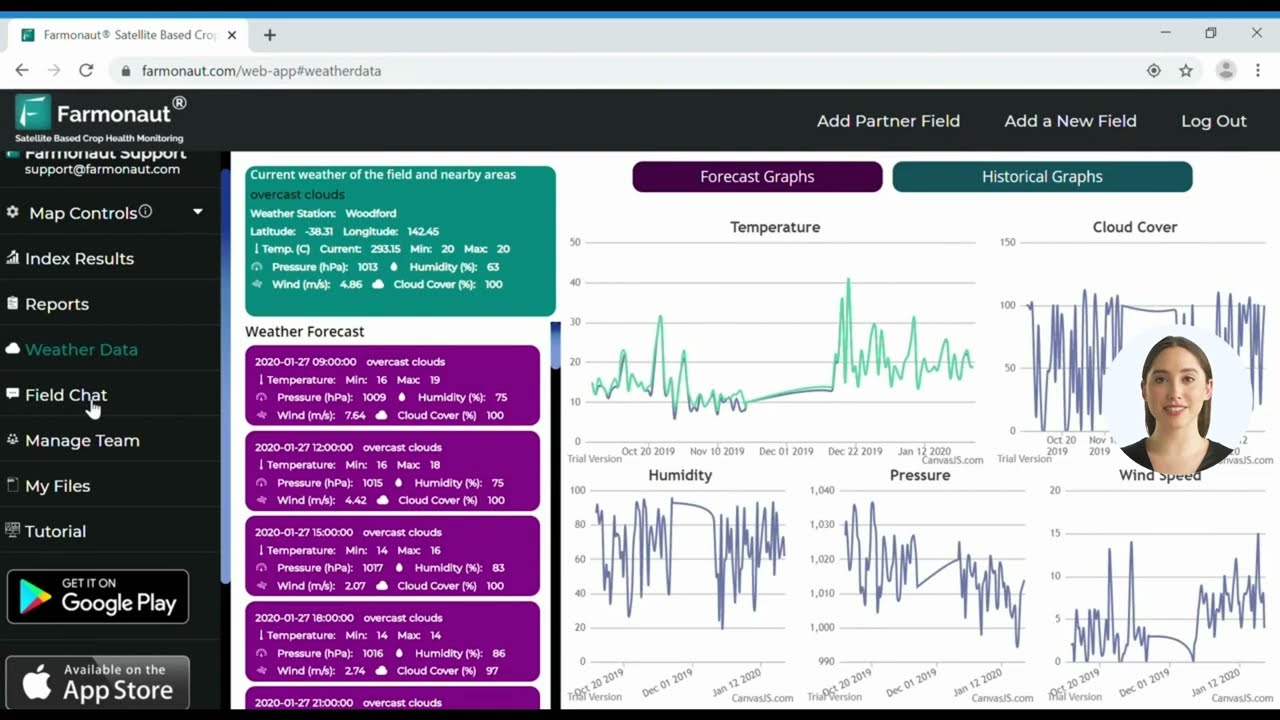
Access real-time field monitoring, precision weather, and fertilizer management—from your desktop or mobile device. Farmonaut Apps put space-age technology in the hands of every grower and agri-business manager.
How Farmonaut Fits Into Fertilizer Cost Control
At current wholesale and retail levels — $915.50/ton anhydrous ammonia, $912.22/ton DAP, $746.55/ton 17-17-17 retail — the margin for waste on any field has narrowed. Farmonaut’s tools are built to catch that waste before it compounds across a season.
- 🛰️ Satellite Crop Monitoring: The agro-admin platform flags NPK deficiency zones so you apply where it’s needed rather than uniformly across a field.
- 🧠 AI Advisory System (Jeevn AI): Real-time recommendations on fertilizer timing and input use through the crop lifecycle.
- 🔗 Blockchain Traceability: Traceable records of input sourcing and application for compliance and export documentation.
- 🛠️ Fleet and Resource Management: Smart logistics solutions to reduce distribution costs on fertilizer delivery.
- 🌱 Environmental Impact Monitoring: On-demand carbon footprinting tools for climate disclosure and sustainability reporting.
Both smallholders and agribusinesses can access this through the web app, mobile apps, and APIs. Developers can integrate geospatial and farm analytics via the satellite & weather API developer docs for automated input tracking, carbon reporting, and traceability.
With ammonia and DAP both above $900/ton wholesale as of August 2026 (farmdoc daily), variable-rate application data is worth more per acre than it was even a year earlier — the cost of a mistake has gone up alongside the cost of the fertilizer itself.
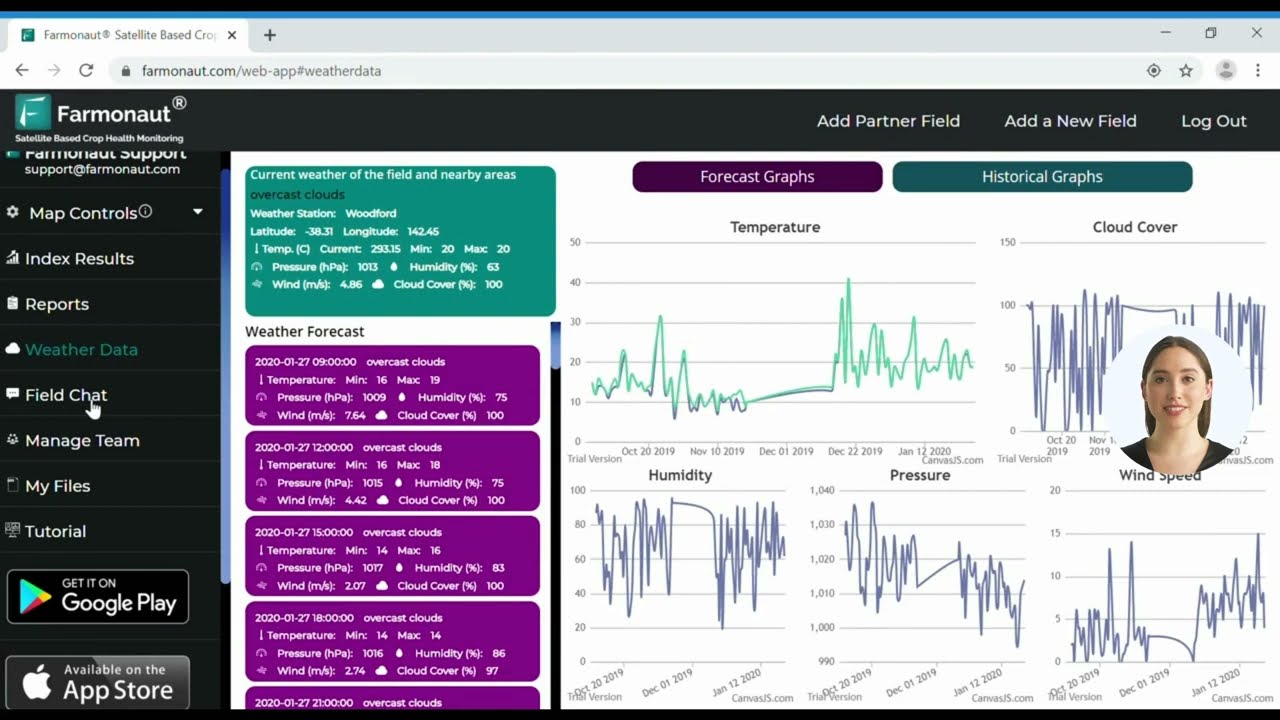
See product traceability solutions for food and agri-mining chains globally.
What Rising Input Costs Mean for Farm Budgets and Policy
- ⚖️ Affordability: A $746.55/ton retail price (Alabama, September 2025) directly affects margins on any operation applying 17-17-17 at scale.
- 👨🌾 Regional Access: USDA AMS’s Alabama-only 17-17-17 coverage means farmers elsewhere in the US should request written quotes rather than assume a national price applies to them.
- 📈 Budget Planning: USDA’s $166-per-acre projected 2026 corn fertilizer cost (farmdoc daily) is a useful benchmark for comparing your own quote against a national planning figure.
- 🔄 Program Design: Conservation and efficiency-linked payment programs increasingly reward documented application rates over flat volume purchases.
- 🏆 Input Efficiency: With DAP at $912.22/ton and ammonia at $915.50/ton (August 2026, farmdoc daily), the cost of a wasted pound of nutrient is higher than it was in 2025 — efficiency programs pay off faster at these price levels.

Programs that condition support on documented, efficient input use — rather than on fertilizer volume purchased — put operations with strong monitoring data in a stronger position as per-ton costs climb.

Technology That Tracks Where Every Ton Goes
Satellite crop condition monitoring, AI nutrient mapping, and blockchain traceability are the tools that let an operation prove — not just claim — efficient fertilizer use to buyers and regulators.
- 🤖 AI & Remote Sensing: Farmonaut’s platform delivers alerts for NPK correction, targeting fertilizer use to where it’s needed.
- 🛰️ Precision Farming: Automated in-season advisories match crop demand against actual field conditions.
- 🧾 Blockchain Integration: Secure reporting for production and supply-chain transactions, relevant for export-market compliance.
- 🌱 Real-time Impact Tools: Carbon footprinting modules for every ton of fertilizer used or produced.
- 📲 Accessible Apps & APIs: Integration into farm, mining, and trading platforms for instant verification.
Building applications for crop monitoring, fertilizer traceability, or environmental impact reporting? Explore the Farmonaut API docs to integrate satellite and sustainability data into your own systems.
Frequently Asked Questions
What is the 17-17-17 fertilizer price per ton right now?
The most recent published figure is $746.55 per ton for Alabama retail, from USDA AMS’s September 2025 report — up from $734.15 per ton in April 2025. USDA AMS does not currently publish 17-17-17 retail prices for other US regions, so this is a directional benchmark, not a national figure. Check the current AMS report for the latest issue and ask local suppliers for a written quote to compare against it.
What is triple 17 fertilizer, and is its price different from 17-17-17?
“Triple 17” is another name for 17-17-17 — the “triple” refers to the three equal 17% nutrient percentages (N-P-K), not a different formulation. Pricing sources and figures are identical to standard 17-17-17.
What is the nitrogen fertilizer price per ton?
Anhydrous ammonia (82-0-0) was $786 per ton in Illinois in August 2025 (USDA AMS) and $915.50 per ton by August 2026 (farmdoc daily). Urea (46-0-0) was $594 per ton in Illinois in August 2025 (USDA AMS). Neither is 17-17-17, but both set the nitrogen-cost floor that feeds into any NPK blend price.
What is the phosphate fertilizer price per ton in 2026?
DAP (18-46-0), the most commonly tracked phosphate product, was $912.22 per ton wholesale in August 2026, per farmdoc daily. A separate phosphate-rock-only price was not found in current USDA sources; DAP is the standard proxy used in fertilizer cost reporting.
17 17 17 உரம் விலை என்ன? (What is the 17-17-17 fertilizer price?)
This page reports 17-17-17 pricing sourced from US agencies: USDA AMS’s most recent retail figure is $746.55 per ton (Alabama, September 2025), up from $734.15 per ton (April 2025). US wholesale input costs — anhydrous ammonia at $915.50/ton and DAP at $912.22/ton, both August 2026, per farmdoc daily — are the drivers behind that retail number. For pricing outside the US, consult your local agricultural marketing authority, since USDA figures don’t cover other national markets.
How can I calculate my own 17-17-17 cost per acre?
Divide your quoted price per ton by 2,000 to get a price per pound, then multiply by your application rate in pounds per acre. Use the calculator above to run this with your own numbers and see the nitrogen, phosphate, and potash delivered per acre at that rate.
How can Farmonaut help manage fertilizer costs?
Farmonaut provides satellite-driven crop monitoring, AI advisories, blockchain traceability, and environmental impact analytics that help target fertilizer application to where it’s needed, reducing waste as per-ton costs rise.





Summary: How to Keep This Number Current
The 17-17-17 fertilizer price per ton is not a static figure — it moved from $734.15 to $746.55 per ton in Alabama between April and September 2025 alone (USDA AMS), while the wholesale ammonia behind it climbed from $786 to $915.50 per ton over roughly the same window into August 2026 (farmdoc daily). Any number on this page will be outdated by the time you read it; the sources it came from will not be.
Pull the latest bi-weekly nitrogen, phosphate and potash prices from USDA AMS’s Illinois Production Cost Report (it does not list 17-17-17 blends). Track the monthly nitrogen, phosphate, and potash wholesale prices at farmdoc daily. For annual national consumption totals by nutrient, check USDA ERS Fertilizer Use and Price. Cross-check all three before locking in a purchase decision.
- Farmers: Soil-test before buying a 1:1:1 blend, use the calculator above against your own quote, and compare it to the AMS Alabama benchmark rather than assuming it applies nationwide.
- Policymakers: Design efficiency-linked support rather than volume-based subsidies as per-ton costs climb.
- Agri-businesses: Adopt traceability and environmental impact monitoring to document efficient use for buyers and regulators.
Fertilizer pricing will keep moving with energy markets, mining supply, and regulation — that’s structural, not a one-year event. What stays useful is knowing exactly which agency publishes which number, how often, and how to convert it into your own field’s cost, which is what the sources and calculator above are built to do.
Discussion
Questions, corrections or field experience? Share them below. First-time comments are reviewed before they appear, and your email is never published.
No comments yet. Be the first to add a question or your experience.

 Farmitopia
 TVS Electronics
 BW Pipelines
 WICO
WICO Gen Chayat
 Chimera Innovation
 SkyHarvest
 Polaris Digitech
 Teledarbas
 Wild Oak Farm
 SFX
SFX BACF Africa
 Doodlakine
 Exurbia Geospatial
 FieldZero
 Indico Company
 Licence holder · Niger · Gold










