

Forestry · Ecosystems and carbon
How Sustainable Forestry Protects Ecosystems and Carbon
Sustainable forestry keeps soil, water, habitat and carbon in place while wood is still harvested. An average acre of US forest held about 89 metric tons of carbon in 2022 (EPA). Seven ways it protects ecosystems, with charts and a carbon balance calculator.
Key takeaways
- US forests held about 221 metric tons of carbon per hectare in 2022, and soil held about 122 of that (EPA).
- Land use, land-use change and forestry offset 13% of US greenhouse gas emissions (EPA Inventory).
- World net forest loss fell from 10.7 million ha a year in 1990–2000 to 3.68 million in 2000–2015, then rose to 4.12 million ha a year in 2015–2025 (FAO FRA 2025).
- Forest roads are the main source of water pollution from forestry; stream BMPs address it (EPA).
- Carbon stays stored only while regrowth matches or beats harvest losses; the calculator tests this for your woodland.
In this article
- Why sustainable forestry matters now
- How sustainable forestry protects ecosystems: 7 ways
- What each practice protects
- How sustainable forestry supports long-term carbon storage
- Does your woodland store more carbon than it loses?
- How to check your woodland in five steps
- How we checked the numbers
- Watching a forest from space
- Paying for ecosystem services
- Climate resilience: a plan, not a single fix
- Community and economic benefits
- FAQ
- Bottom line
Sustainable forestry protects ecosystems by keeping forest cover, soil, water and wildlife habitat intact while wood is still harvested. It also keeps carbon locked up: an average acre of US forest held about 89 metric tons of carbon in 2022 and added about 0.27 tons a year, according to the EPA greenhouse gas equivalencies references. This guide explains how sustainable forestry protects ecosystems in seven concrete ways, with charts and a calculator to test the carbon balance of your own woodland.
It is written for farm owners and woodland owners in the US, Canada, the UK, Europe, Australia and New Zealand who manage a woodlot, shelterbelt or forest block next to their fields. For a step-by-step list of field practices, see our separate guide to sustainable forest management techniques. This page focuses on the why: what each practice protects, and how much.
Why sustainable forestry matters now
Forests are still being lost, but more slowly than before. The FAO Global Forest Resources Assessment 2025 puts the world’s net forest loss at 10.7 million hectares a year in 1990–2000. It fell to 3.68 million hectares a year in 2000–2015 and was 4.12 million hectares a year in 2015–2025. FAO links the earlier fall mainly to forest gains in Canada, China, Russia and the United States.
Chart
Net forest loss per year, world and South America
million hectares per year, average for each period
Net loss is not the same as deforestation. FAO counts net change as forest cleared minus forest gained through planting and natural regrowth. A region can clear old forest and plant new trees and still show a small net figure, even though the old habitat is gone.
The tropics carry most of the damage. Primary tropical forest loss fell by 36% from 2024 to 2025, but the world still lost 4.3 million hectares of it in 2025, according to the WRI Global Forest Review. WRI says 94% of human-caused, long-term forest removal happens in the tropics. Readers in temperate countries still have a role: well-run home forests supply wood that does not come from cleared land.
How sustainable forestry protects ecosystems: 7 ways
Each of the seven ways below links a forestry practice to the part of the ecosystem it protects. “Best for” lines show where each one matters most on a mixed farm or small woodland.
1. It keeps carbon stored in trees and soil
Most forest carbon is not in the trunks. In the EPA figures for US forests in 2022, soil held about 122 of the 221 metric tons of carbon per hectare. Trees above ground held 63, roots 11, dead wood 11 and leaf litter 13. Harvest methods that avoid deep soil disturbance and keep litter on site protect the biggest store.
Forests and other land uses also act as a sink at national scale. The EPA Inventory of US Greenhouse Gas Emissions and Sinks says land use, land-use change and forestry offset 13% of US greenhouse gas emissions. Keeping that sink depends on harvest staying below regrowth over time.
Best for: owners who want to report carbon on their farm or join a carbon project.
2. It keeps streams clean
Forestry can pollute water. The EPA page on nonpoint source pollution from forestry names the main sources: removing streamside vegetation, building and using roads, timber harvesting and mechanical site preparation. It calls road building and road use the primary source on forest land, contributing up to 90% of the sediment from forestry operations.
Sustainable forestry answers this with best management practices (BMPs). Typical BMPs are unharvested strips along streams, well-drained roads, and stream crossings built to keep sediment out. Some US states audit how well BMPs are applied; the EPA page cites Montana’s biennial field review as one example. Rules differ by state and country, so check with your local forestry agency before you cut near water.
Best for: woodlots with streams, ponds or drainage lines that feed farm water.
3. It protects habitat by keeping forests whole
How land is cleared matters as much as how much. A modelling study in PNAS (Chaplin-Kramer and colleagues, 2015) found that impacts of farmland expansion on biodiversity and carbon were larger when clearing cut into forest interiors than when it moved in from the edge. It notes field evidence of lower biodiversity in small forest patches and lower carbon at forest edges.
For a woodland owner, this means keeping blocks large and connected. Plan harvests so they do not slice a block into small islands. Leave corridors along streams and between woods so animals can move.
Best for: owners with several small woods who can link them with hedgerows or replanting.
4. It lets the forest regrow after harvest
A harvest is only sustainable if the next forest grows back. Regrowth can fail where deer and other browsers eat young trees. A USDA Forest Service research paper on red oak in Pennsylvania tested plastic tree shelters to protect oak seedlings from deer browsing and help them grow taller. Natural regeneration, planting and browse control are all part of the same plan.
Best for: hardwood stands where oak or other valued species struggle to come back.
5. It keeps trees on farmland
Trees outside the forest count too. Remote sensing showed that in 2010, 43% of all farmland in the world had at least 10% tree cover, according to a study by Zomer and colleagues (Scientific Reports, 2016). Shelterbelts, hedgerows, scattered trees and woodlots store carbon, shade livestock, slow wind and give birds and insects a place to live.
In some places, clearing farm trees needs approval. In New South Wales, for example, the NSW Land Management Code guidance explains when native vegetation clearing needs approval from Local Land Services and when routine work may not. Check your local rules before you remove trees.
Best for: crop and livestock farms with field margins, windbreaks or unproductive corners.
6. It proves where wood comes from
Certification gives buyers a way to reward good management. PEFC says its certified forests cover almost 300 million hectares, about 71% of the world’s certified forest area, on its facts and figures page. PEFC and FSC estimate that about 63 million hectares were certified by both schemes in mid-2024.
Certification asks for a management plan, records and audits. Small owners can often join a group certificate to share the cost. Traceability tools, such as supply chain traceability, help buyers follow wood and farm products back to a mapped plot.
Best for: owners who sell timber to mills or buyers that ask for certified wood.
7. It makes forests more resilient to fire, pests and drought
WRI reports that fire has become a growing threat to forests. Its review links record tropical forest loss in 2024 to extreme fires. Thinning dense stands, mixing species and ages, and removing fuel near buildings and roads reduce the chance that one fire, pest or drought kills a whole stand. Regular checks catch problems while they are small.
Best for: dense, even-aged plantations and woods in dry or fire-prone regions.
What each practice protects
The table sums up the seven ways. Use it as a checklist when you write or review a woodland plan.
| Practice | What it protects | Main evidence |
|---|---|---|
| Low-impact harvest | Soil and litter carbon | Soil holds about 122 of 221 t C/ha in US forests (EPA) |
| Stream BMPs | Water quality | Roads are the main forest pollution source (EPA) |
| Large, linked blocks | Habitat and edge carbon | Interior clearing hurts more than edge clearing (PNAS, 2015) |
| Regeneration plan | The next forest | Tree shelters against deer browsing (USDA Forest Service) |
| Farm trees | Carbon, shade, wildlife | 43% of farmland had 10%+ tree cover in 2010 (Zomer et al.) |
| Certification | Market trust | PEFC covers almost 300 million ha (PEFC) |
| Fuel and mix | Resilience | Fire drove record 2024 tropical loss (WRI) |
How sustainable forestry supports long-term carbon storage
This is the question many readers ask. The short answer: carbon stays stored when a forest grows back at least as much as is cut, burned or lost each year, and when the soil is left in place. Wood that becomes long-lived products, such as timber frames, keeps part of its carbon out of the air for decades.
Chart
Where US forest carbon is stored
metric tons of carbon per hectare, US forests, 2022
Three rules follow from this. First, keep harvest below growth over a full rotation. Second, protect the soil, because it holds the largest carbon pool. Third, replant or regenerate quickly, because a cleared site that stays bare stores very little. Tools such as carbon footprinting can help farms track their carbon over time.
The calculator below tests the first rule on your own woodland. It uses annual growth and harvest losses that you enter.

▶ Why soil carbon matters, and how it builds healthy, resilient soils. · 12:15
Does your woodland store more carbon than it loses?
Enter your own forest area, growth rate and harvest numbers. The defaults are examples only, set near break-even so you can see how each input moves the result.
The default growth of 0.27 tons of carbon per acre per year is the EPA average net change for US forests in 2022. That figure already allows for harvests across the US, so for your own woodland enter growth before your harvest. Your forest may grow faster or slower depending on species, age, soil and climate. Carbon lost per harvested acre depends on how much is removed and how much ends up in long-lived wood products, so treat it as your own estimate. To turn carbon into carbon dioxide, the calculator multiplies by 44/12, the ratio EPA uses.
Try the numbers for your own farm below.
Calculator
Does your woodland gain or lose carbon each year?
Enter your own woodland area, growth and harvest numbers.
- Carbon added by growth: 270 t C/yr
- Carbon lost to harvest: 270 t C/yr
- Net carbon change: 0 t C/yr
Example values only, set near break-even; they are not benchmarks or forecasts. The 0.27 t C per acre per year default is the EPA average net change in carbon stock for US forests in 2022, which already includes harvest across the US, so for your woodland enter growth before your own harvest; your forest may differ. Carbon lost per harvested acre is your own estimate. The 44/12 factor converts carbon to carbon dioxide, as EPA does. The result ignores fire, storms, soil changes and wood products.
How to check your woodland in five steps
You do not need to be a forester to see whether your woodland is in good shape. These five steps take a few hours a year and give you a record to show a forester, a certifier or a carbon buyer.
- Map the boundary. Draw the edge of each wood on a map or app, and note streams, roads and neighbours. Measure the area in acres or hectares so you can track change.
- Walk the streams. Look for bare banks, muddy runoff after rain and tracks that cross water. These are the first places where forestry harms an ecosystem.
- Count young trees. In a few marked plots, count seedlings and saplings and note signs of browsing. If almost no young trees survive, the forest will not replace itself after harvest.
- Note damage. Record dead or dying patches, storm damage, pest signs and fire scars. Take a photo from the same spot each year.
- Compare growth with harvest. Write down what you cut each year and use the calculator above with your own numbers. A forester can give you a better growth figure for your species and site.
Between visits, satellite images help you see changes you might miss on foot, such as a patch that browns early in a dry summer. Keep each year’s notes together so you can see the trend.
How we checked the numbers
Every number on this page comes from a named public source, listed at the end. Carbon figures are EPA averages for US forests in 2022, built on USDA Forest Service inventory data; your own forest will differ. Forest loss figures are FAO net change, which is not the same as gross deforestation, and WRI tropical primary forest loss, which covers only primary forest in the tropics. We removed older claims from the previous version of this page that we could not trace to a source.
Watching a forest from space
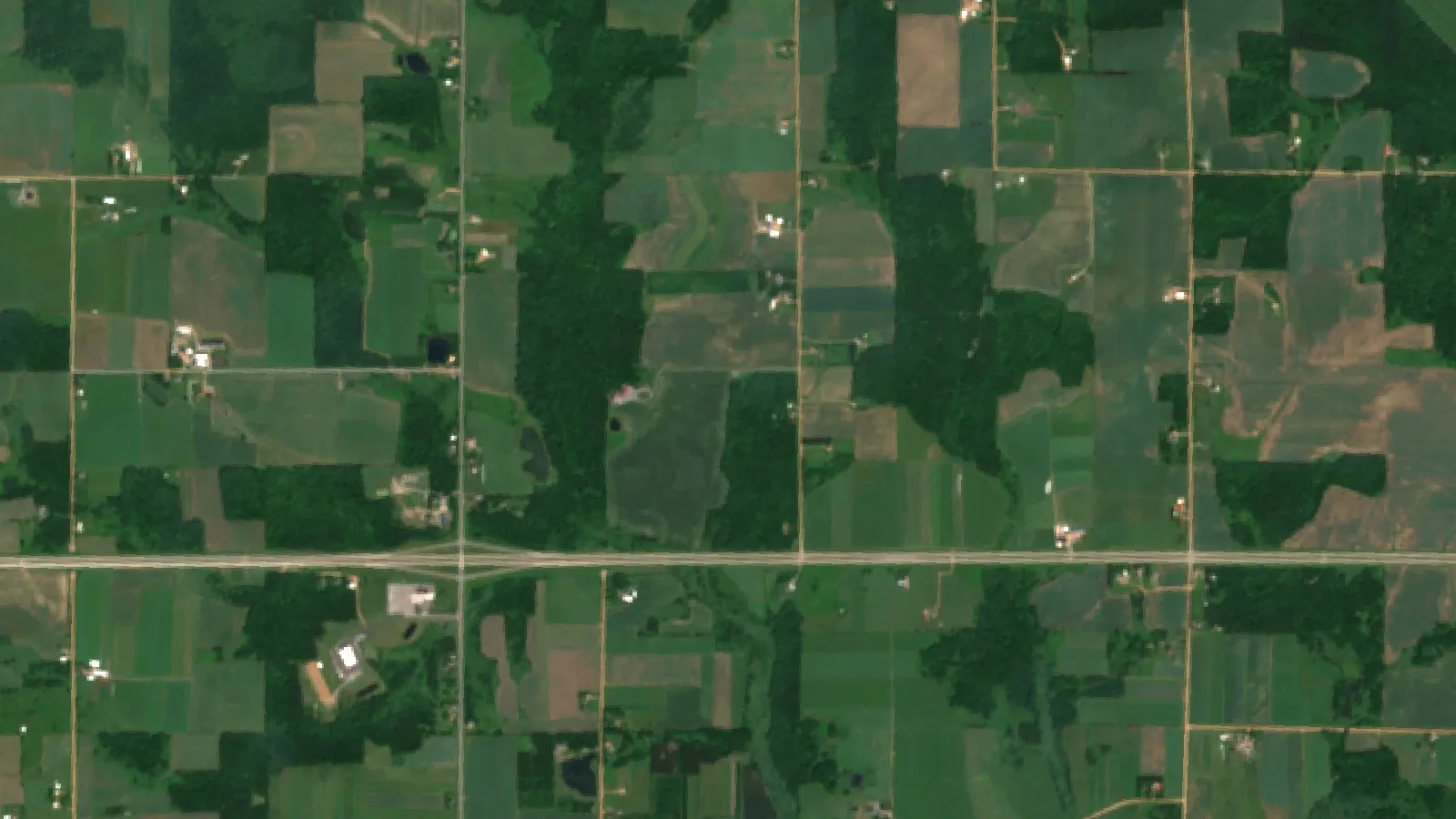
Woods are hard to walk, and problems spread fast. Satellite images can show where tree cover thins, where a harvest went beyond plan, or where a stand is stressed by drought. Public images from the European Sentinel-2 satellites are taken every few days, and cloud cover is the main limit. Radar satellites can see through clouds.
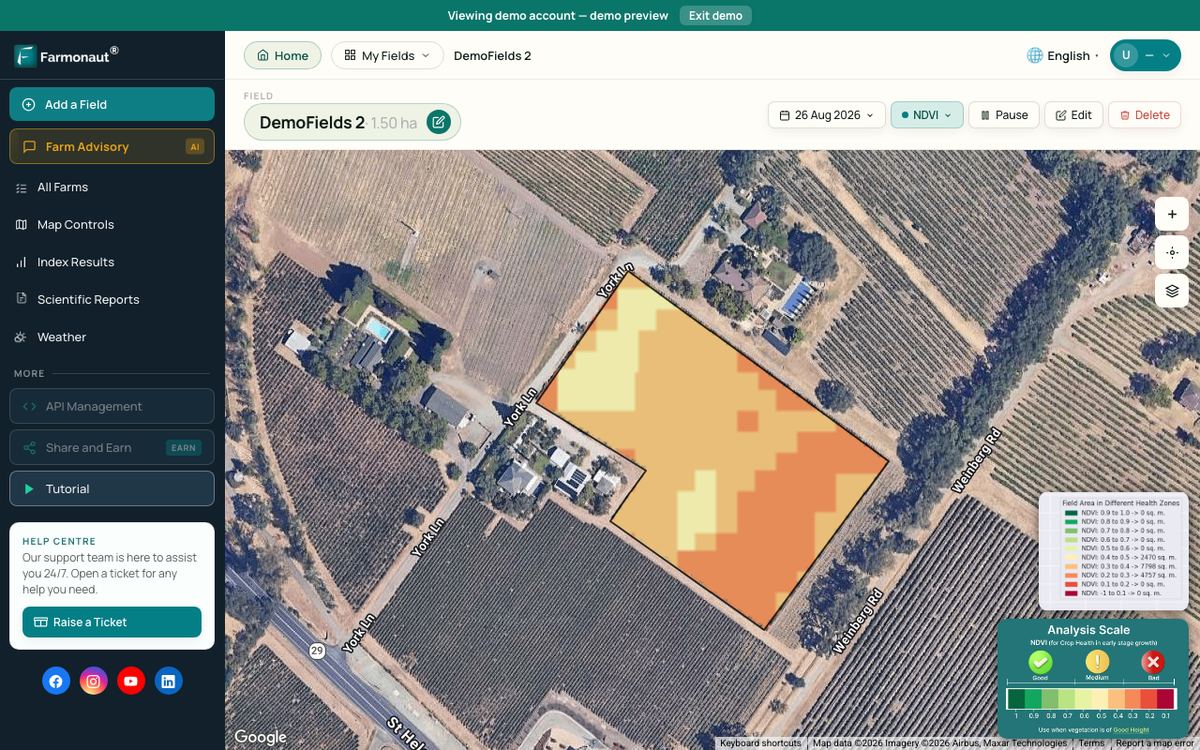
Farmonaut is a US-based company. The Farmonaut Satellite + AI Farm Monitoring System lets you draw your fields and woodlots once and then check vegetation maps for them through the season.
Related pages on our site: fleet management for farm and forestry vehicles, satellite data for crop loans and insurance, satellite and weather API docs, the agro admin app for large estates and the web app.

▶ Why radar satellites can see through clouds when normal cameras cannot. · 2:37
Paying for ecosystem services
Forest owners can sometimes earn money for the services their forest gives, not only for timber. Examples are carbon credits, payments for protecting drinking water sources and grants for planting native trees. Each program has its own rules on how long you must keep the trees, how carbon is measured and who checks it.
Before you sign a contract, read how long it binds the land and what happens if a fire or storm destroys the trees. Ask how the buyer measures carbon and what share of the payment goes to fees. Ask whether you can still harvest, graze or hunt on the land during the contract. This is a legal and financial decision, so get professional advice and check local rules.
Climate resilience: a plan, not a single fix
Forests face hotter summers, longer droughts and new pests. A resilient woodland plan mixes several steps. Grow a mix of native species and ages. Thin dense stands so the remaining trees get more water. Keep fire breaks and access roads in good shape. Record what you see each season so you notice slow changes.
Chart
Drop in primary forest loss, 2024 to 2025
percent reduction in primary forest loss
Monitoring links all of these. A walk-through once or twice a year, backed by satellite images between visits, gives you a record of how the forest is changing. That record also helps when you apply for certification, grants or carbon programs.
Community and economic benefits
Sustainable forestry keeps a steady supply of jobs and income from wood, rather than one large harvest followed by decades of nothing. It keeps paths, hunting grounds, views and clean streams that neighbors value. On farms, trees give shade and shelter that can help livestock and crops.
Healthy forests also protect farms downstream. Tree cover on slopes and along streams slows runoff and holds soil, which can mean less silt in ponds and ditches after heavy rain.
The trade-off is short-term income. Cutting less than you could, leaving stream buffers and waiting for regrowth all cost money now. The benefit comes as steady harvests, better wood prices from certified buyers and lower risk of losing the whole stand.
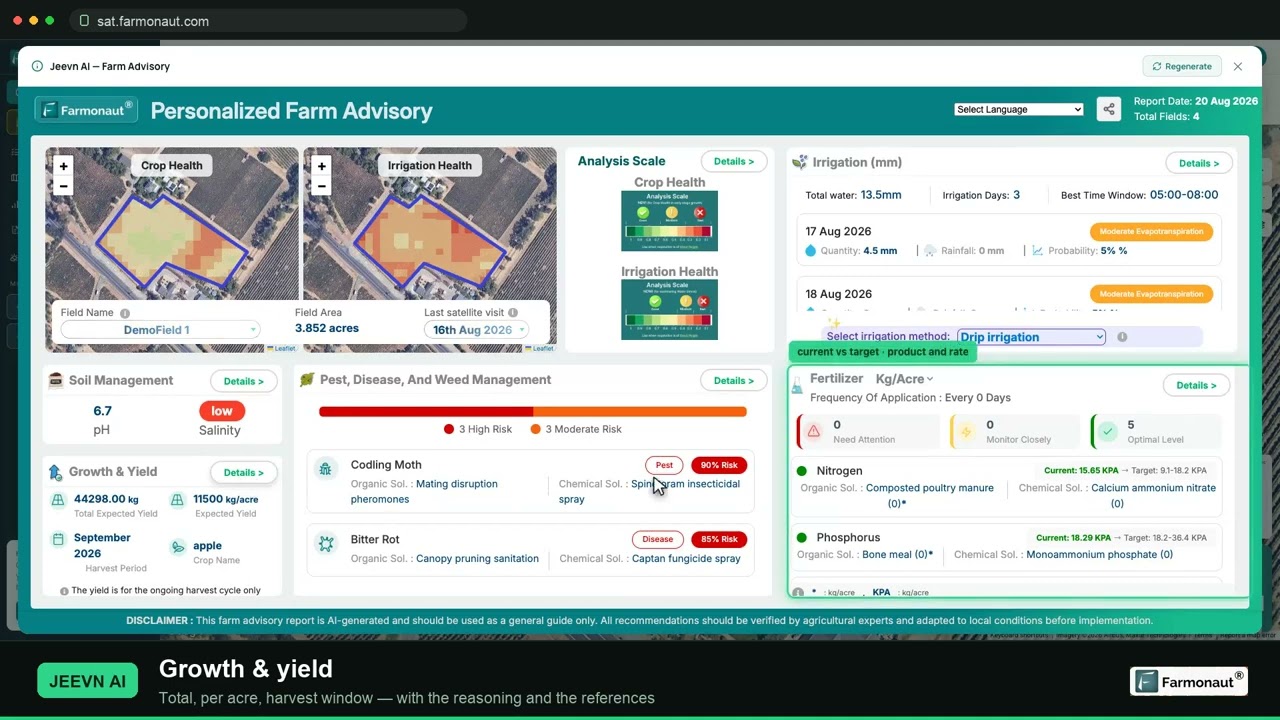
▶ A walkthrough of satellite monitoring: reading NDVI to spot plant stress early. · 19:36
FAQ
How does sustainable forestry protect ecosystems?
It keeps harvest below growth, protects soil and streams, keeps forest blocks large and connected, makes sure trees grow back and keeps a mix of species and ages. Together these keep habitat, water and carbon in place while wood is still produced.
How do sustainable forestry practices support long-term carbon storage?
They keep regrowth equal to or larger than losses over a full rotation, leave the soil carbon store in place and regenerate cut areas quickly. In US forests in 2022, soil held more than half of forest carbon, according to EPA.
What are the best practices to maximize carbon sequestration in a forest?
Regenerate quickly after harvest, avoid deep soil disturbance, extend rotations where it makes sense, control browsing so young trees survive, and keep fire risk low. The right mix depends on your species and region, so ask a local forester.
Does sustainable forestry mean no cutting?
No. It means cutting at a rate the forest can replace and in a way that protects soil, water and habitat. Some areas, such as stream buffers, may be left uncut.
How can a small woodland owner start?
Map your woodland, write a simple management plan with a forester, mark stream buffers, and record what you cut and plant each year. Then check the forest at least once a year on foot and, between visits, with satellite images.
Bottom line
Sustainable forestry protects ecosystems by treating the forest as a long-term asset. Keep harvest below growth, protect soil and water, keep blocks connected, and make sure trees come back. Measure what you do, and you will know whether your woodland is storing carbon or losing it.
Farmonaut farm monitoring
See your fields and woodlots from space
Draw your fields and woodlots once and Farmonaut shows satellite vegetation maps for them through the season, on web, Android or iOS.



Sources
- US EPA, Greenhouse Gas Equivalencies Calculator: Calculations and References (2024): epa.gov
- US EPA, Inventory of U.S. Greenhouse Gas Emissions and Sinks: epa.gov
- US EPA, Nonpoint Source: Forestry: epa.gov
- FAO, Global Forest Resources Assessment 2025: Forest extent and change: openknowledge.fao.org
- WRI Global Forest Review, Tropical rainforest loss slowed in 2025 (2026): gfr.wri.org
- Chaplin-Kramer et al., Spatial patterns of agricultural expansion determine impacts on biodiversity and carbon storage, PNAS (2015): pmc.ncbi.nlm.nih.gov
- Zomer et al., Global tree cover and biomass carbon on agricultural land, Scientific Reports (2016): pmc.ncbi.nlm.nih.gov
- Walters, Protecting red oak seedlings with tree shelters in northwestern Pennsylvania, USDA Forest Service Research Paper NE-679: research.fs.usda.gov
- NSW Government, Managing native vegetation under the Land Management Code: nsw.gov.au
- PEFC, Facts and figures: pefc.org
Discussion
Questions, corrections or field experience? Share them below. First-time comments are reviewed before they appear, and your email is never published.
No comments yet. Be the first to add a question or your experience.

 IRE Soil
 Blickwinkel
 Agricultural Credit Policy Council
 BayWa
BayWa MCSOD
MCSOD Marei Nursery
 eKGIS
eKGIS Mostas Tech
 Native Seeds
 Andex
Andex FCF India
 Unifrutti Gulf
 Deluxe Conseil
 TVS Electronics
 WICO
WICO Chimera Innovation
 Licence holder · Niger · Gold
 Licence holder · Nigeria · Gold + lithium










