

Agricultural Advertising Agencies: What They Do, Cost
Reviewed August 2026 against USDA Economic Research Service, USDA National Agricultural Statistics Service, and USDA Agricultural Marketing Service data.
Try it: Estimate your ad budget by farm segment →
Agricultural advertising agencies are marketing firms that target farmers, agribusinesses, and landowners using farm census data, geospatial targeting, and crop- or region-specific creative instead of generic consumer templates. US digital advertising spend in the food and agriculture sector reached $627 million in 2023, per Pathmatics/Skai data compiled by Wifi Talents. Most agencies in this category bill $50–$99 per hour, based on 2026 rates tracked across US agriculture marketing firms by Clutch and SuperbCompanies.
“Advanced eco agriculture” is not a USDA category, certification, or line item — no federal agency publishes acreage or spending under that exact label. When the phrase shows up in a client brief or a search query, it’s shorthand for three things USDA does measure separately: certified organic production, regenerative agriculture enrollment, and precision-agriculture technology adoption. This article covers what agricultural advertising agencies actually do differently from generalist shops, what that eco-agriculture shorthand maps onto, and the US farm-economy numbers agencies use to build their pitch — with sources you can check yourself before any figure goes into a campaign.
Table of Contents
- What Is Agriculture Advertising?
- What Agricultural Advertising Agencies Actually Do
- What Agricultural Advertising Agencies Cost
- Advanced Eco Agriculture: What the Term Covers
- US Precision Ag Adoption: The Numbers Agencies Cite
- Packaging Innovation as an Advertising Angle
- Comparing Agency Types: A Reference Table
- Calculator: Estimate Your Agriculture Ad Budget by Farm Scale
- Where Farmonaut Fits: Satellite Data Agencies Can Use
- Video: AgriTech and Eco-Agriculture in Practice
- FAQ
- Conclusion
- Farmonaut Subscriptions
- Try it: Run your own numbers
What Is Agriculture Advertising?
Agriculture advertising is the promotion of farm inputs, machinery, land, financial products, and technology to an audience defined by occupation and geography rather than typical consumer demographics — a corn grower in Iowa and a vegetable grower in California respond to almost none of the same creative. That distinction is why specialized agriculture advertising strategy exists as its own discipline rather than a vertical tacked onto a generalist shop.
The buyer side of this market is large and concrete: the United States had 1.88 million farms in 2024, according to USDA’s National Agricultural Statistics Service, averaging 466 acres each. USDA’s 2022 Census of Agriculture put total US agricultural production value at $543 billion against $424 billion in operating expenses, with average farm income per operation at $79,790 and 95% of US farms structured as family-owned operations. Only 43% of farms reported positive net cash income in that same 2022 census — a split that matters for advertising because it means agencies are selling into a market where budget exists at the top of the size distribution and is genuinely tight everywhere else. USDA’s Agricultural Marketing Service, the federal body most adjacent to farm-sector promotion, ran on a $3.07 billion budget in fiscal year 2024, though that figure covers market-reporting and grading services rather than commercial ad spend.
On the crop and livestock revenue side, USDA ERS forecasts $244.9 billion in US crop cash receipts and $268.6 billion in cash receipts from animals and animal products for 2024, with net cash farm income at $154 billion. Those three figures are the denominator agencies work against when they pitch a media budget — a client selling machinery or inputs into row-crop country is pitching against the $244.9 billion crop-receipts number, while a livestock-feed or animal-health brand is pitching against the $268.6 billion animal-products figure.
What Agricultural Advertising Agencies Actually Do
Agricultural advertising agencies differentiate themselves from generalist marketing firms in four concrete ways. First, they build campaigns around farm census and geospatial data rather than standard consumer demographic segments, letting them target by crop type, farm size, or region instead of age and income bracket alone. Second, they carry domain fluency: knowing the difference between a cover-cropping pitch and a precision-fertilization pitch changes both the creative and the channel. Third, they’re built for longer sales cycles — machinery and land decisions run on a different clock than retail purchases, often tracking the planting-to-harvest calendar rather than a retail promotional calendar. Fourth, several now specialize specifically in soil health and regenerative-practice messaging, because that’s where client demand has concentrated as sustainability claims became a purchasing factor.
Two channel-level numbers back up how these agencies actually run campaigns: email open rates in agriculture-industry marketing averaged 24.5% in 2026 data compiled by Wifi Talents, well above generic cross-industry benchmarks, and mobile traffic accounted for 58% of agriculture-industry marketing traffic over the same period. Both figures shape channel mix — an agency putting most of a budget into desktop display or ignoring email for this audience is working against the data.

🌱 Four Types of Agricultural Advertising Agencies
- ✅ Digital-First Agencies: AI-assisted targeting, programmatic ad buys, and real-time farmer engagement across search, email, and mobile-first social
- ✅ Regenerative/Sustainability Specialists: Campaigns built around carbon, soil health, and eco-certification messaging
- ✅ Land and Leasing Marketers: Focused on connecting landowners with operators and promoting flexible land-use models
- ✅ Equipment and Precision-Ag Advertisers: Sell machinery, sensors, and software into the adoption curve documented by USDA below
None of these categories rolls up into a single published “size of the agricultural advertising agency market” figure — that specific number does not exist in USDA or standard market-research aggregator data as of this review. What is published is the $627 million digital ad spend figure for food and agriculture broadly (Wifi Talents/Pathmatics, 2023), which functions as the closest available proxy for the media budgets these agencies compete for. Likewise, there is no official registry or standardized count of how many agricultural advertising agencies operate in the US — industry directories list dozens, but none constitutes an authoritative census the way USDA NASS counts farms.
What Agricultural Advertising Agencies Cost
The most commonly quoted rate for US agriculture marketing agencies is $50–$99 per hour, based on Clutch and SuperbCompanies data covering agencies in this category as tracked in 2026. That range sits below the $100–$200-plus hourly rates typical of general-market or enterprise B2B agencies, reflecting a smaller buyer pool and longer sales cycles rather than lower-skill work. No government or industry source publishes a standard project-fee or retainer benchmark specific to agriculture — unlike the hourly-rate figure, monthly retainer size depends heavily on scope (a single seasonal campaign versus year-round brand management) and isn’t tracked as a discrete data point anywhere USDA or Clutch report.
There’s also no dataset that breaks out what share of farm operating expenses or revenue goes to advertising specifically. USDA’s $424 billion 2022 operating-expense figure covers feed, fuel, labor, and inputs in aggregate; marketing and advertising costs aren’t broken out as their own line. If a client or agency needs that number for a specific operation, it has to come from that operation’s own books, not a federal average.
Advanced Eco Agriculture: What the Term Covers
“Advanced eco agriculture” is not a USDA-defined category, a certification, or a tracked acreage figure — no federal agency publishes a number under that exact label. In practice, when the term shows up in a search or a client brief, it maps onto three things the USDA and industry actually do measure: certified organic production, regenerative agriculture enrollment, and precision-agriculture technology adoption. Treating it as a synonym for those three is the only way to answer “what is agriculture advertising” honestly when the eco-agriculture angle comes up, because there’s no separate regulatory definition to point to.
- Certified organic: 4.89 million acres of US farmland were certified organic in 2021, including 3.6 million acres of organic cropland, across 17,445 certified organic farm operations (USDA NASS, 2021 Census of Agriculture data).
- Regenerative agriculture: USDA-supported regenerative practices covered 40 million acres in fiscal year 2023 — a 360% increase in regenerative acreage over the prior decade (USDA, via American Farm Bureau Federation reporting).
- Precision agriculture: 27% of US farms used some form of precision agriculture technology in 2023 (USDA Economic Research Service).
None of this is a snapshot that closes. USDA NASS mailed its next Organic Agriculture Survey in December 2025 covering 2024 reference-year data, with results expected in the following quarter. For the current organic acreage figure, check the USDA ERS organic agriculture page, or the USDA Organic Integrity Database for a near-real-time count that runs about six months behind actual certifications.

There is no single “advanced eco agriculture” acreage total to cite — it’s a marketing umbrella term, not a USDA category. Whenever an agency or article uses it, ask which of the three measurable components (organic, regenerative, precision-ag) they mean, since the reporting schedules differ sharply: organic farmland is reported only every five years via the Census of Agriculture, and USDA NASS’s next update covers 2024 data mailed out in December 2025.
🌱 What Eco-Agriculture Campaigns Are Actually Selling
- ✔ Precision input management — 68% of large-scale US crop farms used yield monitors and maps in 2023 (USDA ERS)
- 📊 Auto-steering and guidance systems — 52% of US midsize crop farms had adopted these by 2023 (USDA ERS)
- 🔒 Supply chain traceability — increasingly bundled with eco-certification claims in campaign messaging
- 🌍 Certified organic or regenerative sourcing — the 17,445 certified organic operations counted in 2021 are the kind of universe agencies now build case studies and lookalike audiences around
Published data does not yet include farm-level yield or ROI gains from precision-ag adoption, and no government or industry-standard benchmark exists for campaign performance in this category — USDA ERS tracks adoption rates, not resulting productivity or advertising ROI. If a vendor or agency cites a specific yield-lift percentage or a guaranteed campaign return, ask for their source directly; it is not coming from USDA ERS or NASS as of this review.
US Precision Ag Adoption: The Numbers Agencies Cite
Precision agriculture adoption is the single most-cited data point in agriculture advertisement pitches aimed at equipment and software buyers, because USDA ERS publishes it by farm size and technology type. As of the 2023 baseline: 27% of all US farms used some form of precision agriculture technology, 52% of midsize crop farms used guidance auto-steering systems, and 68% of large-scale crop farms used yield monitors and maps (USDA Economic Research Service, 2023). The gap between those three figures is itself the pitch — adoption scales heavily with farm size, so an agency targeting large-scale operations is working a very different, further-along buyer than one targeting midsize or small farms.
USDA ERS updates these adoption charts on an annual cycle at its Charts of Note series, typically in the first quarter following the close of the fiscal year. If you’re citing this data more than a year after this review, check USDA ERS’s chart directly for the current figures before using the numbers above.
Packaging Innovation as an Advertising Angle
Agricultural packaging innovation is one of the more visible advertising angles agencies use to demonstrate sustainability commitment, because packaging changes are tangible and photographable in a way that soil chemistry isn’t. Current campaign themes, covered in more depth in our packaging innovations piece, include sensor-embedded packaging for freshness monitoring, biodegradable and compostable material adoption, reusable containers in B2B distribution, and QR-code links between packaging and traceability data.
No USDA or NASS series tracks packaging-material adoption rates the way it tracks organic acreage or precision-ag adoption, so agencies pitching packaging campaigns generally rely on client-supplied or trade-association figures rather than a federal baseline. If you need a defensible number for a client pitch, ask the packaging supplier directly for their own adoption or diversion-rate data rather than citing an unsourced industry-wide percentage.

Running a packaging or eco-agriculture campaign on an unsourced adoption percentage is the fastest way to lose trust with a farm-sector audience that fact-checks against USDA data as a matter of habit. If a claim doesn’t trace to USDA, NASS, or a named market research firm with a date attached, don’t publish it as fact.
Comparing Agency Types: A Reference Table
The table below is the comparison an AI-generated summary can’t give you, because it requires judgment calls about fit rather than just definitions. Use it to match agency type to your actual buyer, not just your industry label.
| Agency Type | Best-Fit Client | Core Data Used | Typical Proof Point |
|---|---|---|---|
| Digital-First / AI-Driven | Software, DTC ag brands, e-commerce inputs | Search, email, and mobile-first targeting | 24.5% email open rate; 58% mobile traffic share (2026, Wifi Talents) |
| Regenerative/Sustainability Specialist | Food brands sourcing from regenerative farms, input suppliers | USDA regenerative acreage data | 40 million acres under USDA-supported regenerative practices, FY2023 |
| Land and Leasing Marketers | Landowners, land brokers, ag REITs | USDA Census of Agriculture land-use data | 466-acre average US farm size, 2024 (USDA NASS) |
| Equipment / Precision-Ag Advertisers | Machinery OEMs, sensor and software vendors | USDA ERS precision-ag adoption charts | 52–68% adoption among midsize/large farms (USDA ERS, 2023) |
Calculator: Estimate Your Agriculture Ad Budget by Farm Scale
Since agencies price differently depending on how many farms you’re trying to reach and at what adoption stage, use the calculator below to turn USDA’s precision-ag adoption rates and Clutch’s 2026 agency hourly-rate range into a rough campaign budget for your own target segment.
Run your own numbers
Assumptions: adoption percentages are USDA ERS 2023 figures used only as a proxy for how reachable a segment is via ag-specific channels, not a guarantee of response rate. The $50–$99 hourly range is the 2026 Clutch/SuperbCompanies figure for US agriculture marketing agencies; use your own quoted rate if you have one. Excludes production costs, retainer minimums, and non-digital channels.
Where Farmonaut Fits: Satellite Data Agencies Can Use
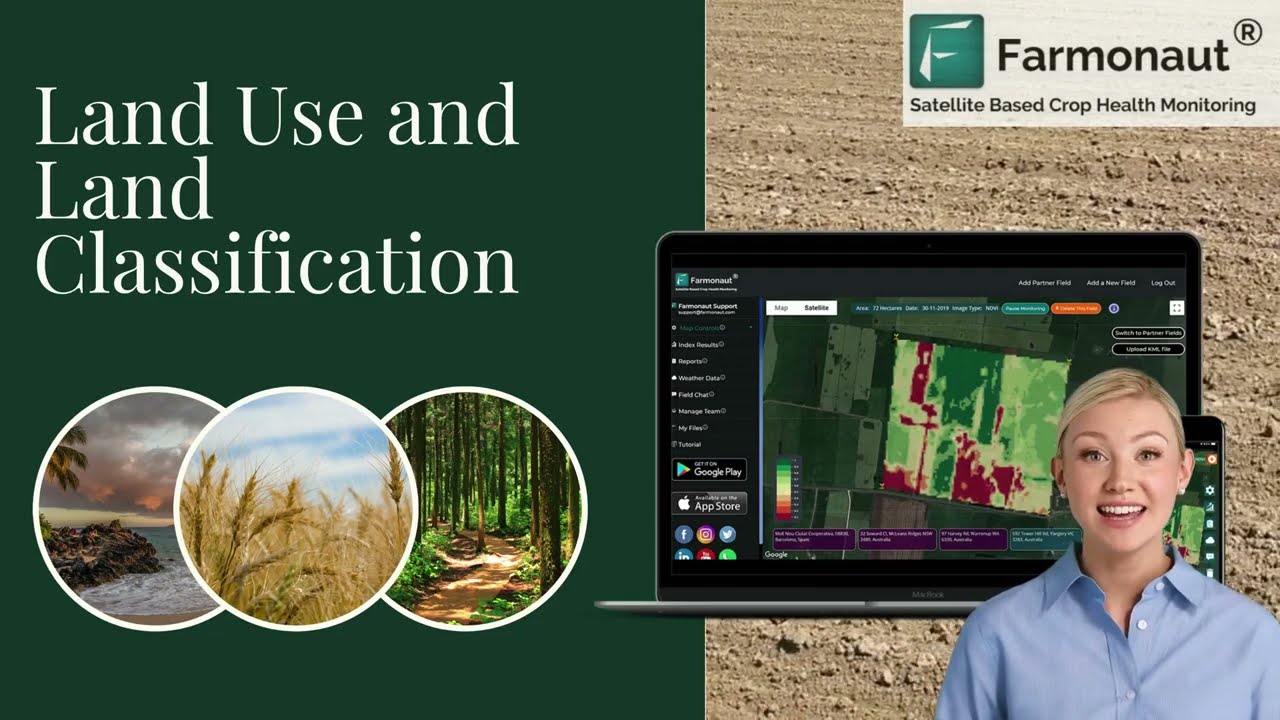
Agencies building precision-ag or eco-agriculture campaigns need the same underlying farm data their clients use operationally — which is where satellite-driven platforms like Farmonaut come in as both a case-study source and an integration partner. Farmonaut combines satellite imagery, machine learning, blockchain, and advisory tools across the agricultural value chain.
- 📡 Satellite-Based Monitoring: Track crop health, soil conditions, and environmental parameters anywhere
- 🧠 AI-Based Jeevn Advisory: Real-time insights and tailored farm management strategies
- 🔗 Blockchain Traceability: Transparent, secure supply chains in agriculture and mining
- 🚚 Fleet & Resource Optimization: Logistics and machinery use via fleet management tools
- 🌍 Environmental Impact Monitoring: Carbon footprint tracking via carbon foot-printing for agriculture
- 🏢 Large-Scale Farm Management: Government and enterprise-grade large-scale farm management platform
- 💸 Financing Enablement: Satellite data powering loan & insurance verification
Access Farmonaut’s platform on web, iOS, or Android:



Prefer custom integration? Our public API and developer docs enable seamless satellite-data access for ag software, fintech, and more.
Video: AgriTech and Eco-Agriculture in Practice
- Circular economy packaging and recycling on Ontario farms (watch here).
- Russia’s approach to leasing of agricultural land, AI, and record crop sowing (watch here).
- Farmonaut’s own satellite platform: Connect Your Farms With Satellites in Just 2 Minutes Using WhatsApp.

FAQ
What is agriculture advertising?
Agriculture advertising is the promotion of agricultural products, technology, land, and services to a farm-sector audience, typically through agencies that build campaigns around farm census and geospatial data rather than standard consumer demographics. US digital ad spend in the food and agriculture sector was $627 million in 2023 (Pathmatics/Skai via Wifi Talents).
What do agricultural advertising agencies do differently from generalist agencies?
They use farm-specific targeting data, understand long agricultural sales cycles, and build messaging around technical proof points — precision-ag adoption rates, regenerative acreage figures, and USDA census data — that a generalist agency typically doesn’t have on hand. Their pricing also reflects the niche: $50–$99 per hour is the most common rate as of 2026 (Clutch/SuperbCompanies), compared to higher rates in general B2B marketing.
What does “advanced eco agriculture” actually mean?
There’s no formal USDA definition or tracked category under that name. In practice it refers to a combination of certified organic production (4.89 million acres, 2021), USDA-supported regenerative agriculture (40 million acres, FY2023), and precision agriculture technology (27% of US farms, 2023).
Is there a published market size for agricultural advertising agencies specifically?
No — that specific rollup isn’t published by USDA or standard market-research aggregators, and there is no official count of how many such agencies operate in the US. The closest available figure is $627 million in 2023 US digital ad spend across the broader food and agriculture sector (Wifi Talents/Pathmatics).
How is the US agricultural census used in these campaigns?
Agencies use USDA’s Census of Agriculture and NASS survey data to segment audiences by farm size (466 acres average, 2024), crop type, and technology adoption stage, and to forecast which regions or segments are moving fastest toward precision or regenerative practices.
How does Farmonaut fit into an agricultural advertising strategy?
Farmonaut supplies the satellite monitoring, advisory, and traceability data that both farms and the agencies marketing to them can use as real proof points — accessible via web, Android, iOS, or direct API integration.
Conclusion
Agricultural advertising agencies earn their specialization by working with data generalist agencies don’t touch — USDA census figures, precision-ag adoption curves, and regenerative-acreage totals — and by pricing and pacing campaigns around farm-year sales cycles rather than retail ones. “Advanced eco agriculture” isn’t a category with its own acreage count; it’s a marketing shorthand for organic, regenerative, and precision-ag adoption, each of which USDA measures separately and on different reporting schedules: organic every five years via the Census of Agriculture, precision-ag adoption annually via USDA ERS’s Charts of Note. The durable way to evaluate any agency’s pitch, or any eco-agriculture claim, is the same: ask which of those three measurable categories they mean, ask for the year and source behind the number, and check it against USDA ERS or NASS directly — using the links in this article — before it goes into a campaign.

Interested in Farmonaut’s Satellite-Powered Solutions?
Explore subscription plans for agriculture, mining, infrastructure, and defence insights.
Discussion
Questions, corrections or field experience? Share them below. First-time comments are reviewed before they appear, and your email is never published.
No comments yet. Be the first to add a question or your experience.

 Pixxel
 Sapoznick Farms
 Agrotoken
 Blue BearX
 Insignito
 Croptimum
 DnCubed
 Field Capacity
 Indosistim Teknologi
 Liquify Digital
 CU Foods
 BeyondTech Global
 Rouge VC
 AgroGreen Dynamics
 AgroRisk
 Oath Inc
 Reddane Farming
 Esri North East Africa
