

Farm finance · Overview
Agriculture Loans for Farmers: Types, Rates and Limits
US farmers borrow from the FSA, the Farm Credit System and banks. On 15 October 2026 FSA direct operating loans were 5.375%, while bank survey averages ran about 6.8% to 7.9% in mid-2026.
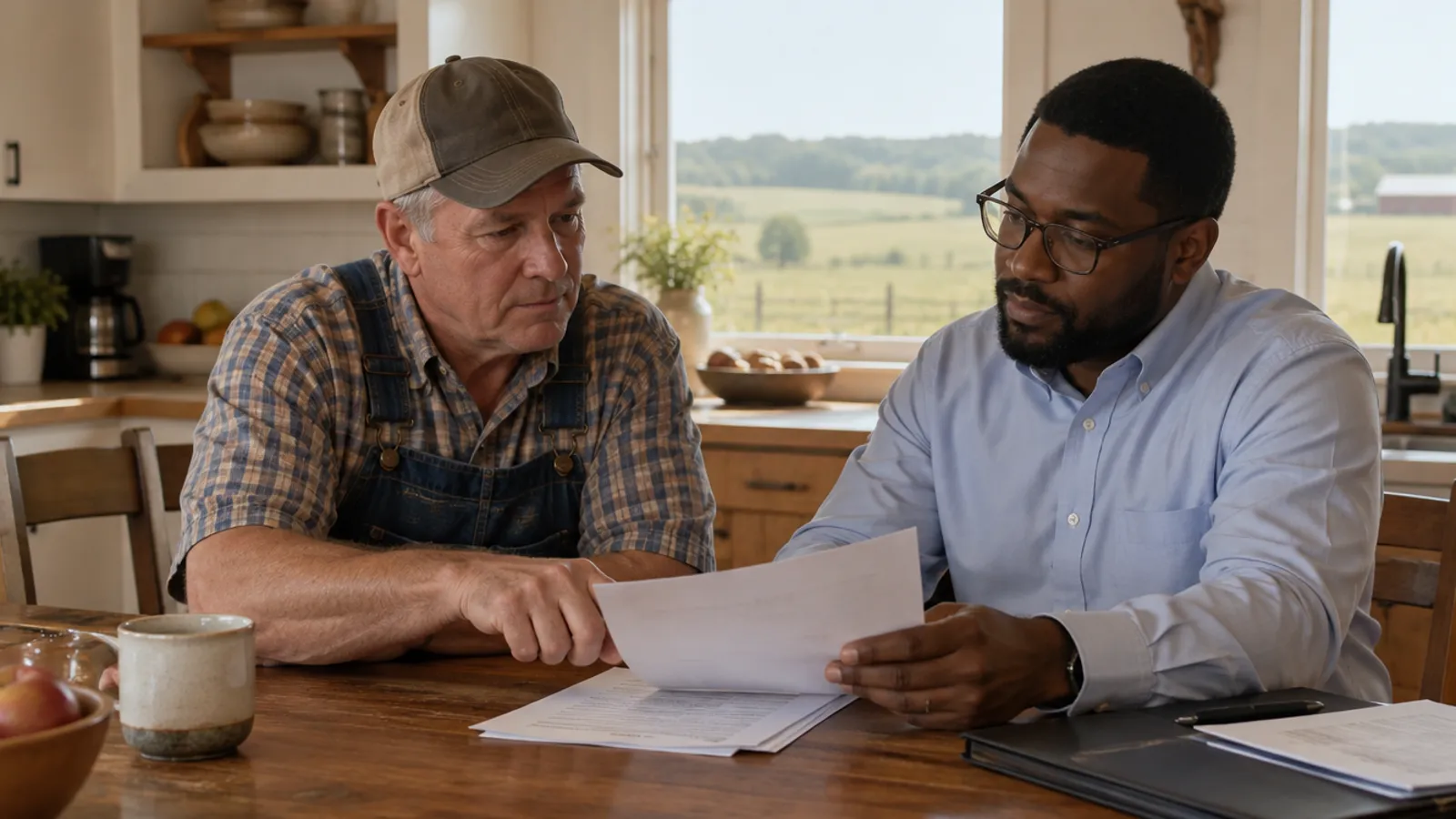
Key takeaways
- The Farm Credit System (45%) and commercial banks (35%) held 80% of US farm debt in 2021 (USDA ERS).
- FSA direct loans reach $400,000 for operating and $600,000 for farm ownership; guaranteed loans reach $2,558,000.
- FSA listed 5.375% for direct operating and 6.25% for direct ownership loans on 15 October 2026.
- Match the loan term to the asset: one year for inputs, three to seven for machines, up to 40 for land.
- Compare total cost, including fees, and get professional advice before you sign.
In this article
Agriculture loans for farmers in the US come from three main places: the USDA Farm Service Agency (FSA), the Farm Credit System and commercial banks. On 15 October 2026 the FSA listed 5.375% for direct operating loans and 6.25% for direct farm ownership loans, while bankers in Federal Reserve surveys reported averages of roughly 6.8% to 7.9% in the second quarter of 2026.
This page is a short overview. It explains each loan type, who it suits, the limits and terms, and how to compare offers. A table and a calculator help you check what a seasonal loan really costs. For deeper detail, see our guides to Farm Service Agency loans, farmland loan rates and tractor loans.
Important: this is general information, not financial or legal advice. Loan rules, limits and rates change. Check the current terms with the lender and get professional advice from an agricultural lender, accountant or farm business adviser before you sign.
Who lends to farmers
Two lender groups carry most farm debt. A USDA Economic Research Service study found that the Farm Credit System provided 45 percent of total farm debt in 2021 and commercial banks provided 35 percent. Together that was 80 percent. The rest came from the FSA, life insurance companies, input suppliers, individuals and others.
Each group has a different role:
- Commercial banks lend to farms of all sizes. Community banks in rural areas know local land and crops.
- The Farm Credit System is a national network of borrower-owned lenders that only lends to agriculture and rural borrowers. In 2025 it made 310,821 loans totalling $150.2 billion, according to the Farm Credit Administration.
- The FSA is the lender of last resort. It lends directly to farmers who cannot get enough commercial credit, and it guarantees loans that banks and Farm Credit lenders make.
- Farmer Mac does not lend to farmers directly. It buys and guarantees farm mortgage loans from lenders, which gives them more money to lend.
In Canada, the federal lender Farm Credit Canada plays a similar role to Farm Credit in the US. In other countries, banks and government schemes fill a similar role. Names and limits differ, but the loan types below are much the same.
Chart
Who held US farm debt
Share of total farm sector debt, %, 2021
Types of agriculture loans for farmers
Most farm credit falls into six types. The right one depends on what you are buying and how long it will earn money for the farm. A good rule is to match the loan term to the life of the asset: short loans for seed and fertilizer, medium loans for machinery, long loans for land.
1. Seasonal operating loans and lines of credit
What it is: short-term credit for seed, fertilizer, feed, fuel, crop protection and labour. You draw money as you need it and pay interest only on what you use. You repay after harvest or after you sell livestock.
Terms: usually one year or less for a line of credit. FSA operating loans can run from one to seven years, depending on the purpose. A guaranteed operating line of credit can be advanced for up to five years, with all advances repaid within seven years, says the FSA guaranteed loan page.
Best for: crop and livestock farms with uneven cash flow across the year. This is the closest match to a seasonal agriculture loan with flexible repayment.
2. Equipment and machinery loans
What it is: an intermediate loan to buy a tractor, combine, sprayer, irrigation system or grain dryer. The machine is usually the collateral. Dealers and manufacturer finance arms also offer these loans, sometimes with low promotional rates for a short time.
Terms: often three to seven years. Lenders usually ask for a down payment. Our tractor loan guide covers rates and timing in more detail.
Best for: farms replacing or adding machines that will be used for several seasons.
3. Farm real estate loans
What it is: a long-term mortgage to buy land, build barns or make lasting improvements. Land is the collateral. Real estate is the largest part of farm debt: the ERS study put farm real estate debt at $344.5 billion in 2021, more than two-thirds of the total.
Terms: up to 40 years for FSA farm ownership loans. Banks and Farm Credit lenders offer fixed and variable rates over many years. Rates and land values are covered in our farmland loan rates guide.
Best for: buying land or long-life buildings, where the asset earns money for decades.
4. FSA direct and guaranteed loans
What it is: federal farm credit for family farms. Direct loans come from the FSA itself. Guaranteed loans come from a bank or Farm Credit lender, with the FSA covering up to 90 percent of a loss on most loans, and up to 95 percent in some cases.
Limits: the FSA lists up to $400,000 for a direct operating loan and up to $600,000 for a direct farm ownership loan. Guaranteed operating and ownership loans can go up to $2,558,000, a limit the agency adjusts each fiscal year for inflation. The EZ Guarantee covers smaller requests up to $100,000 with simpler paperwork.
Use: in fiscal year 2025 the FSA obligated $6.74 billion across 27,792 farm loans, up from $5.39 billion across 24,555 loans in fiscal year 2024, according to the American Farm Bureau Federation. Beginning farmers received about 56% of those loans and 52% of the dollars.
Best for: beginning farmers, farmers rebuilding after a bad year, and anyone a bank turns down. You must show you cannot get enough credit elsewhere for a direct loan. Our FSA loans guide explains eligibility step by step.
5. Microloans for small and new farms
What it is: a small FSA loan with simpler paperwork. The FSA offers operating microloans of up to $50,000, and a separate ownership microloan of up to $50,000.
Terms: one to seven years for operating microloans. The interest rate is the same as the direct loan rate for the purpose.
Best for: small, beginning, niche and urban farms, and farms selling direct to buyers, which may not have long records.
6. Emergency and disaster loans
What it is: FSA emergency loans help farmers recover production and physical losses after a declared disaster such as drought, flood or freeze. On 15 October 2026 the FSA listed 3.75% for an emergency loan for the amount of actual loss.
Best for: farms in a declared disaster county that need to replace lost crops, livestock or buildings. Crop insurance is a separate tool that pays on insured losses; many lenders ask for it before they approve an operating loan.
Agriculture loan rates in late
FSA direct loan rates are set by the agency and change from time to time. The current FSA loan interest rates page listed these rates when we checked on 15 October 2026:
- Direct farm operating loan: 5.375%
- Direct farm ownership loan: 6.25%
- Ownership loan with joint financing: 4.25%
- Down payment loan for beginning farmers: 2.25%
- Emergency loan (actual loss): 3.75%
For guaranteed loans, the rate is agreed between you and the lender, within FSA maximums. For rates fixed for less than five years, the maximum is the prior business day’s SOFR plus 6.75%.
Commercial rates come from quarterly surveys of rural banks by the regional Federal Reserve Banks. For the second quarter of 2026, Progressive Dairy’s summary of the surveys reported averages from 6.79% for variable-rate real estate loans in the Chicago district to 7.9% for variable-rate operating loans in the Dallas district. Kansas City variable operating loans averaged 7.39%, and Minneapolis fixed real estate loans averaged 7.07%. Purdue University’s 2026 agricultural credit outlook noted that operating loan rates in the Chicago and St. Louis Fed districts had fallen over the past year but were still at levels unseen since 2007.
These are survey averages, not offers. Your own rate depends on your credit history, collateral, debt level and the lender.
Chart
FSA direct rates vs bank survey averages
Interest rate, %; FSA rates on 15 October 2026, bank averages for Q2 2026 in the district shown
Comparison table of agriculture loan options
The table compares the main options side by side. Limits and rates are from the FSA pages and surveys cited above, checked in October 2026.
| Loan type | Typical use | Term | Limit or rate note | Best for |
|---|---|---|---|---|
| Bank operating line | Inputs, feed, labour | Up to 1 year | Kansas City and Dallas survey averages about 7.4% to 7.9% (Q2 2026) | Established farms with records |
| Farm Credit loan | Operating, machinery, land | Short to long term, varies by loan | Set by each lender | Farms wanting an ag-only lender |
| FSA direct operating | Inputs, livestock, equipment | 1 to 7 years | Up to $400,000; 5.375% | Farmers who cannot get bank credit |
| FSA direct ownership | Land, buildings | Up to 40 years | Up to $600,000; 6.25% | Beginning and family farms |
| FSA guaranteed | Operating or ownership | Up to 7 or 40 years | Up to $2,558,000; rate set by lender | Larger farms near bank limits |
| FSA microloan | Small operating needs | 1 to 7 years | Up to $50,000 | Small and new farms |
| Equipment loan | Tractors, sprayers | 3 to 7 years | Dealer or bank rate | Farms adding machines |
| Emergency loan | Disaster recovery | Varies | 3.75% (actual loss) | Farms in disaster areas |
Chart
Maximum FSA farm loan amounts
US$ thousands per borrower, by loan type, as listed by FSA in October 2026
How to choose an agriculture loan
Use these steps to compare offers fairly.
- Match the term to the asset. Do not pay for land with a one-year line, or for seed with a ten-year loan.
- Compare the full cost, not only the rate. Ask about origination fees, guarantee fees, appraisal costs and prepayment penalties. FSA guaranteed loans can carry a guarantee fee, though the FSA beginning farmer fact sheet notes that lenders in the down payment program do not have to pay one. Ask the lender what fee applies.
- Check fixed versus variable. A variable rate can rise. The Federal Reserve raised its policy rate in September 2026, the first rise since 2023.
- Look at repayment timing. A seasonal loan should fall due when you sell the crop or the calves, not before.
- Ask about collateral. Know what the lender can take if you cannot pay, and whether it wants a lien on crops, machines or land.
- Prepare your records. Lenders want a balance sheet, income statements, a cash flow plan and recent tax returns.
- Get advice. A farm business adviser, extension economist or accountant can check that the payments fit your cash flow.
What the loan costs: a quick check
Interest on a seasonal loan is often small next to the crop, but it can turn a thin margin into a loss. The calculator below estimates the interest and fees on an operating loan and compares them with your expected margin before finance costs.
Try the numbers for your own farm below.
Calculator
Does the margin cover the loan cost?
Enter your own loan, rate and expected margin.
- Interest: $5,250
- Fees: $500
- Finance cost per acre: $12
Example values only, not a benchmark or a quote. Simple interest on the full amount for the months shown; real loans may charge interest only on the amount drawn. Fees are entered as a percent of the loan.
How lenders use farm data
Lenders judge risk from records: yield history, sales, insurance and the condition of the land. Good records help you show that a loan can be repaid. Some lenders and insurers also look at satellite images and weather data to check field conditions over a season.
Farmonaut Satellite + AI Farm Monitoring System gives growers satellite vegetation maps of their fields through the season. These maps show changes in plant cover; they do not by themselves prove yield or replace a lender’s own checks. Farmonaut also runs a crop loan and insurance verification service that lenders and insurers can use to view field data.
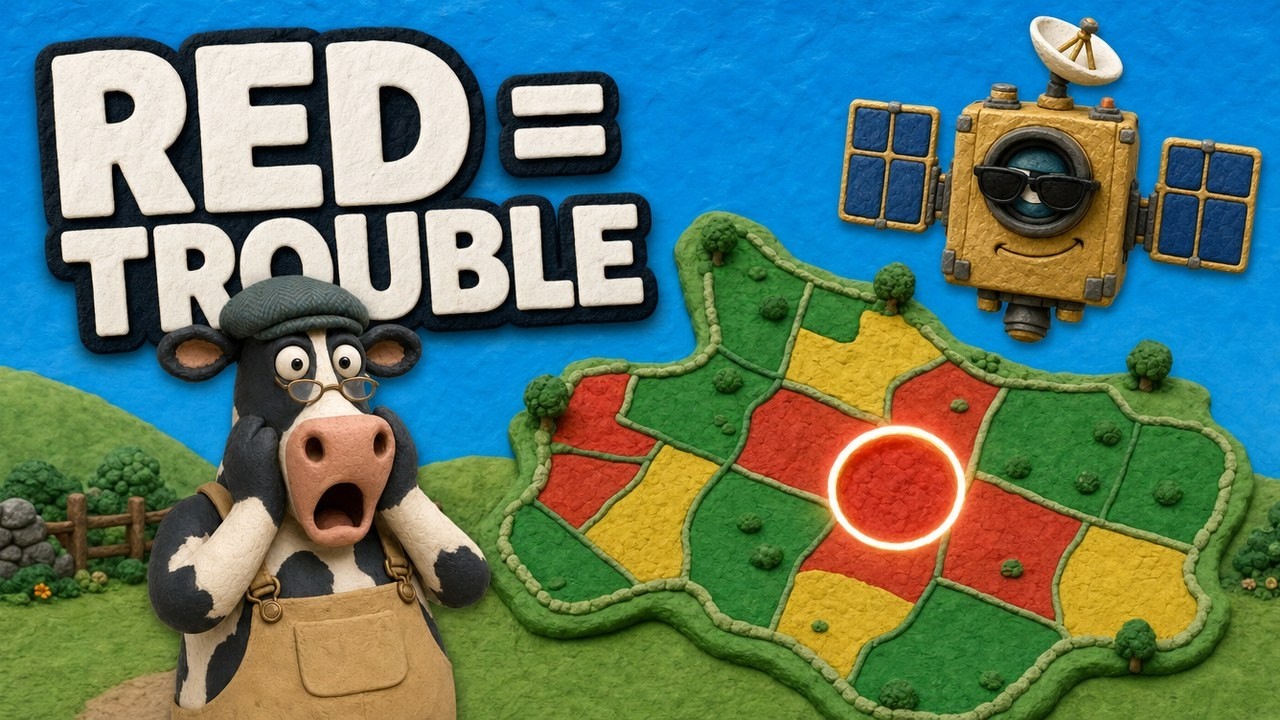
▶ How satellite crop health maps show changes across a large farm during the season. · 4:09
Financing sustainable practices
Some loans pay for conservation work such as irrigation upgrades, soil health practices or tree planting. The FSA can guarantee conservation loans, with the same $2,558,000 guaranteed limit as other guaranteed loans. Tree crops and agroforestry take years to earn money, so look for longer terms or grace periods that match the time to first harvest. If you plan to sell carbon credits, keep in mind that credit prices and programme rules vary; the loan should still be affordable without that income.
Related pages on our site: agro admin app, fleet management, carbon footprinting, product traceability, traceability solutions, satellite and weather API docs, API access and our app.

▶ Six plain steps to start precision farming, from field maps to satellite monitoring. · 4:18
How we checked the numbers
We used the FSA’s own program and rate pages, the American Farm Bureau Federation summary of FSA lending for fiscal year 2025, the USDA ERS report on farm debt, the Farm Credit Administration report for 2025 and the Federal Reserve district surveys as summarised by Progressive Dairy and Purdue University. Rates are the published direct loan rates or survey averages on the dates shown, not quotes from any lender.
FAQ
What is the easiest agriculture loan to get?
For small and new farms, the FSA microloan has the simplest paperwork, with up to $50,000 for operating needs. For established farms with good records, a bank or Farm Credit operating line is often quickest.
Is there a seasonal agriculture loan with flexible repayment?
Yes. An operating line of credit lets you draw money as needed and repay after harvest. Ask the lender to set the due date after your main sale, and check the fees for renewing the line each year.
What is the interest rate on an FSA farm loan?
On 15 October 2026 the FSA listed 5.375% for direct operating loans and 6.25% for direct farm ownership loans. Guaranteed loan rates are set by the lender within FSA maximums. Check the FSA rate page for the current figure.
Can I get a farm equipment loan with low interest?
Dealers sometimes offer low promotional rates for a short time. FSA direct operating loans can also pay for equipment at the direct rate. Compare the full cost, including fees and any lost cash discount on the machine.
Do I need collateral for an agriculture loan?
Usually yes. Operating loans are often secured by crops, livestock or machines; land loans by the land. FSA microloans also need some collateral; check current FSA rules for what is accepted. Ask a lender or adviser what applies to you.
Farmonaut crop monitoring
See your own fields from space
Draw your fields once and Farmonaut shows satellite vegetation maps for them through the season, on web, Android or iOS.




Keep reading
Sources
- USDA FSA, Current FSA Loan Interest Rates (accessed October 2026): fsa.usda.gov
- USDA FSA, Farm Operating Loans: fsa.usda.gov
- USDA FSA, Farm Ownership Loans: fsa.usda.gov
- USDA FSA, Guaranteed Farm Loans: fsa.usda.gov
- USDA FSA, Operating Microloan: fsa.usda.gov
- USDA FSA, Loans for Beginning Farmers and Ranchers fact sheet (2026): fsa.usda.gov
- USDA ERS, EIB-273 farm debt report (2021 data): ers.usda.gov
- American Farm Bureau Federation, Financing the Farm: USDA Farm Loan Programs (2026): fb.org
- Farm Credit Administration, 2025 YBS mission performance report: fca.gov
- Farm Credit Administration, About Farmer Mac: fca.gov
- Progressive Dairy, Interest rates largely unchanged in Q2 reports (September 2026): agproud.com
- Purdue University, 2026 Agricultural Credit Outlook (PAER-2026-11): ag.purdue.edu
- Farm Credit Canada, Corporate Profile: fcc-fac.ca
Discussion
Questions, corrections or field experience? Share them below. First-time comments are reviewed before they appear, and your email is never published.
No comments yet. Be the first to add a question or your experience.

 JJM Farms
 WeMe Global
 Pixxel
 Agrotoken
 Blue BearX
 Insignito
 Croptimum
 DnCubed
 Field Capacity
 Indosistim Teknologi
 Liquify Digital
 CU Foods
 BeyondTech Global
 Rouge VC
 AgroGreen Dynamics
 AgroRisk
 Oath Inc
 Reddane Farming
 Esri North East Africa

 Licence holder · Niger · Gold










