

Reviewed August 2026 against the Agricultural Drone Directory and IMARC Group.
Try it: Run your own numbers →
Market Overview: The Numbers That Matter
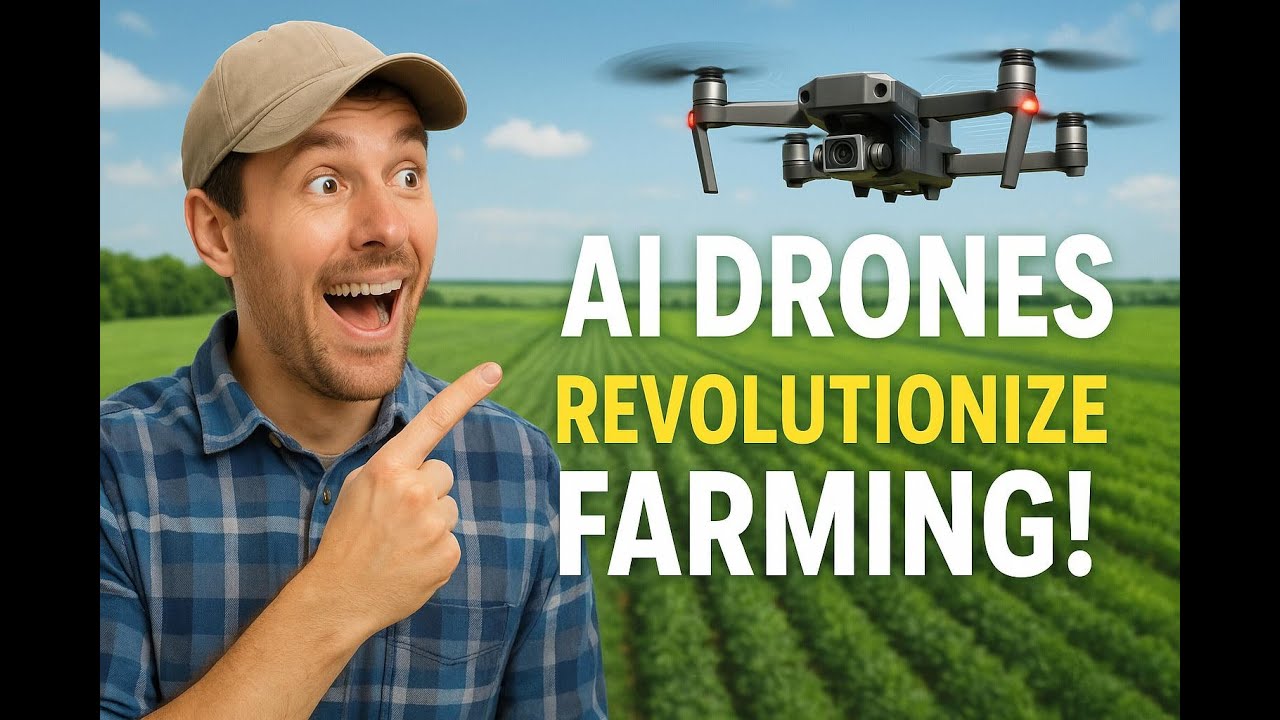
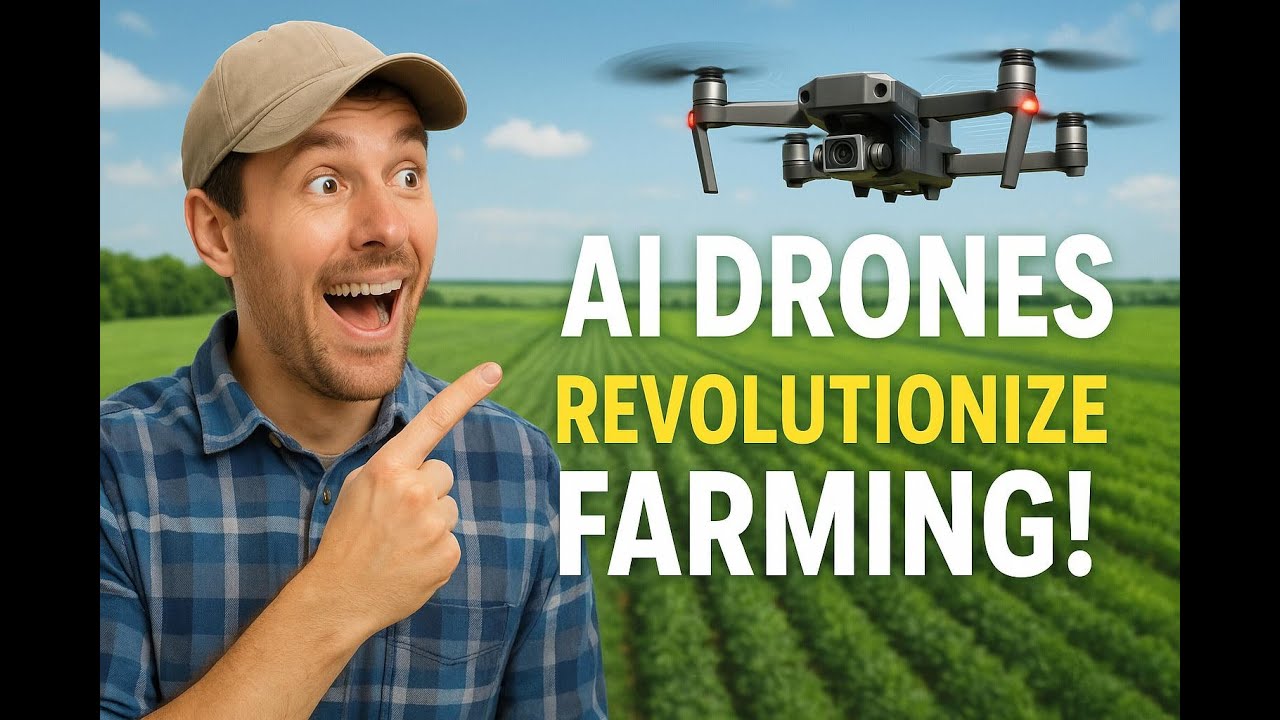
The agriculture robot and drone market already has a hard number behind it in the United States: Agricultural Drone Directory reports 16.4 million acres of US farmland treated by spray drones in 2025, up 58.7% from 2024. That is not a forecast — it is what already happened last season. Robot agriculture as a category is broader than spraying, but spraying is where the US data is most complete, so it is the clearest lens on how fast agriculture robot adoption is actually moving on the ground, not just in vendor projections.
On the robotics side, IMARC Group sizes the North America agricultural robot market at $6.613 billion for 2025, putting the region at 38.9% of the global total. Within that, the autonomous sprayer robot segment — ground-based robots, not aerial drones — is worth $3.12 billion in North America for 2025 per Business News TBRC’s synthesis, with the global autonomous sprayer segment forecast to grow at a 19.7% CAGR from 2025 to 2030. These are three separate, non-interchangeable numbers: total drone-treated acreage, total regional robot market value, and one sub-segment’s value. Keep them separate when you compare this page to any other source, since blending them is the fastest way to misquote the market.
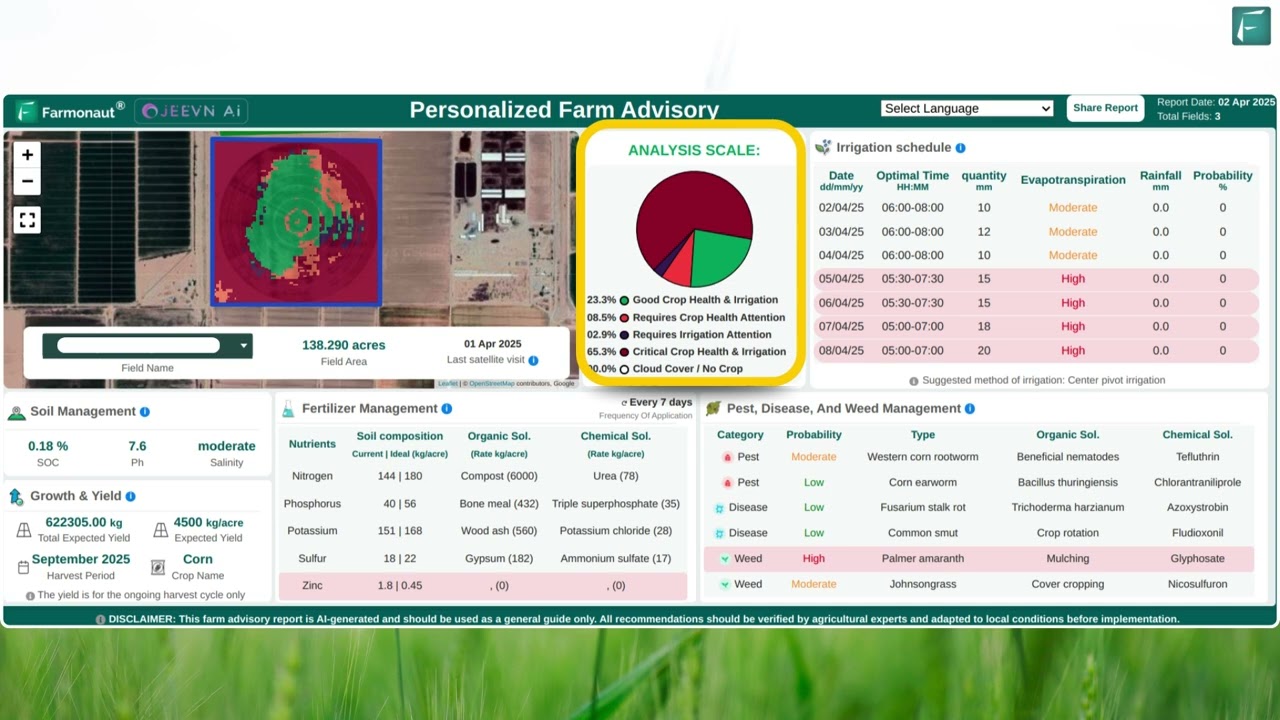
For readers asking “what is Farmonaut” directly: Farmonaut is a satellite crop-monitoring and farm-advisory platform — not a drone or robot manufacturer. It sits downstream of the robot/drone hardware market covered here, supplying the satellite imagery, AI advisory, and traceability layer that many of these autonomous systems plug into. That distinction matters for this page: everything below is independent market data on robots and drones, and the Farmonaut sections describe where our own tools fit into that picture, not a claim that we build the hardware.
Market Dynamics: Drivers & Trends Reshaping Agriculture Robots
The agriculture robot drones market and the broader agricultural robots market are moving on a few converging, measurable forces rather than vague “digital transformation” momentum.
1. Falling Per-Acre Cost Is the Real Adoption Driver
- Cost dropped 38% in one year: Average US drone spraying cost fell from $21 per acre in 2024 to $13 per acre in 2025, per Agricultural Drone Directory. That single change explains more of the 58.7% acreage growth than any marketing narrative about “smart farming.”
- Certified operators nearly tripled the addressable service base: The FAA counted 1,710 Part 137 unmanned aircraft operators certified in the US as of September 2025 — the workforce that makes contract drone spraying available to farmers who don’t want to own a rig outright.
- Labor economics still apply: Robots and drones substitute for scarce field labor on tasks like spraying, scouting, and monitoring, which is why adoption tracks input costs closely rather than novelty.
2. Precision Application: Chemical and Exposure Reduction With Numbers Attached
- Pesticide volume cut 46-75%: Drone application reduces total pesticide volume by 46% to 75% compared with ground spraying, per Agricultural Drone Directory’s 2025 figures — a real range, not a marketing rounding of “less chemical.”
- Operator chemical exposure cut 90-99%: The same source puts operator exposure reduction at 90-99% versus ground equipment, since the applicator is no longer walking or driving through a treated field.
- Real-time field data: Aerial drones and robotic sensors feed field-level data back for spot-treatment decisions instead of blanket application.

3. Technology: AI, Computer Vision & Sensor Stacks
- AI-guided application: AI and computer vision let drones and ground robots identify crop stress, weeds, and pest pressure and adjust spray or seed rates in-flight or in-row.
- Swarm coordination: Multiple UAVs coordinate on large-acreage jobs, which is part of why the 1,710 certified Part 137 operators can now service 16.4 million acres rather than a fraction of that.
- Farm-system integration: Drone and robot output increasingly feeds into farm management software rather than staying siloed in the flight-planning app.
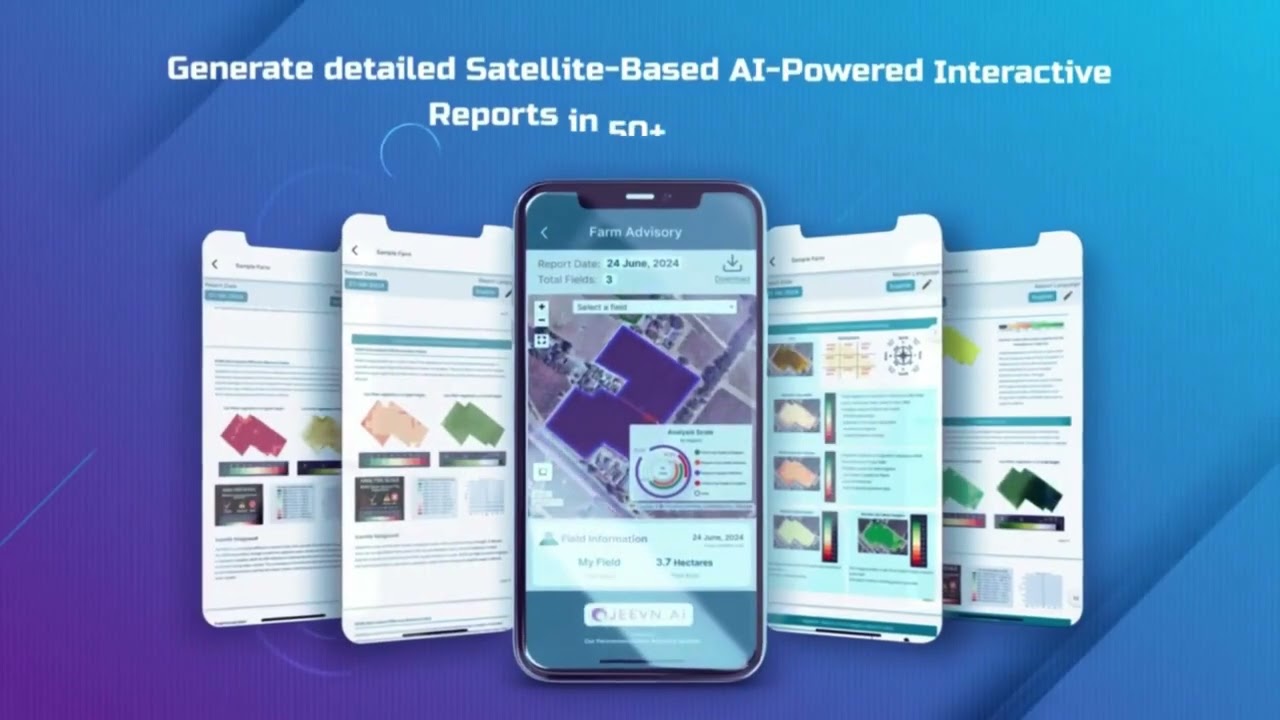
Farmonaut’s Jeevn AI Advisory System sits at that integration point: real-time satellite data analysis paired with AI-driven recommendations across crop health, soil conditions, and field management, designed to complement — not replace — on-the-ground robot and drone data.

4. Regulatory Framework: FAA Part 137 Is the Actual Gate
- Certification is the bottleneck, not technology: Commercial agricultural spraying by drone in the US requires FAA Part 137 certification. The 1,710 operators certified as of September 2025 is the number to track if you want to know how fast the service-provider side of this market is actually scaling, since anyone can buy a drone but not everyone can legally spray for hire.
- State-level rules layer on top: Pesticide application rules vary by state agriculture department in addition to the federal FAA layer, so operators serving multiple states carry multiple compliance obligations.

5. Scale of Adoption: Large Operations Lead, Cost Curve Is Pulling in Smaller Ones
- Large-acreage operations lead: Row-crop operations with thousands of acres were the first to justify drone-spraying contracts and ground-robot capital purchases, since the per-acre savings compound fastest at scale.
- The 2024-to-2025 cost drop changes the calculus for smaller farms: At $13 per acre versus $21 per acre, a 500-acre operation’s total spraying line item fell from roughly $10,500 to roughly $6,500 for a single pass — the kind of swing that moves mid-size farms from “watching” to “budgeting for it.”
For farmers seeking data-powered recommendations and crop health insights, Crop Plantation and Forest Advisory by Farmonaut makes satellite-driven crop, soil, and forest monitoring accessible on any device.



Technology & Innovation: What’s Actually Deployed on US Farms
“Robot in agriculture” covers two distinct hardware categories that get lumped together in market reports but behave very differently in the field:
- Unmanned Aerial Vehicles (UAVs): Spray drones and imaging drones carrying multispectral cameras and spray tanks. These are the machines behind the 16.4-million-acre 2025 figure — they don’t touch soil, so they work across wet fields and irregular terrain that ground equipment can’t.
- Ground-based robots: Autonomous sprayers, seeders, weeders, and harvesters that drive the field rather than fly over it. This is the segment IMARC Group and Business News TBRC size separately — the $3.12 billion North America autonomous sprayer robot figure for 2025 sits inside this category, not the drone acreage figure above.
- AI and computer vision: Shared across both categories — the same detection models that flag weed pressure for a ground sprayer can flag it for a drone’s variable-rate spray map.
- Autonomous navigation: GPS, LiDAR, and RTK positioning guide both UAVs and ground robots through field boundaries and obstacles without a human pilot or driver.
- Cloud and IoT integration: Field machinery increasingly reports back to farm management software in near real time rather than requiring manual data downloads after each pass.
- Blockchain-enabled traceability: Farmers and buyers track product history through tamper-proof traceability platforms by Farmonaut, linking robot-driven field operations to verifiable records.
Key Applications of Agricultural Robots & Drones
Deployed at scale, aerial drone fleets and ground robots are delivering measurable value across distinct use cases rather than a single generic “automation” benefit.
1. Crop Monitoring & Health Assessment
- Multispectral and hyperspectral imaging: Drone-mounted sensors capture field imagery for detecting crop stress, disease, pests, and water deficiencies before visible symptoms appear.
- Satellite-plus-drone analysis: Farmonaut’s platform integrates with satellite datasets and AI to flag field anomalies, complementing drone imagery with a wider-area view.
- Early intervention: Catching stress signals early lets a farmer target a specific block rather than treating an entire field, which is the same principle behind the 46-75% pesticide-volume reduction figure above.

2. Automatic Spraying Robots & Precision Fertilization
This is the application with the most complete US data. An automatic spraying robot or drone, guided by a field map, applies pesticide or fertilizer only where sensors indicate it’s needed rather than blanketing the whole field.
- Direct cost comparison: $13 per acre for drone application in 2025 versus $21 per acre in 2024 — a farmer budgeting for the coming season should use the current figure, not the prior year’s, and should check the Agricultural Drone Directory’s annually updated guide since these figures move with fuel, labor, and equipment-financing costs.
- Volume and exposure reductions: 46-75% less pesticide volume applied, and 90-99% less chemical exposure for the operator, compared with ground spraying — both from Agricultural Drone Directory’s 2025 data.
- Scale without added labor: A single certified Part 137 operator can service acreage that would otherwise require a much larger ground crew, which is part of why 1,710 operators can collectively cover 16.4 million acres.
3. Soil & Field Analysis
- Sampling and mapping: Ground robots collect soil samples across fields while UAVs map soil texture, moisture, and canopy vigor from above.
- Planning inputs: This data feeds planting schedules, hybrid or variety selection, and rotation decisions for the coming season.
- Satellite overlay: Farmonaut’s multispectral imagery adds a field-history layer — useful for spotting trends a single drone flight won’t show.
Track and reduce your farm’s carbon footprint using Farmonaut’s Carbon Footprinting tool, which pairs with input-reduction data from drone and robot spraying records.
4. Autonomous Planting & Harvesting
- Robotic seeders: Plant at consistent spacing and depth across a field, removing the variability of manual planting passes.
- Autonomous harvesters: Handle fruit, vegetable, and grain harvest with programmed gentleness settings to reduce bruising and grain loss.
- Continuous operation: Machines run through the harvest window independent of labor-shift limits, which matters most in the narrow harvest windows common to US row-crop regions.
5. Fleet and Resource Management
- Connected machinery: Drone and robot fleets increasingly report into farm management dashboards for route planning and utilization tracking.
- Farmonaut’s digital Fleet Management tool tracks vehicles, assets, and machine health to cut downtime and operating cost.
- Remote oversight: Mobile and web dashboards let a farm manager monitor field operations without being on-site for every pass.

6. Blockchain Traceability & Food Security
- Verifiable records: Farmonaut’s Traceability platform links robot- and drone-driven field operations to tamper-proof records, supporting buyer and consumer trust in product origin.
- Compliance and market access: Verifiable application records can support export documentation and premium-market contract requirements.

Drone Spraying Savings Calculator
Use your own acreage and current per-acre quotes to see how the 2024-to-2025 cost shift — $21 to $13 per acre nationally — plays out on your fields, and what a chemical-volume reduction within the reported 46-75% range would save separately.
Run your own numbers
Assumptions: uses your entered per-acre application costs (default $21 ground vs. $13 drone, from Agricultural Drone Directory’s 2025 US averages) and a chemical-volume reduction you select from the reported 46-75% range. Excludes equipment financing, FAA Part 137 certification or contracting fees, drone maintenance, and any yield-side effects. This is a planning estimate, not a quote.
Comparative Market Overview Table
The figures below come from different sources measuring different things — acreage, regional market value, and one sub-segment's value — so they are presented separately rather than combined into one misleading "market size" number.
| Metric | Figure | Period | Source |
|---|---|---|---|
| US farmland treated by spray drones | 16.4 million acres | 2025 | Agricultural Drone Directory |
| US drone spraying acreage growth | +58.7% YoY | 2024 to 2025 | Agricultural Drone Directory |
| Average US drone spraying cost | $13 per acre (down from $21 in 2024) | 2025 | Agricultural Drone Directory |
| FAA Part 137 certified operators (US) | 1,710 operators | September 2025 | Agricultural Drone Directory |
| North America agricultural robot market size | $6.613 billion (38.9% of global market) | 2025 | IMARC Group |
| North America autonomous sprayer robot market | $3.12 billion | 2025 | Business News TBRC |
| Global autonomous sprayer robot market growth | 19.7% CAGR | 2025-2030 forecast | Business News TBRC |
These figures update on different schedules. Drone spraying acreage, cost-per-acre, and operator counts come from Agricultural Drone Directory's guide, which the brief for this piece notes is worth rechecking each fall as harvest-season data comes in. Market-size and CAGR figures from IMARC Group and similar research firms are typically revised biannually — check again in Q2 and Q4 of any given year for updated forecasts, since the 2025-2030 CAGR figure above will be superseded by a later forecast window as time passes.
Farmonaut: Satellite Technology for Farm Decisions
Farmonaut is not a robot or drone manufacturer. Our role is the layer that sits above the hardware described in this article: satellite monitoring, AI-based advisory, blockchain traceability, and fleet analytics that make robot- and drone-collected field data more useful to a farm manager.
Key Technologies Offered by Farmonaut
- Satellite-Based Monitoring: Farmonaut uses multispectral and hyperspectral satellite imagery for crop health and soil analysis, accessible via Android, iOS, and web apps.
- AI Advisory (Jeevn AI): Real-time advisory combining satellite data with weather and resource recommendations, complementing on-ground drone and robot data rather than duplicating it.
- Blockchain Traceability: End-to-end supply traceability for agricultural production, linking field-operation records — including robot- and drone-applied treatments — to verifiable history.
- Fleet and Resource Management: Tools for tracking field vehicles and reducing operating costs, usable alongside a drone or ground-robot fleet.
- Environmental Impact Tracking: Carbon footprint monitoring that can incorporate input reductions from precision drone application.
- Accessible APIs: Integrate Farmonaut's satellite analytics directly into your own systems:
Farmonaut Satellite API
API Developer Documentation
User-Centric Tools and Subscription Model
Farmonaut subscription plans offer modular service levels for individuals, businesses, and governments. For operations managing larger holdings alongside robot or drone fleets, visit our Large Scale Farm Management portal to streamline operations at scale.
Market Outlook, Challenges & Opportunities
The drone-spraying acreage and cost data above describe a market already moving, not one waiting on a future inflection point. The trends and constraints below shape what happens next.
1. Outlook: Growth Anchored in Falling Costs
- Cost curve keeps bending down: The drop from $21 to $13 per acre in a single year (2024 to 2025) suggests continued price competition among the 1,710-plus certified operators, though a farmer should get a current local quote rather than assume the national average applies exactly to their region and crop.
- Regional leadership: North America holds 38.9% of the global agricultural robot market as of 2025 per IMARC Group, with the autonomous sprayer sub-segment forecast at 19.7% global CAGR through 2030 per Business News TBRC.
- Convergence with digital agriculture: Robotics, satellite advisory, and traceability platforms increasingly share data rather than operating as separate systems.
2. Challenges: What's Actually Missing From the Public Data
Being direct about what current published sources do not cover is more useful than guessing:
- No published US adoption rate: USDA NASS does not publicly report what percentage of US farms currently use agricultural robots or drones. If you need this for a specific region or crop, the closest proxy is a direct survey of your local extension office or state department of agriculture, since no national aggregate exists yet.
- No standardized ROI or payback-period figure: There is no published average ROI or payback period broken out by crop type or farm size. Calculate your own using your actual per-acre costs (see the calculator above) against your current ground-spraying spend — that is the only reliable way to get a number specific to your operation.
- No application-type breakdown with US adoption rates: Public sources reviewed for this piece don't break the robot market into spraying-vs-weeding-vs-harvesting-vs-monitoring shares with US-specific adoption data. Vendor-specific sales data would be the only route to that figure, and it isn't independently published.
- No 2024-2025 subsidy/grant total: No published aggregate exists for US government subsidy or grant dollars awarded for robot/drone adoption in 2024-2025. Check your state department of agriculture and USDA NRCS program pages directly for current cost-share programs available in your state, since these vary and change on their own schedule.
- Skill and integration gaps: Operating and maintaining drone fleets or ground robots requires training that many operations still have to build from scratch, and new hardware doesn't always integrate cleanly with legacy farm equipment.
- Data security: As field data increasingly routes through cloud platforms, protecting farm and supply-chain data against breaches becomes a real operational requirement, not a hypothetical one.
Farmonaut's blockchain traceability and encrypted analytics are built to address the data-security piece of that list directly.
3. Opportunities: Where the Next Data Points Will Come From
- Falling entry cost: If per-acre application costs continue the trajectory seen from 2024 to 2025, mid-size operations that currently contract out spraying may find owning equipment justified sooner than the large operations that adopted first.
- Expansion beyond row crops: Forestry, horticulture, and livestock-adjacent monitoring are plausible next areas for drone and robot deployment, though none of the brief's sources publish adoption figures for those yet.
- Satellite-based crop loan and insurance products can use verified application records — including drone-spray logs — as part of remote crop-health verification for faster claims processing.
Frequently Asked Questions
What is the agriculture robot drones market?
It's the sector covering unmanned aerial vehicles (UAVs) and ground-based robots built for agricultural tasks: spraying, crop monitoring, soil analysis, planting, and harvesting. In the US specifically, drone spraying alone covered 16.4 million acres in 2025, a 58.7% increase from 2024, per Agricultural Drone Directory.
What does an automatic spraying robot cost per acre?
US average drone spraying cost was $13 per acre in 2025, down from $21 per acre in 2024, according to Agricultural Drone Directory. That figure is a national average — get a local quote from a certified Part 137 operator for your specific acreage and crop, since regional pricing varies with operator density and field conditions.
How big is the robot agriculture market in North America?
IMARC Group sizes the North America agricultural robot market at $6.613 billion for 2025, representing 38.9% of the global market. The autonomous sprayer robot sub-segment specifically is valued at $3.12 billion in North America for 2025, per Business News TBRC, with a global CAGR of 19.7% forecast for 2025-2030.
How much do drones reduce pesticide use compared to ground spraying?
Drone application reduces pesticide volume by 46% to 75% compared with ground spraying, and cuts operator chemical exposure by 90% to 99%, according to Agricultural Drone Directory's 2025 data. The exact reduction within that range depends on crop, field layout, and equipment calibration.
How many certified drone spraying operators are there in the US?
The FAA had 1,710 Part 137 certified unmanned aircraft operators as of September 2025. This certification count is the clearest indicator of how many businesses can legally offer commercial drone spraying services — check the FAA's own registry for a current count, since this figure changes as new operators certify.
What percentage of US farms currently use robots or drones?
This is not publicly reported. USDA NASS does not currently publish a farm-level adoption rate for agricultural robots or drones, so no reliable national percentage exists. The acreage and market-value figures in this article are the closest verified substitutes.
How is Farmonaut different from a drone or robot manufacturer?
Farmonaut doesn't build drones or robots. It provides satellite-based crop monitoring, AI advisory, blockchain traceability, and fleet management tools that work alongside robot and drone hardware from other providers, delivered through web and mobile apps and APIs.




Conclusion
The measurable story in agriculture robots and drones right now is a cost curve, not a hype cycle: US drone spraying cost fell from $21 to $13 per acre between 2024 and 2025, acreage treated grew 58.7% to 16.4 million acres, and 1,710 FAA-certified operators now make that service available at scale. Layered on top, North America's agricultural robot market sits at $6.613 billion for 2025 with the autonomous sprayer sub-segment at $3.12 billion and a 19.7% CAGR forecast for 2025-2030 globally.
What isn't published yet — a farm-level US adoption rate, a standardized ROI figure, an application-type breakdown, subsidy totals — is worth naming honestly rather than guessing at. Use the calculator above with your own quotes to get a number that applies to your acreage, and revisit the Agricultural Drone Directory and IMARC Group sources each season, since both update on a predictable cycle that will move these figures again.
Farmonaut's role in this market is the satellite and AI advisory layer that sits above the hardware described here — bridging monitoring, traceability, and fleet data into decisions a farm manager can act on, regardless of which drone or robot brand is doing the fieldwork.

 Insignito
 Croptimum
 Dalmia Bharat Sugar
 DnCubed
 Pistachio ST
 Field Capacity
 Indosistim Teknologi
 Liquify Digital
 CU Foods
 BeyondTech Global
 Rouge VC
 AgroGreen Dynamics
 AgroRisk
 Oath Inc
 Reddane Farming
 Esri North East Africa
 Cresol
 MDCV UK
 Etech Consulting Madagascar
