

Table of Contents
- Farming Adalah, Apa Itu Agriculture — Quick Definitions
- What Is Farming? What Is Agriculture?
- Farm Structure: Renting, Owning, and Consolidating
- Modern and Precision Farming Techniques
- Vertical Farming: What It Is and Why It Works
- Apartment and Urban Farming in US Cities
- Calculator: Estimate Your Own Water Savings
- Comparison Table: Four Ways to Farm
- The Role of Satellite and AI Technology
- Farming Principles in Mining, Forestry & Infrastructure
- FAQ
- Try it: Run your own numbers
Reviewed August 2026 against the USDA National Agricultural Statistics Service’s Census of Agriculture, USDA’s Economic Research Service, and USDA’s Agricultural Research Service.
Try it: Run your own numbers →
Farming Adalah: What Farming Means, By the Numbers
Farming is the practice of raising crops and livestock on land to produce food, fiber, and other raw materials; agriculture is the wider field — the science, economics, and policy around that practice — that studies and supports it. If you searched “farming adalah,” “apa itu farming,” or “arti farming,” that is the literal answer: farming adalah usaha menanam tanaman dan memelihara hewan untuk menghasilkan pangan dan bahan baku. The rest of this page goes past the dictionary definition into how US farming actually runs, in acres, gallons, and adoption rates a reader can check for themselves.
Key Numbers
- The United States had 1,900,487 farms in 2022, down 6.9% from 2,042,220 in 2017 — the first count below 2 million since before the Civil War.
- Those farms worked 880 million acres, about 41% of all US land, averaging 463 acres per farm.
- Farms of 5,000+ acres controlled 42% of US farmland in 2022, up from 35% around 2002 — a 7-percentage-point shift toward consolidation in two decades.
Farming Adalah, Apa Itu Agriculture — Quick Definitions
A large share of the searches landing on this page are in Indonesian, so here are direct, one-line translations before the US data:
| Search term | Bahasa Indonesia | English |
|---|---|---|
| farming adalah / farming artinya / arti farming / arti farming adalah | Farming adalah kegiatan mengelola lahan, tanaman, dan hewan untuk menghasilkan pangan. | Farming means managing land, crops, and animals to produce food. |
| apa itu farming / farming itu apa / farming apa / farming | Farming adalah praktik bertani atau beternak, dari persiapan lahan hingga panen. | Farming is the practice of growing crops or raising livestock, from land prep through harvest. |
| agriculture adalah | Agriculture adalah bidang ilmu dan industri yang lebih luas dari sekadar bertani. | Agriculture is the broader science, industry, and policy field built around farming. |
| agriculture farming adalah / agriculture and farming adalah | Farming adalah kegiatannya; agriculture adalah disiplin ilmu yang mempelajarinya. | Farming is the activity; agriculture is the discipline that studies, regulates, and scales that activity. |
| parming adalah | Ejaan alternatif dari “farming adalah.” | Common misspelling of “farming adalah.” |
What Is Farming? What Is Agriculture?
Farming: the hands-on activity
Farming covers everything involved in growing a crop or raising livestock on a given piece of land: preparing soil, planting, irrigating, fertilizing, controlling pests, and harvesting. It happens at every scale the USDA counts in the Census of Agriculture — from a market garden on a few acres to a Midwest row-crop operation running thousands of acres with GPS-guided equipment. The USDA Economic Research Service’s chart on farm numbers puts that scale in perspective as of the 2022 Census of Agriculture: 1,900,487 farms, averaging 463 acres each, working a combined 880 million acres — about 41% of all land in the country, per Michigan State University Extension’s summary of the same census.
That farm count fell 6.9% between the 2017 and 2022 censuses — a drop of about 142,000 operations — while total farmland acreage fell only 2.2%, a loss of 20.1 million acres. The gap between those two rates is consolidation: fewer farms working nearly the same land, so the average farm grew 5%, from 441 acres in 2017 to 463 acres in 2022.
Agriculture: the discipline around it
Agriculture is the umbrella term: the science, economics, and policy that study and support farming, including soil science, agronomy, agricultural economics, water law, and food-safety regulation. In the United States that discipline runs through the USDA itself, land-grant university extension services such as Texas A&M AgriLife and Michigan State University Extension, and federal statistics agencies like NASS and ERS. The practical difference between “farming” and “agriculture” is scope: farming is what happens on one operation’s acres; agriculture is the system of research, credit, insurance, and regulation that operation sits inside.
Farm Structure: Renting, Owning, and Consolidating
Farming in the US isn’t only about ownership. In 2022, 39% of US farmland was rented or leased rather than farmed by its owner — unchanged from the 2017 Census, according to USDA ERS’s chart on farmland tenure. That share held steady even as consolidation concentrated more acreage in fewer hands: the same census cycle showed operations of 5,000 acres or more controlling 42% of total farmland in 2022, a 7-percentage-point rise from 35% around 2002, per the Agricultural & Applied Economics Association’s Choices Magazine analysis of the 2022 Census.
Pro Tip: how to get a fresher number
The Census of Agriculture runs on a fixed five-year cycle — 2012, 2017, 2022 — so the next round covers 2027 and publishes roughly two years later, as the 2022 data did in February 2024. For anything narrower than the national figures above (a specific state, county, or crop), the USDA NASS QuickStats database and the ERS Chart of Note series linked throughout this page are updated between full censuses and are the fastest way to check whether a number here has moved.
Modern and Precision Farming Techniques
The clearest line between “just farming” and “agriculture as an industry” is precision agriculture: using GPS guidance, variable-rate input controllers, and satellite or drone imagery to apply seed, water, and fertilizer by the section of a field instead of a flat rate across it. Adoption is no longer a niche behavior on US row-crop farms. According to USDA ERS’s tracking of auto-steer and guidance systems, guided equipment was used on 58.4% of corn acres in 2016, 55.9% of winter wheat acres in 2017, 54.5% of soybean acres in 2018, and 64.5% of cotton acres in 2019.
Adoption tracks farm size closely: ERS’s related research on 2016 corn growers found the largest farms adopting guidance at several times the rate of the smallest ones in that same survey year. That matters for how “modern agriculture” reaches an individual reader’s operation — a 40-acre vegetable farm and a 4,000-acre grain farm are not adopting the same technology at the same pace, and a national average blurs that gap.
Beyond guidance systems, the toolkit modern US operations draw on includes:
- Soil and crop sensors that flag nutrient or moisture deficits before they show up in yield.
- Satellite and drone imagery for field-level monitoring, vegetation-health indices, and yield forecasting.
- AI-assisted decision tools that turn sensor and imagery data into fertilizer or irrigation recommendations, and that increasingly feed into carbon footprint tracking for sustainability reporting.
- Blockchain-based traceability, used to document a crop’s path from field to buyer — see product traceability tools for how that record gets built.



Farmonaut’s app puts field-level satellite monitoring within reach at any of these scales, from a single field to a full operation, without requiring an in-house GIS team.
Vertical Farming: What It Is and Why It Works
Vertical farming stacks growing space on shelves or walls instead of spreading it across a field, almost always without soil — using hydroponic or aeroponic systems, LED lighting, and a fully controlled indoor environment. The appeal is stated plainly by USDA’s own research arm: the USDA Agricultural Research Service reports that vertical farms can produce 10 to 20 times the yield per acre of open-field crops, because growing layers stack vertically instead of using only the ground floor.
Water is the other headline number, and it comes from an actual US field trial rather than an industry estimate. Texas A&M AgriLife Research’s center in Uvalde, Texas grew bibb, loose-leaf, and romaine lettuce hydroponically and found it used 85 to 90% less water than the same crops grown in soil, in results published August 5, 2015. Put another way: the hydroponic system used somewhere between 10% and 15% of the water a soil-grown crop needed for the same yield.

The tradeoffs are real, and USDA’s own write-up is candid about them: lighting and climate control mean vertical farms carry higher energy costs than open-field production, and the upfront cost of racking, LEDs, and climate systems has to be paid before a single harvest ships. What vertical farming gives up in energy efficiency, it recovers in land efficiency, water efficiency, and — because the environment is fully controlled — output that doesn’t stop for weather or season.

Apartment and Urban Farming in US Cities
Apartment and urban farming is the household- and building-scale version of the same idea: growing food in containers, window boxes, balcony hydroponic kits, or community garden plots instead of on farmland. It is the segment national statistics track least precisely, and this article says that plainly instead of inventing a figure — but USDA does report the support network built around it. Through the USDA urban grower program, the agency runs 27 dedicated urban county committees, gives producers access to more than 2,300 Service Centers nationwide, and draws on roughly 7,700 FSA county committee members who help urban and small-scale growers use the same loan, insurance, and reporting programs built for full-scale farms.
There is no published national total for acres, water, or output from apartment- and balcony-scale growing, because the Census of Agriculture counts operations that sell $1,000 or more of product a year, and most household growing never reaches that threshold or gets reported at all. If a reader wants a real number for their own setup instead of a national average that doesn’t exist, the honest method is to measure it directly: track water added to a container system over two weeks with a measuring jug or an inline flow meter, weigh or count the harvest, and divide. That produces a real, current, personal cost-per-yield figure that no national dataset can substitute for.

Calculator: Estimate Your Own Water Savings
Use the Texas A&M AgriLife range above as a starting assumption, then swap in your own numbers — the calculator runs the arithmetic on whatever you enter.
Run your own numbers
Assumptions and exclusions: this estimate holds the water-reduction percentage constant across the comparison period, does not account for start-up costs (containers, pumps, grow lights), energy use, or nutrient-solution cost, and is not a substitute for metering your own system.
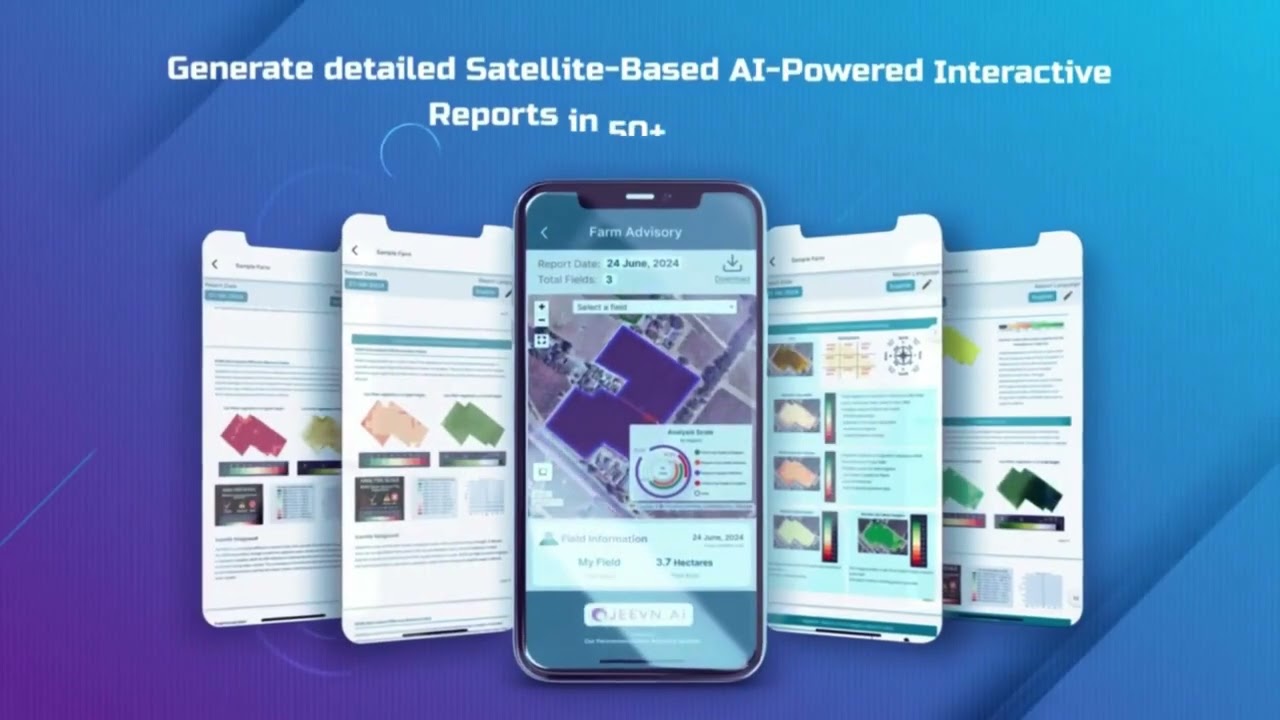
See real-time satellite monitoring of any plot — apartment rooftop garden or full field — through the Farmonaut API, documented at the developer docs.
Comparison Table: Four Ways to Farm
| Method | Scale (US) | Water Use vs. Baseline | Land Productivity | Source & Vintage |
|---|---|---|---|---|
| Traditional / conventional row-crop farming | 1 of 1,900,487 US farms; avg. 463 acres | Baseline (100%) | Baseline (1×) per acre | USDA NASS, 2022 Census of Agriculture |
| Precision / modern agriculture | Auto-steer/guided equipment on 54.5–64.5% of corn, wheat, soy, and cotton acres | Same water source, applied by variable rate instead of a flat rate; no separate national % published | Same land, fewer wasted inputs — tracked in $/acre, not a yield multiplier | USDA ERS, Chart of Note 106187 (2016–2019 survey years) |
| Vertical / hydroponic farming | Indoor, shelved growing area measured in square feet, not acres | 10–15% of soil-grown water use (85–90% less) | 10–20× the yield per acre of open-field crops | Texas A&M AgriLife (2015) + USDA ARS |
| Apartment / container / urban farming | No national acreage total published; supported via 27 USDA urban county committees + 2,300+ Service Centers | Not tracked nationally — meter your own system (see calculator above) | Not tracked nationally — container size, crop, and light hours each change the result | USDA farmers.gov Urban Growers program |
Reading the gaps
Two rows in this table say "not tracked nationally" instead of a number. That's deliberate: the alternative was inventing a figure to fill the cell, and a wrong number is worse than an honest gap with a method attached.

- ✔ Field- and farm-level monitoring: Farmonaut's large-scale farm management app.
- ✔ Chain-of-custody records: product traceability.
- ✔ Emissions reporting: carbon footprint tracking.
- ✔ Equipment and logistics from field to buyer: fleet management.
- ✔ Credit and coverage verification: crop loan & insurance tools.
The Role of Satellite and AI Technology
Across all four methods above, the common thread is data: knowing what a plant needs before it shows visible stress, and knowing where a plot stands without walking every row. Farmonaut's role in that picture is monitoring and traceability infrastructure, not selling seed, chemicals, or land — the platform layers satellite imagery, AI-driven analysis, and blockchain record-keeping on top of whatever farming method a grower already uses. That includes:
- Land and water management at field-level precision, whether the field is 3 acres or 3,000.
- Reducing waste and carbon footprint tied to farming inputs and equipment.
- Monitoring at every scale, from an individual grower up to fleet- and cooperative-level operations.
- API and mobile access for field or apartment-scale monitoring from any device.
The practical payoff is fewer surprises at harvest: earlier detection of stress or disease, input decisions backed by imagery instead of guesswork, and a documented record of practices that can support sustainability claims or buyer requirements.
Farming Principles in Mining, Forestry & Infrastructure
The same land-management logic that defines farming and agriculture — soil condition, water use, and vegetation cover — extends into land uses that sit next to farmland rather than on it. Reclaimed mine land, timber tracts, and infrastructure corridors all face a version of the same question a farm faces every season: is the ground gaining or losing productive capacity? Post-mining land in the US is required to be reclaimed toward a productive use under federal surface-mining law, and vertical- or container-style growing systems are one option operators have used on reclaimed sites where open-field row cropping isn't practical, alongside restoring pasture, woodland, or wildlife habitat.
Farmonaut's monitoring tools apply the same way regardless of which of those categories a plot falls into: real-time environmental monitoring, vegetation-index mapping, and emissions tracking work on a reclaimed pit, a working forest, or a row-crop field without separate systems for each. Fleet-management tools built for farm equipment carry over directly to tracking heavy equipment across mining and infrastructure sites.
For crop, plantation, and forest advisory services built on this same monitoring base, see Farmonaut's plantation and forest advisory tools.
FAQ
What does "farming adalah" mean?
"Farming adalah" is Indonesian for "farming is" or "farming means." The short answer: farming is the practice of managing land, crops, and animals to produce food and raw materials. Agriculture is the broader field of science, economics, and policy built around that practice.
What's the actual difference between farming and agriculture?
Farming is the activity on one operation's acres — planting, irrigating, harvesting. Agriculture is the system around it: research universities, USDA programs, water regulation, crop insurance, and the economics that make farming viable at scale.
How much less water does vertical farming really use?
In Texas A&M AgriLife's Uvalde, TX field trial (published August 5, 2015), hydroponic lettuce used 85–90% less water than the same crop grown in soil — meaning it used 10–15% of the soil-grown water volume for a comparable yield. Results for other crops or growing systems will land in a different range; the calculator on this page lets a reader test their own assumed percentage.
Is US farmland becoming more concentrated in large operations?
Yes. Farms of 5,000 acres or more controlled 42% of US farmland in 2022, up from 35% around 2002 — a 7-percentage-point increase over two decades, according to USDA Census of Agriculture data analyzed by the Agricultural & Applied Economics Association. Over the same period the total number of farms fell 6.9% between 2017 and 2022 alone.
Where can I find a more current number than the ones on this page?
The Census of Agriculture is conducted every five years (2012, 2017, 2022, next in 2027) and published roughly two years after each count. Between censuses, USDA's Economic Research Service Chart of Note series and the NASS QuickStats database update specific figures — both are linked throughout this page and are the fastest way to check whether a number here has since moved.
Bottom Line
Farming adalah — farming is — the direct work of growing crops and raising animals on land; agriculture is the science, economics, and policy built around that work. In the United States, that work is being done by fewer, larger operations: 1.9 million farms in 2022, averaging 463 acres, with 5,000+-acre operations now holding 42% of the farmland. Precision agriculture has moved from experimental to majority practice on row-crop acreage, vertical farming trades energy cost for a 10–20× yield gain and 85–90% less water per unit of lettuce, and apartment-scale growing remains the one segment with no national tally — which is itself a useful fact, and the reason this page includes a calculator instead of a fabricated average. Whichever of these four approaches applies to a reader's own land, container, or plot, the way to keep the numbers honest is the same one used throughout this page: name the source, name the date, and measure what a national dataset can't.

 Mostas Tech
 AgroStar
 Native Seeds
 Andex
Andex FCF India
 Unifrutti Gulf
 Deluxe Conseil
 TVS Electronics
 BW Pipelines
 WICO
WICO Chimera Innovation
 SkyHarvest
 Polaris Digitech
 Teledarbas
