

B2B Agriculture Marketplace: Cut Procurement Time & Costs
Reviewed August 2026 against USDA NASS, the American Farm Bureau Federation, and IMARC Group’s food traceability research.
Try it: Run your own numbers →
A b2b agriculture marketplace is a digital platform that connects farmers, input suppliers, processors, distributors, and food manufacturers so they can source, price, and settle transactions without relying on phone calls, paper contracts, or fragmented broker networks. The US B2B agricultural e-commerce market was valued at $9.8 billion in 2024 and is projected to reach $17.5 billion by 2033, with the B2B model already accounting for 52.5% of agricultural e-commerce transactions in 2023, according to Market.us. This article explains what these platforms actually do, who benefits, and how to evaluate one against the traditional procurement process it replaces.
Table of Contents
- Introduction: Why B2B Agriculture Marketplaces Matter Now
- What Are B2B Agriculture Marketplaces?
- Market Scale: Sizing the US B2B Agriculture Marketplace
- Key Components & Value Propositions
- Traceability in Agriculture and the Food Supply Chain
- Comparative Benefits Table: Traditional vs. B2B Marketplaces
- Stakeholder Benefits in Agriculture Marketplaces
- Procurement Time & Cost Calculator
- Best Practices for Success in B2B Agriculture Marketplaces
- Challenges & Solutions
- How Farmonaut Technology Supports B2B Agriculture Efficiency
- FAQs
- Conclusion: Next Steps in Digital Agriculture
- Try it: Run your own numbers



Introduction: Why B2B Agriculture Marketplaces Matter Now
US grain production keeps setting records that traditional procurement chains struggle to move efficiently. NASS put 2024 US corn production for grain at 15.1 billion bushels and soybean production at 4.37 billion bushels, with corn yield reaching 179.3 bushels per acre — up roughly 50% from 118.5 bushels per acre in 1990, per the American Farm Bureau Federation. Wheat in storage across all positions stood at 1.57 billion bushels as of December 1, 2024, per NASS. Moving volumes like these through broker calls and fax-based purchase orders is exactly the friction a b2b agriculture marketplace is built to remove.
The same shift is visible in how buyers vet suppliers. Large US food manufacturers using electronic traceability systems reached 84% in 2025, and 71% of major US grocery retailers required digital tracking from suppliers that year, according to IMARC Group’s food traceability research. A marketplace that cannot produce a clean digital record for a shipment is increasingly a marketplace a retailer’s compliance team will reject outright.
What Are B2B Agriculture Marketplaces?
A b2b agriculture marketplace is more than a listings site. It is a technology-enabled system that aggregates verified suppliers, standardizes product specifications, and orchestrates procurement, traceability, and settlement in one place. The core purpose is smarter sourcing, tighter demand planning, and end-to-end traceability — while cutting transaction costs and removing unnecessary intermediaries across farming and food-processing supply chains.
These platforms typically:
- ✔ Aggregate a verified catalog of inputs — seeds, fertilizers, crop protection products, machinery, and extension services
- ✔ Facilitate bulk sourcing for processors, wholesalers, and food manufacturers seeking raw materials such as grain, produce, and dairy
- ✔ Support data-driven price discovery, product comparison, and transparent contract terms
- ✔ Embed compliance, traceability, and quality-assurance mechanisms that reduce counterparty risk
- ✔ Integrate logistics, warehousing, and settlement options for delivery and payment
Crop Produce was the largest single commodity segment in agricultural e-commerce, holding a 47.1% market share in 2023, per Market.us — meaning fresh and bulk produce transactions are the single biggest category a US b2b food agriculture platform needs to handle well, ahead of packaged inputs or equipment.

Market.us projects the US B2B agricultural e-commerce market growing from $9.8 billion in 2024 to $17.5 billion by 2033 — implying sustained double-digit annual growth through the next decade as more of the roughly 60% of US farms projected to sell online in 2024 move that activity onto structured B2B platforms rather than one-off online listings.
Market Scale: Sizing the US B2B Agriculture Marketplace
Anyone evaluating whether to build on, or buy into, a food and agriculture marketplace needs the actual scale of the opportunity, not a vague “growing fast.” Here is what is published and where it comes from:
- ✔ US B2B agricultural e-commerce: $9.8 billion in 2024, projected to $17.5 billion by 2033 (Market.us)
- ✔ B2B share of total agricultural e-commerce: 52.5% in 2023 (Market.us)
- ✔ Crop Produce commodity share: 47.1% in 2023, the largest single segment (Market.us)
- ✔ US farms projected to engage in online produce sales: 60% in 2024, per USDA-informed projections cited in Market.us reporting
These figures come from Market.us’s e-commerce of agricultural products market report, which revises its sizing and CAGR projections roughly annually, typically in the first half of the year. If you need a number newer than this article’s, that report is the fastest way to get one — check it directly rather than relying on a secondhand figure that may already be a year stale.
Key Components & Value Propositions of B2B Agriculture Marketplaces
Sourcing and Procurement Efficiency
Traditional agricultural procurement involves dispersed supplier discovery, uncertain quality verification, and slow price negotiation. A b2b agriculture marketplace replaces that with:
- ✔ Direct access to a verified, current catalog of inputs — seeds, fertilizer, crop protection, irrigation equipment, machinery, extension services
- ✔ Bulk sourcing of grain, produce, dairy, and livestock by processors, wholesalers, and manufacturers from a single interface
- ✔ Transparent side-by-side comparison of price, certification, and contract terms across suppliers
A grain buyer sourcing against the 15.1-billion-bushel 2024 US corn crop, for example, can compare protein spec, delivery point, and price across multiple elevators in one session instead of calling each one — the exact kind of comparison a paper-based process makes slow and error-prone.
- 📑 Standardized product specifications for every input and raw material
- ✅ Compliance documentation and certifications visible at the point of procurement
- 🔎 Batch-level traceability from field to buyer
- 📉 Reduced post-harvest loss through closer demand matching
Market Linkage and Demand Discovery
A core value proposition of a modern agriculture b2b marketplace is market linkage: exposing real buyer demand to upstream producers and suppliers before planting or purchasing decisions lock in. Farmers and input sellers can align production, planting timing, and storage capacity with what buyers actually want to purchase, which reduces the gluts and shortages that drive price shocks.
Standardization and Quality Assurance
- ✔ Structured grading criteria applied consistently across raw materials
- ✔ Compliance documentation for organic, GAP, or sustainability standards attached to each listing
- ✔ Batch-level tracking from farm to customer that supports audits and recalls
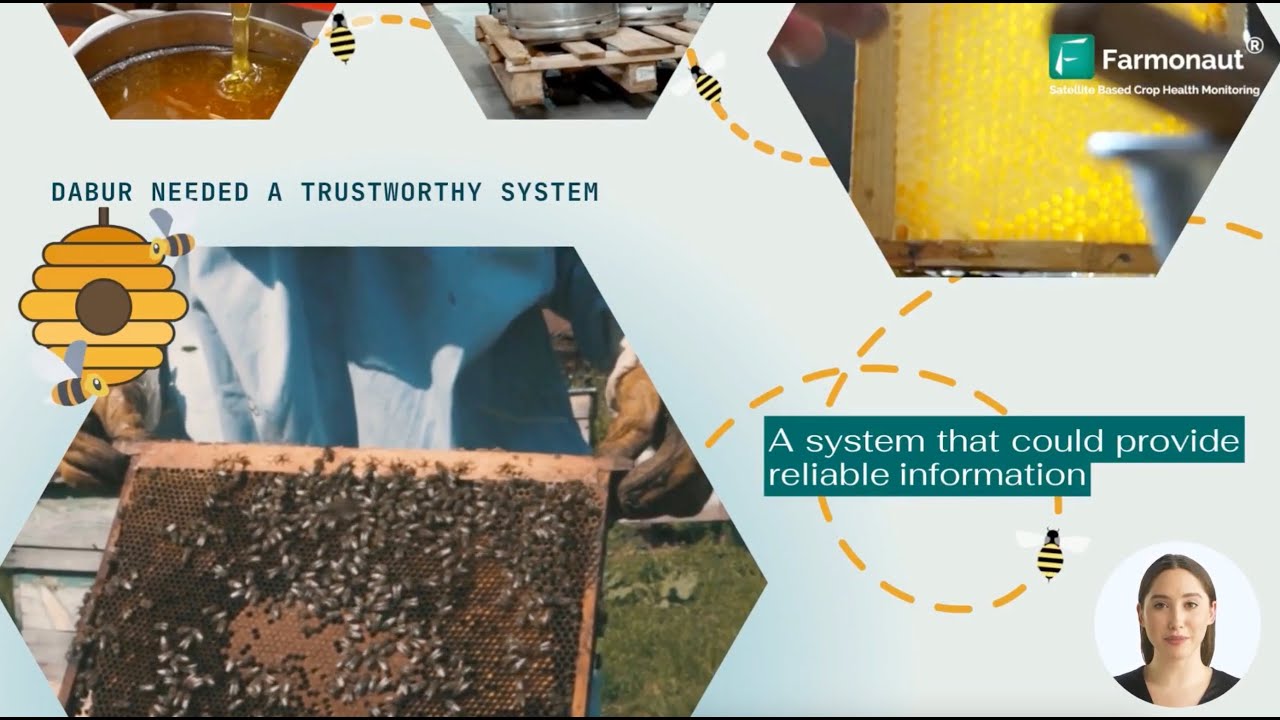
Blockchain-based traceability — such as Farmonaut’s traceability solution — lets a buyer confirm origin and certification for products like honey, fruit, and grain before payment clears, which is the kind of documentation the 71% of major US grocery retailers requiring digital supplier tracking in 2025 are asking for.
Logistics, Payment, and Settlement
- ✔ Integrated logistics and freight aggregation for cost-effective delivery
- ✔ Standardized payment terms — escrow, prepaid settlement, letter of credit
- ✔ Automated settlement that reduces payment disputes between buyers and suppliers

- 🚚 Route optimization for last-mile delivery across rural delivery points
- 💳 Escrow and on-platform invoicing to secure seller payment
Data-Driven Insights and Agronomic Support
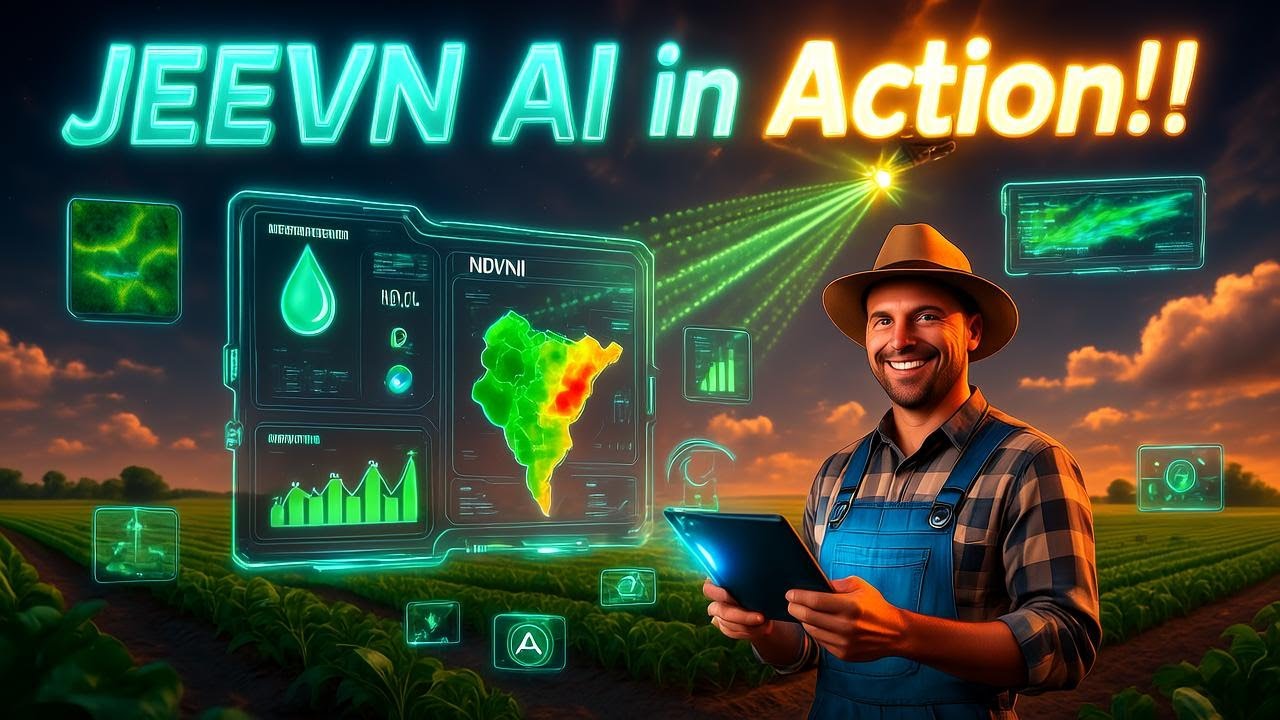
Participants on a well-built marketplace gain access to market analytics, price dashboards, historical seasonality data, and agronomic advice for maximizing input use. Combined with satellite-based crop intelligence — such as Farmonaut’s Jeevn AI — these insights improve planning at every stage from field to finished product.
Financing and Risk Management
B2B food agriculture platforms increasingly support supplier credit, inventory financing, and contract insurance, helping participants plan operations with less exposure to price swings:
- ✔ Crop loan and insurance products with digital verification (see Farmonaut’s satellite-verified insurance)
- ✔ Hedging or futures contracts for price-risk management
- ✔ Faster digital onboarding for financing providers
Traceability in Agriculture and the Food Supply Chain
Traceability adoption is no longer optional for anyone selling into US retail or food manufacturing. IMARC Group’s food traceability market research puts electronic traceability adoption among large US food manufacturers at 84% in 2025, with 71% of major US grocery retailers requiring digital tracking from suppliers that same year. Within adoption by product segment, meat and livestock represented a 25.9% market share in 2025 — the single largest commodity category driving traceability investment, ahead of produce or grain.
For a b2b agriculture marketplace, this means traceability is not a bolt-on feature; it is the compliance layer that determines whether a retailer or manufacturer will transact on the platform at all. A marketplace that cannot generate a batch-level digital record — origin, certification, chain of custody — fails the supplier vetting that 71% of major grocery retailers now require before a purchase order is even issued.
The IMARC Group Food Traceability Market report is the source for these figures and is the place to check for an updated adoption rate, since traceability penetration is still climbing and this snapshot will be superseded as more manufacturers and retailers convert.
Comparative Benefits Table: Traditional vs. B2B Marketplaces
| Procurement Aspect | Traditional Method | B2B Marketplace |
|---|---|---|
| Sourcing Speed | 5–7 days | 1–2 days |
| Quality Assurance Level | Low/Moderate, manual inspection | Standardized, batch-traceable |
| Transparency | Limited, manual tracking | Digital, near real-time tracking |
| Traceability System Use (US large manufacturers) | Below the 84% adopting electronic systems (2025, IMARC) | Built into the platform by default |
| Supply Chain Collaboration | Fragmented, broker-dependent | Integrated digital network |
| Payment & Settlement Speed | Weeks, manual invoicing | Same-day to 1–2 days, escrow-backed |
| Market Intelligence | Limited, delayed | Near real-time price and demand data |
Stakeholder Benefits in Agriculture Marketplaces
For Farmers and Producers
- ✔ Easier access to quality inputs and vetted suppliers
- ✔ Transparent pricing that improves bargaining position
- ✔ Less time spent on supplier outreach and negotiation
- ✔ Real-time demand signals to inform planting cycles and harvest timing
- ✔ Lower risk of non-payment through escrow and digital contracts
Many producers still rely on verbal agreements with buyers, which creates disputes when quality or price is contested after delivery. Digital contract terms and batch traceability on a B2B marketplace remove that ambiguity before the transaction closes.
For Processors and Manufacturers
- ✔ Reliable sourcing of consistent-quality raw materials
- ✔ Shorter procurement cycles through direct digital negotiation
- ✔ Consolidated supplier networks for streamlined compliance (see Farmonaut’s Traceability Platform)
- ✔ Real-time documentation for certifications and audits

For Distributors and Exporters
- ✔ Bulk aggregation and faster onboarding of new supplier networks
- ✔ Digital access to regional or national demand channels
- ✔ Streamlined logistics and warehousing with tracking
- ✔ Simplified export compliance and documentation
Marketplaces that integrate with fleet and resource management tools such as Farmonaut’s Fleet Management reduce last-mile delays and cut the total delivered cost of goods.
For Input Suppliers and Service Providers
- ✔ Expanded reach to new regional customer segments through verified listings
- ✔ Demand forecasting tools to scale inventory intelligently
- ✔ Bundling opportunities across seeds, fertilizer, and advisory services
- ✔ Rating and review systems that build buyer trust
Procurement Time & Cost Calculator
Use your own sourcing volume and current cycle time to see the range of days and dollars a marketplace-speed process could free up, based on the 5–7 day traditional versus 1–2 day marketplace sourcing range shown in the comparison table above.
Run your own numbers
Assumes staff time is the main variable cost of sourcing delay and that your traditional and marketplace sourcing day estimates are accurate for your operation; it excludes financing costs, spoilage, and price-volatility effects, which vary by commodity and season.
Best Practices for Success in B2B Agriculture Marketplaces
1. Rigorous Supplier Onboarding & Product Verification
- ✔ Require verified business credentials and audit supplier capabilities
- ✔ Use digital documentation and site inspections where feasible
- ✔ Maintain a rating and review system for transparency
2. End-to-End Traceability
- ✔ Tag all batches and shipments with unique digital IDs
- ✔ Support organic, GAP, and sustainability certifications, which matter most in the meat and livestock segment given its 25.9% share of traceability adoption
- ✔ Enable automated batch-level recall
3. Flexible Terms & Seamless User Experience
- ✔ Transparent pricing with clear volume discounts
- ✔ Tiered payment options — credit, advance, net terms
- ✔ Fast, mobile-friendly navigation and search
Provide region-specific agronomic and market data (see Farmonaut's Large Scale Farm Management) so pricing and planning reflect local crop cycles rather than a national average.
4. Localized and Tailored Solutions
- ✔ Surface regional price discovery and demand signals rather than a single blended national figure
- ✔ Integrate regional extension services and pest or disease alerts
- ✔ Support the specific commodity mix a region actually grows, since national figures like the 47.1% Crop Produce share mask large state-by-state differences
5. Data Interoperability & Integration
- ✔ Use standardized data formats for straightforward system integration
- ✔ Enable API access for plug-and-play with farm management systems, ERP, and third-party agriculture APIs
- ✔ Provide accessible developer documentation

Challenges & Solutions: Navigating B2B Agriculture Marketplaces
- ⚠ Fragmented quality standards across regions and crops
→ Solve with digital grading protocols and structured compliance records attached to each listing - ⚠ Logistics bottlenecks in rural delivery areas
→ Integrate satellite and IoT-informed fleet management and route optimization - ⚠ Price volatility and delayed payments affecting cash flow
→ Offer digital contract insurance, escrow payment, and forward-contract hedging - ⚠ Regulatory and certification compliance complexity
→ Embed automated certification checks and batch-level traceability, since 84% of large US manufacturers already run electronic traceability systems and buyers increasingly expect suppliers to match that standard
As procurement digitizes, demand for carbon footprint monitoring (see Farmonaut's carbon footprinting solution) and sustainability documentation is rising alongside traceability requirements across US agriculture supply networks.
How Farmonaut Technology Supports B2B Agriculture Efficiency
Farmonaut supports b2b agriculture with satellite monitoring, AI advisory tools, blockchain-based traceability, and fleet management. Farmonaut is not itself a b2b marketplace — it is infrastructure that marketplace operators, processors, and farm groups can plug into to close the traceability and monitoring gaps that buyers are increasingly requiring.
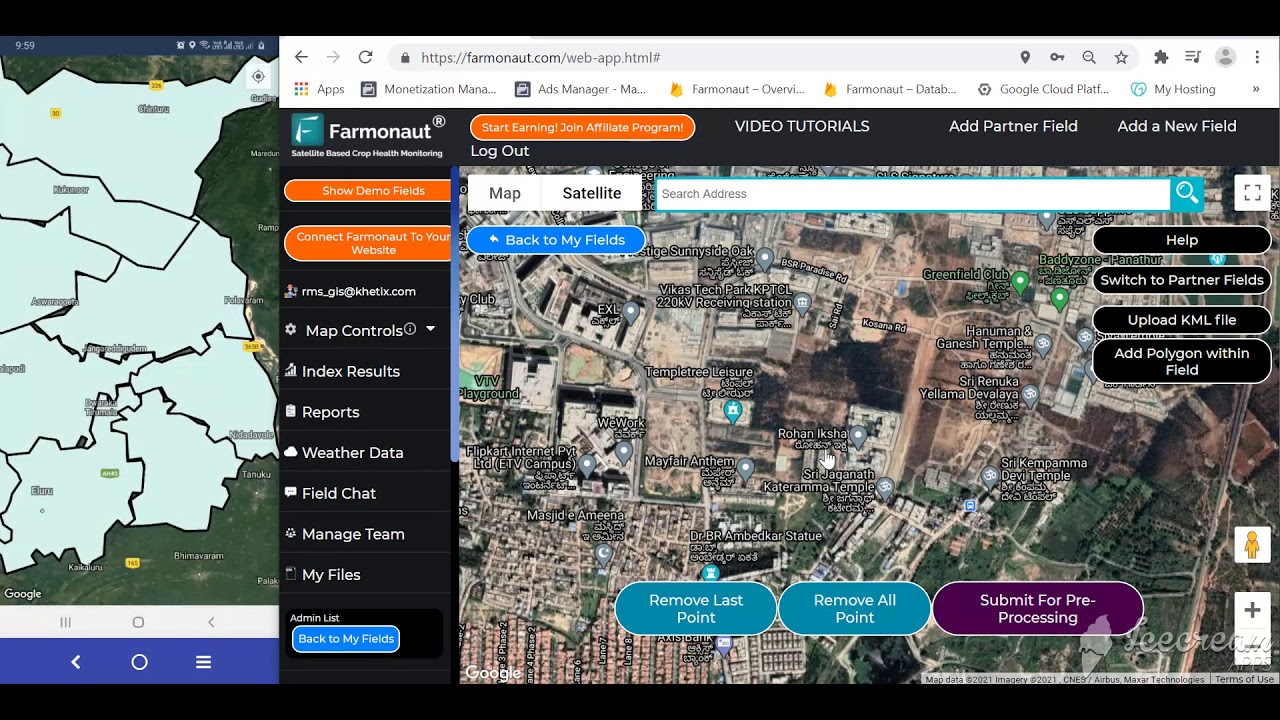
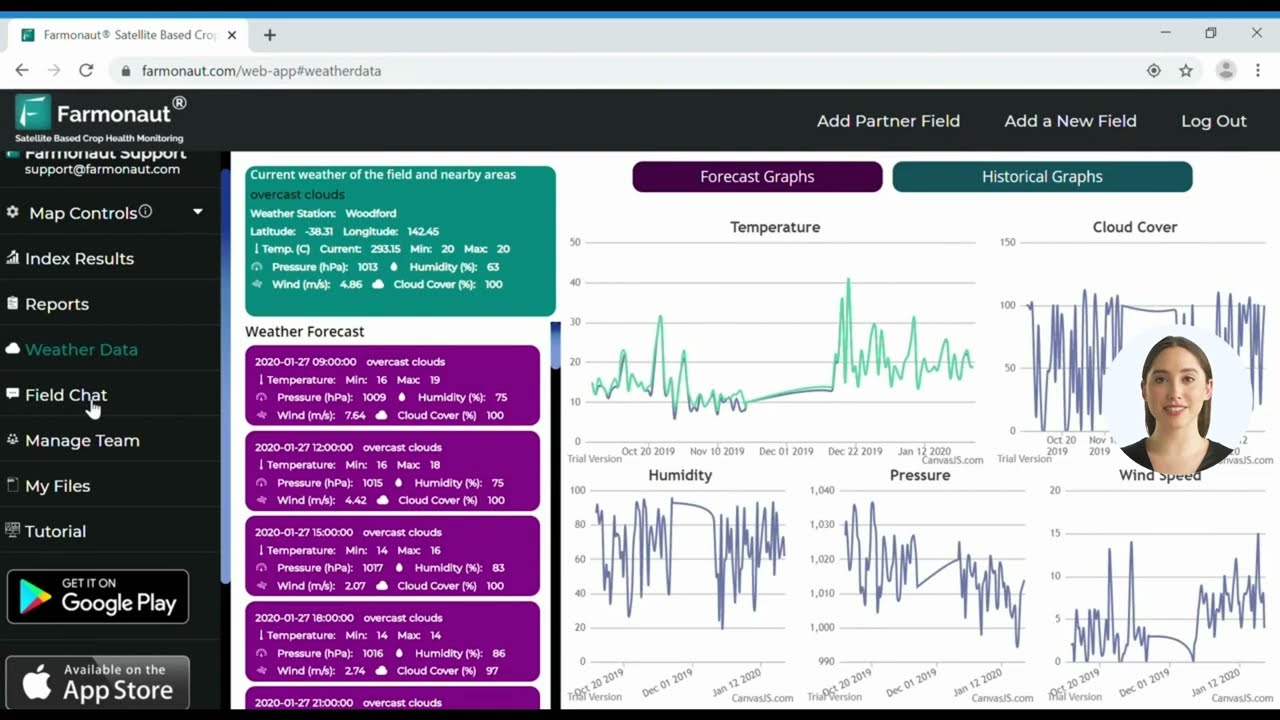
- ✔ Satellite-based crop and resource monitoring: real-time NDVI and soil moisture data to inform sourcing and yield expectations
- ✔ Blockchain-based traceability for proving product origin and compliance
- ✔ AI-driven insights through Farmonaut's Jeevn AI system for crop planning and resource allocation
- ✔ Fleet and resource management to reduce fuel costs and last-mile delays
- ✔ Carbon footprint calculation for sustainability reporting in procurement
- ✔ Satellite-based verification for crop loans and insurance
- ✔ Access via web, Android, or iOS app, with an open API for integration with any marketplace or management system
Farmonaut Subscription Plans
Explore satellite-driven monitoring, logistics, traceability, and compliance plans, and choose one that matches your operation's scale:
✔ Five Practical Advantages of B2B Agriculture Marketplaces
- 🌐 Integrated Sourcing: inputs, services, and buyers in one platform
- ⏱️ Faster Procurement: 1–2 day sourcing cycles versus 5–7 days traditionally
- 📊 Actionable Intelligence: price trends, regional demand signals, and compliance status on demand
- 🔒 Risk Reduction: escrow and digital settlement mitigate non-payment and disputes
- 🌱 Compliance Ready: batch traceability positions suppliers for the 71% of major grocery retailers already requiring digital tracking
Frequently Asked Questions (FAQs)
Q1. What is the main value of a b2b agriculture marketplace?
A: Faster sourcing, centralized access to verified suppliers, transparent price comparison, and built-in digital traceability. The US B2B agricultural e-commerce market was valued at $9.8 billion in 2024, per Market.us, reflecting how much procurement activity is already moving onto these platforms.
Q2. How is traceability handled in agriculture and food supply chain platforms?
A: Through standardized grading, digital certification records, and batch-level tracking, often blockchain-based. Electronic traceability adoption reached 84% among large US food manufacturers in 2025, per IMARC Group, with meat and livestock the largest adopting segment at 25.9% share.
Q3. What are the main challenges in B2B agriculture procurement, and how are they solved?
A: Fragmented quality standards, rural logistics bottlenecks, price volatility, and delayed payments. Solutions include digital grading, escrow payment, route-optimized logistics, and API-based integration with farm and ERP systems.
Q4. Can small and mid-size farms benefit from a b2b agriculture marketplace?
A: Yes. With roughly 60% of US farms projected to engage in online produce sales in 2024, smaller operations gain access to buyers, financing, and pricing transparency that used to require a large broker relationship to reach.
Q5. Is there a b2b platform for agriculture that also handles satellite crop data?
A: Farmonaut is not a marketplace operator, but it provides the satellite monitoring, blockchain traceability, and fleet-management infrastructure that marketplace platforms and processors integrate to meet buyer compliance requirements.
Conclusion: Next Steps in Digital Agriculture
The numbers make the case plainly: a $9.8 billion US B2B agricultural e-commerce market in 2024 growing toward $17.5 billion by 2033, 84% of large food manufacturers already running electronic traceability, and sourcing cycles that can drop from 5–7 days to 1–2 days on a well-run marketplace. None of that requires speculation — it requires checking the sourcing report and traceability data linked above whenever you need a number newer than this one.
Farmonaut's satellite, AI, and blockchain-based tools give farmers, processors, and marketplace operators the monitoring and traceability layer that buyers are increasingly requiring before they'll transact at all. Start with our app or the API suite to see how it fits your sourcing process.
Explore next-generation agriculture market intelligence, traceability, and efficiency — get started with Farmonaut.
Discussion
Questions, corrections or field experience? Share them below. First-time comments are reviewed before they appear, and your email is never published.
No comments yet. Be the first to add a question or your experience.

 Juligerm
 Inclusive Growth Chain
 AdBio
AdBio MISE Maroc
 Drift-Sense
 NWNS
NWNS Red August Group
 Farm Inc
 WeMe Global
 Agrotoken
 Blue BearX
 Insignito
 Croptimum
 DnCubed
 Field Capacity
 Indosistim Teknologi
 Liquify Digital
 CU Foods
 Licence holder · Niger · Gold
 Licence holder · Nigeria · Gold + lithium










