

Bacterial Canker in Tomatoes: Symptoms & Organic Treatment
Reviewed September 2026 against UC Statewide IPM Program, USDA Economic Research Service, and University of Connecticut IPM data.
Try it: Run your own numbers →
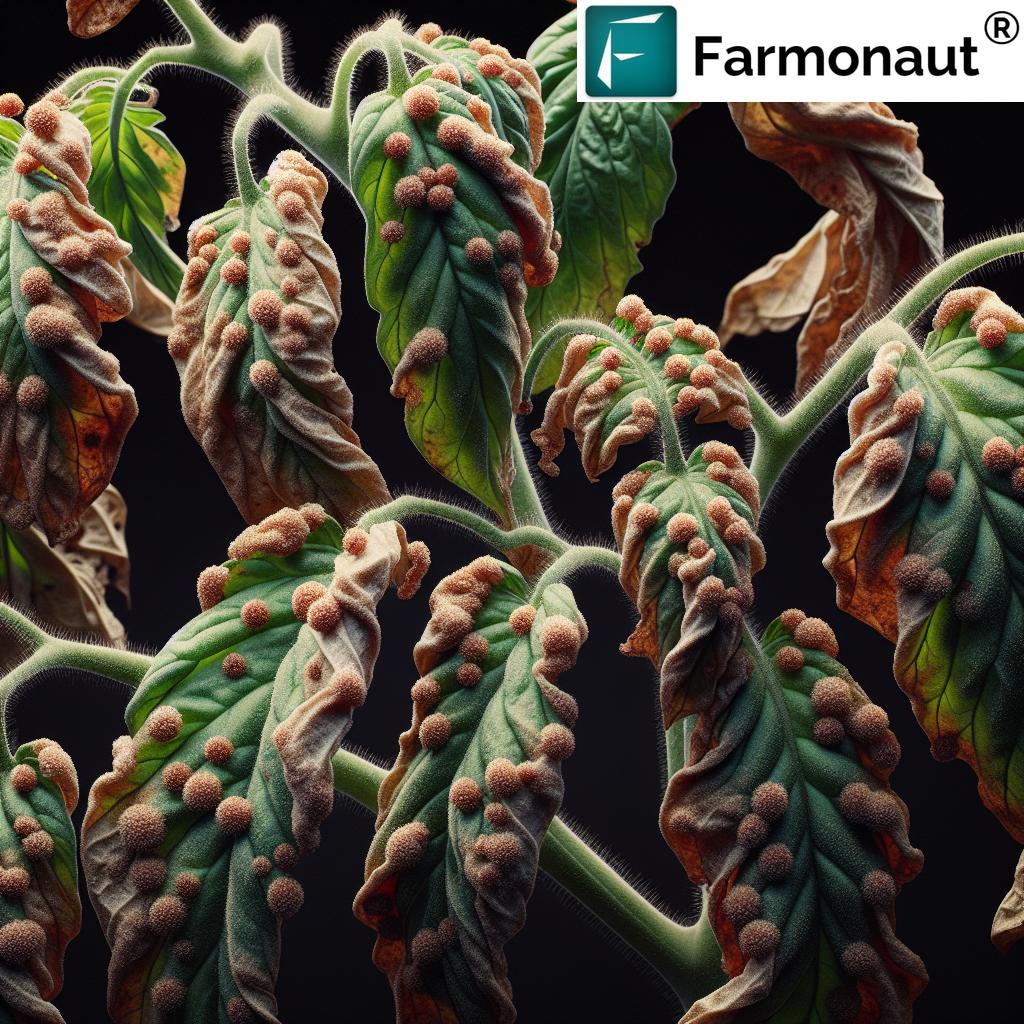
Bacterial canker in tomatoes is caused by Clavibacter michiganensis subsp. michiganensis, and there is no cure once a plant is infected — organic management means hot-water seed treatment before planting, strict sanitation, and copper as a limited preventive spray, not a rescue treatment. There is a separate, unrelated question buried in the same search traffic: whiteflies on tomatoes, which don’t cause canker but do spread other viruses, and are controlled by an entirely different, well-documented organic program. This guide covers both, plus the related bacterial spot disease that gets confused with canker, and what “potato disease” searchers need to know about the same pathogen jumping hosts.
Table of Contents
- What Bacterial Canker Is, and Isn’t
- Symptoms: Canker vs. Bacterial Spot
- Organic Treatment That Actually Works
- Whiteflies on Tomatoes: The Organic Program
- Prevention Checklist
- Potato Disease: Same Genus, Different Crop
- Satellite Detection: Catching Stress Before Symptoms
- Seed Treatment Batch Calculator
- FAQ
- Try it: Run your own numbers
What Bacterial Canker Is, and Isn’t
Bacterial canker is caused by Clavibacter michiganensis subsp. michiganensis, a gram-positive bacterium that survives in dried plant debris and on seed coats for up to three years, according to the UC Statewide IPM Program’s tomato guidelines. It enters through wounds — pruning cuts, transplant handling, wind-whipped leaf hairs, hail damage — and moves systemically through the vascular system, which is why a single infected transplant can collapse an entire greenhouse row before anyone notices leaf symptoms.
It is not the same disease as bacterial spot (caused by Xanthomonas species) or bacterial speck (Pseudomonas syringae pv. tomato), even though all three produce dark leaf lesions and get lumped together in casual diagnosis. The distinction matters for treatment: bacterial spot and speck respond better to copper-mancozeb rotations and are foliar-splash diseases, while canker is primarily seed- and transplant-borne and spreads mechanically through tools and handling. Misdiagnosing canker as bacterial spot means spraying copper on a systemic vascular infection that copper cannot reach — the plant is already lost, and the correct response shifts from “spray it” to “remove it and protect the rest of the field.”
The Infection Sequence
- Survival: The bacterium persists in soil and crop debris for up to three years (UC IPM).
- Entry: Wounds, natural openings, or transplanting handling introduce it to the plant.
- Colonization: It moves into the vascular (xylem) tissue.
- Systemic spread: Infection travels through the plant, often asymmetrically — one side of a leaf or stem shows symptoms before the other.
- Visible symptoms: Marginal leaf necrosis, stem cankers, “bird’s-eye” fruit spots.
- Secondary transmission: Pruning shears, stakes, irrigation splash, and handling move it to healthy plants.
Symptoms: Canker vs. Bacterial Spot
Because “bacterial canker” and “bacterial spots on tomatoes” are frequently searched as if they were the same problem, here is a side-by-side comparison an AI summary won’t build for you — the kind of field-triage table you’d want printed and taped inside a greenhouse door.
| Symptom Location | Bacterial Canker (Clavibacter michiganensis) | Bacterial Spot (Xanthomonas spp.) |
|---|---|---|
| Leaf pattern | One-sided wilting, marginal browning, interveinal yellowing | Small (2–3mm) angular water-soaked spots, uniform across leaf |
| Stem | Dark cankers that may split open; vascular streaking when cut lengthwise | Rarely cankers; lesions stay superficial |
| Fruit | Raised white “bird’s-eye” spots with brown centers | Small, scabby, raised dark spots, often with a yellow halo |
| Spread mechanism | Seed-borne, transplant handling, tools | Wind-driven rain, overhead irrigation splash |
| Whole-plant collapse | Common — vascular systemic infection | Rare — stays foliar/fruit-limited |
| Confirmatory test | Stem cross-section vascular discoloration + lab culture/PCR | Leaf spot culture on semi-selective media |
If you cut a symptomatic stem lengthwise and see light-brown streaking in the vascular ring, you are looking at canker, not spot — send a sample to your state or university plant diagnostic lab (most US land-grant universities and the UK’s Fera Science run these) for PCR confirmation before deciding on removal versus spot-treatment.
Organic Treatment That Actually Works
There is no organic — or conventional — chemical that cures an infected plant. Every documented organic protocol targets either the seed (before planting) or the greenhouse/tool environment (before spread), which is why prevention timing matters more than product choice.
Hot-Water Seed Treatment
The UC Statewide IPM Program’s standard protocol calls for soaking seed in water held at 130°F for 25 minutes, followed by immediate cooling and drying before storage or planting. This is the single most-cited organic intervention for canker because the pathogen frequently rides on the seed coat itself — treat the seed and you remove the most common introduction point before it ever reaches soil or transplant trays.
Greenhouse and Tool Disinfection
For benches, flats, stakes, and pruning tools, UC IPM specifies a 0.5–1% concentration of calcium or sodium hypochlorite as the disinfection standard between crop cycles and between plants when pruning symptomatic material. A 1% sodium hypochlorite solution is roughly a 1:5 dilution of standard household bleach (5–6% sodium hypochlorite) in water — mix fresh each session, since hypochlorite solutions lose potency within hours of dilution.
Copper-Based Bactericides
Copper hydroxide or copper sulfate sprays are OMRI-listed organic options, but UC IPM is explicit that copper offers only limited benefit against canker specifically, because the infection is systemic and vascular — copper acts on surface bacteria, not the pathogen already inside the plant’s plumbing. Use copper preventively, before any symptoms appear, on fields with a history of the disease; once cankers are visible on stems, copper will not reverse the infection in that plant.
Biological and Botanical Options
- Beneficial microorganisms: Research into biocontrol agents that suppress Clavibacter is ongoing; no single commercially available strain has published efficacy figures specific to canker suppression as of this review — ask your extension office which biocontrol products currently carry canker-specific label claims in your state or territory.
- Plant-derived extracts: Products such as neem oil carry antimicrobial properties and are commonly used in organic programs, primarily as a preventive foliar application rather than a treatment for confirmed vascular infection.
- Compost teas: Used to support general plant immunity; treat as a supporting cultural practice, not a standalone canker control.
Sanitation and Removal
Remove and destroy (do not compost) any plant confirmed positive for canker — the bacterium survives in plant debris for up to three years, so home or field composting will not reliably kill it and creates a long-term inoculum source. Disinfect every tool that touched the plant before moving to the next one.
Whiteflies on Tomatoes: The Organic Program
Whiteflies don’t cause bacterial canker — they’re a separate pest problem that happens to share a field with it, and the most-searched query on this topic (“whiteflies on tomatoes organic”) deserves its own straight answer: an integrated approach combining biological control, cultural practices, and targeted organic sprays outperforms any single method alone.
According to a University of Connecticut IPM comparative trial, an integrated pest management approach achieved 73% virus suppression efficacy in tomatoes against whitefly-vectored viruses, compared with relying on biological or chemical control in isolation. That 73% figure is the clearest piece of evidence available for why growers should stack methods rather than pick one:
- Yellow sticky traps: Deployed at canopy height to monitor and reduce adult whitefly populations; check weekly to track pressure trends.
- Reflective mulches: Silver or aluminum-surfaced mulch disrupts whitefly landing behavior on young transplants.
- Insecticidal soaps and horticultural oils: OMRI-listed contact treatments effective against nymphs and adults when coverage includes the leaf underside, where whiteflies colonize.
- Neem oil: Acts as both a repellent and a growth regulator against whitefly nymphs; the same neem oil application guidance used for canker prevention applies here.
- Beneficial insects: Encarsia formosa (parasitic wasp) and predatory beetles such as Delphastus catalinae are established biological controls in both greenhouse and field settings.
- Row covers: Physical exclusion during early transplant establishment, removed once plants flower and need pollinator access.
The practical takeaway: don’t choose between neem oil, sticky traps, and beneficial insects — the UConn data specifically credits the combination, not any single tactic, for the 73% figure. Rotate monitoring (sticky traps) with intervention (soap/oil sprays timed to nymph stages) and habitat support (reflective mulch, beneficial insect refuge plantings) across the season rather than waiting for visible pressure to pick one tool.
Prevention Checklist
Prevention is consistently described as the most cost-effective response to bacterial canker in the university extension literature, even though none of the sources in this review publish a per-acre cost figure for organic treatment — if you need a cost comparison for your own operation, your state extension IPM cost-of-production budgets (published annually by land-grant universities) are the right place to build one, since input costs vary by region and season.
1. Seed and Transplant Sourcing
- Buy certified disease-free seed from suppliers who test seed lots for Clavibacter.
- Apply the 130°F / 25-minute hot-water treatment described above if seed origin or testing status is uncertain.
- Inspect transplants before purchase for any marginal leaf necrosis or stem discoloration.
2. Nursery and Greenhouse Hygiene
- Use sterile growing media and new or disinfected containers each cycle.
- Disinfect benches and tools with the 0.5–1% hypochlorite solution between batches.
- Avoid overhead watering of seedlings — use bottom-watering or drip.
3. Field Management
- Rotate out of tomatoes and other Solanaceae (peppers, eggplant, potatoes) for at least 3–4 years on any field with a canker history.
- Remove and destroy (never compost) crop debris after harvest.
- Control nightshade-family weeds that can host the bacterium between seasons.
- Avoid working fields — pruning, staking, harvesting — while foliage is wet, since handling wet plants is the main mechanical spread vector.
4. Water and Nutrition
- Use drip irrigation instead of overhead sprinklers to minimize leaf wetness duration.
- Avoid excess nitrogen, which pushes soft, susceptible growth.
Potato Disease: Same Genus, Different Crop
Searches for “potato disease” alongside tomato canker queries usually reflect the fact that potatoes are in the same host range: Clavibacter michiganensis (a different subspecies, sepedonicus, causes potato ring rot) and the broader Solanaceae family — which also includes peppers and eggplants — share several bacterial and fungal pathogens with tomatoes. If you rotate tomatoes with potatoes on the same ground, you are not achieving true crop rotation against canker, because both crops can carry related Clavibacter pathogens and act as reservoirs for each other.
The practical implication: a 3–4 year rotation plan for canker-affected tomato ground needs to exclude potatoes, peppers, and eggplants specifically — not just tomatoes — and should include a non-host crop such as small grains, legumes, or brassicas instead. If you’re diagnosing a suspected potato disease separately from tomato canker, your state or national plant health authority (in the UK, the Defra Plant Health Portal; in the US, your state land-grant extension) is the right first stop for a current potato-specific pest and disease identification guide, since ring rot, late blight, and other potato-specific pathogens require their own diagnostic protocols outside the scope of this article.
Satellite Detection: Catching Stress Before Symptoms
Because bacterial canker symptoms often appear after the vascular infection is already established, satellite-based crop monitoring closes a real gap: it can flag localized plant stress signatures before marginal necrosis or wilting becomes visible to a field walk-through.
| Feature | Manual Field Inspection | Satellite-Based Monitoring (Farmonaut) |
|---|---|---|
| Detection speed | Depends on walk-through frequency and scout availability | Automated imagery refresh across the whole field |
| Coverage | Limited by labor hours; large fields scouted in sections | Whole-field, single pass |
| Symptom timing | Typically after visible leaf/stem symptoms appear | Can flag vegetation-index stress signals pre-visible-symptom |
| Historical tracking | Manual notes/spreadsheets | Stored field history for season-over-season comparison |
Satellite indices don’t diagnose canker specifically — no remote-sensing tool distinguishes Clavibacter from drought stress or nutrient deficiency on its own — but a flagged zone tells you exactly where to send someone to do the stem cross-section test described earlier, instead of walking an entire field blind. Explore the monitoring tool via the Farmonaut app or integrate field data directly through the Farmonaut API. The mobile apps are available for Android and iOS.
Seed Treatment Batch Calculator
Use the calculator below to size your hot-water seed treatment session and hypochlorite disinfection batch against the UC IPM protocol figures cited above (130°F / 25 minutes; 0.5–1% hypochlorite).
Run your own numbers
Assumptions: bleach stock assumed at 5.5% sodium hypochlorite (standard US household bleach; check your product label, as concentrations range 5–8.25%). This calculator sizes seed-soak time and disinfectant dilution only — it does not account for water temperature ramp-up time, seed lot size in weight/volume, or disposal of spent solution. Always verify actual bleach concentration on your product label before mixing.
FAQ: Bacterial Canker, Bacterial Spot, and Whiteflies on Tomatoes
- Q: What is the difference between bacterial canker and bacterial spot on tomatoes?
A: Canker (Clavibacter michiganensis) is a systemic, vascular, primarily seed-borne infection causing one-sided wilting and stem cankers; bacterial spot (Xanthomonas spp.) is a foliar, wind/rain-splash disease causing small angular leaf spots without vascular streaking. See the comparison table above for the full field-triage breakdown. - Q: Is there an organic treatment for bacterial canker once a plant is infected?
A: No. There is no cure, organic or chemical, for an already-infected plant. Organic management is entirely preventive: 130°F/25-minute hot-water seed treatment (UC IPM), 0.5–1% hypochlorite tool and bench disinfection, and preventive (not curative) copper sprays. - Q: How do I control whiteflies on tomatoes organically?
A: Combine yellow sticky traps, reflective mulch, insecticidal soap or horticultural oil (leaf-underside coverage), neem oil, and beneficial insects such as Encarsia formosa. University of Connecticut IPM trial data credits this integrated combination with 73% virus suppression efficacy, versus lower results from any single method. - Q: Can bacterial canker affect potatoes?
A: Potatoes can carry a different Clavibacter michiganensis subspecies (sepedonicus, causing ring rot) and share the broader Solanaceae host range with tomatoes, peppers, and eggplant — meaning a tomato-potato rotation does not break the disease cycle. Use a non-host crop instead. - Q: How long does Clavibacter michiganensis survive in soil?
A: Up to three years in soil and plant debris, per UC Statewide IPM Program guidance — this is why crop rotation away from tomatoes and other Solanaceae for 3–4 years is standard advice, and why infected debris should never be composted. - Q: What temperature and time should I use for hot-water seed treatment?
A: 130°F held for 25 minutes, per UC IPM's standard organic protocol, followed by rapid cooling and drying before storage or sowing. - Q: What concentration of bleach should I use to disinfect tools and greenhouse surfaces?
A: 0.5–1% calcium or sodium hypochlorite, mixed fresh each session, per UC IPM guidelines. See the calculator above to convert that to a bleach-to-water ratio for your batch size. - Q: Are copper sprays effective against bacterial canker?
A: Only as prevention, applied before infection. UC IPM states copper offers limited benefit against canker specifically because the infection is systemic and vascular; copper cannot reach bacteria already inside the plant's vascular tissue. - Q: Is it safe to compost tomato plants infected with bacterial canker?
A: No. The pathogen survives in plant debris for up to three years, so home or field composting will not reliably kill it. Remove and destroy infected plants instead. - Q: How can satellite monitoring help with bacterial canker specifically?
A: It cannot diagnose canker on its own, but stress-index flags can point you to the specific zone of a field to walk out and inspect — cutting a symptomatic stem lengthwise for the vascular-streak check described above — before you'd otherwise notice wilting from the field edge.
For organic pest control approaches that support canker and whitefly prevention across a wider range of field conditions, see our guide on affordable pest control practices.

 Liquify Digital
 Ascentya
 CU Foods
 BeyondTech Global
 Rouge VC
 Yutz Automation
 AgroGreen Dynamics
 AgroRisk
 Oath Inc
 Reddane Farming
 Esri North East Africa
 Cresol
 Atur Kuliner
 MDCV UK
 Zerella Group
 Etech Consulting Madagascar
 Vestlandsforsking
 Delicio
 WB Dev
 Sama Premium
 Prochecker
 Tres Valles
 LACOS Geoinformation
 Magrifly
