

Crop pests · Organic control guide
Organic Control of Red Spider Mites: Neem, Soap, Predators
Hose leaf undersides, fix water stress and dust, protect or release predatory mites, and spray soap, oil or neem only when scouting finds mites. UC IPM names soap and oil as its preferred sprays when treatment is needed.
Key takeaways
- A spider mite generation can finish in under a week in hot weather, so scout weekly in hot, dry spells (UC IPM).
- UC IPM’s rough guide is one predator for every 10 spider mites; release early and in hot spots.
- Avoid soaps and oils on water-stressed plants or above 90°F, and keep sulfur 30 days from oil sprays (UC IPM).
- Neem works best before numbers build; UC IPM’s strawberry guidelines give 7- to 21-day repeat intervals.
- Some pyrethroids, organophosphates and carbaryl can trigger outbreaks by killing predators.
In this article
- Organic control of red spider mites at a glance
- What red spider mites are, and which species you have
- How weather and dust drive outbreaks
- How to scout and when to act
- Organic treatment options, ranked
- Predator release or spray program: compare your costs
- Cultural practices that prevent outbreaks
- Satellite monitoring and early detection
- When organic sprays are not enough
- FAQ
Organic control of red spider mites works best in layers: hose the leaf undersides, fix water stress and dust, protect or release predatory mites, and use insecticidal soap, oil or neem only when scouting shows mites are present. UC IPM names soap and oil as its preferred sprays when treatment is needed. Timing matters because a generation can finish in under a week in hot weather (UC IPM Pest Notes).
This guide ranks the options, gives the published thresholds and predator release rates, and includes a calculator that compares a predator release with a spray program on your own costs. It is written for growers and agronomists in North America, the UK, Europe and Australasia. Product rules differ by country, so always check the label and local rules.
Organic control of red spider mites at a glance
The table puts the options in the order most growers should try them. Each one is explained below.
| Option | Best for | Main limit |
|---|---|---|
| Water spray | Gardens, small trees, houseplants | Needs repeating; UC IPM suggests at least daily on infested plants |
| Water and dust control | Every farm and orchard | Prevents more than it cures |
| Predatory mites | Greenhouses, strawberries, orchards | Works best early; broad sprays kill them |
| Insecticidal soap | Spot treatment of hot spots | Needs direct contact; avoid above 90°F |
| Horticultural oil | Orchards, vines, in-season spot sprays | Leaf burn risk; can kill predator eggs |
| Neem oil | Light pressure, before numbers build | Frequent sprays can harm plants and yield |
| Plant-oil products | Rotation with other sprays | Short residual; use labeled products |
| Sulfur | Tomatoes and some tree crops | Burns cucurbits; keep 30 days from oil |
What red spider mites are, and which species you have
Red spider mites are not insects and not true spiders. They are arachnids with eight legs, related to spiders and ticks. Adult females are less than 1/20 inch long, so to the naked eye they look like tiny moving dots. A 10X hand lens shows them clearly. If you searched for “small red spiders” on leaves, this is often what you are seeing, and webbing on the leaf underside is the easiest way to confirm it (UC IPM).
The name covers several species:
- Twospotted spider mite (Tetranychus urticae): the widespread species on vegetables, berries and ornamentals.
- Carmine spider mite (Tetranychus cinnabarinus): reddish, and a pest of strawberries among other crops.
- European red mite (Panonychus ulmi): a fruit tree pest, well known on apples.
- Citrus red mite (Panonychus citri): a pest of citrus orchards.
- Glasshouse red spider mite: the common UK name for the pest of protected crops (RHS).
You rarely need an exact name. UC IPM says the common Tetranychus species cannot be reliably told apart in the field, and their damage, biology and management are almost the same. On apples, heavy European red mite feeding can bronze leaves by mid-July (Purdue Extension).
Crops they attack
UC IPM lists fruit trees, vines, berries, vegetables, houseplants and ornamentals. Commonly affected crops include tomatoes, peppers, eggplant, cucumbers, melons, beans, strawberries, roses and chrysanthemums. Iowa State also notes that they feed on nearly all houseplants (Iowa State Extension).
Signs of an infestation
- Stippling: light dots on the leaf, often the first sign.
- Bronzing or yellowing: color change as feeding spreads.
- Webbing: fine silk on leaves and, at high numbers, on twigs and fruit.
- Leaf drop: heavily infested leaves may fall.
- Moving dots: colonies, mostly on leaf undersides; one colony can hold hundreds of mites.

▶ How to identify red spider mites and the organic ways to control them. · 11:53
How weather and dust drive outbreaks
Hot, dry and dusty conditions are the classic setup. UC IPM says numbers commonly climb from June through September in California. Mites often appear first on plants beside dusty roads or at garden margins, and on water-stressed plants.
Dry air helps them in several ways. Colorado State University explains that mites feed more when low humidity lets them evaporate excess water. Most of their natural enemies also need more humid conditions, and drought can make plants more nutritious to mites (CSU Extension).
- Heat: speeds reproduction. A generation can take under a week in favorable conditions.
- Water on leaves: forceful jets remove and kill many mites and rinse off dust.
- Wind: when leaf quality falls, females ride air currents to new plants.
- Cooler weather: numbers may fall quickly in late summer as predators catch up and temperatures drop.
Not every species follows this pattern. CSU notes that spruce spider mite and some turf mites are most active in the cool of spring and fall. Check your own species before you rely on a summer-only scouting plan.
How to scout and when to act
A few mites do not need treatment. UC IPM says small numbers are usually no cause for concern, and woody plants tolerate low to moderate populations. Spraying without a count wastes money and can kill the predators doing the work. Published thresholds vary a lot by crop and season, as the two examples here show.
Chart
European red mite treatment threshold on apples
Average mites per leaf, by date, Indiana guidance
On apples, Purdue Extension advises sampling four leaves from each of five trees, weekly from just after petal fall. Its threshold rises through summer because trees become more tolerant of feeding as the season goes on.
On strawberries, UC IPM advises 10 leaflets per acre in small fields and 5 per acre in larger fields, taken from mid-tier leaves. Yield loss is detectable above one mite per leaflet in the early months after transplanting, and plants may be severely weakened above 75 (UC IPM strawberry guidelines). Almond growers can use a presence-absence form instead of counting. Predators will typically control the pest when the number of leaves with predators matches the number with mites (UC IPM almond guidelines).
These figures apply to the crop and region studied. Use them as examples and ask your local extension service for your crop’s number.
Chart
Twospotted spider mite levels on strawberries
Average mites per mid-tier leaflet, California; harvest threshold shown at the low end of 15-20
Organic treatment options, ranked
The order below runs from the least disruptive option to the most. The US National Organic Program allows narrow-range horticultural oils, insecticidal soaps, elemental sulfur and lime sulfur as synthetic materials for mite control (7 CFR 205.601(e)). Certified growers should still confirm each product with their certifier, as UC IPM advises, and readers outside the US should check their national rules. For a mite guide with other crops in view, see our page on organic mite control.
Chart
How long azadirachtin in neem lasts
Half-life range in days, by where it lands
1. Water sprays
Best for: gardens, small trees and houseplants. UC IPM suggests spraying leaf undersides with water or mist at least once a day on infested plants. Regular forceful spraying often reduces numbers enough on small plantings. On orchards and vines, a mid-season wash that removes dust may prevent serious late-season infestations.
2. Natural enemies and predator releases
Best for: greenhouses, strawberries and perennial crops. Natural enemies include predatory mites, sixspotted thrips, minute pirate bugs, lacewings, bigeyed bugs and small black lady beetles known as spider mite destroyers (Stethorus).
- Phytoseiulus persimilis: the most used in strawberries and in UK glasshouses. It feeds only on pest mites, so it dies out when they run out.
- Neoseiulus californicus: can hold low populations below threshold. RHS notes that Amblyseius mites also feed on other prey and pollen, so they survive when pest numbers are low, but are less likely to control heavy infestations.
- Galendromus occidentalis (western predatory mite): more effective in hot, dry conditions, says UC IPM.
- Feltiella acarisuga: a predatory midge sold for glasshouses in the UK.
UC IPM’s rough guide is one predator for every 10 spider mites. In heavy infestations, knock numbers down with soap or a selective spray first, then concentrate the release in hot spots. CSU adds a caution: mail-order predators have worked on interior plants, but effective outdoor use has not been shown in Colorado, partly because they need humidity.
In strawberries, UC IPM says its rates rest on experience, as research is lacking. They show why early release matters: a threshold-level infestation needs more than three times the predators of an early one.
3. Insecticidal soap
Best for: spot-treating hot spots. Soap only works on the mites it wets, so spray the leaf undersides until covered. Be sure mites are present first. Skip it on water-stressed plants or above 90°F (UC IPM). Use a labeled product, because these sprays can injure some plants. Test it on part of the foliage several days before a full spray.
4. Horticultural oil
Best for: orchards, vines and in-season spot sprays. Oils work by suffocation, so coverage decides the result. They are not selective: predator mite eggs die as easily as pest eggs. The residue has little activity once dry, so beneficials can return, and spot treatment limits the harm (UConn Extension). Dormant oils can also target overwintering eggs of certain mites. Heat limits vary by crop. On strawberries, UC IPM limits one oil to semi-dormant winter months and warns against it from peak bloom through fruiting or when air temperatures are expected to exceed 75°F within several days after application.
5. Neem oil for red spider mites
Best for: light pressure, before numbers build. UC IPM’s strawberry guidelines say neem works best before mites and eggs are present in large numbers, with repeat sprays at 7- to 21-day intervals until pressure ends. They also warn that frequent oil sprays can damage plants and cut fruit yield. Do not expect a single spray to clear a webbed crop.
Dose comes from the label, not from a garden recipe. As one example, an EPA-registered cold-pressed neem product lists 0.625 to 1.25% v/v for normal pest pressure and 1.8% for heavier infestations (EPA label, Reg. No. 88760-15). Your product may differ.
The active part breaks down fast. The half-life of azadirachtin on leaves is only 1 to 2.5 days (National Pesticide Information Center), which is one reason repeat sprays are needed. The same fact sheet rates neem oil as practically non-toxic to bees and birds, slightly toxic to fish, and azadirachtin as moderately toxic to fish. Keep it out of waterways. Neem can also irritate skin and eyes.
Growers using aerial application can read our page on neem oil and drone spraying. Check that drone application is allowed on your label and under local rules.
6. Plant-oil products
Best for: rotating with other sprays. UC IPM lists garlic extract, clove, mint, rosemary and cinnamon oils as acaricide ingredients. Its strawberry guidelines list cottonseed, clove, garlic, rosemary and peppermint oil products. Good coverage is essential, and one listed product should go on no more than once in 7 days. Use registered products: home mixes of essential oils have no tested dose and can burn leaves.
7. Sulfur
Best for: tomatoes and some tree crops. Mined sulfur dust or sprays are acceptable on organic tomatoes in UC IPM’s guidelines, which say not to apply above 90°F or during heavy dew or fog (UC IPM tomato guidelines). Sulfur can burn cucurbits, should not go on within 30 days of an oil spray, and irritates skin, eyes and lungs. Wear protective clothing.
8. Microbial products
Best for: organic strawberry programs. UC IPM lists Beauveria bassiana, Burkholderia sp. strain A396 and Chromobacterium subtsugae strain PRAA4-1 among organically acceptable tools. Availability differs by country.
What about diatomaceous earth?
Diatomaceous earth does not appear among the options in the UC IPM guides cited here. Since dusty conditions lead to outbreaks, and dust harms mite predators, a fine dust on foliage is a poor bet. Spend your effort on the options above.
Chart
Predatory mite release rates in strawberries
Predators per acre, experience-based rates, California
Predator release or spray program: compare your costs
Predators cost money up front and sprays cost money every pass. The calculator compares the two per season for your own acreage, using prices from your own supplier. It leaves out scouting, which you need either way, and yield effects, which vary.
Try the numbers for your own farm below.
Calculator
Is a predator release cheaper than repeat sprays?
Enter your own acreage, prices and number of sprays.
- Predator release cost, US$: $2,400
- Spray program cost, US$: $2,400
- Sprays that match the predator cost: 5.0
Example values only, set near break-even; not a benchmark, price quote or forecast. Enter your supplier’s prices. The 30,000 per acre default is UC IPM’s experience-based strawberry rate for early releases; use a rate for your crop. Results exclude scouting and any yield difference. Follow the product label and local rules, and get professional advice before changing a program.
Cultural practices that prevent outbreaks
Prevention costs less than rescue, and it makes every other tool work better.
1. Irrigation
Water enough to avoid drought stress, which increases both mites and their damage (UC IPM). Mulch and ground covers keep soil moist and hold dust down. Drip systems save water but do not wash leaves, so scout drip-irrigated crops closely in hot spells.
2. Dust control
Dust often comes before an outbreak. Water pathways and farm tracks at regular intervals. UC IPM’s strawberry guidelines also name road dust control. Start scouting on the rows next to tracks.
3. Plant choice and vigor
Strawberry cultivars differ in how they tolerate mites. UC IPM links plant vigor to mite pressure, including proper chilling of transplants and good irrigation. Ask local advisers about cultivars for your region. In glasshouses, RHS warns that high temperatures, dry air and crowding raise the risk.
4. Sanitation
Mites overwinter as red or orange mated females in bark, ground litter and trash. RHS advises clearing plant debris, old canes, stakes and ties before spring, controlling weeds, and cleaning empty glasshouses. Remove badly affected plants in late summer, before females seek winter shelter.
5. Rotation and companion plants
Rotation can help on annual crops, but females can disperse on air currents, so it will not stop them arriving from nearby hosts. Garlic, chives, dill and similar companion plants are often suggested, yet none of the extension guides cited here lists them as a control. Treat them as an experiment, and keep scouting.
Satellite monitoring and early detection
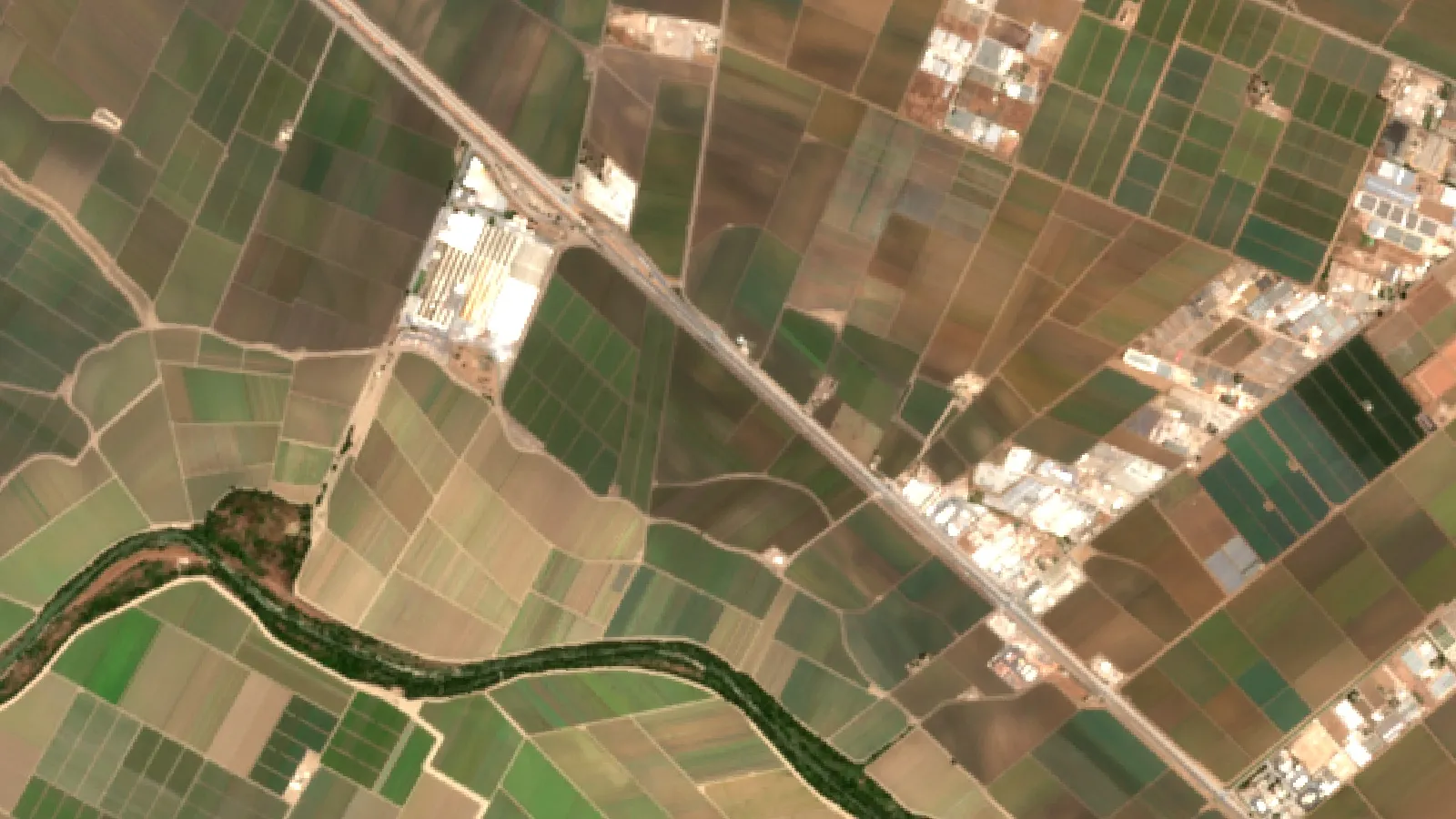
Satellites cannot see a mite. They can show a part of a field where the crop is losing vigor, and that tells you where to walk first. The cause could be mites, water, disease or nutrients, so a hand lens still makes the diagnosis. This helps most on large fields, where hot spots near tracks or field edges are easy to miss on foot.

▶ How satellite NDVI maps show crop stress across a large farm. · 4:09
Farmonaut offers satellite crop health maps through its web app, the Android app and the iOS app, plus an API with developer documentation for teams building their own tools.

▶ A tutorial on monitoring fields with satellite imagery and crop health indices in the Farmonaut web app. · 8:43
When organic sprays are not enough
Integrated pest management keeps conventional miticides as a backstop, not a first step. If you are not certified organic and numbers pass your threshold despite these steps, follow these points from UC IPM:
- Avoid mite flare-ups. Some organophosphates, carbamates and pyrethroids can trigger outbreaks by killing predators. CSU reports the same for carbaryl. Malathion and soil-applied imidacloprid can also aggravate some mite problems.
- Spray only what is infested. Sample first and treat the affected part of the field. Purdue makes the same point for orchards: you may need to treat only part of the block, plus a few rows past the edge.
- Rotate modes of action. Twospotted spider mites have a history of rapid resistance when one miticide is repeated on the same population.
- Watch residues. Some pyrethroids can stay highly toxic to predatory mites for months or more, so check before you release predators.
Follow the product label and local rules, and ask a licensed adviser where one is required. For the wider case for protection programs, see our page on the importance of crop protection.
Related pages on our site: organic treatment of the pomegranate red mite; aphids vs mealybugs.
FAQ
What kills red spider mites naturally?
Predatory mites and other natural enemies are the main natural control. Forceful water, insecticidal soap and plant-based or horticultural oils also kill mites on contact. Soap and oil only work on the mites they cover, so spray leaf undersides thoroughly.
Does neem oil kill red spider mites?
Neem products are listed as a spider mite option by UC IPM, and they work best before mites and eggs build up. Expect to repeat sprays at the label interval. Too many oil sprays can damage plants.
How often should I treat for spider mites?
Follow the label, and spray only when scouting shows mites. UC IPM’s strawberry guidelines give 7 to 21 days for neem. Water sprays on infested plants can be daily.
Are red spider mites harmful to humans?
The extension guides cited here treat them as plant pests and name no human health risk. The sprays are the bigger concern: sulfur irritates skin, eyes and lungs, and neem can irritate skin and eyes. Wear the protective clothing the label asks for.
How can I prevent red spider mites in a greenhouse?
Keep plants well watered, raise humidity by damping down, avoid overcrowding, clear debris and weeds, and clean empty houses. RHS adds that Amblyseius mites can serve as a preventive control out of season.
Can I mix organic treatments?
Check labels first. Do not combine sulfur and oil: UC IPM says to keep them 30 days apart. Soap and oil can be combined according to UC IPM, but test on a few leaves. Oil and soap also harm predators, so spray before a release, not after it.
Farmonaut crop monitoring
See where to scout first
Satellite crop health maps show which parts of a field are losing vigor, so you know where to check for mites.




Keep reading


Sources
- UC IPM, Spider Mites, Pest Notes 7405: ipm.ucanr.edu
- UC IPM, Strawberry Pest Management Guidelines: Twospotted Spider Mite: ipm.ucanr.edu
- UC IPM, Tomato Pest Management Guidelines: Spider Mites: ipm.ucanr.edu
- UC IPM, Almond Pest Management Guidelines: Webspinning Spider Mites: ipm.ucanr.edu
- Colorado State University Extension, Spider Mites: extension.colostate.edu
- Purdue Extension, E-258 European Red Mite Management: extension.entm.purdue.edu
- Royal Horticultural Society, Glasshouse red spider mite: rhs.org.uk
- UConn Home and Garden Education Center, Horticultural Oils: homegarden.cahnr.uconn.edu
- National Pesticide Information Center, Neem Oil General Fact Sheet: npic.orst.edu
- US EPA, accepted label for cold-pressed neem oil product, Reg. No. 88760-15 (August 2024): www3.epa.gov
- US National Organic Program, 7 CFR 205.601 (Cornell LII): law.cornell.edu
- Iowa State University Extension, Spider Mites: hortnews.extension.iastate.edu
- Android app: play.google.com
- iOS app: apps.apple.com
Discussion
Questions, corrections or field experience? Share them below. First-time comments are reviewed before they appear, and your email is never published.
No comments yet. Be the first to add a question or your experience.

 Azure Clouds
 MCSOD
 Marei Nursery
 eKGIS
 Mostas Tech
 Native Seeds
 Andex
 FCF India
 Unifrutti Gulf
 Deluxe Conseil
 TVS Electronics
 WICO
 Chimera Innovation
 SkyHarvest
 Polaris Digitech

 Licence holder · Niger · Gold
 Client · Tanzania · Gold
 Client · Somalia · Gold
 Client & affiliate partner · Ghana · Gold










