

Blockchain-Based Smart Contracts: AI Boosts Food Traceability in 2025
“By 2025, over 60% of global food supply chains will use blockchain-based smart contracts for traceability.”
Introduction: The Food Traceability Revolution
In 2025, food traceability has evolved from an industry buzzword to a mission-critical function—one that assures consumers, farmers, suppliers, and regulators of the origin, quality, and safety of every bite we eat. The integration of blockchain-based smart contracts and AI smart agriculture has revolutionized the way agricultural products are produced, tracked, and delivered across global supply chains. This unprecedented digital transformation offers profound benefits, addressing challenges like trust, efficiency, transparency, and sustainability in the broader food ecosystem.
Powering this shift are two technology pillars: the decentralized and immutable ledger system of blockchain, and the intelligent, adaptive capabilities of AI. Together, they dramatically improve traceability in farming, maximizing consumer confidence while minimizing risks and inefficiencies. Let’s dive into how this evolution is reshaping the agricultural world in 2025 and beyond.

Regenerative Coffee Boom 2025: AI, Agro-forestry & Blockchain
Blockchain-Based Smart Contracts & AI Smart Agriculture Explained
Understanding Blockchain-Based Smart Contracts
At the heart of the evolution in food supply chains is blockchain technology. Blockchain is a decentralized, immutable ledger that records transactions transparently and securely. But what truly sets 2025 apart is the rise of blockchain-based smart contracts.
- Smart contracts are self-executing digital agreements stored on the blockchain.
- They automate the execution of agreements between farmers, suppliers, distributors, retailers, and other stakeholders without intermediaries.
- The contracts are triggered automatically by predefined conditions such as delivery confirmation, quality verification, or environmental compliance standards.
- Payments are released upon successful transaction verification—minimizing disputes and reducing transaction costs.
- All actions are recorded transparently and are unalterable, fostering trust and empowering farmers with timely compensation.
What is AI Smart Agriculture?
AI smart agriculture refers to the integration of artificial intelligence into farming operations. AI systems analyze vast amounts of data from IoT sensors, satellite images, and historic records to optimize resource use, predict crop needs, detect diseases, and more.
- AI algorithms make real-time decisions for optimal irrigation, fertilizer application, harvesting schedules, and yield predictions.
- These systems can automatically trigger smart contracts for supplies and resources based on exact field conditions.
- Integration with blockchain ensures all data and actions are recorded securely and are accessible to all stakeholders throughout the chain.
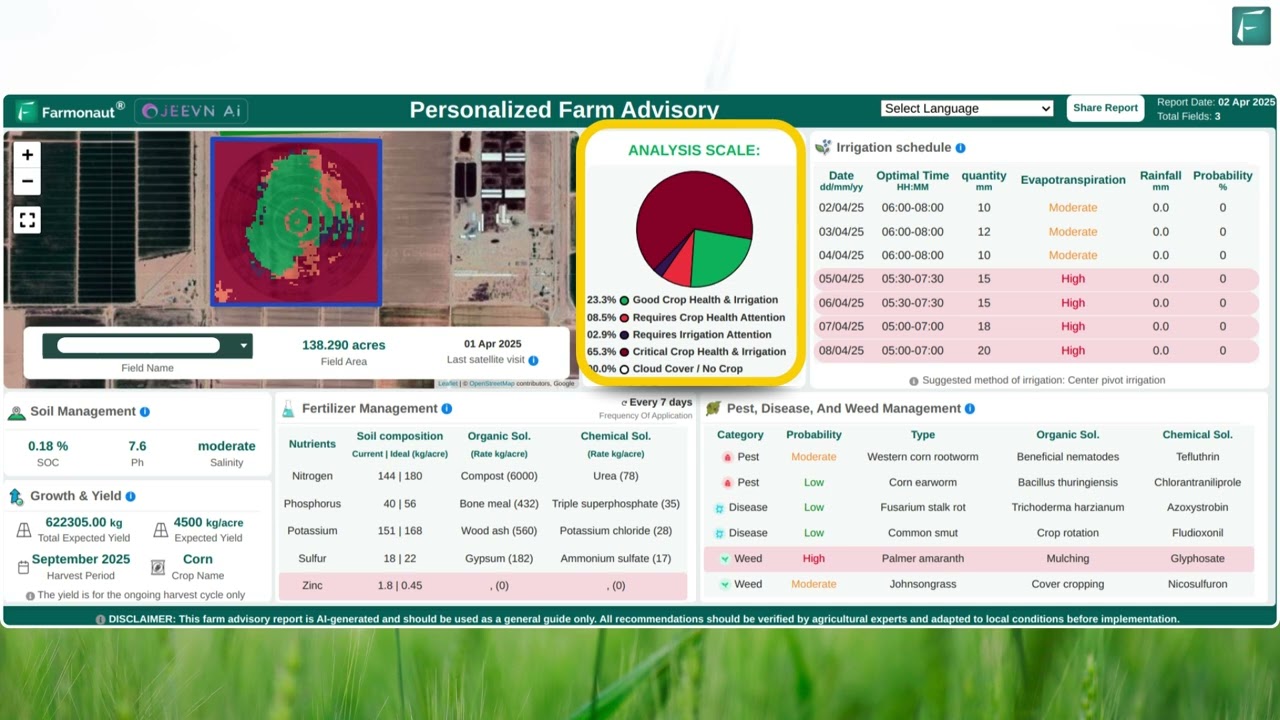
JEEVN AI: The Future of Smart Farming with Satellite & AI Insights
How Blockchain Improves Food Traceability & Transparency
The ability to track food from farm to fork is a critical concern for both consumers and the broader agricultural ecosystem. As demand for greater assurance around food safety, origin, and ethical sourcing has surged, blockchain food traceability companies have emerged as key players in making traceability not only possible, but ultra-efficient.
- Every step in the food supply chain—including planting, harvesting, processing, and distribution—is recorded on blockchain.
- This creates an unalterable, transparent chain of events—a history secured against tampering or fraud.
- Consumers can instantly verify product authenticity and quality via simple QR codes or mobile apps. However, users should remain cautious of QR Code scams, as malicious actors can exploit fake or tampered codes to mislead consumers despite the underlying blockchain security.
- Blockchain-based smart contracts ensure all data and transactions are up-to-date, accurate, and universally accessible to permitted stakeholders.
The result is a profound boost in consumer confidence, the reduction of food fraud, and the creation of a far more transparent and sustainable agricultural ecosystem.
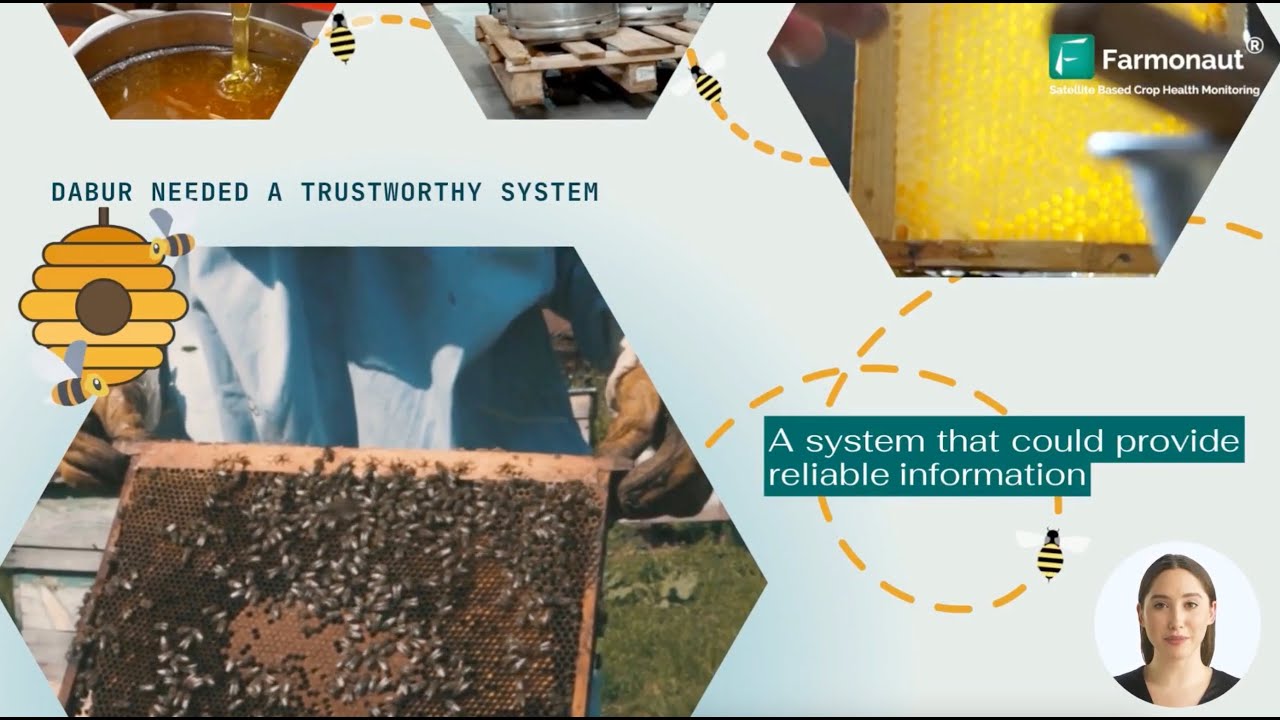
Farmonaut®’s Blockchain Traceability Solution for Honey
“AI-driven smart agriculture is projected to increase food traceability data accuracy by up to 90% in 2025.”
Impact Table: Traditional vs. Blockchain & AI-Enabled Food Supply Chains
| Feature/Metric | Traditional Food Supply Chain (Est. 2024) | With Blockchain & AI Integration (Est. 2025) | Estimated Improvement (%) |
|---|---|---|---|
| Traceability Speed (Days) | 7 | 1 | ~85% |
| Data Transparency | Partial, manual access | Full, real-time blockchain records | 100% |
| Error Rate (%) | 15% | 2% | ~87% |
| Fraud Cases (Per Year) | 1200+ | < 100 | ~92% |
| Sustainability Score (Index 0-100) | 55 | 88 | ~60% |
| Consumer Trust Level (Index 0-100) | 65 | 95 | ~46% |
Farmonaut’s Role in Blockchain-Based Traceability & AI Smart Agriculture
As a leading satellite technology company, we at Farmonaut are committed to making advanced, yet affordable solutions accessible for all segments of the agriculture sector. Our platform brings together:
- Satellite-based monitoring (crop health, soil conditions, resource usage)
- Real-time AI advisory (personalized crop, weather, and input guidance via Jeevn AI)
- Blockchain-based traceability (learn more) to ensure secure, transparent supply chains.
- Resource and fleet management for operation efficiency (Fleet Management Solution).
- Environmental impact tracking (including carbon footprinting for sustainable farming).
Our unique approach leverages blockchain to record, secure, and share all data points along the food supply chain. The transparency ensures regulatory compliance, builds trust, and empowers everyone from smallholder farmers to global food brands. Furthermore, our satellite and AI-backed services maximize resource efficiency, providing tangible benefits in productivity, environmental management, and operational cost reduction across agriculture, mining, and infrastructure.

2025 Veg Equipment Boom: Smart Farming & AI Telematics
What Makes Blockchain-Based Traceability Indispensable?
- Immutable records: All supply chain actions and data are securely stored and cannot be altered retrospectively.
- Decentralized architecture: No single entity controls or can manipulate the entire chain; all stakeholders can verify transactions and product histories.
- Provenance and ethical sourcing: Stakeholders and consumers have an unbroken view of a product’s journey from farm to table, supporting sustainability and ethical practices.
- Quick response to issues: In the event of contamination or fraud, implicated batches are instantly identified for recall or investigation.
We support seamless API integrations—whether businesses, governments, or developers want to connect with our blockchain and satellite data.
Access Farmonaut API | API Developer Docs
Smart Farming Future: Precision Tech & AI Enhance Sustainability
From Farm to Fork: Practical Examples of Blockchain-Based Smart Contracts & AI
Let’s break down a typical product journey in the 2025 food supply chain empowered by blockchain-based smart contracts and AI.
1. Planting & Growth Monitoring
- IoT sensors and satellite imagery collect real-time data about soil health, moisture, growth rates, and weather conditions.
- AI algorithms analyze data, identify optimal input timings (water, fertilizer), and alert farmers about potential issues (pests, disease, drought).
- Smart contracts trigger automated orders—supplies are dispatched and payments securely released upon satellite-verified planting.
2. Harvesting & Initial Processing
- Harvest events are securely recorded on blockchain. Each batch gets a digital ID.
- Processing facilities can access full lifecycle data for quality verification before accepting shipments.
- If environmental compliance or organic farming standards are required, smart contracts automatically validate or reject batches based on satellite and sensor records.
3. Transportation, Distribution & Retail
- Shipment GPS and environmental data (temperature, humidity) are monitored to ensure safety and quality throughout delivery.
- If a delay, temperature spike, or route deviation occurs, smart contracts can trigger automatic alerts and delays or returns (minimizing spoilage and waste).
- At retail, the entire product journey can be viewed by scanning a QR code—instantly displaying authenticity, origin, handling, carbon footprint, and safety compliance.

BEE True: A Smart, Scalable Honey Traceability Solution
AI: Maximizing Blockchain Food Traceability in 2025
-
AI-driven data analysis enables:
- Predictive alerts for weather and crops, minimizing yield loss from environmental uncertainty.
- Real-time monitoring and diversion of resources or logistics if unanticipated challenge arise.
- Proactive identification of plant diseases, pest outbreaks, or supply chain bottlenecks before they escalate.
- Blockchain integrations mean that all these AI insights, decisions, and actions are logged and instantly verifiable for compliance and audits.
- Smart contracts automate repetitive decisions (like input reordering or insurance filing) based on AI-assessed thresholds, freeing up farmers and stakeholders to focus on growth and strategy.
- This cycle builds a smarter, more resilient agricultural future—where transparency enhances food safety, trust, and efficiency throughout the ecosystem.

Smart Farming Future: Precision Tech & AI
Driving Sustainability and Regulatory Compliance
In 2025, governments and certification bodies increasingly require verifiable evidence of eco-friendly farming practices throughout supply chains. Blockchain-based traceability provides a bulletproof audit trail—dramatically simplifying sustainability assessment and compliance documentation.
- Every eco-friendly action is securely logged (e.g., water conservation, reduced chemical use, carbon footprint reduction).
- Certification agencies have instant access to immutable blockchain records for each batch, reducing the time and cost of audits—while ensuring high integrity of sustainable labels.
- Producers enjoy access to premium markets and sustainability-linked financing, because their records prove alignment with environmental goals.
Want to see these features in action? Read more about our blockchain-based product traceability services.
Additionally, for large-scale management and compliance at the organization level, see our agro admin app.

Farmonaut: Cultivating Innovation in Agriculture
Risk Mitigation: Food Safety & Rapid Recall Response
Food safety recalls and contamination events present critical challenges. Blockchain-based traceability turns complicated crisis management into a near-instant, targeted procedure:
- Each batch is uniquely identified, linked to all records and actions performed on blockchain.
- If a safety breach arises (e.g., contamination, spoilage, allergen exposure), affected units are pinpointed immediately.
- Impacted batches can be isolated and recalled with minimal economic loss and public health impact.
- Consumer trust is preserved because the recall is efficient and highly targeted—a stark contrast to large-scale, disruptive recalls of the past.
Looking for a solution that supports crop loan and insurance verification for risk management? Explore Farmonaut’s blockchain-based verification for loans and insurance.
Future: Decentralized Marketplaces & Smart Collaboration
By 2025 and beyond, blockchain-based smart contracts and AI are revolutionizing not just traceability, but the very structure of agri-food commerce and collaboration. Here’s what’s emerging:
- Decentralized marketplaces: Using blockchain-based smart contracts, farmers can sell directly to global buyers—bypassing traditional intermediaries, and accepting instant, automated payments upon confirmed delivery and quality verification.
- Data-driven collaborative farming models: Blockchain-based platforms and AI allow for secure, real-time sharing of agricultural data across local and global cooperative networks.
- Fully digitalized agricultural ecosystems: Precision agriculture, personalized AI crop advisory, and traceable, smart contracts-based supply chain relationships become standard practice.
Farmonaut Apps & Solutions: Experience Next-Gen Agriculture



Try our mobile or web/browser app today to:
- Access satellite-based farm monitoring for every field
- Utilize AI advisory for real-time crop and weather insight
- Manage blockchain-based traceability for transparent supply chains
- Streamline resource usage, enable regulatory reporting, and boost sustainability
Looking to scale or integrate with your systems? Explore our API and developer documentation for seamless integration.
For advisory on crop plantation, forest monitoring, and resource optimization:
Check our specialized solutions.
FAQ: Blockchain & AI in Food Traceability (2025)
What is blockchain-based food traceability?
Blockchain-based food traceability is the use of a decentralized, immutable digital ledger where every significant event in the food supply chain—planting, harvesting, processing, logistics—is securely recorded. This allows all permitted stakeholders and consumers to transparently verify product origin, journey, and handling history.
How do smart contracts boost food supply chain efficiency?
Smart contracts automate the execution of supply chain agreements, releasing payments, confirming delivery, and validating product quality without manual intervention or intermediaries. This reduces disputes, minimizes delays, and lowers transaction costs.
How does AI smart agriculture improve food quality and sustainability?
AI in agriculture enables automated, data-driven decision-making for irrigation, fertilization, pest control, and harvesting, increasing yields while minimizing resources and environmental impact. Integration with blockchain ensures every action is recorded and verifiable.
Can blockchain and AI stop food fraud completely?
While no system is absolutely infallible, blockchain and AI together significantly reduce fraud by providing transparent, tamper-proof records and real-time anomaly detection. This dramatically decreases the risk and scale of food fraud.
What are the benefits for smallholder farmers?
Smallholder farmers gain greater negotiating power, faster payments, more access to global markets, better compliance, and resource efficiency. Satellite, AI, and blockchain make advanced solutions affordable and accessible to farms of any size.
How do consumers access food product traceability information?
In most blockchain-based supply chains, consumers can scan a QR code or barcode on packaging to view detailed blockchain records, including the farm of origin, sustainability certifications, safety checks, and more—directly from their smartphone.
Where can I learn more or try these tools?
Visit the official Farmonaut traceability solution page, try our Web and Mobile Apps, or explore our API platform.
Conclusion: Transforming Agriculture for a Transparent, Sustainable Future
By the year 2025, the seamless integration of blockchain-based smart contracts and AI smart agriculture is rapidly becoming the industry norm. This transformation offers profound benefits for the broader agricultural ecosystem:
- Empowering farmers with timely, verifiable compensation and improved market access.
- Boosting consumer confidence via transparent, immutable food histories.
- Enabling unmatched sustainability and environmental compliance across the supply chain.
- Reducing risk and economic disruption through rapid, targeted incident response.
- Enabling data-driven innovations for both smallholders and large agri-enterprises.
As these technologies mature and their adoption proliferates, the future of agriculture is assured: more efficient, digitally connected, and environmentally responsible than ever before.
Let’s build a future where trust, quality, and transparency stand at the core of every food supply chain.
Discover more about blockchain-based food traceability, AI smart agriculture, and satellite-powered solutions for your field at Farmonaut’s Traceability Solutions.

 ZOL Zimbabwe
 Innomick
 Juligerm
 AdBio
AdBio MISE Maroc
 Drift-Sense
 NWNS
NWNS Red August Group
 Farm Inc
 WeMe Global
 Agrotoken
 Blue BearX
 Insignito
 Croptimum
 DnCubed
 Field Capacity
 Indosistim Teknologi
 Liquify Digital
