

Boost Sustainable Farm & Forestry Yields: 10 Tips
“Sustainable farming can increase soil organic matter by up to 58%, enhancing crop yields and ecosystem health.”
“Efficient water management in agriculture reduces water usage by up to 40%, supporting long-term resource sustainability.”
Table of Contents
- Introduction: Sustainable Resource Management in Agriculture and Forestry
- 1. Prioritize Soil Health for Reliable Yields
- 2. Enhance Water Efficiency with Modern Stewardship
- 3. Diversify with Crop Rotations & Agroforestry Systems
- 4. Adopt Precision Technology: Smarter Resource Use
- 5. Boost Biodiversity for Resilient Ecosystems
- 6. Practice Responsible Inputs and Integrated Nutrient Management
- 7. Embrace Climate Resilient Strategies for Land Stability
- 8. Circular Economy: Turn Residues & Waste into Value
- 9. Engage in Proactive Risk Planning and Early Warning Systems
- 10. Strengthen Governance, Education & Knowledge Sharing
- Comparison Table of Sustainable Practices: Agriculture vs. Forestry
- How Farmonaut Empowers Sustainable Land Management
- FAQ: Sustainable Resource Management
- Final Thoughts: Shaping the Future of Sustainable Yields
Introduction: Sustainable Resource Management in Agriculture and Forestry
Sustainable resource management sits at the intersection of agricultural productivity and forest stewardship, recognizing that the health of soil, water, and biodiversity are foundational to secure food supplies and robust ecosystems. In every landscape—from vital croplands to expansive forests—the pursuit of maximizing yields must harmoniously coexist with ecological integrity, ensuring both present and future generations are supported.
This blog, focused on boosting sustainable farm & forestry yields, offers actionable, research-based tips rooted in the latest practices, management strategies, and cutting-edge technology. Whether you’re managing a regenerative farm, a productive forest, or working within a broader landscape, the following insights will help enhance yields, promote resilience, and secure long-term sustainability.



1. Prioritize Soil Health for Reliable Yields
Soil health is the foundation of every agricultural and forestry system. High-quality soil supports thriving root systems, robust plant growth, and optimal nutrient cycling, directly impacting yields and overall ecosystem stability. Sustainable soil management involves a host of practices designed to boost soil structure, moisture retention, and microbial diversity.
- ✔ Cover Cropping: Reduces erosion, improves organic matter, and enhances nutrient cycling.
- ✔ Reduced Tillage: Preserves soil structure, reduces compaction, and maintains soil microbiome.
- ✔ Organic Amendments: Adds compost, manure, or biochar to invigorate soil health.
- ✔ Monitor Soil pH: Maintain optimal conditions for nutrient uptake.
- 📊 Data insight: Sustainable practices can raise soil microbial activity and organic carbon, driving up to 15% yield increases.

2. Enhance Water Efficiency with Modern Stewardship
Water is a limiting resource in both farming and forestry. Efficient irrigation and strategic water management are critical for adapting to climate volatility and ensuring long-term resilience. Good stewardship reduces freshwater use, minimizes stress on aquifers, and keeps ecosystems healthy.
- ✔ Efficient Irrigation: Drip or precision sprinklers apply water directly to crop roots, reducing waste and evaporation.
- ✔ Rainwater Harvesting: Collect and store rainwater for use during dry periods.
- ✔ Riparian Buffers: Maintain vegetated zones along streams to reduce runoff and protect aquatic ecosystems.
- ✔ Monitor and Plan: Track seasonal rainfall and adjust schedules accordingly for both agriculture and forestry projects.
- ⚠️ Risk: Poor water planning leads to salinization, nutrient loss, and yield declines in sensitive zones.
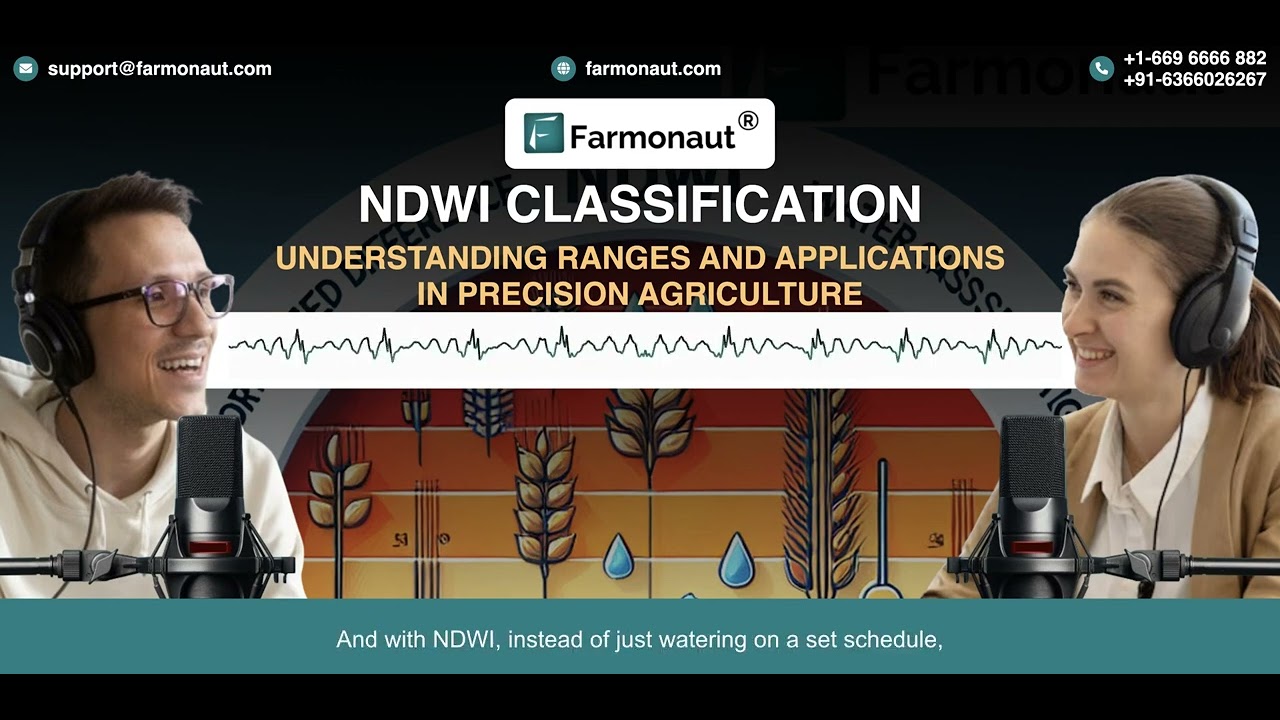
3. Diversify with Crop Rotations & Agroforestry Systems
Mono-cropping or single-species forestry can expose systems to significant risk from pest cycles, soil degradation, and climate variability. Rotating crops and integrating agroforestry increases yields, breaks disease cycles, and revitalizes the landscape.
- ✔ Crop Rotations: Alternate crops with different nutrient needs to improve soil structure and reduce pest pressure.
- ✔ Agroforestry: Blend trees, shrubs, and annual crops for diversified production and improved biodiversity.
- 📊 Data insight: Agroforestry increases total yield potential by up to 20% compared to monoculture, while enhancing carbon sequestration and climate resilience.

4. Adopt Precision Technology: Smarter Resource Use
Precision agriculture and forestry technologies—ranging from soil sensors to satellite monitoring—target inputs to actual crop needs, reducing waste, lowering environmental footprints, and optimizing economic returns.
- ✔ Soil & Water Sensors: Monitor moisture and nutrient levels for fine-tuned irrigation and fertilization.
- ✔ Remote Satellite Monitoring: Leverage high-frequency imagery for real-time crop and forest health assessments.
- ✔ Variable Rate Application: Use data-driven systems to apply fertilizer and water only where needed.
- 📊 Data insight: Precision inputs reduce costs by as much as 25% while sustaining or increasing yields and protecting downstream water quality.
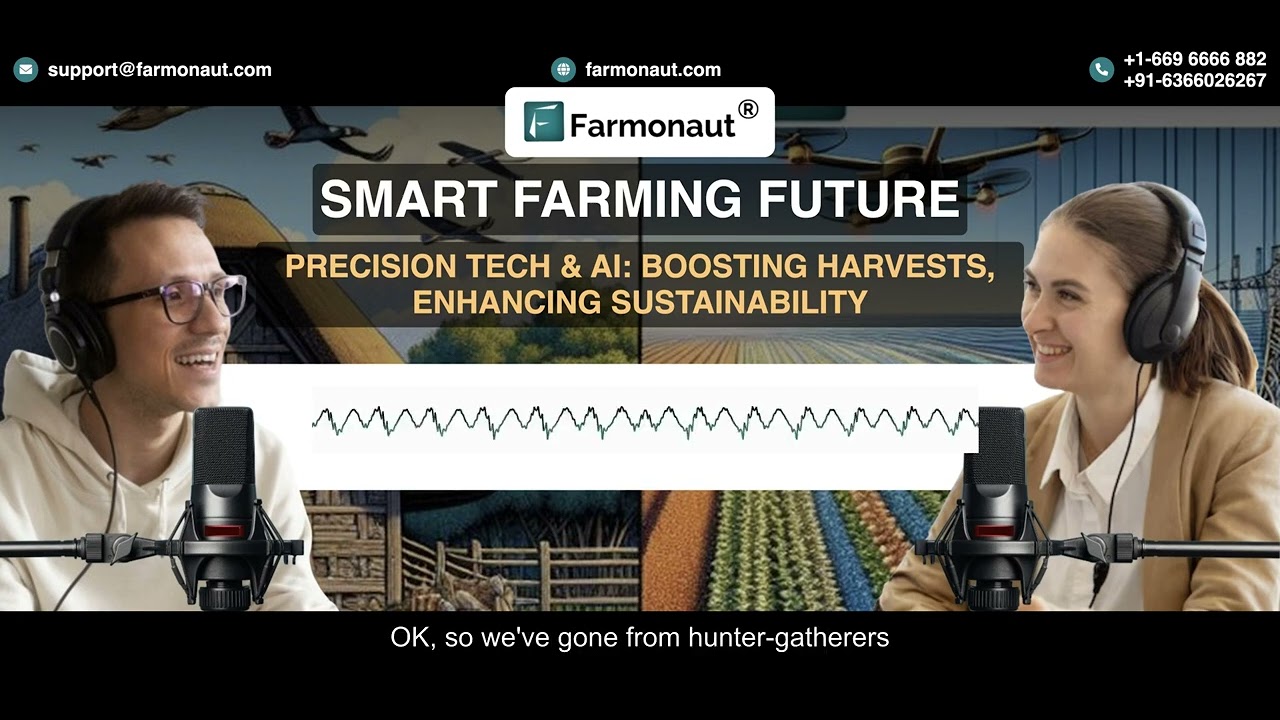
Explore the Farmonaut API and API Developer Docs to integrate field-level monitoring, NDVI analysis, and actionable weather forecasts into your workflow for superior precision and efficiency.
5. Boost Biodiversity for Resilient Ecosystems
Biodiversity enhances the resilience of both agricultural and forestry systems, providing vital ecosystem services such as pollination, pest regulation, and nutrient cycling. Conserving and increasing habitat diversity improves long-term stability and adaptive capacity.
- ✔ Native Trees and Shrubs: Plant for enhanced shade, microclimate regulation, and habitat connectivity.
- ✔ Pollinator-Friendly Margins: Establish flower strips and hedgerows—reduced chemical spread enhances pollinator presence.
- ✔ Minimize Monocultures: Diverse species foster more robust and adaptable ecosystems.
- ⚠️ Risk: Loss of genetic diversity can amplify pest/disease outbreaks and decrease resilience to environmental change.

- 🌳 Plant native trees for shade and structure
- 🦋 Maintain wildflower strips along field margins
- 🐦 Install bird and bat boxes for natural pest control
- 🌿 Retain mixed-species hedges to enhance corridors
- 🐝 Minimize insecticide use to protect pollinator health
6. Practice Responsible Inputs and Integrated Nutrient Management
Balanced nutrient management is essential for sustaining soil fertility, protecting water quality, and reducing economic and environmental costs. Excessive or mismanaged input use leads to nutrient runoff, pollution, and missed yield opportunities.
- ✔ Soil Testing: Target amendments to real-time field needs using lab or satellite-derived soil maps.
- ✔ Integrated Nutrient Management: Combine organic and synthetic inputs based on actual crop requirements.
- ✔ Proper Storage/Timing: Synchronize application with crop uptake and rain forecasts to minimize losses.
- ⚠️ Limitation: Over-reliance on synthetics elevates costs and can degrade long-term soil health.
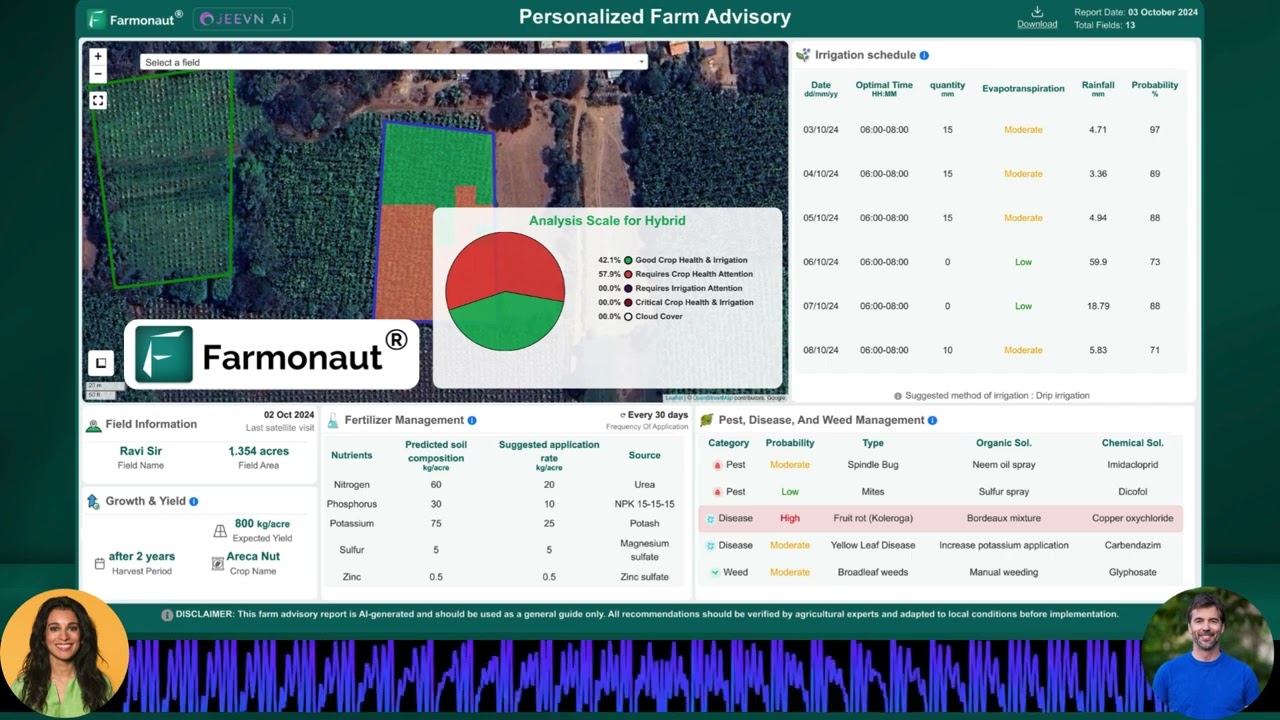
Farmonaut’s advisory tools, available in our main application, can deliver custom recommendations aligned to satellite-monitored field conditions, reducing over-application and supporting responsible, sustainable yields.
7. Embrace Climate Resilient Strategies for Land Stability
The unpredictable impacts of climate change demand adaptive, resilient management of both farms and forests. Practices that buffer against drought, floods, and extreme weather reduce risk to yields, help maintain ecological integrity, and secure livelihoods.
- ✔ Drought-Tolerant Varieties: Plant adaptive species/varieties that maintain productivity under limited water.
- ✔ Soil & Water Conservation: Terracing, mulching, and residue retention minimize erosion and runoff during heavy rainfall events.
- ✔ Reforestation & Restoration: Restore damaged land and degraded forests to boost landscape-wide carbon storage.
- ✔ Create Buffer Zones: Use natural vegetation to shelter crops and maintain habitat continuity across the landscape.
- 🌱 Mulch fields to reduce evaporation
- 🌳 Plant windbreak trees to lower wind erosion
- 💧 Store rainwater for critical periods
- 🛤️ Restore degraded land for landscape stability
- 🔄 Rotate crops & species for adaptive capacity

8. Circular Economy: Turn Residues & Waste into Value
Circular resource management transforms waste—like crop residues and forestry byproducts—into assets, building soil organic matter, fueling on-site energy, or generating new revenue streams. This not only prevents environmental problems but also aligns with the growing demand for sustainable products.
- ✔ Compost & Mulch: Convert crop/farm/forest residues into organic amendments; boost soil health for the next cycle.
- ✔ Bioenergy: Utilize biomass for community heating, power, or fuel production.
- ✔ Innovative Products: Timber processing residues can be transformed into panels, pellets, or organic fertilizers.
- ⚠️ Risk: Burning residues leads to nutrient loss, carbon emissions, and air pollution—avoid open burning whenever possible.
Integrate Farmonaut’s Fleet & Resource Management to optimize harvest, transport, and logistics of residues, minimizing operational costs and maximizing efficiency in circular production models.
9. Engage in Proactive Risk Planning and Early Warning Systems
Proactive risk management is integral to sustaining yields in variable climates and evolving markets. Early-warning tools—leveraging AI and satellite insights—enable you to plan, mitigate losses, and maintain reliable output.
- ✔ Disease & Pest Forecasting: Use remote monitoring and predictive analytics for outbreak prevention.
- ✔ Remote Sensing Alerts: Detect drought, flood, and heat stress in real time with satellite and AI technology.
- ✔ Insurance & Verification: Satellite-based verification supports insurance claims, credit access, and risk reduction—see Farmonaut’s Crop Loan and Insurance Verification.
- ⚠️ Risk: Delayed response to extreme events can cause catastrophic losses—invest in timely, data-driven alerts.

10. Strengthen Governance, Education & Knowledge Sharing
Effective governance, education, and knowledge transfer create lasting frameworks for sustainable management in agriculture and forestry. Empowering farmers, forest managers, and communities with the latest science and technology amplifies positive outcomes.
- ✔ Clear Tenure Rights: Secure land access encourages long-term stewardship.
- ✔ Certification & Incentives: Engage with voluntary sustainability standards for access to premium markets.
- ✔ Extension Services: Foster peer-to-peer and expert-led learning networks—critical for adoption of best practices.
- ✔ Transparent Monitoring: Use digital tools for accountability, traceability, and continuous improvement. Try Farmonaut’s Blockchain-Based Traceability for trusted product verification.
- ✔ Engage Local Knowledge: Collaborate with Indigenous and local communities for robust, context-appropriate management.
Comparison Table of Sustainable Practices: Agriculture vs. Forestry
| Sustainable Practice | Estimated Yield Increase (%) (Agriculture / Forestry) |
Soil Health Impact (Agri / Forestry) |
Water Efficiency Improvement (%) (Agri / Forestry) |
Biodiversity Gain Index (1–10) (Agri / Forestry) |
Climate Resilience Score (1–10) (Agri / Forestry) |
|---|---|---|---|---|---|
| Soil Health Management | 15% / 8% | High / Medium | 18% / 12% | 5 / 4 | 7 / 6 |
| Water Stewardship/Efficiency | 12% / 5% | Medium / Low | 35% / 15% | 3 / 4 | 8 / 7 |
| Crop Rotation / Forest Mixed Species | 18% / 10% | High / High | 14% / 9% | 7 / 7 | 7 / 9 |
| Precision Technology Adoption | 20% / 12% | Medium / Medium | 30% / 20% | 4 / 4 | 9 / 8 |
| Boosting Biodiversity/Habitat | 10% / 8% | Medium / High | 10% / 10% | 9 / 10 | 8 / 10 |
| Integrated Nutrient Management | 15% / 7% | High / Medium | 20% / 8% | 6 / 5 | 8 / 7 |
| Climate Adaptation Strategies | 10% / 10% | Medium / High | 16% / 10% | 5 / 6 | 10 / 10 |
| Residue/Waste Circularity | 12% / 10% | High / Medium | 22% / 9% | 7 / 5 | 7 / 8 |
| Proactive Risk Planning | 8% / 10% | Medium / Medium | 19% / 20% | 5 / 5 | 9 / 9 |
| Governance/Education & Knowledge | 10% / 8% | Medium / Medium | 12% / 7% | 8 / 8 | 10 / 9 |
“Sustainable farming can increase soil organic matter by up to 58%, enhancing crop yields and ecosystem health.”
“Efficient water management in agriculture reduces water usage by up to 40%, supporting long-term resource sustainability.”
How Farmonaut Empowers Sustainable Land Management
As a pioneering satellite technology company, we at Farmonaut offer advanced solutions for real-time monitoring, AI-driven advisories, and blockchain-based traceability—all integral to sustainable agriculture and forestry management.
- ✔ Satellite Imagery & AI Insights: Remotely monitor soil health, vegetation, and water stress for more efficient planning and resource use.
- ✔ Jeevn AI Advisory: Provides tailored strategies and weather updates directly to decision-makers.
- ✔ Blockchain Traceability: Enhances supply chain authenticity and transparency. Learn more about our Traceability solutions.
- ✔ Fleet & Resource Management Tools: Optimize logistics and reduce waste during harvest and transport—see our fleet solutions.
- ✔ Environmental Impact Tracking: Quantify and benchmark resource use, emissions, and ecosystem conservation across every parcel you manage with scalable, remote tools.
Farmonaut’s solutions are available on web, Android, and iOS—making advanced farm and forest management accessible to all stakeholders, from individual growers to large enterprises and governments.
FAQ: Sustainable Resource Management in Agriculture and Forestry
What is sustainable resource management in agriculture and forestry?
Sustainable resource management ensures that soil, water, forest, and biodiversity are used efficiently and responsibly, maintaining ecological balance while meeting present and future needs. It combines practices like soil conservation, efficient irrigation, integrated pest management, and circular economy for residues.
How can improving soil health boost yields?
Healthy soils have higher organic matter, better structure, and improved water retention, directly increasing crop and forestry yields. Practices like cover cropping, organic amendments, and reduced tillage support these outcomes.
What role does water management play in sustainable yields?
Efficient water management reduces input costs, minimizes resource stress, and prevents runoff-driven soil and nutrient loss—critical for sustaining agricultural productivity and ecosystem health.
Are precision technologies accessible to smallholders and large operations alike?
Absolutely—with affordable, scalable tools like those offered by Farmonaut, all users can leverage satellite monitoring, AI-driven advisories, and traceability solutions to inform resource management decisions at any scale.
Why is biodiversity important for yield resilience?
Biodiversity supports natural pest regulation, pollination, nutrient cycling, and climate adaptation, all of which contribute to more reliable yields and landscape stability.
Does circular economy practice make financial sense?
Transforming waste and residues into compost, energy, or value-added products cuts costs, enhances environmental outcomes, and meets evolving market and regulatory demands for sustainability.
Final Thoughts: Shaping the Future of Sustainable Yields
The future of agriculture and forestry rests on our ability to manage resources sustainably, efficiently, and resiliently. From improving soil health and optimizing water stewardship, to enhancing biodiversity, practicing circular economy, and embracing precision technology, these ten tips represent the pillars of a productive and ecologically sound landscape.
Remember—innovation, knowledge sharing, and practical adoption are key. By integrating these strategies within your operations, you not only increase yields and economic value, but also reinforce landscape resilience and stability for generations to come. Tools like Farmonaut’s Large Scale Farm Management App put cutting-edge monitoring and advisory solutions right at your fingertips, allowing everyone—from single farmers to multi-asset land stewards—to plan, act, and adapt with confidence.
For continued guidance and to advance your sustainability journey, download our application or reach out for custom solutions on your next farm, forestry, or landscape project. Together, let’s forge a path toward a greener, more abundant, and sustainably managed world.
- ✔ Sustainable resource management underpins food security, resilient yields, and thriving rural economies.
- 📊 Remote sensing and AI-powered platforms make data-driven decision-making accessible to all growers and forest managers.
- 🌎 Biodiversity and circular economy practices amplify long-term stability and open access to new markets and incentives.
- ⚠ Ignoring soil and water imbalances poses serious risks to productivity—proactively monitor and plan for resilience.
- 🔗 Education, transparent governance, and knowledge sharing catalyze system-wide improvement and help scale best practices globally.

 Godrej Agrovet
 Hayleys Agriculture
 Linx Agritech
 Adinet
 Save Your Soils
 GalaxEye Space
 Grandstream Algérie
 XOS Realty
 Geospatial Lab Africa
 Agro La Gándara
 HIPSAC
 ZOL Zimbabwe
 Juligerm
 AdBio
AdBio MISE Maroc
 NWNS
NWNS Red August Group
 Farm Inc
 WeMe Global
 Agrotoken
 Blue BearX
 Insignito
 DnCubed
 Indosistim Teknologi
 Liquify Digital
 CU Foods
 BeyondTech Global
 Rouge VC
 AgroRisk
 Oath Inc
 Esri North East Africa
 MDCV UK
 Etech Consulting Madagascar
 Vestlandsforsking
 WB Dev
 Sama Premium
 Tres Valles
 Blickwinkel
 Agricultural Credit Policy Council
 eKGIS
eKGIS Mostas Tech
 Andex
Andex Deluxe Conseil
 WICO
WICO Chimera Innovation
 SkyHarvest
 Teledarbas
 Exurbia Geospatial
 FieldZero
