

Buy a Small Farm or Rent: 7 Smart Tips for 2026 Success
Meta Description: Buy a small farm or rent? Discover 7 actionable tips for buying, renting, equipment selection, and eco-infrastructure to build a sustainable small farm in 2026.
“In 2025, over 60% of small farm buyers prioritize eco-friendly farm sheds and sustainable equipment selections.”
Table of Contents
- Introduction: Why Small Farms Matter in 2026
- Buying vs Renting a Small Farm: Which Path is Right?
- Table: Buying vs Renting a Small Farm – Sustainability & Costs
- Smart Tip 1: Know Your Purpose and Scale
- Smart Tip 2: Land Selection, Acquisition, and Lease Essentials
- Smart Tip 3: Understanding the Costs of Buying and Renting
- Smart Tip 4: Essential Equipment and Small Farmall Tractors
- Smart Tip 5: Small Farm Sheds and Infrastructure Planning
- Smart Tip 6: Sustainable Practices, Regenerative and Organic
- Smart Tip 7: Maximizing Value from Digital and Satellite Resources
- FAQs: Buying, Renting, and Equipping Small Farms
- Conclusion: Building a Sustainable Future
Introduction: Why Small Farms Matter in 2026
The growing interest in sustainable living and the pursuit of local food production are dynamically reshaping how individuals engage with agriculture in 2025 and heading into 2026. The surge in demand for manageable-scale agriculture makes the choice to buy a small farm or rent a small farm more relevant than ever for aspiring farmers, hobbyists, and even established growers seeking tailored expansion or diversification.
- ✔ Key benefit: Small farms benefit communities through food security, eco-friendly practices, and rural economic resilience
- 📊 Data insight: In 2025, over 60% of new small farm buyers actively seek sustainable options such as small farm sheds with solar integration
- ⚠ Risk or limitation: Failing to assess costs and suitable equipment can undermine your farming success
- ✔ Key benefit: Renting a small farm typically reduces setup costs by approximately 35% over buying (2026 projections)
- ⚠ Risk or limitation: Short lease terms may limit the ability to implement permanent sustainability improvements
Whether we are looking to purchase property for diversified crop production or seeking for rent small farms tailored to part-time agriculture, the eco-conscience is guiding our decisions and investments.
Buying vs Renting a Small Farm: Which Path is Right?
Making the decision to buy a small farm or rent a small farm sets the foundation for your adventure into small-scale farming in 2026. Each route presents its unique advantages, responsibilities, and implications for cost, flexibility, infrastructure setup, and sustainable agricultural development.
Advantages of Buying a Small Farm
- ✔ Long-term Stability: Ownership provides the ability to make permanent improvements (eco-sheds, solar, agroforestry)
- ✔ Market Asset: As property prices fluctuate (especially in prime rural locations), buyers gain an appreciating asset, especially with regenerative and specialty crops rising in popularity
- ✔ Customization: Full control over infrastructure, including solarized small farm sheds and eco-adapted irrigation
- ⚠ Higher Upfront Costs: Typically larger capital and responsibility for taxes, major maintenance, and improvements
Advantages of Renting a Small Farm
- ✔ Lower Upfront Investment: Ideal for those testing the farming waters or lacking significant capital
- ✔ Flexibility: Seasonal rentals or short-term lease allows adaptation if markets or personal plans change
- ✔ Maintenance Relief: Responsibility for major repairs and property taxes often remains with the owner
- ⚠ Lease Limitations: Less ability for permanent infrastructure or regenerative improvements unless specified in agreements
Small farms for rent pave a low-barrier entry into sustainable agriculture while buying gives you ultimate customization and long-term strategic flexibility for eco-driven growth.
Table: Buying vs Renting a Small Farm – Sustainability & Costs
| Factor | Buying a Small Farm | Renting a Small Farm | Sustainability Impact |
|---|---|---|---|
| Estimated Initial Cost (USD) | $80,000 – $500,000+ (5–50 acres; location-dependent) | $5,000 – $18,000/year (lease or seasonal rental) | Renting reduces resource use and setup costs by 35% |
| Annual Maintenance Cost (USD) | $3,000 – $12,000 | $800 – $3,500 | Owning allows full investment in eco-upgrades; renting may have limits |
| Flexibility/Commitment | Low flexibility; high commitment | High flexibility; lower commitment | Renting is suitable for short-term eco-initiatives |
| Eco-Friendly Setup Options | Full (solar, regen zones, native restoration) | Dependent on lease terms | Buying supports full landscape transformation |
| Suitability for Sustainable Practices | Ideal for long-term regenerative and organic projects | Good for pilots, market gardening, or pop-up agroforestry | Both modes complement eco-agriculture in regional networks |
| Potential for Local Food Production | High (permanent setup, specialty branding possible) | Moderate–High (often tied to terms and scale of rental) | Both crucial for diversified local food economies |
Smart Tip 1: Know Your Purpose and Scale Before You Buy or Rent a Small Farm
Whether aiming to join the growing band of hobbyists or establishing a full-time agricultural business, your exact purpose will dictate every subsequent decision— from acreage to equipment needs.
Start with a manageable scale: For diversified crop production or integrated livestock on a small farm, 5–20 acres is optimal for eco-impact and operational control in 2026.
- Ask Yourself: Are you growing for local food production, regenerative farming, or niche retail (e.g., organic herb, cut flower, or microgreen markets)?
- Understand Your Time Investment: Are you looking to farm full-time or as a weekend pursuit?
- Evaluate Skills & Resources: Do you have prior farm management experience, or will you depend on digital advisory platforms such as satellite analytics?

Remember, investing in the right-sized land is critical. Renting offers a flexible approach to discovering your true operational needs without heavy commitments upfront.
Smart Tip 2: Land Selection, Acquisition, and Key Lease Essentials
Land lies at the heart of all farming ventures. Whether you’re eager to buy a small farm or rent a small farm, the location, soil profile, access to water, proximity to markets, and surrounding rural infrastructure drive your success.
Key Considerations for Land Selection
- ✔ Soil Quality: Test for organic content, drainage, and potential for regenerative improvement
- ✔ Water Access: Secure water rights, reliable supply, or rainwater harvesting opportunities
- ✔ Topography: Eases tractor mobility and supports sustainable drainage for crop resilience
- ✔ Community & Markets: Proximity to local buyers supports fresh food production and reduces transport emissions
For those looking to rent, consider the length and terms of the lease. Will it allow you to establish perennial crops or only annual vegetables? Do you have permission to erect small farm sheds or upgrade infrastructure? If livestock is in your future, confirm fencing and shelter rights.
Types of Lease Arrangements (2025-2026)
- 1. Short Term (Seasonal/Annual): Ideal for new entrants in market gardening
- 2. Multi-Year Lease: Better for livestock or agroforestry production
- 3. Lease-with-Option-to-Buy: Attractive for those aiming for future ownership while managing risk
Many rental agreements also come with access to existing resources: established irrigation, greenhouses, or shared machinery. This can dramatically reduce your initial outlay while you pilot your agricultural concept.
Land with existing infrastructure (solar sheds, fenced paddocks, drip irrigation) commands a premium but can offer faster ROI and sustainability benchmarking—crucial for regenerative agriculture and carbon credits.
Explore satellite-based carbon footprinting tools for small farms:
Measure your farm’s carbon impact with Farmonaut.

Essential Due Diligence Checklist
- ✔ Title & Ownership: Conduct searches with legal/land title offices for lien-free property
- ✔ Environmental Restrictions: Check for protected areas, wetlands, or zoning affecting farm activities
- ✔ Historic Use: Verify previous chemical use, cropping, or contamination
“Renting a small farm for local food production reduces average setup costs by 35% compared to buying in 2026.”
Smart Tip 3: Understanding the Costs of Buying and Renting
Budgeting for your small farm endeavor involves more than the sticker price or rental rates on acres of land. Let’s break down the core cost categories for both models:
- ✔ Acquisition/Lease Cost: Down payment vs. first-year lease
- ✔ Annual Maintenance: Repairs, fencing, mowing, and insurance
- ✔ Infrastructure: Building or maintaining small farm sheds, greenhouses, irrigation
- ✔ Equipment: Tractors (notably small Farmall tractor), tools, carts, harvest bins
- ✔ Utilities & Inputs: Energy, water, seeds, organic amendments
- ✔ Regulatory: Taxes (ownership), permits for structures, market licensing
Underestimating seasonal costs— machinery hires, repairs, and input price swings. Always budget a 10–20% contingency.
Financial Incentives for Sustainable Investments (2025-2026)
More governments are rewarding sustainable agriculture. New and existing owners and tenants may access grants for eco-upgrades (solar-powered farm sheds, drip irrigation, biodiversity field zones).

For digital monitoring or to streamline regulatory reporting (such as carbon accounting), explore API and app-based solutions like our Farmonaut Satellite API. For integration how-tos, see the Farmonaut API Developer Docs.
Mobile Agri-Tech for Financial Clarity



Smart Tip 4: Essential Equipment and Small Farmall Tractor Selection
Choosing the right equipment can make or break the efficiency and sustainability of your small farm operation. Small Farmall tractors remain the go-to machinery for properties under 20 acres. Their balance of power, maneuverability, economical fuel profile, and versatility suit diverse tasks — from tilling to hauling, row cropping, landscaping, and light livestock chores.

Visual List: Key Qualities of the Modern Small Farmall Tractor
- 🚜 Compact Size: Fits limited field parcels and eco-farm access lanes
- 💡 Eco Efficiency: Newest 2025 models offer hybrid and low-emission options
- 🦾 Multi-Task Capable: Swap implements—from seeders to aerators—in minutes
- 🧑🌾 Operator Comfort: Ergonomics and AI guidance reduce fatigue on longer farm days
- ♻️ Sustainability Ready: Pairs well with precision ag, drip systems, and renewable-powered sheds
When equipping your small farm, invest first in a versatile small Farmall tractor and modular implements. Upgrade with telematics and fleet tracking for maximum output—no matter your acreage.
Monitor fleet utilization to minimize downtime—see our recommended satellite fleet management system.

Budget-Friendly Equipment Pathway
- ✔ Buy reconditioned or lease tractors for the first 1–2 years to test operational scale
- ✔ Prioritize implements suited to your primary crops—row planters, low-till cultivators, spreaders
- ✔ Avail shared-use machinery from co-ops or for rent small farms packages to lower annual costs
Visual List: Top 2026 Small Farm Equipment Must-Haves
- 🛢️ Drip Irrigation Systems
- 🌾 Walk-Behind Seeder/Planter
- 🏠 Solar-Powered Small Farm Sheds
- 🤖 Satellite/A.I. Farm Monitoring App (for timely decisions, see our platform above)
- 👩🔬 Soil Health Test Kits
Smart Tip 5: Plan Small Farm Sheds and Infrastructure for Sustainability
A small farm’s backbone is its infrastructure. In 2026, small farm sheds are rapidly evolving from basic shelters to dynamic, multi-purpose spaces equipped for higher sustainability and advanced resource management.
Modern small farm sheds integrate solar panels, rain-catchment roofs, and smart ventilation to protect equipment and crops while reducing energy costs and carbon emissions.
Track infrastructure ROI via digital dashboards using real-time satellite insights on structure exposure and microclimate—for continuous improvement.

Essential Infrastructure Features (2026 Focus)
- ✔ Modular Design: Expand or relocate as production needs shift
- ✔ Climate Smart Upgrades: Solar ventilation, insulation, integrated tool racks, and livestock-friendly setups
- ✔ Greenhouse Attachment: All-year food production and starter seedling protection
- ✔ Efficient Layout: Easy access between sheds, fields, and animal zones
- ✔ Perimeter Security: Wildlife-exclusion fencing and digital monitoring (infrared cameras, solar floodlights)
Smart Infrastructure Planning Tips
- ✔ Analyze wind and sun exposure with satellite tools for optimal shed placement
- ✔ Choose materials and anchor designs that fit annual weather extremes in your location
With Farmonaut’s satellite-based monitoring services, you can remotely check crop progress, field boundaries, and infrastructure integrity. Real-time data and AI-advisories help farmers maintain and adapt their sheds and equipment for peak performance.
Smart Tip 6: Embrace Sustainable, Regenerative, and Organic Farming
Accelerating the transition to sustainable and regenerative agriculture is no longer optional in 2026. Whether you buy a small farm or rent a small farm, integrate practices that restore soil health, enhance biodiversity, and sequester carbon.
Regenerative strategies—no-till, cover-cropping, silvopasture, and biodiversity zones—qualify your farm for premium markets, carbon markets, and eco-labelling schemes.
Verify and document your sustainable practices with satellite and blockchain traceability:
Enable transparent farm-to-market records here.
Top Sustainability Pathways for 2026+ Small Farms
- ✔ Soil Regeneration: Build soil carbon and fertility with compost, green manures, and integrated livestock
- ✔ Perennial Cropping: Consider free-standing orchards or nut crops, depending on climate/lease horizon
- ✔ Agroforestry Zones: Shelterbelts and pollinator strips for pest resilience and biodiversity
- ✔ Digital Traceability: Document inputs, yields, and supply chain for food assurance and premium pricing
Unlock Eco-Finance and Risk Reduction
- ✔ Explore satellite-based & AI-verified insurance for small farms to reduce crop risk: Check smarter insurance solutions
- ✔ Use satellite agri-advisory platforms to optimize watering, planting dates, and reduce input waste (see app links above)
Smart Tip 7: Maximize the Value of Digital and Satellite Resources
Embracing digital agriculture in 2026 is critical for small farm success—whether you own, rent, or support local food production through contract growing.
- ✔ Receive real-time crop and field alerts anytime, anywhere, using mobile apps powered by remote sensing
- ✔ Access AI-driven advisory for proactive farm management and cost savings
- ✔ Utilize satellite-based mapping for large-scale farm management & compliance—more info here

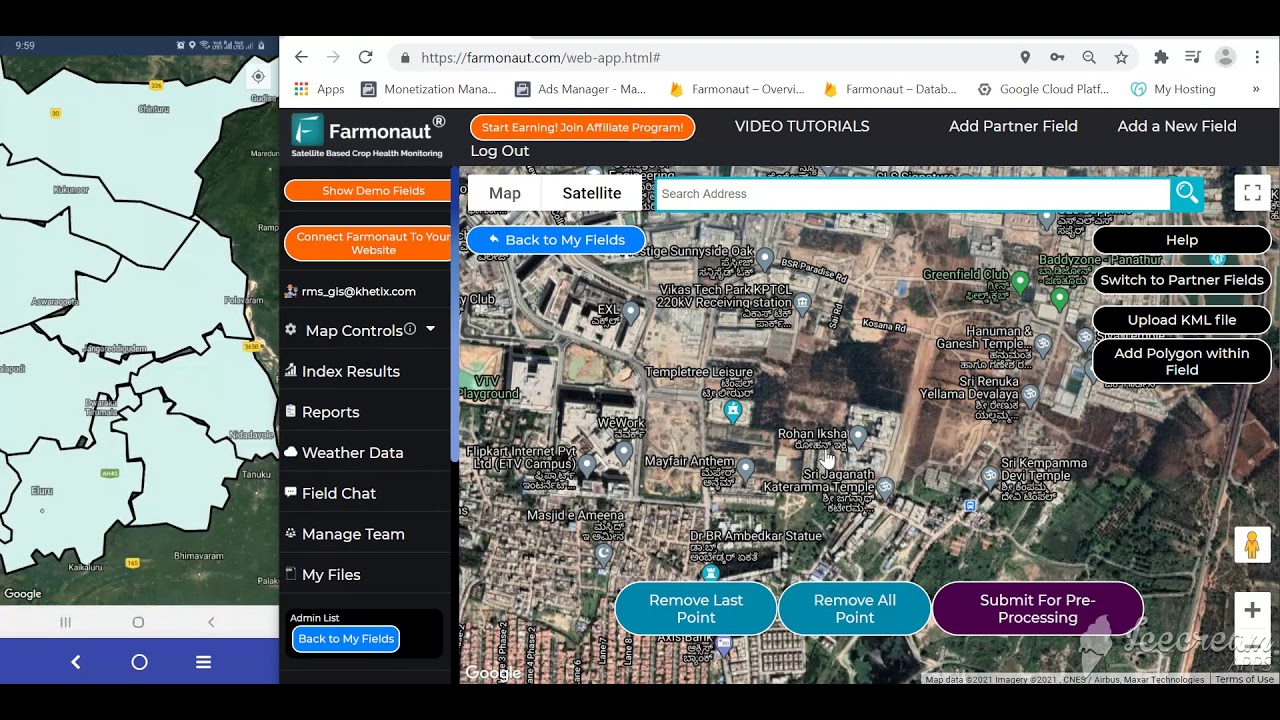
Farmonaut’s app, accessible via web, Android, and iOS, empowers everyone from small farm owners to for rent small farms tenants to monitor crops, receive AI advisory, and benchmark performance against sustainability targets.
- ✔ Integrate blockchain traceability for eco-labeling and secure supply chain verification (learn more here)
- ✔ Evaluate and reduce carbon emissions with affordable footprinting tools (see options)
Bullet Summary: Advantages of App-Based Remote Monitoring
- ✔ Timely Alerts: Disease, drought, and stress signals sent straight to your phone
- ✔ Resource Efficiency: Lower input waste and boost yield with data-driven schedules
- ✔ Risk Reduction: Proactive insurance, compliance, and disaster monitoring
- ✔ Market Opportunity: Enhanced traceability for local food sales and premium contracts
Ignoring digital tools and remote operations puts you at a strategic disadvantage—real-time insight is the new currency of eco-farming in 2026.
FAQs: Buying, Renting, and Equipping Small Farms
Is it better to buy a small farm or rent a small farm in 2026?
Answer: The right choice depends on your financial situation, desired flexibility, and sustainability objectives. Buying enables total control and long-term improvements. Renting (especially small farms for rent with existing infrastructure) cuts risk and cost, perfect for newcomers or testing new markets. Both contribute to the growth of local food ecosystems.
How do I choose equipment for my small farm?
Answer: Start with a small Farmall tractor for versatile, efficient operations. Supplement with implements and tech-smart tools—remote sensing, soil testing, and modular sheds—for maximum sustainability.
What are the essential infrastructure investments for 2026?
Answer: Prioritize small farm sheds with solar or rainwater collection, flexible fencing for livestock or crops, and greenhouses for all-year production. Use satellite platforms for remote facility monitoring and efficiency.
Are there benefits to tracking my farm’s carbon impact?
Answer: Absolutely! Tracking your farm’s carbon footprint enables access to eco-labels, premium buyers, and even carbon credit payments. Affordable tools are available, such as Farmonaut’s carbon monitoring system.
How can satellite or app-based management improve my small farm?
Answer: Satellite-powered apps deliver up-to-date field maps, plant health summaries, weather forecasts, and smart alerts, reducing risks and optimizing every critical farm decision.
Conclusion: Building a Sustainable Future, One Small Farm at a Time
In 2026, the dreams of small-scale farmers ring truer than ever—responsively stewarding land for resilient food production, vibrant rural economies, and a healthier planet. Whether your path leads you to buy a small farm for permanent improvements or to rent a small farm for flexible market testing, your steps matter to the ecological and economic revival sweeping agriculture.
By carefully selecting land, investing in equipment adapted to your operation (like the ever-versatile small Farmall tractor), prioritizing smart farm sheds and modular infrastructure, and embedding digital monitoring and sustainability practices at every turn, you join a cohort of aspiring and experienced farmers driving meaningful change on a manageable scale.
As we continue our mission to make advanced agricultural insights and sustainability accessible to all, we invite you to explore how satellite technology and digital platforms can accelerate your journey—wherever you farm, and however you farm.
Ready to take the next step? Start monitoring, planning, and benchmarking your small farm—in 2026 and beyond—with our affordable, satellite-driven platform.

 Godrej Agrovet
 Hayleys Agriculture
 Linx Agritech
 Adinet
 Save Your Soils
 GalaxEye Space
 Grandstream Algérie
 XOS Realty
 Geospatial Lab Africa
 Agro La Gándara
 HIPSAC
 ZOL Zimbabwe
 Juligerm
 AdBio
AdBio MISE Maroc
 NWNS
NWNS Red August Group
 Farm Inc
 WeMe Global
 Agrotoken
 Blue BearX
 Insignito
 DnCubed
 Indosistim Teknologi
 Liquify Digital
 CU Foods
 BeyondTech Global
 Rouge VC
 AgroRisk
 Oath Inc
 Esri North East Africa
 MDCV UK
 Etech Consulting Madagascar
 Vestlandsforsking
 WB Dev
 Sama Premium
 Tres Valles
 Blickwinkel
 Agricultural Credit Policy Council
 eKGIS
eKGIS Mostas Tech
 Andex
Andex Deluxe Conseil
 WICO
WICO Chimera Innovation
 SkyHarvest
 Teledarbas
 Exurbia Geospatial
 FieldZero
