

Carbon Offset Farming: 7 Powerful Soil Practices for 2026
“By 2026, adopting 7 soil practices can increase on-farm carbon storage by up to 30%.”
“Soil carbon management may reduce agricultural greenhouse gas emissions by nearly 20% in sustainable farms by 2026.”
Summary:
Carbon offset farming is transforming modern agriculture in 2026, integrating soil carbon stewardship, resilience, and climate-smart soil management practices. Leveraging innovative approaches, including reduced tillage, cover cropping, agroforestry, organic amendments, and advanced monitoring, farmers can boost profitability and sustainability. With growing global and local demand for credible carbon sequestration through improved farmland management, the intersection of agricultural productivity and environmental health has never been more significant.



Table of Contents
- What is Carbon Offset Farming?
- Carbon Offset Market Trends for 2026
- 7 Powerful Soil Carbon Practices for 2026 and Beyond
- Practice Impact Comparison Table
- Measuring, Reporting, and Verification (MRV) in Carbon Farming
- Co-Benefits of Carbon Offset Farmland: Beyond Carbon
- Farmonaut Technology: Enabling Carbon Offset Farming
- Expert Callouts and Highlights
- Frequently Asked Questions (FAQ)
- Conclusion: Embracing the Future of Soil Carbon Stewardship
What is Carbon Offset Farming?
Carbon offset farming refers to a comprehensive portfolio of agricultural and agroforestry practices that are intentionally designed to remove, keep, or store carbon dioxide from the atmosphere. These techniques help capture carbon within the soil, vegetation (such as trees and shrubs), and across rural and production landscapes. In essence, what is carbon farming? It is the strategic use of land, crop, and animal systems to maximize carbon sequestration, minimize greenhouse gas emissions, and boost ecosystem services.
By 2026, carbon offset farming sits at the crucial intersection of climate policy, farm profitability, and rural land stewardship. New regulations and markets put growing emphasis on verifiable, long-term carbon sequestration, requiring credible reporting and monitoring of results and co-benefits—including improved biodiversity and farm resilience.
- ✔ Carbon offset farmland provides a route to global and regional climate solutions.
- ✔ Soil carbon farming builds on both ancient and modern agricultural knowledge.
- ✔ Farmland for carbon offsets is increasingly a new asset in carbon markets and agri-financing.
- 📊 Data insight: Adopting the right soil management practices may increase on-farm carbon storage by up to 30% across climates by 2026.
- 📊 Biodiversity benefit: Multi-layered agroforestry and perennial rotations often double pollinator habitats compared to conventional monocultures.

Carbon Offset Market Trends for 2026
By 2026, carbon offset farming will be even more embedded in national and international climate targets. The voluntary and compliance-driven carbon markets continue to grow, trading verified credits based on real reductions or removal of CO₂ from the atmosphere.
- Carbon offset farmland is being formally recognized—allowing farmers to generate revenue from credible carbon offsets.
- Policies increasingly require MRV (measuring, reporting, verifying) for participation in offset programs.
- Companies, nations, and investors are favoring contracts with long-term stewardship, additionality, and permanence.
- Remote sensing, such as through satellite-driven platforms (like Farmonaut), is central to transparent and scalable monitoring.
📈 By 2026, nearly 40% of new farm-based offset credits in some regions are linked directly to improved soil management and agroforestry initiatives.
- 🌱 Boost farm resilience to climate and market shocks
- 🌾 Increase biodiversity and wildlife habitats
- 💧 Enhance soil water-holding capacity and nutrition
- 🌍 Reduce erosion and degradation on rural landscapes
- 🕸️ Support pollinators and beneficial insects through diversified rotations
7 Powerful Soil Carbon Practices for 2026 and Beyond
Now, let’s explore the key soil carbon farming practices—the backbone of sustainable carbon offset farming. Each of these approaches, when implemented together on a holistic, field-to-landscape scale, forms an integrated carbon management system for modern agriculture.
-
Reduced/No-Till and Conservation Tillage
Minimize mechanical disturbance to protect soil structure, boost organic matter retention, and lower CO₂ loss. -
Cover Cropping & Diverse Crop Rotations
Use living cover crops and rotate plant families to build soil organic matter, enhance root carbon deposition, and recover degraded soils. -
Agroforestry & Silvo-pastoral Integration
Integrate trees, shrubs, and perennial plants to increase woody biomass and carbon stored below and above ground. -
Managed/Rotational Grazing
Move livestock on planned rest periods to maximize root growth, soil carbon input, and minimize overgrazing. -
Enhanced Nutrient Stewardship
Apply fertilizers in sync with crop demand to optimize nitrogen use, limit emissions, and promote root-driven carbon sequestration. -
Organic Amendments (Compost, Biochar, Manure)
Add stable carbon-rich residues to build soil matter, improve biology, and increase long-term carbon stabilization. -
Baseline Assessment and Ongoing MRV
Establish a starting point, use periodic measurement (including remote sensing), and perform verification to ensure credible emission reductions.

- 🌾 Reduced tillage: Protects soil, reduces erosion, boosts carbon retention, and lowers fuel costs.
- 🌻 Cover cropping: Adds roots, increases biomass, and stabilizes soil.
- 🌳 Agroforestry: Stores carbon in above and below-ground woody biomass.
- 🐄 Managed grazing: Enhances root matter and battles erosion.
- 🧪 Enhanced nutrient stewardship: Reduces greenhouse gas emissions from fertilizer loss.
- 🪱 Organic amendments: Increases stable soil carbon and fertilizes biodiversity.
- 📏 Baseline & MRV: Ensures offsets are credible, traceable, and market-ready.
Combining two or more of these soil practices multiplies the climate and profitability benefits. Holistic carbon stewardship outperforms single-practice systems by increasing soil carbon sequestration and improving overall farm resilience.

Practice Impact Comparison Table
To make it easy to compare which carbon offset farming practices to prioritize, here is a Practice Impact Comparison Table highlighting key metrics for each approach. Data reflects current best estimates for 2025–26 and will be further refined as MRV and science progress.
| Practice Name | Estimated Carbon Offset (tons CO₂/ha/year) |
Biodiversity Impact | Farm Resilience Score (1–5) |
Implementation Cost (Estimated $/ha) |
|---|---|---|---|---|
| Reduced/No-Till Tillage | 0.3 – 1.2 | Medium | 4 | $20 – $60 |
| Cover Cropping & Diverse Rotations | 0.4 – 1.5 | High | 5 | $35 – $120 |
| Agroforestry Integration | 1.2 – 4.0 | Very High | 5 | $150 – $350 |
| Managed/Rotational Grazing | 0.2 – 1.6 | Medium | 4 | $15 – $60 |
| Enhanced Nutrient Stewardship | 0.1 – 0.5 (plus emission reductions) | Low-Medium | 3 | $10 – $25 |
| Organic Amendments (Compost, Biochar, Manure) | 0.3 – 2.0 | Medium-High | 4 | $50 – $200 |
| MRV & Baseline Assessment | Synergistic (enables all) | Medium | 5 | $8 – $40 |
- 🔎 Practice Selection: Each farm should adapt approaches to climate, land use history, and goals.
- 💡 Combined impact: Stacking multiple practices multiplies both carbon sequestration and resilience.
- 💵 Offset Revenue: Higher-impact practices are often paired with premium carbon credits in 2026 markets.
- ⚠ Risk Note: Some practices require increased management, upfront cost, or monitoring investment.
- 📝 Farmonaut ProTip: Use remote-sensing tools to efficiently monitor carbon impact and biodiversity gains season-by-season.

Measuring, Reporting, and Verification (MRV) in Carbon Farming
Success with carbon offset farming depends on robust MRV—Measuring, Reporting, and Verification—which is central to both carbon markets and on-farm management. In 2026, MRV for carbon offsets typically includes:
- Soil carbon sampling: Field-based soil cores, lab analysis for organic matter.
- Remote sensing: Multispectral satellite imagery (like what Farmonaut provides) to monitor vegetation indexes, track biomass, and document land use changes.
- Modeling: Predicting carbon sequestration pathways based on crop, geography, and practice data.
- Field surveys: Reporting on practice use, residue cover, and tillage methods.
- Blockchain-based data traceability: Ensures transparency, builds trust, and facilitates auditing across supply chains.
Permanence (stored carbon stays in place) and additionality (sequestration exceeds business as usual) are crucial. Credible MRV gives farmers access to more lucrative programs/trading and underpins public and private investment into carbon offset farmland.
For best carbon offset verification, integrate ground-based sampling with real-time remote sensing platforms—this keeps overhead low, provides proof-of-impact for audits, and enhances market credibility.
Learn more about Farmonaut’s carbon footprint monitoring service, designed to help users measure, track, and optimize agricultural emissions in near real time across operations.

Assuming all soils react the same way to new carbon farming practices. Always assess baseline conditions before and after implementation—especially with degraded or previously conventionally managed lands.
“By 2026, adopting 7 soil practices can increase on-farm carbon storage by up to 30%.”
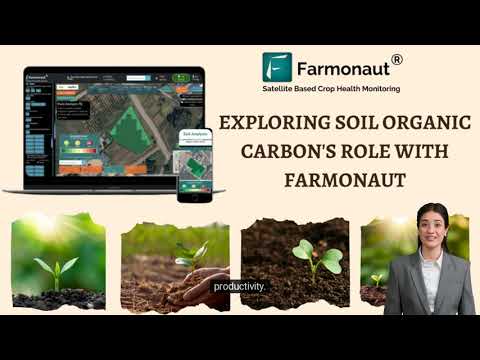
Co-Benefits of Carbon Offset Farmland: Beyond Carbon
The true value of soil carbon farming isn’t just the carbon offset. Co-benefits often exceed even the climate advantages, including:
- 🌲 Improved soil structure & water-holding capacity—resilient to drought and extreme weather.
- 🦋 Biodiversity gains—from wildlife corridors to pollinator support in diversified landscapes.
- ⚠ Reduced erosion, pest, and weed pressure—supporting healthier, more stable cropping systems.
- 💵 Reduced input needs—less reliance on commercial fertilizers and pesticides.
- 🏆 Marketable supply chain—consumers, regulators, and value chains are demanding verified soil-positive foods and fibers.
Learn how Farmonaut’s traceability system boosts authenticity and transparency for agricultural supply chains and their environmental claims.

Farmonaut Technology: Enabling Carbon Offset Farming
As a global leader in satellite-based agricultural intelligence, we at Farmonaut are committed to driving the future of carbon offset farming and holistic land management for 2026 and beyond.
- 🚀 Satellite-Based Monitoring: Our platform leverages state-of-the-art satellite imagery and multispectral data to track vegetation health (NDVI), soil conditions, and structural integrity on farmland for carbon offsets.
- 🤖 AI & Jeevn Advisory: Using advanced AI, we provide custom strategies for maximizing soil carbon sequestration, optimizing rotations, managing input, and improving long-term revenue prospects.
- 🔗 Blockchain Traceability: Our blockchain solutions offer transparent and secure verification for all agricultural carbon data, ensuring authenticity and trust across the supply chain (try our traceability tools).
- 🛠️ Fleet, Crop, and Resource Management: Manage inputs, fleets, and operations—boosting both carbon impact and profit potential (fleet management solution).
- 📈 Environmental Impact Monitoring: Near-real-time carbon footprinting technology helps you track, report, and optimize for better market access, sustainability, and compliance (carbon footprint monitoring).
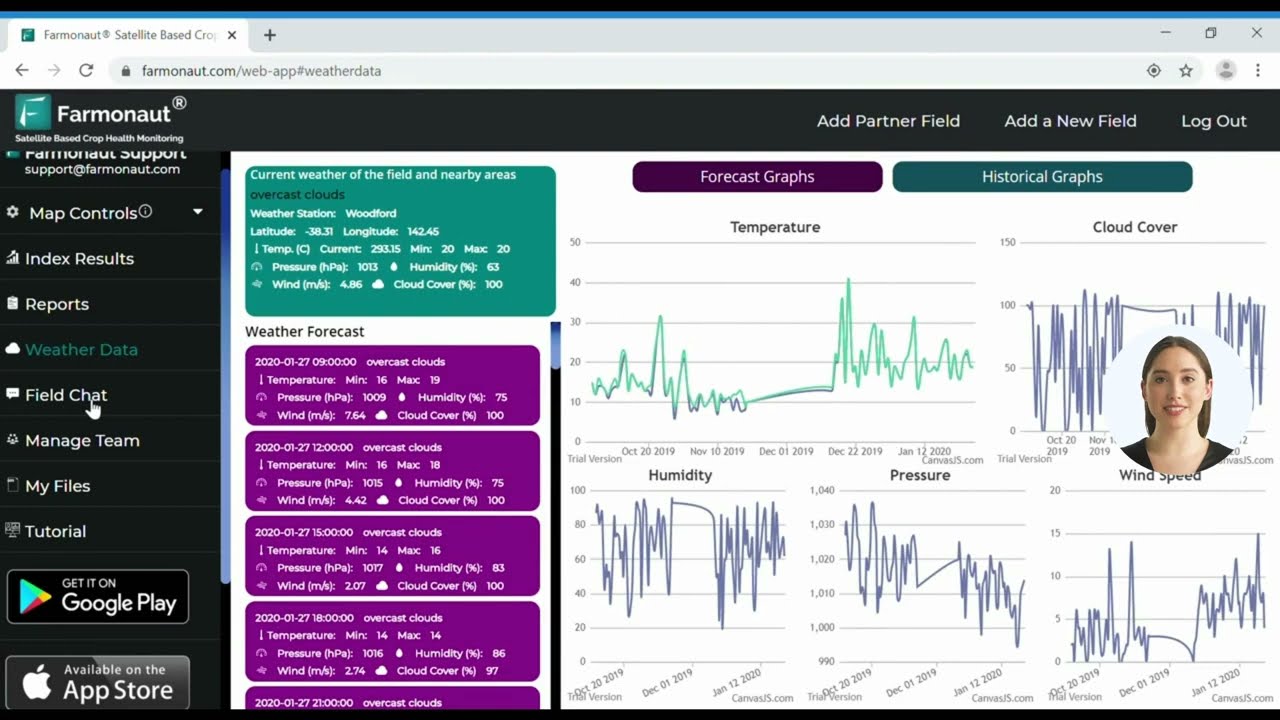
Want easy access to our platform? Try the Farmonaut Web App or our Android/iOS apps.
For developers or agritech partners, explore our open API or developer documentation to build carbon farming tools and analytics directly into your workflows.
Farmonaut Subscriptions: Affordable Access to Cutting-edge Carbon Management
Whether you manage a single farm or hundreds of fields, our subscriptions make satellite-driven carbon insights both affordable and scalable for any operation.
With rising compliance and ESG demands, carbon offset farmland is rapidly gaining value—not just for carbon markets, but also as a driver of resilient agri-business models and verifiable supply chains.
Deploying remote-sensing MRV has cut verification costs for soil carbon credits by up to 50% in leading programs by 2026—broadening market participation for small and medium-sized producers.
Expert Callouts and Highlights
- ✔ Practical pathways: Always ground your carbon farming journey in an up-to-date soil carbon baseline—this ensures both MRV accuracy and optimal farm management.
- 📊 Market insight: Over 50% of all new carbon offset farmland contracts in 2026 include biodiversity and resilience bonuses—a sign of demand for “carbon plus” programs.
- ⚠ Risk management: Protect against reversals (losses due to tillage, fire, or drought) by building redundancy—diversify crops, improve residue retention, and design “buffer pools.”
- 🔒 Verification priority: Third-party, independent offset verification is critical. Leverage blockchain and digital audit trails for compliance.
- 🌱 Biodiversity focus: Mix perennial crops and habitat strips on degraded lands for best results in both carbon sequestration and ecological restoration.
Integrate real-time field or region monitoring via the Farmonaut API to automate carbon reporting, enabling next-generation traceability and risk management solutions for enterprise clients.
Frequently Asked Questions (FAQ)
1. What is carbon offset farming and how is it different from conventional farming?
Carbon offset farming is an approach where agricultural practices are intentionally designed to store or keep carbon dioxide in soil and vegetation, above what would happen in regular farming. Unlike conventional systems, it focuses on boosting soil carbon, biodiversity, and climate resilience, while providing participation in offset markets.
2. How do I measure the carbon stored in my soil?
Use a blend of soil sampling (field/lab tests), remote sensing (e.g., NDVI, soil moisture via Farmonaut platforms), and carbon modeling. Accurate baseline measurement and repeat assessments every 2–5 years are key for credible MRV and offset verification.
3. Which practices offer the highest return for carbon offset revenue?
Agroforestry integration and cover cropping with diverse rotations typically deliver the highest sequestration rates and market premiums, especially when paired with rigorous monitoring.
4. What role does technology like Farmonaut play in carbon farming?
Satellite monitoring, AI advisory, blockchain-backed traceability, and digital MRV streamline the entire process—from field-level data acquisition to market-ready verification and risk management. This shortens time-to-revenue and lowers costs.
5. How can I get started with carbon offset farming today?
Start by assessing your soil carbon baseline, select a portfolio of practices suited to your land and climate, and consider using digital tools (such as Farmonaut’s app) for ongoing monitoring, data traceability, and connecting to local or international carbon markets.
6. Is carbon offset farming only for large-scale farms?
No. Technology, digital MRV, and group certification schemes are making it accessible for smallholders and family-run farms—enabling everyone to participate in and benefit from carbon markets.
7. How do I protect against risks, such as loss of stored carbon due to natural disasters?
Diversify your soil practices, maintain buffer pools at the landscape level, and ensure robust insurance/contingency arrangements. Digital MRV (like Farmonaut provides) offers rapid detection, baseline resets, and transparent reporting.
8. Can I use Farmonaut for crop insurance verification or precision agriculture in carbon farming?
Yes. Our platform supports crop loan and insurance verification, precision nutrient management, and resource optimization—helping farmers both minimize risk and maximize the co-benefits of carbon stewardship.
Conclusion: Embracing the Future of Soil Carbon Stewardship
Carbon offset farming, built on the principles of soil carbon management, biodiversity, and cutting-edge technology, is shaping the future of agriculture in 2026 and beyond. Far more than a climate solution, it is a practical, profitable, and resilient path for farmers to integrate sustainability into the heart of every field, pasture, and rural landscape.
As markets, regulations, and consumer expectations evolve, adopting these 7 powerful soil practices will anchor long-term farm success, unlock multiple revenue streams, and drive genuine environmental improvement. Farmonaut’s technology puts actionable data, automated MRV, and transparent traceability at your fingertips—empowering the next generation of soil carbon stewardship worldwide.
Start your carbon offset farming journey with precision and confidence: Explore Farmonaut’s carbon footprinting tools for agriculture today!

 Godrej Agrovet
 Hayleys Agriculture
 Linx Agritech
 Adinet
 Save Your Soils
 GalaxEye Space
 Grandstream Algérie
 XOS Realty
 Geospatial Lab Africa
 Agro La Gándara
 HIPSAC
 ZOL Zimbabwe
 Juligerm
 AdBio
AdBio MISE Maroc
 NWNS
NWNS Red August Group
 Farm Inc
 WeMe Global
 Agrotoken
 Blue BearX
 Insignito
 DnCubed
 Indosistim Teknologi
 Liquify Digital
 CU Foods
 BeyondTech Global
 Rouge VC
 AgroRisk
 Oath Inc
 Esri North East Africa
 MDCV UK
 Etech Consulting Madagascar
 Vestlandsforsking
 WB Dev
 Sama Premium
 Tres Valles
 Blickwinkel
 Agricultural Credit Policy Council
 eKGIS
eKGIS Mostas Tech
 Andex
Andex Deluxe Conseil
 WICO
WICO Chimera Innovation
 SkyHarvest
 Teledarbas
 Exurbia Geospatial
 FieldZero
