

Chinese Tallow Tree: Impact & Uses in Sustainable Farming (2025 & Beyond)
Introduction: The Chinese Tallow Tree in 2026
The Chinese tallow tree (Triadica sebifera), sometimes simply referred to as the tallow tree, has become a significant figure in the worlds of agricultural innovation, forestry management, and environmental policy—especially as we look forward to 2026 and beyond. As sustainable farming and the urgent need for renewable resources drive global discussions, understanding this remarkable (and divisive) species matters more than ever.
Originally native to eastern Asia—notably China and parts of Southeast Asia—the tallow tree rapidly grew in popularity due to its multipurpose use and adaptability, leading to its spread internationally. Today, its increasing presence sparks debates over its benefits, uses, and formidable ecological challenges, especially regarding agricultural landscapes, forestry management, and environmental restoration.
In this comprehensive guide, we delve into the implications of the Chinese tallow tree within sustainable farming—including biodiesel production, environmental management, and the balancing act between economic benefit and ecological risk that this species brings to both farmers and forestry professionals worldwide in 2026.




Origin, Distribution, and Botanical Profile
Chinese Tallow Tree: Origins in Eastern Asia & Global Spread
The Chinese tallow tree is originally native to China and parts of eastern and southeast Asia. Its journey from deciduous woodlands of East Asia to agricultural regions across the planet highlights the global fascination with Chinese trees.
- Introduced into the southern United States in the 18th century, initially for ornamental and industrial purposes.
- Has spread internationally across Europe, Australia, and various tropical and subtropical regions.
- Well-suited to marginal lands and degraded soils due to adaptability, rapid growth rate, and tolerance of flooding/drought.
Botanical Characteristics
- Triadica sebifera is a deciduous tree, meaning it sheds its leaves in the fall/winter.
- Can reach heights of 10–20 meters (33–66 feet), with a broad canopy and rapid vertical growth.
- Produces waxy seeds contained in distinctive three-lobed capsules.
- Leaves are diamond-shaped and turn bright shades of yellow, orange, and red in autumn, increasing ornamental interest.
- Flowers are small, yellowish-green, and grow in upright clusters.

Agricultural and Industrial Uses of the Chinese Tallow Tree
Multipurpose Value: Tallow, Oil, and More
One of the primary reasons for the global interest in the Chinese tallow tree is its exceptional versatility. Both agricultural and industrial sectors have embraced its multiple uses:
- Seed Production: The tree’s seeds are rich in oils, producing a unique, waxy substance called “tallow.”
- Historical Uses: Tallow has been historically used in candle-making, soaps, and waterproofing.
- Modern Applications: In recent years, interest in biofuels such as biodiesel has surged globally, making the tallow tree a promising feedstock for renewable energy solutions.
- Alternative Crop: Offers farmers an alternative cash crop for marginal lands and soils unsuitable for conventional food crops.
- High Biomass Yield: Its rapid growth delivers high biomass yield, positioning it as a strong candidate for bioenergy plantations in restoration programs.
In the context of climate change and land reclamation, these characteristics are vital for regions grappling with soil degradation, variability, and the need for diversification in agricultural production.

Chinese Tallow Tree in Agro-Industrial Programs
By 2026, many agricultural initiatives and forestry programs are integrating tallow tree plantations to enhance both economic returns and environmental restoration. Its role in marginal and degraded lands highlights its importance in sustainable agriculture and land management strategies.
- Economic Viability: Tallow tree plantations offer an economic buffer against commodity price shocks and crop failure due to climate variability.
- Restoration Programs: Its growth on poor or degraded soils enables the restoration of lands while supporting farmers’ livelihoods.
- Carbon Sequestration: Fast growth patterns and high biomass translate to significant carbon sequestration per hectare, which is valuable in environmental impact tracking and carbon footprinting solutions for responsible agriculture.
Biodiesel Production and Renewable Energy from Chinese Tallow
The Chinese Tallow Tree as a Promising Source of Biodiesel
The biodiesel potential of the Chinese tallow tree is among its most significant industrial uses. With mounting global interest in renewable biofuels, tallow-derived oils have seen surging demand in both pilot and commercial-scale production by 2026:
- High Seed Yield: Its ability to produce up to 4,700 kg of seeds per hectare annually offers a major feedstock advantage.
- Oil Content: Seeds contain up to 20%–25% tallow oil, making extraction efficient and scalable.
- Biodiesel Conversion: Modern biodiesel production techniques achieve high yield rates, turning otherwise underutilized lands into productive energy assets.
- Integration with Energy Programs: Governments and private-sector stakeholders are increasingly investing in bioenergy plantations as part of sustainable development strategies.
For farmers in regions with soil degradation or poor market access for conventional food crops, the tallow tree offers a path to diversification and economic resilience.

Sustainable Energy and the Tallow Tree: Environmental Implications
The extensive use of Chinese tallow trees is closely tied to sustainable energy transitions:
- Reduces Pressure on food crops for biofuel, preventing food vs. fuel conflicts strongly debated in the early 2020s.
- Enhances Renewable Portfolio for regions seeking to meet climate targets by 2030.
- Boosts Rural Economies in areas with large stretches of low-value or degraded lands.
- Improves Carbon Sequestration rates and soil health, addressing two core issues in sustainable farming.
However, these benefits come with ecological challenges—the subject of increasing research, policy debate, and farm management planning.

Impacts on Soil Health and Biomass Yield
Soil Improvement and Carbon Sequestration
One of the most discussed benefits of the Chinese tallow tree is its marked influence on soil health:
- Soil Organic Carbon: Studies show up to 35% increase in soil organic carbon when replacing conventional fallow fields with tallow tree plantations.
- Improved Physical Structure: Falling leaves, decaying stems, and a robust root system add organic matter and prevent erosion.
- Biomass Production: High above-ground biomass yield provides ecological and economic value in bioenergy plantations.
These factors support restoration efforts in regions grappling with land degradation and assist farmers seeking to improve long-term soil productivity.
Want to monitor your soil health and carbon footprint from space? Leverage Farmonaut’s Environmental Impact Monitoring and Carbon Footprinting Solution. It empowers agricultural businesses to track carbon sequestration, optimize sustainable practices, and visualize restoration impact—right from their devices.

Livestock and Forage Implications
While the Chinese tallow tree is not directly used as forage, its spread into pasturelands significantly influences the productivity and management of livestock operations:
- Encroachment: Vigorous growth and seed dispersal allow it to outcompete native forage species, reducing available graze for cattle.
- Allelopathy: Produces allelopathic chemicals that suppress neighboring plant growth, further affecting pasture diversity.
Careful management strategies are required, especially in areas where livestock farming is vital to rural economies. The invasive potential of Triadica sebifera raises alarms in the Southern United States and comparable regions.
Environmental Concerns: Invasiveness and Ecological Risks
Why Is the Chinese Tallow Tree Considered Invasive?
Despite its economic and environmental benefits in specific controlled uses, the Chinese tallow tree is considered invasive in many parts of the world—especially in the southern United States. Professionals increasingly warn about its aggressive growth patterns and ecological impacts:
- Prolific Seed Production: Each mature tree can disperse thousands of seeds annually, enhancing its spread rate.
- Rapid Colonization: Seeds germinate quickly, allowing dense stands that outcompete native species in natural and agricultural landscapes.
- Vigorous Resprouting: When cut or damaged, roots and stumps rapidly resprout new trees, complicating eradication efforts.
- Ecosystem Alteration: Dense tallow groves displace native flora, decrease local biodiversity, and impact wildlife habitats.
- Soil Allelopathy: Chemicals released by the roots inhibit the growth of other plants nearby.
The spread of tallow trees in wetlands, pastures, and restoration lands often requires significant resources for management and rehabilitation.
Landscape-Scale Effects and the Challenge for Sustainability
- Biodiversity Loss: Estimates suggest tallow invasions can reduce native plant species diversity by up to 70% in affected areas.
- Displacement of Native Species: Rare grasses and wetland plants are often among the first to be eliminated.
- Wildlife Impact: Reduction in plant diversity leads to lower food and habitat options for insects, birds, and mammals.
Balancing the economic incentives of the tallow tree with sustainable landscape management and protection of native biodiversity is a defining challenge as we head into 2026 and beyond.

Management Strategies to Address Invasiveness
Integrated and Sustainable Management Approaches
Given its invasiveness, effective strategies must go beyond traditional removal methods:
- Mechanical Removal: Cutting and uprooting trees is labor-intensive; effective only with regular maintenance.
- Herbicide Application: Targeted use of selective herbicides can prevent regrowth, but environmental risks must be assessed.
- Prescribed Burns: Periodic fire has been used in some regions to manage seedlings, though results are mixed.
- Restoration Planting: Re-planting with native species helps restore balance and suppress new invasions.
- Biological Control: 2026 research focuses on host-specific insects and pathogens, but ecological safety requires rigorous vetting.
For farmers and land managers, the goal is not simply to remove the tallow tree but to sustain native plant diversity, ecosystem functions, and livelihood productivity.
Use blockchain-based traceability and resource monitoring for efficient landscape and restoration project management, supporting robust ecological reporting and environmental compliance.
For large-scale farm management or plantations, we recommend exploring Farmonaut’s Large Scale Farm Management Tools to track crop health, manage interventions, and optimize restorative strategies using satellite insights.
Comparing Chinese Tallow Tree with Other Chinese Trees and Agricultural Species
Chinese Fringe Tree, Flame Tree, and Chinese Cow Breeds: A Broader Outlook
Within forestry and ornamental horticulture, several related Chinese trees are important to consider for landscape diversity, soil improvement, and aesthetic value:
-
Chinese Fringe Tree (Chionanthus retusus):
- Valued for ornamental appeal, white fringed flowers, and moderate ecosystem support.
- Less invasive and suitable for agroforestry systems aiming for landscape diversity.
-
Chinese Flame Tree (Koelreuteria bipinnata):
- Known for showy yellow flowers and colorful seed pods; offers shade and modest ecosystem benefits.
- Not considered a major invasive threat in most non-native environments.
-
Chinese Cow Breeds:
- While unrelated botanically, “Chinese cow breeds” represent another agricultural strength from China, especially in livestock improvement initiatives. These programs, aimed at disease resistance and milk yield, are supporting the sustainability of livestock farming globally.
In forestry and restoration projects where species selection is critical, the Chinese fringe tree and flame tree may be preferred over Triadica sebifera for environmental safety. Meanwhile, improved Chinese cow breeds continue to bolster sustainable farming without intersecting with tallow management.
Farmonaut Technologies for Sustainable Agriculture
How Farmonaut Empowers Sustainable Tree Plantation and Biodiversity Management
At Farmonaut, we understand that precision data and continuous monitoring are critical for managing complex species such as the Chinese tallow tree within agricultural and forestry landscapes. Our satellite-powered solutions offer the following advantages:
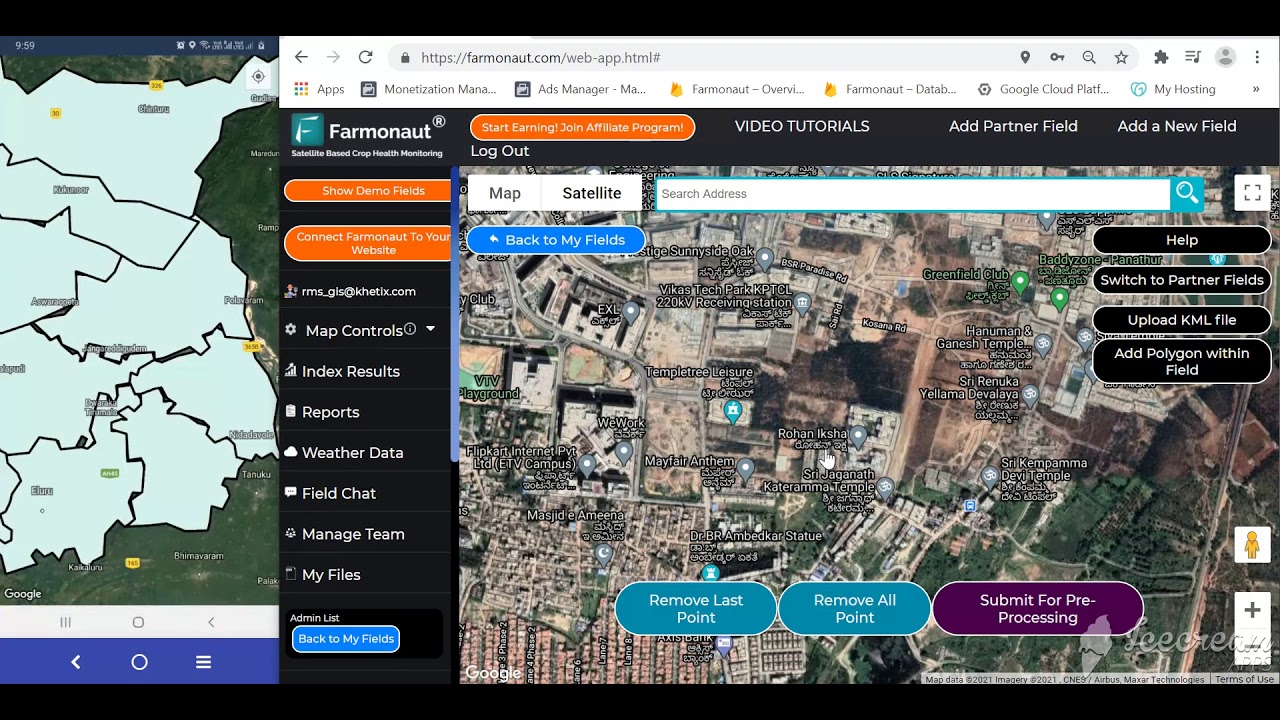
- Real-Time Satellite Monitoring: We offer multispectral satellite imagery (vegetation health indices like NDVI), supporting monitoring of tree growth, restoration projects, and invasion patterns.
- AI-Based Advisory: Our Jeevn AI Advisory provides custom insights into soil condition, biomass yield, and risk management for both farmers and large operations.
- Carbon and Resource Management: With integrated carbon tracking, product traceability, and fleet management tools, users can optimize logistics and meet sustainability standards.
- Blockchain Traceability: Our traceability platform ensures full transparency in plantation and restoration projects.
- Financial Support: Satellite-based verification for crop loans and insurance makes access to capital fast, credible, and secure for tree plantation projects.
- API Integration: Our Farmonaut API and developer docs enable seamless integration of satellite insights into your farm, forestry, or environmental management system.
For those aiming to scale up or experiment with tree plantations—including biodiesel, biomass, or ecosystem restoration—Farmonaut’s Crop, Plantation & Forest Advisory is tailored for comprehensive monitoring and data-driven decision making.
Environmental and Agricultural Impacts of Chinese Tallow Tree: Comparative Table
| Impact/Use Area | Positive Effects (Estimated Value/Description) |
Negative Effects (Estimated Value/Description) |
Relevance to Sustainable Farming |
|---|---|---|---|
| Soil Health | Increase in soil organic carbon by up to 35%; addition of biomass and organic matter; improved soil structure | Allelopathic effects may inhibit native plant roots; risk of reduced diversity in soil microbes | Supports soil restoration and long-term productivity, but may disrupt native ecosystem balance |
| Biodiversity | Provides habitat in monoculture plantations; limited pollinator support | Potential loss of up to 70% native plant species in invaded areas; displacement of wildlife | Needs careful management to avoid biodiversity loss; mixed value for sustainable agroecosystems |
| Biodiesel Yield | Up to 1,200–1,500 liters/ha/year; high seed oil content (20–25%) | Resource use may compete with restoration or food crops in unmanaged areas | Excellent for non-food, marginal land energy production; not suitable for diverse landscapes |
| Carbon Sequestration | Est. 10–15 t CO₂/ha/year captured; offsets fossil fuel use | Potential trade-off if replacing wild, old-growth native stands | Significant carbon sink capacity for degraded lands, not for natural habitats |
| Invasiveness Risk | Rapid ground cover reduces soil erosion | Spread rate: Up to 20–25% area increase per year in optimal conditions; costly removal and control | Demands integrated management in restoration and productive landscapes |
Future Outlook for 2026 and Beyond: Sustainable Pathways or Rising Challenges?
As we move into 2026 and beyond, the debate over the Chinese tallow tree will intensify—weighing its significance as a biodiesel and biomass crop against the seriousness of its ecological risks. Key points for the global agriculture and forestry community include:
- Policy Frameworks: Anticipate increased regulation for tallow tree planting, especially in sensitive restoration projects and biodiversity hotspots.
- Integrated Monitoring: Adoption of satellite, AI, and blockchain technologies will become standard in project planning and reporting.
- Restoration Balance: “Right tree, right place” ethos will drive site-specific intervention strategies, balancing economic opportunity with ecological restoration.
- Livelihood Diversification: Tallow tree offers value for farmers in severe environments, but integration into mixed agroforestry and responsible management is key to sustainability.
- Biotechnological Research: 2026 will see further research into less invasive varieties, improved biological controls, and safe coexistence within productive lands.
FAQs: Chinese Tallow Tree in Agriculture and Forestry
1. Why is the Chinese tallow tree both praised and criticized?
It’s celebrated for its biodiesel yield, rapid restoration of degraded lands, and renewable energy potential. However, it’s also criticized for being highly invasive and disruptive in many non-native environments, threatening biodiversity and requiring costly management.
2. How is the Chinese tallow tree used in sustainable agriculture?
Its seeds are used for biodiesel production and high biomass yield. Planted in marginal lands, it improves soil health and provides an alternative income for farmers.
3. What are the environmental risks associated with it?
The tallow tree spreads aggressively, displaces native flora, reduces biodiversity, and alters wetland and grassland ecosystems. Efforts to control it require a blend of mechanical, chemical, and sometimes biological interventions.
4. Is planting the Chinese tallow tree recommended for 2026?
Only in highly controlled, non-sensitive environments such as strictly managed energy plantations or degraded lands far from ecological priority zones. It’s not recommended for restoration in biodiversity-rich areas.
5. How can technology help manage its risks?
Advanced satellite, AI, and blockchain tools—like those offered by Farmonaut—provide continuous monitoring, ecological impact assessment, secure project traceability, and adaptive management for both invasiveness and productivity.
Conclusion: The Chinese Tallow Tree—Agricultural and Environmental Implications in 2025 & Beyond
The Chinese tallow tree (Triadica sebifera) stands at a critical crossroad in global agriculture and forestry management. With unmatched biodiesel potential, remarkable soil restoration capacity, and the ability to revitalize marginal lands, its uses pave new ways for sustainable farming. Yet, its aggressive invasiveness and threat to native biodiversity demand careful, site-specific management, policy oversight, and robust monitoring.
For farmers, foresters, and environmental strategists, striking the right balance will define rural landscapes in 2026 and beyond: Leveraging its economic and restoration opportunities, while guarding native ecosystems, requires continual adaptation, advanced technologies, and informed, transparent decisions.
At Farmonaut, we remain committed to supporting this balance—offering affordable, accessible satellite and AI-driven insights that drive productivity, transparency, and responsible land use within the evolving realities of a data-driven, sustainable global agriculture.
Choose your tools wisely. Embrace opportunities—but always with an eye on long-term ecological health.

 Consulthink Global
 Rouge VC
 Yutz Automation
 AgroGreen Dynamics
 AgroRisk
 Oath Inc
 Reddane Farming
 Esri North East Africa
 Cresol
 Atur Kuliner
 MDCV UK
 Zerella Group
 Etech Consulting Madagascar
 Vestlandsforsking
 Delicio
 WB Dev
 Sama Premium
 Prochecker
 Tres Valles
 LACOS Geoinformation
 Magrifly
 LatConnect 60
 Blickwinkel
