

Costs of Hydroponic Systems for Successful Farming in 2025
“In 2025, hydroponic system start-up costs range from $25 to $100 per square foot, depending on technology level.”
Table of Contents
- Introduction: The Evolving Landscape of Hydroponic Farming
- Hydroponic Systems: Fundamentals & Rising Relevance
- Initial Investment: Capital Costs in 2025
- Operational Costs of Hydroponic Farming
- Technology & Innovation Driving Hydroponics in 2025
- Comparative Cost Breakdown Table of Hydroponic Systems in 2025
- Economic Viability, ROI & Market Factors
- Reducing Costs Through Operational Management
- Modern Monitoring & Resource Management (Farmonaut)
- Challenges, Risks and Cost Mitigation Strategies
- Frequently Asked Questions (FAQ)
- Conclusion & Key Takeaways
Introduction: The Evolving Landscape of Hydroponic Farming
As we step into 2025, the realm of hydroponic farming finds itself at the center of a global movement responding to climate change, urbanization, and resource availability. Hydroponics, a method of cultivating plants without soil by using nutrient-rich water solutions, has evolved into a viable alternative to traditional farming worldwide—especially in regions facing water scarcity, poor soil quality, or space constraints.
This blog explores in extensive detail the costs of hydroponic systems for successful farming in 2025, dissecting not just the initial investment and operational costs, but also the technological advancements, savings potential, and key factors crucial for determining the success of hydroponic ventures. Our goal is to equip potential farmers, investors, and agribusiness leaders with actionable insights into the economic viability, ROI, and operational management of modern hydroponic systems.

The costs of hydroponic systems are rapidly decreasing due to technology integration and scalable designs, making successful farming accessible to both urban entrepreneurs and large-scale commercial operations.
Hydroponic Systems: Fundamentals & Rising Relevance
Hydroponics refers to a set of innovative farming techniques allowing plants to grow efficiently without soil, using only water and dissolved nutrients. Core elements of every hydroponic system include:
- ✔ Water Reservoirs: Store and circulate nutrient solutions
- ✔ Growing Trays or Channels: House plants and facilitate root exposure to nutrients
- ✔ Pumps: Deliver the correct amount of water and nutrient to every plant
- ✔ Lighting (LED for indoor): Provide optimal light spectrum, especially for urban or vertical farming
- ✔ Sensors: Monitor pH, temperature, and nutrient levels
Hydroponics are gaining significant traction given their ability to:
- 🥬 Boost productivity in restricted spaces
- 🌿 Use up to 90% less water than traditional agriculture
- 🏙️ Flourish in both urban and rural regions
- 💡 Provide year-round crop production unaffected by outdoor climate
- 🦠 Limit pesticide and herbicide use, improving crop quality

Start with a modular hydroponic system to minimize upfront costs and scale your farming operation gradually as your market grows.
Initial Investment: Capital Costs of Hydroponic Systems in 2025
The initial investment or capital expenditure for a hydroponic system remains the single most substantial financial factor, especially for first-time adopters, as it encompasses all the infrastructure and technology needed to start successful farming.
Infrastructure & System Components
- ✔ Growing Trays/Channels: Polyethylene channels or trays for plants
- ✔ Reservoirs: For nutrient solution storage
- ✔ Pumps & Delivery Systems: Ensure water and nutrient circulation
- ✔ Lighting (LED): Especially for indoor or vertical units
- ✔ Climate Control Equipment: Maintain optimal temperature and humidity
- ✔ Sensors: For monitoring pH, water levels, and nutrient content
- ✔ Control Automation: Centralized data for improved management
Cost Ranges in 2025
- 📊 Small-scale (Urban/Home Units): $5,000 to $20,000
- 📊 Commercial Scale (Vertical/Large Farms): $50,000 to millions, depending on scale, technology, and location
- 📊 Per Square Foot: $15 to $50+ (more advanced = higher costs)
- 📊 Advanced Automation: Can increase initial costs by 10-25% but promise significant improvements in efficiency and yield
Factors determining capital costs:
- • Degree of technology integration (automation, IoT, AI, sensor networks)
- • Type of system: NFT, DWC, Drip, or Aeroponics
- • Facility type: outdoor greenhouse vs. indoor vertical farm
- • Cropping choices (herbs vs. tomatoes)
- • Regulatory and compliance fees (varies by region)
Many investors see hydroponic farming as a gateway into controlled environment agriculture (CEA), which is increasingly insulated from the pressures of climate variability and resource scarcity.
Initial Capital Expenditure Example (2025)
- 50 sq. ft. indoor NFT System: ~$10,000 (including infrastructure & basic automation)
- 1,000 sq. ft. commercial DWC greenhouse: ~$75,000–$100,000 (full-feature setup, advanced monitoring, climate control)
Operational Costs of Hydroponic Farming in 2025
Operational costs are recurring expenditures essential to maintain high crop yield and systemic health. In 2025, operational savings and cost categories include:
Main Operational Cost Factors
- 💡 Electricity: Lighting, climate control, and automation systems—energy is often a dominant operational expense in areas scarce in natural sunlight
- 💧 Water: Hydroponics require 70–90% less water than traditional farms, resulting in significant savings, especially in arid regions
- 🧪 Nutrients: Custom hydroponic formulations tailored for each crop
- ⚙️ System Maintenance: Pumps, reservoirs, and monitoring sensors require routine care
- 👷 Labor: With automation, labor costs drop—but advanced skills for troubleshooting and system management are needed
- ✔ Annual operational costs in 2025
- • Home/small scale hydroponics: $700–$2,000 per annum
- • Commercial units: $20,000–$200,000 per annum (depending on scale & region)

“Advanced hydroponic automation can cut operational expenses by up to 40% compared to traditional soilless methods in 2025.”
Ignoring energy costs and seasonal fluctuations—especially heating/cooling and LED lighting—can erode expected operational savings in hydroponic farms.
Technology & Innovation Impacting Costs of Hydroponic Systems
2025 marks a prime era for innovation-driven savings in hydroponic farming. Technological advances—from AI-powered climate control to blockchain-based traceability—have transformed how farmers monitor crops, manage resources, and reduce both operational and initial costs.
- 🤖 AI & Automation: Automates nutrient dosing, lighting cycles, and climate control, ensuring consistent, high-quality yield and lowering labor costs
- ⚡ Renewable Energy Integration: Solar and wind installations significantly offset electricity consumption
- 📊 IoT Sensors: Enable 24/7 monitoring of pH, EC levels, temperature, and system alerts to minimize risk of failure and crop loss
- 🧬 Data-Driven Crop Management: Yield prediction and digital logbooks
- 🔗 Blockchain Traceability: Building consumer trust via transparent records of the crop journey

- ✔ Key Benefit: Consistent, year-round production unaffected by outside weather.
- 📊 Data Insight: Farms using real-time monitoring systems can detect issues 5x faster than manual checks.
- ⚠ Risk: Power failures or sensor malfunctions can rapidly impact crop health.
- 💲 Cost Factor: Automated systems have higher initial costs but provide ROI within 3-5 years.
- 🌱 Sustainability: Hydroponics ensures significant water savings and better nutrient efficiency.
Comparative Cost Breakdown Table of Hydroponic Systems in 2025
To make informed investment choices, it is essential for farmers and agri-entrepreneurs to compare how different hydroponic systems perform across cost and output axes.
| Type of Hydroponic System | Initial Investment (USD) | Annual Operational Costs (USD) | Estimated Yield Increase (%) | Technology Advancements (2025 Features) | Payback Period (Years) | Potential Annual Savings (USD) |
|---|---|---|---|---|---|---|
| Nutrient Film Technique (NFT) | $20,000 – $50,000 | $8,000 – $15,000 | 25 – 35 | AI Nutrient Dosing, IoT Sensors | 3 – 4 | $6,000 – $12,000 |
| Deep Water Culture (DWC) | $25,000 – $70,000 | $10,000 – $18,000 | 30 – 40 | pH Automation, Real-Time Data Analytics | 3 – 5 | $8,000 – $16,000 |
| Drip System | $30,000 – $60,000 | $9,000 – $16,000 | 20 – 30 | Smart Dosing, Cloud-Based Monitoring | 4 – 5 | $7,000 – $13,000 |
| Aeroponics | $45,000 – $100,000 | $12,000 – $24,000 | 40 – 55 | UV Sterilization, Remote Diagnostics, Advanced AI | 2 – 4 | $12,000 – $25,000 |
- 🤔 Note: The values are indicative based on 2025 market trends and may fluctuate based on scale, location, and technology integration.
Aeroponics features the highest investment but delivers unrivaled yield increases and scalability for commercial operations, offering an accelerated ROI for experienced farmers.
📊 Visual List: Hydroponic Technology Comparison
- 💧 NFT: Low water usage, best for leafy greens.
- 🌊 DWC: High oxygenation, robust for large root crops.
- 🌱 Drip: Customizable, scalable, great for fruiting crops.
- 🌫️ Aeroponics: Ultimate root aeration, premium cost and maintenance.
Economic Viability and ROI: The Role of Costs in Successful Hydroponic Farming
The economic viability of hydroponic systems in 2025 is strengthened by:
- ✔ High-value crop selection (lettuce, microgreens, herbs, strawberries)
- ✔ Yield increases per unit area (often 20–50% vs. soil farming)
- ✔ Market demand for pesticide-free, locally produced food
- ✔ Premium pricing for traceable, organic, and sustainable produce
- ✔ Reduction in water and pesticide costs
- ✔ Shorter production cycles, enabling more harvests annually
ROI (Return on Investment) periods for hydroponic systems are often 3–5 years for commercial ventures, with small-scale units potentially recovering costs in as little as two years with efficient management and good market access.

- ✔ Crop rotation & continuous production = more sales cycles per year
- ✔ Direct-to-market channels (e.g., local grocers, restaurants) = higher profit margin
- ✔ Digital monitoring = less downtime and reduced risk of total crop loss
- ✔ Energy efficiency (solar, wind) = lower recurring expenses
- ✔ Government incentives/grants on sustainable farming projects
Reducing Costs Through Operational Management & Advanced Monitoring
Effective management practices—from automated system controls to resource optimization and advanced data analytics—dramatically reduce both operational and unexpected costs in hydroponic farming.
How Monitoring Systems Cut Costs
- ✔ Early Issue Detection: Avoids expensive crop failures by flagging pH, nutrient or temperature anomalies
- ✔ Inventory Controls: Prevents nutrient or water wastage
- ✔ Automated Alerts: Minimize labor requirements for system checks
- ✔ Yield Prediction: Aids market planning and inventory sales

Leverage renewable energy sources and carbon footprinting tools to additionally lower your operational costs and tap into incentive programs for sustainable farming.
🌟 Visual List: Resource-Optimizing Features from Farmonaut
- 🛰️ Satellite-Based Crop & Soil Health Monitoring
- 🧠 AI-Driven Advisory for Nutrient and Water Management
- 🔒 Blockchain Traceability for Transparent Supply Chains
- ⚡ Resource & Fleet Management to Cut Expenses
- 🌱 Environmental Impact Tracking for Compliance & Sustainability
Modern Monitoring & Resource Management: Farmonaut’s Role in 2025+ Hydroponic Adoption
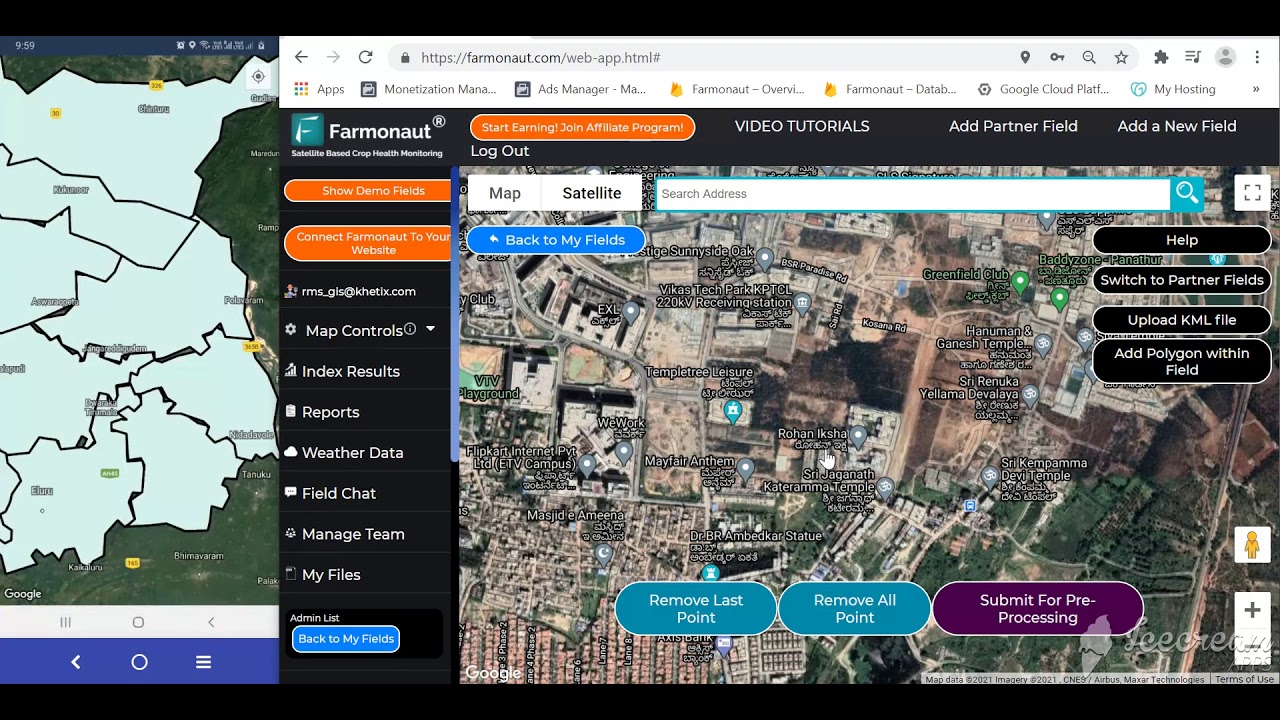
No hydroponic system can maximize its potential without robust, reliable, and scalable monitoring solutions. That’s where we at Farmonaut stand out, offering advanced, satellite-based technologies for agriculture resource management.
Through our web, mobile, and API platforms, farmers and agri-enterprises can:
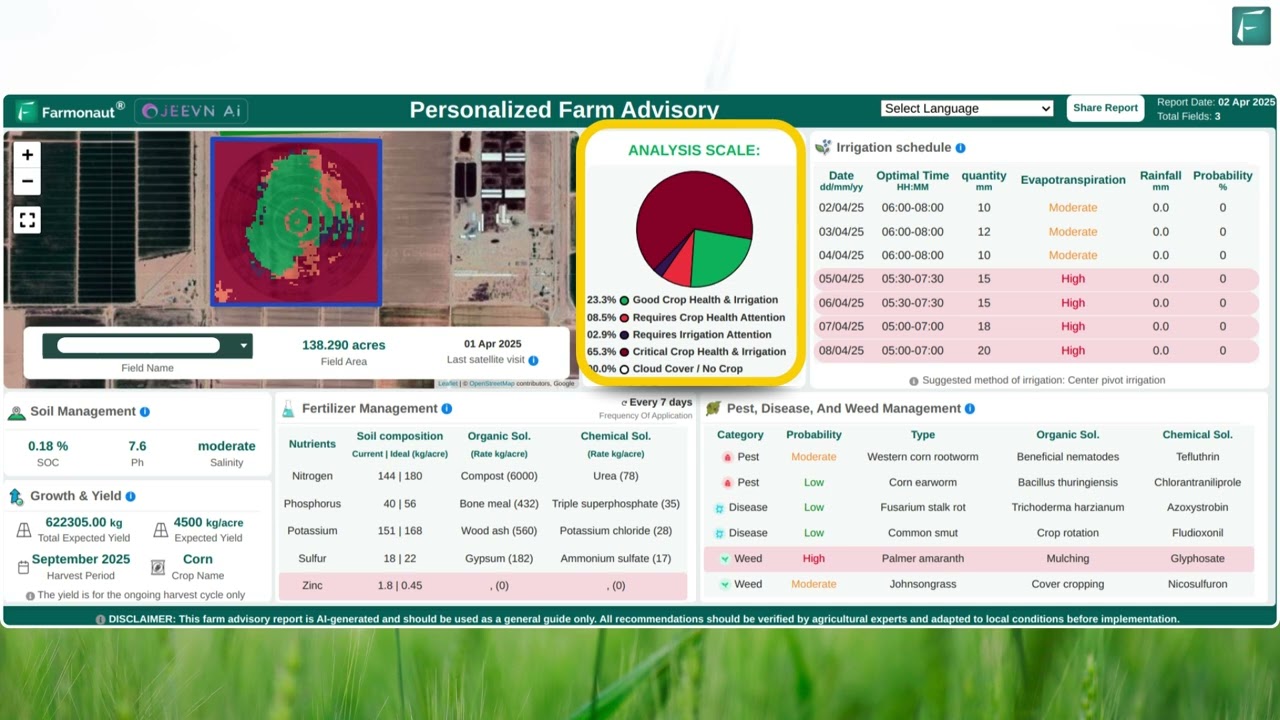
- ✔ Obtain real-time crop and soil health data (NDVI, moisture, nutrient levels) for precise decision-making
- ✔ Use AI-based advisory systems like JEEVN AI for predictive crop management and risk minimization
- ✔ Leverage blockchain-based traceability for value-added marketing and supply chain integrity
- ✔ Optimize the performance of hydroponic operations using environmental and fleet management tools
Access our solutions directly via:



- 💡 API Access: Custom integration solution – see developer docs
- 📦 Farmonaut Large-Scale Farm Management — Built for agri-enterprises & government to unify hydroponic & traditional operations via one dashboard.
- 🛒 Farmonaut Traceability Suite — For seamless tracking from seed to market, raising downstream value and consumer trust.
- 🌍 Farmonaut Carbon Footprinting — Essential for accessing green markets and incentives in 2025 and beyond.
- 🚜 Fleet & Resource Management — Designed to help cut costs by optimizing hydroponic support logistics across regions.
- 📤 Satellite-Based Verification for Crop Loans and Insurance — Reduce risk with accurate system & yield verification for lenders and insurers.
Our commitment is to democratize satellite-driven agricultural insights, elevating farm productivity and reducing costs across all types and scales of hydroponic farming ventures.
Challenges of Hydroponic Systems & Cost Mitigation Strategies for 2025+
While the costs of hydroponic systems are dropping, several challenges remain especially when scaling or localizing to new regions:
- ⚠ Power Outages: System failures can quickly result in crop loss
- ⚠ Technical Expertise: Successful management requires knowledge of both agriculture and technology
- ⚠ Initial Barriers: Upfront capital expenditure is high compared to soil-based techniques
- ⚠ Maintenance Requirements: Pumps, sensors, and water quality monitoring demand regular checks
- ⚠ Supply Chain Risk: Delays in acquiring replacement parts or nutrients can impact cycles
Mitigating these challenges:
- • Invest in backup or redundant systems (generators, dual pumps)
- • Train staff in hardware and software troubleshooting
- • Adopt modular expansion over one-time large installations
- • Leverage digital monitoring platforms (like Farmonaut) for continuous oversight
- • Tap into government and private incentives for sustainable projects
Subsidies, grants and low-interest financing for hydroponics are expanding in many regions for 2026 and beyond. Careful analysis of local policies can significantly reduce your upfront costs and overall risk.
Frequently Asked Questions (FAQ): Costs of Hydroponic Systems for Successful Farming
Q1: What is the main factor affecting costs of hydroponic systems in 2025?
A: The biggest factors are initial investment in technology and infrastructure, followed by operational costs like energy, water, and nutrients. The type of system chosen, scale of farming, and degree of automation all play significant roles.
Q2: Are hydroponic systems always more expensive than traditional soil farming?
A: The upfront costs are higher, but hydroponic systems offer significant operational savings (water, pesticides, labor) over time, especially when leveraging technology and renewable energy. Over several years, the ROI and yield increases can make hydroponics much more cost-effective, particularly for high-value crops and urban farming.
Q3: How do I finance a hydroponic farming venture?
A: Common options include personal financing, business loans, agribusiness grants, and in 2026 onward, more regional governments are offering subsidies for sustainable and tech-based agriculture ventures.
Q4: What crops offer the best ROI in hydroponic systems?
A: Leafy greens, herbs, strawberries, microgreens, and tomatoes are especially well-suited for hydroponics and offer high market value and short growth cycles.
Q5: How can I monitor my hydroponic farm efficiently?
A: Farmonaut offers satellite-driven monitoring, AI advisory, and API solutions for real-time tracking and resource management in hydroponic and other farming operations.
Conclusion: The True Costs of Hydroponic Systems and Their Role in Successful Farming (2025 and Beyond)
The landscape of agriculture is being redefined by the costs of hydroponic systems and the role they play in successful farming—especially as we move past 2025 into a future shaped by climate change, urbanization, and resource pressures.
Despite traditionally high initial investments, ongoing advances in technology, the integration of data-driven management, and energy-smart operational models are making hydroponics a practical—and for many, a preferred—solution. Farmers who plan carefully, select appropriate crops, prioritize system maintenance, and adopt digital monitoring stand to gain both savings and sustainability in production.
We encourage agri-innovators and advanced farming ventures to assess their local incentives, leverage the best digital tools (like Farmonaut’s monitoring and advisory platforms), and invest in continuous learning to ensure high ROI and ecological responsibility.
The future belongs to those who combine technological precision with agricultural wisdom—making every drop, dollar, and decision count.
Hydroponics isn’t just a solution for cost-effective production—it’s a cornerstone of sustainable farming as we look towards 2026 and beyond.

 Rouge VC
 Yutz Automation
 AgroGreen Dynamics
 Leher
Leher AgroRisk
 Oath Inc
 Reddane Farming
 Esri North East Africa
 Cresol
 Atur Kuliner
 MDCV UK
 Zerella Group
 Etech Consulting Madagascar
 Vestlandsforsking
 Delicio
 WB Dev
 Sama Premium
 Prochecker
 Tres Valles
 LACOS Geoinformation
 Magrifly
 LatConnect 60
 Blickwinkel
