

Countries Where Foreigners Can Buy Agricultural Land: Regulations, Opportunities & Compliance Paths
“Over 30 countries, including Australia and Brazil, allow foreigners to buy agricultural land with varying restrictions and regulations.”
Table of Contents
- Introduction: The Global Landscape
- Why Foreigners Seek to Buy Agricultural Land
- Ownership Rules & Regulatory Regimes
- Comparative Country Policy Table
- Investment Pathways & Practical Implications for Non-Farmers
- Canada’s Approach: A Nuanced Model
- Environmental Compliance: Zoning & Sustainability
- How Much Farmland is Owned by Foreign Countries?
- Planning for Non-Farmers: Key Requirements & Strategies
- Technology & Market Trends in Global Agricultural Land Ownership
- Key Insights & Pro Tips (Callouts)
- Frequently Asked Questions
- Useful Resources
Introduction: The Global Landscape of Foreign Ownership of Agricultural Land
Agricultural land ownership by foreigners is a growing topic of interest among investors, policymakers, and farmers worldwide. Questions often revolve around: “Can foreigners buy agricultural land?”, “What rules or restrictions exist?”, and “Which countries offer access with reasonable compliance standards?”.
In this comprehensive guide, we’ll explore countries where foreigners can buy agricultural land, the key ownership rules that shape these markets, investment pathways, and compliance tips for non-farmers considering entry into this global asset class.
- 🌍 30+ major countries allow some form of foreign ownership
- 📋 Ownership rules vary widely: size limits, usage, location, and approvals
- 💡 Investment pathways include direct purchase, leases, partnerships, and corporate routes
“In Ukraine, foreigners can lease farmland but are currently prohibited from outright ownership under national law.”
Why Foreigners Seek to Buy Agricultural Land
Foreign ownership of agricultural land is driven by multiple global trends:
- ✔ Investment diversification: Farmland acts as a hedge against inflation and economic cycles.
- 🌱 Agricultural innovation: Access to new technologies, practices, and systems.
- 🌐 Food security: Countries and corporations seek reliable sources of food production.
- ⚡ Growth of global agribusiness: Increasing demand for sustainable agriculture and resources.
- 🤝 Partnerships with local operators: Unlocking knowledge, labor, and market access.
Countries offering agricultural land to foreigners often aim to encourage investment, stimulate technology transfer, and promote sustainable agriculture practices—while carefully balancing security, local livelihoods, and food sovereignty.
Ownership Rules & Regulatory Regimes: Central Questions and Diverse Approaches
The central questions usually revolve around whether foreigners can buy agricultural land, what limits or permissions exist, and how regimes encourage or restrict such ownership.
- ✔ National security and food security are common justifications for restrictions.
- 📑 Zoning and land-use conditions protect local production and environmental standards.
- 📊 Ownership caps (e.g., acreage, % of region) ensure no oversize influence by non-residents.
- ⚠ Approval pathways may involve ministries, agencies, or local authorities.
- 🤝 Structures for access: Leases, corporate arrangements, partnerships, and joint ventures are widely used.
Let’s delve into some best-in-class frameworks across the globe.
Comparative Country Policy Table: Countries Where Foreigners Can Buy Agricultural Land
| Country | Eligibility for Foreigners | Ownership Restrictions | Investment Pathways | Required Documentation | Compliance Notes |
|---|---|---|---|---|---|
| Australia | Yes (with approval) | Approval by Foreign Investment Review Board (FIRB); obligatory notification for parcels over AUD 15 million | Direct Purchase, Corporate, Leasehold | FIRB Application, Identity Proof, Financial Source Evidence | Strict reporting, must comply with biosecurity and water laws, usage declarations |
| Brazil | Conditional | Limits: up to 25% in a municipality by foreigners; national security zones excluded | Direct Purchase, Company Incorporation | Company Registry, Land Use Plan, Residency/ID docs | Environmental compliance stringently enforced |
| Canada | Yes (province specific) | Varies by province. Some restrict to Canadian citizens. Max. area caps in select provinces | Direct Purchase, Corporate Investment, Long-Term Lease | Land Title, Due Diligence Files, Provincial Approvals | Notification may be required; environmental and water regulations apply |
| New Zealand | Conditional (requires OIO approval) | High threshold for “significant benefit” to New Zealand; Sensitive land restrictions | Direct Purchase, Partnerships, Leases | OIO Consent Application, Detailed Business Plan | Preference for land use that meets environmental and economic development criteria |
| Romania | EU citizens: Yes; Non-EU: Conditional | Non-EU buyers face restrictions; up to 100 hectares (approx), certain zones exempt | Direct, Lease, Company Setup | Proof of EU residency or special permits | Usage requirement—farmland must be actively cultivated |
| South Africa | Yes | No explicit size limits; strategic areas excluded | Direct, Joint Ventures, Leases | Standard land purchase documentation | BEE (Black Economic Empowerment) encouraged in partnerships |
| United States | Yes (state-specific) | Certain states have restrictions or caps; e.g., Iowa bans foreign ag land ownership; Texas and others have minimal restrictions | Direct, Corporate Entity, Leasehold | Property Deed, Entity Papers, State Compliance | Foreign Investment Disclosure in Agriculture Act applies (AFIDA) |
| India | Very restricted | Non-residents/foreigners generally not permitted; OCI/PIO possible via inheritance | Inheritance, Limited through partnerships | Resident proof, specific legal processes | Acquisition by foreigners rarely allowed; legal advice compulsory |
| Ukraine | No (lease only) | Ownership prohibited by law for foreigners; leasing possible (up to 50 yrs) | Long-Term Lease with restrictions | Lease Contracts, National Registry | Ownership law is evolving; stay updated; land use closely monitored |
| Philippines | No (lease only) | Foreigners cannot own, but may lease up to 75 years (25 + 25 + 25 years) | Long-Term Leases | Lease Contract, Approval from Department of Agriculture | Leased land must be used for approved agricultural purposes |
Investment Pathways & Practical Implications for Non-Farmers
Many ask: I am not a farmer, can I buy agricultural land? The answer depends heavily on national and local regulations, but practical procurement paths exist for non-farmers in several countries:
- Direct Purchase: Where allowed, direct ownership usually requires proof of intent for agricultural use, compliance with size/location restrictions, and sometimes a business or farming plan.
- Leasing Arrangements: Long-term or perpetual leases (sometimes up to 99 years) enable control and use of agricultural land without full freehold transfer.
- Corporate Ownership: Creating a local company or purchasing shares in existing corporations owning farmland is a common route, but may require local partners or compliance with foreign investment caps.
- Partnerships & Cooperatives: Joint ventures or forming agricultural partnerships with local farmers/operators facilitates knowledge transfer and policy compliance.
- Management Contracts: In some regions, management and operational agreements can grant foreign investors control and returns from farm operations, without outright land ownership.

Can Foreigners Buy Agricultural Land in Canada? A Nuanced Approach
Canada exemplifies a sophisticated, layered approach to agricultural land ownership by foreigners. The answer to “Can foreigners buy agricultural land in Canada?” is yes—but subject to provincial rules and regulatory frameworks:
- 📊 Provinces govern specifics: Each province enforces its own laws and restrictions (e.g., Quebec, Manitoba and Saskatchewan have stricter limits than British Columbia or Nova Scotia).
- ✔ Ownership limits exist: For example, Saskatchewan permits up to 10 acres for foreign buyers; Manitoba restricts non-residents to 40 acres, while Alberta largely permits open purchase.
- ⚠ Notification & Registration: Some provinces require foreign buyers to notify land registry agencies or secure special approvals for large tracts or land near sensitive water resources.
- 💡 Use of Corporate Structures: Many foreign investors use Canadian-incorporated companies or partnerships for acquisitions, subject to compliance with local ownership and management standards.
For all transactions, due diligence on property zoning, environmental laws, and local infrastructure is crucial, particularly when parcels are situated near protected resources or community assets.
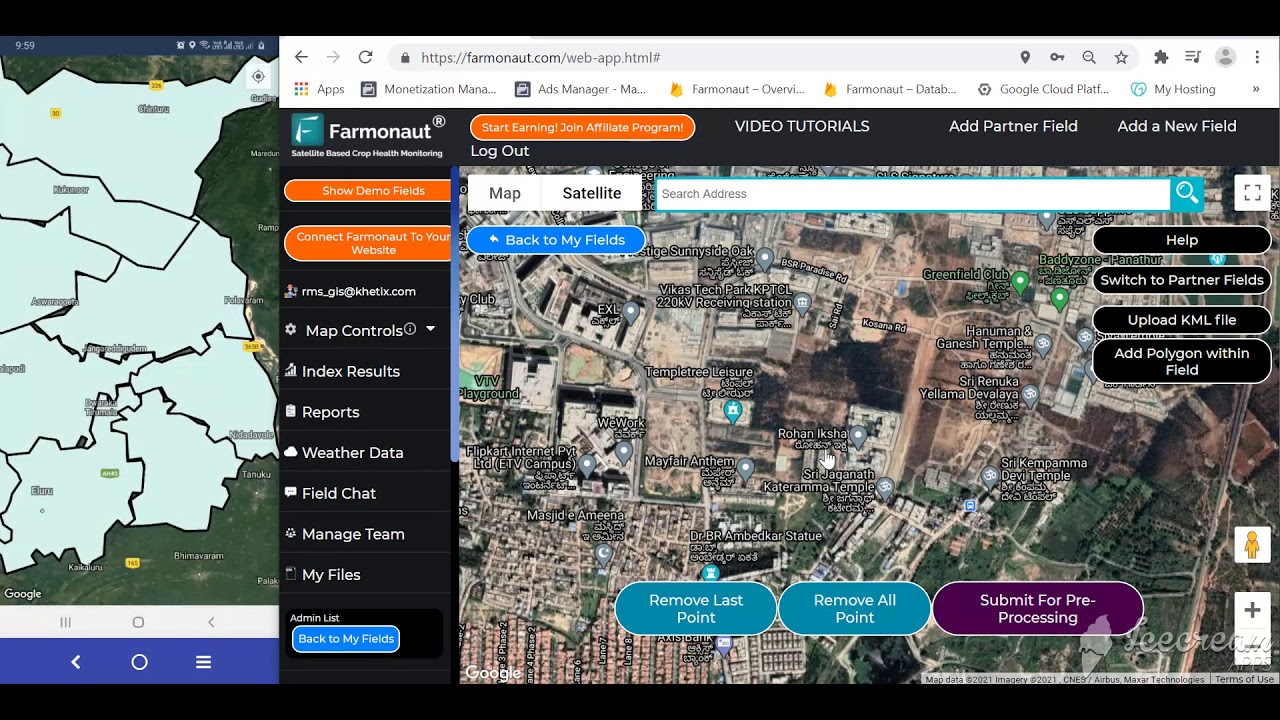
For readers interested in monitoring agricultural assets or agricultural production in Canada, Farmonaut’s platform provides affordable, high-resolution large-scale farm management solutions. These combine satellite imagery, resource planning, and real-time reporting tools, helping with management and strategic planning across provinces and land ownership models.

Environmental Compliance: Zoning, Stewardship & Sustainable Practices
Environmental stewardship and compliance are central to most policy frameworks governing countries where foreigners can buy agricultural land:
- 🌱 Zoning requirements: Protect against misuse by defining land as agricultural-only or mixed-use.
- 💦 Water management: Water rights are often distinct and require separate purchase, lease, or usage permits.
- 🌳 Sustainability certifications: Some jurisdictions favor buyers able to demonstrate credible agricultural plans with climate-resilient and biodiversity-focused methods.
- 📝 Mandatory environmental impact assessments: Particularly for parcels near protected resources, rivers, or forests.
- ♻️ Reporting and traceability: Increasing integration of carbon footprint tracking and agricultural traceability solutions in ownership and investment compliance regimes.
For investors and land managers, emerging satellite, AI, and blockchain-driven tools offered by providers like Farmonaut can streamline environmental monitoring, reduce regulatory risks, and support sustainability initiatives at both small and large scales.

Key Requirements Before You Buy Agricultural Land Abroad
- ✔ Comprehensive due diligence on zoning, soil, water rights, and environmental obligations
- 📑 Clear documentation: Proof of funds, business/farming plans, background check
- 🤝 Assessment of local partnership requirements (some regimes require resident directors/partners)
- ⚠ Awareness of transfer, tax, and succession laws for foreign landholders
- 🕵️♂️ On-ground legal and agronomic advice is indispensable
How Much Farmland is Owned by Foreign Countries or Entities?
“How much farmland is owned by foreign countries?” is a complex and much-debated topic. This is because ownership structures may be layered—foreign individuals, corporate investors, joint ventures, or funds might all hold a stake in agricultural parcels.
- 📊 Australia: By 2023, foreigners owned about 13.4% of Australia’s agricultural land (mainly UK and Chinese holdings).
- 🇧🇷 Brazil: Approximately 3 million hectares owned by foreign entities, regulated chiefly via corporate holdings.
- 🇺🇸 United States: Foreign investors held an estimated 37.6 million acres of US agricultural land in 2021, accounting for about 2.9% of all privately held US farmland as per the USDA’s Agricultural Foreign Investment Disclosure Act (AFIDA).
- 🇪🇺 EU: Statistics vary widely, however, Eastern European countries (e.g., Hungary, Romania) have seen increased acquisitions by foreign EU and non-EU corporations and individuals since mid-2000s reforms.
However, public data often reflects transparency gaps and regulatory complexity. Many international investment groups use layered corporate structures or local partnerships that mask direct foreign ownership in land registries. Nations are implementing standardized reporting and registry improvements to capture this data more accurately.

Planning for Non-Farmers: Practical Approaches & Pathways
For those pondering, “I am not a farmer, can I buy agricultural land?”—you’ll find that most countries favor buyers who demonstrate credible farming, management or stewardship plans. Here’s what the process often looks like:
- ☑️ Form a legal entity or cooperative in the target country (often a requirement for purchase or lease)
- ☑️ Negotiate partnerships with established farming operators to enhance compliance and secure local buy-in
- ☑️ Lease land with a long tenure and detailed management contract, especially in regions with foreign ownership caps
- ☑️ Submit a detailed business or stewardship plan (highlighting sustainable, local, or technological benefits)
- ☑️ Engage in traceability and reporting for food safety, environmental, and market access purposes
It’s vital to assess the land’s suitability (soil quality, access to water, infrastructure, and climate risks). Technology providers like Farmonaut help by offering resource management, environmental impact tracking, and geospatial insights via Android/iOS/web apps and APIs.

Technology & Market Trends in Global Agricultural Land Ownership
Countries actively marketing agricultural land to foreigners now emphasize technology transfer and long-term stewardship. This supports their overarching goal to attract productive investment while upholding food security and rural development.
- 📈 More “clearer pathways” for foreign buyers who bring advanced farming methods, data-driven management, or sustainable land-use plans.
- 🛰️ Use of satellite monitoring, AI, and blockchain for real-time compliance tracking, supply chain transparency, and environmental monitoring.
- 🌍 Global policy frameworks now integrate climate-smart agriculture, carbon tracking, and resource efficiency as prerequisites for foreign ownership and investment.
At Farmonaut, we recognize that remote management, reporting, and compliance have become central to cross-border farmland ownership. Our APIs and traceability solutions empower users and businesses to meet evolving standards for transparency, environmental impact, and audit compliance.
For developers, seamless integration into custom land management, insurance, or agri-banking solutions is possible via our robust Fleet Management and Crop Loan & Insurance Verification APIs.




Key Insights & Pro Tips for Foreign Agricultural Land Buyers
- 💡 Research the latest laws—Ownership rules can shift fast due to elections, food security, and global events.
- 🗺️ Choose a region carefully—Proximity to water, roads, and food markets affects both profitability and compliance hurdles.
- ⚠️ Don’t ignore local partnerships—Having a credible local partner or manager signals your commitment to sustainable stewardship.
- 🧾 Double-check documentation—Missing a single regulatory or tax document can delay your deal or void the investment.
- 🛰️ Integrate remote monitoring—Tools like Farmonaut’s advanced farm monitoring can provide peace of mind for international and absentee owners.
Frequently Asked Questions (FAQ): Foreign Ownership of Agricultural Land
-
Can foreigners buy agricultural land anywhere in the world?
No, countries vary widely—some allow it without restrictions, many with conditions, and some prohibit it outright or require leasehold structures. Always check national and local laws. -
Must I be a farmer to purchase agricultural land as a foreigner?
Not always, but non-farmers may face additional requirements (e.g., proof of management plans, formation of local entities, or demonstration of intended agricultural production or stewardship). -
Can I use agricultural land for non-farming purposes?
Usually not. Zoning laws and agricultural policies restrict land to farming uses; unauthorized conversion can result in fines, repossession, or voiding of investment. -
Are there limits to how much agricultural land a foreign entity can acquire?
Yes, most countries establish land caps (by area or percentage of region) or restrict sensitive locations, such as near water sources or borders. -
How can remote owners ensure compliance and effective management?
Engage with local experts, continually monitor with remote sensing, and use real-time field monitoring platforms like Farmonaut for compliance, environmental tracking, and operational transparency.
Useful Resources & Further Reading
- 🌐 Farmonaut: Farmonaut Satellite Platform — field monitoring, resource management, and compliance support for landowners, investors, and governments worldwide.
- 📢 Farmonaut API — for developers and businesses seeking customized satellite data integration. API Documentation
- ⬇️ Official App Downloads:
Android |
iOS
- 💻 Farmonaut Carbon Footprinting — Monitor and manage carbon emissions for regulatory and brand compliance.
- 📄 Product Traceability — Blockchain-based supply chain solutions for authenticating farm origin and production practices.
- 🚜 Fleet Management — Optimize logistics and safety for large-scale agricultural operations.
- 🌱 Large-scale Farm Management
- 🌳 Crop, Plantation & Forest Advisory
Conclusion: Striking the Right Balance in Foreign Agricultural Land Ownership
Whether you’re an investor, farmer, policymaker, or technology provider, countries where foreigners can buy agricultural land present both opportunities and intricate compliance requirements. The choice of location, investment pathway, and stewardship approach should be tailored to the regulatory landscape and evolving global trends in sustainability, food security, and rural livelihoods.
At Farmonaut, we are committed to enabling informed, productive, and sustainable agricultural land investment globally—empowering you with the affordable, satellite-driven insights and compliance monitoring tools you need for modern, responsible land ownership.
Your next step: Use this guide as your starting point. Dive deeper into country-specific rules, leverage technology for transparency and compliance, and partner with trusted local and global advisors for safe, impactful agricultural investment.
Stay tuned for continued updates as trends in foreign farmland ownership, compliance, and global agriculture evolve.
Discussion
Questions, corrections or field experience? Share them below. First-time comments are reviewed before they appear, and your email is never published.
No comments yet. Be the first to add a question or your experience.

 SatSure
 Geno
Geno Hayleys Agriculture
 Linx Agritech
 Adinet
 Save Your Soils
 Grandstream Algérie
 XOS Realty
 Geospatial Lab Africa
 Agro La Gándara
 HIPSAC
 ZOL Zimbabwe
 Juligerm
 AdBio
AdBio MISE Maroc
 NWNS
NWNS Red August Group
 Licence holder · Niger · Gold










