

Types of Dairy Cows: Breed Guide for Milk, Beef & Mini Farms
Reviewed September 2026 against USDA NASS and USDA ERS.
Try it: Run your own numbers →
The short answer: Holstein Friesians produce the most milk per cow (60 lbs/day on average, per USDA NASS), Jerseys and Guernseys produce the richest milk on less feed, and “miniature” and “fluffy” dairy cows are novelty and small-acreage picks, not commercial milk producers. Below is a breed-by-breed comparison, real US production numbers, and a cost calculator so you can work out what a herd this size actually costs to feed and house before you buy.
- US Dairy Trends: What the Data Actually Shows
- Comparison Table: Types of Dairy Cows by Yield & Price
- Fluffy Cows, Miniature Cows & Cows Bred for Milk
- Beef Cattle: Angus Prices and Selling by Region
- Dairy Herd Cost Calculator
- How to Start a Dairy Business: The Real Setup Costs
- Modern Dairy Farming: Consolidation and Technology
- Buying Dairy Cows: What to Check Before You Pay
- Male Dairy Calves: Managing the Non-Milking Half of the Herd
- How Farmonaut Supports Dairy and Beef Operations
- FAQs



US Dairy Trends: What the Data Actually Shows
The US produced 225.9 billion lbs of milk in 2024, up from prior years even as the number of dairy operations kept shrinking, according to USDA’s Economic Research Service (ERS). The USDA NASS milk production report for the 2025 marketing year put national output at 232 billion lbs. The story behind those numbers is consolidation: the US had 24,811 licensed dairy herds in 2024, after the total number of dairy farms fell 63% between 2004 and 2024. Fewer farms, more milk per cow — that is the defining trend in US dairy right now, not a single new technology or breed.
Average annual milk production per US dairy cow reached 24,178 lbs in 2024 (USDA ERS), which works out to roughly 60 lbs of milk per cow per day for a Holstein-dominated national herd, per USDA NASS. Per-cow productivity rose 28% from 2004 to 2024 — genetics, nutrition, and herd management all contributed, but the ERS analysis attributes much of the gain to larger operations culling low producers faster and adopting better feed rations. Geographically, more than 65% of US milk now comes from just five states: California, Wisconsin, Idaho, New York, and Texas (USDA ERS).
Is there a future in dairy farming in the US? The ERS data says yes for scale operations and no for the smallest ones: cost per hundredweight (cwt) of milk was $19.14 on farms milking 2,000+ cows in 2021, versus $42.71 per cwt on farms with fewer than 50 cows — more than double. That cost gap, not consumer demand, is what has pushed small dairies out over the past two decades. For a full walkthrough of the underlying numbers, USDA ERS’s own writeup is the primary source: Fewer Farms, More Milk (USDA ERS).

Comparison Table: Types of Dairy Cows by Yield & Price
“Different types of dairy cows” almost always means these six categories: five established dairy breeds plus the crossbred/miniature segment. The USDA does not publish a national breed-price dataset, so the price ranges below reflect typical private-treaty and auction listings reported by breed associations and regional livestock markets — treat them as a starting point for negotiation, not a fixed catalog price, and confirm current local prices with your state’s livestock market report or a breed association before buying.
| Breed | Milk Yield (lbs/lactation) | Best Suited Climate | Typical Price Range (USD) | Why Farms Choose It |
|---|---|---|---|---|
| Holstein Friesian | 22,000–27,500 | Temperate, confinement/free-stall | $1,500–$2,500 (bred heifer) | Highest raw volume; dominates the top 5 milk-producing states |
| Jersey | 13,000–18,700 | Hot, humid, pasture-based | $1,200–$2,200 | High butterfat (4.8–5.0%), smaller body, lower feed intake per cow |
| Brown Swiss | 18,700–23,100 | Wide range, heat and cold tolerant | $1,400–$2,600 | Longevity, strong feet and legs, good cheese-milk protein |
| Ayrshire | 15,400–19,800 | Cool, wet pastures | $1,100–$2,000 | Strong grazer, good udder health, moderate input cost |
| Guernsey | 14,300–17,600 | Moderate, pasture-based | $1,100–$2,100 | Beta-carotene-rich “golden” milk, docile temperament |
| Miniature Jersey / Dexter (dual-purpose) | 4,000–8,000 | Small acreage, any climate | $1,800–$4,500 | Fits under 5 acres, lower daily volume for household or hobby use |
Note what the table does not claim: there is no USDA dataset tracking miniature-cow sale prices or market size, so that row reflects breed-registry and hobby-farm listings rather than a federal statistic — if you need a defensible number for a business plan, get a current quote directly from a registered Dexter or Miniature Jersey breeder in your state rather than relying on any published average.
Fluffy Cows, Miniature Cows & Cows Bred for Milk
“Types of fluffy cows” is a grooming and show-cattle search, not a dairy-breed search — the long, brushed coat associated with viral “fluffy cow” photos comes from show fitting (typically Highland cattle, Belted Galloway, or heavily groomed show Herefords), not from a distinct breed developed for milk. None of the standard fluffy-coat breeds rank among the top US dairy producers; Highland cattle in particular are a beef and conservation breed, not a milking breed, and their yield is not tracked in USDA milk statistics.
“Types of miniature cows” splits into two groups: naturally small breeds (Dexter, Miniature Jersey, Miniature Zebu) and standard breeds bred down over generations for a smaller frame. Miniature dairy cows typically produce 2–4 gallons of milk per day versus 6–9 gallons for a full-size Holstein — useful for a household that does not want a full-size cow’s output or feed bill, but not a commercial substitute. As the GAPS in available data show, there is no published USDA figure for miniature-cow adoption rates or herd counts nationally; if you’re evaluating the mini-cow market for a business, the closest proxy is direct outreach to breed registries such as the American Dexter Cattle Association, since no federal agency tracks this segment.
For “types of cows for milk” specifically: Holstein, Jersey, Brown Swiss, Ayrshire, and Guernsey account for the overwhelming majority of the US dairy herd, with Holsteins alone estimated to make up the large majority of commercial milking cows nationally. USDA does not publish an exact breed-share percentage broken out by Jersey vs. Guernsey vs. Brown Swiss, so if you need a precise current split, the National Association of Animal Breeders’ annual sire-inventory report is the closest available proxy — USDA’s own herd counts are aggregated, not broken out by breed.

Beef Cattle: Angus Prices and Selling by Region
“How much does a full grown black Angus cow sell for” has no single national answer because Angus cattle trade on live weight, condition, and local sale-barn demand, and USDA’s dairy datasets in this brief don’t cover beef cattle pricing at all — beef cattle price discovery runs through USDA’s Agricultural Marketing Service (AMS) livestock market news reports and regional sale barns, not the milk-production statistics cited above. To get a defensible current number for your area, pull the weekly AMS feeder and slaughter cattle report for your region, or call two or three sale barns within driving distance and ask for last week’s clearing price on mature Angus cows by weight class.
The same applies to “beef cattle for sale Victoria” — whether that means Victoria, Texas, Victoria, Australia’s state, or another Victoria, cattle listings are local and change weekly; the reliable path is your state or regional livestock marketing association’s current listings rather than any figure quoted in an article. For breed selection guidance once you know your target market, see Farmonaut’s beef cattle breed comparison, covering American, British, and French types.
On “best cattle to raise for profit”: profitability depends on your feed costs, land base, and whether you sell weaned calves, finished beef, or breeding stock — there is no single breed or system that is most profitable everywhere, and no dataset in this brief quantifies beef cattle margins. What the dairy-side data does show, by analogy, is that scale drives cost efficiency: the same $19.14 vs. $42.71 per-cwt gap between 2,000-cow and sub-50-cow dairy operations (USDA ERS, 2021 figures) illustrates why herd size and fixed-cost spreading matter as much as breed choice in any cattle enterprise.
Dairy Herd Cost Calculator
Estimate daily milk output and feed-driven revenue gap for your herd using the per-cow production and cost figures cited above.
Run your own numbers
Assumes constant per-cow yield and a flat production cost per hundredweight; it excludes seasonality, milk-price volatility, replacement heifer costs, and herd health events. Default values reflect the 2024 US average yield (60 lbs/cow/day, USDA NASS) and the 2021 mid-size-farm cost benchmark (USDA ERS); replace them with your own numbers.
How to Start a Dairy Business: The Real Setup Costs
There is no single "dairy setup" cost because the number scales entirely with herd size, land ownership, and whether you're building a parlor from scratch or buying an existing operation — but the cost-per-cwt data gives a usable planning anchor. At the 2021 USDA ERS benchmark, producing at $19.14/cwt (2,000+ cow scale) versus $42.71/cwt (under-50-cow scale) means a startup dairy at small scale needs either a price premium (organic, direct-to-consumer, specialty cheese) or non-milk revenue (agritourism, breeding stock sales) to compete with the large-scale cost structure.
Practical steps for how to start a dairy business in the US: (1) confirm zoning and a Grade A milk permit with your state department of agriculture, since requirements vary by state and are not federal; (2) contract with a milk processor or cooperative before buying cows, since without a buyer lined up you have no market for output; (3) budget for the cow purchase price (see the breed table above), housing, a milking system sized to your herd, and feed; (4) size your herd realistically against the small-farm cost curve above rather than assuming national averages apply at your scale. USDA ERS's dairy background page is the right place to check current national structural data before finalizing a business plan: USDA ERS Dairy Background.

Modern Dairy Farming: Consolidation and Technology
Modern dairy farming in the US is defined by three linked shifts, all documented by USDA ERS: fewer, larger operations; higher per-cow output; and a widening cost gap by scale. The 63% decline in dairy farm numbers between 2004 and 2024 did not reduce national milk supply — it rose to 225.9 billion lbs in 2024 — because the 28% gain in per-cow productivity over the same period more than offset the farm count drop. That combination is why five states (California, Wisconsin, Idaho, New York, Texas) now supply over 65% of US milk: production has concentrated where the cost structure favors large, technology-enabled operations.
Trends in the dairy industry beyond consolidation include genomic selection for milk components (not just volume), robotic and automated milking adoption on larger farms, and closer feed-to-milk tracking to manage the cost side of the $19.14–$42.71/cwt gap. None of these are captured in a single USDA statistic, but the herd-count and productivity trend above is the clearest quantified signal of where the industry is heading. USDA NASS refiles national milk production and cow-count data monthly on the third Friday of each month — check USDA NASS Milk Production and Milk Cows for the current release before citing a figure from this page as still current.
Satellite and remote-sensing tools fit into this consolidation trend by letting a smaller labor force manage more acres of feed and forage per farm — which is precisely the constraint that scale-driven dairies face as they expand herd size without proportionally expanding staff.

Buying Dairy Cows: What to Check Before You Pay
- Health records and vaccination history: request complete veterinary records; a cow without documented health history carries hidden disease and productivity risk.
- Lactation stage: a cow in early-to-mid lactation gives you the clearest read on her actual yield versus the breed-table ranges above; a dry cow is a bet on her next lactation, not a known quantity.
- Genetic and production records (DHIA or equivalent testing): ask for Dairy Herd Improvement Association test-day records where available — these show actual milk weight, fat, and protein percentages rather than breed averages.
- Climate and system fit: match the breed table's climate column to your actual pasture and housing setup; a Jersey suited to pasture-based heat tolerance performs differently in a confinement free-stall barn built for Holsteins.
- Traceable ownership and health records: Farmonaut's blockchain-based traceability lets farms and dairies keep tamper-proof records of pedigree, health checks, and product flow from farm to processor.

On the environmental and financing side, Farmonaut's carbon footprinting tools help dairy operations track and document herd-related emissions against state and buyer sustainability requirements, and Farmonaut's satellite-verified insurance and loan services support financing applications for herd expansion by giving lenders independently verified farm and feed-acreage data.
Male Dairy Calves: Managing the Non-Milking Half of the Herd
Roughly half of all calves born to a dairy herd are male, and because bull calves do not produce milk, dairy operations manage them through a small number of established paths rather than raising them as future milkers:
- Beef crossbreeding: breeding dairy cows to beef sires (Angus, Hereford, or other beef breeds) produces calves with meaningfully higher beef-market value than a straight dairy-breed bull calf. See Farmonaut's beef cattle breed comparison for sire selection by region.
- Sexed semen: widely available sexed semen lets a dairy farm skew calf sex ratios toward heifers, directly reducing the number of lower-value bull calves born each year.
- Precision tracking of growth and market timing: logistics for moving crossbred calves to feedlots or beef finishers depends on efficient transport scheduling. Farmonaut's Fleet Management module tracks transportation and logistics across mixed dairy-beef operations.
- Welfare standards: buyer and processor sustainability requirements increasingly specify shelter, feeding protocol, and handling standards for male calves before sale.

How Farmonaut Supports Dairy and Beef Operations
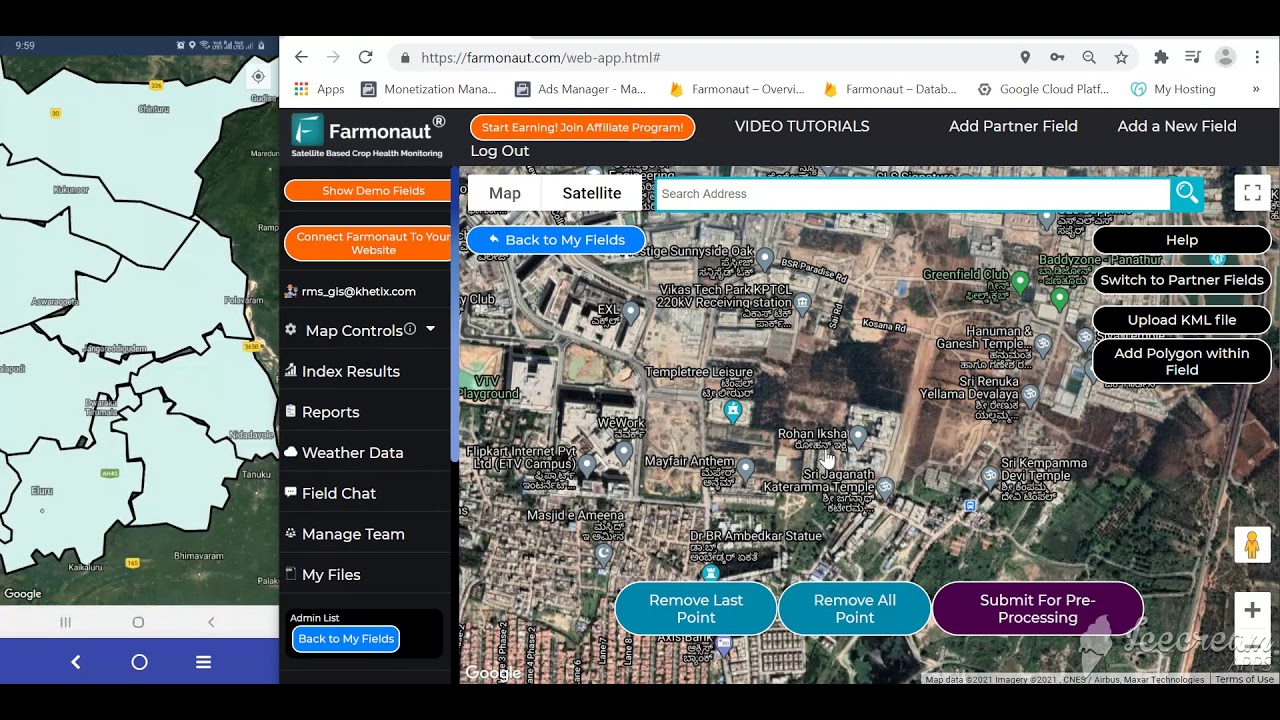
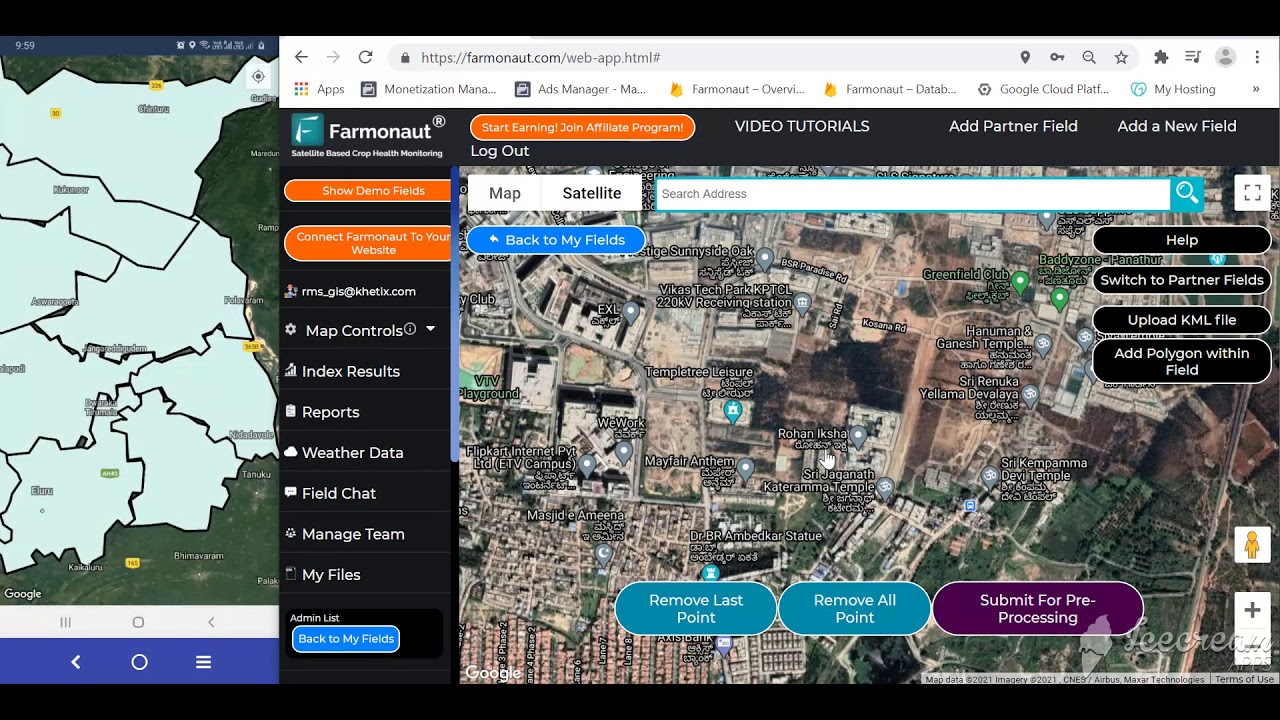
Farmonaut's satellite monitoring platform is built for the acreage side of the herd-scale problem described above: as dairies consolidate to fewer, larger operations, managing feed and pasture acres per cow becomes the binding constraint. Farmonaut's tools include:
- Satellite monitoring of pasture and forage crop health, to plan feed supply against herd size
- The Jeevn AI Advisory System for weather, irrigation, and resource guidance
- Carbon footprinting for sustainable dairy operations reporting to buyers or regulators
- Blockchain traceability for herd and product records, described above
- Large-scale farm management tools for operations tracking feed acreage across multiple sites
- Access via Android, iOS, web, and API — see the API page or the Developer Docs

Get Started with Farmonaut's Subscription Plans
Unlock precision monitoring, resource optimization, and data-driven advisory for your dairy or beef operation.
Choose your tailored subscription:










FAQs
What are the different types of dairy cows?
The five established US dairy breeds are Holstein Friesian (22,000–27,500 lbs/lactation), Jersey (13,000–18,700 lbs), Brown Swiss (18,700–23,100 lbs), Ayrshire (15,400–19,800 lbs), and Guernsey (14,300–17,600 lbs). Miniature breeds such as Dexter and Miniature Jersey produce 4,000–8,000 lbs per lactation and suit small-acreage or household use rather than commercial dairies.
What is modern dairy farming and how has it changed?
Modern US dairy farming means fewer, larger operations producing more milk per cow. USDA ERS reports a 63% decline in dairy farm numbers from 2004–2024, alongside a 28% rise in per-cow productivity and total 2024 production of 225.9 billion lbs. Over 65% of US milk now comes from five states: California, Wisconsin, Idaho, New York, and Texas.
Are fluffy cows and miniature cows dairy breeds?
"Fluffy cows" typically refers to Highland cattle or heavily groomed show cattle — a beef and show-cattle look, not a dairy trait. Miniature cows (Dexter, Miniature Jersey) are true dairy breeds bred smaller; they produce 2–4 gallons of milk per day, versus 6–9 gallons for a full-size Holstein, and suit household or small-farm use rather than commercial milk production.
How much does a full-grown black Angus cow sell for?
There is no single national price — Angus cows sell by live weight, condition, and local demand. Check USDA AMS regional livestock market news reports or contact sale barns in your area for a current clearing price, since values shift weekly and are not part of USDA's dairy production datasets.
How do I start a dairy business?
Secure a state Grade A milk permit, line up a processor or cooperative buyer before purchasing cows, budget for cows, housing, and a milking system sized to your herd, and size your operation against the real cost curve: USDA ERS reported $19.14 per hundredweight at 2,000+ cow scale versus $42.71 at under-50-cow scale in 2021. Small operations typically need a price premium or added revenue stream to compete.
How are male dairy calves managed?
Male dairy calves are commonly crossbred with beef sires to raise their market value, or reduced in number through sexed semen use that skews births toward heifers. Farms increasingly track growth and transport logistics digitally to manage this side of the herd efficiently.
The right breed, the right scale, and current data — not last year's snapshot — are what make a dairy or beef purchase pay off. Check USDA NASS and ERS for the latest release before you finalize a herd decision, and explore sustainable dairy farming practices to plan for the next stage of consolidation.
Discussion
Questions, corrections or field experience? Share them below. First-time comments are reviewed before they appear, and your email is never published.
No comments yet. Be the first to add a question or your experience.

 Raketla
 Polaris Digitech
 Teledarbas
 Wild Oak Farm
 SFX
SFX BACF Africa
 Doodlakine
 Exurbia Geospatial
 FieldZero
 Indico Company
 Kubota
 FFBS
FFBS Jontra
 Tucor
Tucor
 Licence holder · Niger · Gold










