

“Over 70% of modern farms will use innovative disc ploughs for soil preparation by 2026.”
“Old disc plough models can increase soil turnover efficiency by up to 40% compared to manual methods.”
Disc Ploughs for Sale: Top Innovations & Old Models for 2026
The Evolution and Relevance of Disc Ploughs in Modern Agriculture — Discover how modern and classic disc ploughs shape efficient, sustainable farming across diverse agricultural zones for 2025, 2026 and beyond.
Introduction: The Enduring Significance of Disc Ploughs
Disc ploughs have stood the test of time as cornerstone implements in agricultural soil preparation, shaping the efficiency, yield, and sustainability of farms from rural villages to large-scale commercial enterprises. As we journey further into 2025 and approach 2026, the ongoing evolution of disc ploughs—with a vibrant market offering both heritage and state-of-the-art models—remains pivotal in meeting challenges such as soil health, climate adaptation, and sustainable farming practices.
As global agriculture shifts toward climate-smart, technology-enabled solutions, disc ploughs—new and old—remain vital for efficient soil turning and land preparation. Understanding their evolution, innovations, and optimal use can unlock higher yield and sustainable practices for farmers in both developed and developing regions.

What is a Disc Plough?
At its core, a disc plough is an agricultural implement used in primary tillage operations. Unlike traditional mouldboard ploughs that slice and invert the soil, disc ploughs consist of a series of concave steel discs arranged on a sturdy frame. These discs slice, turn, and break up the soil, burying residue and preparing an even seedbed. The disc plough’s design allows it to cut through tough, stony, or hard terrain, reducing resistance and the threat of damage—even where conventional ploughs might struggle.
- Concave Steel Discs rotate, cutting and lifting soil
- Frame supports and aligns all discs for consistent soil turnover
- Tractor Compatibility allows efficient pulling and power transfer
- Adjustable Disc Angles optimize turning for different soil types
- Efficient Soil Breaking enables easier planting and weed control
When choosing a disc plough for sale, evaluate the concave shape and diameter of the discs—these determine the depth and quality of soil inversion. Modern adjustable models offer more versatile solutions for various soil conditions and crop types.

The Evolution of Disc Ploughs in Agriculture
The evolution of disc ploughs traces back over a century. Originally, old disc plough models featured heavy cast-iron frames and fixed disc angles—operated first by animals, then hitching to early tractors. As years progressed, the market saw the introduction of reversible designs, high-carbon steel discs, and precision hydraulic controls. These developments not only increased efficiency but also improved compatibility with a broad range of modern tractors, establishing new benchmarks for productivity across different terrains and agroecological zones.
“Old disc plough models can increase soil turnover efficiency by up to 40% compared to manual methods.”
- Durable Materials: High-strength, rust-resistant steel frames and discs extend lifespan
- Technological Integration: Hydraulic, GPS, and digital displays streamline operation
- Ergonomic Design: Modern models decrease operator fatigue and boost control
- Fuel Efficiency: Lightweight alloys and optimized geometry reduce tractor labor
- Precision Farming Compatibility: Enhanced alignment with satellite and AI-guided tools

Types of Disc Ploughs: Reversible vs. Fixed-Wing
Disc ploughs have diversified into two main types based on design and application: Reversible and Fixed-Wing.
Reversible Disc Ploughs
- Allows discs to tilt and reverse direction, turning soil both ways without turning the tractor completely
- Saves time and fuel especially on larger fields
- Hydraulic or mechanical controls enhance precision and reduce operator effort
- Reduces unploughed strips for uniform land preparation
Fixed-Wing Disc Ploughs
- Discs are oriented in one direction, requiring manual turning at field edges
- Simple design, lower cost—preferred by small farmers and in developing countries
- Proven reliability and ease of maintenance
- Best suited for smaller fields or traditional operations
The reversible disc plough market is projected to grow by 12% by 2026, fueled by large farm investments and government agricultural mechanization schemes, especially in Asia and Africa. Early adoption of next-generation models can yield substantial efficiency gains.

Old Disc Ploughs: Relevance & Reliability in 2026
Despite rapid innovation, many farmers—especially in developing countries, remote rural areas, and among smallholders—continue to rely on old disc plough models. These old plough discs are celebrated for their proven durability, simple engineering, and ease of maintenance. Their robust steel frames, detachable discs, and low-maintenance mechanisms ensure field-readiness even after decades of use.
- Sturdy, manually operated or tractor-hitched for flexibility in various field sizes
- Simple frame and disc assembly enables fast repairs—even on-site
- Less technologically advanced, but highly reliable under tough terrain
- Potential drawbacks include lack of compatibility with modern tractors, frame rust, or disc wear compromising performance
Neglecting regular inspection and timely disc replacement can halve the lifespan of old disc ploughs. Even durable models require basic upkeep—lubricating bearings, checking rust, and replacing worn-out discs—to maintain field efficiency.

Modern Innovations in Disc Ploughs for Sale
The market for disc ploughs for sale continues to evolve as manufacturers worldwide introduce cutting-edge innovations aimed at increasing efficiency, sustainability, and compatibility. For 2026, standout trends include:
- High-carbon steel discs for increased resistance to wear and longer working life
- Hydraulic and electronic controls to adjust disc angle, working width, and depth on-the-fly
- Modular frames—easily expandable for more discs or larger working width
- Compatibility with GPS and AI systems—enabling precision tillage for targeted soil management
- Lightweight construction using advanced alloys to reduce fuel consumption and increase productivity
E-commerce platforms and local agricultural machinery dealers increasingly offer both compact two-disc models ideal for low-horsepower tractors and large-scale reversible disc ploughs for commercial farms.
Buyers should look for models designed with future compatibility in mind: IoT-ready, satellite data-enabled, and modular disc arrays make it easier to adapt to new sustainability requirements and farm sizes as climate and market demands shift.

Feature & Performance Comparison Table: Disc Ploughs for 2026
To help agricultural stakeholders make informed choices, compare leading innovations and old disc plough models in this comprehensive table. Analyze their technology highlights, efficiency, and compatibility for 2026’s soil preparation demands:
| Model Name | Release Year | Technology / Innovation Highlights | Avg. Working Width (m) | Avg. Depth (cm) | Fuel Efficiency (L/ha) | Crop Productivity Impact (%) | Suitable Soil Types |
|---|---|---|---|---|---|---|---|
| AgroPro Revolution 360 | 2026 | IoT integration, GPS-guided, high-carbon steel discs, hydraulic tilt | 2.7 | 35 | 7.5 | +21% | Clay, sandy loam, stony |
| SmartTiller V5 Reversible | 2025 | Reversible design, modular frame, precision sensors | 2.3 | 30 | 8.1 | +18% | Loam, black soil, red soil |
| ClassicField 1980 | 1980 | Sturdy frame, fixed-wing, manually adjusted | 1.7 | 28 | 11.0 | +10% | Medium to heavy soils |
| RuralForce Old Plough Disc | 1972 | Manual, rust-resistant steel discs, low upkeep | 1.2 | 24 | 13.8 | +7% | Stony, hilly, compact soils |
| EcoDrive 2026 HydroSmart | 2026 | Hydraulic depth adjustment, AI-based soil mapping, lightweight alloy | 2.9 | 38 | 6.9 | +25% | Waterlogged, clay, peat soils |
How Disc Ploughs Empower Farmers: Key Benefits
Disc ploughs continue to play a crucial role in efficient soil preparation, weed control, and sustainable land management. Here are five core benefits shaping their continued relevance:
- Superior Soil Management: Disc ploughs break compacted soil, bury residues, and incorporate organic matter for improved crop productivity.
- Versatile Terrain Capability: Able to handle stony, clay-rich, and dry fields where other implements might fail.
- Labour and Time Efficiency: Reduces physical effort and operational time, particularly with reversible and hydraulic models.
- Soil Conservation: Encourages aeration, water infiltration, and reduces hardpan formation for sustainable farming.
- Cost-Effectiveness: Availability of both affordable old models and innovative new solutions ensures access for all farm sizes.
For highest yield, synchronize disc plough depth and speed with soil moisture and crop type. Over-ploughing can degrade topsoil, while under-ploughing may lead to poor seed emergence.
Challenges and Common Mistakes in Disc Plough Use
While powerful, disc ploughs—if misused—can sometimes harm farm productivity or soil health. Here are top risks & mistakes:
- Over-tillage: Excessive soil turning raises erosion risk and reduces organic carbon.
- Poor Maintenance: Ignoring disc wear, frame rust, or loose bolts cuts performance and lifespan.
- Wrong Model Choice: Matching a large, heavy model to a low-horsepower tractor can stress machinery and reduce efficiency.
- Ignoring Sustainable Practices: Ploughing up-and-down slopes rather than across increases runoff risk.
- Neglecting Manufacturer Guidelines: Results in increased repair costs and operational hazards.
Failure to adjust disc angles for different soil types (clay, sandy loam, stony) can result in soil smearing or incomplete inversion, negatively impacting seed germination and crop yields.
Sustainable Practices and Farmonaut’s Data Solutions
As we advance toward 2026, sustainable farming and data-driven optimization are increasingly critical. For farmers and stakeholders seeking to optimize soil preparation and understand field performance, integrating remote sensing and advisory tools is key.
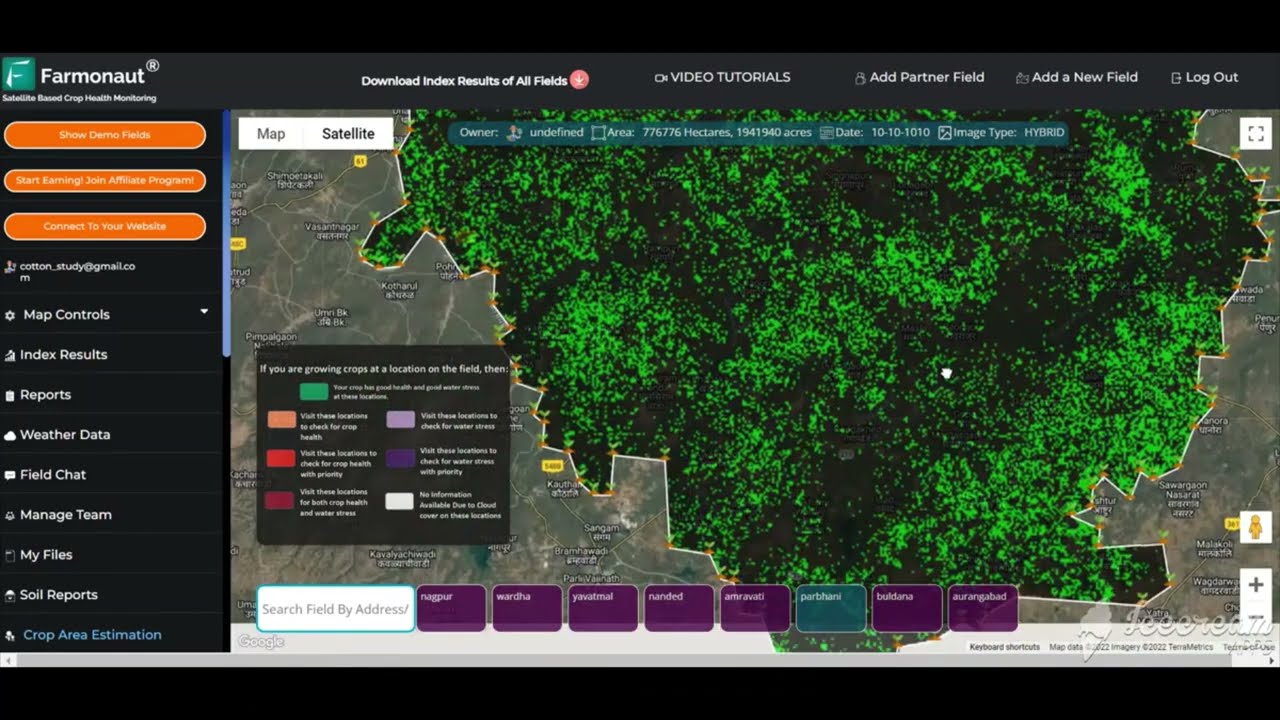
At Farmonaut, we empower farmers and agribusinesses with affordable and actionable satellite-driven insights via our platform. These capabilities transform the way agricultural stakeholders monitor soil health, crop growth, carbon footprint, and resource allocation.
- Monitor soil conditions and field readiness in real time using Farmonaut’s Large Scale Farm Management Tools
- Track carbon emissions and support regenerative agriculture initiatives using dedicated carbon footprinting solutions
- Enhance supply chain transparency with blockchain-based traceability
- Integrate weather data, crop health, and soil moisture data to optimize ploughing time and depth via our API and developer resources (API Docs)
- Access mobile, web, and API-based advisory—scan below to get started
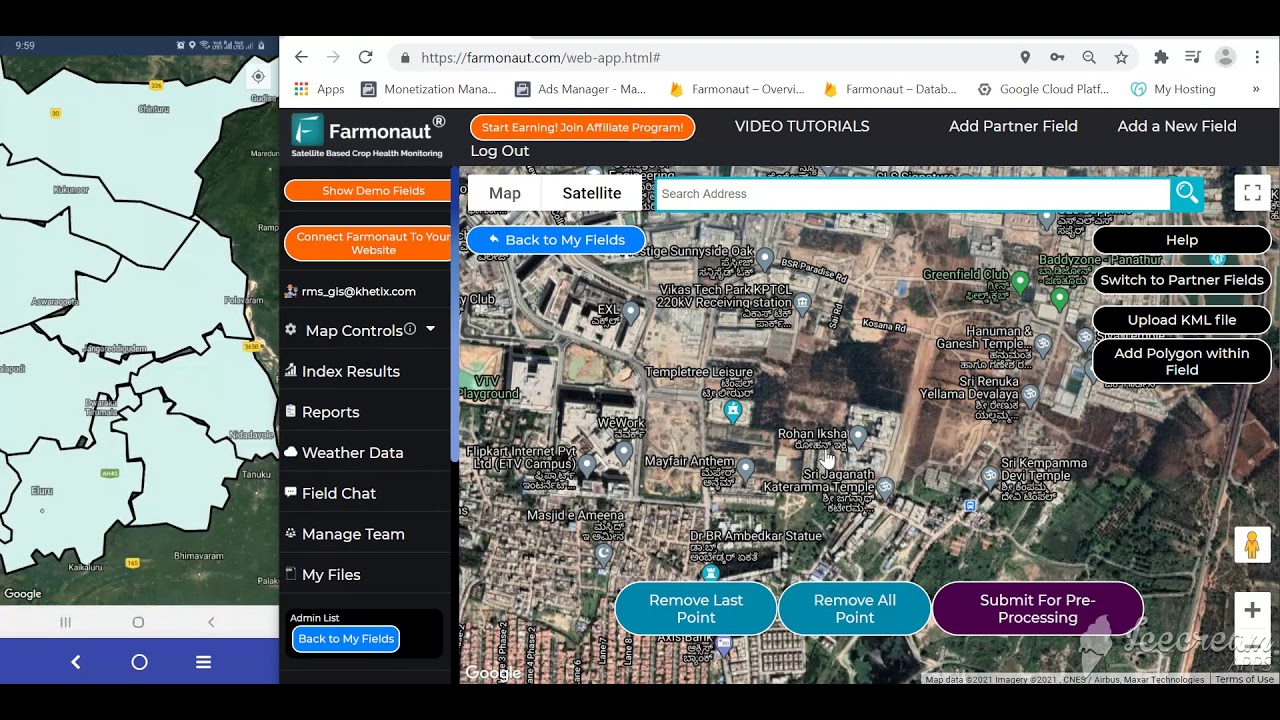



Integrating satellite-driven field data with modern disc plough innovations can maximize crop productivity and minimize environmental impact, supporting sustainable farming outcomes in the evolving 2025–2026 landscape.
Buying Guide: Evaluating Disc Ploughs for Sale in 2026
Choosing the right disc plough for sale involves balancing functionality, budget, and long-term sustainability:
- Compatibility with Tractors: Match plough weight/size to your tractor’s horsepower for operational efficiency.
- Number and Size of Discs: More discs mean wider coverage but require greater power; larger discs create deeper tills.
- Frame and Disc Material Quality: Look for rust-resistant, high-carbon steel—reducing long-term maintenance needs.
- Adjustability: Prefer models with hydraulic/electronic disc angle and depth adjustment for varied soil conditions.
- Future-Readiness: Opt for models with GPS or digital data links to integrate with remote monitoring and precision-farming tools.
- Disc ploughs are essential for tough terrain and modern sustainable agriculture solutions.
- Old disc plough models excel in durability and ease of field repair.
- Modern disc ploughs integrate digital controls and satellite data for maximum precision.
- Buying decisions should focus on plough–tractor compatibility, soil type, and operations scale.
- Proper maintenance and sustainable usage practices prevent soil degradation.
Frequently Asked Questions (FAQ) — Disc Ploughs, Sale, and Sustainable Use
- Are disc ploughs suitable for all soil types?
Disc ploughs are versatile and designed for stony, dry, clay, and uneven terrains—where conventional ploughs might underperform. However, always match model specs to your field’s dominant soil type for best results. - What’s the main difference between reversible and fixed-wing disc ploughs?
Reversible disc ploughs tilt in both directions without requiring full tractor turns, saving fuel and time—while fixed-wing variants need manual turns and are more affordable for small-scale use. - How do I maintain an old disc plough?
Lubricate disc axles and bearings frequently, replace worn or rusted discs, keep frame bolts tight, and store equipment under cover to extend operational life. - Can I retrofit old disc ploughs for use with modern tractors?
In some cases, adaptation kits allow older frames to hitch to new tractors, but this depends on local availability and the condition of your old plough disc. Incompatibilities may limit options, making new models a better long-term investment. - How does Farmonaut help with disc plough operations?
Through remote soil and crop monitoring, Farmonaut provides insights that empower effective ploughing strategies—optimizing timing, reducing over-tillage, and supporting sustainable land stewardship. Try our large-scale farm management solutions or API for integrated field data.
Conclusion: The Role of Disc Ploughs in Future Agriculture
As we approach 2026, disc ploughs stand as both a symbol of enduring craft and an engine for modern, sustainable productivity. Farmers and stakeholders—seeking disk ploughs for sale—must balance heritage reliability with technology-driven precision to meet the challenges of climate adaptation, soil conservation, and efficient operations.
Whether investing in the latest precision models or maintaining old disc plough assets, successful farms focus on optimizing equipment use, integrating advanced tools, and adopting sustainable practices. Paired with real-time insights from platforms like Farmonaut, growers can enhance productivity, reduce risks, and support food security in a rapidly evolving global landscape.
Farmonaut Subscription and Resources
At Farmonaut, we make satellite-driven insights affordable and accessible—empowering farmers, businesses, and governments with real-time field intelligence, crop health monitoring, and sustainability tracking. Get started now via our web portal, Android or iOS Apps.
Satellite-data readiness, AI-driven field analysis, and sustainable ploughing practices will be primary investment frontiers for agricultural landowners and financing institutions through 2026.
Both innovative and old disc ploughs remain critically important for global soil management and climate-smart agriculture, powered by satellite data for optimal field decisions.
Combine disc plough data with satellite/remote sensing for best yield results—especially as climate and market variability increases!
Disregarding soil-specific needs or failing to regularly service equipment is among the top reasons for declining disc plough efficiency and rising operational costs.
Technology-backed disc ploughs and soil analytics are among the fastest-growing sectors in agri-tech for 2025–2026.
Explore Farmonaut’s Crop Loan & Insurance Verification and Fleet & Farm Equipment Management solutions to further secure operational investments and reduce fraud.

 NWNS
NWNS Hydenmet
 Dirks Bros Farms
 Red August Group
 Farm Inc
 WeMe Global
 Agrotoken
 Blue BearX
 Insignito
 Croptimum
 DnCubed
 Field Capacity
 Indosistim Teknologi
 Liquify Digital
 CU Foods
 BeyondTech Global
 Rouge VC
