

Reviewed September 2026 against USDA NASS and the National Center for Education Statistics (NCES).
Try it: Run your own numbers →
- Distance Learning Agriculture Courses: The Short Answer
- Who Is Actually Taking Agriculture Courses by Distance Learning
- What Distance Learning Agriculture Courses Cover: Modules & Offerings
- The Sustainable Agriculture Production Track
- Horticulture Courses by Distance Learning: What’s Different
- E-Learning in Agriculture: The Technology Layer
- Forestry, Land Management, and Mining: Expanding Horizons
- Project-Based Experiential Learning & Real-World Assessment
- Comparison Table: Distance Learning Agriculture Course Types
- Durable Checklist: How to Vet Any Program
- Course Cost & Time-Investment Calculator
- Farmonaut: Satellite Tools That Support Coursework
- Quick Access: Apps, APIs & Satellite Solutions for Learners
- Frequently Asked Questions (FAQ)
- Conclusion
Distance Learning Agriculture Courses: What to Check Before Enrolling
A distance learning agriculture course lets you study crop science, agronomy, precision farming, or land management remotely, through a mix of recorded lectures, live seminars, and project work assessed on real farm or satellite datasets rather than a physical campus. The strongest programs for US, Danish, and Australian learners combine an accredited land-grant, university, or vocational provider with hands-on modules in remote sensing, sustainability, and data analysis — not video lectures alone. Below, we cover what these courses actually teach, how enrollment in distance education has shifted, and a checklist you can reuse every time a new program launches.
Who Is Actually Taking Agriculture Courses by Distance Learning
Distance education enrollment across US higher education is well documented even though agriculture-specific enrollment figures are not broken out separately by most reporting bodies (see the note in the Gaps section below on why a course-level agriculture figure isn’t publicly available). According to the National Center for Education Statistics, 61% of US undergraduate students were enrolled in at least one distance education course in fall 2021, and 28% of undergraduates took their coursework exclusively through distance education that same term. At the postbaccalaureate level, the exclusively-distance share was higher still: 40% of postbaccalaureate students in fall 2021 studied entirely online, per the same NCES release.
Those are campus-wide figures, not agriculture-program-specific ones, but they matter for anyone evaluating a distance learning agriculture course: they tell you that distance and hybrid delivery is now the default mode of study for a large share of US students generally, so an agriculture program offered only in a traditional lecture-hall format is increasingly the exception rather than the rule. For a current reading, NCES republishes these Fast Facts figures on the same page as new IPEDS survey cycles are processed — check the NCES Fast Facts page directly rather than relying on any article’s snapshot.
If you’re in Denmark or Australia, the equivalent national figures are not part of this research base and should be pulled from Danmarks Statistik / the Danish Ministry of Higher Education and Science for Denmark, and from ABARES or the Australian Bureau of Statistics for Australia — treat any Denmark- or Australia-specific enrollment percentage you see quoted elsewhere with caution unless it links to one of those primary sources.
What Distance Learning Agriculture Courses Cover: Modules & Offerings
Course content across the leading providers clusters into five areas:
- ✔ Foundational agricultural science: Soil science, water resources, crop physiology, and pest management
- ✔ Advanced agribusiness training: Precision agriculture, agronomy, farm management, and supply chain logistics
- ✔ Field-ready applications: Irrigation planning, post-harvest handling, plant nutrition, and sustainable inputs
- ✔ Sustainable agriculture production: Agroecology, crop rotation, circular resource use, and certified-organic transition planning
- ✔ Applied technology modules: Remote sensing, analytics dashboards, IoT sensors, drone (UAV) imagery, and guidance/autosteering systems
- Try it: Run your own numbers
The strongest programs pair each module with a dataset or dashboard exercise rather than a reading assignment alone: a soil science module that includes an actual soil-moisture dataset to interpret, or a pest-management module built around a real infestation case study, teaches differently than one built entirely from textbook chapters.

The Sustainable Agriculture Production Track
“Course on sustainable agriculture production distance learning” is a distinct search from generic agribusiness training, and the distinction matters because sustainable-production coursework increasingly maps directly onto certified-organic transition planning — a track with hard numbers behind it in the United States.
The USDA National Agricultural Statistics Service recorded 17,445 certified organic farms in the United States in 2021, a 5% increase from 2019, generating $11.2 billion in certified organic product sales that year. Sales growth outpaced farm-count growth by a wide margin: US organic product sales grew 32% between 2017 and 2022, per the same NASS release — meaning existing organic operations were scaling output and revenue faster than new farms were certifying. Separately, USDA NASS’s Organic Production survey guide reports that 28% of US farms surveyed in the 2021 period said they planned to increase organic production going forward.
For a distance learning agriculture course marketed toward sustainable production, that 28%-planning-to-increase figure is the practical hook: if you farm in the US and are weighing whether a transition-to-organic module is worth the tuition, you’re in the same cohort as more than a quarter of surveyed US operations. USDA republishes updated organic survey data periodically through its Organic Production survey guide, and the underlying Quick Stats database (queried by commodity, state, and year) is the authoritative source to check for a more current count than the 2021 figures above — USDA runs a full organic census roughly every two years, so a 2023 or later dataset may already be published by the time you’re reading this.
A course worth its tuition in this track should teach you to read that kind of dataset yourself: not just “organic farming is growing,” but how to pull the current NASS Quick Stats number for your own state and commodity before you commit to a transition plan.




Horticulture Courses by Distance Learning: What’s Different
Horticulture-specific distance courses narrow the agriculture curriculum toward fruit, vegetable, ornamental, and nursery production rather than broadacre cropping, and they tend to sit at vocational and further-education institutions rather than land-grant universities in all three target markets. In the US, look for programs affiliated with state cooperative extension services or community colleges with a horticulture major; in Denmark, agricultural and horticultural vocational education runs through the erhvervsuddannelse (vocational education) system rather than the university sector; in Australia, TAFE providers run accredited horticulture qualifications (Certificate III/IV level) that can be studied by distance or blended mode.
Whichever market you’re in, the same test applies as with the sustainable-production track above: ask whether the horticulture module includes a live plant-health or pest-identification exercise using real images or field data, not just a plant taxonomy reading list. Programs that license access to actual crop-health imagery or diagnostic datasets teach a transferable skill; programs built entirely from static course notes do not.
E-Learning in Agriculture: The Technology Layer
“E-learning in agriculture” as a search phrase points at the technology stack behind the course rather than the subject matter — and technology adoption on the ground is what these courses are increasingly built to teach toward. USDA’s Economic Research Service reported that 52% of US midsize farms and 70% of large-scale crop farms used guidance autosteering systems in 2023, and 68% of large-scale farms used yield monitors combined with soil mapping the same year. Those adoption rates are the reason precision-agriculture modules now sit inside general agriculture curricula rather than as a specialist add-on: a majority of large US operations already run the equipment that these modules teach students to interpret.
The USDA Economic Research Service chart behind these figures is updated as ERS refreshes its farm-technology data series, so check that page directly for the current adoption rate before assuming the 2023 figures above still hold — ERS’s charts-of-note series is one of the faster-refreshing USDA data products and doesn’t run on a fixed annual cycle.
Course modules built around remote sensing (satellite NDVI, soil moisture mapping), IoT sensor networks, and traceability systems using blockchain are the practical expression of this adoption curve. A course that teaches you to read an autosteering guidance log or interpret a yield-monitor map is teaching a skill the majority of large US farms already use daily — not a speculative future technology.
- ✔️ AI-driven modules for real-time crop health monitoring
- 📊 Data-centric project work with high-resolution remote sensing imagery
- ⚡ Instant feedback loops for iterative model refinement and deployment
- 🔄 Seamless API integration (e.g., Farmonaut API for farm data analysis)
- 🎓 Micro-credentials & digital badges — portable, recognized across sectors
Modern distance learning agriculture courses also increasingly cover:
- 🛰️ Remote sensing: Leveraging imagery from satellites (like NDVI and soil moisture maps), UAVs, and drones for field-level insight
- 🔍 IoT-enabled sensors: Monitoring water usage, soil health, atmospheric conditions, and pest activity across large landholdings
- 🔗 Blockchain for traceability: Creating transparent records for produce, mineral, or timber origins (see Farmonaut blockchain traceability)
- 📊 Interactive dashboards: Real-time, customized advisory delivered via AI-based systems such as Farmonaut Carbon Footprinting for tracking sustainability impact

Forestry, Land Management, and Mining: Expanding Horizons
Distance learning in agriculture now extends past crop and livestock topics into forestry, land management, and mineral operations — relevant to Australian and US students in particular, given the scale of forestry and mining land use in both countries.
Forestry & Land Management Modules
- 🌲 Sustainable silviculture: Planning timber production and habitat conservation to align with ecological resilience.
- 🛰️ Remote forest monitoring: Using satellite imagery to track forest health, assess wildfire risk, and monitor carbon stock changes.
- 🐞 Infestation & disease detection: Applying image analysis to recognize land cover changes, pest outbreaks, or invasive species impacts from time-lapse imagery.
- 🌱 Restoration planning: Analytical tools for habitat restoration, watershed management, and sustainable concession planning.
- 📘 For more on forestry integration, see Farmonaut’s Crop Plantation and Forest Advisory
Mining and Infrastructure: Environmental Modules in Distance Learning
- ⛏️ Sustainable minerals management: Training on responsible resource extraction, pollution prevention, and environmental safeguard protocols.
- 🛰️ Geospatial analysis: Modules for predicting soil erosion, monitoring land rehabilitation, and planning reclamation, using both satellite data and on-the-ground sensors.
- 💎 Traceability in mineral supply chains: Blockchain-enabled modules for environmental compliance and transparent origins (see Farmonaut Traceability Solutions).

Project-Based Experiential Learning & Real-World Assessment
The programs worth paying for now assess students through capstone projects and dashboards rather than closed-book exams alone:
- 🖥️ Real-world farm and forest case studies: Analyze authentic data from commercial operations to pinpoint challenges and design solutions.
- 🪴 Pilot project design: Build a soil-monitoring plan, deploy a sensor network model, or design a drone-based crop mapping route.
- 📈 Experimentation and interpretation: Design, run, and interpret models for pest/disease forecasting or yield prediction using real datasets.
- 🤝 Mentorship and industry interface: The stronger programs connect learners with field experts for guided feedback.
Comparison Table: Distance Learning Agriculture Course Types
| Track | Typical Provider Type | Core Modules | Assessment Style | Best Fit |
|---|---|---|---|---|
| General Agribusiness / Agronomy | University extension, land-grant online division | Soil science, farm management, supply chain | Case studies, exams, capstone | Career-changers, farm managers |
| Sustainable Agriculture Production | University sustainability program, ag college | Agroecology, organic transition planning, crop rotation | Field project, transition plan submission | Operators evaluating organic certification |
| Horticulture by Distance Learning | Vocational / TAFE / community college | Plant health, nursery production, pest ID | Practical assessment, portfolio | Nursery, orchard, market-garden operators |
| Precision Ag / E-Learning Technology | Ag-tech online academy, university partnership | Remote sensing, guidance systems, dashboards | Data project, dashboard build | Large-scale and midsize farm operators |
| Forestry & Mining Environmental | Natural resources college, environmental program | Forest monitoring, reclamation planning, geospatial analysis | Geospatial project, compliance case study | Land managers, mining environmental staff |
Durable Checklist: How to Vet Any Program
Course names and providers change; this checklist doesn’t. Run any distance learning agriculture course through it before paying tuition:
- Accreditation source named explicitly. A credible program states which body accredits it (a university’s own accreditation, a state education authority, or in Australia’s case a nationally recognised training package under the VET system) — not just “certified” with no issuer named.
- A real dataset, not a demo screenshot. Ask to see a sample project brief. If every visual is a stock photo or an illustrative mockup, the hands-on claim is marketing copy.
- Named instructors with current field or research roles. A syllabus with anonymous “expert faculty” and no linked names or credentials is a red flag regardless of subject.
- Assessment method matches the skill claimed. A course claiming to teach remote-sensing interpretation but assessing only via multiple-choice quiz is not teaching the skill it markets.
- Primary-source citations in the materials. Courses referencing USDA NASS, NCES, ERS, Defra, ABARES, or Eurostat directly (with a link you can click and verify) are citing checkable data; courses that only assert figures without a source are not.
- A clear refund or trial period, particularly for self-paced or asynchronous formats where you can’t sit in on a live class first.
This list holds regardless of which specific course names exist when you’re reading this — providers, prices, and even entire platforms turn over every few years, but the six checks above don’t expire.
Course Cost & Time-Investment Calculator
Use your own weekly study hours and course length to see total time investment and per-hour cost before you enroll — plug in the numbers from any program’s syllabus, not ours.
Run your own numbers
Assumptions: total hours = weeks × hours/week, adjusted by a 15% time buffer for instructor-led formats to account for fixed deadlines. This excludes textbook or software costs, exam fees, and any accreditation charges billed separately — add those from the provider’s own fee schedule before comparing two programs.
Farmonaut: Satellite Tools That Support Coursework
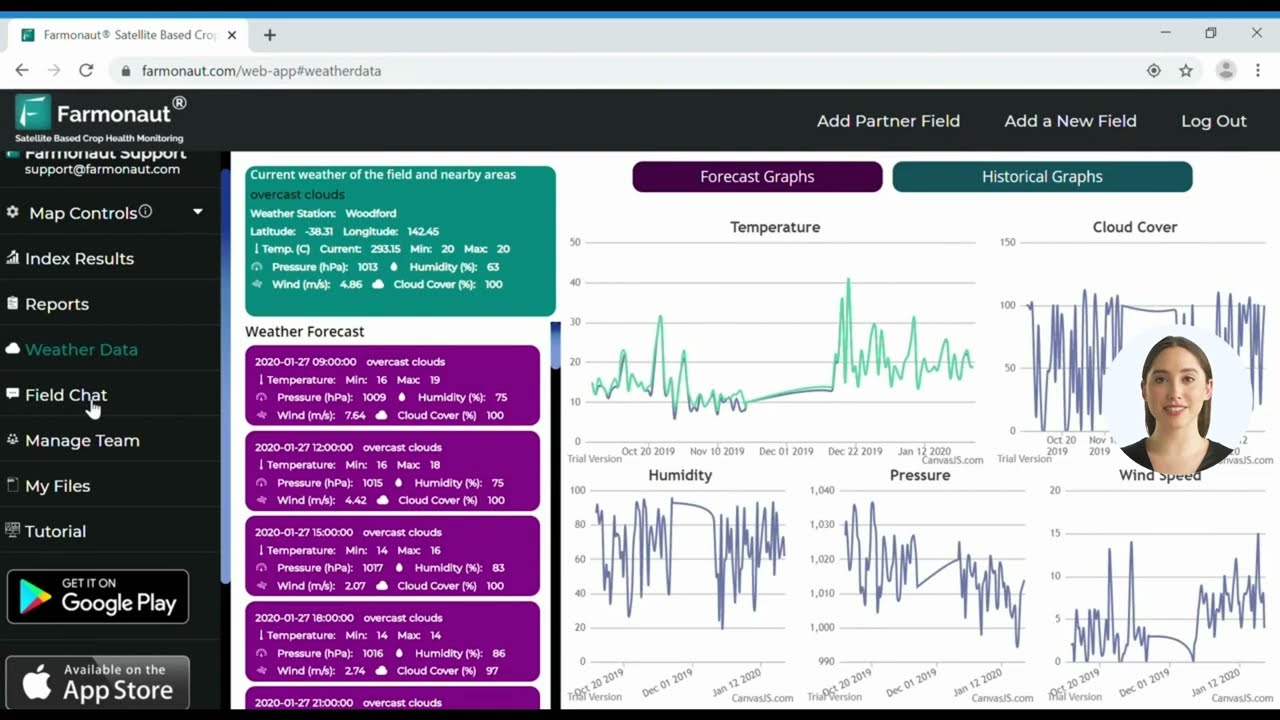
Farmonaut’s platforms are not a distance learning agriculture course themselves, but they’re the kind of live dataset the checklist above asks any real program to provide. Students and professionals working through remote-sensing or precision-agriculture modules can use Farmonaut’s tools, available via Android, iOS, browser, and API, to:
- 🔬 Access crop, pasture, and forest health monitoring with multi-spectral satellite data
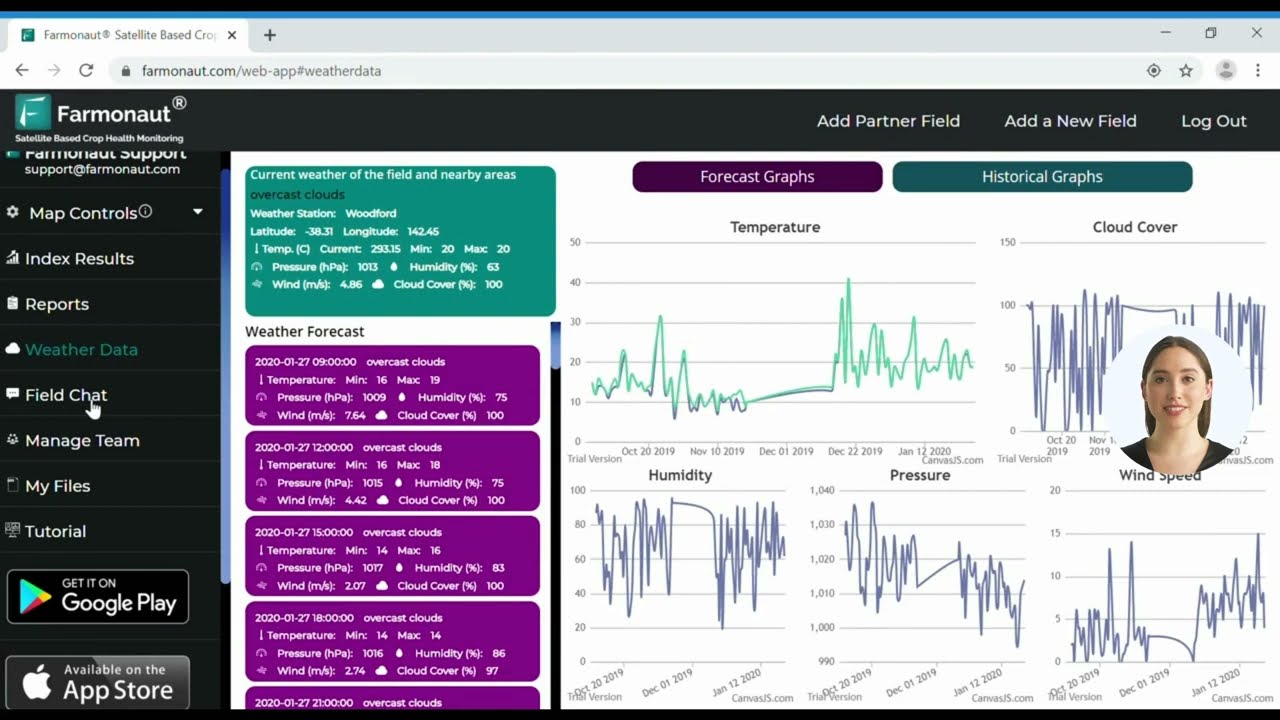
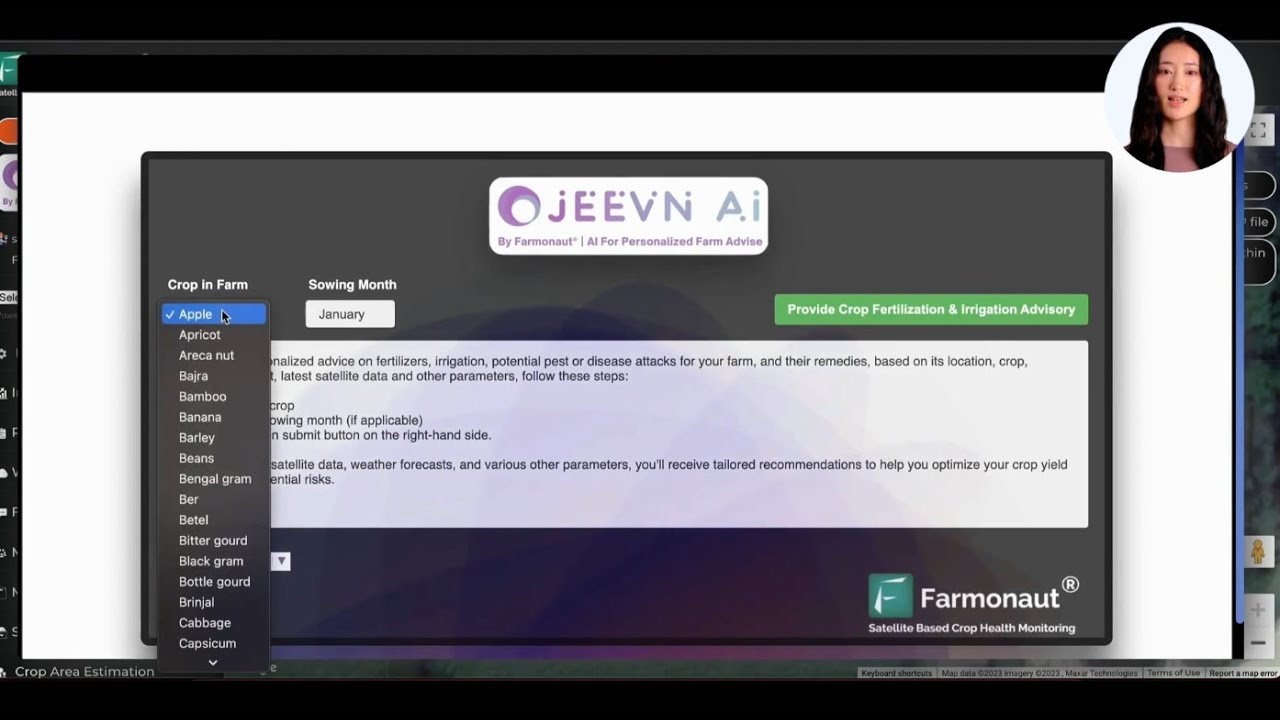
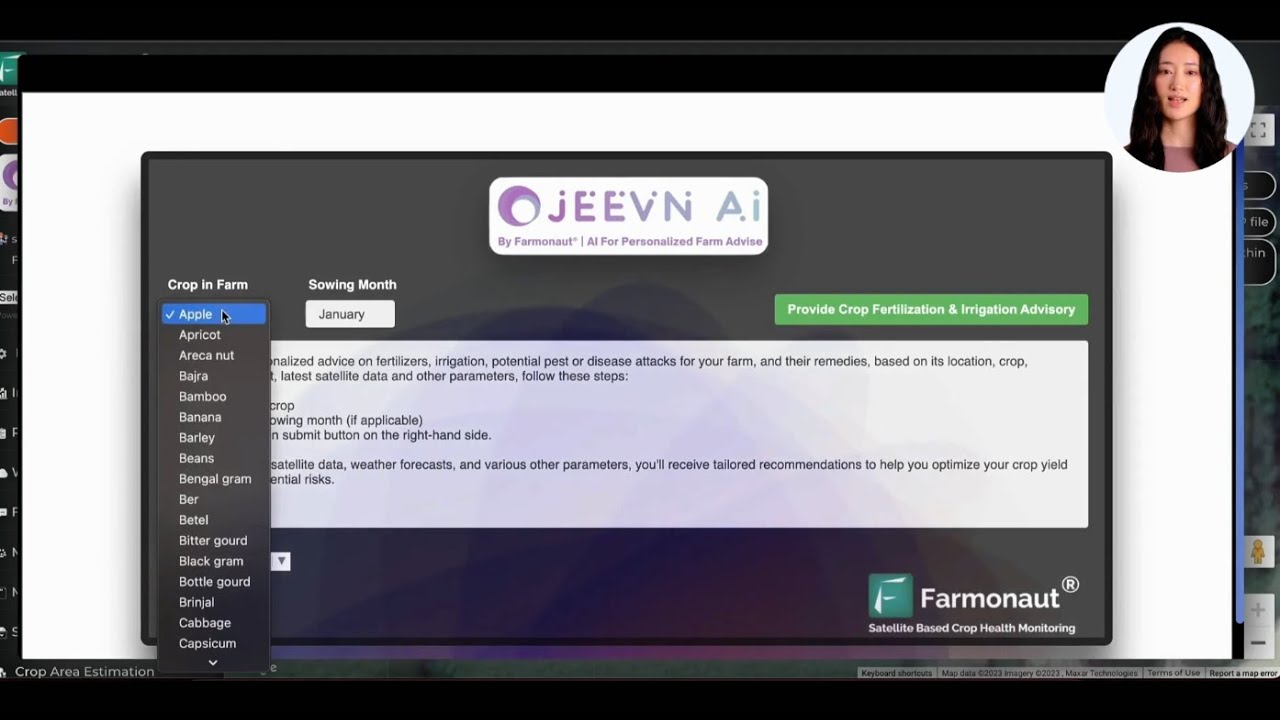
- 🌱 Review advisory output from Jeevn AI, covering weather and productivity insights for farm, mining, and infrastructure planning
- 🔗 Examine blockchain-based traceability across agricultural and mineral value chains (see product traceability)
- 🚚 Explore fleet and logistics tools used in operations modules (fleet management)
- 🌍 Study carbon accounting workflows through carbon footprinting solutions
- 📱 Reference technical documentation while building API-integration coursework (developer docs)
Quick Access: Apps, APIs & Satellite Solutions for Learners
- 🌟 Farmonaut Web App — Monitor crops and land from anywhere using AI and satellite imagery.
- 📲 Android App and iOS App — Mobile tools for instant access to advisory, traceability, and field data.
- ⚙️ Farmonaut API — Integrate satellite observations and analytics into your own systems.
- 📚 Developer Docs — Technical resources for building data-driven apps or dashboards.
- 🌱 Large Scale Farm Management — Best for commercial and group-managed farming environments.
Frequently Asked Questions (FAQ)
1. What does a distance learning agriculture course actually cover?
Foundational agricultural science (soil, water, crop, pest), advanced agribusiness, precision agriculture, remote sensing, sustainable production, horticulture, forestry, and land or mineral management modules — the exact mix depends on the track described above.
2. What’s the difference between “distance learning agriculture courses” and “sustainable agriculture production distance learning”?
The first is the general category; the second is a specific track focused on agroecology, organic transition planning, and circular resource use. USDA NASS reported 17,445 certified organic farms in the US in 2021 and 28% of surveyed farms planning to increase organic production — figures directly relevant to whether this track is worth the tuition for a given operation.
3. Are horticulture courses by distance learning different from general agriculture courses?
Yes — horticulture programs narrow toward fruit, vegetable, ornamental, and nursery production, and in Australia and Denmark they typically run through vocational (TAFE or erhvervsuddannelse) providers rather than university agriculture departments.
4. How much of higher education is now delivered via distance learning in the US?
61% of US undergraduates took at least one distance education course in fall 2021, and 28% studied exclusively online that term, per NCES. These are campus-wide figures rather than agriculture-specific, but they indicate how mainstream distance delivery has become.
5. How important is technology (e-learning) in agriculture courses now?
Central to top programs: USDA ERS reported 70% of US large-scale crop farms and 52% of midsize farms used guidance autosteering in 2023, and 68% of large-scale farms used yield monitors with soil maps — adoption rates that make precision-ag modules standard rather than optional in current curricula.
6. Can Farmonaut’s tools be used alongside coursework?
Yes — satellite monitoring, AI-based advisory, and blockchain traceability tools, accessible via apps and APIs, can support hands-on projects for students in agriculture, forestry, or mining-related environmental modules.
7. How do I check whether organic or sustainable-production data is still current?
Query USDA’s Quick Stats database directly at quickstats.nass.usda.gov, filtering by “organic,” commodity, state, and year — USDA runs a full organic survey approximately every two years, so a more recent dataset than 2021 figures may already be available.


Conclusion
Distance learning agriculture courses now split cleanly into recognizable tracks — general agribusiness, sustainable agriculture production, horticulture, precision-ag technology, and forestry/mining environmental modules — and the right one depends on what you’re trying to solve, not which provider has the flashiest landing page. The checklist above (named accreditation, real datasets, named instructors, matched assessment, cited sources, clear refund terms) stays valid regardless of which specific courses exist when you read this, because providers and prices turn over far faster than the underlying test for quality does.
Where hard numbers exist — US organic farm counts and sales from USDA NASS, distance-enrollment shares from NCES, precision-technology adoption from USDA ERS — use them to weigh whether a track is worth your tuition. Where they don’t exist yet, such as Denmark-specific adoption rates or direct tuition comparisons across the three markets, go to the primary source listed rather than trusting an unsourced figure. Explore related coverage on modern farming technology innovations and on Australia’s top online agriculture courses for market-specific detail beyond what’s covered here.

 Godrej Agrovet
 Hayleys Agriculture
 Linx Agritech
 Adinet
 Save Your Soils
 GalaxEye Space
 Grandstream Algérie
 XOS Realty
 Geospatial Lab Africa
 Agro La Gándara
 HIPSAC
 ZOL Zimbabwe
 Juligerm
 AdBio
AdBio MISE Maroc
 NWNS
NWNS Red August Group
 Farm Inc
 WeMe Global
 Agrotoken
 Blue BearX
 Insignito
 DnCubed
 Indosistim Teknologi
 Liquify Digital
 CU Foods
 BeyondTech Global
 Rouge VC
 AgroRisk
 Oath Inc
 Esri North East Africa
 MDCV UK
 Etech Consulting Madagascar
 Vestlandsforsking
 WB Dev
 Sama Premium
 Tres Valles
 Blickwinkel
 Agricultural Credit Policy Council
 eKGIS
eKGIS Mostas Tech
 Andex
Andex Deluxe Conseil
 WICO
WICO Chimera Innovation
 SkyHarvest
 Teledarbas
 Exurbia Geospatial
 FieldZero
