

Reviewed August 2026 against USDA Farm Service Agency, USDA NASS, and Farmdoc Daily (University of Illinois).
Try it: Run your own numbers →
Farm machinery finance in the US runs through three main channels: USDA Farm Service Agency (FSA) direct and guaranteed loans, commercial bank or credit union equipment loans, and manufacturer or dealer leasing programs. As of June 1, 2026, FSA direct operating loans carry a 5.000% interest rate and direct farm ownership loans carry 5.875%, while FSA equipment and storage facility loans run 4.000%-4.625% depending on term length, per the USDA Farm Service Agency’s June 2026 lending rate announcement. The right option depends on whether you’re financing a single tractor, a land purchase, or this season’s input bill — each has a different lender, term, and cost structure, and this guide walks through all three plus how to size the loan against your actual per-acre costs.
- What Farm Machinery Actually Costs to Run
- Farm Machinery Finance Options Compared
- How to Finance a Farm: Land, Machinery, and Inputs
- Farm Input Finance: Seed, Pesticide, and Working Capital
- Farm Machinery Finance Help: Where to Get It
- Digital Tools That Strengthen a Loan Application
- Farmonaut: Satellite Data Behind the Application
- Challenges Lenders and Borrowers Both Face
- Calculator: Equipment Loan Payment vs. Per-Acre Cost
- FAQ: Farm Machinery Finance
- Try it: Run your own numbers
What Farm Machinery Actually Costs to Run
Before comparing loans, know what you’re financing against. Farmdoc Daily at the University of Illinois estimated 2024 US machinery operating costs — depreciation, fuel, repairs, labor, and interest combined — at $171 per acre, per its 2025 machinery cost estimates report. That figure updates on a biennial cycle: Farmdoc’s tables refresh in odd-numbered years, so the next full update lands in 2027. For a current-year read between updates, the same source directs readers to Farmdoc’s “Management” section at farmdoc.illinois.edu for interim per-acre breakdowns by crop and farm size.
Machinery cost is one line in a bigger budget, and lenders look at the whole picture. USDA NASS put the 2024 US average farm real estate value — land plus buildings — at $4,170 per acre, with cropland specifically averaging $5,570 per acre and pastureland at $1,830 per acre, according to the USDA NASS 2024 Land Values and Cash Rents report. Cropland cash rent averaged $160 per acre the same year. NASS publishes this report annually in August with the prior year’s figures — the 2025 land values will post in August 2026 — so check nass.usda.gov and search “Land Values” for the update, or subscribe to NASS release notifications for the exact publication date.
These per-acre numbers matter for financing because lenders size equipment loans against projected revenue per acre, not just the sticker price of the machine. A farm budgeting $171/acre in machinery costs on 1,000 acres is carrying roughly $171,000 in annual machinery-related expense before a new loan payment is added — the calculator further down this page lets you run your own acreage and rate against that baseline.
Farm Machinery Finance Options Compared
Five financing paths cover most US farm machinery purchases: FSA direct loans, FSA-guaranteed bank loans, conventional bank/credit union equipment loans, manufacturer captive-finance leasing, and dealer rent-to-own arrangements. FSA direct farm ownership loans are capped by statute; guaranteed farm loans (where FSA guarantees a portion of a loan made by a commercial lender) can reach up to $2,343,000 in 2026, per the USDA Farm Service Agency’s guaranteed farm loan program page.
| Finance Option | Typical Use | Rate (as of June 2026 / typical bank range) | Max Loan / Term Notes |
|---|---|---|---|
| FSA Direct Operating Loan | Inputs, repairs, smaller equipment | 5.000% | Set monthly by USDA; apply through local FSA office |
| FSA Direct Farm Ownership Loan | Land purchase, major capital improvements | 5.875% | Long-term, real-estate secured |
| FSA Equipment/Storage Facility Loan | Tractors, combines, storage structures | 4.000%–4.625% | 3–12 year terms depending on equipment life |
| FSA-Guaranteed Bank Loan | Larger equipment or land packages | Set by the lending bank; FSA guarantees repayment | Up to $2,343,000 (2026 cap) |
| Conventional Bank/Credit Union Equipment Loan | Any machinery size, faster approval than FSA | Market rate; ask your lender for current pricing | Terms and down payment set by individual lender |
FSA rates reset on the first business day of every month. The June 2026 figures above are current as of this review; for the live rate table, go to fsa.usda.gov’s current FSA loan interest rates page before you sign anything — a rate quoted three months ago may no longer apply.
🎯 Pro Tip

One figure that isn’t published anywhere: the average price of a new tractor or combine. Manufacturers treat retail pricing as proprietary, and USDA doesn’t survey it directly — only price indices and used-equipment resale trends are publicly tracked. What is public: US farm tractor sales totaled 195,857 units in 2025, and combine harvester sales totaled 3,579 units the same year, according to Farm Credit Administration data reported in Farmdoc Daily’s February 2026 analysis of the US farm machinery market. If you need a specific model’s price, get a written quote from your dealer — that quote, not a national average, is what any lender will actually underwrite against.
Buying vs. Leasing Big and Small Machinery
- Equipment loans build ownership equity and suit machinery you’ll run past the loan term — tractors, combines, sprayers you expect to keep 8-10+ years.
- Leasing lowers upfront cash outlay and can include maintenance packages, but you don’t build equity; it suits equipment that depreciates fast or that you’ll want to upgrade on a shorter cycle.
- A mini-tractor or other small-farm implement often qualifies for the same FSA equipment loan terms as full-size machinery, just at a lower principal — worth checking with your FSA loan officer rather than assuming small purchases don’t qualify for the same programs.
How to Finance a Farm: Land, Machinery, and Inputs
“How to finance a farm” usually means one of three distinct problems — buying land, buying equipment, or covering this season’s cash costs — and each uses a different loan product. Land purchases run through FSA direct or guaranteed farm ownership loans (5.875% direct as of June 2026) or a conventional agricultural mortgage from a Farm Credit System lender or bank. Equipment runs through the FSA equipment loan category above or a bank term loan. Operating costs — seed, fuel, labor, repairs — run through an FSA direct operating loan (5.000%) or a bank operating line of credit.
The starting point for any of the three is the same: know your cost per acre before you approach a lender. USDA NASS’s $5,570/acre average cropland value and $160/acre average cash rent (2024 figures) give you a national benchmark, but land values vary by state and even by county — NASS publishes state-level detail in the same annual Land Values report. A lender comparing your purchase price to the national average without state context is doing it wrong, and so is a borrower who does the same.
A Practical Sequence for a First-Time Buyer or Expanding Operation
- Total your per-acre costs across machinery ($171/acre in 2024 per Farmdoc), land carrying cost (rent or mortgage), and inputs (seed, pesticide — see next section) to know your breakeven before adding new debt.
- Check current FSA rates at the FSA rates page linked above — rates reset monthly, and a 0.5-point difference on a $200,000 equipment loan changes your annual interest by roughly $1,000.
- Get pre-qualified with your local FSA office in parallel with a bank quote — FSA direct loans and guaranteed bank loans aren’t mutually exclusive options to compare in isolation; a loan officer can tell you which combination fits your balance sheet.
- Match loan term to asset life — a 3-year FSA equipment loan for a combine you’ll run for 15 years front-loads payments unnecessarily; match to the 4.000%-4.625%, 3-12 year FSA equipment loan bracket that fits the specific machine.
- Document farm performance — yield history, field records, and verifiable land-use data strengthen any loan application, whether FSA or conventional. This is where digital farm records (covered below) do real work.
Farm Input Finance: Seed, Pesticide, and Working Capital
Input finance covers the recurring seasonal costs that don’t sit on a balance sheet as a depreciable asset — seed, chemicals, fertilizer, fuel — and is usually financed through an operating loan or line of credit rather than a term loan. The scale of that cost varies sharply by crop. Kansas State University’s agricultural economics data, drawing on USDA ERS input cost surveys, put 2024 non-irrigated corn seed costs at $211 per acre nationally, while irrigated wheat seed costs averaged $121.33 per acre — both from the Kansas State University / USDA ERS input cost report. Soybean pesticide costs ran $61-71 per acre in 2024, per Farmdoc Daily’s crop budget data in the same machinery cost report cited above.
An FSA direct operating loan at 5.000% (June 2026) is designed exactly for this — it covers annual input costs and is repaid from that season’s crop revenue, unlike an equipment loan amortized over several years. A farm budgeting $211/acre for corn seed alone on 500 acres is looking at $105,500 in seed cost before fertilizer, chemicals, or fuel — a number worth having in hand before walking into an operating-loan conversation, whether with FSA or a bank.
One number this article won’t invent: what share of US farms use equipment financing versus paying cash or leasing. That breakdown isn’t published in a single national statistic — USDA’s Agricultural Resource Management Survey captures related debt-to-asset data but not financing method by equipment type. If you want your operation’s own answer, the practical method is to total last year’s machinery-related loan payments against total machinery spend from your own farm records — that ratio, not a national average, is what a lender will ask about anyway.
Farm Machinery Finance Help: Where to Get It
If you need direct help rather than a rate table, three channels cover most of the US: your local FSA county office (search “FSA office” plus your county at fsa.usda.gov), a Farm Credit System association in your region, or a commercial bank’s agricultural lending division. FSA staff can walk through direct loan eligibility and the guaranteed loan program in the same visit, since eligibility criteria overlap. Farm Credit associations specialize in agricultural collateral and often move faster on machinery-specific loans than a general-purpose bank branch unfamiliar with equipment depreciation schedules.
⚠️ Common Mistake
Precision-agriculture adoption is now common enough that lenders increasingly expect it as part of a loan file. USDA’s Economic Research Service found 70% of large-scale US crop farms and 52% of midsize farms had adopted autosteering by 2023, per the USDA Economic Research Service chart on precision agriculture adoption. A farm’s tech stack — GPS guidance, yield monitors, satellite field records — is now routinely part of what a loan officer reviews when assessing operational sophistication and repayment capacity, alongside the traditional balance sheet.




Digital Tools That Strengthen a Loan Application
Lenders — FSA and commercial alike — ask for evidence of yield history, field condition, and farm management practice as part of underwriting. Digital field-record platforms exist to generate exactly that documentation continuously, rather than reconstructing it at application time from memory or paper receipts.
- Verified field boundaries and crop-history records support both loan applications and traceability requirements some lenders and insurers now ask for.
- Season-over-season yield and vegetation-health records give a loan officer a longer view of operational consistency than a single tax return.
- Digital documentation reduces the back-and-forth of paper-based FSA or bank applications, though it does not change the underlying rate or eligibility rules set by the lender.
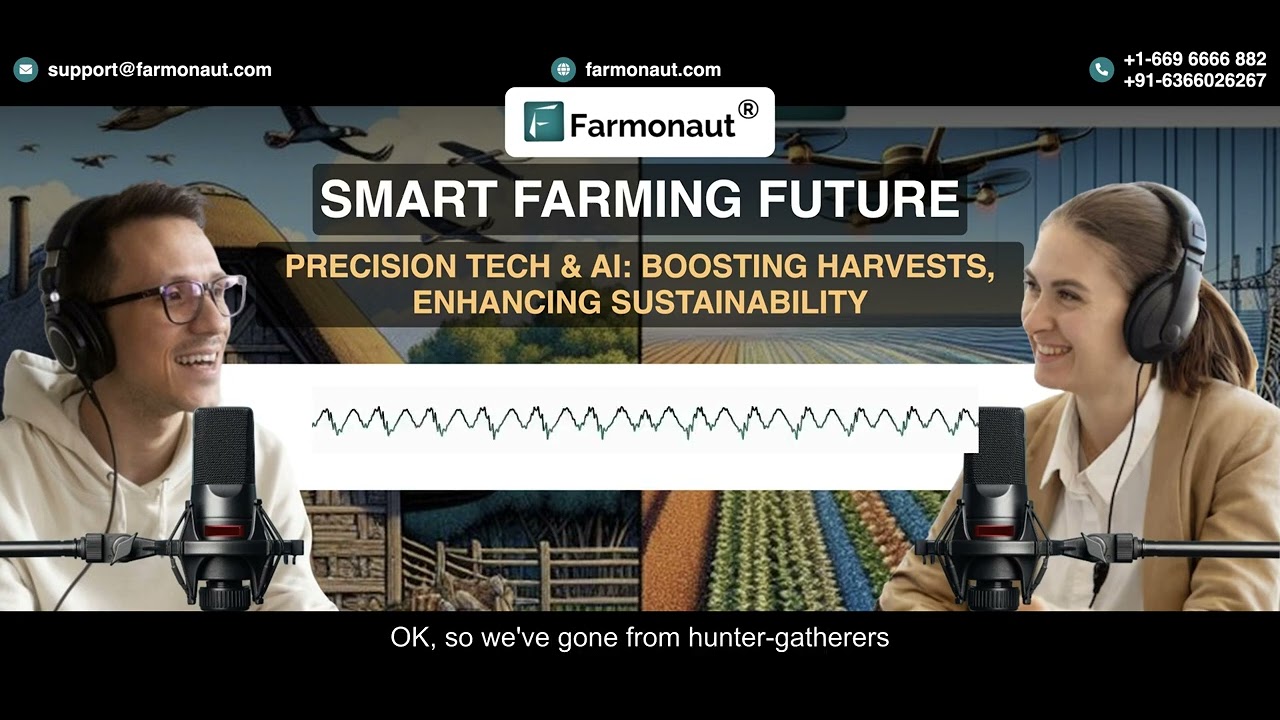

Farmonaut: Satellite Data Behind the Application
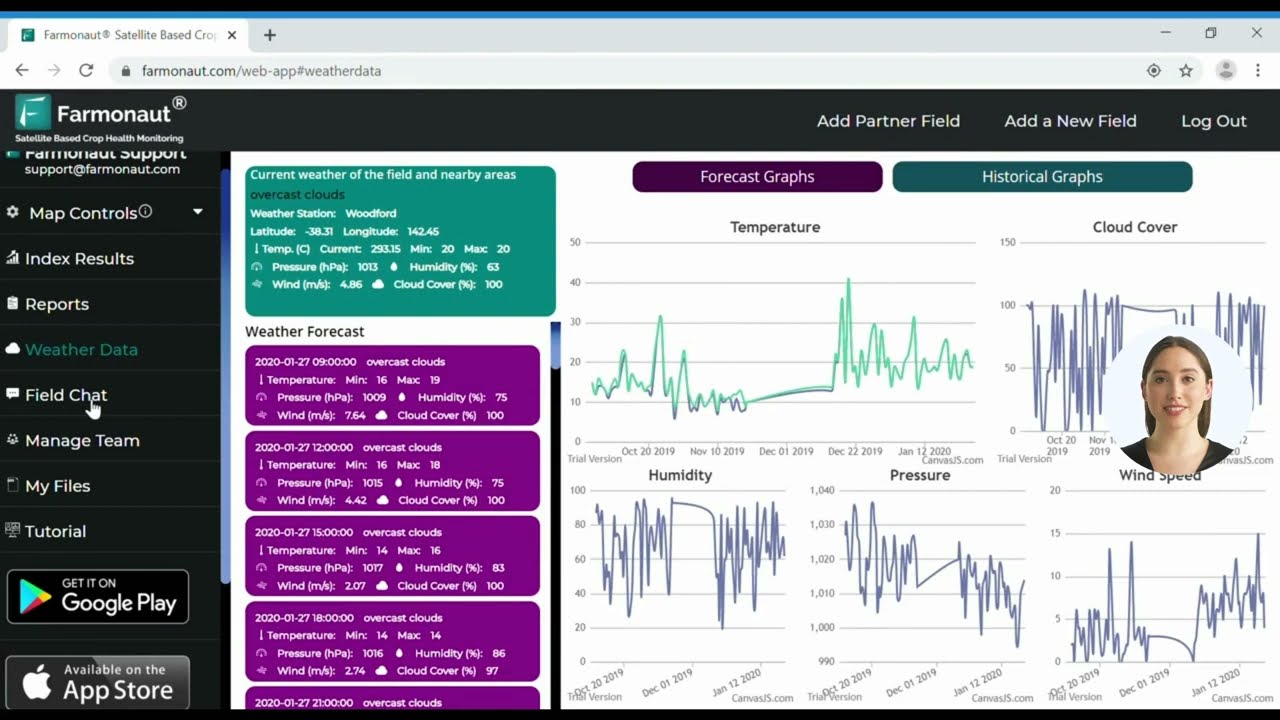
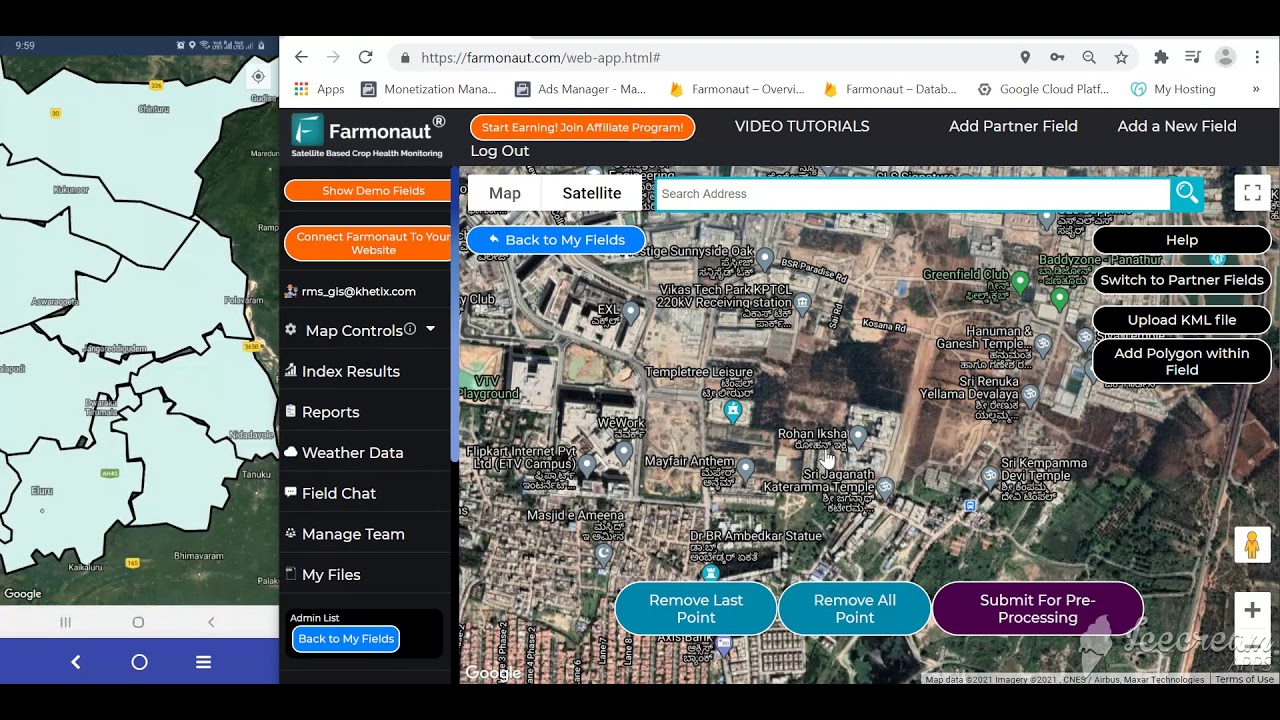
Farmonaut is a satellite technology company; we do not manufacture or sell machinery, act as a lender, or set loan rates. What our platform provides is the field-level data record that a lender, insurer, or the farm’s own bookkeeping can draw on when a machinery, land, or input loan application needs supporting evidence of crop condition, land use, and operational history.
- Real-Time Satellite Monitoring: Track crop health, field conditions, and land usage — the kind of documented history that supports a loan file.
- AI-powered Farm Advisory (Jeevn AI): Field-specific insights to support machinery deployment and operational planning decisions.
- Blockchain-Based Traceability: Transparent records of machinery and input use that can support collateral or provenance verification.
Explore our Product Traceability platform for secure supply chain monitoring. - Fleet & Resource Management: Track machinery deployment and resource usage across large and small farms.
Discover benefits of Fleet Management with Farmonaut. - Satellite-Driven Verification: Supports lenders and insurers authenticating farm loan or claim applications.
For loan underwriting and insurance risk reduction specifically, see: Farmonaut’s Crop Loan and Insurance Service

Developers and lenders can also pull this data directly: our satellite API and API developer documentation let agritech lenders integrate field-level satellite records into their own underwriting workflow rather than requesting paper documentation from the borrower.
Challenges Lenders and Borrowers Both Face
Financing farm machinery, land, or inputs carries risks that are structural to agriculture, not specific to any one lender:
- Commodity price volatility affects repayment capacity directly — a loan sized against last season’s crop prices can strain a budget if prices fall before harvest.
Mitigation: Pair loan payments with crop insurance sized to the same repayment schedule. - Interest rate movement — FSA rates reset monthly and bank rates track broader credit markets, so the rate you budget against today may not hold through a multi-month application process. Always confirm the live rate before signing.
- Climate-related yield risk — drought, flooding, or crop loss raises default risk for lenders and repayment risk for borrowers alike, which is part of why crop insurance and equipment loans are increasingly discussed together rather than separately.
- Collateral and credit history gaps for newer or smaller operations without a multi-year track record — documented field and yield history helps close this gap over time.
- Rate-shopping friction — comparing FSA direct, FSA-guaranteed, and conventional bank terms takes more legwork than accepting the first quote, but the rate spread across those three categories (4.000% to open-market bank rates) is large enough to justify it.

🌳 Sustainability Note
Calculator: Equipment Loan Payment vs. Per-Acre Cost
This tool takes a loan amount, rate, and term and converts the resulting annual payment into a per-acre figure you can compare directly against the $171/acre 2024 machinery operating cost benchmark cited above.
Run your own numbers
FAQ: Farm Machinery Finance
1. What is the current FSA interest rate for a farm equipment loan?
- 📌 As of June 1, 2026, FSA equipment and storage facility loans carry rates of 4.000%-4.625% depending on term (3-12 years), per the USDA Farm Service Agency. Rates reset on the first business day of each month — check the FSA current rates page for the live figure before applying.
2. How do I finance a farm land purchase versus a machinery purchase?
- 📌 Land purchases use FSA direct or guaranteed farm ownership loans (5.875% direct as of June 2026) or a conventional agricultural mortgage. Machinery uses FSA equipment loans (4.000%-4.625%) or a bank term loan. They are different loan categories with different underlying collateral, so apply for each separately even if buying both together.
3. What does farm input finance cover, and how is it different from an equipment loan?
- 📌 Input finance covers seasonal costs like seed, pesticide, and fertilizer — for example, $211/acre for non-irrigated corn seed or $61-71/acre for soybean pesticide in 2024 (Kansas State/USDA ERS and Farmdoc Daily data). It's financed through an operating loan repaid within the season, unlike an equipment loan amortized over several years.
4. Where can I get farm machinery finance help if I don't know where to start?
- 📌 Start with your local FSA county office for direct and guaranteed loan eligibility, then get a comparison quote from a Farm Credit System association or your bank's agricultural lending division. Comparing at least two lender types before committing typically surfaces a meaningfully better rate or term.
5. What's the maximum amount I can borrow through an FSA-guaranteed farm loan?
- 📌 The FSA guaranteed farm loan program cap is $2,343,000 in 2026, per USDA's Farm Service Agency. This applies to loans made by a commercial lender where FSA guarantees a portion — not to FSA direct loans, which have separate, lower limits.
6. Do digital farm records actually help with loan approval?
- 📌 They provide documented yield, field condition, and land-use history that lenders review as part of underwriting. They don't change the interest rate a lender offers, but a stronger, longer documented record can support a stronger application. Learn more via our Carbon Footprinting Solutions.
🚜 Fleet Manager Note
For land, machinery, or input financing decisions, the closest thing to a durable rule is this: total your real per-acre costs first (using current NASS and Farmdoc figures or your own farm records), confirm the live FSA rate for the loan category you need, and get at least one competing quote from a bank or Farm Credit lender before signing. Rates and land values shift every month and every year respectively — the sources linked throughout this page are where to check the current numbers rather than relying on any figure quoted here past its stated date.
To explore satellite-based field records, traceability, or API-driven tools that can support a machinery, land, or input finance application, see the Farmonaut platform — available via web, Android, or iOS. For direct farm-management tools relevant to larger operations preparing a loan file, see Farmonaut's large-scale farm management tools.

 Godrej Agrovet
 Hayleys Agriculture
 Linx Agritech
 Adinet
 Save Your Soils
 GalaxEye Space
 Grandstream Algérie
 XOS Realty
 Geospatial Lab Africa
 Agro La Gándara
 HIPSAC
 ZOL Zimbabwe
 Juligerm
 AdBio
AdBio MISE Maroc
 NWNS
NWNS Red August Group
 Farm Inc
 WeMe Global
 Agrotoken
 Blue BearX
 Insignito
 DnCubed
 Indosistim Teknologi
 Liquify Digital
 CU Foods
 BeyondTech Global
 Rouge VC
 AgroRisk
 Oath Inc
 Esri North East Africa
 MDCV UK
 Etech Consulting Madagascar
 Vestlandsforsking
 WB Dev
 Sama Premium
 Tres Valles
 Blickwinkel
 Agricultural Credit Policy Council
 eKGIS
eKGIS Mostas Tech
 Andex
Andex Deluxe Conseil
 WICO
WICO Chimera Innovation
 SkyHarvest
 Teledarbas
 Exurbia Geospatial
 FieldZero
