

Farm Management Fees & Types: Powerful Strategies for 2026

Try Farmonaut’s Web App for advanced satellite-driven farm monitoring and farm management decision support.
Farm Management in 2026: Overview & Importance
Farm management fees, covering areas like cow farm management, pig farm management, and diversified farm business farm management, have rapidly become a central aspect of modern agriculture. As the industry extends across cattle, pig, crop, forestry, and resource-adjacent sites like mining support operations, the need to optimize costs, foster sustainability, and deploy data-driven planning has never been greater. This article anchors itself in practical strategies and cost-control approaches you need in 2026 for real, measurable results—across livestock, crop, and mixed-enterprises.
The core focus for 2026 and beyond includes:
- Transparent, value-based fee structures that align with operational deliverables and measurable outcomes.
- Strategic planning that uses advanced technology for data-driven decision-making and ongoing efficiency improvement.
- Sustainability and compliance integration, addressing new regulatory demands, climate risks, and market volatility.
- Hybrid and modular management models progressively replacing older flat or strictly percentage-based fees.
The evolution of farm management strategies is driven by increasing operational scale, more complex compliance frameworks, and the availability of advanced technologies—like remote satellite data, AI-based advisory systems, and blockchain traceability platforms.


Satellite-AI Farm Management on Your Mobile:
Access real-time environmental impact dashboards or get AI-driven fleet & resource optimization directly with the Farmonaut mobile apps. Monitor, plan, and report anytime—wherever you farm.
Farm Management Fees: Impact & Fee Structure in 2026
Farm management fees in 2026 are the financial backbone of efficient, sustainable, and resilient agricultural operations. Understanding how these are structured and what drives their value unlocks serious advantages for every enterprise—big or small, livestock or crop.
How are Farm Management Fees Structured?
Fee Structure Models:
- Annual Retainer: A fixed fee, covering a predefined set of services for the year—commonly used for full-service agreements.
- Percentage of Revenue or Profit: The management fee is a percentage of either gross revenue, gross margin or net profit. This aligns management incentives with overall performance.
- Modular / Service-Tied Model: Each core service—like bookkeeping, compliance, HR, feed planning, technology adoption, or business reporting—carries a defined individual fee.
- Custom or Hybrid Agreements: Many farms in 2026 prefer a custom blend, combining basic retainers with variable, outcome-linked charges tied to measurable KPIs (like cost per kg gain, milk yield per cow, etc.).
Key Deliverables Often Included in Farm Management Fees:
- Strategic cost budgeting and quarterly scenario planning.
- Performance dashboards (e.g., cost per unit gain, feed conversion ratios, milk yield per cow).
- Annual reporting on capital allocation, labor utilization, and equipment cycles.
- Data-driven recommendations for operational improvements and ROI optimization.

Pro Tip: Annual retainers offer budget predictability, while modular pricing gives flexibility for scaling and seasonality—choose a hybrid structure if your operations are diverse or expanding.
Fee Impact: What Drives Cost and Value?
- Strategic planning for market risk (volatility in feed, input, and output prices).
- Labor optimization and management (including HR systems, scheduling, and training programs).
- Capital project oversight (including equipment upgrades, silo/storage expansion, fencing, and facility modernization).
- Integration of technology platforms: e.g., blockchain-based traceability, IoT devices, cloud-based dashboards.
- Alignment with measurable, outcome-based metrics: cost per unit gain, milk yield improvement, waste reduction, and sustainability achievements.
Farms that align management fees directly to performance indicators and clear deliverables increasingly see higher value, improved cash flow stability, and stronger budgeting discipline.
Cow Farm Management: Cost Levers, Data, and Technology in 2026
Cow farm management in 2026 focuses on maximizing efficiency, reducing waste, and delivering sustainable, profitable operations. Dairy and beef enterprises—facing increasing market volatility, changing input costs, and climate impacts—are leading adopters of advanced farm management systems.
- ✔ Herd Health Programs: Prioritize preventive care, vaccination schedules, and disease outbreak planning for lower mortality and higher gains.
- 📊 Nutrition and Feed Efficiency: Integrate sensor-based feed planning to improve milk yield per cow and reduce input cost per unit of gain.
- ⚠ Energy and Waste Control: Benchmark electricity and manure management to cut unnecessary costs and environmental impact.
- 💡 Automated Data Tracking: Use milk yield, calving intervals, and fertility tracking to drive ongoing process improvement.
- 🔗 Technology Adoption: Adopt systems for real-time monitoring, automated milking, and AI-driven advisory for strategic forecasting and early-warning alerts.

Common Mistake: Neglecting data integration between herd management and milk production systems can result in missed opportunities for yield optimization and cost control—keep your platforms connected.
Core Cow Farm Management Services & Fee Inclusions:
- Preventive animal health management, vaccination, and fertility tracking
- Feed conversion and nutrition advisory
- Milking schedules, parlor energy use, milk yield reporting & benchmarking
- Waste and manure management, environmental compliance dashboards
- Data analytics and dashboard reporting—identifying underperforming cohorts and improvement opportunities
For 2026, management fees increasingly incorporate performance-based deliverables: for example, fees may be partially based on milk yield per cow, reduction in mastitis events, or lower cost per kg of gain.

Farmonaut’s platform, for instance, leverages AI advisories for large-scale farm, dairy, and mixed enterprise management. Our real-time dashboards make it easier to track milk yields, flag feed conversion anomalies, and optimize sustainability outcomes—all integrated into streamlined farm management systems for 2026.
Operational, Environmental & Regulatory Levers in Cow Farming:
- Biosecurity implementation for disease prevention
- Environmental impact reporting (carbon footprint monitoring for compliance and stewardship)
- Automated herd records for audit readiness and traceability
- Preventive maintenance and infrastructure upgrades (parlors, silos, storage)
- Labor productivity benchmarking and automation opportunities
Pig Farm Management: Advanced Optimization, Biosecurity, and Sustainability in 2026
Pig farm management in 2026 requires rigorous attention to biosecurity, environmental controls, and feed conversion efficiency. Markets demand transparency and optimized production costs—making modern management models more important than ever.
Key Focus Areas in 2026:
- 🛡️ Biosecurity & Housing
- 🌡️ Environmental Controls (Temperature, Humidity)
- 🌱 Feed Conversion & Growth Rate Optimization
- 🦠 Morbidity & Mortality Tracking
- 💧 Waste, Emissions, and Odor Control

Fee Components and Key Management Deliverables:
- Animal welfare audits & compliance reporting
- Veterinary & vaccination program tracking (automated logs)
- Feed formulation and efficiency analytics—linking cost per kg gain to profit or loss
- Contingency plans for outbreaks & disease control
- Emissions and manure-to-energy system planning for improved sustainability & compliance
Pig farm management fees in 2026 are frequently structured as a modular hybrid: a base management retainer covering core compliance and oversight, with additional charges based on improvement to measurable outcomes—such as reduction in feed cost per liveweight gain, lower mortality, or successful audit completion.
To stay competitive, it’s essential to utilize ongoing AI-driven risk assessments, environmental reporting, and data dashboards. Farmonaut’s carbon footprinting tools and advisory systems simplify compliance and reporting for pig farms, driving better outcomes at lower cost.
Farm Business Farm Management & Types of Farm Management Models
Farm business management is a holistic discipline encompassing finance, operations, risk management, and governance. The types of farm management models available in 2026 enable businesses to tailor services and costs to their specific needs and enterprise mixes.
Popular Farm Management Models:
- 🧾 Full-Service Farm Management: Finance, HR, procurement, compliance, performance dashboards
- 🥛 Specialized Enterprise Management: Cow farm management or pig farm management, deep technical/production expertise
- 🔄 Hybrid/Consulting Models: Combine on-farm leadership with satellite/A.I. advisory, scenario planning, and sustainability reporting
Successful farm business management ties together:
- Budgeting and cash flow management
- Capital project planning and lifecycle reporting (upgrades, silos, fencing, energy systems)
- Tax optimization and subsidy reporting (where applicable)
- Succession and risk planning (for family and corporate farms)
- Integrated benchmarking: cost of production per unit, return on capital employed, inventory turnover (feed, fertilizer, meds), and annual net farm income
Looking to unify enterprise management across multiple sites or integrate forestry or mining support facilities within your farm network? Farmonaut’s platform delivers large-scale farm and resource management with real-time, satellite-enabled monitoring and reporting for 2026.
Farm Management Fee Types & Cost Impact Comparison
| Fee Type | Estimated Fee Range (per Year, USD) | Common Use Case | Pros | Cons | Potential Impact on Operational Efficiency |
|---|---|---|---|---|---|
| Flat Fee (Annual Retainer) | $10,000 – $60,000 | Full-service, integrated or stable enterprise | Predictable costs Simple budgeting |
May lack flexibility Incentives less aligned |
Good for established operations with steady needs |
| Percentage of Gross Revenue | 3% – 10% (of revenue) | Growth-focused, variable-output farms | Strong incentive alignment Scales with performance |
Potentially high in bumper years May encourage risk-taking |
Highly effective for dynamic enterprises |
| Hybrid/Custom Agreement | $8,000 + Bonus/Outcome Fee | Mixed, multi-site, technology-driven | Flexible Customizable to needs Outcome-oriented |
Requires clear KPIs Complex to administer |
Drives measurable improvements; suits 2026 priorities |
| Modular Service Model | $2,000 – $25,000 per service (e.g., compliance, tech reporting, HR) |
Component-based, on-demand | Pay only for what you use Can scale up/down easily |
Harder to forecast total fees Potential for service gaps |
Optimizes spend for specific activities |
How to Use This Table: Benchmark your farm management fees against the models here. For advanced, multi-enterprise, or compliance-heavy operations, hybrid agreements tying a base retainer with performance bonuses provide maximum impact in 2026.
Sector-Specific Differences in Management Fee Structures
Management fee structures are shaped by the type of enterprise, risk profile, and degree of operational complexity:
- Dairy and Beef: Need rigorous financial controls; management fees cover detailed input forecasting (feed, energy), herd health and breeding program oversight, and milk yield benchmarking.
- Pig Operations: Fees reflect biosecurity protocols, housing design, waste and emissions control, animal welfare checks, and contingency planning. Often modular or hybrid-based.
- Mixed Crops + Livestock Farms: Fees prioritize integrated budgeting, cash flow forecasting, multi-enterprise reporting, and multi-site coordination (especially for family farms and corporate operators).
- Resource/Ops-Heavy (Forestry, Mining-Area Farms): Management fees include satellite-based monitoring, carbon footprint and sustainability dashboards, and compliance/advisory services—key for audit readiness and resource allocations.

Key Value Drivers & Strategic Planning for Farm Management in 2026
- ✔ Outcome Alignment: Link fees to measurable, auditable metrics—such as feed conversion, yield per unit, or environmental impact scores.
- 📊 Real-Time Decision Support: Leverage AI-based dashboards for scenario planning and forecasting, reducing the risks from market volatility and climate events.
- ⚠ Contingency Planning: Factor in budgeting for disease outbreaks, insurance management, and unexpected labor or capital costs.
- 💸 Capital Efficiency: Monitor inventory turns, asset utilization, and return on capital—vital for cost control and long-term sustainability.
- 🔗 Compliance & Reporting: Integrate audit readiness, traceability solutions, and regulatory update trackers in your 2026 management agreements.
Data-Driven Systems & Technology Adoption: The Role of Farmonaut in 2026
Modern farm management increasingly depends on technology integration. Satellite, AI, IoT, and blockchain platforms—like those from Farmonaut—transform operations at every level:
- Real-time monitoring of crops, livestock, and resource sites
- Automated advisory on weather, yields, and risk factors
- Blockchain-based traceability for regulatory and market demands
- Fleet and equipment optimization tools for cost efficiency
- Environmental impact dashboards and carbon tracking for compliance
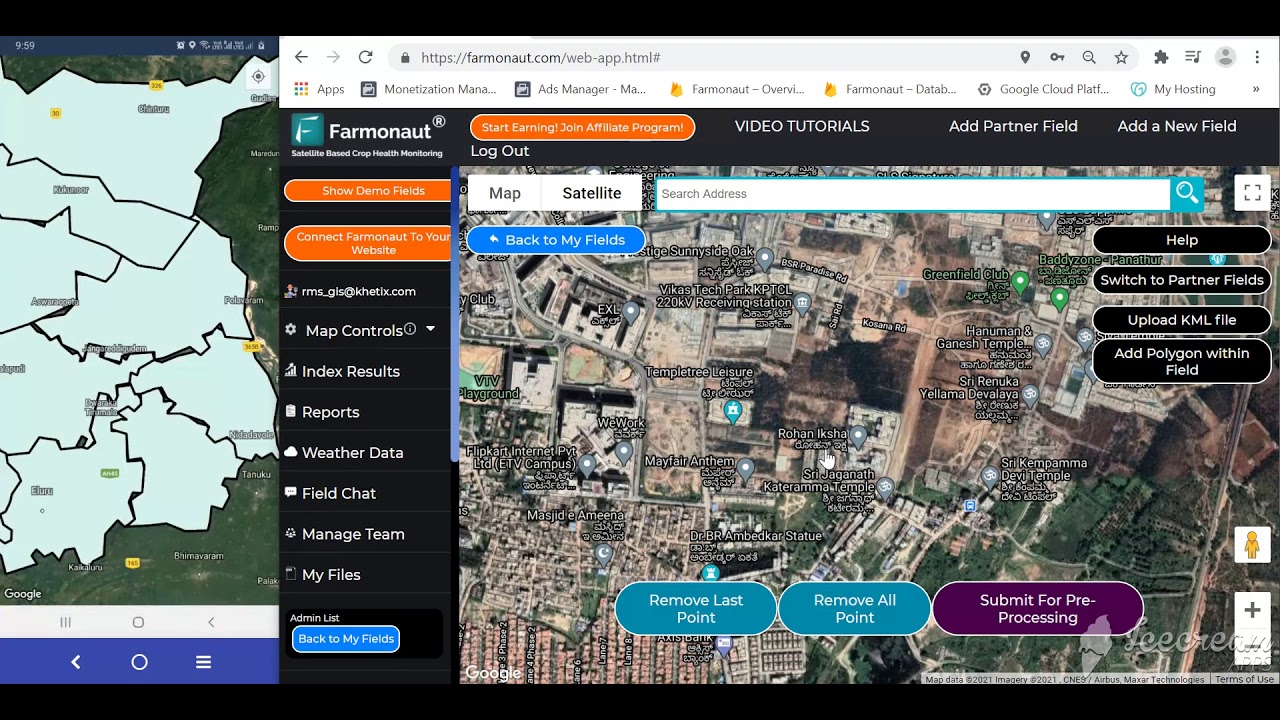
Leverage Farmonaut’s cloud-based systems for integrated crop, livestock, forestry, and mining support site management—continuously accessible on all devices, including direct API connections (Farmonaut API | Developer Docs).
Benefits of Data-Driven Farm Management in 2026
- ✔ Enhanced Operational Visibility—remote monitoring reduces manual checks, streamlines audits, and supports faster decision-making.
- 📊 Early-Warning & Scenario Planning—forecasts and alerts help avoid losses from disease, weather, or market shifts.
- ⚠ Risk Minimization—compliance tracking and insurance data integration secure assets, reduce premiums, and improve financial stability.
- 💸 Lower Overhead—digital systems scale as your operations grow, reducing marginal labor and reporting costs.
- 🔗 Regulatory & Audit Readiness—automated blockchain and reporting save time and cut costly mistakes.
Compliance, Sustainability & Environmental Reporting in 2026
The regulatory landscape for agriculture, livestock, and resource-heavy businesses is evolving rapidly. Farm management fees in 2026 must cover:
- Sustainability and carbon audits (essential for market and investor access)
- Environmental stewardship and animal welfare reporting for compliance
- Certification readiness for local and export markets (dairy, pork, crop residue utilization, organic validation, etc.)
- Traceability requirements (blockchain-powered record keeping helps ensure trust and supports premium pricing)
- Contingency planning for regulatory or climate shocks

FAQ: Farm Management Fees, Models, and Optimization in 2026
What is the most cost-effective farm management fee structure in 2026?
Hybrid models tying a transparent base retainer to measurable performance bonuses are favored by most progressive farms in 2026—they encourage efficiency, sustainability, and outcome improvement. Combining modular elements for compliance, reporting, and technology upgrades helps tailor costs to specific business needs.
How should management fees be benchmarked within my sector?
Benchmark against peers by calculating fee percentage as a portion of gross revenue or profit. For cow farm management and pig farm management, also review cost per unit of gain, feed conversion improvements, and animal welfare/ compliance benchmarks to ensure your agreement delivers value.
Are technology and reporting services included in standard management agreements?
Increasingly, yes. Most modern agreements factor in a baseline of digital record-keeping, dashboard reporting, and scenario planning, but integrations for satellite, blockchain, or AI may be modular or require an upgraded service package. Always clarify in your agreement.
What compliance and sustainability services are covered in fees for 2026?
Expect baseline services covering animal welfare, environmental reporting, carbon tracking, and traceability audits. Advanced plans may include full certification support, blockchain record hosting, and climate impact planning.
How can Farmonaut support my farm business management strategy?
We provide integrated, satellite-powered dashboards, AI advisory, fleet management, crop/forestry/mixed-enterprise monitoring, blockchain traceability, and carbon footprint tools—all accessible via API, mobile, or web. Our platform is modular and scalable for all farm sizes.
Conclusion: Aligning Farm Management Fees With Measurable Outcomes
As we look toward 2026 and beyond, farm management fees will remain the pivot point for sustainable profitability and strategic business growth in agriculture. Whether your focus is on cow farm management, pig farm management, or a fully diversified farm business, the imperative is clear:
- Insist on fee structures that are transparent, modular, and aligned with your operational goals.
- Cover the full spectrum of compliance, sustainability, technology adoption, and risk management needs.
- Utilize platforms—like Farmonaut’s AI-powered satellite dashboard and blockchain systems—to supercharge efficiency, traceability, and decision-making.
- Pursue management models that foster resilience against market, labor, and climate risks.
- Make use of integrated, real-time dashboards and scenario analysis tools to drive measurable improvement in key metrics: cost per unit gain, yield per cow or pig, environmental score, and annual net profit.
Ready to power up your strategic planning and cost control for 2026? Explore Farmonaut’s scalable, subscription-based management and reporting tools—delivering affordable, actionable insights for every size of agri-business, across every enterprise type.
Start optimizing your farm, livestock, and resource-heavy operations with satellite-powered intelligence—anywhere, anytime.

 MapMyCrop
 Cresol
 Atur Kuliner
 MDCV UK
 Zerella Group
 Etech Consulting Madagascar
 Vestlandsforsking
 Agritein
 Delicio
 WB Dev
 Sama Premium
 Prochecker
 Tres Valles
 LACOS Geoinformation
 Magrifly
 LatConnect 60
 Blickwinkel
 Agricultural Credit Policy Council
 Marei Nursery
 eKGIS
eKGIS Mostas Tech
