

Reviewed August 2026 against USDA Economic Research Service, Farm Credit Administration, and Purdue Center for Commercial Agriculture data.
Try it: Run your own numbers →
A farm management line of credit is a revolving facility that lets a farm draw funds up to an approved limit and repay as cash comes in from crop or livestock sales, rather than receiving a lump sum on a fixed schedule. Farm Credit System institutions — the cooperative lenders behind terms like “farm credit associations” and “farm credit cooperative” — held $81.21 billion in outstanding non-real estate farm loans at year-end 2024, the category that includes most operating lines of credit, according to USDA’s Economic Research Service. This guide breaks down how these lines work, how they compare to term loans and treasury management platforms, and what the numbers actually say about the market in Texas and nationally.



Table of Contents
- What Is a Farm Management Line of Credit?
- Line of Credit vs. Traditional Farm Loans
- Farm Credit System, Cooperatives & Farm Credit Associations
- Farm Credit in Texas: Volume and Growth
- Agriculture Treasury Management: Tools Beyond the Loan
- Tools of Farm Management That Support Credit Access
- Comparison Table: Digital Tools & LOC Verification Features
- Where Farmonaut Fits: Verified Farm Data for Lenders
- Calculator: Line of Credit Draw & Interest Cost
- Checklist: Preparing to Apply for a Farm Line of Credit
- Farmonaut Subscription & Pricing Access
- Frequently Asked Questions
- Try it: Run your own numbers
What Is a Farm Management Line of Credit?
A farm management line of credit is a revolving facility built for operating expenses that recur every season: seed, fertilizer, fuel, labor, and machinery repairs. Instead of disbursing one fixed amount, the lender approves a ceiling, and the farm draws against it as bills come due, then repays as crops or livestock are sold. Interest generally accrues only on the drawn balance, not the full approved limit — but the exact spread a lender charges over its base rate is set per borrower and credit tier, and Farm Credit System institutions publish their base or prime rate rather than individual retail spreads, so the only reliable way to get your number is to request a quote from a local Farm Credit association or commercial ag lender for your specific credit profile.
Common uses of a farm operating line of credit include:
- Seed, fertilizer, and crop protection purchases timed to planting windows
- Fuel, machinery repairs, and unplanned equipment costs
- Irrigation costs and seasonal labor
- Bridging the gap between input spending in spring and revenue after harvest
The revolving structure matters because farm cash flow is lumpy: most expenses cluster in planting season while most revenue arrives after harvest or when livestock are marketed. US farm sector production expenses totaled $463.8 billion in 2024, and the average farm spent $254,043 in total expenditures that year, according to USDA’s National Agricultural Statistics Service (NASS) — a scale of spending that rarely lines up neatly with the timing of income.

Line of Credit vs. Traditional Farm Loans
The distinction between a farm management line of credit and a traditional farm loan comes down to purpose and repayment structure, not just interest rate:
| Aspect | Farm Operating Line of Credit | Traditional Term Loan |
|---|---|---|
| Disbursement | Revolving — draw and repay repeatedly up to the approved limit | Lump sum, disbursed once |
| Typical use | Seasonal operating costs: inputs, labor, repairs, fuel | Real estate, equipment, long-term capital assets |
| Repayment | As cash flow allows, tied to sales | Fixed installments on a set amortization schedule |
| Interest basis | Usually charged only on the drawn balance | Charged on the full principal from disbursement |
| 2024 FCS volume outstanding | $81.21 billion (non-real estate) | $187.95 billion (real estate) |
Both figures come from Farm Credit Administration data compiled by USDA’s Economic Research Service for year-end 2024 (USDA ERS, chart 109678). Real estate lending is larger in dollar terms because land values carry bigger balances, but the non-real estate figure is the closer proxy for operating-line activity — the category farm management lines of credit fall into.

Farm Credit System, Cooperatives & Farm Credit Associations
“Farm credit cooperative” and “farm credit associations” both refer to the same national network: the Farm Credit System (FCS), a government-sponsored network of borrower-owned cooperative lending institutions chartered specifically to serve agriculture and rural communities across the United States. Local farm credit associations are member-owned — farmers who borrow from them also hold an ownership stake, which is what makes the “cooperative” label accurate rather than marketing language.
The System’s scale in the overall US agricultural lending market, per USDA ERS and the Farm Credit Administration’s April 2025 quarterly report:
- 45.82% share of total US agricultural debt (2023, USDA ERS)
- 49% share of farmland real estate loans nationally (2024, Farm Credit Administration)
- 40% share of farm production loans nationally (2024, Farm Credit Administration)
That means the Farm Credit System is not a niche lender — it holds close to half of all US farm real estate debt and two in every five dollars of production financing. For a farm shopping for an operating line, an FCS association is one of the two or three lenders that realistically dominate the market in most counties, alongside commercial banks and, in some regions, the USDA Farm Service Agency’s guaranteed loan programs. Read the full FCA quarterly condition report at fca.gov for the underlying breakdown by institution.
Farm Credit in Texas: Volume and Growth
“Farm credit texas” searches most often lead to the Farm Credit Bank of Texas, the wholesale funding bank supporting a network of associations across Texas, and also serving Alabama, Louisiana, Mississippi, and New Mexico. Farm Credit Bank of Texas reported $31.8 billion in total loan volume at year-end 2024, up 7.0% from the prior year, according to its own year-end financial results release (Farm Credit Bank of Texas, 2024 results). That growth rate outpaced the national current farm debt growth rate of 9.1% reported for the same year by USDA ERS and Purdue’s Center for Commercial Agriculture only in the sense that both reflect the same underlying pressure: rising input costs and tighter margins are pushing more farms toward credit, in Texas and nationally alike.
A Texas producer looking for a farm operating line of credit typically works with one of the local associations under the Farm Credit Bank of Texas umbrella rather than the bank itself, which functions as the funding entity behind the retail associations. The application process, collateral requirements, and rate quotes are set at the local association level, so the number to request is theirs, not the wholesale bank’s.
Agriculture Treasury Management: Tools Beyond the Loan
Agriculture treasury management is the broader discipline a line of credit sits inside: forecasting cash inflows and outflows across a season, timing draws and repayments against known revenue events (harvest sales, livestock marketing, government program payments), and managing working capital so the farm is never forced into a high-cost draw it could have avoided with better forecasting. A line of credit is one instrument inside that discipline — not a replacement for it.
Adoption of the software side of agriculture treasury management is measurable. USDA’s Economic Research Service reported that 63% of farm operators used farm management software in 2023, and 27% of US farms and ranches were using precision agriculture practices that same year (USDA ERS, Amber Waves, July 2024). The commercial market backing that adoption is sizeable: the US farm management software market was valued at $751.93 million in 2024, with a projected compound annual growth rate of 9.9% from 2024 through 2032, per MarketResearchFuture’s industry report. What is not published is a breakdown of how much of that spend is treasury-specific (cash flow forecasting and credit-line timing) versus agronomic (crop and soil monitoring) — vendors do not disclose category-level revenue splits, so if you need that figure for a specific vendor, ask the vendor directly for its product usage data rather than relying on market-wide estimates.
Two financial pressures make treasury discipline more valuable now than it was several years ago. First, current farm debt grew 9.1% in 2024 according to USDA ERS data cited by Purdue’s Center for Commercial Agriculture. Second, net farm income fell 24% over the two years from 2022 to 2024, per the same Purdue analysis (Purdue Center for Commercial Agriculture, February 2026). Rising debt combined with falling income is exactly the combination that makes precise draw-and-repay timing on an operating line worth real money in avoided interest — which is what the calculator further down this page is built to estimate.

Tools of Farm Management That Support Credit Access
The tools of farm management that matter most to lenders are the ones that turn a credit application into verifiable data rather than a narrative. Lenders assessing a line of credit request want evidence that acreage, crop condition, and input timing match what the applicant is claiming. The categories in active use across US farms include:
- Digital farm management software for record-keeping, expense tracking, and cash flow projection — used by 63% of US farm operators in 2023 (USDA ERS)
- Precision agriculture devices such as GPS-guided equipment and field-mapping tools, in use on 27% of US farms and ranches in 2023 (USDA ERS)
- Satellite crop monitoring for remote verification of planted acreage and crop health without a site visit
- Soil and weather sensors feeding real-time data into input-timing decisions
- Farm accounting platforms that reconcile input spending against the operating line balance
The average US farm in 2024 covered 466 acres, and there were 1.88 million farms nationally, according to USDA NASS. At that scale, a lender cannot economically send a loan officer to walk every field before approving or renewing a line — which is why remote-verification tools have moved from convenience to underwriting infrastructure over the past several years.
Comparison Table: Digital Tools & LOC Verification Features
The following table compares the categories of digital tools farms use alongside a line of credit, based on the functions each category performs rather than a claim about which specific vendor a lender prefers:
| Tool Category | Primary Function | Relevance to LOC Underwriting | Platform Access |
|---|---|---|---|
| Satellite crop monitoring | Remote acreage and crop health verification | Confirms planted area and crop stage without a farm visit | Web, Android, iOS, API |
| Farm accounting software | Expense tracking, cash flow projection | Supports draw-timing requests and repayment forecasts | Cloud, mobile app |
| Precision agriculture devices | GPS-guided input application, yield mapping | Documents input-use efficiency for risk assessment | On-equipment, cloud sync |
| Weather and soil sensors | Field-level moisture, temperature, nutrient data | Supports risk pricing tied to seasonal conditions | IoT hardware, mobile alerts |
| Blockchain traceability | Supply chain and product-origin verification | Supports value-added and export financing terms | Web, API |
-
Carbon footprint tracking: Some lenders are beginning to link sustainability metrics to credit terms — see Farmonaut’s
Carbon Footprinting tool for how emissions tracking works at field level. -
Supply chain traceability: Blockchain-based tracking of agricultural goods from field to buyer, relevant for farms seeking value-added or export financing — see
Product Traceability. -
Fleet and equipment tracking: Remote monitoring of field vehicles and machinery utilization, via
Fleet Management.

Where Farmonaut Fits: Verified Farm Data for Lenders
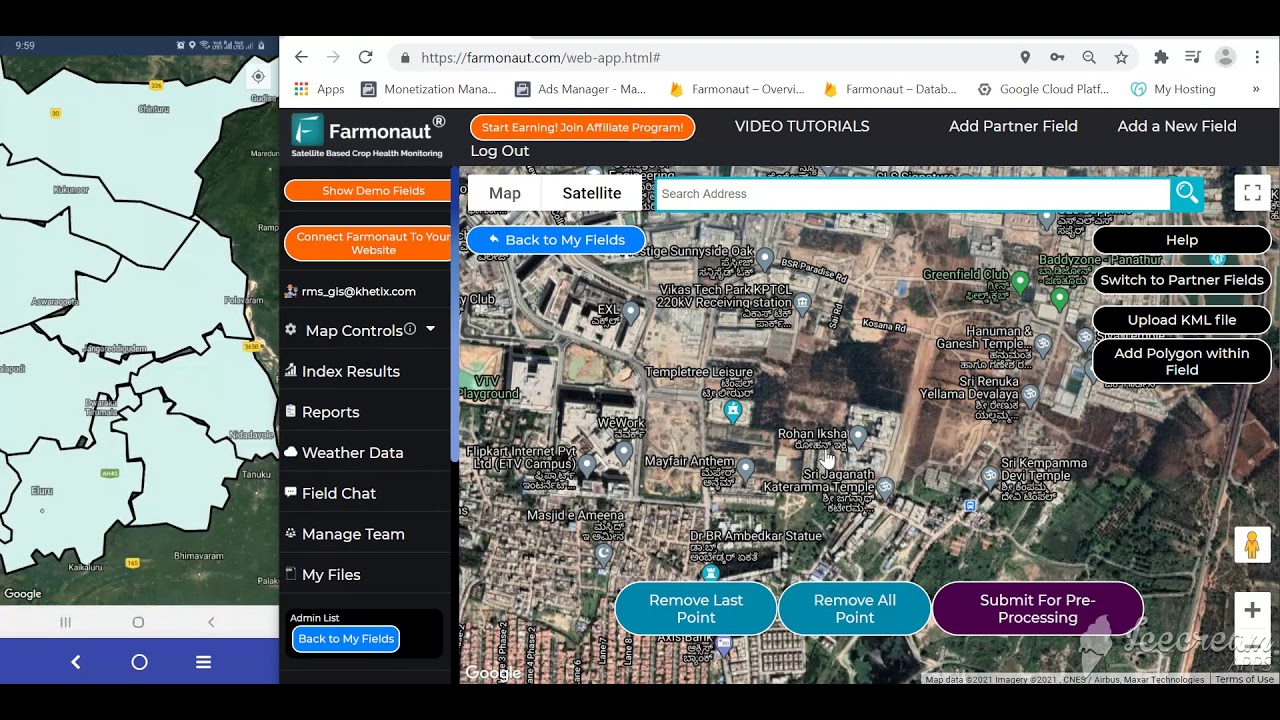
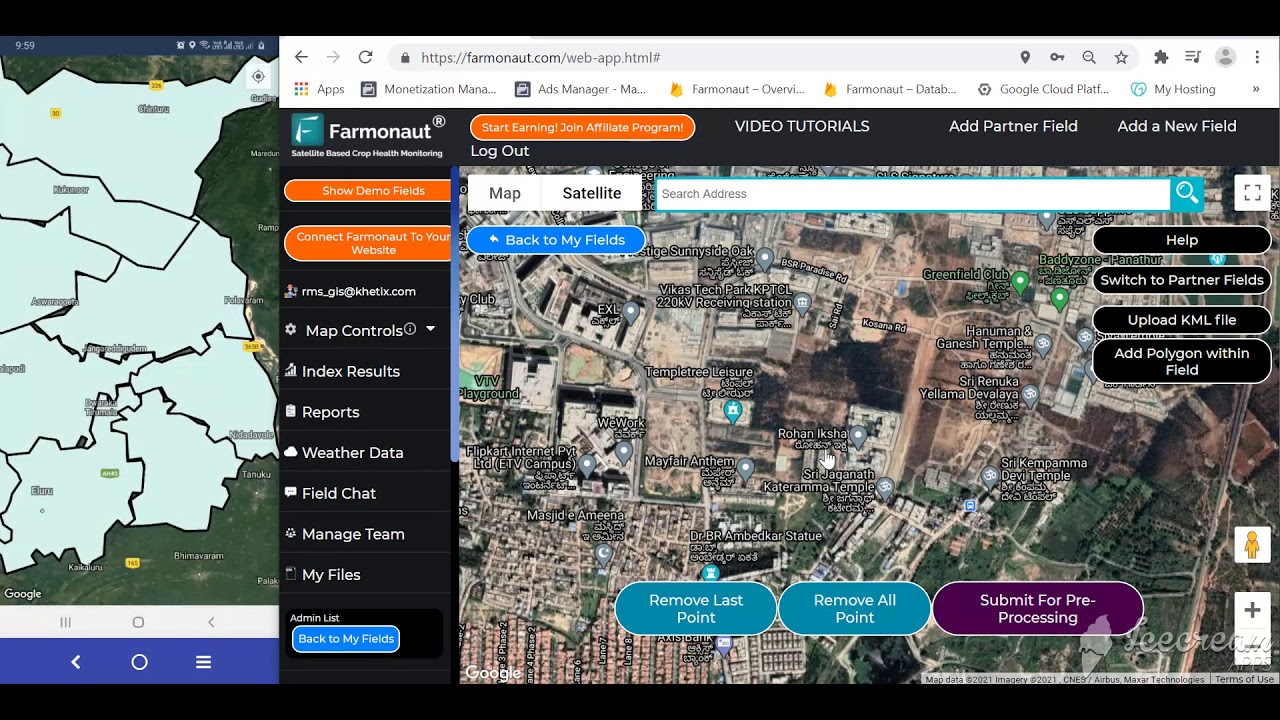
Farmonaut provides satellite-based crop monitoring, soil health tracking, and blockchain traceability that farms and the institutions financing them can use as supporting documentation — not as a lender itself, and not as a guarantee of approval. Access is available through web, Android, and iOS apps, or direct integration via the Farmonaut API for institutions that want to pull verified field data into their own underwriting systems.
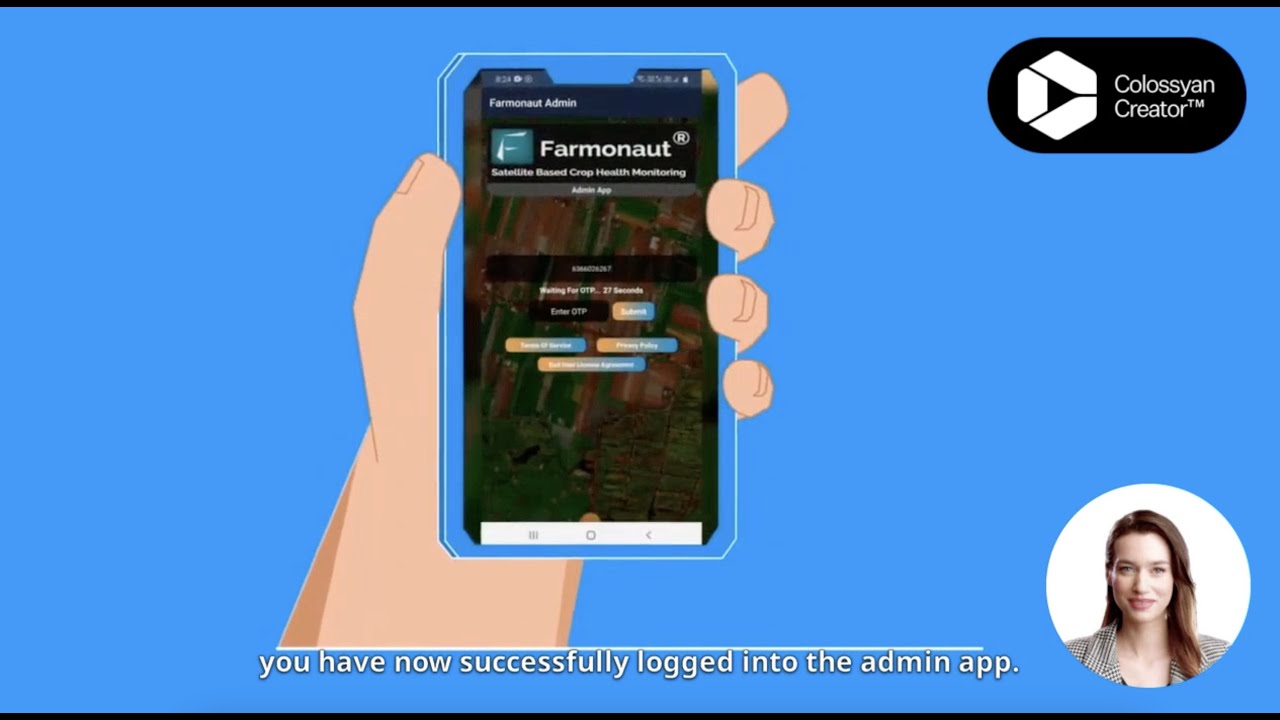
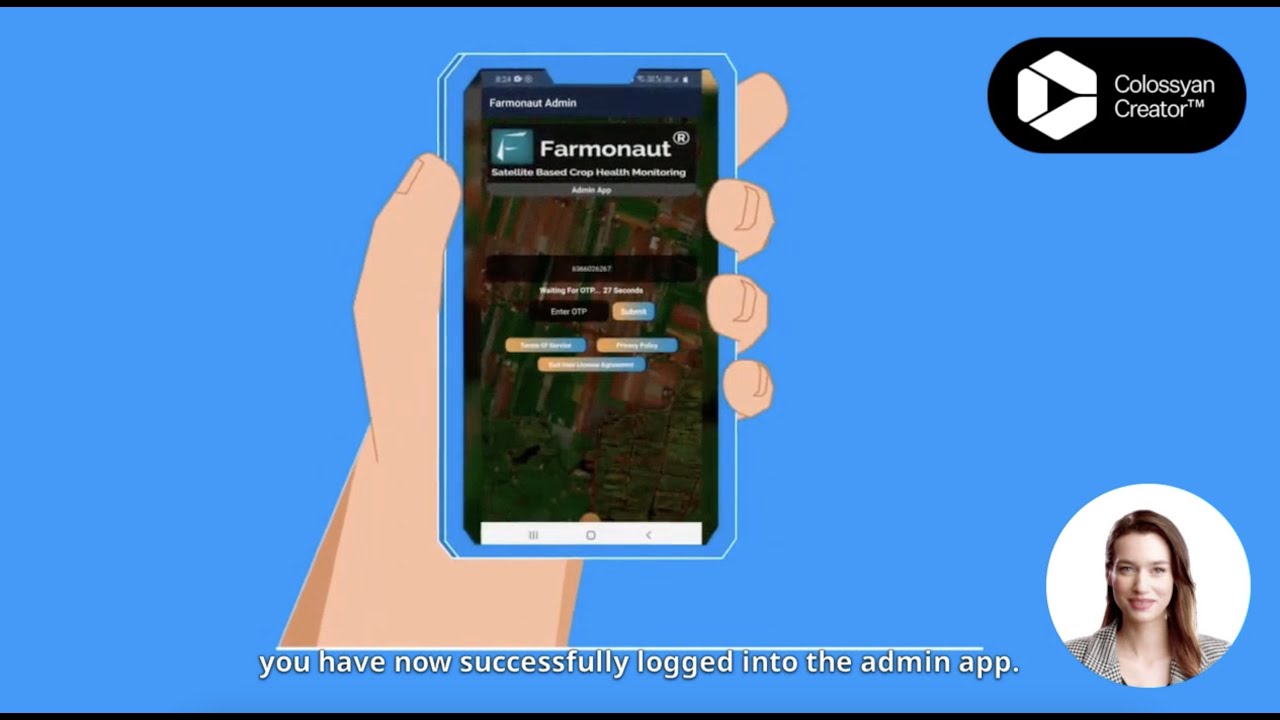
For farms already carrying crop loans or insurance, Farmonaut’s Crop Loan & Insurance page explains how satellite-verified data supports claims and renewal documentation. Large operations managing multiple plots can use the Agro Admin App for multi-plot oversight and resource allocation, which is also useful when preparing consolidated financials across several parcels for a lender.

Calculator: Line of Credit Draw & Interest Cost
Estimate what a seasonal draw on a farm operating line of credit will actually cost in interest, based on your own limit, rate, and how many months the balance stays outstanding before repayment.
Run your own numbers
Checklist: Preparing to Apply for a Farm Line of Credit
- ✅ Document your working capital gap — the dollar difference between when input costs hit and when sales revenue arrives, by month
- ✅ Gather three years of farm financial records, including the $254,043 average expenditure figure as a national benchmark for comparison (USDA NASS, 2024)
- ✅ Compile digital verification data — satellite crop records, precision-ag logs, or accounting software exports that support your acreage and input claims
- ✅ Request a specific rate quote in writing from at least two lenders, since published base rates do not reflect your individual spread
- ✅ Match your draw schedule to your cash cycle using a tool like the calculator above before signing
- ✅ Ask directly about unused-limit fees, since these are not standardized and are not covered in public FCA reporting
Farmonaut Subscription & Pricing Access
Explore Farmonaut’s subscription plans for individuals, businesses, and government agencies. Manage crop monitoring, soil data, and traceability records in one place — records that can also support your next credit application:





Frequently Asked Questions
What’s the difference between a farm management line of credit and a farm loan?
A line of credit is revolving — you draw and repay repeatedly against an approved limit as cash flow allows. A traditional farm loan disburses a fixed sum once and is repaid on a set installment schedule. Farm Credit System data shows $81.21 billion in non-real estate loans (the category operating lines fall under) versus $187.95 billion in real estate loans outstanding at year-end 2024, reflecting how the two serve different purposes (USDA ERS).
Is a farm credit association the same as a bank?
No. Farm credit associations are borrower-owned cooperatives within the Farm Credit System, chartered specifically to lend to agriculture and rural borrowers. Farmers who borrow also hold an ownership stake. The System held a 45.82% share of total US agricultural debt in 2023 (USDA ERS) and 49% of farmland real estate loans and 40% of farm production loans nationally in 2024 (Farm Credit Administration).
How do I find current rates for a farm operating line of credit in Texas?
Contact a local association affiliated with the Farm Credit Bank of Texas directly, since retail rates are set at the association level, not published centrally. The bank itself reported $31.8 billion in total loan volume at year-end 2024, up 7.0% year over year, per its own financial results release — a volume figure, not a rate figure.
What digital tools help a farm qualify for a line of credit?
Farm accounting and management software (used by 63% of US operators in 2023, per USDA ERS), precision agriculture devices (27% adoption in 2023), and satellite crop monitoring platforms all generate the verifiable records lenders use to support underwriting decisions, particularly for larger or multi-plot operations.
Is there published data on interest rates for farm operating lines of credit?
Not at the retail level. The Farm Credit Administration and individual Farm Credit banks publish base or prime rates, but the spread applied to an individual borrower depends on credit tier, collateral, and lender — none of which is centrally reported. Request a written quote from your lender for an accurate number.
Is Farmonaut a lender or an online marketplace?
No. Farmonaut is a satellite technology and data platform for crop monitoring, soil health, and traceability. It is not a lender, retailer, or marketplace — its role is to supply verifiable field data that farms and financial institutions can use in their own credit and insurance processes.
For a farm evaluating whether a line of credit fits its 2026 operating plan, the numbers above point to one conclusion: credit access through the Farm Credit System is large ($81.21 billion in non-real estate lending alone) and growing in places like Texas (7.0% volume growth in 2024), but debt is also rising faster than income for many operations nationally. Pair any new line of credit with the kind of documentation — cash flow projections, verified acreage data, precision-ag records — that gives a lender confidence in your numbers, not just your narrative. Start with Farmonaut’s platform if satellite-verified field data is the piece you’re missing.

 Godrej Agrovet
 Hayleys Agriculture
 Linx Agritech
 Adinet
 Save Your Soils
 GalaxEye Space
 Grandstream Algérie
 XOS Realty
 Geospatial Lab Africa
 Agro La Gándara
 HIPSAC
 ZOL Zimbabwe
 Juligerm
 AdBio
AdBio MISE Maroc
 NWNS
NWNS Red August Group
 Farm Inc
 WeMe Global
 Agrotoken
 Blue BearX
 Insignito
 DnCubed
 Indosistim Teknologi
 Liquify Digital
 CU Foods
 BeyondTech Global
 Rouge VC
 AgroRisk
 Oath Inc
 Esri North East Africa
 MDCV UK
 Etech Consulting Madagascar
 Vestlandsforsking
 WB Dev
 Sama Premium
 Tres Valles
 Blickwinkel
 Agricultural Credit Policy Council
 eKGIS
eKGIS Mostas Tech
 Andex
Andex Deluxe Conseil
 WICO
WICO Chimera Innovation
 SkyHarvest
 Teledarbas
 Exurbia Geospatial
 FieldZero
