

20 Farm Tools and Their Uses with Pictures: Prices, Work Rates and Maintenance
A buyer’s reference, not a vocabulary list: what each tool costs, how much ground it covers, and what kills it early.
Twenty tools cover nearly every job on a working farm: hoe, plough, spade, rake, seed drill, sprayer, watering can/irrigation, wheelbarrow, sickle, thresher, cultivator, tractor, pruning shears, combine harvester, fork, planter, disc harrow, manual weeder, soil testing kit and greenhouse equipment. Roughly six of them — hoe, spade, rake, sickle, fork, wheelbarrow — will handle a plot under one hectare for less than the cost of a single tractor tyre. Everything above that threshold is a machinery decision driven by area, crop and labour cost, not by preference.
This guide keeps the pictures and adds the three things a tool list usually omits: price bands, realistic work rates, and the maintenance interval that decides whether the tool lasts three seasons or fifteen. Where a figure varies too much by country to state honestly, we say so and show you where to check it locally.
Table of Contents
- Which Tools You Actually Need, by Farm Size
- Feature Comparison Table: 20 Farm Tools and Their Uses with Pictures
- Top 20 Essential Farm Tools and Their Uses
- 20 Farm Tools and Their Uses and Maintenance: Full Schedule
- Buy, Hire or Share? The Break-Even Maths
- Key Insight & Pro Tips
- Quick Reference & Benefits
- Modern Technology & Farmonaut for Next-Gen Agriculture
- Choosing Tools for the Next Five Seasons
- Frequently Asked Questions (FAQs)
- Farmonaut Subscriptions
- Conclusion
Which Tools You Actually Need, by Farm Size
The most common mistake in buying farm tools is buying the list instead of the farm. A grower on 0.3 ha of vegetables who buys a disc harrow has spent money on a tool that cannot physically work in their beds. A 40 ha grain farmer still hand-harvesting with sickles is losing more in labour every week than a used combine costs per month on hire.
Use area and crop as the filter. The bands below reflect where mechanisation typically starts paying in most farming regions — the exact crossover shifts with local wage rates and contractor availability, which we show you how to calculate in the break-even section.
| Farm Profile | Tools That Earn Their Keep | Usually Not Yet Worth Owning |
|---|---|---|
| Kitchen garden / under 0.2 ha | Hoe, spade, rake, manual weeder, pruning shears, watering can, soil testing kit | Everything powered |
| Smallholding 0.2–2 ha, mixed crops | All of the above plus wheelbarrow, fork, sickle, knapsack sprayer, walk-behind cultivator | Tractor, combine, disc harrow, planter |
| 2–20 ha, one or two field crops | Compact tractor (or hired hours), plough, cultivator, seed drill, boom sprayer, thresher | Combine harvester — hire it |
| 20 ha+ broad-acre | Tractor, disc harrow, planter/seed drill, self-propelled sprayer, combine or contract harvest | Duplicate hand tools bought “just in case” |
| Protected / horticulture | Greenhouse equipment, drip irrigation, pruning shears, soil testing kit, manual weeder | Plough, harrow, combine |
“A hoe costs about a tenth of one hectare’s worth of hand-weeding labour — and lasts a decade.”
Feature Comparison Table: 20 Farm Tools and Their Uses with Pictures
Price bands below are indicative global retail ranges spanning entry-level to commercial-grade equipment; machinery prices in particular swing widely with brand, horsepower, used-market condition and import duty. Treat them as a bracket for budgeting, then confirm against two local dealer quotes plus one used-machinery listing. Work rate is the practical field capacity most operators report — always below the manufacturer’s theoretical figure once turning, refilling and breakdowns are counted.
| Tool Name | Image | Primary Use | Typical Work Rate | Power Source | Typical Price Range (USD) |
|---|---|---|---|---|---|
| 1. Hoe | 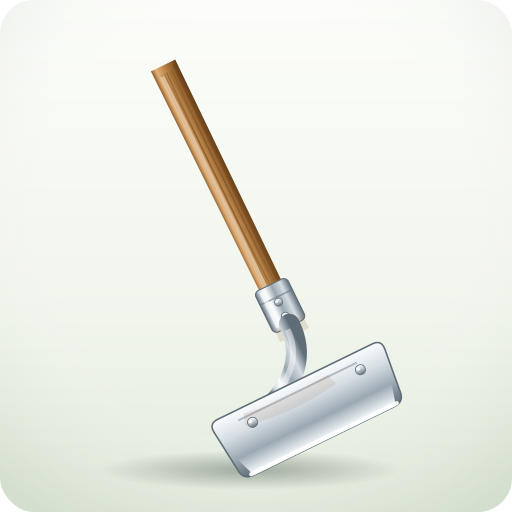 |
Tilling soil, removing weeds, shaping planting rows | ~100–300 m²/hr weeding | Hand | $10–$25 |
| 2. Plough | 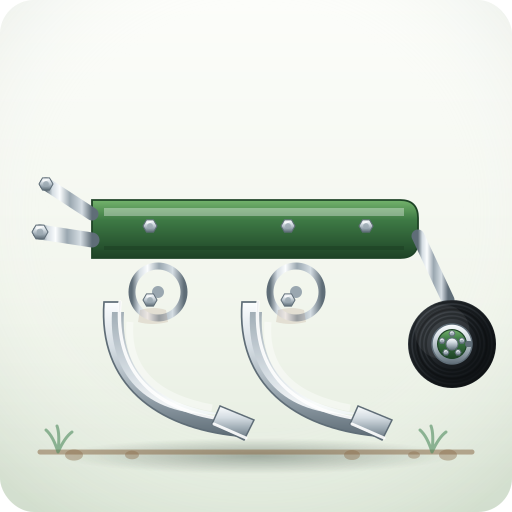 |
Breaking & turning soil before sowing | 0.4–1.2 ha/hr (2–4 furrow) | Tractor PTO / draught animal | $250–$3500 |
| 3. Spade/Shovel | 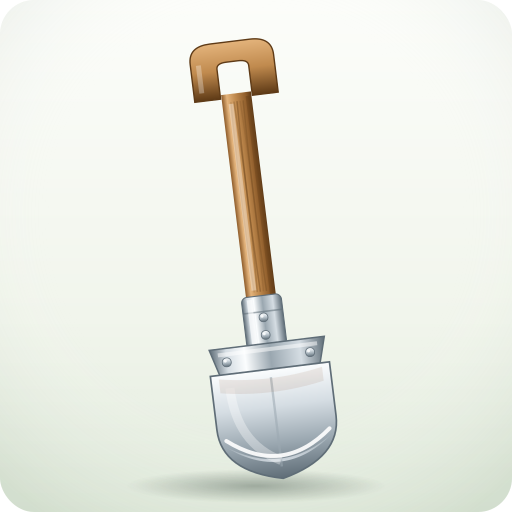 |
Digging, lifting soil, managing beds & irrigation ditches | 1–3 m³ soil/hr | Hand | $15–$40 |
| 4. Rake | 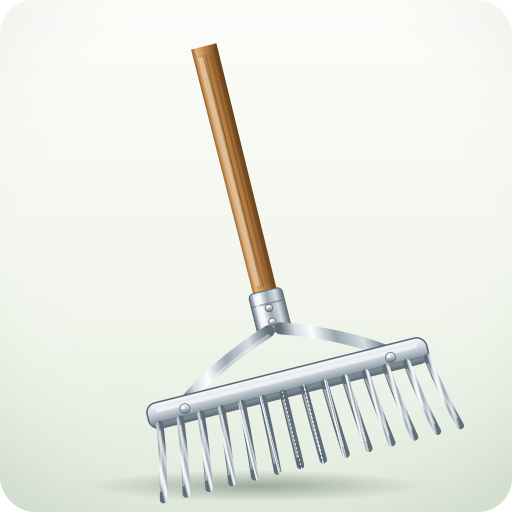 |
Leveling soil, gathering debris, preparing seedbeds | 200–400 m²/hr levelling | Hand | $10–$30 |
| 5. Seed Drill | 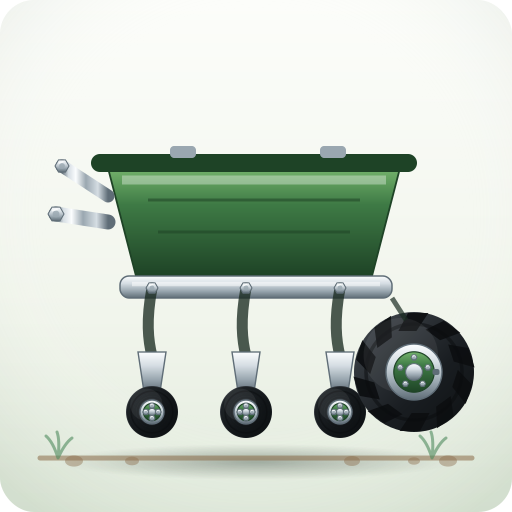 |
Mechanized sowing at uniform depth & spacing | 0.8–3 ha/hr by width | Tractor-drawn / seed-cum-ferti | $500–$4200 |
| 6. Sprayer | 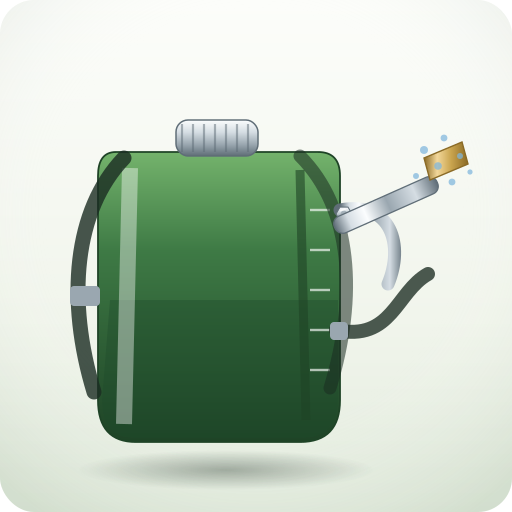 |
Uniform application of pesticides, fertilizers | Knapsack 0.2–0.4 ha/hr; boom 4–12 ha/hr | Manual / battery / PTO | $40–$1200 |
| 7. Watering Can / Irrigation Equipment | 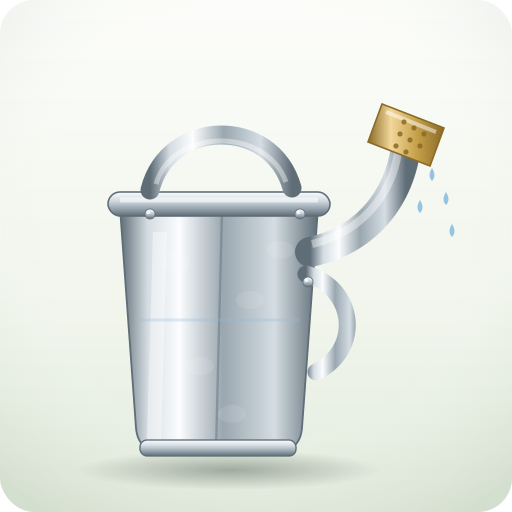 |
Hand/manual watering or efficient irrigation | Can: ~10 L/trip; drip: unattended | Hand / pump / solar | $5–$3500 |
| 8. Wheelbarrow | 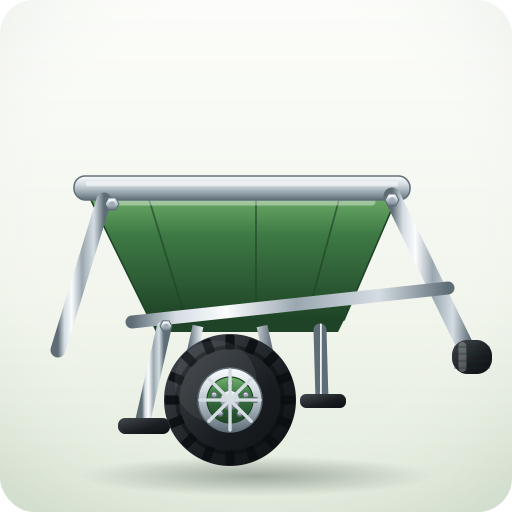 |
Moving soil, compost, crops, or tools | 60–100 L per load | Hand | $45–$180 |
| 9. Sickle | 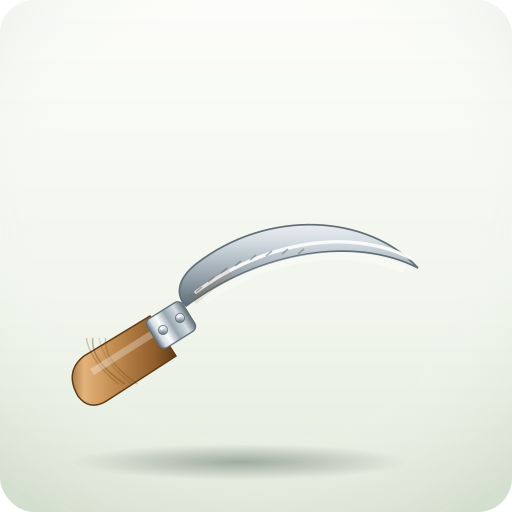 |
Hand harvesting of grains and grasses | ~0.02–0.05 ha/hr per worker | Hand | $7–$18 |
| 10. Threshing Machine | 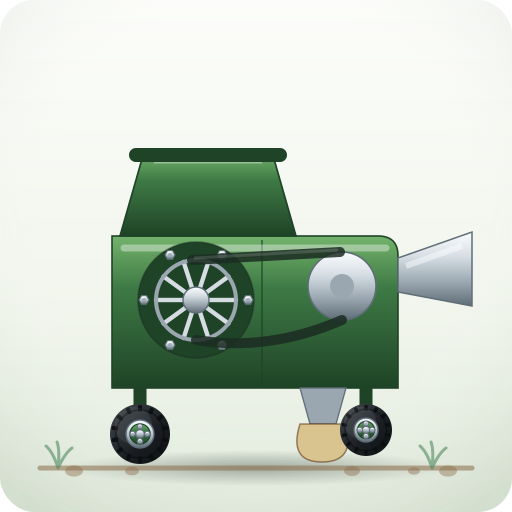 |
Mechanical separation of grains from stalks | 0.3–2 t grain/hr by model | Electric motor / diesel / PTO | $700–$8500 |
| 11. Cultivator | 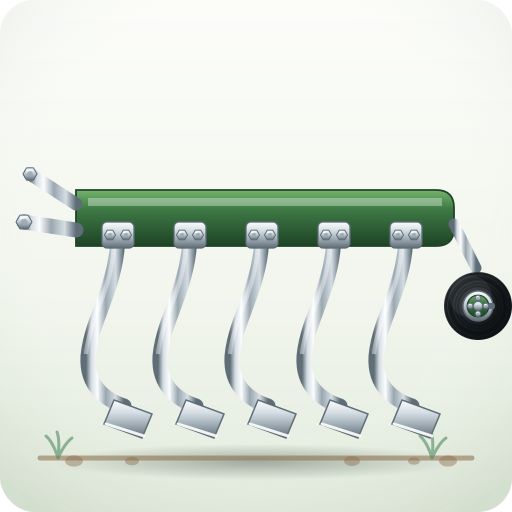 |
Aerating soil, in-row weed removal | Walk-behind 0.1–0.3 ha/hr; mounted 1–2 ha/hr | Petrol / tractor | $150–$2400 |
| 12. Tractor | 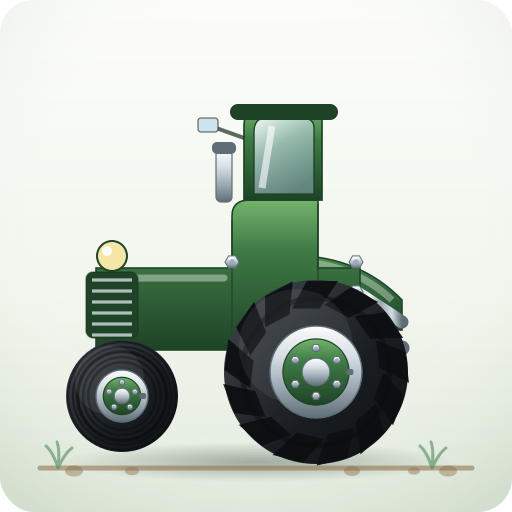 |
Power source for various implements, haulage | Depends on implement; 20–120+ hp | Diesel (electric models emerging) | $6500–$120,000 |
| 13. Pruning Shears | 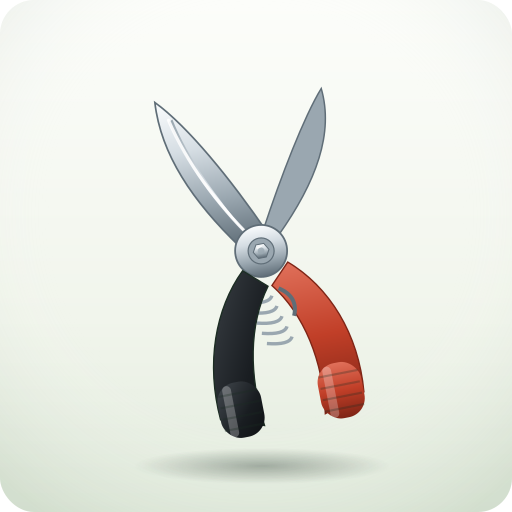 |
Trimming plants, orchard/tree management | Cuts to ~20–25 mm wood | Hand / battery | $10–$22 |
| 14. Harvester / Combine Harvester | 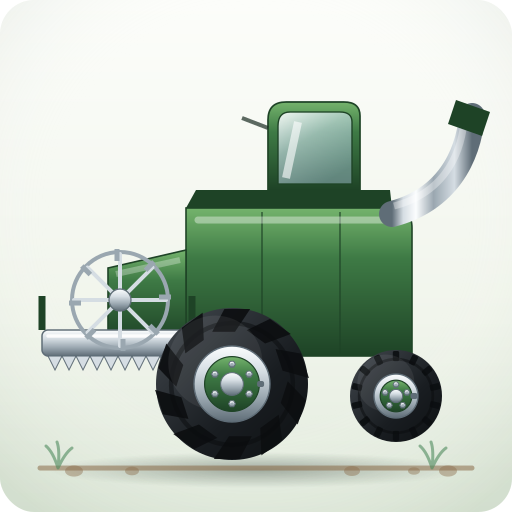 |
Automated reaping, threshing, cleaning | 1–5 ha/hr by header width | Diesel, self-propelled | $27,000–$390,000 |
| 15. Fork | 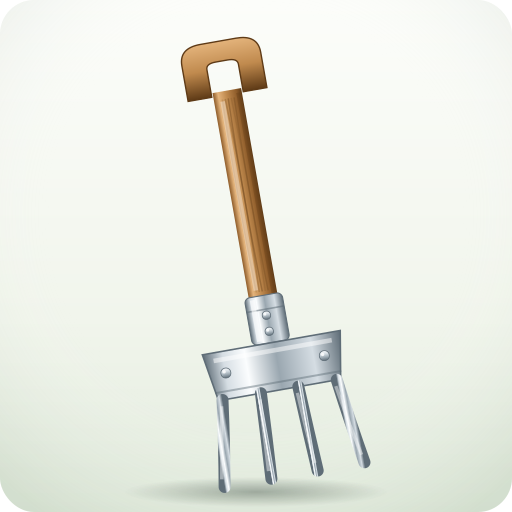 |
Moving compost, hay, debris | 1–2 m³ loose material/hr | Hand | $15–$48 |
| 16. Planter | 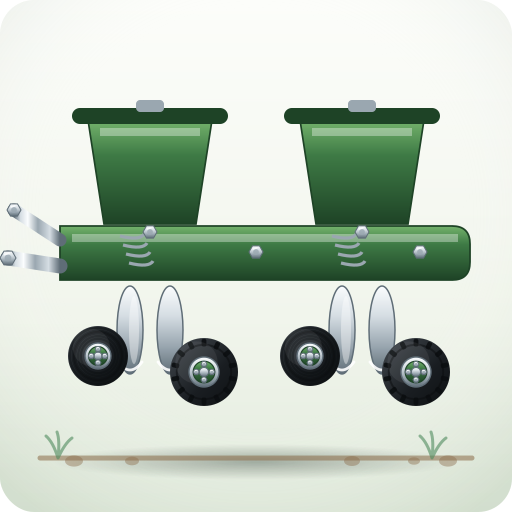 |
Planting seeds/seedlings at uniform spacing | 1–4 ha/hr, 2–16 rows | Tractor-mounted | $700–$24,000 |
| 17. Spinning Disc Harrow | 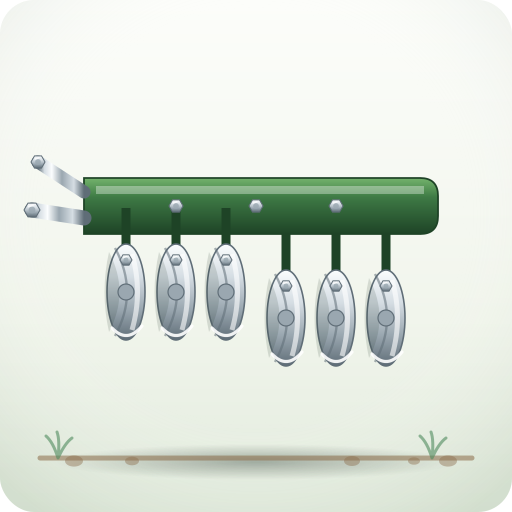 |
Breaking soil clods, seedbed refinement | 1–4 ha/hr by working width | Tractor-drawn | $350–$7500 |
| 18. Manual Weeder | 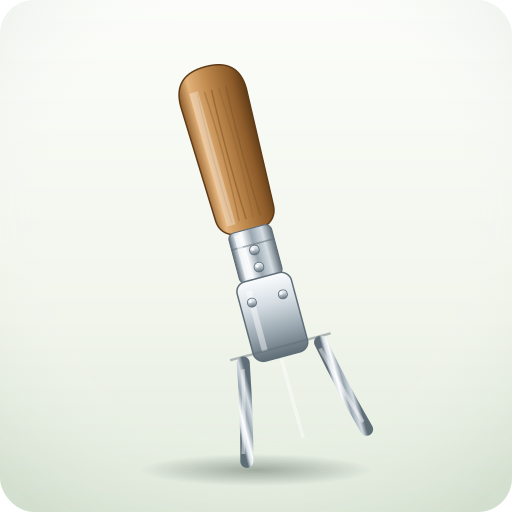 |
Hand removal of weeds in organic settings | Row-crop precision work, ~50–150 m²/hr | Hand | $6–$12 |
| 19. Soil Testing Kit | 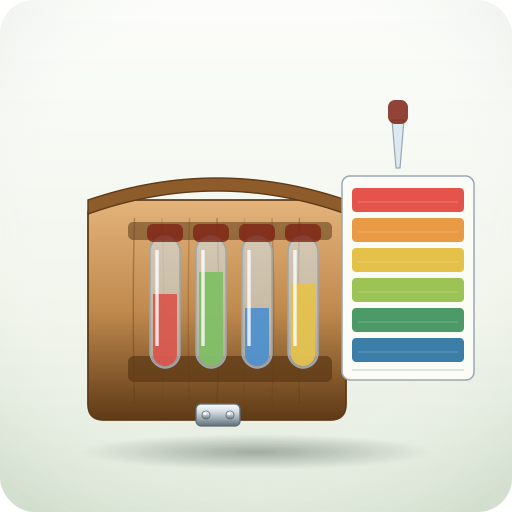 |
Measuring nutrient/pH levels for informed decisions | Minutes per sample, in-field | Chemical reagent / digital probe | $22–$150 |
| 20. Greenhouse Equipment |  |
Controlled crop production year-round | Year-round cycles vs 1–2 outdoors | Grid / solar / passive | $390–$55,000+ |
Top 20 Essential Farm Tools and Their Uses with Pictures
Each entry below covers what the tool does, the variant worth choosing, and the specific failure that ends most units early.
1. Hoe
The hoe tills, weeds and shapes planting rows. Which type matters more than which brand: a draw hoe (heavy blade at right angles) moves soil and chops established weeds; a scuffle or stirrup hoe slices weed seedlings just below the surface on the push-and-pull stroke and is two to three times faster on young weeds; a collinear hoe with a thin blade works between close-spaced vegetables without disturbing roots. Buy the scuffle first if you weed on a weekly rhythm.
What kills it: a dull blade. A hoe used blunt is dragged rather than sliced, which doubles the effort and loosens the handle joint. Touch up the edge with a file every few hours of use.
Timing beats tooling in weed control. Hoeing at the white-thread stage — weeds barely emerged — clears a bed in a fraction of the time needed once they are established and rooted, and reduces chemical use without extra labour.
2. Plough
The plough (plow) inverts and breaks soil ahead of sowing. Three families dominate: the mouldboard plough fully inverts the furrow slice and buries residue, best for heavy trash or breaking pasture; the disc plough rolls rather than slices, so it survives stony and root-filled ground; the chisel plough fractures compaction at depth without inverting, which preserves surface residue and soil structure.
Rule of thumb for matching a tractor: allow roughly 12–15 hp per furrow bottom in average soil, more in heavy clay. Undersized tractors on oversized ploughs wheel-slip, burn fuel and glaze the furrow wall.
What kills it: worn shares left in service. A rounded share pushes soil instead of cutting it, raising draught sharply. Replace shares and coulters on wear, not on calendar.
3. Spade/Shovel
A spade has a flat blade for cutting and edging; a shovel has a dished, pointed blade for scooping loose material. Owning both saves time — using a shovel to cut a clean bed edge or a spade to move gravel is slow in each direction. For transplanting and irrigation-ditch work, choose a spade with a solid-socket or solid-strap handle joint over a cheap tang-and-ferrule, which is where budget spades snap first.
What kills it: prying rocks sideways with the handle, which levers the joint apart. Dig around the rock instead.
4. Rake
Two distinct jobs, two rakes. A bow or level-head rake with rigid steel tines grades soil, breaks clods and finishes seedbeds; a leaf/spring rake with flexible tines gathers debris without scalping the surface. A wider head (60–70 cm) levels faster on open ground; a narrower head is more controllable in beds.
What kills it: using a soil rake to drag wet, heavy debris, which splays the tines permanently.
5. Seed Drill
The seed drill places seed at controlled depth and spacing instead of broadcasting it. That single change cuts seed rate, evens emergence and makes mechanical weeding possible, because the crop is in known rows. Variants worth knowing: the seed-cum-fertiliser drill places starter fertiliser in the same pass; the zero-till drill cuts through residue into unprepared ground, saving one or more tillage passes; GPS-guided units add section control and reduce overlap on irregular fields.
Calibrate before every crop, not every season. Jack a drive wheel, turn it a counted number of revolutions matching a known area, weigh what the drill delivers into a bag, and scale up to per-hectare rate. Ten minutes here beats discovering a 20% seed-rate error at emergence.
What kills it: fertiliser left in the hopper over the off-season — it draws moisture and corrodes metering parts into a solid mass.
6. Sprayer
Sprayers apply pesticides, herbicides and foliar fertiliser. The nozzle, not the tank, determines results. Flat-fan nozzles suit broadcast herbicide; hollow-cone nozzles give the fine droplets that contact-fungicides need; air-induction and drift-reduction nozzles produce coarser droplets that stay on target in wind. Nozzle output is also pressure-dependent, so changing pressure changes both rate and droplet size together.
Three habits separate good spraying from wasted chemical: calibrate by catching output from each nozzle for a timed interval and comparing against the label rate; replace worn nozzles once output exceeds new-nozzle flow by about 10%; and spray in low wind, avoiding both dead-calm inversions and gusty conditions.
What kills it: storing a sprayer unrinsed. Residue hardens in filters and nozzle orifices, and carryover of the wrong herbicide can damage the next crop.
Looking to enhance your farm’s traceability and environmental compliance? Discover Farmonaut’s Blockchain-based Product Traceability—designed to ensure secure, transparent agricultural supply chains for the digital age.
7. Watering Can / Irrigation Equipment
The watering can is still the right tool for nurseries and transplant establishment, where per-plant control matters. Beyond a few hundred square metres, the choice becomes a system:
- Furrow/flood: lowest capital cost, highest water use, needs land levelling.
- Sprinkler: flexible, wets foliage (raising disease pressure in some crops), loses water to wind and evaporation.
- Drip: highest capital and maintenance demand, delivers water at the root zone, and allows fertigation. Requires filtration — the single most common cause of drip failure is emitter clogging from unfiltered or hard water.
Scheduling is where most irrigation money is lost. Rather than watering on a fixed calendar, match applications to crop demand and soil moisture. Satellite indices and weather-driven models — the basis of Farmonaut’s crop monitoring — let you see which blocks are actually stressed before the canopy shows it visually.
8. Wheelbarrow
A wheelbarrow moves soil, compost, harvested crops and tools. Single-wheel barrows turn tightly and suit narrow paths; two-wheel barrows are far more stable under heavy or top-loaded material and are worth the loss of manoeuvrability for compost and produce. Puncture-proof or solid tyres remove the most frequent downtime cause on stubbly ground.
What kills it: leaving a loaded barrow standing overnight, which flat-spots pneumatic tyres and bends axles over time.
9. Sickle
The sickle hand-harvests wheat, rice, fodder and grass where terrain, plot shape or scale rule out machines — terraced and fragmented fields especially. Serrated sickles grip and cut wet or fibrous stems such as paddy with less slipping; smooth-edged sickles give cleaner cuts on dry stalks and can be honed sharper.
What kills it: nothing, quickly — a sickle is one of the cheapest and longest-lived tools on the farm, provided it is dried and oiled after wet-crop use.
10. Threshing Machine
A threshing machine separates grain from stalks and husks. Multi-crop threshers handle wheat, paddy, maize, pulses and oilseeds by changing drum speed, concave clearance and sieves — the settings, not the crop, do the work. Too fast and you crack grain; too slow and unthreshed heads leave with the straw.
Diagnose by sample: catch a handful from the grain outlet and a handful from the straw outlet. Broken kernels in the grain means reduce drum speed; intact heads in the straw means increase speed or close the concave.
What kills it: unguarded belts and worn bearings. Threshers cause serious injuries; never clear a blockage with the drum turning.
11. Cultivator
A cultivator stirs the top few centimetres to kill weeds between crop rows without inverting the profile. Rigid tines hold depth in hard ground; spring-loaded (danish) tines vibrate, shatter clods and trip over rocks instead of breaking. Set shields or a shallow pass near young crops — a cultivator run too deep or too close prunes crop roots along with the weeds.
What kills it: operating faster than tine geometry allows, which throws soil onto the crop row and buries seedlings.
12. Tractor
The tractor is a power unit, and it should be bought around the heaviest implement you will regularly pull — usually the plough or harvester-feeding trailer. Check three specifications before horsepower marketing: PTO horsepower (what reaches the implement, always less than engine hp), hydraulic lift capacity at the link ends, and total weight, since traction depends on weight as much as power.
Buying used is usually the better value on a small farm, but inspect for the expensive faults: hours versus condition mismatch, hydraulic leaks at cylinder seals, blue exhaust smoke under load, play in front-axle kingpins, and a transmission that jumps out of gear. Ask for the service record; absence of one is itself information.
What kills it: deferred oil and filter changes, and running with a clogged air filter in dusty conditions — the fastest route to engine wear on any farm machine.
Looking for fleet management solutions? Our advanced satellite tools optimize machinery usage, logistics, and minimize cost for all farm scales.
13. Pruning Shears
Pruning shears (secateurs) come in two mechanisms with different jobs. Bypass shears cut like scissors, leaving a clean cut on live wood — correct for orchards, vines and anything you want to heal. Anvil shears crush the stem against a flat plate, acceptable on deadwood only. For any living branch, use bypass.
Sanitise blades between trees when disease is present; shears are an efficient way to spread canker and bacterial infection through a block.
What kills it: cutting wood beyond the rated diameter by twisting, which springs the blade out of alignment permanently.
14. Harvester / Combine Harvester
A combine harvester reaps, threshes, separates and cleans in one pass. Its economics are unusual: extremely high capital cost against very few working days per year, which is why contract harvesting and machinery-sharing rings are common even on large farms.
Measure your own losses instead of guessing. Stop the machine mid-field, back up, and count loose grain on a measured area of ground — comparing that with grain in an equal area of standing crop gives your loss percentage. Header loss (grain shed before it enters) is usually the largest share and responds to reel speed and cutting height; separation loss responds to rotor speed and fan settings.
What kills it: fire. Combines burn from accumulated chaff on hot surfaces — blow the engine bay down daily in dry harvest and carry an extinguisher.
15. Fork
Match the fork to the material. A digging/garden fork has four thick, flat tines for breaking soil and lifting root crops. A pitchfork has two or three long, slender tines for hay and straw. A manure or bedding fork has many closely spaced tines that hold loose material. Using a hay fork on soil bends tines; using a digging fork on hay wastes half your effort.
What kills it: stepping on the shoulder to force a garden fork into stony ground, which splays the outer tines.
16. Planter
A planter differs from a drill in one important way: it singulates. A precision planter places individual seeds at a set in-row spacing, which is what maize, cotton, sunflower and many vegetables need, whereas a drill meters a stream of seed suited to cereals. Metering is either vacuum/air (accurate, needs clean seed and correct plate) or mechanical plate (simpler, cheaper, more sensitive to seed size grading).
Two settings determine stand quality: down-pressure, which controls whether the opener reaches target depth in variable ground, and closing-wheel setting, which controls seed-to-soil contact. Uniform spacing with poor depth control still gives uneven emergence.
What kills it: worn seed discs, brushes and double-eliminators, which quietly raise skips and doubles until stand counts drop.
17. Spinning Disc Harrow
The disc harrow breaks clods after ploughing, chops surface residue and refines seedbeds. Tandem harrows suit lighter secondary tillage; offset harrows are heavier and cut deeper in tough ground. Disc angle and gang weight set aggressiveness — more angle, more soil movement and more residue cut.
Repeated shallow discing at the same depth can form a compacted layer just below working depth. Vary depth between seasons, or alternate with a deeper non-inversion pass, to avoid building a pan.
What kills it: dry, unattended bearings on the gang shafts, which seize and shear the shaft.
18. Manual Weeder
A manual weeder removes weeds inside the crop row, where no cultivator can reach without crop damage — the reason it survives in commercial organic vegetable production. Common forms are the hand fork weeder, the wire/wheel weeder pushed between rows, and the cono/rotary weeder used in puddled paddy, which also stirs the soil surface.
What kills it: very little — but efficiency collapses if used late. In-row hand weeding is only competitive on small weeds.
19. Soil Testing Kit
A soil testing kit measures pH and available nutrients so fertiliser matches the deficit rather than habit. Field kits and handheld probes give fast indicative readings and are ideal for spotting pH problems and comparing blocks; an accredited laboratory test remains the reference for actual fertiliser recommendations, organic matter and micronutrients.
Sampling technique matters more than kit price. Take 10–15 cores per uniform management zone at consistent depth, mix them in a clean bucket, and submit the composite. Sample separately for visibly different soil, slope or cropping history — averaging across a whole heterogeneous farm produces a recommendation wrong everywhere.
Explore Farmonaut’s satellite-driven carbon footprinting service and leverage environmental data to improve soil health and sustainability.
20. Greenhouse Equipment
Greenhouse equipment — ventilation, shade nets, irrigation and fertigation, heating or evaporative cooling, and sensors — converts weather from a constraint into a setting. Structures range from low-cost polytunnels and naturally ventilated net-houses through to fan-and-pad or fully climate-controlled glasshouses, and cost scales in that order.
The highest-return item in most protected structures is not automation but ventilation capacity. Under-ventilated tunnels overheat, which stops pollination and burns crops regardless of how good the irrigation control is. Get airflow and shading right, then add sensors and automated fertigation.
20 Farm Tools and Their Uses and Maintenance: The Full Schedule
Most farm tools are not worn out; they are neglected into failure. This is the maintenance table that separates a hoe lasting ten seasons from one lasting two, and a tractor reaching high hours from one needing an engine.
| Tool | After Each Use | Periodic | Off-Season Storage | Most Common Failure |
|---|---|---|---|---|
| Hoe, spade, rake, fork, weeder | Scrape soil off, dry | File edge; tighten/re-wedge handle | Light oil on metal; hang, never on soil | Handle joint failure from prying |
| Sickle, pruning shears | Wipe sap/moisture, dry | Hone edge; oil pivot; sanitise between diseased trees | Oiled, closed, dry store | Rust pitting and blade misalignment |
| Wheelbarrow | Empty and rinse if manure/chemical | Check tyre pressure; grease axle; tighten tray bolts | Store inverted or covered, unloaded | Punctures; rusted-through tray |
| Sprayer | Triple-rinse tank, lines and nozzles | Calibrate; check nozzle flow vs new; clean filters | Drain fully; antifreeze in pump where frost risk | Blocked/worn nozzles, seized pump |
| Seed drill / planter | Empty hoppers completely | Calibrate per crop; inspect discs, brushes, tubes; grease bearings | Clean fertiliser residue; oil metering parts | Corroded metering from stored fertiliser |
| Plough / harrow / cultivator | Knock off soil; check for cracks | Grease gang bearings; replace worn shares/tines; check hitch pins | Coat wearing metal with oil; store off wet ground | Seized gang bearings; worn shares raising draught |
| Thresher | Clear straw and grain from drum and sieves | Belt tension; bearing check; guard integrity; drum balance | Release belt tension; cover from dust and rodents | Bearing failure, belt snap, rodent-chewed wiring |
| Tractor | Walk-around: leaks, tyres, loose bolts; check coolant/oil | Oil and filter changes per hour meter; air filter in dust; grease points; hydraulic filter | Full tank (limits condensation), battery on charge, tyres off wet floor | Engine wear from skipped services and dirty air filters |
| Combine harvester | Blow down chaff from engine bay and hot surfaces | Chain and belt tension; knife sections; bearing and concave check; loss checks | Thorough clean-out (rodents), grease, sheltered store | Machine fire from chaff build-up |
| Irrigation / drip | — | Clean filters at set intervals; flush laterals; check emitter uniformity | Drain to prevent freeze split; acid/chlorine flush per water quality | Emitter clogging from poor filtration |
| Soil test kit / sensors | Rinse probes; cap reagents | Calibrate pH/EC meters against buffer solutions | Cool, dark store; replace expired reagents | Silently drifted, uncalibrated readings |
| Greenhouse equipment | — | Clean covering; test vents/fans; check sensor accuracy and alarms | Inspect film/structure before storm season; sanitise between crops | Vent or fan failure causing heat damage |
One habit underpins all of it: a fixed weekly tool check. Ten minutes on a set day each week — edges, handles, tyre pressures, grease points, filter state — catches nearly everything above before it becomes downtime during the one week when the field will not wait.
Buy, Hire or Share? The Break-Even Maths
This is the calculation that decides most tool spending, and it takes five minutes with your own numbers rather than someone else’s averages.
- Annual ownership cost = (purchase price − expected resale) ÷ years you will keep it, plus insurance, shelter and finance interest.
- Operating cost per hour = fuel + lubricants + repairs reserve + operator wage.
- Hours you will actually use it per year — be honest; this is where optimism costs money.
- Own cost per hectare = (annual ownership ÷ hectares covered) + (operating cost per hour ÷ hectares per hour).
- Compare with the local contractor rate per hectare for the same operation.
The pattern that emerges almost everywhere: tools with high use across many days — tractor, cultivator, sprayer — favour ownership. Tools used in a narrow window of a few days a year, above all the combine harvester, favour hire or a shared-machinery arrangement. Where machinery-hire centres or custom-hiring platforms operate, they usually beat ownership for any implement used under a handful of days annually.
Where to get real numbers instead of estimates: two local dealer quotes, one used-machinery marketplace listing for the same model and hour range, the contractor rate from a neighbouring farm, and — for fuel and labour — your own last-season records. Your national or state agricultural extension service typically publishes custom-rate and machinery-cost guides; those are the correct source for your region, and they change yearly.
Key Insight & Pro Tips from the 20 Farm Tools and Their Uses
🎯 Quick Reference: 10 Farm Tools and Their Uses with Pictures
- 1. Hoe – Tilling and weeding ()
- 2. Plough – Soil preparation ()
- 3. Spade – Digging, bed prep ()
- 4. Rake – Leveling and debris removal ()
- 5. Seed Drill – Precision sowing ()
- 6. Sprayer – Chemical/fertilizer application ()
- 7. Irrigation Equipment ()
- 8. Wheelbarrow – Internal transport ()
- 9. Sickle – Hand harvesting ()
- 10. Threshing Machine – Grain separation ()
What the Right Farm Tools Actually Change
- ✔ Labor savings—mechanized tools convert days of hand work into hours, which matters most in the narrow windows for sowing and harvest.
- 💸 Cost reduction—calibrated drills and sprayers cut seed and chemical over-application, the two easiest input savings to capture.
- 🌾 Increased yields—uniform depth and spacing produce even emergence, and even stands are what harvest yield follows.
- 🌱 Sustainable farming—mechanical weeding, precision nozzles and drip irrigation reduce chemical and water use per tonne produced.
- 📊 Data-driven improvements—soil kits plus satellite analytics tell you which block to treat, not just how to treat it.
- 🌱 Essential: All 20 farm tools from hoe to greenhouse equipment cover the full cycle from soil prep to post-harvest.
- 🚀 Efficiency: Work rate per hour is the number to compare, not price alone.
- 💧 Water: Filtration and flushing decide whether a drip system survives its second season.
- 📦 Logistics: Tractors, wheelbarrows and forks handle internal transport — often the hidden labour cost on small farms.
- 🔬 Technology: Digital tools like soil testing kits and satellite monitoring drive precision input decisions.
Modern Technology & Farmonaut for Next-Gen Agriculture
Hand and machine tools act on a field; satellite monitoring tells you where in the field to act. At Farmonaut, we enable farmers, agri-businesses, and governments to integrate satellite-driven intelligence into their operations — so a sprayer pass, an irrigation set or a soil sample is aimed at the block that needs it.
- ✔ Remote Crop Monitoring: Multispectral imagery for tracking vegetation health, soil moisture, and yield forecasts.
- 📊 AI-Driven Advisory: Real-time, personalized recommendations to improve productivity and sustainability with Jeevn AI System.
- ⚠ Risk & Compliance Analysis: Environmental impact measurement, resource use, and regulatory support for climate-savvy farming.
- 🔗 Blockchain Traceability: Supply chain transparency for authentic, secure food production.
- 📱 Multi-Platform Access: Web, mobile, and API—manage your farm operations from anywhere.

Web App

Android App

iOS App
Want to integrate satellite and weather data directly into your farming or agri-tech platform? Try Farmonaut’s API for custom solutions or access our full Developer Documentation.
Choosing Tools for the Next Five Seasons
Rising labour cost, tighter water availability and stricter input rules are pushing tool decisions in a consistent direction: fewer passes, better placement, and equipment that can be justified by hours of use. Practical implications when you next buy:
- ✔ Prefer tools that combine passes. A seed-cum-fertiliser or zero-till drill replaces separate operations, saving fuel and time in the same window.
- ✔ Check parts availability before brand. A cheaper machine whose shares, belts and bearings are stocked locally outperforms a better machine that waits weeks for parts mid-season.
- ✔ Buy repairability on small farms. Simple mechanical metering you can fix beats electronics you cannot diagnose, unless dealer support is genuinely nearby.
- ✔ Match irrigation to water quality, not brochure efficiency. Drip on hard or silty water without adequate filtration underperforms sprinkler.
- ✔ Pair equipment with measurement. A calibrated sprayer plus a satellite view of crop variability applies less product to better effect than either alone.
Whether you farm half a hectare or five hundred, the decision rule is the same: buy for the operation that constrains you, maintain what you own on a schedule, and hire the machine you would use for three days a year.
“The cheapest yield gain on most farms is a correctly calibrated drill and sprayer.”
Frequently Asked Questions (FAQs) on Farm Tools and Their Uses
Q1: What are the most essential farm tools for a beginner?
Start with six: hoe, spade, rake, fork, sickle and wheelbarrow, plus a soil testing kit. Together these cover soil preparation, planting, weeding, harvesting and transport on plots up to roughly a hectare, and the whole set typically costs less than a single powered implement. Add a knapsack sprayer next, then a walk-behind cultivator if weeding time is your bottleneck.
Q2: What is the difference between a seed drill and a planter?
A drill meters a stream of seed into rows at set depth — ideal for cereals sown at high population. A planter singulates seed and places individual seeds at a defined in-row spacing — required for maize, cotton, sunflower and many vegetables where each plant needs its own space. If your main crops are row crops needing precise spacing, the planter is the correct machine.
Q3: How do I stop my hand tools from rusting?
Clean soil off, dry the metal, and wipe it with any light oil before storage — soil left on steel holds moisture against it. Store tools hanging, not standing in contact with the ground, and keep a file in the shed so edges get touched up while you remember rather than at the start of next season.
Q4: Should I buy a combine harvester or hire one?
Hire, unless you harvest enough hectares to put substantial hours on it annually or you can custom-harvest for neighbours. Run the break-even calculation with your local contractor rate: combines carry the highest capital cost and the fewest annual working days of any farm machine, which is exactly the profile that favours hiring or a shared-machinery ring.
Q5: How can I reduce environmental impact using modern equipment?
Calibrate before you upgrade. A worn nozzle set can over-apply chemical across an entire farm, and an uncalibrated drill wastes seed on every hectare. After that, precision sprayers, drip irrigation with proper filtration, and soil testing to match fertiliser to actual deficit deliver the largest reductions. Farmonaut’s environmental monitoring then lets you track input use and carbon footprint over time.
Q6: Can I access satellite & AI insights for my small farm?
Yes, Farmonaut provides services for farms of all sizes. Register on the web or mobile app to monitor crop health, weather and soil conditions, and use it to decide which blocks your tools should work first.
Q7: Where do I find accurate local prices for farm equipment?
Use four sources together: two local dealer quotes for the same specification, a used-machinery marketplace listing for that model and hour band, your regional agricultural extension service’s published machinery cost or custom-rate guide, and a neighbouring farm’s actual contractor invoice. Published global price ranges — including the ones in this article — are for budgeting brackets only; local duty, freight and used-market condition move them substantially.
Flexible Farmonaut Subscriptions for Every Need
At Farmonaut, we offer a range of subscription plans suitable for individual farmers, agri-businesses, and institutional users. Access satellite crop analytics, resource management, blockchain traceability, and environmental monitoring alongside the tools you already own.
Conclusion: Buy for the Bottleneck, Maintain on Schedule
Knowing what twenty farm tools are called is the easy part. The decisions that change a farm’s results are narrower: which tool removes your current bottleneck, whether the hours you will genuinely use it justify owning it, and whether it is maintained well enough to work on the day the field demands it. Calibration and a weekly ten-minute check quietly outperform most upgrades.
With digital platforms like Farmonaut, we make it possible for more farmers, agripreneurs, and workers to access satellite-driven insights and resource management solutions — so the tools above are pointed at the right hectare at the right time.
Ready to see which blocks need your attention first? Try Farmonaut’s platforms, APIs, and resource management apps to monitor your crops, climate, and soil with confidence.
Keywords in Focus: 20 farm tools and their uses with pictures, 20 farm tools and their uses and maintenance, agricultural tools pictures with names and uses, farm tools and their uses, 10 farm tools and their uses with pictures, agricultural tools and equipment and their uses, farm tool prices, tool maintenance schedule, seed drill calibration, sprayer nozzle wear, drip irrigation filtration, combine harvester hire, soil testing kit, farm mechanisation break-even.
Discussion
Questions, corrections or field experience? Share them below. First-time comments are reviewed before they appear, and your email is never published.
No comments yet. Be the first to add a question or your experience.

 Geospatial Lab Africa
 KhetiBuddy
 Agro La Gándara
 Global Agrifood
 HIPSAC
 ZOL Zimbabwe
 Juligerm
 AdBio
AdBio MISE Maroc
 NWNS
NWNS Red August Group
 Farm Inc
 WeMe Global
 Agrotoken
 Blue BearX
 Insignito
 Croptimum
 DnCubed
 Field Capacity
 Indosistim Teknologi
 Licence holder · Niger · Gold
 Licence holder · Nigeria · Gold + lithium










