

Farming Online Safety Systems: 7 Data Protection Tips for Secure & Productive Agribusiness
“Over 70% of agribusinesses experienced cyber threats in 2023, highlighting the need for robust online safety systems.”
- Introduction: Digital Transformation & Cyber Risks in Modern Farming
- The Three Essential Layers of Farming Online Safety Systems
- Layer One: Data Governance in Agribusiness
- Layer Two: Operational Cyber Safety Management Online
- Layer Three: Personnel Training & Governance
- 7 Data Protection Tips: Comparison Table
- Smart Tools & Platforms for Agriculture Online Safety Systems
- Key Benefits & Challenges: Visual Lists & Highlights
- How We at Farmonaut Empower Secure, Data-Driven Farming
- Integration, Sustainability, and Resilience Through Secure Systems
- FAQ: Online Data Protection in Modern Agribusiness
- Final Thoughts
Introduction: Digital Transformation & Cyber Risks in Modern Farming
The digital revolution has firmly rooted itself in agriculture. Today’s farms are no longer isolated patches of land relying solely on intuition and tradition; they are connected, data-driven, and automated, blending physical processes with advanced technologies. The result? Massive productivity gains, streamlined operations, and deeper insights into soil health, weather patterns, and entire supply chains.
However, with the convergence of online platforms, automated equipment, smart irrigation, drones, and cloud-based management tools, farmers and agribusinesses face a rapidly growing frontier—cybersecurity risk and data integrity challenges. The transition to farming online safety systems is no longer optional; it is as essential for sustainability and continuity as proper soil management or irrigation planning.
The Three Essential Layers of Farming Online Safety Systems
Farming online safety systems must be comprehensive. We break them down into three interconnected layers for robust agribusiness safety:
- Data Governance: The backbone—establishes secure access, permissions, and control over all farm and supply chain data.
- Operational Cyber Safety: The day-to-day—maintains secure interactions between field devices, digital networks, and software platforms.
- Personnel Training & Governance: The culture—ensures every person in the value chain is aware, prepared, and vigilant.
7 actionable data protection tips address every key point in these layers, helping farms, cooperatives, and agri-enterprises stay ahead of threats while maximizing productivity.
“Implementing automated data protection can reduce cyber risk in farming operations by up to 60%.”
Layer One: Data Governance in Agribusiness
Data governance is the foundation of all strong farming safety management online programs. Farming now involves collecting and managing enormous volumes of diverse data:
- ✔ Soil moisture, health, and nutrient patterns—captured by sensors, satellite imagery, and manual tests.
- ✔ Equipment telemetry and operational data—from tractors, harvesters, autonomous drones, and irrigation systems.
- ✔ IoT, weather, and environmental monitoring—including weather forecasts, temperature, and pest activity.
- ✔ Supply chain and produce contracts—purchasers, logistics details, and distribution agreements.
- ✔ Proprietary farm data and business plans—unique agronomic strategies, buyer terms, or new crop trials.
Effective management starts with setting clear access controls and permissions, following least-privilege principles so each employee, contractor, or vendor only accesses what they truly need.
Data Security Practices Every Farm Must Implement
- Encryption in Transit & at Rest: All data—soil reports, buyer contracts, or drone images—should be encrypted both when stored locally/on the cloud (at rest) and during any transfer (in transit). Open-source password management helps securely store and control access to credentials, reducing unauthorized access risks.
- Regular Asset Inventories: Maintain a current list of all digital and connected equipment: field sensors, machinery with IP addresses, software licenses, and integrations that connect to the farm network.
- Incident Response Playbooks & Backup Strategies: Develop detailed plans for how the farm will respond to a breach or ransomware attempt, including how critical systems and data are restored.
- Compliance Auditing: Routinely check farm data policies against industry standards and regional regulations. Codify these requirements into digital workflows and regularly test adherence.
Automation & Cloud Backups: Keeping Data Available and Safe
Automated, cloud-based backups should be a key pillar. They:
- ✔ Minimize downtime in case of an attack, hardware failure, or natural disaster.
- ✔ Ensure historical data—like seasonal soil moisture—remains available for future planning.
Immutable logs and traceable backups are vital, especially for audit trails, supply chain transparency, and insurance claims.

Layer Two: Operational Cyber Safety Management Online
Operational cyber safety encompasses every system, device, and platform running across fields and facilities. With tractors, sprayers, irrigation tools, and field drones all connected, the risk of breach, malware, or operational disruption grows.
Key Online Safety Systems & Their Protective Actions
- Firmware & Software Updates: Ensure all tractors, autonomous harvesters, and agri-robots have regular updates installed. These patches protect against known vulnerabilities and prevent exploitation by attackers.
- Network Segmentation: Critical farm control systems—like irrigation or automated sprayers—should operate on separate networks from guest WiFi, mobile devices, or external vendor connections.
- Multi-Factor Authentication & Secure Remote Access: Use MFA and VPNs for access to central farm dashboards, including remote sensor data and supply chain management platforms, reducing attack surfaces.
- Manual Override/Offline Capabilities: Any safety-critical process (e.g., field irrigation or autonomous pesticide application) must have a manual or offline fallback in the event of digital disruption.
- Regular Security Testing: Conduct penetration tests and “red-team” exercises on high-risk assets to identify gaps before real attackers do.
Layer Three: Personnel Training & Governance
Even the best systems are only as strong as the people using them. Successful agriculture safety management online mechanisms require a culture of security-conscious personnel.
How to Build a Human “Firewall” on the Farm
- ✔ Practical Training: Equip all operators and field workers with scenario-based cybersecurity training—recognizing phishing, device best practices, and safe use of mobile tools.
- ✔ Incident Reporting Incentives: Encourage non-punitive, quick reporting of suspicious activities or breaches to reduce response time and operational damage.
- ✔ Third-Party Risk Management: Ensure all contractors, suppliers, and distributors with access to your network meet agreed minimum safety standards and have documented breach response procedures.
- ✔ Role-Specific Controls: Use role-based permissions and regularly audit who has access to which systems, platforms, and data types.
- ✔ Management Awareness: Train management teams on risk frameworks and industry regulations.




7 Data Protection Tips: Comparison Table for Online Safety Systems
Farmers and agribusinesses can prioritize actions based on feasibility, costs, and risk reduction by reviewing these online safety systems side by side.
| Safety System/Tip | Description | Estimated Implementation Cost |
Ease of Implementation | Estimated Data Risk Reduction (%) | Recommended for (Farm Size/Type) |
|---|---|---|---|---|---|
| 1. Cloud-Based Automated Backups | Automatic, encrypted data backups to cloud storage with regular versioning and recovery tools. | $-/month to moderate (decreases per-device at scale) | Easy | 40–55% | All farms, especially those managing seasonal or contractual data |
| 2. Multi-Factor Authentication (MFA) | Requires two or more proofs of identity (e.g., password + code) for accessing critical systems or data. | Low | Easy | 25–35% | All digital farms, especially with distributed teams |
| 3. Regular Firmware/Software Updates | Proactively patching vulnerabilities on field devices, tractors, sensors, and central computers. | Low–moderate (mainly staff/labor time) | Moderate | 30–40% | Farms using autonomous machinery and IoT sensors |
| 4. Network Segmentation | Separation of core control networks from guest/vendor/office networks to prevent lateral attack spread. | Moderate (router/VLAN setup) | Moderate | 35–45% | Medium–large farms with IoT or external integrations |
| 5. Data Validation & Audit Trails | Automated checks for data accuracy, anomaly detection, and secure audit logs for traceability. | Low–moderate (often included in cloud software) | Easy–moderate | 20–40% | Farms with automated or AI-driven decision systems |
| 6. Personnel Cybersecurity Training | Employee education on phishing, reporting protocols, device management, and secure practices. | Low (mainly time investment) | Easy | 20–35% | All farms—essential for scalable safety |
| 7. Incident Response & Recovery Planning | Pre-defined processes and contacts for quick reaction, backup, and damage minimization post-breach. | Low | Moderate | 20–30% | Farms of all sizes—especially regulated/contractually bound |
Smart Tools & Platforms for Agriculture Online Safety Systems
Next-gen farms are powered by specialized tools and platforms strengthening online safety, enhancing visibility, and enforcing secure management practices. Automated monitoring, AI-based decision systems, and blockchain for traceability are transforming the field.
Visual List: Key Safety-Enhancing Technologies
- 📊 AI Monitoring Systems: Real-time, ML-powered detection of crop health anomalies, pest outbreaks, or equipment malfunctions.
- 🔗 Blockchain-Based Traceability: Secure, tamper-evident records for supply chain transactions, crop origin, and input usage transparency.
- 🌱 Satellite Imaging & Remote Sensing: Automated field monitoring, soil moisture visibility, and yield forecasting to reduce manual data risks.
- 🤖 Autonomous Fleet Management: Optimized resource allocation and safety checks for tractors, drones, and sprayers. Fleet Management from Farmonaut ensures operations are efficient, trackable, and secure—minimizing unauthorized access or loss.
- 🔒 Regulatory & Compliance Dashboarding: Centralizes regional regulatory checks, ensuring ongoing compliance with evolving standards.
Trusted Solution: Blockchain Traceability
Farmonaut Traceability Platform
: Blockchain-based traceability locks in every interaction for agri-products, enabling buyers, insurers, and regulators to verify product authenticity and reduce fraud. Traceability is vital for high-value, contract-driven, or export-oriented farms.

Key Benefits & Challenges: Visual Lists & Highlights
✔ Five Major Benefits
- ✅ Boosted productivity due to fewer cyber incidents and faster recovery.
- ✅ Regulatory compliance with regional and international standards.
- ✅ Better supplier and buyer trust via traceability and data integrity.
- ✅ Data-driven decisions based on validated, tamper-proof information.
- ✅ Enhanced resilience against disasters, commodity shocks, and weather volatility.
⚠ Three Common Challenges
- ⚠ Legacy equipment may lack basic digital protections or upgradability.
- ⚠ Low cybersecurity awareness among non-technical staff leads to accidental errors.
- ⚠ Fragmented supply chains may introduce risk from non-compliant partners or vendors.

Visual List: Five Must-Have Controls
- 🔒 Access Control: Identity-based, least-privilege permissions for all software, dashboards, and remote access tools.
- 💾 Automated Backups: Scheduled, cloud-protected backups for minimal downtime after a breach or natural disaster.
- ⏰ Patch Management: Track and automatically push updates to field devices and networks.
- 📝 Audit-Ready Logs: Immutable records for every system interaction—critical for accountability, insurance, and regulatory reporting.
- 🕵️ Continuous Monitoring: Real-time alerts and anomaly detection across operational networks and farm equipment.
How We at Farmonaut Empower Secure, Data-Driven Farming
At Farmonaut, our mission is to democratize access to cutting-edge satellite, AI, and blockchain technologies for agribusiness safety, risk reduction, and compliance. Our platform supports both smallholder and large-scale operations worldwide on Android, iOS, web, and API.
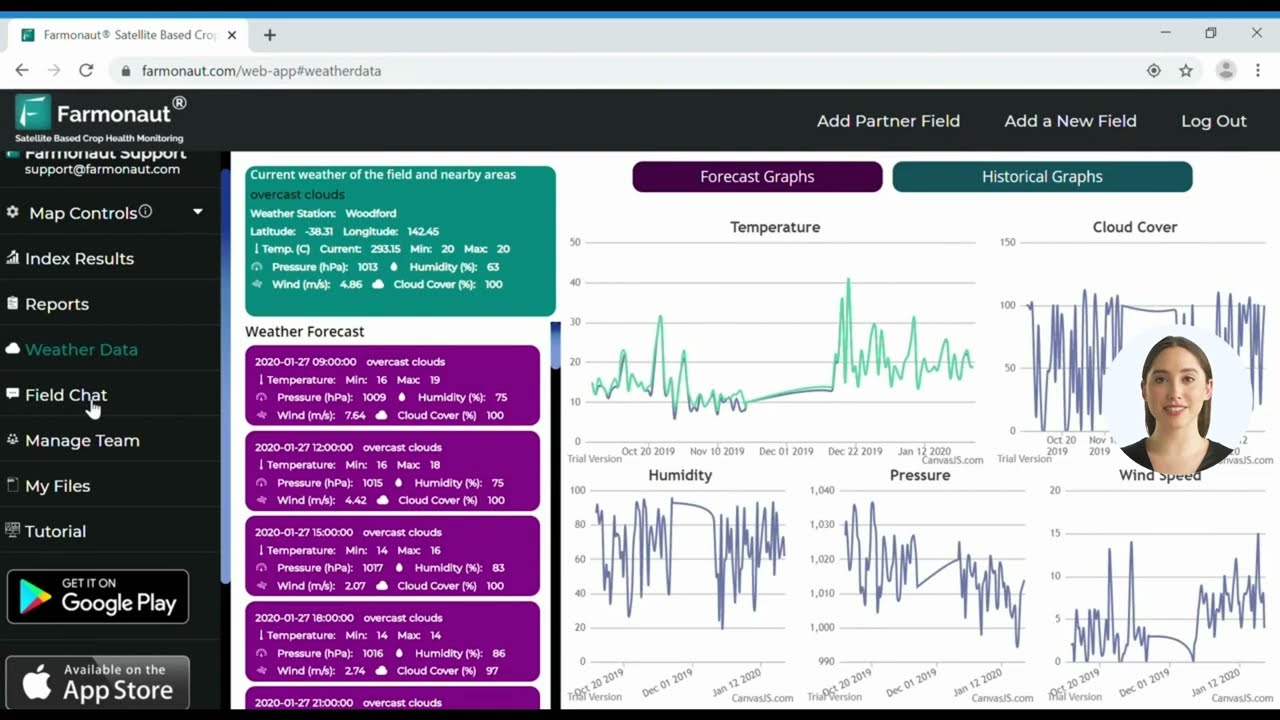
- 🔭 Satellite-Based Monitoring: Detects soil health, crop vegetation indices (like NDVI), irrigation irregularities, and environmental changes—remotely, securely, and at scale.
- 🤖 AI-Based Advisory (Jeevn AI): Delivers crop health, weather, and input recommendations—reducing the risk of poor decisions due to corrupted or false data.
- 🔗 Blockchain Traceability: Creates secure, tamper-proof records that support contractual compliance, reduce fraud, and assure buyers about input provenance.
- 🌍 Environmental Impact & Carbon Footprinting: Track and validate carbon emissions, compliance for green certifications, and promote sustainability via Farmonaut’s Carbon Footprinting product.
- 🚚 Resource & Fleet Management: Monitor, deploy, and track all farm vehicles/equipment securely—Fleet Management by Farmonaut ensures only authorized users operate mission-critical assets.
Learn more and access developer docs:
API Home |
API Developer Documentation
Start Secure Management Online Today
Let modern technology work for you—optimize farm efficiency, reduce cyber risk, and maintain rock-solid data integrity from soil to supply chain.
Integration, Sustainability, and Resilience Through Secure Systems
Strong farming online safety systems don’t operate in isolation. The most productive and resilient agriculture operations integrate their safety workflows directly into existing farm management platforms, ERP dashboards, and supply chain tracking tools.
- 🌳 Sustainability: Enforce sustainable practices and verify emissions with carbon footprinting tools, supporting both regulatory and market demands.
- 💼 Continuity: Reduce operational downtime, prevent crop losses, and speed-up disaster recovery with integrated, automated safety and backup solutions.
- 🔁 Holistic Risk Visibility: Centralize monitoring for data, operations, and security events—faster detection leads to faster recovery.

FAQ: Online Data Protection in Modern Agribusiness
-
What are “farming online safety systems”?
These are digital solutions and programs designed to protect farm data, software, networks, and people from cyber threats, unauthorized access, and operational disruption. They combine data governance, operational safety practices, and personnel training. -
Why is data protection essential in agriculture?
Farm data includes sensitive crop health reports, financial contracts, equipment details, and proprietary plans. Protecting this data prevents fraud, crop loss, downtime, and compliance issues—directly affecting farm productivity and profitability. -
Do these systems apply only to large, industrial farms?
No—smallholder, midsize, and large farms all benefit. While large farms face higher risks, even small operations are vulnerable without basic safety controls and regular data backups. -
How does online safety tie into sustainability?
By automating and protecting data records (including for carbon tracking and resource use), farms ensure compliance with eco-friendly practices and maintain uninterrupted supply chains. -
What role do platforms like Farmonaut play?
We at Farmonaut deliver secure, real-time satellite and AI-based monitoring, blockchain-powered traceability, and management tools that help farms reduce risk, comply with evolving regulations, and make better decisions with confidence. -
Where can I integrate farming safety management online tools?
Integration is possible across web, mobile, and API interfaces—enabling seamless use in remote offices, field operations, and supply chain branches.
Final Thoughts
The next generation of agribusiness safety and productivity gains will be defined by how effectively the industry embraces comprehensive farming online safety systems. By blending robust data governance, engineered operational controls, and continuous personnel training, farms can mitigate new and evolving cyber risks.
Whether optimizing irrigation, defending against ransomware, or verifying produce traceability, these systems deliver essential protection, continuity, and trust to all layers of agriculture. Remember:
- • Regularly update backups, software, and access permissions.
- • Leverage integrated, automated tools like those available from Farmonaut for maximum scalability.
- • Make training, compliance, and response drills a regular part of farm management.
The future belongs to those who build on strong, secure, and data-driven digital foundations—unlocking new productivity, resilience, and innovation for farms and agribusiness everywhere.
Discussion
Questions, corrections or field experience? Share them below. First-time comments are reviewed before they appear, and your email is never published.
No comments yet. Be the first to add a question or your experience.

 Godrej Agrovet
 Hayleys Agriculture
 Linx Agritech
 Adinet
 Save Your Soils
 GalaxEye Space
 Grandstream Algérie
 XOS Realty
 Geospatial Lab Africa
 Agro La Gándara
 HIPSAC
 ZOL Zimbabwe
 Juligerm
 AdBio
AdBio MISE Maroc
 NWNS
NWNS Red August Group
 Farm Inc
 WeMe Global
 Licence holder · Niger · Gold










