

Potatoes · Harvest and storage
Harvesting Potatoes for Storage: Timing, Curing, Dry Rot
Skin set, pulp temperature and a two-to-three-week cure decide how well potatoes keep. Fusarium dry rot only enters through wounds, so most of its control happens at the digger and in the first weeks in store.
Key takeaways
- Wait at least 14 days after vines die so skins set (Ontario harvest checklist, Spud Smart).
- Dig at 11–16°C (52–61°F) pulp; below 7°C tubers shatter-bruise, above 18°C soft rot and Pythium leak rise.
- Cure at 50–55°F with at least 95% humidity for 2–3 weeks (University of Idaho), then cool slowly.
- Dry rot has caused 6–25% storage losses (University of Idaho); it cannot enter intact or healed skin.
- Shrink and loss on the 2024 US crop reached 24.9 million cwt by 1 June 2025, about 6% of production in 13 states (USDA NASS).
In this article
- When to start harvesting potatoes for storage
- Pulp temperature: the digging window
- How to dig without bruising the crop
- Curing: heal wounds before you cool
- Cooling and holding conditions
- How dry rot gets into stored potatoes
- What storage losses look like in US stores
- Is a dry rot program worth it on your farm
- Harvest-to-storage checklist
- Storing potatoes on a small farm or at home
- Where field monitoring helps before harvest
- FAQ
Harvesting potatoes for storage works best when the vines have been dead for at least 14 days, the skins no longer rub off, and tuber pulp is between about 11°C and 16°C (52–61°F), according to the Ontario harvest checklist published by Spud Smart. After digging, hold the crop at 50–55°F with at least 95% humidity for two to three weeks so wounds heal, then cool slowly, as the University of Idaho dry rot guide advises.
That sequence matters because Fusarium dry rot, one of the most important storage rots of potatoes, can only enter through wounds. This guide walks through each step from vine kill to the holding bin. It adds US storage-loss charts from USDA data, a side-by-side table of curing advice from four regions, and a calculator to test whether a dry rot program pays on your own tonnage.
When to start harvesting potatoes for storage
Storage potatoes need mature skin. Skin that is still loose peels and scuffs on the harvester chain, and every scuff is an open door for rot. The fix is time between vine death and digging.
- Kill or let the vines die first. Killing vines when tubers reach size cuts the green mass going through the digger and starts skin set.
- Wait about two weeks. The Ontario checklist says potatoes for long storage should not be dug until vines have been dead for at least 14 days.
- Do the rub test. Dig a few tubers and rub the skin with your thumb. If it slips off easily, the Oregon State University Extension advice is to wait another week.
- Keep blight in check until the end. Northern Ireland’s DAERA potato management notes advise keeping blight sprays going until after haulm desiccation and allowing time for full skin set.
Late varieties and russets usually keep longer than early, thin-skinned types. Oregon State notes that red and thin-skinned potatoes have shorter storage life, while mature late-season potatoes can stay in good condition for seven to eight months in proper storage.
Too early, and you get thin skins, bruising and short storage life. Too late, and tubers sit in cold, wet or very warm soil, which raises the risk of soft rot, Pythium leak and pink rot and makes tubers harder to cure. Trial digs every few days in the last weeks give you the best read on both size and skin.

▶ A complete guide to growing potatoes, from choosing varieties to managing pests and diseases with satellite monitoring. · 13:10
Pulp temperature: the digging window
Tuber temperature at digging decides how easily potatoes bruise and which rots follow them into the store. Push a probe thermometer into the centre of a few tubers early in the morning and again in the afternoon.
| Pulp temperature | What happens | Source |
|---|---|---|
| Below 7°C (45°F) | Tubers are very prone to shatter bruise | Ontario checklist (Spud Smart) |
| Above 10°C (50°F) | Minimum for digging to limit dry rot | Cornell Vegetable Program |
| 11–16°C (52–61°F) | Best range for harvest | Ontario checklist (Spud Smart) |
| Above 16°C (60°F) | Avoid digging to reduce tuber disease | UC IPM |
| Above 18°C (64°F) | Soft rot and Pythium leak become likely | Ontario checklist (Spud Smart) |
| 21°C (70°F) | Higher pink rot risk if the fungus is present | Ontario checklist (Spud Smart) |
The Cornell Vegetable Program fact sheet says to harvest after skins are set and when pulp is above 50°F. The UC IPM potato harvest guidelines advise avoiding harvest when pulp is above 60°F. In a hot spell, dig in the cool early hours and stop in the afternoon. On a cold morning, start later.
Tuber water content matters as well. UC IPM explains that low water content makes tubers sensitive to blackspot bruise, while high water content makes them sensitive to shatter bruise. If the soil is very dry before harvest, a light irrigation can help. If it is waterlogged, wait for it to drain.
Chart
Key temperatures from field to store
°F; upper limits for each stage and where the dry rot fungus grows best
How to dig without bruising the crop
Harvest management is mostly bruise management. Every drop, sharp edge and empty chain section adds injuries, and dry rot, soft rot and Pythium leak use them to get in. The North Dakota State University bulletin on Fusarium dry rot gives a long anti-bruise checklist; these are the points that matter most.
- Keep drops short. Remove needless drops and keep every remaining drop as low as possible, including into trucks and bins.
- Keep the chains full. Run the digger chain about 1.2 to 1.5 times faster than forward speed, as the NDSU dry rot bulletin suggests, so soil cushions the tubers.
- Pad hard points. Put padding where tubers hit metal, and check that blades and shares are set right.
- Tarp loads. Cover every load to avoid sun and wind damage on the way to the store.
- Check daily. DAERA advises taking daily samples, washing them and “hot boxing” them to show bruises fast.
- Train the crew. The people on the harvester see damage first. Make sure they know what to look for and can stop the line.
Electronic bruise-detection devices ride through the harvester and record impacts. The Ontario checklist and the NDSU dry rot bulletin both list them as a way to find the exact points where a machine damages tubers.
Curing: heal wounds before you cool
Curing is the short warm period right after harvest when tubers form a corky layer (suberin) over wounds. Once that layer forms, the dry rot fungi cannot get through. The University of Idaho says minimizing wounds and promoting wound healing are the most important tools against Fusarium dry rot.
Regional advice is close, but not identical:
| Source | Temperature | Humidity | Length |
|---|---|---|---|
| Univ. of Idaho | 50–55°F (10–13°C) | At least 95% | 2–3 weeks |
| Cornell | About 55°F | Above 90% | Until wounds heal |
| DAERA (N. Ireland) | 12–15°C (54–59°F) | 85% (“dry curing”) | About 2 weeks |
| Oregon State (home) | Moderate | High | 7–10 days |
The UK approach dries the crop within 48 hours with positive ventilation and keeps humidity a bit lower, because DAERA says fast drying cuts silver scurf and soft rots. North American guides keep humidity higher to limit shrink. Both agree on a temperature in the low to mid 50s °F, good air movement and enough time for healing. Warmer air heals faster, but Idaho notes the main dry rot species grows best at 68–77°F, so curing too warm helps the fungus too.
Cooling and holding conditions
After curing, bring the temperature down to the holding level for your market. Cornell advises dropping it slowly so water does not condense on tubers, since wet surfaces invite soft rot bacteria into dry rot lesions. Store as cool as your market allows.
- Table potatoes: 40–46°F (4–8°C), says Oregon State. Above 46°F, expect storage life to fall to two or three months.
- Processing potatoes: often held warmer to protect fry and chip colour, because Oregon State notes that below 38°F sugars build up and fried products darken.
- Seed potatoes: DAERA describes holding seed at 3–4°C until close to planting.
Keep the store dark, because light turns tubers green. Keep air moving through the pile and keep humidity high, since tubers are about 80% water and shrivel in dry air. Check temperature at several heights in the pile, not only in the plenum.
Colder air slows dry rot but does not stop it. Idaho notes the disease can still develop at the lowest temperatures used in potato storage. That is why the work at harvest and curing carries most of the weight.
How dry rot gets into stored potatoes
Cornell calls Fusarium dry rot probably the most important cause of postharvest potato losses in the northeastern United States and nationwide. Several Fusarium species cause it; Fusarium sambucinum is the main one in the Northeast and in Idaho.
What it looks like: a dry, light to dark brown or black rot that starts at a bruise or cut. The surface sinks and wrinkles, and inside you find hollow cavities with white, yellow or pink mould. Soft rot bacteria often follow, turning a dry lesion into a wet, smelly one.
How bad it gets: the University of Idaho reports storage losses of 6–25% from dry rot. The NDSU bulletin notes seed lots are allowed 2% dry rot at shipping, and grading may be needed to meet that tolerance.
Why fungicides are only part of the answer: Cornell records that F. sambucinum became resistant to thiabendazole and other benzimidazoles, with resistance found in the US in 1992. Idaho says these products are not recommended in the Pacific Northwest. Newer postharvest products exist, but coverage of the whole tuber surface is essential, and trade partners may set residue limits. Always read and follow the product label, check local rules and ask your extension office or a licensed adviser before treating tubers.
Cornell adds two store rules worth printing: never grade tubers and put them back into storage, because it spreads the disease; and market lots with significant dry rot as soon as you can.
What storage losses look like in US stores
USDA tracks how much of the crop shrinks or is lost in storage in the main potato states. For the 2024 crop, shrink and loss built up month by month through the storage season, from 12.7 million cwt on 1 December 2024 to 24.9 million cwt on 1 June 2025, according to the USDA NASS Potato Stocks report of December 2025. Against 421 million cwt produced in those states, that is roughly 6% of the crop.
Chart
Share of 2025 crop still in storage on 1 December 2025
Stocks as a percent of 2025 production, selected states
For the 2025 crop, stocks on 1 December 2025 were 270 million cwt, 66% of production in the 13 states. By 1 April 2026, stocks were 127 million cwt and season-to-date shrink and loss was 20.0 million cwt, down 3% on a year earlier, per the NASS April 2026 Potato Stocks release. Shrink includes water loss and rot together, so these numbers are the ceiling for what better harvest and curing can save, not a dry rot figure.
Stores in different states hold very different shares of their crop. Oregon and Colorado still held more than three-quarters of their 2025 crop on 1 December, while Washington held 59%.
Chart
Accumulated shrink and loss, 2024 US potato crop
Million cwt, 13 major states, first day of each month
Is a dry rot program worth it on your farm
Better curing, slower harvest speeds, padding and a postharvest treatment all cost money. The calculator compares the value of the potatoes you would save with the cost of the extra steps. Use your own numbers; the defaults are examples set near break-even, not benchmarks.
Try the numbers for your own farm below.
Calculator
Does a dry rot program pay on your stored crop?
Enter your stored volume, expected loss, price and the cost of extra steps.
- Potatoes saved: 900 cwt
- Value of potatoes saved: 9,000 $
- Cost of the program: 9,000 $
Example values only, set near break-even; they are not benchmarks or forecasts. The University of Idaho reports dry rot storage losses of 6–25%. Use your own contract or local price and your own cost for padding, curing energy or treatment. Check product labels and get professional advice before using any postharvest fungicide.
Harvest-to-storage checklist
- Clean and disinfect the store, bins and handling equipment before the first load.
- Kill vines on time and wait about 14 days for skin set.
- Rub-test skins and probe pulp temperature each morning.
- Dig only inside the 11–16°C (52–61°F) window where you can.
- Keep chains full, drops short and loads tarped.
- Sort out cut, rotten and green tubers before they enter the store.
- Cure at 50–55°F with high humidity and steady airflow for two to three weeks.
- Cool slowly to the holding temperature for your market.
- Walk the store weekly and sample tubers from several depths.
- Ship affected lots early and never re-grade back into the bin.
Storing potatoes on a small farm or at home
Small growers and gardeners can follow the same logic with simple tools. Oregon State Extension suggests reducing watering in mid-August so vines die back, then waiting for skins to set before digging.
Brush off soil from sandy ground, or rinse sticky clay and let tubers dry fully. Cure in a dark, airy spot for 7–10 days. Then keep them at 40–46°F in perforated bags or ventilated crates, for example in a cool basement, insulated garage or a fridge set in that range. Use any cut or damaged tubers within the first month, because damaged potatoes do not store well and may spread decay.
Do not save sprouted or shriveled potatoes to plant next spring. Oregon State recommends planting certified, healthy seed potatoes instead, because stored tubers can carry viruses.
Where field monitoring helps before harvest
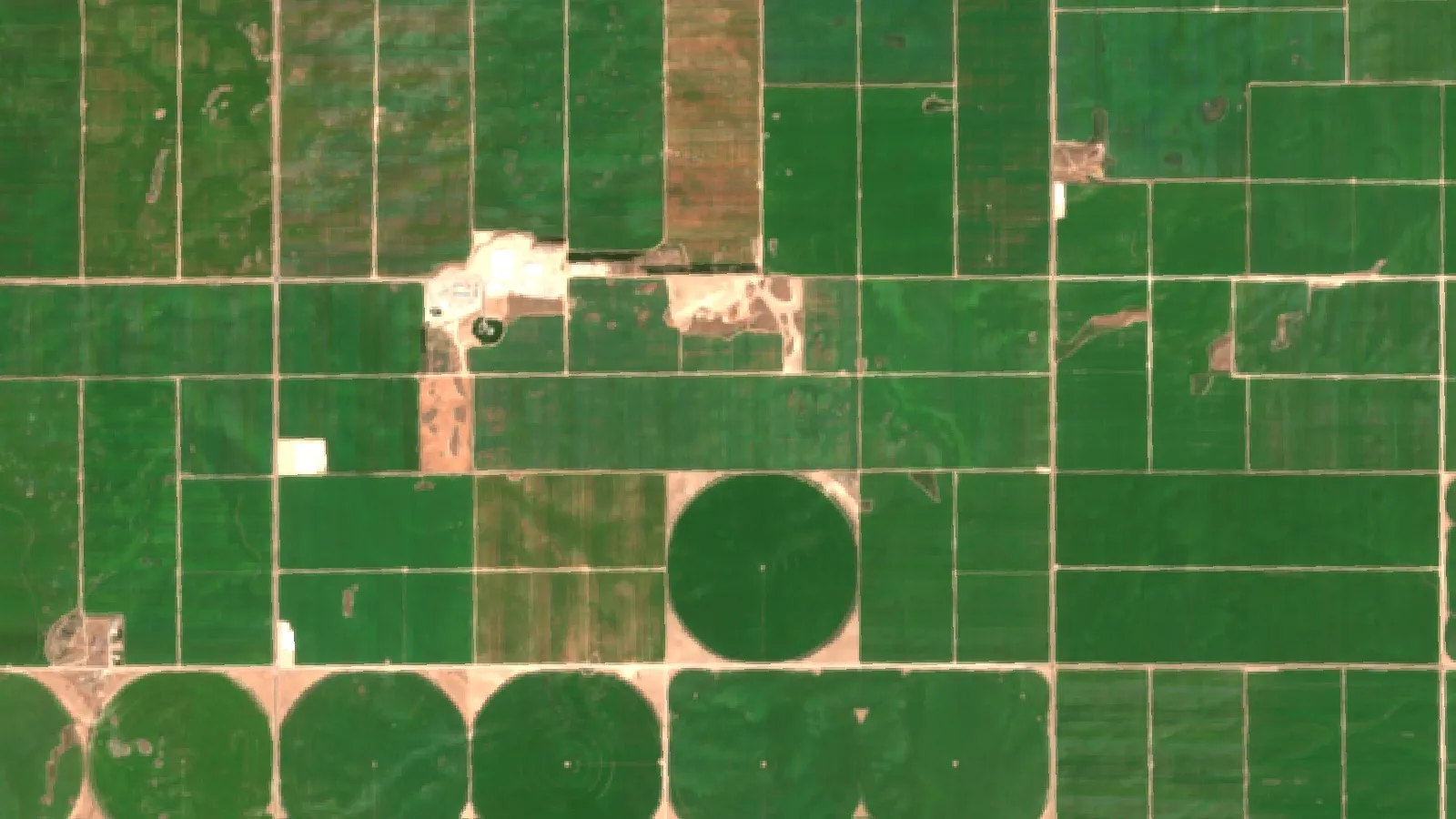
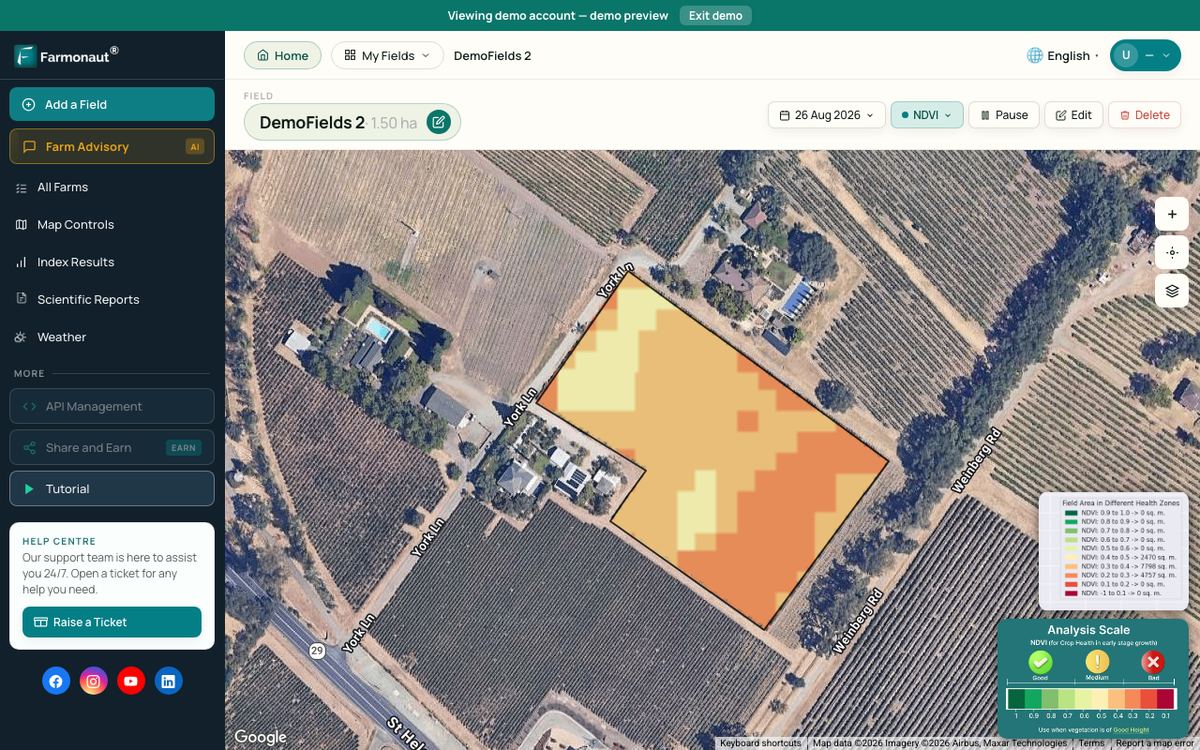
Most dry rot control happens at the digger and in the store, but field timing starts earlier. Knowing which blocks are senescing first helps you plan vine kill and the digging order so each field gets its two weeks of skin set. Farmonaut Satellite + AI Farm Monitoring System maps crop vigour across each field from satellite images through the season, which can show uneven ripening or stressed areas worth a trial dig. For growing-season advice, see our guide to potato farming techniques for high yield.
Satellite data does not measure pulp temperature, skin set or bruising. Those still need a thermometer, a thumb and a daily sample bag.
Related pages on our site: agribusiness admin app, crop loan and insurance verification, fleet management, product traceability, carbon footprinting, satellite and weather API docs and the Farmonaut app.

▶ How to monitor your fields with Farmonaut’s web app using satellite crop health maps. · 8:43
Related reading on this site: Best Soil for Sweet Potatoes: Yield Tips & Kennebec Guide.
FAQ
How long should potatoes stay in the ground after the vines die?
For long storage, about two weeks. The Ontario harvest checklist says at least 14 days after vines die, so the skin is fully set. Rub a few tubers; if skin slips off, wait longer.
What temperature should potatoes be cured at?
Most North American guides say 50–55°F (10–13°C) with high humidity for two to three weeks. Northern Ireland’s DAERA uses 12–15°C at about 85% humidity for about two weeks.
Can you stop dry rot once it starts in storage?
Not fully. Cold slows it, but the University of Idaho notes it can still develop at the lowest storage temperatures. Market affected lots early and never re-grade tubers back into storage.
Should I wash potatoes before storing them?
Only if the soil is sticky clay. Brush off dry soil instead. If you do rinse, make sure tubers are completely dry before they go into storage, as Oregon State advises.
Why do stored potatoes turn sweet?
Below about 38°F, starch turns to sugar. Oregon State says this makes fried potatoes darker, so processing crops are often held warmer than table potatoes.
Farmonaut crop monitoring
Watch your potato fields ripen from space
Draw your fields once and Farmonaut shows satellite crop vigour maps through the season, on web, Android or iOS, to help plan vine kill and digging order.



Sources
- University of Idaho Extension, Fusarium dry rot (IPM page): uidaho.edu
- Cornell Vegetable Program, Fusarium Dry Rot of Potato (updated May 2021): vegetables.cornell.edu
- Oregon State University Extension, Best practices for harvesting and storing homegrown potatoes (2024, reviewed 2025): extension.oregonstate.edu
- DAERA Northern Ireland, Potato management notes: daera-ni.gov.uk
- UC IPM, Potato Pest Management Guidelines: Harvest: ipm.ucanr.edu
- Secor, Preston, Gudmestad and Lamey, Fusarium Dry Rot of Potatoes, NDSU Extension bulletin (hosted by Northwest Potato Research Consortium): nwpotatoresearch.com
- USDA NASS, Potato Stocks, 17 December 2025: esmis.nal.usda.gov
- USDA NASS, Potato Stocks, February 2026: esmis.nal.usda.gov
- USDA NASS, Potato Stocks, April 2026: esmis.nal.usda.gov
- Spud Smart, Updated checklist for a successful harvest of the storage crop (Ontario): spudsmart.com
Discussion
Questions, corrections or field experience? Share them below. First-time comments are reviewed before they appear, and your email is never published.
No comments yet. Be the first to add a question or your experience.

 Zerella Group
 Agroes
 Etech Consulting Madagascar
 Vestlandsforsking
 Agritein
 Delicio
 WB Dev
 Sama Premium
 Prochecker
 Tres Valles
 LACOS Geoinformation
 Magrifly
 LatConnect 60
 WebsEdge
 Blickwinkel
 Agricultural Credit Policy Council
 Marei Nursery
 eKGIS
eKGIS Mostas Tech
 Andex
Andex
 Exploration consultancy · South Africa · Gold
 Licence holder · Niger · Gold
 Licence holder · Nigeria · Gold + lithium










