

Kingdom Farming: Restore Abandoned Lands, 7 Key Tips
“Over 30% of global land is degraded—kingdom farming can help restore millions of abandoned hectares sustainably.”
Table of Contents
- Introduction: The Kingdom Farming Opportunity
- Why Restore Abandoned Lands?
- 7 Key Tips for Kingdom Farming Restoration
- Comparison Table: Sustainable Practices & Impacts
- The Role of Technology in Kingdom Farming
- Challenges & Opportunities
- Key Insights, Tips, and Highlights
- FAQ: Kingdom Farming & Land Restoration
- Farmonaut Subscription Plans
- Conclusion: The Future of Kingdom Farming
Introduction: The Kingdom Farming Opportunity
Kingdom farming, kingdom new lands farmers not farming. This phrase encapsulates a vital paradox: amidst a shifting global context of land use and stewardship, vast tracts of abandoned or set-aside lands quietly await regeneration. At this crossroads where tradition meets innovation, lies the potential for kingdoms, rural communities, and local farmers to restore productivity, biodiversity, and resilience through intentional action and integrated planning.
In this comprehensive guide, we unravel how kingdom farming — an approach that blends age-old wisdom with modern techniques — can restore idle lands, revive rural economies, sustain ecosystems, and meet the demands of today’s agriculture, forestry, and mining landscapes. Across the following sections, we share transformative practices and actionable strategies for reclaiming abandonments, heightened by cutting-edge technology and a shared commitment to lasting stewardship.
Why Restore Abandoned Lands?
- Productive Potential: Untapped and fallow plots represent missed opportunities for growing food, timber, and resources needed by both urban and rural populations.
- Ecosystem Resilience: Degraded sites lose soil fertility, biodiversity, and water retention — weakening surrounding ecosystems and increasing vulnerability to climate shocks.
- Rural Livelihoods: Restored lands can bolster income for farmers, foresters, and local communities, diversifying livelihoods and enhancing security.
- Climate Change Mitigation: Regenerating carbon-rich soils and planting native trees and cover crops helps sequester carbon, regulate local climate, and reduce greenhouse gas emissions.
- Integrated Governance: Kingdom-wide plans that address farming, forestry, and mining needs can strike a harmonious balance while supporting progressive restoration and social equity.
“Integrated land use boosts soil biodiversity by up to 50%, enhancing resilience and productivity in restored ecosystems.”
7 Key Tips: Kingdom Farming, Kingdom New Lands Farmers Not Farming
The journey to restore abandoned lands calls for a thoughtful blend of ecosystem knowledge, community participation, and modern technology. Here are 7 strategic, sustainable tips to kickstart regeneration within the kingdom farming paradigm:
-
#1: Integrated Land-Use Planning
Assess, map, and prioritize abandoned and marginal lands for restoration. Harmonize agriculture, forestry, mining, and infrastructure objectives under a coordinated governance framework. -
#2: Soil Health First—Remediation & Conservation
Test and amend soils, using cover crops, organic amendments, and reduced tillage to rebuild fertility, structure, and microbial diversity — the foundation of productive regeneration. -
#3: Agroforestry & Diversified Cropping
Plant native trees, integrate crops and timber species, and use intercropping to create resilient, multi-layered landscapes that maximize sunlight, water, and nutrient flows. -
#4: Sustainable Forestry Practice
Restore forest cover on steep, fallow, or erosion-prone sites using sustainable silviculture, selective harvesting, and native species plantings. Buffer waterways via riparian corridors to protect habitat and watersheds. -
#5: Responsible Mining & Land Reclamation
Implement progressive reclamation and post-mining restoration plans. Limit surface disruption, rebuild topsoil, and reestablish native vegetation, converting extractive sites into productive or ecological assets. -
#6: Water Management for Resilience
Infiltrate and retain water with swales, conservation buffers, and restoration of wetlands and springs. Protect water quality and availability for crops, livestock, and communities. -
#7: Community Stewardship & Knowledge Integration
Center local and indigenous stewardship. Blend traditional land-use wisdom with modern technology and governance for equitable, long-term success.
Restoring kingdom new lands farmers not farming is not about simply planting more; it’s about rethinking systems — connecting farmers, foresters, miners, and decision-makers in shared stewardship for resilient, productive, and biodiverse landscapes.

Comparison Table: Sustainable Practices & Their Impacts
| Tip/Practice | Description | Estimated Soil Health Improvement (%) | Estimated Biodiversity Boost (%) | Estimated Resilience Increase (%) | Practical Example |
|---|---|---|---|---|---|
| Integrated Land-Use Planning | Coordinating priorities across agriculture, forestry, and mining for optimized land use | 25–40% | 20–30% | 30–40% | Developing village-level land-use maps with participatory GIS tools |
| Soil Health First | Organic covers and amendments for erosion control and microbiome restoration | 40–60% | 15–25% | 20–35% | Applying compost and cover crops after mining site closure |
| Agroforestry & Diversified Cropping | Interplanting trees with crops for multi-layered productivity | 30–45% | 40–60% | 35–45% | Mixing fruit trees, grains, and legumes on abandoned fields |
| Sustainable Forestry | Selective harvesting and planting native species for watershed protection | 20–30% | 30–50% | 40–50% | Reforestation on eroded slopes with fast-growing natives |
| Mining Reclamation | Progressive site restoration and topsoil rebuilding after extraction | 50–65% | 15–35% | 30–45% | Converting exhausted quarries to woodland meadows |
| Water Management | Swales, buffers, and spring restoration to support crops and communities | 25–35% | 10–25% | 30–40% | Restoring seasonal wetlands next to rural villages |
| Community Stewardship | Merging traditional/local knowledge with modern restoration governance | 15–25% | 20–35% | 15–30% | Community-led restoration festivals and land-use planning meetings |

The Role of Technology in Kingdom Farming
The future of kingdom farming is powered by innovation, enabling us to make effective stewardship decisions at scale. Satellite technology, AI advisory systems, and blockchain-based traceability are transforming our ability to monitor, analyze, and manage lands for optimal productivity and sustainability.
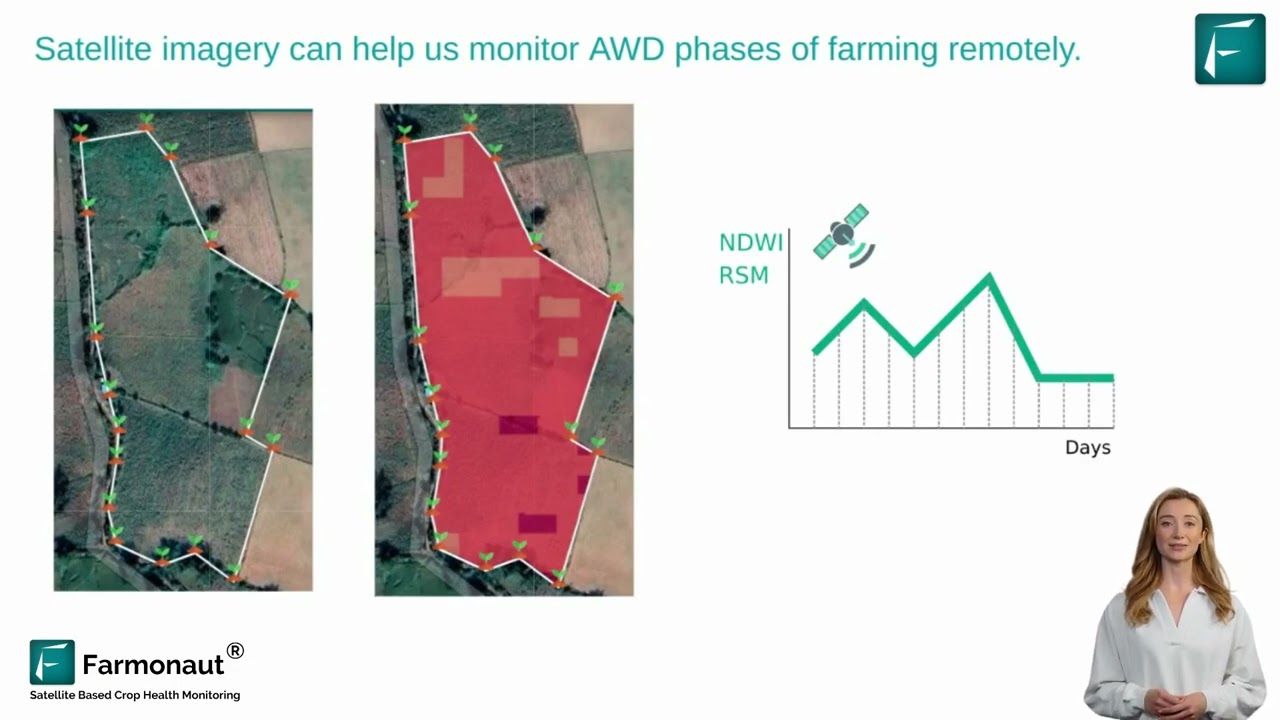
- Real-Time Monitoring: Use satellites to track vegetation, soil moisture, and land-use changes across vast and remote lands.
- AI-Powered Advisory: Systems like Jeevn AI deliver custom advice for farming, forestry, and mining resilience.
- Blockchain Traceability: Ensure resource supply chain integrity from field, forest, or mine to end market. Explore how our Traceability Tools enhance transparency and consumer trust.
- Carbon Footprint Tracking: Accurately measure emissions reduction and carbon sequestration across restoration sites with tools like Farmonaut Carbon Footprinting.
- Environmental Compliance: Instantly assess ecosystem impacts for planned infrastructure or extraction using geospatial analytics.

Satellite-based insights can be accessed from your phone or browser via our web and mobile apps. Harness AI analysis to monitor crop health, plan restoration, and optimize inputs — no specialized equipment required.



- Save time decision making with real-time, remote field intelligence
- Increase yields and reduce resource use by targeting interventions where needed most
- Enhance transparency across supply chains with blockchain traceability
- Meet environmental goals via precise carbon, biodiversity, and land health tracking
- Access financing and insurance for farms and mines with satellite-based verification

Challenges & Opportunities in the Kingdom Farming Context
As we pursue restoration of abandoned lands, it is crucial to recognize both the tensions and synergies between sectors like agriculture, forestry, mining, infrastructure, and defense. Effective kingdom farming frameworks support planning that reduces conflicts and achieves lasting gains in ecosystem resilience and community livelihoods.
Opportunities
- Diversified income: Blending food, timber, and mineral resources can help rural communities weather price shocks and climate impacts.
- Enhanced resilience: Agroforestry, conservation buffers, and community stewardship build natural protections against floods, drought, and land degradation.
- Market Access: Modern traceability and restoration create opportunities for export of certified sustainable products.
- Social cohesion: Integrated governance gives stake and voice to all — from farmers to miners, foresters to young people returning to the land.
Challenges
- Conflicting Land Claims: Balancing tenure, customary rights, and newly planned uses requires inclusive governance.
- Short-Term Extraction: Mining or plantation forestry can undermine restoration if not coupled with progressive reclamation.
- Lack of Data: Without satellite-based monitoring, it’s easy to lose track of land degradation or recovery progress.
- Climate Uncertainties: Drier or unpredictable weather demands more resilient cropping systems and forest management.
- Investment Gaps: Restoration and stewardship need upfront resources — a challenge for many rural or indigenous communities.
Modern infrastructure and defense projects play a key role in kingdom farming restoration — by investing in integrated planning, compensatory planting, and environmental impact tracking, value is created for communities, biodiversity, and future generations.
Solutions for 21st Century Kingdom Farming
- Adopt geospatial platforms to map, monitor, and analyze lands for restoration across all sectors. Our large-scale farm management solution supports this at any scale.
- Champion community-led governance, respecting traditional land tenure and collaborative land-use planning.
- Support blended finance (public, private, community) to fill restoration investment gaps, with verification powered by satellite monitoring.
- Design resilient cropping and forestry systems that reduce risk from climate variability and market shifts.
- Promote knowledge sharing through mobile apps, field schools, and digital extension services.

Key Insights, Tips, and Highlights
Attempting restoration without regular assessment leads to wasted effort and fragmented progress. Continuous monitoring — using satellite and on-the-ground data — is essential for adaptive management.
Integrated land-use and restoration projects can reduce on-farm input costs by 20–40% over 3–7 years, while boosting resilience to drought and market shocks.
Discover new restoration opportunities by analyzing recent satellite imagery. Spot emerging degradation, invasive species, or untapped corridors rapidly and cost-effectively.
Kingdom farming supports the “triple win”: securing food production, climate resilience, and rural employment — all while rebuilding natural ecosystems.

- Soil health: Key metric for kingdom farming; restoration judged by organic matter, structure, and biodiversity improvement
- Water retention: Best practices increase infiltration and reduce runoff, stabilizing yields and habitats
- Vegetation cover: Use satellite imagery to track canopy gain and carbon sequestration
- Biodiversity returns: Agroforestry corridors and buffers become wildlife havens, boosting ecosystem services
- Community engagement: Participatory monitoring boosts project adoption and ensures equitable benefit-sharing
- Farmonaut API – Automate satellite data pipelines for land and restoration monitoring.
- API Developer Docs – Integrate satellite-driven insights into your custom applications.
- Fleet Management Tools – Coordinate logistics for multi-site projects, reducing time and fuel costs.

FAQ: Kingdom Farming & Land Restoration
What is kingdom farming?
Kingdom farming is a comprehensive, multi-sector approach blending traditional stewardship and modern innovation to manage lands for agriculture, forestry, mining, and related infrastructure within a kingdom-wide planning context. It aims to harmonize productivity with ecosystem health, resilience, and social wellbeing.
Why are abandoned lands important in this context?
Abandoned lands represent untapped potential. Kingdom new lands farmers not farming is both a challenge and an opportunity—restoring these lands can increase food and resource security, sequester carbon, diversify livelihoods, and rebuild ecosystem resilience for future generations.
Can farming, forestry, and mining really coexist harmoniously?
Yes. Integrated planning and progressive reclamation practices allow these sectors to operate in tandem, reducing tension and boosting overall biodiversity and productivity when guided by shared stewardship values.
How does Farmonaut support kingdom farming restoration?
We provide affordable, satellite-based monitoring and AI-driven advisory tools for fields, forests, and mining sites worldwide. Our platform (try our app) empowers informed decisions, resource optimization, and transparency via blockchain. From land-use change detection to carbon tracking and supply chain traceability, we enable sustainable operations across sectors.
How can communities finance and sustain their restoration efforts?
With satellite-based verification and blockchain traceability, communities can attract impact investment, access loans/insurance, and qualify for sustainability-linked market premiums. Farmonaut (see crop loan and insurance tools) proves compliance for both investors and regulatory bodies.
Farmonaut Subscription Plans
Choose the right plan for integrated kingdom farming, restoration, and rural resource management. Instantly access satellite monitoring, AI advisory, and blockchain traceability — scale your operations, from individual fields to kingdom-wide land portfolios:
Conclusion: The Future of Kingdom Farming
At the heart of kingdom farming, kingdom new lands farmers not farming stands a compelling recognition: land stewardship is not just about yields, but about sustaining the social, ecological, and economic fabric of rural and urban communities. By restoring and integrating abandoned lands, weaving traditional knowledge with modern technology, and aligning sectoral goals, kingdoms can convert unrealized potential into landscape-scale prosperity, resilience, and security.
With strategic planning, innovative tools, and committed community participation, we can restore ecosystems, revive local economies, and ensure food, resource, and defense for future generations. This is the promise — and the power — of modern kingdom farming.

 Field Capacity
 Abhishta Agri
 SP Farms
 Indosistim Teknologi
 Liquify Digital
 CU Foods
 BeyondTech Global
 Rouge VC
 AgroGreen Dynamics
 AgroRisk
 Oath Inc
 Reddane Farming
 Esri North East Africa
 Cresol
 MDCV UK
 Etech Consulting Madagascar
 Vestlandsforsking
