

Local Farm App: 7 Powerful Ways Tech Boosts Farming Success
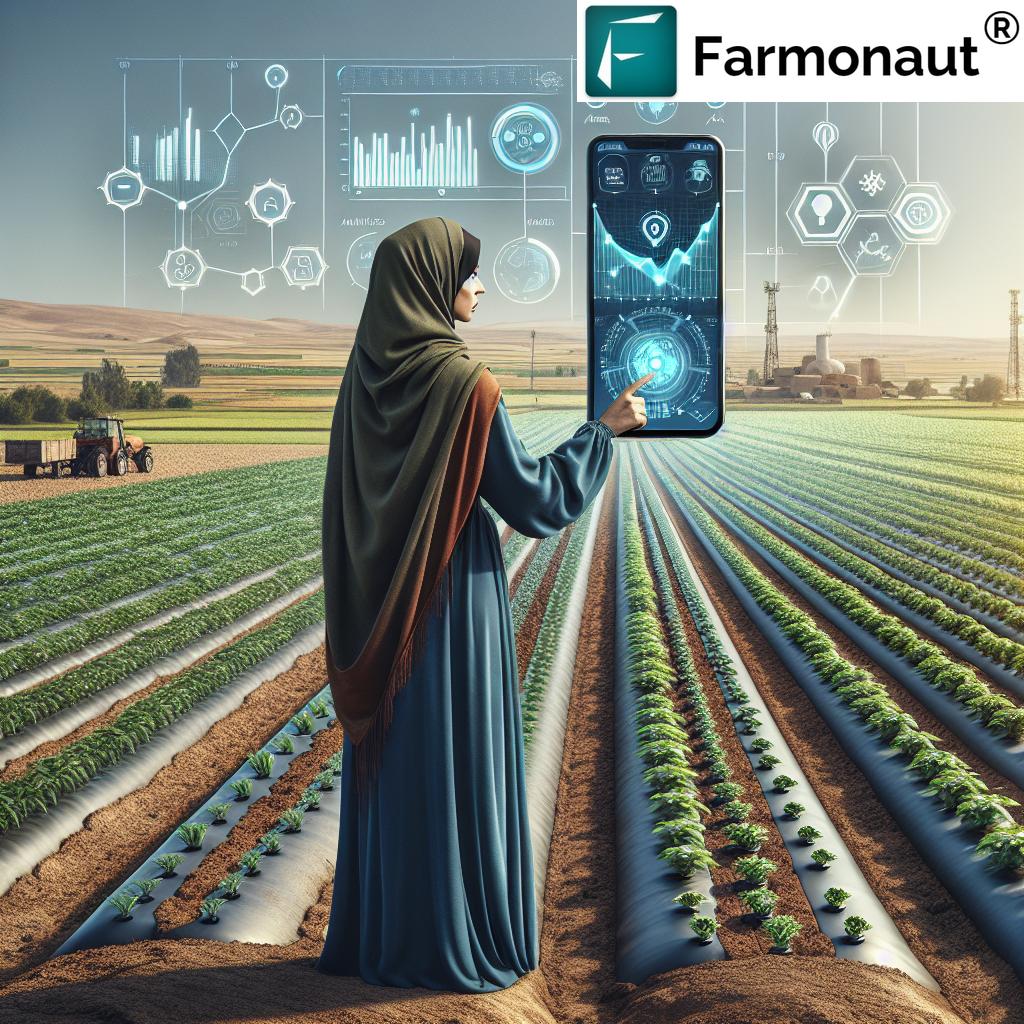
In the ever-evolving landscape of agriculture, technology is radically transforming the way we farm, produce food, and manage agricultural resources. Local farm apps are at the heart of this revolution, providing farmers and agronomists with digital solutions for farming that are practical, effective, and tailored to the unique needs of their communities. Today, we’re witnessing how these apps – leveraging mobile technology in agriculture, satellite data, artificial intelligence, and blockchain – are empowering farmers to monitor crop health, optimize resource management, implement sustainable farming practices, and boost overall productivity.
Our shared goal? Enhancing the connectivity and success of farming communities through technology-driven, accessible, and affordable tools and services. In this comprehensive guide, we’ll explore the top seven powerful ways local farm apps are changing agriculture, drawing on the latest industry trends, analytics, and the remarkable innovations offered by companies like Farmonaut.
The Rise of Local Farm Apps
Let’s begin with a fundamental shift: The smartphone—now an everyday necessity—has become a critical instrument in agricultural operations. As smartphones reach deep into rural pockets and internet connectivity expands, farmers in regions from Punjab to the Punjab’s Canadian diaspora are increasingly turning to local farm apps for farmers to manage their crops and fields.
These apps are designed to address specific challenges farmers face: limited access to agricultural information, irregular market opportunities, inefficient resource management, and the need for timely, accurate advisory services. Mobile technology in agriculture—from precision agriculture satellites to community-driven marketplaces—offers powerful solutions and real-time guidance that was previously unimaginable.
By harnessing the power of digital channels, we now have access to a range of features that are truly transforming agriculture at every level.
Why Local Matters: Community & Regionally-Tailored Apps
While global platforms play an important role, local farm apps are vital because they offer:
- Regionally-adapted agronomic recommendations based on local soil, water, weather, and crop varieties.
- Support for local languages and dialects, making the technology more accessible for all farmers.
- Marketplaces that connect directly with local buyers, processors, and consumers, supporting fair trade and reducing food miles.
- A true community for farming innovations, where area-specific best practices, pest alerts, and regulatory updates are shared in real-time.
By focusing on local needs and realities, these applications are more relatable and more impactful for their target users.


Key Features & Benefits of Local Farm Apps
Let’s explore the principal features, innovations, and benefits that make local farm apps essential for modern agriculture.
1. Crop Health Monitoring and Advisory Services
Crop health monitoring is at the core of any farm app for farmers. By integrating mobile technology, AI-driven diagnostics, and advanced data analytics, these apps enable us to:
- Identify and diagnose issues such as pests, diseases, nutrient deficiencies, or water stress at an early stage through satellite imagery or by uploading images of affected plants.
- Receive real-time, actionable recommendations for intervention and management—reducing crop losses and improving yields.
- Access expert advisory services via automated systems or remote agronomists, bringing professional knowledge directly to the field.
For instance, Farmonaut’s satellite-based analysis brings affordable, high-frequency crop health monitoring using NDVI, SAVI, and other vegetation indices, along with hyper-local weather data, directly to even the smallest of farms. This data-driven approach empowers farmers in making smarter choices for irrigation, fertilization, and pest control—transforming traditional farming into precision agriculture.
The importance of crop health monitoring cannot be overstated. Real-time alerts and plant disease detection limit the spread of issues and minimize the use of pesticides, supporting both sustainability and profitability. This is the foundation of digital solutions for farming.
2. Market Access and Trade Facilitation
Access to fair and efficient markets is crucial for farmers’ livelihoods. Local farm apps have transformed market access for farmers by:
- Connecting sellers (farmers) directly with buyers (traders, aggregators, retailers, and end consumers), increasing profit margins by eliminating expensive intermediaries.
- Supporting crop sales through digital platforms, streamlining contracts, logistics, and payments.
- Providing live price updates, demand forecasts, and personalized trade advisory based on local conditions.
Platforms centered around local trade ensure our produce reaches the right audience at fair prices, encouraging sustainable commerce and boosting the rural economy.
How Farmonaut Facilitates Better Market Integration
While Farmonaut focuses on digital crop monitoring, its technology helps support digital traceability that enhances buyers’ trust and enables financial institutions to verify farms for crop loans and agricultural insurance. This verification is essential for smooth operations and risk management in trade, especially for smallholder farmers.
3. Resource Management and Optimization
Efficient use of resources—water, fertilizers, labor, and fuel—is at the heart of sustainable agriculture. Advanced resource management tools within local farm apps offer:
- Precision tracking of water use, soil moisture, and crop nutrient status using satellites and sensors.
- Input optimization recommendations, ensuring that only the required amount of fertilizers, water, or pesticides are applied—reducing costs and environmental impact.
- Labor, fleet, and equipment management via geolocation and scheduling tools (see Farmonaut’s fleet management solutions).
For example, Farmonaut’s platform integrates live satellite data for field-level water and crop monitoring—enabling us to take timely action, avert irrigation stress, and optimize every drop of water and kilogram of nutrient applied. This dramatically cuts losses and improves yields.
Farmonaut Agro Admin App is specifically designed for large-scale farm management, making resource optimization seamless across sprawling plantation and agricultural enterprises.
Streamlining operations through digital agricultural resource management also paves the way for compliance and reporting in sustainable farming certifications.
4. Educational Content and Community Building
Local farm apps are not just management tools; they form a community for farming innovations. They provide:
- Best practice guides and how-to videos about sustainable farming practices and digital tools.
- Interactive forums or chat groups where farmers ask questions, report issues, and share innovations.
- Localized alerts (such as pest outbreak and weather warnings) alongside training on new techniques (e.g., integrated pest management).
By fostering knowledge sharing and continuous learning, these apps help bridge generational, educational, and digital divides within agricultural communities. This sharing is essential for the rapid adoption of new, innovative solutions and driving up community-level yields.
5. Sustainable Practices and Environmental Monitoring
Environmental stewardship and long-term farm viability go hand-in-hand. Farm apps today offer:
- Tracking of the farm’s carbon footprint—helpful for sustainability certifications, market requirements, and climate mitigation.
- Tools to monitor and report on water use, soil health, and biodiversity.
- Recommendations to reduce chemical use and implement regenerative or organic farming approaches.
With Farmonaut’s carbon footprinting platform, farmers and agribusinesses can monitor emissions in real time, adjust farming operations, and demonstrate their commitment to environmentally responsible agriculture. These functions boost eligibility for green financing and access to eco-conscious consumer markets.
6. Transparency, Traceability, and Blockchain Technology
Blockchain technology is revolutionizing agri-supply transparency. Many leading farm apps, like Farmonaut, integrate blockchain-based modules to ensure:
- Every stage of the product’s journey—from seed to harvest to market—is digitally recorded, verifiable, and tamper-proof.
- Farmers gain tools to establish product provenance, enhancing trust with consumers and corporate buyers.
- Product traceability solutions improve market access, fight counterfeiting, and enable participation in premium value chains (such as organics or fair-trade).
With demand growing for ethically sourced, traceable food, such digital solutions are not just future-proof—they’re essential.
7. Farm Productivity Tools and Digital Integrations
In today’s data-driven world, farm productivity tools extend far beyond simple mapping or record-keeping. Leading farm apps now deliver:
- Real-time weather forecasts and historical analytics to support proactive planning.
- Customizable farm dashboards for monitoring everything from planting schedules to input inventories, fleet, and operational costs.
- Seamless API integrations—like Farmonaut’s API and developer documentation—to power everything from yield estimations to government crop subsidies, financial lending, and insurance verification.
By leveraging constant data flow, we can confidently make data-backed decisions that maximize yields, minimize costs, and mitigate risk—even at scale. Take advantage of cloud-based, web, Android, and iOS platforms for farm oversight anywhere, anytime.



Comparative Benefits of Local Farm Apps in Agriculture
| Tech Feature | Estimated Benefit | Impact on Farming Success |
|---|---|---|
| Crop Health Monitoring & AI-based Advisory | +20% yield, -25% crop loss | Improved detection, timely intervention, higher productivity |
| Market Access & Trade Facilitation | +15% income, +30% faster payments | Better pricing, lower dependency on middlemen, improved cashflow |
| Resource Management (Water, Fertilizer, Fleet) | -40% resource wastage, +28% efficiency | Optimized usage, sustainable operations, reduced costs |
| Educational Content & Community Forums | +18% adoption of new practices | Collaborative problem-solving, rapid knowledge transfer |
| Sustainable Practices & Environmental Monitoring | -22% emissions, +24% compliance scores | Stronger sustainability, eligibility for eco-labels, reduced footprint |
| Transparency & Product Traceability (Blockchain) | +35% trust, +17% premium market access | Reduced fraud, greater consumer confidence, supply chain strength |
| Productivity Tools & Digital Integrations (APIs, Dashboards) | +30% time saved, +12% asset life | Data-driven strategy, scalability, reduced admin burden |
Challenges and Considerations in the Adoption of Farm Apps
Despite their immense promise, the adoption and integration of farm apps encounter several key factors we must carefully consider:
- Digital Literacy and Accessibility: Parts of farming communities, especially older generations or those in regions with unreliable network, may lack the tech skills or devices necessary to fully leverage applications.
- Data Privacy and Security: Farmers need assurance that their operational data, farm boundaries, and sensitive information are secure and used ethically. Robust cybersecurity measures are a must for all agricultural technology companies.
- Integration with Existing Systems: Digital tools must blend smoothly with traditional records, machinery, and workflows. User adoption soars for apps that respect existing habits and minimize change-fatigue.
- Cost and Subscription Models: While many basic apps are free or affordable, value-added, precision ag services might require fees. Evaluating ROI and scalable pricing is key for smallholders and large enterprises alike.
- Regulatory and Ethical Considerations: Keeping up with legal requirements (data protection, traceability, financial compliance) across different regions and crops can pose ongoing challenges.
Addressing these areas requires a collective approach—combining training, community outreach, local support teams, and intuitive app design with clear privacy guidelines.
Future Outlook: The Next Generation of Farm Tech
The future for local farm apps and agricultural technology is extraordinarily bright, driven by:
- The exponential growth of satellite imaging, remote sensing, and precision ag analytics.
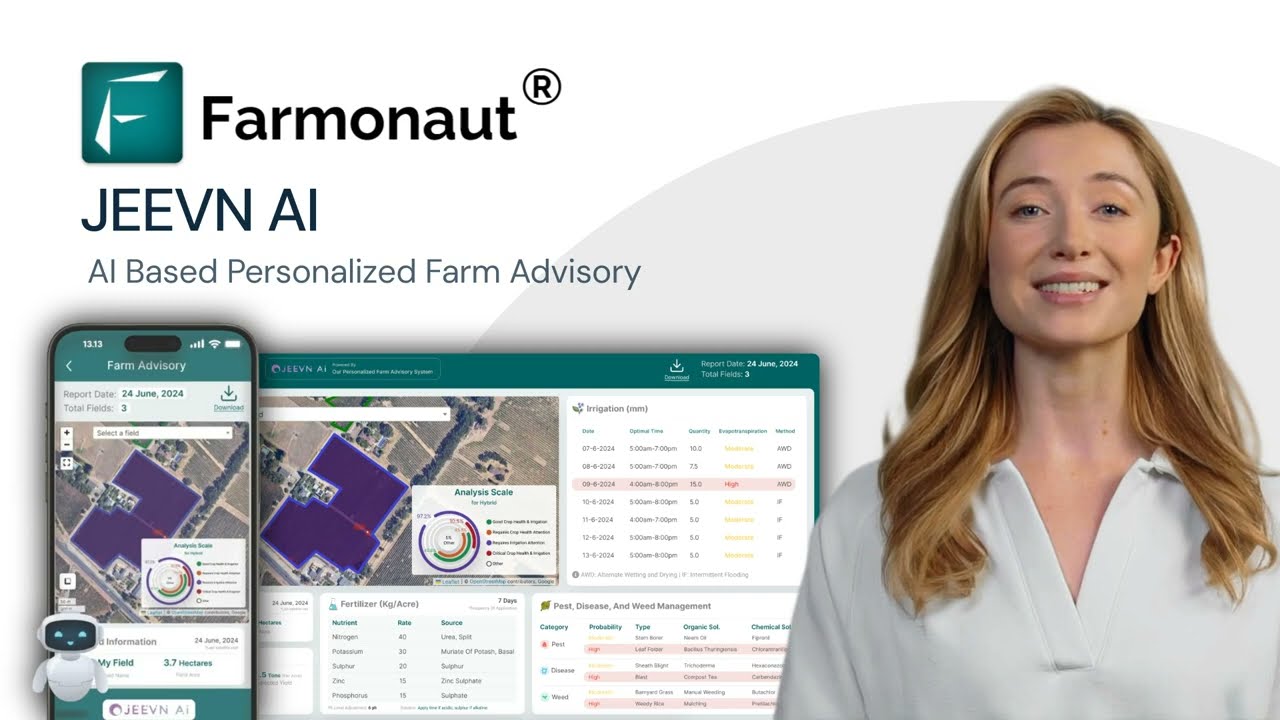
- Even smarter AI-driven advisory systems (like Jeevn AI) that blend satellite, weather, crop, and market data for hyper-personalized recommendations.
- Complete digital blockchain-based traceability for farm products, meeting the demands of traceable, safe, ethical food.
- Deep integration with financial institutions for instant loan and insurance validation using real-time field data.
- Greater sustainability monitoring—from carbon footprint to water use—supporting both compliance and eco-marketing.
We can expect farm apps to become even more interactive (such as voice-guided planting tools), highly visual (enhanced by AR), and community-centric. Partnerships with government schemes and local cooperatives will further drive mass adoption and benefits.
How Farmonaut Empowers Farmers with Tech
As a leader in agricultural technology, Farmonaut stands out for its commitment to making precision agriculture accessible, scalable, and affordable for farming communities of all sizes, worldwide. Here’s how our technology and business model deliver real value:
- Satellite-Based Crop Health Monitoring: Multispectral satellites continuously scan your fields, detecting stress (NDVI, SAVI), moisture, pests, and nutrient deficiencies—delivering insights directly to your app, browser, or dashboard.
- Personalized AI Crop Advisory (Jeevn AI): Real-time, field-specific recommendations on irrigation, fertilizing, disease management, and weather risks. Our advisory adapts as field data and weather forecasts evolve.
- Blockchain Traceability: Every step from sowing to storage to transport is verifiable—ensuring secure, transparent farm-to-market journeys. Explore our traceability module.
- Fleet and Resource Management: Tools to monitor machinery, labor, and input usage, driving down operational costs and enhancing safety. Large plantations can use Agro Admin App for holistic farm management.
- Real-Time Carbon Footprinting: Demonstrate your environmental leadership with live emissions tracking—vital for sustainability markets and green funding.
- Accessible, Scalable, API-Driven: Flexible plans serve everyone from smallholders to large-scale agribusiness and governments. Easy API integrations make expansion and collaboration a breeze.
Farmonaut’s value proposition is clear: democratize data, increase yields, cut waste, and unlock new markets—without expensive hardware or complex integrations.
Want to try? Browse our modern apps and developer tools.
Get Started with Farmonaut: App, API & Subscriptions
Ready to bring precision farm management to your operations? Farmonaut offers flexible access for every scale:
- Browser/Web App: Monitor your fields, download reports, view maps, and more on any computer or tablet.
- Android & iOS Apps: Real-time analytics, AI-based advisory, and seamless in-field use.
- API & Developer Platform: Build your own agricultural solutions or integrate with existing systems easily using the Farmonaut API and visit our developer documentation.
- Subscription Packages: Only pay for what you need, based on farm size, frequency of satellite updates, and required features. From smallholders to governmental projects, there’s a solution for you.
Frequently Asked Questions (FAQ)
What types of farmers benefit most from local farm apps?
Local farm apps are extremely versatile. They help smallholder and family farms access the same advanced technology as corporate operations—improving yields, resource management, and sustainability at any scale.
What’s unique about mobile technology in agriculture through Farmonaut?
Farmonaut uses satellite-based remote sensing, AI-driven crop advisory (Jeevn AI), fleet/resource management, and blockchain traceability, all in a single affordable, accessible platform available on web, Android, iOS, and through API.
How do farm apps help me implement sustainable farming practices?
By monitoring crop health, water usage, and carbon emissions, and providing suggestions for input reduction, digital tools support both environmental compliance and long-term farm profitability.
What kind of data privacy is ensured?
Farmonaut adheres to high data privacy and security standards. Your farm’s information is accessible only to you and those you explicitly authorize, ensuring safe and secure operations.
Can farm apps function in areas with low internet connectivity?
Many farm apps, including Farmonaut, offer offline data syncing and lightweight modules—enabling basic functions even in remote areas with limited connectivity.
How do I get started?
Simply download the Farmonaut app for Android or iOS, or use the browser version. Sign up, map your fields, and take advantage of trial features or flexible subscriptions to match your needs.
Conclusion: Embracing Innovation for a Sustainable Agricultural Future
The future of agriculture belongs to those who adapt and leverage technology for better crop management, market access, and sustainability. Local farm apps are not just software—they’re powerful enablers, bridging the gap between farmers, agronomists, and consumers, and putting actionable data right into our hands. Companies like Farmonaut are pioneering this transformation with affordable, data-driven, and scalable solutions.
By embracing farm apps, we position ourselves and our communities for:
- Higher productivity and profitability through precision farming
- Greater resilience to weather, pest, and market shocks
- Stronger compliance with environmental and food-safety standards
- A thriving, digitally connected agricultural community
It’s time to embrace the digital revolution in farming. Whether you’re a first-time user or a large-scale agribusiness, the right local farm app gives you powerful farm productivity tools and connects you to the future of agriculture.

 CGIAR
CGIAR Hayleys Agriculture
 Linx Agritech
 Adinet
 Save Your Soils
 GalaxEye Space
 Grandstream Algérie
 XOS Realty
 Geospatial Lab Africa
 Agro La Gándara
 HIPSAC
 ZOL Zimbabwe
 Juligerm
 AdBio
AdBio MISE Maroc
 NWNS
NWNS Red August Group
 Farm Inc
 WeMe Global
